

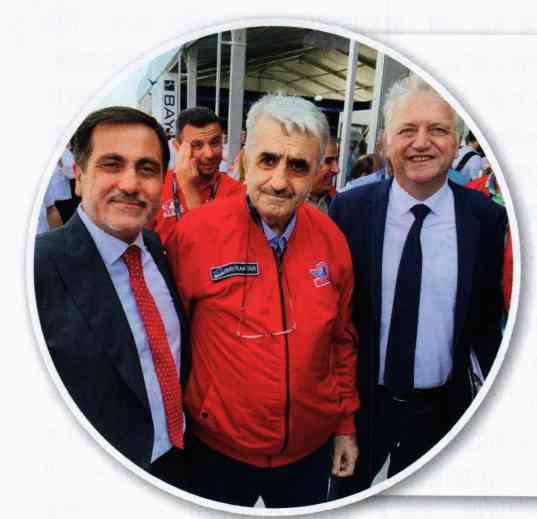
On October 18, 2021, an engineer named Ozdemir Beylaktar died in Istanbul, Turkey’s largest city, at the age of 72. Not many people paid attention to this news. Of course, who would notice the death of an engineer at a time when the Delta strain of COVID-19 was sweeping the world? However, for those who know the Turkish defense industry, Ozdemir Beylaktar is an iconic figure. A few months later, the Turkish TB2 military drone, which once again shined on the Ukrainian battlefield, was the product of his leadership.
It can be said that Ozdemir Beylaktar and his family have opened up a different path for the development of Turkish military drones from the United States, and the Turkish state has continued to attach importance to military drones for nearly two decades, and finally reaped rich rewards in a series of wars in this turbulent world.
Marriage breeds industry
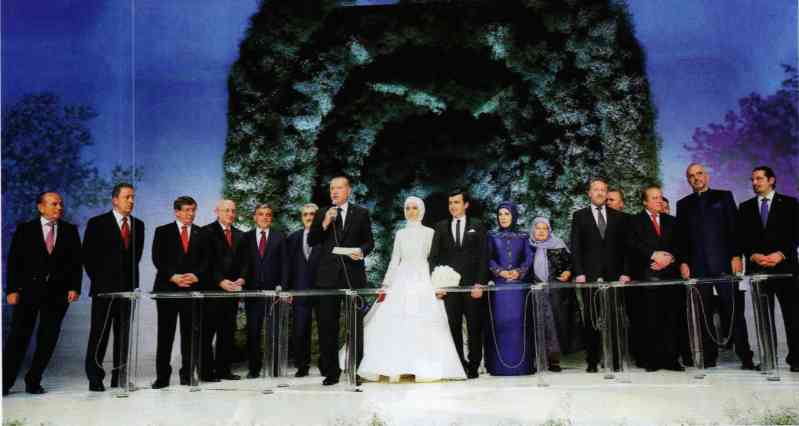
The importance Turkey attaches to the autonomous military drone industry can be seen from the marriage of President Erdogan’s daughter. On May 14, 2016, Turkish President Recep Erdogan held a grand wedding for his youngest daughter, Sumeiye Erdogan, in Istanbul, with nearly 6,000 guests. The wedding was hosted by Istanbul Mayor Kadir Topbas, and former Turkish President Abdullah Gul, then Prime Minister Ahmet Davutoglu and General Hulusi Akar, Chief of the General Staff of the Armed Forces, served as witnesses. Other important guests included then Pakistani Prime Minister Nawaz Sharif, Bosnian State Presidency member Bakir Izetbegovic, former Lebanese Prime Minister Saad Hariri, Albanian Prime Minister Edi Rama and others.
Born in 1985, Sumeiye Erdogan entered politics very early. In 2013, when her father Erdogan was still the Prime Minister of Turkey, she served as an advisor to the Vice President of the Justice and Development Party of Turkey. At that time, she was only 28 years old. The high-profile marriage of the Turkish president’s daughter this time is certainly not without intention, and the groom of this wedding is Selcuk Bayraktar, the second son of Ozdemir Bayraktar.
Selçuk Bayraktar, who returned from the United States after studying, has long served as the chief technology officer of his father’s company. The TB2 drone is an excellent product he created personally. The combination of the 37-year-old him and the 31-year-old Sumeiye Erdogan established the position of his family company Baykar in the field of military drones in Turkey.
The arrival of this day should be mainly attributed to the foresight of the Bayraktar father and son.
Ozdemir Belaktar was born in 1949. He graduated from Istanbul Technical University in 1972 with a degree in Mechanical Engineering, and then obtained a master’s degree in the Engine Department, with a major in internal combustion engines. After graduation, he worked in several important companies in the Turkish industrial sector.
In 1984, Ozdemir Baylakta participated in the establishment of Baykar Makina, "Baykar" means "Baylakta Brothers". This is a CNC precision machining company dedicated to producing domestic auto parts in Turkey, such as engines, pumps and other accessories, to develop Turkey’s domestic auto industry.
In 2004, 55-year-old Ozdemir Baylakta decided to turn to the production of unmanned aerial vehicles with his second son Selçuk, who was studying for a doctorate in unmanned aerial systems at the Massachusetts Institute of Technology in the United States. From then on, the unknown Baykar company was gradually transformed into Turkey’s top enterprise for independent research and development of drones, establishing a world-class influence.
Ozdemir Baylakta’s two sons also made great contributions to the development of Baykar. Born in 1979, Selcuk Beylaktar attended Istanbul’s famous Robert College in high school. In 2002, he graduated from his father’s alma mater, Istanbul Technical University, with a major in electrical engineering, and then obtained a master’s degree in engineering from the University of Pennsylvania in the United States.
In 2005, Selcuk Beylaktar, together with his father, actively called on Turkey to invest in drone technology at the national level. He said: "If Turkey supports (Beka’s drone project), then in five years, it can easily be at the forefront of the world in this field."
Selcuk Beylaktar completed his studies at the Massachusetts Institute of Technology in 2006, and his graduation thesis was titled "Research on Active Landing Maneuverability of Unmanned Aerial Vehicles." In 2007, he returned to Turkey to join Beka and subsequently played a key role in the development of the TB2 UAV.
Ozdemir Belaktar’s eldest son Haluk Belaktar studied at the Middle East Technical University in Ankara, Turkey, and received a bachelor’s degree in engineering in 2000 and a master’s degree in the same major from Columbia University in the United States in 2002. In 2004, Haluk Belaktar began studying for a doctorate in business administration at Bosphorus University in Istanbul, and participated in the conceptual design, prototyping, testing, mass production, training and commercialization of multiple UAV projects of Beka.
Currently, Haluk Belaktar serves as the CEO and general manager of Beka, and was elected chairman of the board of directors of the Istanbul Defense and Aviation Cluster of the Turkish Defense Industry Organization in 2018, and a member of the board of directors of the Turkish Scientific and Technological Institute.
It was precisely because of the father and son Belacta’s keen insight into the military use of drones at the beginning of this century, as well as their outstanding capabilities in engineering technology and business management, that Beka’s drone products, represented by TB2, became the representative of Turkish military drones. They are not only widely used in the country’s own army, but also have passed many actual combat tests, winning wide reputation for Turkish military products in the international market.
From micro to stealth
Ozdemir Bayraktar and Selçuk Bayraktar adopted a step-by-step and cautious approach in the development of drones, which is very pragmatic. After all, the company was basically engaged in work related to the automotive industry before. Now it has suddenly turned to the development of drones and needs to gradually accumulate experience.
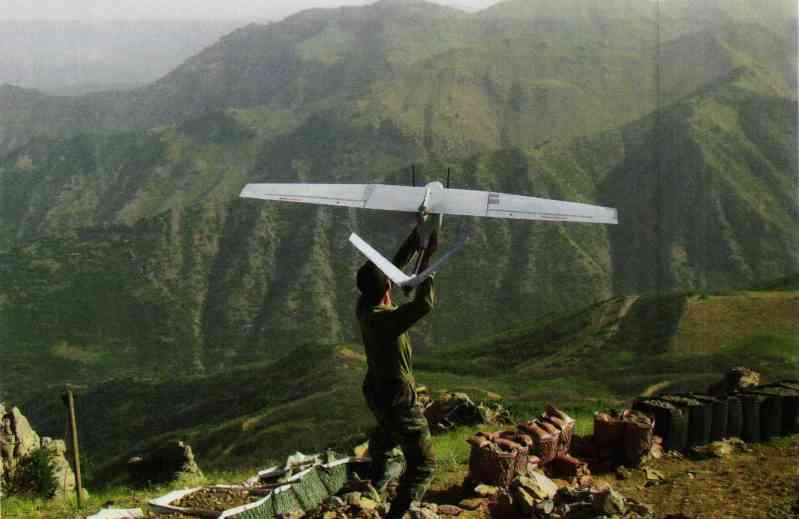
Beka’s first drone product was the Bayraktar Mini UAV designed in 2004. This is a hand-thrown micro drone that mainly performs short-range reconnaissance and surveillance missions during the day and night. For Beka, which is new to the field of drones, the starting point of micro drones is not high and the research and development difficulty is small. The A-type prototype was completed in 2005 and received an order from the Turkish military. Based on repeated tests and actual applications, Beka made major upgrades and improvements and launched the B-type in December 2007, which was well received by the military and exported to Qatar in 2012, taking the first step towards the international market. As of 2021, the Baylakta micro-UAV has developed to the D type, with a cumulative flight time of more than 100,000 hours, laying a solid technical foundation for Beka to explore the field of UAVs.
After the success of the Baylakta micro-UAV, Beka launched the research and development of its representative product, the TB series of medium-sized tactical UAVs. In 2007, the Turkish Defense Industry Administration launched the "Tactical UAV Program". After two years of research and development, a joint venture formed by Beka Company and Kyle Group launched a Bayraktar Caldiran UAV with dual redundant avionics systems and fully autonomous take-off and landing capabilities. It was later named TB1 UAV, but due to the US embargo on Turkey due to the Kurdish issue, it was not mass-produced in the end, and TB2 was developed on its basis. In August 2014, TB2 made its first flight. The aircraft is a medium-altitude long-endurance reconnaissance and strike integrated UAV. It has won a reputation in the Nagorno-Karabakh conflict and the Russian-Bird conflict, and will not be repeated here. At present, Beka Company has launched the TB2S model with satellite communication capabilities, which made its first flight on December 4, 2020.
In addition, the naval version TB3 has also been derived. The main features are increased size and folding wings. It is carried by the amphibious assault ship "Anadolu" and is expected to be in service in 2023.
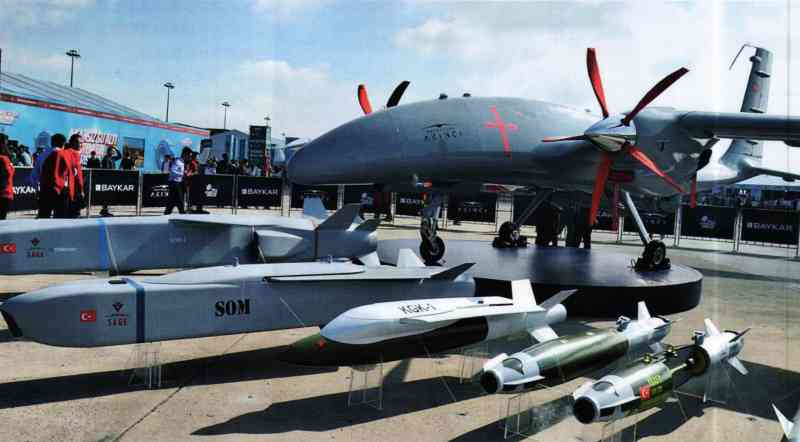
TB The success of the series provided the impetus for Beka to move into high-end drones, and the result was the AkincI, which made its maiden flight on December 6, 2019. This large, high-altitude, long-endurance drone is larger than the TB series, with a maximum take-off weight of 5,500 kg. It is propelled by two Ukrainian-made turboprop engines, has a cruising speed of 240 kilometers per hour, a range of 7,500 kilometers, and a flight time of 25 hours. Its internal payload is 400 kilograms, and its external payload is 950 kilograms, for a total of 1,350 kilograms. "Asinchi is equipped with advanced synthetic aperture radar, electronic warfare and electromagnetic signal intelligence collection systems, dual satellite communication systems, and other sensors and avionics equipment. The eight weapon attachment points can carry a variety of weapons and reconnaissance equipment pods. As of October 2022, "Asinchi" has been exported to Azerbaijan, Pakistan and Kyrgyzstan, and the Turkish military has also equipped 12 aircraft for the "Claw Lock Operation" against Kurdish armed forces in August 2022.
In addition to the privately owned Beka, the state-owned Turkish Aerospace Industries (TAI) also played an important role in the development of its own UAVs. TAI’s products are mainly large and medium-sized UAVs, mainly used by the Turkish military. Representative models are "Anka" and "Aksungur". "Anka" is a medium-altitude long-endurance UAV. It began to be developed in 2004, the basic model was launched in 2010, and it received an order from the Turkish Air Force in 2013. "Anka" is equipped with synthetic aperture radar and precision-guided weapons. The latest S model has satellite communication capabilities, a maximum range of 4,900 kilometers, and a flight time of 30 hours. "Aksungul" is a twin-engine version developed on the basis of "Anka" S model. It made its first flight in March 2019 to meet the Turkish military’s needs for long-duration reconnaissance and patrol missions. Its engine model is the same as "Anka", with a range of 6,500 kilometers, a flight time of 60 hours, and 6 external attachment points. In October 2021, the first mass-produced "Aksungul" was delivered to the Turkish Navy.
The highest-end goal of the development of contemporary UAV technology is to develop models that are comparable to manned aircraft in performance, highly informationized and intelligent, and can work closely with manned aircraft or have independent combat capabilities. The "Red Apple" UAV currently being developed by Beka Company is aimed at this goal, making Turkey stand at the forefront of modern UAV technology.
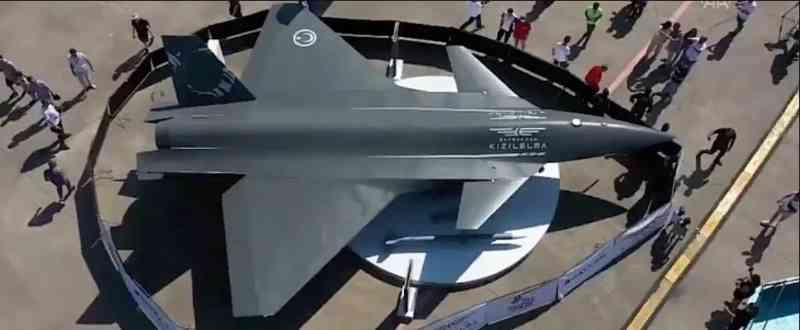
The "Red Apple" drone is a jet-powered supersonic stealth unmanned fighter, which was called "a 12-year dream" by Selcuk Belaktar and is also part of the Bekaa Combat Unmanned Aircraft System (MIUS) project. Concept research for the MIUS project began in secret in 2013, and it was not until July 20, 2021 that pictures and information about the aircraft were first released to the public. On March 12, 2022, the full details of the project were released to the public. At the same time, Selcuk Belaktar revealed that the first prototype has entered the assembly stage. A prototype was exhibited to the public at the "Technology Fair, (Teknofest)" in September 2022. Haluk Belaktar, general manager of Bekaa, said in an interview: "(Red Apple) The cost will not be high, and we will be able to produce more products at a lower cost." ”
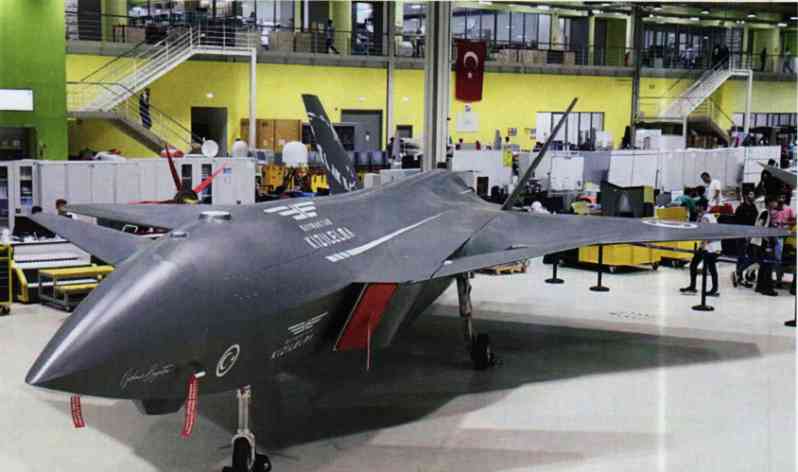
In the second half of 2022, the first prototype of the "Red Apple" began intensive ground testing after assembly. According to reports, the first engine integration test was successfully carried out on September 19, automatic taxiing and ground operation tests were carried out on November 20, and the take-off test was completed on December 3. During this process, the wheels of the "Red Apple" left the ground for the first time and fell back to the ground after a short flight. Beka plans to complete the first flight of the "Red Apple" by the end of 2022 and deliver it to the Turkish military in 2023. The progress is not slow.
The biggest design highlight of the "Red Apple" is the aerodynamic layout of canard plus delta wing and low detectability, which is very similar to the fifth-generation J-20 stealth fighter of the Chinese Air Force. It is generally believed that the canard layout can achieve a balance between stealth performance and high maneuverability, but from the photos currently disclosed, the "Red Apple" still has some shortcomings in stealth design, such as the tail engine nozzle is obviously not treated with corresponding stealth, and there is still room for improvement in subsequent improvements.
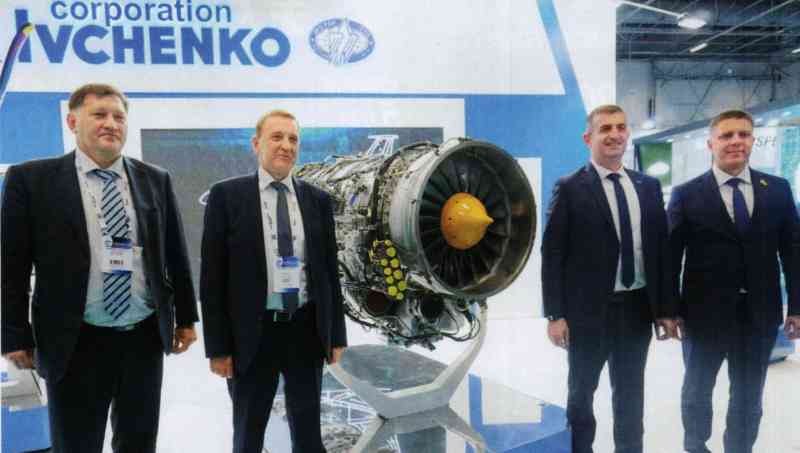
At the 2022 exhibition, Beka announced that the "Red Apple" will have three power configuration options: Type A uses an A1-25TLT jet engine from the Ukrainian Ivchenko-Progress Design Bureau and flies at high subsonic speeds; Type B uses an A1322F jet engine from the Ivchenko-Progress Design Bureau and can achieve supersonic flight. Type C will be equipped with two AI-322F jet engines to achieve higher speeds and better maneuverability. The above engines will be produced by the Black Sea Shield, a joint venture between Turkey and Ukraine. It may also be replaced with the TF6000 turbofan jet engine manufactured by Turkey’s TEI company.
The technical parameters of the "Red Apple" A model currently released by Beka Company show that the aircraft is 14.7 meters long, 3.3 meters high, 10 meters wide, with a maximum take-off weight of 6,000 kilograms, a payload of 1,500 kilograms, a maximum speed of 0.9 Mach (1,100 kilometers per hour), a cruising speed of 735,000 meters per hour, a combat radius of 930 kilometers, a flight time of 5-6 hours, a practical ceiling of 14,000 meters, and a cruising altitude of 11,000 meters. The "Red Apple" is expected to have 2 internal attachment points (internal bomb bays) and 6 wing attachment points, which can be equipped with various types of air-to-air missiles and precision-guided munitions of the Turkish Air Force. In terms of avionics, Beka Company did not reveal much information. It is reported that the "Red Apple" will be equipped with active phased array radar, synthetic aperture target indication system, electronic warfare pod and communication system module, etc. This kind of configuration means that the "Red Apple" is likely to have certain air combat capabilities. In addition, the "Red Apple" also has the ability to take off and land completely autonomously, and may achieve short-range takeoff and landing capabilities, so that it can be carried by the Turkish Navy’s amphibious assault ships in the future and used as a carrier-based aircraft.
Although the MIUS project has been going on for many years and the "Red Apple" is about to make its first flight, the outside world is still unclear about its true concept positioning. It may be similar to the US Air Force’s "Loyal Wingman" project, providing a drone companion with comparable performance for manned aircraft, or according to the traditional control mode of drones, there is a ground remote control station for guidance and command, or it may be an intelligent fighter with some autonomous ability to independently judge and actively attack targets. Obviously, the last option exceeds Turkey’s current technical capabilities. After all, the US Air Force has not yet solved the corresponding technical problems. On the other hand, Beka’s emphasis on the low-cost feature of the "Red Apple" means that it may be pushed into the international market and provided to customers who cannot afford to buy high-performance American drones or obtain export licenses for high-end fighter jets. The low cost also means that the "Red Apple" may be regarded as a consumable.
For the Turkish military, the "Red Apple" has a more important practical significance for maintaining the combat capability of its air force. Due to the deterioration of US-Turkey relations caused by Turkey’s purchase of S-400 air defense missiles from Russia, Turkey has been kicked out of the ranks of F-35 stealth fighter users. Turkey’s plan to purchase more F-16 fighters and upgrade existing aircraft has also been shelved. Without the support of the United States, it is questionable whether Turkey’s own TF-X stealth fighter project can be completed as scheduled. In this context, a large number of stealth unmanned fighters similar to the "Red Apple" can meet some of the needs of the Turkish military, share the combat missions of manned aircraft, and thus extend the service life of manned aircraft.
Being pioneering and enterprising, breaking new ground
As a private company, Beka successfully predicted the huge potential of drones in military applications and promptly turned to the research and development and production of military drones, thus making this family company a military-industrial enterprise with global influence. The representative product they developed, the TB2 drone, has played a key role in the battlefields of Libya, Syria, Azerbaijan and Armenia. Even in Ukraine in 2022, it once made the Russian army, which ranks first in the world in military power, flustered and unable to resist.
Although in the recent Ukrainian battlefield, with the continuous improvement of various anti-drone means, especially the greatly strengthened electronic countermeasures against drones, the appearance rate of TB2 without satellite communication capability has greatly decreased, but Beka’s unique exploration in the field of military drones is far more significant than the TB2 model.
The first major significance of Beka’s active development is to make Turkey’s military drone products get rid of the influence of the United States and embark on a development path of its own. We can see that the "Anka" drone developed by TAI, a large state-owned company in Turkey, still has a distinct American style, while the Beka TB series drones, which were developed almost at the same time, have unique and distinctive characteristics, which fully demonstrates Beka’s pioneering spirit and creativity. In the face of Western technology blockade, Beka gradually localized all components of its drone system, creating a completely independent military drone product line and industrial chain for Turkey.
The greatest significance of Beka’s transformation into the drone field is that it uses mature technology and shelf products to successfully develop a military drone product that is functional, reliable, cheap and easy to use, making it a weapon in the hands of small and medium-sized armies.
Previously, similar products from the United States did have strong performance, but they were expensive and complicated to use. The key is that there are strict export controls, which are only out of reach for the armies of most countries. TB2 popularizes the use of military drones in actual combat. It is it, not the United States’ drones, that fully proves the value of drones on various battlefields.
Now, Turkey has set an ambitious roadmap for the development of military drones. If people used to doubt the role of drones in the military, then after the high-intensity actual combat between Russia and Ukraine, I believe everyone can see that the sky on the battlefield in the future will be dominated by drones. Turkey has used its strategic location to turn drones into a powerful diplomatic tool, making it a pivotal force in the Middle East and the eastern Mediterranean, exerting growing influence.