

During the ongoing Russian-Ukrainian war, drones produced in Turkey have become very popular. How is the level of Turkey’s aviation industry? Why are its drones so popular?
Brief introduction to Turkey’s aviation industry
Turkey is not a traditional industrial power, but its economic development is steady. Since the beginning of this century, the defense industry has developed rapidly under the strong promotion of the state. The number of aerospace and defense companies has increased from 56 in 2002 to 1,500 in 2019, and the corresponding sales revenue has increased from US$1 billion to US$10.884 billion; in 2021, the export volume was US$3.224 billion, and it is expected to exceed US$4 billion in 2022. Among them, the aerospace industry has performed well. The largest aerospace company is Turkish Aerospace Industries (TAI), which integrates design, manufacturing, system integration and after-sales support. It ranks 53rd in the 2020 World Aerospace Top 100 and 63rd in 2016, rising 10 places in four years, an amazing speed of improvement. In fact, not only TAI, but the entire Turkish aviation industry is developing rapidly, just like a small giant rising quietly.
Let’s focus on TAI. In 1973, with the support of the state, the Turkish Aircraft Industries Corporation was established. In 1984, in order to cooperate with the United States, the Turkish Aerospace Industries Corporation was established. The goal is to master the manufacturing, system integration flight test and delivery of F-16 fighters. In 2005, at the end of the F-16 cooperation project between the United States and Turkey, the two companies merged, retaining and using the latter’s name; the new TAI is held by the Armed Forces Foundation, the Ministry of Defense Industry and the Aviation Association with 54.59%, 45.45% and 0.06% respectively; it is actually a state-owned enterprise. The company’s goal is to become a "world brand aerospace company" with pillar products and global competitiveness, with five major divisions: aircraft structures, aircraft, helicopters, drones and space systems.
TAI is located in the capital Ankara, covering an area of 5 million square meters, with a plant area of about 30 10,000 square meters; with modern R&D and production facilities, it has formed a wide range of capabilities from parts manufacturing to aircraft assembly, flight testing and delivery. There are currently 8,500 employees, including more than 1,500 engineers and about 850 engaged in military project research and development.
TAI’s aviation capabilities mainly come from the authorized cooperative production of the US F-16 fighter, the assembly of the Spanish CASA CN-235 transport aircraft, the Italian SF260 trainer aircraft, the Airbus AS532 helicopter, the Sikorsky S-70 helicopter, etc., and the participation in the development of projects such as the A400M transport aircraft, the T129 armed helicopter, the T625 transport helicopter, and the "Free Bird" turboprop trainer aircraft.
In terms of military aircraft, TAI delivered 270 self-assembled F-16 fighters to its own air force in batches during the 20-year cooperation period, and also submitted 46 to the Egyptian Air Force. It is said that this is the first time that the United States allows foreign-made F-16 fighters to be sold to a third party. TAI also participated in the F-16 upgrades in its own country, Jordan, and Pakistan, the S-70 helicopter cockpit upgrades, and the C-130 avionics system upgrades. Currently, it is leading the development of the TF-X project, known as the "National Fighter Unit (MMU)".
In terms of civil aircraft, TAI is committed to providing structural parts and components to multiple customers. It is a component supplier for AgustaWestland Airbus, Alenia Aermacchi, Boeing, Israel Aerospace Industries, MD Helicopters, Sikorsky and other companies. TAI products are used in many helicopters of Airbus A319/320/3211350 Boeing 737174717671777, Eurocopter and Sikorsky: In May 2015, Turkey launched the development of two regional airliners in the country. The 32-seat TRJ-328 is based on the Fairchild-Dornier Do 328, with a range of 3,700 kilometers and equipped with a new cockpit and engine; the 70-seat TRJ-628 jet is scheduled to make its first flight in 2023
Except In addition to TAI, Turkey has its own Tussac Engine Industries (TEI) and several airborne equipment and weapons R&D and production institutions, such as Roketsan. Like TAI, due to cooperation with many top aviation companies in the United States and Europe, as well as strong organization and promotion of aviation development in the country, these companies and institutions have international backgrounds and promising development prospects.
UAV development status and equipment level
Due to the relatively low technical threshold of UAVs, and through international cooperation and independent development, Turkey has the supporting R&D and production conditions in the field of UAVs, and has made remarkable achievements in this field, becoming an important UAV supplier. Among them, TAI and Beka-Majina, founded in 1984, are the main manufacturers. The highest level is currently represented by Beka-Majina’s "Flagship" TB2 and "Asinchi" ( AKINCI) two reconnaissance and strike drones. Among them, the former is medium-altitude, single-engine, and light, while the latter is high-altitude, twin-engine, and heavy. The overall level of the two products is in the stage of improvement, but they are close to the needs and have good practicality. The airborne equipment and weapons are matched, suitable for medium and low intensity conflicts and wars. The two drones are not only purchased by the military of their own country, but also widely used in neighboring and friendly countries. Their comprehensive strength and development prospects cannot be underestimated.
TAI has developed a variety of target drones and reconnaissance drones. The "Baykus" drone, which has been used by the Turkish military, first flew in 2004, with a take-off weight of 250 kg, a maximum speed of 200 km/h, a stay time of 12 hours, a ceiling of 4,600 meters, and a gimbal and optoelectronic equipment under the nose, with real-time data transmission capabilities.
Another short-range "Scout" (Grozcu) UAV is used for intelligence, surveillance, target acquisition and reconnaissance (ISTAR). It takes off by catapult and recovers by parachute. The take-off weight is 85 kg, the payload is 8 kg; the endurance is 2 hours, and the ceiling is 3700 meters. The aircraft has been used in the Syrian-Turkish border war.
The "Anka" UAV, which first flew in 2010, is a medium-altitude long-endurance ISTAR UAV, similar to the US MQ-1 "Predator", with a maximum take-off weight of 1600 kg and a payload of 200 kg. The "Anka" uses a Turkish-developed PD170 turbocharged diesel engine, with a maximum speed of 217 km/h, a range of 1450 km, an endurance of 24 hours, and a ceiling of 9150 meters. The Anka UAV has also been used in the Turkish-Syrian border war and exported to Tunisia. As a product of Anka, TAI also developed the Peregrine Falcon UAV, which entered service with the country’s navy in 2021. The aircraft is 12 meters long and has a wingspan of 24 meters, an empty weight of 1,800 kg, a maximum take-off weight of 3,300 kg, a payload of 750 kg, and 6 underwing attachment points. The Peregrine Falcon uses two PD170 engines, a cruising speed of 250 km/h, a range of 6,500 kilometers, a stay time of 40 hours, and a ceiling of 12,200 meters.
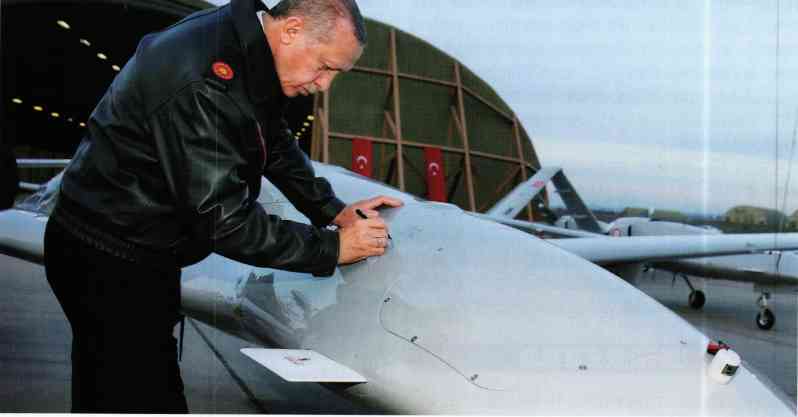
Beka-Majina, the main exporter of Turkish drones, was originally a company that produced auto parts. In 2000, it established a drone R&D team and won the military drone bidding project in 2005. In 2006, it began to produce the Bayraktar small drone, and has produced more than 500 drones so far. This is a hand-thrown reconnaissance drone that can carry optoelectronic and infrared cameras. It weighs 4.5 thousand grams, is battery-powered, has a flight time of 1 hour, and a maximum ceiling of 4,000 meters.
The TB2 drone, which began to be developed in 2007, is the most successful model of Beka-Majina. The aircraft is 6.5 meters long, has a wingspan of 12 meters, a maximum take-off weight of 640 kilograms, a maximum payload of 150 kilograms, uses a 100-horsepower piston engine, a maximum speed of 220 kilometers per hour, a practical ceiling of 8,200 meters, and a flight time of 27 hours. TB2 is equipped with Turkey’s own special weapon system, including MAM-L guided bombs and MAM-C laser-guided anti-tank missiles. MAM-L is less than 1 meter long, weighs 21.5 kg, has a killing radius of 12 meters, and has a range of about 8 kilometers when using laser guidance and 14 kilometers when using inertial navigation/GPS navigation. MAM-L is modified from Rockstein’s L-UMTAS laser-guided anti-tank missile. TB2 UAV entered service with the Turkish military in 2014. Since then, Qatar, Ukraine, Poland and other countries have successively purchased it, and it has been put into actual combat in the Iraqi Kurdish region, Libya, Syria and other regions. It has performed well in the conflict between Azerbaijan and Armenia and the current war between Russia and Ukraine.
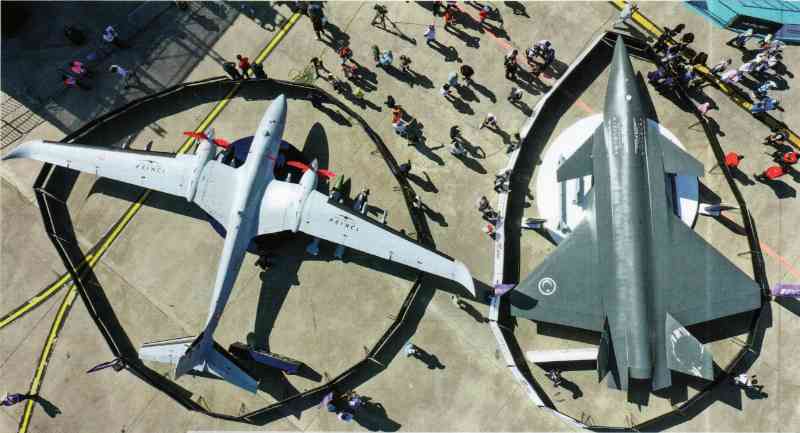
The larger and more advanced Asinchi UAV began development in 2017, made its first flight in 2019, passed a number of tests in 2020, and is believed to have been put into mass production. It is 12.5 meters long, has a wingspan of 20 meters, and looks like a seagull. It has a maximum take-off weight of about 5,000 kilograms and uses two Ukrainian AI-450C turboprop engines. It has a 24-hour airtime and a ceiling of 12,000 meters. The aircraft is equipped with Turkey’s self-developed active phased array radar, a shared aperture optoelectronic system, and an electronic warfare pod, and does not require a global positioning system. The Asinchi has a payload of 1,350 kilograms (900 kilograms externally and 450 kilograms internally), and can be equipped with a variety of air-to-ground/air-to-air weapons. It may become the world’s first drone capable of launching SOM (standoff-range missile) air-launched cruise missiles.
In addition to these two manufacturers, Titra Technologies is developing the country’s first dual-use unmanned helicopter, named "Alpin". Development began in 2019 and the first flight was in 2020. The length is 7 meters and the rotor diameter is 6.28 meters. The empty weight of "Alpin" is 340 kg, the maximum payload is 200 kg, the maximum cruising speed is 160 km/h, and the endurance time is 7 hours. "Alpin’ can use synthetic aperture radar and optoelectronic infrared camera devices to perceive external situations, and use broadband satellite communication channels to achieve air-to-ground transmission through onboard equipment.
Rapid progress under the will of the state
The rapid progress of Turkey’s aviation industry stems from the ambitious national will. The Erdogan government has vigorously promoted the country’s independent development strategy, one of the important contents of which is to continuously and significantly reduce the dependence of the national defense system on foreign resources. According to the government, the current dependence has dropped from 80% to 30%, and by the centenary of the National Day in 2023, it hopes to end dependence on foreign resources. In recent years, Turkey’s military expenditure has risen year by year, exceeding US$20 billion in 2019, reaching 2.7% of GDP. Under this national will, Turkey’s defense forces are shifting from import procurement to relying on domestic independent research and development. Although Turkey hopes to 100% It is not easy to achieve localization, but it is an indisputable fact that the defense industry has received unprecedented attention and significant progress.
The government controls the development of the defense industry by establishing a strong management agency and a foundation that is actually controlled by the government. The Ministry of Defense Industry (SSB), established in 1985, is responsible for restructuring and integrating the defense industry, encouraging the establishment of new enterprises, seeking foreign investment and advanced technology, and implementing military procurement compensation trade. In 1987, the Armed Forces Foundation (TAFF), which was formed by the merger of several similar foundations, was established. Its mission is to improve the combat capabilities of the armed forces by developing new projects and purchasing equipment, and actually owns TAI and other defense companies through shareholding.
In order to vigorously develop the aviation industry, the government strongly supports infrastructure construction. The highly anticipated National Combat Aircraft MMU Engineering Center and the Composite Materials Production Building have invested 220 million and 412 million liras respectively. There are 2,300 employees engaged in TF-X research and development at the center. The Composite Building has become the world’s fourth largest single-roof composite structure production plant, with a capacity to meet 2% of the global demand for aviation composite structures.
The TF-X fighter under development can be regarded as a major product of national will. The Turkish Ministry of Defense Industry said that this is a fifth-generation aircraft with similar functions to the F-35. The development of this aircraft is mainly carried out by TAI, and it is independently developed in conjunction with several domestic defense companies. It is planned to make its first flight in 2026, and from 2030 onwards, it will gradually replace the Turkish Air Force F-16 fighters that will be phased out. On November 23, 2022, TAI held a launching ceremony for the MMU assembly line, showing the first prototype of this "national fighter" with a skinned fuselage and main wing integrated structure, announcing the start of assembly. The prototype stage uses the US F110-GE-129 engine, and the future power system will rely on the country’s Tuss Engine Industry (TEI) to independently develop and guarantee.
To promote the development of the aerospace industry, the government also built the Aerospace Specialized (HAB) Industrial Zone (OIZ) on about 730 square kilometers of land near TAI. This is the first specialized industrial zone in Turkey’s defense industry, with 16 new factories settled in. The goal is to bring together domestic and foreign companies, form synergies, produce high value-added products, support the aerospace industry, and increase exports.
Special development opportunities brought by geopolitics
Turkey pursues a pragmatic "de-Asian and toward Europe" geopolitics, is friendly with the United States and Europe, and does not have an enemy with Russia. Out of a strong intention to rejuvenate the nation and play a greater role in the world political landscape, the Erdogan government’s governing purpose is to firmly develop the country’s economy and defense industry, and maximize national interests with a posture of pleasing the East and the West.
Turkey joined the North Atlantic Treaty Organization in 1952 and became NATO’s foothold in the region in the West’s efforts to contain the expansion of the Soviet Union. In the 1980s, Turkey actively participated in the efforts of NATO allies to modernize their weapons systems and sought ways to enhance its own weapons and equipment production capabilities. Since then, starting from obtaining a license to produce armored vehicles, Turkey has gradually made great progress in drones, ships, military electronic equipment, etc., and has quickly grown into a supplier of multiple varieties of weapons.
Due to its high technical level and competitive prices, and after certain actual combat verification, Turkey’s military trade has a high starting point and has a strong influence in countries with friendly relations or the same religious origins. Turkey’s regional ally Qatar is its main customer; some North African countries and Azerbaijan, Pakistan, Indonesia and Malaysia are also its customers.
As an international hub with a world reputation, a major tourist destination and a financial center, Turkey’s unique geographical and political advantages continue to stand out. In order to further utilize international intelligence and open up opportunities for industrial cooperation, Turkey has vigorously promoted the cluster model and established several clusters focusing on aerospace and defense in Ankara, Eskisehir, Izmir and Istanbul. In this way, global aerospace companies such as General Electric, Sikorsky, Pratt & Whitney, and Saab are attracted to form joint ventures with local companies and enter the cluster. The government provides these joint ventures with financial incentives, including tariff reductions, income tax, and value-added tax, so that these companies can fully develop and provide direct support for Turkey’s military capabilities, while also significantly improving the country’s industrial capabilities and international influence.
Although Turkey’s main political inclination is to ally with the United States and Europe, there are occasional frictions and even certain costs. For example, the MMU project has unspeakable difficulties: because domestic institutions cannot provide long-range air defense and anti-missile defense system solutions, the Turkish government has to purchase the Russian-made S-400 system from Russia. As a punishment, the United States expelled Turkey from the F-35 joint development project, although Turkey has participated in the project since the program stage and paid $6.2 million in the program verification stage, $175 million in the research and development verification stage, and $690 million in the subsequent development stage.
In the future, Turkey will stubbornly advance towards national and national rejuvenation in such a political landscape, and Turkey’s aviation industry will have greater development and progress.