
A veteran of the air
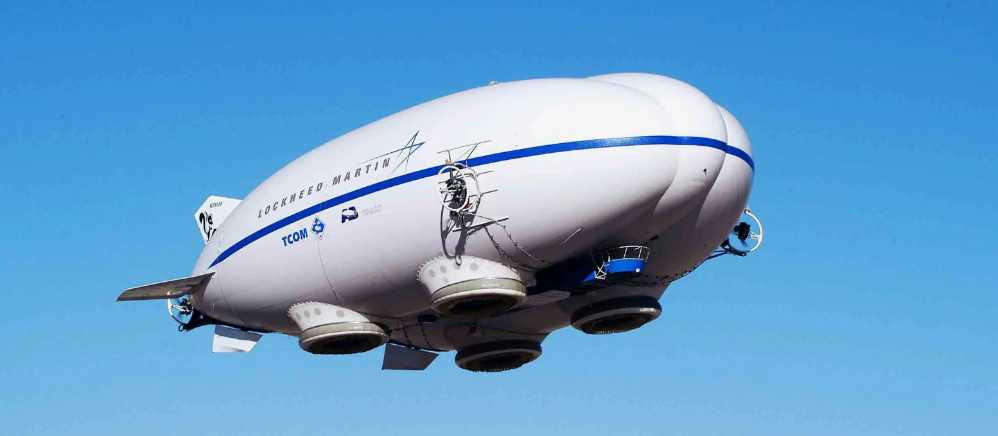
Speaking of the human dream of flying, it began with the French invention of manned hot air balloons and hydrogen balloons in 1783, and the emergence of controllable powered airships in 1852. This type of aircraft, which is lighter than the same volume of air and rises by the static buoyancy of air, is collectively called an aerostat. Like many major inventions of mankind, aerostats soon found their place on the battlefield. From the American Civil War and the Franco-Prussian War in the 19th century to the two world wars in the 20th century, balloons and airships have shown their abilities in various wars, taking on the duties of reconnaissance and surveillance, artillery calibration, key point air defense, escort anti-submarine and search and rescue, and can be said to be a veteran of the battlefield.
During the Cold War, the United States briefly used balloons for reconnaissance of the Soviet Union. However, balloons that drift with the wind are easy to be discovered or disappear, which is obviously not very reliable, and they cannot accurately detect targets. They were soon replaced by reconnaissance satellites and aircraft. In addition, the United States also tried to use balloons as lethal weapons. In 1954, the U.S. Air Force formulated a plan code-named "Flying Cloud", which allowed balloons to carry biological and chemical weapons or low-yield nuclear weapons, and set detonators according to wind direction and wind force, so that the balloons would explode after reaching the target to create a large-scale killing effect. However, after many tests, it was found that the erratic balloons were purely luck to approach the target area as scheduled, so the plan had to be discontinued.
In 1957, the U.S. Atomic Energy Commission used balloons to carry nuclear bombs of different equivalents to hundreds of meters in the air and detonate them in a series of nuclear weapons tests conducted at the Nevada Desert Test Site. Later, it was planned to use airships to transport nuclear weapons, but the airships used were abandoned after a series of accidents. At that time, there was even a plan to develop a large nuclear-powered airship, but it was shelved because it was too advanced and complicated.
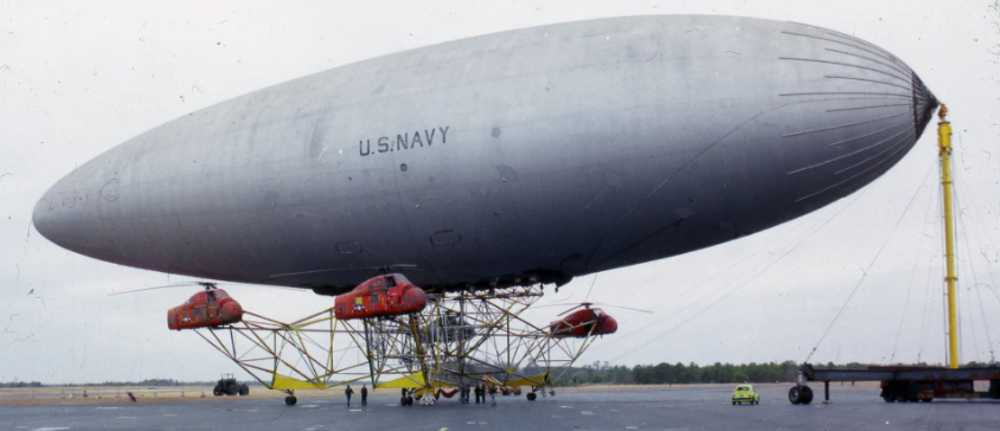
The U.S. Navy used airships for anti-submarine escort in World War II and was very effective. It only lost one in combat, so it still retained the airship force in the early Cold War. At that time, the airships equipped by the U.S. Navy were mainly M-class and N-class soft airships developed by rubber giant Goodyear to perform anti-submarine patrol missions against Soviet submarines, and they were also planned to be equipped with nuclear depth charges. Among them, the N-class airships produced after the war were converted into ZPG-2W airborne early warning platforms. Two radar antennas were installed on the upper part of the airbag and the bottom of the pod respectively, which were used for air and sea surveillance, and the airborne time could reach 200 hours. The upgraded ZPG-3W was the largest military airship at the time, 123 meters long and 36 meters high. It entered service in 1958 to fill the coverage gap of the North American land-based radar network in coastal areas. However, two years later, a ZPG-3W crashed due to a ruptured airbag in flight, killing 18 crew members. The US Navy finally retired all airships in 1962.
In 1982, the Falklands War broke out between Britain and Argentina. The Argentine army sank and damaged several British warships with French "Exocet" anti-ship missiles. In 1987, Iraq also launched "Exocet" to hit a US frigate in the Gulf region. In response, the US Navy restarted the early warning airship project, hoping to guard against the threat of such sea-skimming missiles. The commissioned British Airship Industries designed two different sizes of airships, "Sentinel" 1000 and "Sentinel" 5000, which can carry airborne early warning radar systems, but they were eventually abandoned due to budget cuts. Another bolder idea came in 1986, when the American Piasecki Company assembled a sealed ZPG-2W airship and four Sikorsky H-34J helicopters into a peculiar Helistat--"helicopter aerostat" combination, intending to combine the buoyancy of the airbag and the lift of the helicopter rotor to transport heavy objects, but unfortunately it was damaged during the test flight.
The Soviet Union at that time also formed an aerostat unit, using balloons for reconnaissance, electromagnetic interference, communication and air defense confrontation and other combat exercises, and had actual combat applications during the invasion of Afghanistan. In the Chernobyl nuclear power plant accident in 1986, military balloons were also equipped with lighting equipment and sent to assist in disaster relief. However, after the disintegration of the Soviet Union, the aerostat unit was greatly reduced, and only scientific research institutions were retained.
The road to the revival of airships in the new century
For a long time after the end of World War II, various aircraft and helicopters occupied most of the sky, and the living space of aerostats was shrinking. Due to the inherent shortcomings of large size, long ground preparation time, great influence of climate, and unsatisfactory safety, aerostats are not very popular in the military and civilian fields. However, after the oil crisis in the 1970s, aerostats with low energy consumption and good economy gradually became popular. With the mature development of aviation theory, structural materials and manufacturing technology, aerostats began to be reborn. Compared with other aircraft, aerostats have regained their place in the high-tech battlefield of the 21st century with their unique advantages such as low cost, long air time, strong load capacity and high cost-effectiveness.
1 Tethered balloons that are high in the sky
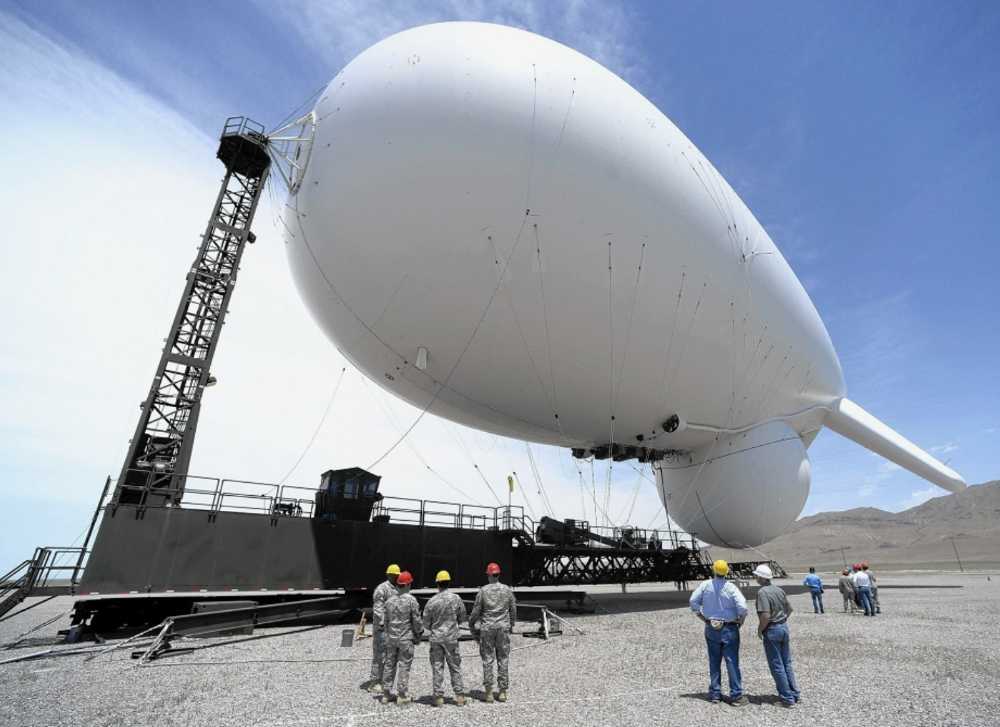
Now when it comes to balloons, most people think of them as either entertainment products or scientific research tools, both of which are mainly free-flying. Although tethered balloons are no longer used for air defense, they are easy to recover, maintain and reuse. They can be operated on land and sea. Compared with early warning aircraft and drones, they are more suitable for long-term monitoring tasks in fixed areas. As early as the 1980s, the US Air Force deployed tethered balloon radar systems for coastal surveillance. The balloons carrying radars can rise to a maximum altitude of 7,600 meters and have a detection range of 400 kilometers. Later, the US Coast Guard and the US Customs also introduced this system to monitor illegal border crossings and drug trafficking activities in the southern United States.
After the September 11th incident in 2001, the United States launched the Afghanistan War and the Iraq War in the name of anti-terrorism. The powerful US military was unstoppable in overthrowing the original regime, but after entering the local area, it had to cope with the frequent harassment of anti-US armed forces. In order to ensure the safety of the garrison, the US Army is equipped with a variety of small and medium-sized tethered balloon monitoring systems, equipped with optoelectronic observation or communication equipment, and deployed flexibly over frontier bases and important strongholds to play the role of battlefield monitoring, intelligence collection and communication relay, and provide early warning for attacks by unknown personnel, mortars and rockets. The British Army uses a combination of balloons and kites, which can provide better stability and lift for real-time monitoring and network transmission, and can also expand the remote control range of drones.
In order to deal with low-altitude targets such as cruise missiles and drones, the US Army began testing a joint ground attack cruise missile air defense network sensor system in 2011. This system, referred to as JLENS, was developed by Raytheon and TCOM Aerostat. It uses two tethered balloons carrying early warning radars and fire control radars as part of the missile defense system. It can continuously monitor key areas at home and abroad and transmit target data to the air defense system. The operating cost is less than one-fifth of the early warning aircraft. Although the JLENS project was frustrated by the cable break accident and insufficient funds, TCOM later teamed up with Israel to develop a similar balloon early warning system. Russia resumed the research and use of military aerostats after 2000, equipped with "Cheetah" and "Puma" tethered balloons with a stay time of 25-30 days, as well as the mobile balloon radar project planned to be included in the capital’s air defense system. In addition, France, Saudi Arabia, India, Singapore and South Korea have also equipped "balloon ears and eyes" through cooperation or procurement.
Modern tethered balloons are no longer what they used to be. They have adopted a streamlined appearance similar to that of airships, equipped with tail wings and equipment fairings, improved wind resistance and stability, and also equipped with lightning protection devices. There are multiple airbags inside its skin, all made of high-strength composite materials, filled with non-flammable helium or mixed gases, and will not leak quickly and fall if damaged. Tethered balloons transmit electricity and data with cables, and are retracted and released through winches and control stations. They can be flexibly configured for long-term duty in fixed, vehicle-mounted or ship-mounted types, making the entire monitoring and defense system more complete. Especially for countries and armies with insufficient resources, early warning aircraft are too luxurious and drones have limited payloads. Tethered balloons are easy to use, versatile, and cost-effective, and can be called "artificial satellites" released by cables.
High-altitude airships that break through the sky
Airships not only have the same characteristics as balloons, but also have more advantages in mobility due to the addition of a power system, and their mission payload and coverage are much larger. Modern airships integrate various "black technologies". The airbags and pods are made of high-strength and lightweight materials, and are equipped with high-efficiency and energy-saving engines, vector propulsion and fly-by-wire control systems. The maneuverability and safety are significantly enhanced, and they can operate freely even in windy weather. Airships can take off and land vertically without relying on runways like helicopters, and their hovering performance and air durability are even better. In 2000, the United Nations peacekeeping force dispatched airships equipped with ground-penetrating radars to clear mines in the Kosovo region. In addition, although the airship is large in size, the large amount of non-metallic materials used actually reduces the radar and infrared characteristics, making it difficult to be discovered at high altitudes, and it can also avoid attacks from anti-aircraft missiles and enemy aircraft by virtue of its height advantage.
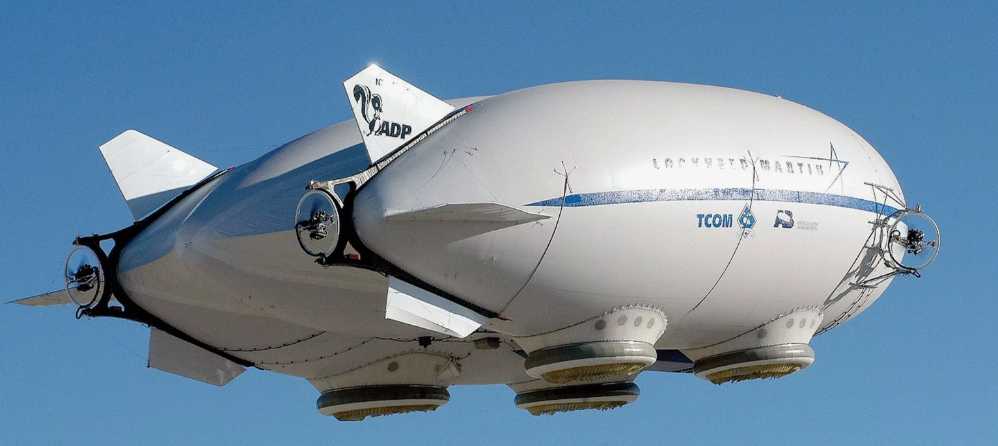
After the breakthrough in design concepts and technical means, the new generation of airships is no longer limited to the traditional olive or cigar shape in terms of structural layout. There are also new concept schemes such as using multiple airbags, disc-shaped or annular airbags, and adding aircraft-style wings and engines, aiming to improve flight performance and usage functions. The P-791 airship developed by Lockheed Martin uses three airbags to form a large lifting body structure, while using the buoyancy and aerodynamic lift of the airbags. It has a heavier load than ordinary aircraft and faster speed than traditional airships. Northrop Grumman cooperated with the United Kingdom to develop the HAV-3 large airship with a double airbag structure, which also takes into account both load capacity and speed. Both of them participated in the bidding for the US Army’s "Long-endurance Multi-purpose Intelligence Vehicle" project at the beginning of this century. The requirements to be met include being able to work continuously at an altitude of 6 kilometers. 21 days, with manned and unmanned control capabilities, to perform reconnaissance, surveillance, intelligence gathering and beyond-line-of-sight communications. The U.S. Defense Advanced Research Projects Agency also took a fancy to this kind of airship + aircraft floating hybrid aircraft, and launched the "Walrus" project to develop a super-large transport airship that can carry 500-1000 tons, has a range of 22,000 kilometers and does not rely on airports, in order to improve the strategic air transport capabilities of the U.S. military. Although these two projects were later cancelled due to demand and funding issues, and both P-791 and HAV-3 were transferred to the civilian field, hybrid airships are still a new path worth exploring. The "Tmall" series of airships being developed by the British Advanced Technology Group combines hovercraft technology and can take off and land or even glide in various terrain environments.
In addition to pursuing faster and stronger performance, the performance of airships is also higher-flying into near-space. The so-called near-space usually refers to the distance from the earth’s surface from 20 kilometers to 100 kilometers. The area between kilometers is exactly between the upper limit of the flight altitude of general aircraft and the lower limit of the orbital altitude of spacecraft, spanning the stratosphere, mesosphere and higher atmospheric space from low to high. Based on the strategic concept of integrated air and space operations, near-space is regarded by major countries as a "high frontier" that must be mastered. Since the thin air here is not conducive to the flight of conventional fighters, but the stable atmospheric environment is suitable for airships to cruise for a long time to make up for the shortcomings of aircraft and satellites, ultra-high-altitude airships have become the development focus in recent years.

The United States is developing hypersonic near-space aircraft with strong penetration capabilities, and is also guarding against the same type of aircraft from others. In addition to the need for anti-terrorism operations, the U.S. Missile Defense Agency, the Defense Advanced Research Projects Agency, and the Army, Navy, and Air Force have all proposed high-altitude early warning airship projects. The "High Altitude Sentinel" airship led by the U.S. Army Space and Missile Defense Command uses a technology that gradually expands and forms during the ascent, reducing ground operation costs. Its test boat once rose to an altitude of 20 kilometers and flew for 8 hours. The integrated sensor structure airship project in which Lockheed Martin participates is to deploy a phased array radar scanning array on the surface of the hull to conduct ground surveillance at high altitudes. The HALE-D demonstration airship of another high-altitude long-endurance project was put into test flight in 2011. The boat consists of a streamlined airbag and an X-shaped inflatable tail, with a special coating that resists high-altitude radiation and equipped with solar panels.
JP Aerospace and the US Air Force have a higher vision and are working together to build an inflatable space transfer station! This large "Dark Sky Station" will be suspended at an altitude of 42 kilometers for a long time. The "Climber" airship will be responsible for communication with the ground. Another "Orbital Climber" will rise from the sky station to an altitude of 50-60 kilometers. They all use a special V-shaped airbag structure to transport personnel and materials to perform various tasks. The "Climber" has been initially tested. Another high-altitude reconnaissance airship under development is small and can be launched into the air with cruise missiles. It can be pushed to an altitude of 30 kilometers after self-inflation, and it is more flexible in performing tasks.
Military aerostats have a long history and broad prospects, but they still have the uncertainty of "erratic". Its biggest advantage is the low cost of equipment and use, but it still faces many challenges in structure, materials, power, control and safety.