

As early as 2010, when Turkey announced that it would develop its own fifth-generation fighter, there was no lack of ridicule from the outside world that it was "drawing big cakes". Many years later, the full-scale models of Turkey’s fifth-generation aircraft frequently appeared at major air shows, and they attracted suspicious eyes of "only appearance". In November 2022, a video of the assembly of this fifth-generation aircraft was released, which made people feel that the rhythm was simply a cheerful "Turkish March", but can it really be played on the fifth-generation aircraft stage where many heroes compete?
From F-35’s partner to substitute
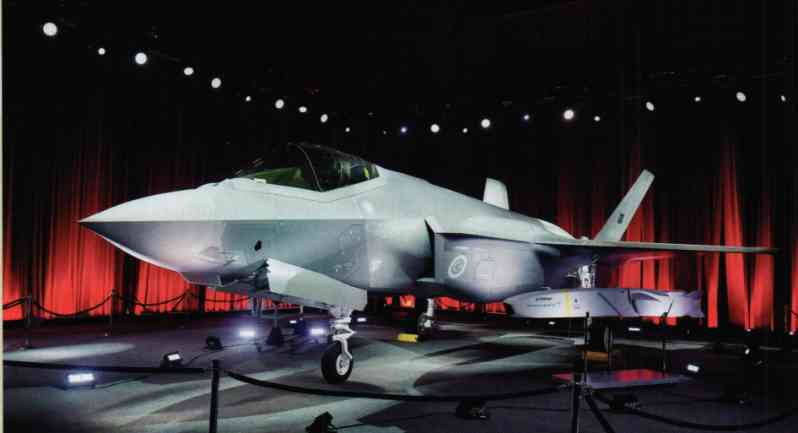
Tracing back to the source, Turkey’s fifth-generation aircraft is not a temporary impulse. As a regional power across the Eurasian continent, Turkey’s air power has always been good. As early as the 1980s, Turkey obtained authorization from the United States to produce and equip F-16 fighters in its own country. In the early stages of the development of the US F-35 Joint Strike Fighter, Turkey was also allowed to join and became one of the parts suppliers and purchasers. According to the plan, the Turkish Air Force will receive 100 F-35A aircraft from 2020, and the Navy will also be equipped with 12-20 F-35B aircraft while eliminating a number of old models. Due to the high price and limited number of F-35s, but the air force must maintain a sufficient scale, Turkey has the idea of developing another fifth-generation aircraft on its own.
The Turkish Air Force currently has about 240 F-16C/D and 40 F-4E fighters. Although the latter has been modernized, it has reached the end of its service life. Only 30 of the F-16s are the more advanced Block 50+ improved models, and the others are Block 30/40/50. The Turkish Air Force plans to retire the F-4E and F-16 Block 30 in the 2020s, and the F-16 Block 40/50 in the 2030s. The number of F-35s purchased is not enough to fill the gap, and the F-35 focuses on ground attack, so an advanced air superiority fighter is needed to cooperate with it to enhance air combat capabilities. It is expected that more than 250 such fighters will be equipped, forming a network-centric air force system with F-35, F-16, drones and Boeing 737 early warning aircraft. In addition, by developing its own new fighters, Turkey can further expand the strength of its aviation industry and its national defense independence, and obtain subsequent development funds through exports, and also enhance its international status.
Therefore, on December 15, 2010, the Turkish Defense Industry Executive Committee decided to design, develop and manufacture the next generation of air superiority fighters by itself, named TF-X (T stands for Turkey, F stands for fighter, and X stands for experimental). In August 2011, the Defense Industry Bureau, which is responsible for the procurement of weapons for the three armed forces, invested $20 million in start-up funds in the Turkish Aerospace Industries (TAI) for a two-year initial concept design. However, Turkey also knew that it could not handle such a high-end project on its own, so it began to seek foreign assistance at the start-up stage. In early 2013, the Turkish Prime Minister and President visited Sweden successively, which led to the establishment of a cooperative relationship between Saab, which started out as an aircraft manufacturer, and TAI, with Saab providing technical assistance to TAI, and TAI also having the option to purchase Saab’s related designs.
Soon, at the Turkish Defense Exhibition in May 2013, TAI displayed the conceptual design of three single-seat fifth-generation aircraft, all of which adopted a stealth-based body fusion mode. Among them, FX-1 is a twin-engine layout similar to the F-22, FX-5 is a single-engine layout similar to the F-16, and FX-6 is a single-engine canard layout similar to the Saab JAS 39, which highlights maneuverability. At the end of the conceptual design phase in September of that year, TAI submitted a design report, but the evaluation results were unsatisfactory, and the fate with Saab ended there. March 2015: The Turkish Defense Industry Bureau issued the project requirements for TF-X, and TAI was the only domestic company capable of winning the bid. The signing of the contract between the two parties on August 5 of the following year marked the official start of the development project. In order to avoid detours, Turkey continued to seek partners, and there were many European and American aviation giants on the candidate list.
After some investigation, Turkey invited British military giant BAE Systems to join in December 2015. In January 2017, during British Prime Minister Theresa May’s visit to Turkey, TAI and BAE signed an agreement to jointly develop TF-X, involving an amount of 100 million pounds. In addition to BAE’s design and engineering assistance, the UK will also issue an export license to facilitate the export of required technologies, products and software to Turkey. At this time, the basic design of TF-X was also finalized as a twin-engine layout. Judging from the model displayed at the time, a lot of optimization and improvements were made on the basis of the original FX-1, and the overall performance was better than the single-engine layout.
Seeing that TF-X was on the right track, there were unexpected changes on the F-35 side. In 2017, Turkey decided to purchase Russia’s S-400 air defense missile system. After the United States’ opposition failed, it simply kicked it out of the F-35 circle, but Turkey’s demand for fifth-generation aircraft is realistic and urgent. Looking around, Greece, which has territorial disputes with it, is equipped with newer F-16Vs and will also purchase France’s "Rafale" and F-35s, while Israel’s F-35s are already in service, and even Egypt has "Rafale". So after the F-35, which was originally going to be a partner, was forced out, Turkey could only let TF-X take the place of the substitute, and it had to be independent.
The dispute between localization and internationalization
TF-X has been labeled as a "national fighter" since the beginning of the project, demonstrating Turkey’s ambition and determination to develop advanced equipment "based on itself". There was news that Turkey had successively approached South Korea, Brazil, Indonesia and Pakistan and other countries to cooperate in the fifth-generation aircraft project, but there was no follow-up, and the participation of Saab and BAE was only an assisting role. Even before the S-400 incident, the United States put pressure on Turkey to give up TF-X, otherwise it would affect its participation in the F-35, but Turkey remained unmoved.
In order to realize the localization of research and development, after the TF-X project contract was signed in 2016, TAI, as the main contractor, was responsible for the overall design and received a large amount of government funding for technology introduction, infrastructure construction, system testing and certification. The development of the aircraft’s avionics equipment computer hardware and software, power control, information processing and other subsystems were also subcontracted to domestic companies and scientific research institutions with close ties to the military in Turkey. For example, ASELSAN Electronics Industry is responsible for developing active phased array radars based on gallium nitride technology. External assistance is naturally indispensable. It is said that TAI has organized more than 1,300 engineers to invest in the TF-X project, and BAE of the United Kingdom has sent more than 100 people to provide assistance. The design and manufacturing software comes from Dassault of France and Siemens of Germany, and wind tunnel tests are carried out in the United Kingdom and the United States. TAI has also specially introduced a complete set of product life cycle management platforms, using digital mapping technology to simultaneously establish virtual models in physical development, allowing all participants to design, manufacture and manage through the same data platform, thereby simplifying the process and improving efficiency.
As for the engine, the "heart" of TF-X, the situation is even more complicated. Turkey also hopes that the engine will be produced domestically, and has extended cooperation invitations to major aviation power companies. In 2015, the German-based Eurojet reached a technology transfer agreement with Turkey to develop an improved model based on the EJ200 turbofan engine used in the European "Typhoon" fighter, as well as the corresponding control and maintenance systems. However, Turkey soon fell in love with something else, preferring the Pratt & Whitney F135 engine equipped with the F-35, but it was subject to export restrictions by the United States, and as a second choice, it took a fancy to the General Electric F110-132 on the latest modification of the F-16. When Turkey introduced the F-16, TAI and General Electric jointly established Tuss Engine Industries (TEI) to produce early models of the F110, and had accumulated experience, but the United States did not give in to this. Because it is difficult to obtain advanced engines with high thrust, TF-X chose a twin-engine layout to ensure that the fifth-generation aircraft indicators such as supersonic cruise can be achieved when the single-engine thrust is low.
By 2017, Turkey’s Kehl Group and the UK’s Rolls-Royce established an aviation engine joint venture with the intention of participating in the TF-X project. Another competitor is TRMotor Power Systems, which was jointly established by Turkey’s BMC Vehicle Company and TEI. Because Turkey has always insisted on localization first, and the United States and the United Kingdom are unwilling to relax on issues involving sensitive technology transfer and intellectual property ownership, the negotiations on engine cooperation have been deadlocked for a long time. Later, TEI proposed a compromise and suggested that the F110 engine with mature technology and domestic production experience be used first to equip the initial production of TF-X until domestic companies come up with domestic engines. It is reported that General Electric has delivered 10 F110-129 engines to Turkey, which will be used in the prototype of TF-X. Rolls-Royce has also restarted its cooperation with Turkey, and the bidding for domestic engines is underway.
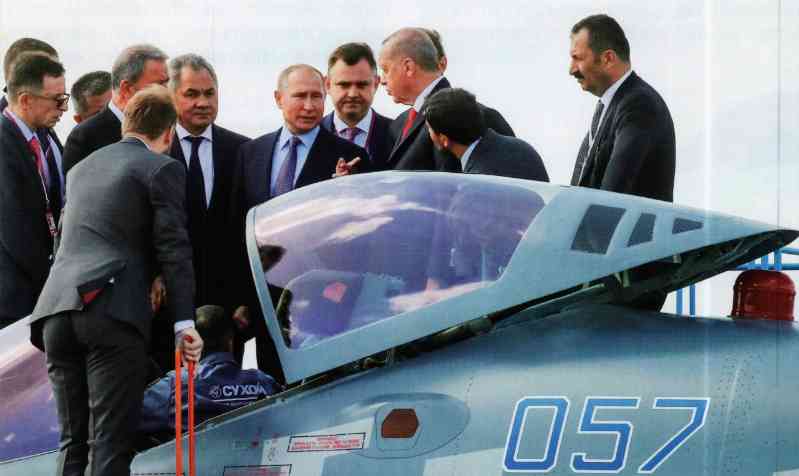
How can Russia be absent from this international game? At the 2018 Turkey Eurasia Air Show, the Russian State Technology Group and the United Engine Corporation expressed interest in participating in the TF-X project. Turkey has not considered the possibility of adding another "friend". At the 2019 Moscow Air Show, Turkish President Erdogan and Russian President Putin visited the Su-57 stealth fighter with great interest and even talked about the prospects of purchasing. However, there is no sign of actual cooperation between the two sides on TF-X. On the one hand, Turkey insists on autonomy, and on the other hand, Russia is deeply trapped in Western sanctions. Turkey has also offended the United States because of the S-400 incident. If there are too many connections, it may be more difficult for Turkey to obtain technical support from the West. In addition, Russia’s production capacity for fifth-generation aircraft and engines is limited, and it is not enough for its own use, let alone to satisfy the appetite of the military. In short, it will obviously not be smooth sailing for TF-X to be localized under international cooperation.
Hidden changes in the plan
Although the outside world is like a fog over TF-X, Turkey has made a plan for the project. Since the conceptual design stage from 2011 to 2013, although there has been a stagnation in the introduction of technical cooperation, the development progress of TF-X has been promoted since 2016. According to the project schedule revealed by the Turkish side, the first step of the first phase is to start the preliminary design of the aircraft, complete the system requirements and functional review by the end of 2022, and then carry out engine research. The second step of the first phase includes key design and review, as well as testing and certification of prototypes until 2029. The second phase is to start the production of the initial model from 2029 and deliver it to the Air Force from 2030 to 2033. The third phase is to carry out mass production and formal service from 2034 to 2040. TF-X is expected to be used until the 2070s, and the entire project will cost tens of billions of dollars.
In recent years, Turkey has displayed the physical model of TF-X in a number of international air shows. This sleek model is quite similar to the F-22, and also adopts the conventional layout of twin-engine configuration, air intake on both sides and V-shaped vertical tail, with features such as wing-body fusion and built-in bomb bay to reduce detectability. This reflects the original design intention as an air superiority fighter, but it also claims to be able to perform multiple tasks. Among the airborne weapons displayed at the same time, there are many air-to-air and air-to-ground missiles and guided bombs, which obviously take into account the functions of F-35. According to official instructions, the TF-X has a wingspan of 14 meters, a fuselage length of 21 meters, and a height of 6 meters, which is slightly larger than the F-22. The thrust of its engine is 120 kN, the maximum flight speed is Mach 1.8, the practical ceiling is 16,800 meters, the maximum overload is +9g/-3.5g, and the maximum take-off weight is about 27 tons. The full-scale model of TF-X shows off, which means that the development project has made phased progress and the main design features have been determined. The frequent exposure is aimed at attracting the interest of potential partners and buyers, and even secretly challenging the United States. However, the model is just a decoration after all, and there is still doubt about how much difference there is between it and the actual finished product. For example, how much impact will the setting of the air intake have on the stealth effect; how is the performance of the airborne radar and electronic equipment; to what extent is the controllability and maneuverability; how much actual load and range can be, etc., all failed to provide convincing answers. In particular, the engine has not yet been finalized. Even if the F110 has been selected for the prototype, if the subsequent mass-produced engine is different, many related subsystems and even the fuselage structure may have to be modified, which will inevitably affect the progress of the plan.
No matter how much doubt there is from the outside world, TF-X has not stopped at PPT and models. In November 2021, TAI announced that it had manufactured the first structural component of the aircraft, and more than 20,000 components could be completed within a year. By the end of November 2022, TAI held a launching ceremony for the TF-X production line, where the nose, cockpit and wing of the first prototype had been assembled. To use a Chinese saying, the eight characters have been completed. According to the plan, TAI will first complete three prototypes, realize the first flight in 2025, and then develop a two-seater version-"Turkish March" seems to be going smoothly.
March or Rhapsody
It is worth noting that on TAI’s official website, TF-X is positioned as a "fifth generation +" multi-purpose fighter. It must not only have the fifth-generation aircraft standard features such as stealth and supersonic cruise, but also enhance the all-round situational awareness and beyond-visual-range air-to-ground precision strike capabilities. It is equipped with an intelligent cockpit supported by A1 and neural networks, and is highly integrated with other fighters and drones through encrypted data links to achieve systemized combat... In short, all performance is only high, not low. It is not difficult to see that Turkey hopes to drive the entire aviation industry of its country to achieve cross-generational development through such a large-scale high-end project as TF-X, and TAI has said that it will use this to rank among the top ten in the global aviation industry.
It should be said that Turkey has a certain confidence in doing such a "tough job". Due to its long-term good relations with the West, Turkey can not only obtain more advanced military aircraft, but also participate in the manufacturing of parts, assembly of complete aircraft and upgrading and improvement. The supporting avionics systems, functional pods, airborne weapons and aircraft engines have also formed a certain industrial scale.
However, the fifth-generation aircraft at the forefront of the industry requires a complete system support from design, manufacturing to use, including technology accumulation, talent resources, infrastructure, supply chain and capital investment. Although the threshold of some high-tech fields has dropped with the globalization and diffusion of advanced technology, even traditional European aviation powers such as Britain, France and Germany have to work together to develop a new generation of fighters to share technology and investment risks. Developed economies such as Japan and South Korea also need foreign aid to test the fifth-generation aircraft. On the other hand, Turkey has no experience in independently developing third- and fourth-generation fighters, and its industrial system is not yet complete. It is difficult to get rid of external dependence. If it wants to directly overtake and step onto the fifth-generation aircraft stage, it will probably only turn the march into a self-indulgent rhapsody.
Moreover, TF-X, which will last for decades, is not just a military project. In addition to technology, it also involves politics, diplomacy and economy. From the beginning of the project, the national leadership needs to make forward-looking decisions and promote it, and come forward to attract foreign partners to ensure the continued implementation of the plan in terms of policies and funds. Turkey’s internal political situation is turbulent from time to time, and its relations with the West are also ups and downs, so it is inevitable that it will be stuck. In addition, the economic downturn and talent loss in recent years make the prospects of TF-X difficult to be optimistic.
A more realistic possibility is that what is being assembled is just an X--test aircraft, which will serve as a technical test platform to lay the foundation for the real domestic fifth-generation aircraft. Another analysis pointed out that the current TF-X is better to follow the example of South Korea’s KF-21, reduce performance indicators under the condition of insufficient technical capabilities, and first build a fourth-generation and a half fighter to enter the practical stage as soon as possible. In any case, to develop cutting-edge equipment, only by establishing a solid industrial foundation and independently mastering core technologies can this complex project be successful.