
"Weapons Acquisition Management Office" and "Lingyun Office"
In addition to personnel training, project management is another major challenge for the Taiwan Air Force. In the previous "Shen Ou" project of purchasing the Grumman S-2T "Turbine Chaser" anti-submarine aircraft upgrade kit, the Taiwan Air Force, which was the first to independently build and manage the project, had a great negative impact on the progress of the entire project due to its lack of experience and poor business capabilities. For example, because the planning and management personnel underestimated the cost of the upgrade and modification kit, the original project planned to purchase 32 anti-submarine aircraft had to be reduced to 26; the equipment from different manufacturers lacked overall planning, resulting in a large number of reliability problems after installation, which made the front-line troops’ mission attendance rate low and seriously affected the mission capability.
"Weapons Acquisition Management Office" originated from the "Anxiang Plan"
Taking the "Shen Ou" case as a precedent, the Taiwan "Air Force Headquarters" decided to directly manage the project performance work with the headquarters’ "Weapons Acquisition Office" at the beginning of the "Phoenix Project". The Taiwan Air Force’s "Weapons and Acquisition Office" was established on March 1, 1992. Its predecessor was the "Anxiang Project" Management Office established on September 1, 1983, which was specifically responsible for the "High-Performance Self-Made Fighter" (the project later developed into the F-CK-1 "Jingguo" fighter) plan.
The "Weapons and Acquisition Office" was established in accordance with the command structure of the Taiwan Air Force and referenced the US Air Force’s weapons procurement management process. It is directly under the management of the Taiwan "Air Force Headquarters". The "Weapons and Acquisition Office" has 1 director (lieutenant general rank), 1 executive director, and 2 deputy executive directors (1 in charge of business, 1 in charge of logistics, both with the rank of major general). In the early stage, it had 6 departments and offices, including the planning management group, combat requirements group, test and evaluation group, system engineering group, logistics support group, and support management group (later the "military reorganization group" was added), each headed by a colonel.
On February 1, 1993, the "Weapons Acquisition Office" was ordered by the Commander-in-Chief of the Taiwan Air Force to set up the "Phoenix Project" office responsible for F-16A/B procurement, with Cai Shengfeng as the team leader; the "Flying Dragon Project" office responsible for the "Mirage" 2000 procurement, with Xiong Xiangtai as the team leader; the "Eagle Project" office responsible for the "King Kuo" procurement, with Cai Delong as the team leader; the "Eagle Eye Project" office responsible for the E-2T procurement, with Tian Zaiming as the team leader; and a logistics reorganization team with Zhai Zhongjun as the team leader. The above project offices and the overseas supervision representatives are jointly responsible for the contract performance of various self-made and purchased weapons projects. Every quarter, the "Weapons Acquisition Office" summarizes the progress and risks of each project, and regularly holds military preparation meetings, which are attended by the Commander-in-Chief of the Taiwan Air Force. From July 1993 to 1999, a total of 22 quarterly military preparation meetings were held. times.
On September 1, 1994, Shen Yiming, former operations chief of the Taiwan Air Force Test and Evaluation Team, was officially transferred to the deputy head of the Operational Requirements Group of the "Weaponry and Acquisition Office". Shen Yiming was previously a seed instructor for the first batch of combat test and evaluation of the "Jingguo" fighter. Later, he went to the United States in 1993 and passed the F-16 test pilot qualification. In May 1996, Shen Ming served as the leader of the first batch of seed instructors of the Taiwan Air Force to France to replace the "Mirage" 2000 fighter jets, becoming the only pilot in the Taiwan Air Force with the qualification of seed instructors for three types of second-generation main fighter jets.
On June 16, 2000, according to the plan of the "Lean and Real Project", the "Weaponry Office" was officially disbanded, and its subordinate offices were reorganized into four parts: the project management group, the test and evaluation group, the combat power demand group, and the system support group, and were incorporated into the management of the Taiwan Air Force’s "Headquarters Planning Department". In more than 8 years, the "Weaponry Office" has gone through four directors, Ding Dianbin, Huang Rongde, Zhou Wenchong, and Shi Jimin, and has successively completed the "Eagle Project", "Eagle Eye Project", "Phoenix Project" and "Flying Dragon Project" on schedule, according to quality, and according to budget requirements, completing the construction of the Taiwan Air Force’s "second-generation force".
Overview of the overall situation of the "Second Generation Aircraft Formation Management Committee"
The scale of the "Second Generation Force Reconstruction" plan of the Taiwan Air Force is huge. The "Eagle Plan", "Phoenix Project" and "Flying Dragon Project" alone involve the replacement of most of the active fighters. Therefore, the Commander-in-Chief of the Taiwan Air Force, Tang Fei, decided to personally participate in the project management at the headquarters level.
On January 15, 1993, the Taiwan Air Force Headquarters formally established the "Second Generation Aircraft Formation Management Committee" (hereinafter referred to as the "Formation Management Committee"), with the Taiwan Air Force "Commander-in-Chief Tang Fei as Chairman, "Deputy Commander-in-Chief" Sun Ping and Xu Mingchang as Chairmen, "Chief of Staff" Qi Zhengwen as Executive Committee Member, and the first director of the "Weaponry Office" Ding Dianbin, two Taiwan Air Force "Headquarters Chiefs of Staff" and six group leaders of the "Weaponry Office" as Committee Members. In dealing with the second-generation force reorganization, the "Army Reorganization Management Committee" has the right to directly control the "Army Reorganization Office", and the "Army Reorganization Office" has the right to control the six departments (bureaus) under the Taiwan Air Force Headquarters, including personnel, intelligence, operations, logistics, communications and electronics, planning and accounting.
Lingyun Office
On April 2, 1993, the Taiwan Air Force Headquarters was ordered to establish a 5-person "Army Reorganization Plan Control Group" under the Operations Department Training Group, also known as the "Lingyun Office", responsible for coordinating the "Army Reorganization Office", "Army Reorganization Management Committee" and the various departments of the Taiwan Air Force Headquarters to manage the specific operations of each project fighter aircraft reorganization. At this time, the specific staffing of the "Lingyun Office" was as follows: Team leader Li Zhenzhi; "Phoenix Project" planning officer Huang Qinghong; "Flying Dragon Project" planning officer Zhao Jiliang; "Eagle Eye Project" planning officer Zhang Wenshuo; "Eagle Yang Project" planning officer Long Xiaoxian. Due to insufficient staffing, the "Lingyun Office" did not operate smoothly in its early stages, and many military preparation businesses were warned by their American and French partners due to significant delays in progress. After discussion, the Taiwan Air Force Headquarters decided to follow the successful experience of the US military in forming a "special staff formation" (TaskForce) during the development of new fighter jets, which was responsible for the integration of new aircraft military planning operations. On August 1, 1993, the "Lingyun Office" was greatly expanded. The expanded "Lingyun Office" became the same level as the "Wuhu Office". The unit is under the control of the "Army Management Committee" and has the right to mobilize the six departments (bureaus) of the Taiwan Air Force Headquarters. The specific personnel of the "Lingyun Office" after the expansion are as follows: Director Li Zhenzhi; Deputy Director Wang Murong; "Phoenix Project" reorganization group planning officer Huang Qinghong; "Flying Dragon Project" reorganization group planning officers Zhao Jiliang and Li Weian; "Eagle Eye Project" reorganization group planning officers Long Xiaoxian and Huang Jiansheng; "Eagle Project" reorganization group planning officers Yue Mu and Chen Qiqing; Logistics Planning Officer Lin Huasheng; Electronic Warfare System Planning Officers Hu Yannian and Xu Siyao; Simulator Planning Officer Li Guoding; Facility Planning Officer Wang Xianrong Information Planning Officer Li Dongling; Information Operations Officers Hu Shujuan, Dong Ningning, Zeng Yani, Zhang Zhihui "Wuhuo Office" Logistics Support Group Personnel include: Team Leader Zhai Zhongjun, Deputy Team Leaders Hao Xidong, Wang Cuijian, etc.
In addition, the Air Force Operations Command, Logistics Command, Air Force Academy, the 443rd, 499th, 427th, 455th, 401st, 439th Wings scheduled to be equipped with new fighters, and the 737th and 828th Wings responsible for personnel training have successively established project management offices directly under the "Lingyun Office" to be responsible for the management of the formation of each unit.
In order to improve efficiency, the "Lingyun Office" holds a "Lingyun Weekly Meeting" every week, and adopts a joint office method of communication and problem solving by various reorganization groups and unit project management offices. For topics that cannot be agreed upon at the weekly meeting, the office will submit them to the "Forming Army Management Committee" Deputy Chief of Staff for a decision at the "Lingyun Biweekly Meeting" every two weeks. For issues that cannot be resolved at the biweekly meeting, the office will hold "Lingyun Monthly Meetings" from time to time to submit them to the "Forming Army Management Committee Deputy Commander-in-Chief of the Air Force for a decision. In order to effectively grasp the progress of the project, Taiwan Air Force Commander-in-Chief Tang Fei will attend the "Lingyun Quarterly Meeting" every quarter and personally decide on major matters.
The "Lingyun Office" is well-organized and efficient, but there are also some problems. For example, after the second US-Taiwan meeting on the "Phoenix Project" was held in November 1993, the US representative complained that the Taiwan Air Force personnel who participated in the talks were "quite unfamiliar" with the project. The Taiwan Air Force only then discovered that this was because the personnel of the "Lingyun Office" were transferred too frequently. After the original person in charge left, the new operator was not familiar with the business, which led to delays in the negotiation process. After review, the Taiwan Air Force Headquarters adopted a special personnel system, stipulating that the personnel transfer of the "Lingyun Office" must be reported to the Army Formation Management Committee for approval to stabilize the business team.
As the four major "second-generation force reconstruction projects gradually got on track, the "Lingyun Office" was officially disbanded in December 1995. On January 1, 1996, it was merged with the various project offices under the "Military Acquisition Office" to become the newly established "Army Formation Preparation Group" within its organization. The first group leader Zhang Nianhua continued to be responsible for the management of project fulfillment and troop formation.
The "Phoenix Project" contract performance progress
The "Phoenix Project" is a huge project, and it is the second largest foreign military procurement project of the Taiwan Air Force to date (the largest project is the F-16V fighter jet procurement project approved in 2019). Therefore, the supervision of the performance of its main contract and the signing and performance of sub-contracts have become one of the most concerned issues of the Taiwan Air Force Headquarters
Factory supervision and project management
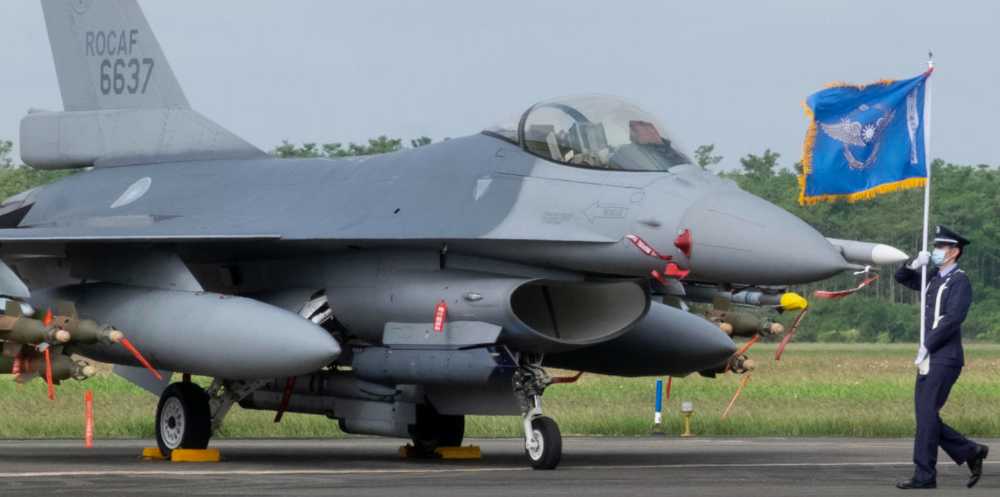
In order to ensure the production quality of the F-16A/B fighter jets, the Taiwan Air Force has sent factory representatives to the original Lockheed Martin factory, the Ogden Air Force Equipment Center of the US Army, and the F-16 Project Office in three batches. The representatives of the F-16 Project Office of the US Air Force include Zhang Yiwen, Cai Delong, Cai Shengfeng and others. The group is specifically responsible for coordinating with the US Air Force F-16 project management team, and is generally responsible for project progress and budget risk control. Representatives stationed at Lockheed Martin’s Fort Worth plant in Texas include Zhou Zhuming, Wang Xinghan, Chen Zhirong and others. The group is specifically responsible for coordinating with the US Air Force and the main contractor Lockheed Martin, integrating control systems, improving flight control software, and controlling the production status of aircraft and subsystems.
Representatives stationed at the Ogden Equipment Center include Cui Renjun, Yu Qixing, Wu Sizhong and others. The group is responsible for the procurement and management of logistics support systems, spare parts, and logistics technical regulations.
In order to communicate project matters in a timely manner, the Taiwan Air Force and the US side agreed to hold a "Planning Management Review Meeting" and an "Overall Logistics Support Assessment Review Meeting" every six months. The main topic of the former was the progress of the F-16 project contract plan and base deployment plan. From 1993 to 2000, a total of 15 meetings were held; the main topic of the latter was the overall support capability assessment of the Taiwan Air Force F-16 fighter project. From 1995 to 1999, a total of 10 meetings were held.
F-16A/B production and delivery In July 1996, the first batch of F-16A/B fighters began to be delivered to the Taiwan Air Force. On July 25, Lockheed Martin held a delivery ceremony at its factory in Fort Worth, Texas, announcing the official delivery of the first single-seat F-16A fighter with the number 6601.
It should be pointed out that all completed F-16A/Bs are responsible for factory test flights by the US Air Force, and can only be received by Taiwan representatives after meeting the acceptance standards. The first two aircraft (one A-type and one B-type) were not returned to Taiwan Island immediately, but remained at Edwards Air Force Base in California for avionics and flight control software testing. The first batch of 18 aircraft (10 A-type and 8 B-type) were handed over to the training unit at Luke Air Force Base for training seed instructors. The 120 F-16A and 30 F-16B purchased under the "Peace Phoenix" program were returned to Taiwan Island in batches of 4 to 6 aircraft from April 1997, and all acceptance operations were completed in November 1999. 12 F-16A and 2 F-16B remained at Luke Air Force Base after delivery, for use by the Taiwan Air Force in future tactical training in the United States.
Delivery of spare parts and auxiliary equipment for F-16A/B
In addition to the 150 F-16A/B fighters themselves, the Taiwan Air Force has also specially compiled a large number of contracts for the purchase of spare parts, auxiliary equipment and warranty services required for the fighters in the "Phoenix Project". Here are a few of them.
1.F-100-PW-220 turbofan engine: The "Phoenix Project" purchased a total of 166 engines (including spare engines) for F-16AB, and all of these engines were delivered from January 1997 to November 1999.
2.Flight control system software: In order to meet the special needs of the Taiwan Air Force F-16A/B, Lockheed Martin made certain modifications to the aircraft’s analog fly-by-wire control system, which was divided into 4 stages. Before each stage of software modification, the engineering team will jointly decide on the modification matters with the US military test flight team and the Taiwan Air Force human-machine interface project team, and then conduct 2 reviews. The first review proposes a modification plan and verifies the specific concept on the simulator. The second review is submitted to the project management unit for approval after the test pilot representatives of both sides (the Taiwan representative is Chang Shiwei, the captain of the Air Force Evaluation Team) agree.
Due to the tight schedule of flight control software development, the work efficiency of the engineering team, representatives of both sides and project management units is very high. For example, the US team sent a fax of modification plan to Taiwan’s "Weaponry Office" on December 15, 1994 (Thursday), asking whether it agreed to include a higher-priced and better-performing program in the software, and the reply deadline was the 20th of that month. The "Lingyun Office" that received the fax decided to agree to include it on the 15th; on the 16th, it convened a meeting of the engineering team and the human-machine interface project team in Taiwan to decide on the final modification matters; on the 19th (Monday), it convened a meeting of the Military Management Committee, and after obtaining the approval of the Commander-in-Chief of the Taiwan Air Force, it called back to the US representative.
3. Mission Planning System: At the end of February 1994, the US proposed to sell the Mission Support System (AFMSS) to the Taiwan Air Force. The system includes the Graphics Generation System (CMPS) and the Mission Planning System (MPS), and asked for a reply before April 15. After the decision, the "Military Management Committee" decided to purchase 10 sets of the system.
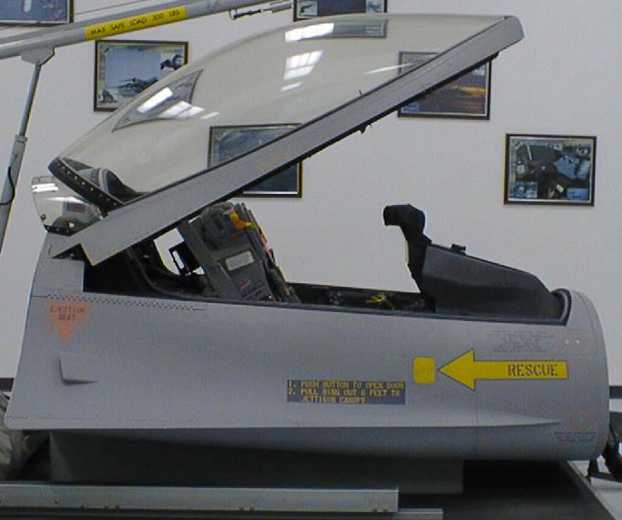
4. Training simulators: The Phoenix Project ordered a total of 2 sets of full-function tactical simulators (FMTS) and 8 sets of unit training simulators (2 of which were placed at Luke Base) from CAE-Link (later merged into Hughes) of the United States, and other advanced pilot simulator training systems. In addition, the Taiwan Air Force also ordered 1 set of simulators for escape, ordnance, electrical, environmental control, gas and hydraulic, flight control, fire control, communication and navigation, and electronic warfare system maintenance, as well as 2 sets of fuel trainers, 1 physical engine for maintenance training, and a large number of ground training equipment.
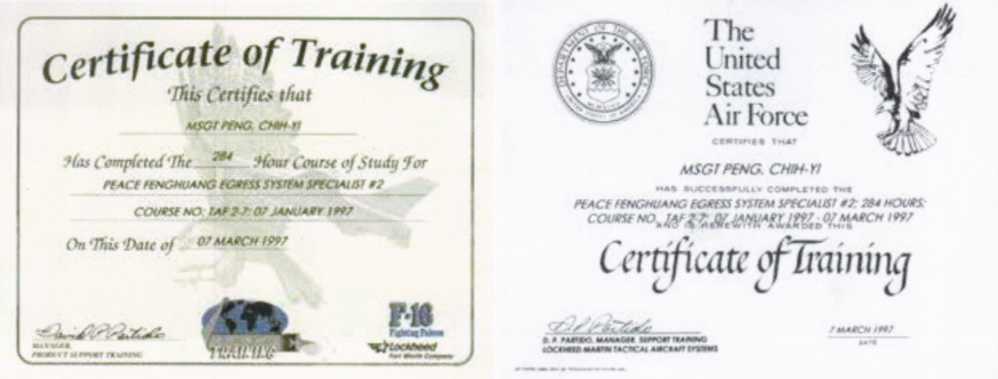
5. Logistics support technical guidance and information: From February 1996 to May 2006, the F-16AB fighters and their associated weapons, equipment, and technical maintenance information purchased by the "Peace Phoenix" project were successively delivered to the Taiwan Air Force. In order to help ground crews form maintenance capabilities early, the Taiwan Air Force In 2001, the first batch of seven American contractors were hired, belonging to seven different specialties, including machinery, avionics, engines, and electronic warfare systems; from 1999 to 2000, four foreign contractors were hired. Since 2001, the Taiwan Air Force has completed the training of ground crew members and started to independently perform maintenance operations in Taiwan.
Delivery of F-16A/B fighter weapons and avionics equipment
In order to ensure that the fighters can perform combat missions efficiently after they are formed, the Taiwan Air Force has planned a large number of budgets for electronic warfare systems and air-to-air weapons in the "Phoenix Project". Here are a few of them briefly listed, 1. AIM-7M "Sparrow" and AIM9M "Sidewinder" missiles: In the initial negotiations, the US only agreed to sell 600 AIM-7M "Sparrow" semi-active radar-guided air-to-air missiles and 900 older AIM-7M "Sparrow" semi-active radar-guided air-to-air missiles and 900 older AIM-7M "Sparrow" semi-active radar-guided air-to-air missiles to Taiwan. AIM-9S "Sidewinder" infrared-guided combat missile. Stimulated by France’s sale of "Magic II" infrared-guided air-to-air missiles to Taiwan, and with the strong demands of Taiwan’s negotiating representatives, the United States finally agreed to replace all AIM-9S with the newer AIM-9M.
2. Forward-looking infrared navigation and laser guidance pods: In 1998, the United States agreed to sell 28 sets of AAQ.13 "Pathfinder" forward-looking infrared navigation pods and the same number of AAQ-14 "Sharpshooters" laser guidance pods along with the "Phoenix Project" to increase the night attack and navigation capabilities of the Taiwan Air Force F-16A/B fleet. Except for two of these pods that remained in the United States for the "Bosheng Project" test purpose, all the rest completed the acceptance operation in 2002. On June 7, 2000, the US government agreed to sell the second batch of 39 The US originally planned to sell the older ALR-69 radar warning receivers and ALE-40 strip/flare launchers to the Taiwan Air Force. "The negotiation team of Lingyun Office took advantage of the opportunity of France selling the Mirage 2000 with advanced electronic warfare system to Taiwan to persuade the US to finally agree to sell the newer ALR-56M radar warning receiver and ALE-47 chaff/flare launcher with the same specifications as the new equipment of the US military.
3. Airborne electronic warfare system: The US originally planned to sell the older ALR-69 radar warning receivers and ALE-40 chaff/flare launchers to the Taiwan Air Force. "The negotiation team of Lingyun’s office took advantage of the opportunity of France selling the Mirage 2000 with advanced electronic warfare systems to Taiwan to persuade the US to finally agree to sell the newer ALR-56M radar warning receivers and ALE-47 chaff/flare launchers of the same specifications as the new equipment of the US military.
82 ventral electronic warfare pods were also sold along with the F-16A/B. In early November 1993, the US proposed that the Taiwan Air Force could choose from the Westinghouse Electric AN/ALO-131 and Raytheon AN/ALO-184(V)7 electronic warfare pods currently in service in the US military, with a deadline of March 31, 1994 for a reply. Taiwan Air Force "Commander-in-Chief Tang Fei" decided to set up a special independent review team in the "Lingyun Office" to conduct the selection work, so as to eliminate the influence of manufacturers’ interests and lobbying to the greatest extent possible. On March 28, 1994, the review team decided that the Leisheng plan won, and sealed the selection results and report in a confidential document bag, ready to unseal and inform the US side three days later.
Unexpectedly, on March 29, the Taiwan Air Force Headquarters suddenly received a telegram from the Taiwan "Ministry of National Defense": "A certain ’legislator’ reported to the ’General Political Warfare Department’ that your army’s electronic warfare British cabin option evaluation report was detrimental to the interests of Westinghouse Company. Please immediately stop the subsequent procurement operations for investigation. The experienced Tang Fei immediately realized that this was because the middleman with a vested interest in Westinghouse Company had learned the content of the review team’s report in advance, so he took the initiative to try to "turn the tables". Tang Fei immediately contacted the "Chief of Staff" Liu Heqian, and after obtaining the other party’s consent, he unsealed the selection documents in advance and informed the US side of the review results, so that the case could be smoothly advanced as scheduled.
This powerful "legislator" saw that there was no hope of "turning the tables", so he reported to the "Control Yuan" that the selection of electronic warfare pods was irregular. After investigation by the "Control Yuan" team, no irregularities were found. All 82 sets of AN/ALQ-184(V)7 pods were delivered between January 1997 and September 1998. Except for two that remained at Luke Air Force Base for testing and training, the remaining 80 sets were allocated to combat troops. The reconstruction of the F-16A/B fighter base The Taiwan Air Force Headquarters planned to build the 4th Squadron of the 455th Wing at Chiayi Air Force Base and the 4th Squadron at Hualien Air Force Base. The 5th Squadron of the 401st Wing (the 5th Squadron is currently stationed at Taoyuan Air Force Base and is scheduled to exchange its station with the 8th Squadron of the Eastern Air Force Command in Hualien in July 1998) is the receiving unit for the F-16A/B. Since both bases are designed to accommodate the "Zhongzheng" fighter, they must be modified accordingly.
For the Chiayi Air Force Base, it is expected to renovate and expand the training classroom, 3 squadron operations rooms, simulator room, aviation material warehouse, missile warehouse, avionics system maintenance factory, rocket fuel factory (for the emergency power system of F-16), T-10 silencer test shed, engine maintenance factory, runway and taxiway renovation, etc. 19 items. For the Hualien Air Force Base, it involves the renovation and expansion of 3 squadron operations rooms, simulator room, aviation material warehouse, missile warehouse, avionics system maintenance factory, rocket fuel factory, T-10 silencer test shed, engine maintenance factory, runway and taxiway renovation, etc. 17 Item.
In March 1993, the United States and Taiwan preliminarily agreed on the content of the F-16 fighter base reconstruction project, which included 19 bases in Chiayi and 17 bases in Hualien. The Taiwan Air Force Facility Project Unit was originally scheduled to submit 36 facility blueprints to the United States for review in June of the same year, but due to various reasons, it was delayed until September and still could not be finalized. The "Lingyun Office" adopted a departmental office and all staff worked overtime to complete the blueprint plan in October, and conducted on-site inspections of the two bases with US representatives in January of the following year. In March 1994, the US F-16 The project office suddenly called Taiwan’s "Weapons and Acquisition Office" and said that the project base renovation project had been classified as "high risk" and there was a possibility of major delays and losses. The surprised "Weapons and Acquisition Office" inquired with the blueprint drawing personnel and learned that the US side had never provided the necessary information such as the blueprint design specifications of the F-16 fighter base facilities, so it explained the situation to the US side at the routine plan management review meeting held in April 1994. In addition to apologizing in person, the US Air Force Assistant Secretary who attended the meeting also immediately instructed the US Air Force Project Office to correct the negligence within 1 month. In May 1994, the US technical representative once again went to Taiwan with a full set of technical specifications, and reviewed the blueprint plans one by one with the "Lingyun Office" facility project team, and conducted another on-site survey of the base to ensure the construction quality.
The original total budget of the Phoenix Project in 1993 was NT$157.96829 billion. Later, due to exchange rate fluctuations, the purchase of additional airborne GPS systems and AIM-120 "Advanced Medium-Range Air-to-Air Missiles" (AMRAAM), the Taiwan Air Force Headquarters transferred an additional NT$4.4 billion in surplus funds from the "Flying Dragon Project", so the total budget increased to NT$162.357227 billion. As of June 2001, the payment of the military sales funds for the entire project was completed, and the actual expenditure of the Phoenix Project was NT$161.34105288 billion.