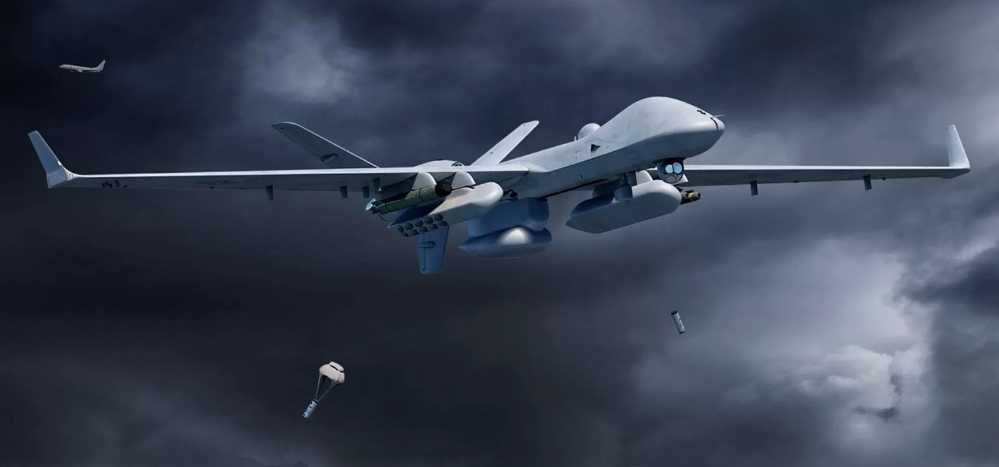

Today, the U.S. MQ-9 Reaper series of drones are already familiar to the world, including the MQ-9A Reaper, MQ.9B Sky Guardian and MQ-9B Sea Guardian, as well as the new Predator C shipborne drone. This series of drones was developed by General Atomics Aeronautical Systems (GA-ASI) in San Diego, California, and has a total flight time of more than 6 million hours. Among them, the MQ-9B Sea Guardian mainly performs maritime patrol and anti-submarine missions.
The "hound" with sensitive hearing
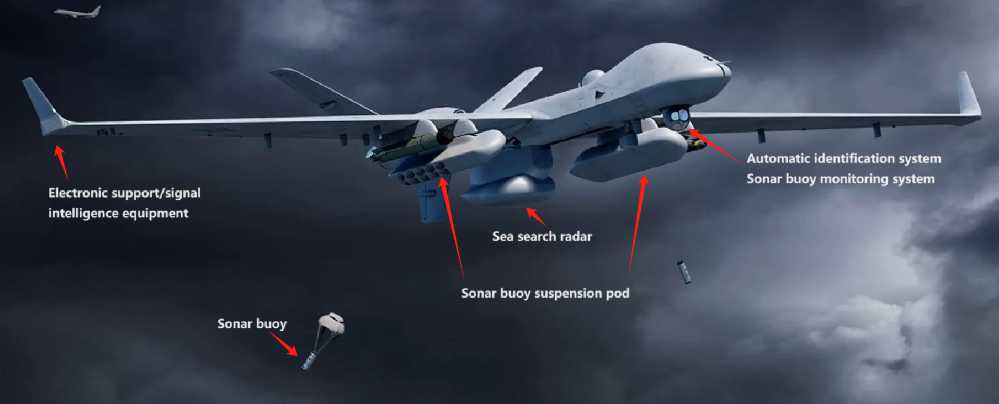
First, let’s talk about the latest integrated anti-submarine system developed by the United States. This system is mainly developed on the basis of various radio sonar buoys to equip unmanned anti-submarine aircraft. The US military plans to equip the MQ-9B "Sea Guardian" with some disposable radio sonar buoys, mainly including:
AN/SSQ-36B passive radio sonar buoy, mainly used to continuously measure the vertical distribution of water temperature in the upper seawater. The first deployment of ocean temperature measuring buoys is to collect hydrological data of relevant sea areas, evaluate the current seawater stratification temperature and predict the water sound propagation channel. The buoy uses thermoelectric sensors to measure the water temperature at different depths during the sinking process. Based on the measured seawater temperature and other data, the deployment tactics and parameters of other buoys, including the working mode and tactics of sonar, are calculated, and then deployed. The working time of the AN/SSO-36B buoy is about 12 minutes, after which the self-sinking device starts to work, and seawater is poured into the buoy, causing it to sink to the bottom of the sea.
AN/SSO-53G passive directional radio sonar buoy (DIFAR), mainly used to detect and determine the direction of underwater targets, and classify and track them. This type of buoy can adopt methods such as hydroacoustic signal amplification and phase correction to ensure the efficiency of direction finding.
AN/SSO-62F active radio sonar buoy (DICASS) is mainly used for the detection, classification, identification and tracking of underwater targets. Compared with the prototype buoys of this series, this type of buoy can detect deeper underwater targets, with a detection depth of more than 450 meters. In order to achieve ranging and direction finding with a single buoy, it uses a directional hydrophone, that is, omnidirectional emission and directional reception, which is used for the final positioning of submarines before attack.
Radio sonar buoys can determine the depth, direction and signal characteristics of underwater targets in accordance with instructions issued by aircraft or other platforms. According to radio instructions, sonar buoys can change the depth of buoy transmitters and hydrophones, transmit acoustic signals and self-destruct after use to prevent being stolen by the enemy.
According to NATO standards, sonar buoys are divided into three types: A, G, and F. They have the same diameter but different lengths. Type A is 91.4 cm long, Type G is 41.9 cm long, and Type F is 12.3 cm long. The above-mentioned types of buoys are all type A.
In addition, Ultra Electronics has also developed new directional sonar buoys (LOFAR) AN/SSQ-553G and AN/SSQ-906GH, as well as underwater acoustic monitoring and analysis recorders, which can be used in conjunction with other radio sonar buoys to efficiently detect enemy underwater targets in anti-submarine operations, identify and classify them, track them, and provide target indications for anti-submarine weapons.
According to the developer, the MO-9B "Sea Guardian" can be equipped with four suspension pods under the wings, which can carry up to 40 type A or 80 type G sonar buoys, which are mainly launched by air pressure ejection.
First UAV anti-submarine test
On November 24, 2020, the MQ-9A BlockV UAV anti-submarine test was carried out at the US Navy’s Pacific Test Range, but it was not made public until January 19, 2021. David Alexander, president of General Atomics Aeronautical Systems, said: "This is the world’s first UAV anti-submarine system test. The test was successfully completed, paving the way for the MQ-9 UAV to develop more anti-submarine means in the future."
During the test, a MO-9A Blocky carrying a pod with 10 radio sonar buoys dropped 1 AN/SSO-36B, 7 AN/SSO53G and 2 AN/SSO-62F sonar buoys to search and track underwater targets within 3 hours. The drone transmitted the monitoring data obtained by the buoy to the ground command post of the Yuma Test Range in Arizona via a communication satellite. The latter immediately used the UYS-505 sonar buoy signal processing system produced by General Dynamics Mission Systems Canada to automatically generate the target trajectory and carried out a simulated attack on the Mk39EMATT underwater self-propelled target. This type of target was developed by Lockheed Martin in the 1990s and is mainly used for anti-submarine exercises of the US Navy. At present, more than 12,000 targets have been produced. Lockheed Martin said: "This type of target is mainly used to simulate conventional submarines. It is inexpensive and comprehensive. Five sub-models have been developed successively. The target will sink to the bottom of the water by itself after completing the scheduled mission." The target does not require the use of special launch devices and can be deployed by platforms such as surface ships, fixed-wing aircraft, helicopters, and drones.
It can be seen that the MQ-9 drone carrying sonar buoys has initially acquired anti-submarine combat capabilities. In the future, General Atomics Aeronautical Systems will continue to work with the U.S. Navy to explore new modes of using drones for distributed anti-submarine warfare to counter potential adversaries equipped with advanced conventional submarines and nuclear submarines.
"Sea Guardian"
MQ-9B "Sea Guardian" is developed based on the MQ-9B "Sky Guardian", and the main performance parameters of the two are the same. The performance of MQ-9 has been well demonstrated and fully recognized in hot spots around the world, and it fully complies with the requirements of the UAV system airworthiness certificate issued by the Federal Aviation Administration (FAA) and the European Aviation Safety Agency (EASA) to ensure the flight safety of drones in public airspace that is not isolated by national aviation dispatch departments. In addition, the MQ-9A "Reaper" also meets the NATO STANAG-4761 airworthiness certificate standard. According to this standard, U.S. military drones have obtained the ability to fly safely in the airspace of all NATO member states. To ensure this capability, General Atomics Aeronautical Systems has specially installed a detect and avoid air collision avoidance system (DAA) for the MQ-9B Sky Guardian and MQ-9B Sea Guardian.
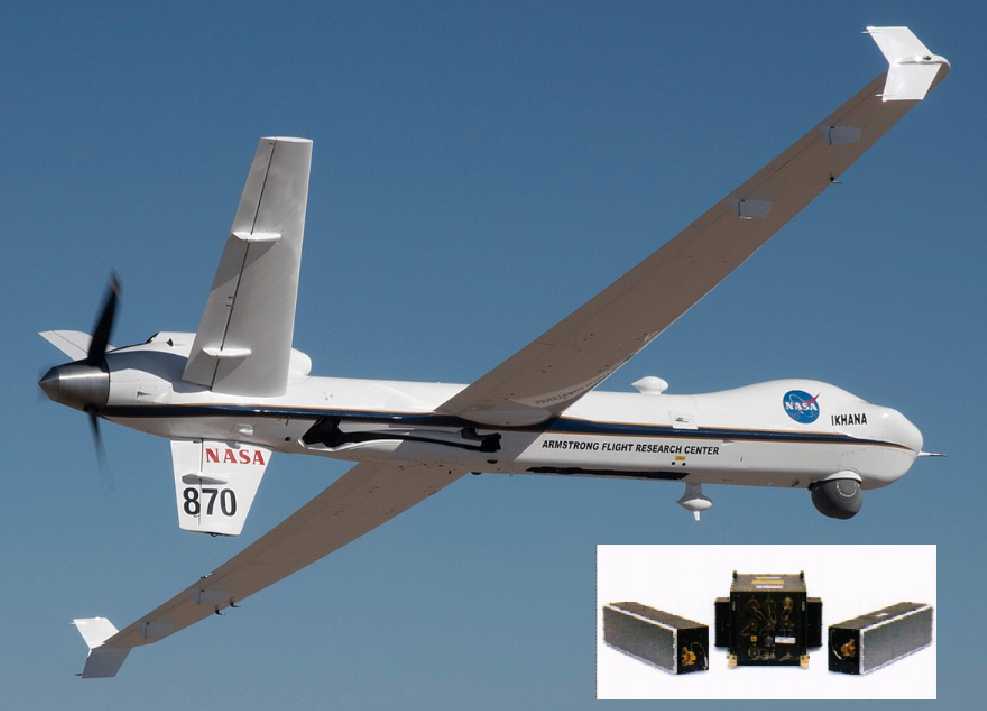
The system includes a DRR phased array radar, a TCAS collision avoidance system and an ADS-B automatic broadcast surveillance system. The DRR radar is mainly used for reconnaissance and is the "heart" of the DAA system. It can detect dangerous air targets that do not have or turn off transponders. The ADS-B system is mainly responsible for automatically transmitting information such as drone identification, coordinates, heading, speed and altitude to the National Flight Dispatch Center. The DRR radar consists of a double-sided active phased array antenna with electronic beam scanning and an electronic equipment unit. This type of radar ensures that drone operators, like pilots, can detect and track multiple air targets within the same field of view. The DRR radar prototype was completed in December 2014 and then installed on manned aircraft and NASA’s MQ-9 drone (called "Ikhana") for testing. The Federal Aviation Administration also uses this type of radar to set flight standards for drones flying in domestic and international airspace.
On June 5, 2018, an "Ikhana" drone equipped with the DAA system completed its first flight. General Atomics Aeronautical Systems pointed out that the DRR radar has begun small-scale mass production and has been delivered to multiple customers. At the same time, the company is developing the latest DRR radar. The full name of DRR in English is literally translated as "Due Regard Radar", which is translated from the International Civil Aviation Organization (ICAO)’s "Due Regard to Civil Aircraft Flight Safety Regulations" for military aircraft.
In the process of developing the MQ-9B "Sky Guardian", the developer also adopted the following technologies: First, the fuselage strength was strengthened to enhance the ability to resist wind and bird collisions; second, a new wing leading edge electric pulse deicing system and engine inlet, air and static pressure receiver deicing and heating system were installed to ensure that the drone can fly safely in an environment as low as -41℃; third, a new lightning protection device was installed; fourth, a new automatic take-off and landing system was adopted; fifth, the onboard control system introduced new reliability software and adopted new avionics equipment, etc. In addition, a new ground control station was developed for the MQ-9B "Sky Guardian".
MQ-9B Sky Guardian has a wingspan of 11.7 meters (MQ-9A is 11 meters), a span of 24 meters (MQ-9A is 20 meters), a maximum take-off weight of 5,670 kg (MQ-9A is 4,763 kg), can carry 2,721 kg of fuel (MO-9A is 1,769 kg) and 2,177 kg of payload, of which 363 kg is located in the internal bomb bay, 1,814 kg is located in a suspended pod under the fuselage and 8 suspended pods under the wings (MO-9A has a payload of 1,747 kg, of which 386 kg is located in the internal bomb bay and 1,361 kg is located in the suspended pod)
Like the MQ-9A Reaper, the MQ-9B Sky Guardian is equipped with a Honeywell TPE331-10 turboprop engine, which ensures that its flight speed reaches 388.9 km/h. Due to its lighter weight, the MQ-9A has a higher flight speed of 444.5 km/h. "The maximum flight altitude of Sky Guardian exceeds 12,190 meters, which is lower than the 15,240 meters of MQ-9A. But the "Sky Guardian" can stay in the air for more than 27 hours of MQ-9A, reaching 40 hours with a maximum flight distance of more than 11,000 kilometers.
Procurement situation
On March 30, 2020, the first mass-produced MQ-9B "Sky Guardian" successfully flew at El Mirage Airport in California. The second "Sky Guardian" began to equip its first overseas customer, the British Air Force. As early as 2016, the British Ministry of Defense and General Atomics Aeronautical Systems signed a preliminary agreement to produce drones for the British Air Force. The drone was named "Protector" RG MK1 to replace the 10 in service. MO-9A "Reaper"
In July 2020, the UK Ministry of Defense signed a final contract with General Atomics Aeronautical Systems. The UK purchased the first three "Protector" RG MK 1s, as well as several ground control stations and support equipment, with a contract value of 65 million pounds. September 25, 2020: The first "Protector" RG MK1 completed its first flight. In July 2021, 13 more were purchased. In October 2022, General Atomics Aeronautical Systems delivered the first "Protector" RG MK 1 to the UK. The "Protector" RGMK1 can carry up to 16 precision strike weapons such as "British Brimstone", "Hellfire" missiles and "Paveway laser-guided bombs. The first three drones will be assigned to the 31st and 13th Aviation Squadrons at the Lincolnshire Waddington Air Force Base, and are planned to have full combat capabilities by June 2024.
Belgium has also chosen the MQ-9B SkyGuardian. According to the contract signed by General Atomics Aeronautical Systems and the Belgian Ministry of Defense in August 2020, four drones are expected to be delivered in 2023.
Australia originally planned to purchase a batch of MQ-9B "Sea Guardian" within the framework of ProjectAir 7003, thus becoming the first foreign buyer of this type of aircraft. On April 26, 2021, the U.S. State Department’s Defense Security Cooperation Agency (DSCA) approved General Atomics Aeronautical Systems to sell 12 "Sea Guardians" and related equipment and precision-guided munitions to Australia, with a contract value of approximately US$1.651 billion. However, in April 2022, Australia canceled the purchase plan.
In October 2022, the MQ-9B "Sea Guardian" introduced by the Japan Coast Guard from the United States was officially put into use. India is the first country in Asia to lease the "Sea Guardian". In November 2020, the United States delivered two "Sea Guardians" to the Indian Navy. In addition, on November 3, 2020, the United States approved the sale of four "Sea Guardians" and supporting equipment worth approximately US$600 million to Taiwan, trying to help the latter enhance its maritime surveillance capabilities in the Taiwan Strait.
Targeting the Ocean
As early as 2017, General Atomics Aeronautical Systems first tested the collaborative combat capability of the MQ-9B "Sea Guardian" and radio sonar buoys. But at that time, the drone only received the signal sent by the buoy and transmitted it to the remote control point. Since then, the company has developed a system specifically for controlling and operating radio sonar buoys, as well as a hanging pod for storing and deploying buoys.
At the same time, the types of weapons that the MQ-9 "Reaper" family can carry are increasing. In September 2020, in a test conducted by the US Air Force at Creech Air Force Base in Nevada, the MQ-9A "Reaper" used the AIM-9X Block Ⅱ "Sidewinder" air-to-air missile successfully intercepted the BQM-167 target simulating a cruise missile. It can be seen that this type of drone can not only intercept aircraft, but also cruise missiles. In the future, the MQ-9B "Sea Guardian" will also have certain defensive capabilities while performing anti-submarine missions, thus having stronger survivability.
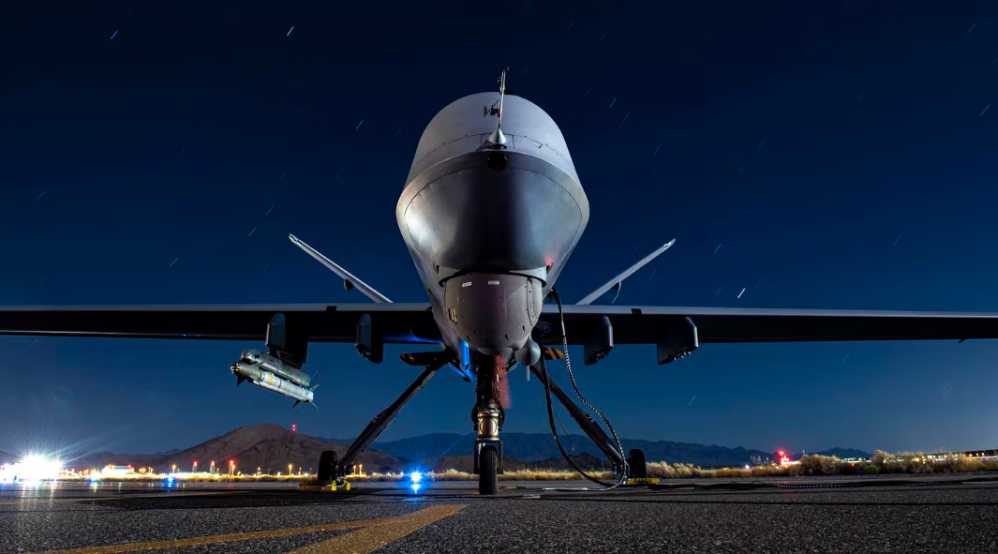
At present, General Atomics Aeronautical Systems has signed a cooperative research and development agreement with the U.S. Naval Aviation Systems Command to develop an updated radio sonar buoy anti-submarine system for the MQ9B Sea Guardian. In the near future, the company will also develop an anti-submarine weapon system that can ensure that the Sea Guardian can both detect and track submarines and attack them.
At that time, the Sea Guardian is likely to be equipped with the U.S. Navy and Coast Guard at the same time. The United States’ allies will surely follow suit and equip a large number of Sea Guardians in both the Atlantic and Pacific directions, thus posing a potential threat to Russian and Chinese submarines. The emergence of a large number of Sea Guardians will, to a certain extent, break the balance of maritime power and gradually allow the United States to gain an anti-submarine advantage, especially in relatively closed waters such as the Baltic Sea, the Black Sea or the South China Sea, and even in the Arctic.
So, what kind of enemies will appear over these waters in the future? If we have not forgotten July 2018, 1 The MQ-9B Sky Guardian took off from Grand Forks Airport in North Dakota, the U.S. drone training center, and carried out only one aerial refueling within 24 hours, flying a total of 3,760 nautical miles (about 6,964 kilometers), successfully crossing the Atlantic Ocean and landing at Fairford Air Force Base in Gloucestershire, England. As we all know, before this, only the "heavyweight" RQ-4A Global Hawk high-altitude and long-endurance drone could complete the task of flying across the Atlantic Ocean. Although the range of the MQ-9B Sea Guardian may be reduced after the installation of the anti-submarine payload, it will still be enough to pose a certain degree of threat to Russian and Chinese submarines, becoming a veritable submarine killer.