
Today, balloons are basically outdated as a means of military frontier reconnaissance, but during the Cold War, a country did use them to conduct large-scale long-range secret military reconnaissance operations. This country is the United States.
Origin: "Mole" Peeping
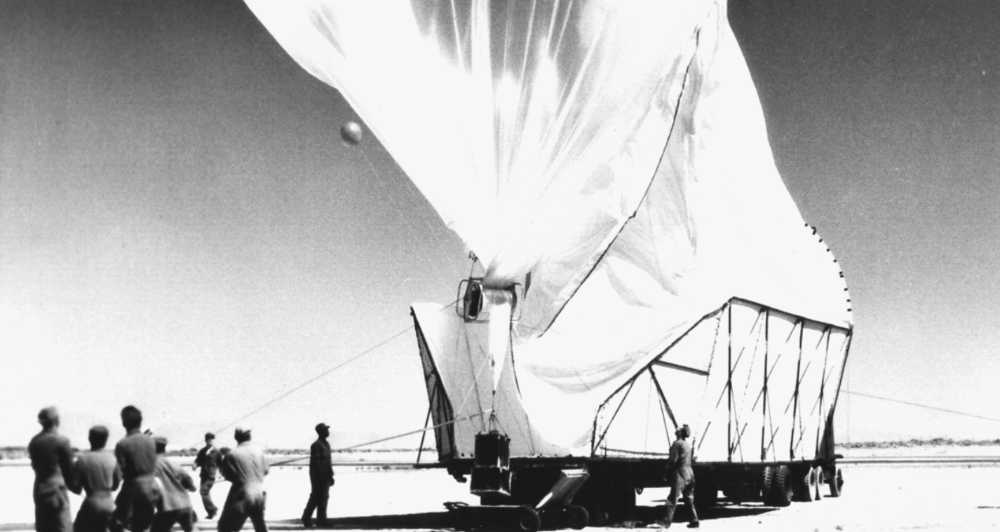
In 1947, the US Navy launched a scientific research project code-named "Skyhook", using a giant polyethylene balloon with a diameter of 30 meters and a height of 120 meters to lift scientific research equipment to an altitude of 30,000 meters to study high-altitude weather and cosmic rays, which attracted the attention of the US Air Force. The latter urgently needed to use high-altitude, long-flight equipment to spy on the Soviet Union’s strategic intelligence.
The US Air Force’s aircraft at that time often had insufficient ceiling and speed when reconnaissance the Soviet Union, and many were intercepted or even shot down, while artificial satellites were still in the theoretical stage. Therefore, balloons seemed to be their most ideal choice. These balloons can carry aerial cameras and can use the westerly belt to work at high altitudes for a long time.
In July 1950, General Mills, which was previously responsible for developing balloons for the Navy, conducted four flight demonstrations for the U.S. Air Force. The balloons were all equipped with aerial cameras and easily and stably floated at an altitude of nearly 20,000 meters. The overjoyed U.S. Air Force soon signed a contract with General Mills in November of that year to develop a confidential balloon reconnaissance system, codenamed MX-1594 "Gopher".
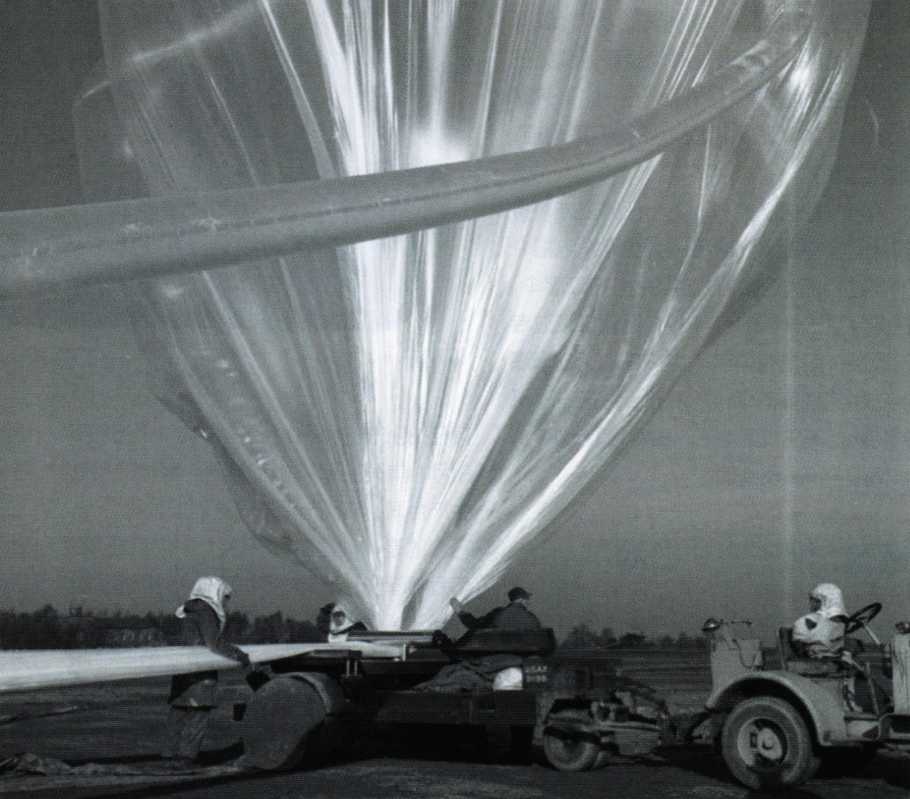
According to the U.S. Air Force’s conception, "Gopher" will use two types of balloons, large and small, with diameters of 39 meters and 20 meters respectively. The former has a ceiling of 26,000 meters and can stay in the air for 8 days; the latter has a ceiling of 18,000 meters and can stay in the air for 7 days. In addition to ballast, both balloons can carry a 227 kg pod. The rotation of the earth, the sunrise and sunset, can form a large temperature difference on the surface of the balloon, so the U.S. Air Force has high requirements for the balloon’s air pressure switch control. Most importantly, the balloon itself must be strong enough and cannot burst due to drastic changes in air pressure.
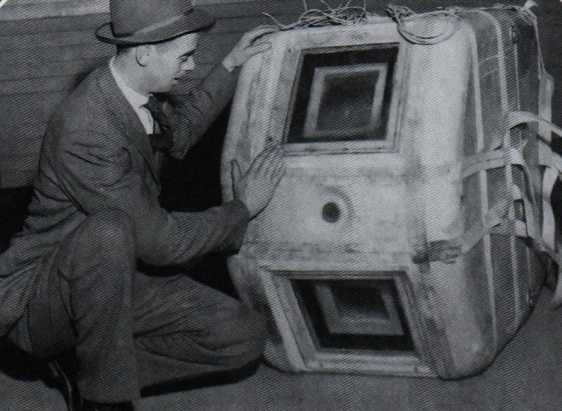
In view of the difficulty in controlling the balloon reconnaissance route, the US Air Force has specially developed the AN/DMQ-1 pod, which contains a battery and two aerial cameras in an incubator.
At the bottom of the pod is the K-17 main camera, which has two 127 mm lenses tilted left and right, covering an area of 80 kilometers on each side. Depending on the size of the balloon, the main camera will take about 500 photos at an interval of 12 minutes and 30 seconds or 5 minutes and 15 seconds. In the middle of the two square lens frames of the K-17 main camera, there is also a circular wide-angle lens for the other auxiliary camera to take pictures of the terrain and determine the approximate geographical location of the photo.
In addition, there is a small photoelectric control tube at the bottom of the pod, which can automatically turn off the camera after dark. In order to keep the secret, both cameras are equipped with adjustable time delay starters to avoid taking photos of the party after the balloon is launched. If the balloon accidentally falls into the hands of the Russians, it will not be peeping, but self-exposure.
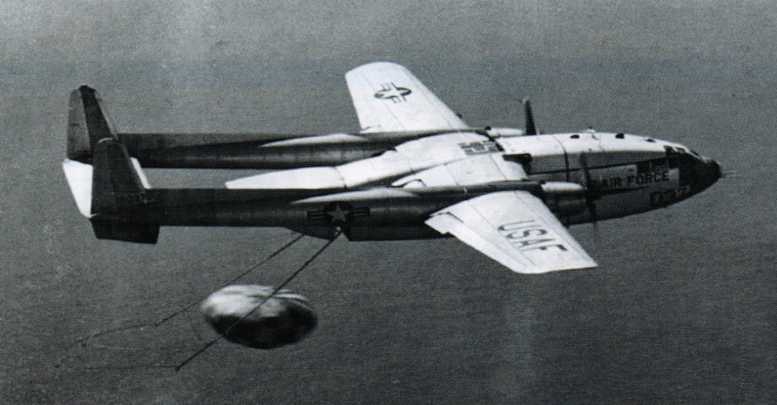
When the balloon is finished taking pictures, it will fly out of the mission airspace and arrive at the recovery airspace. At this time, the pod will automatically cut off the connection with the balloon and open the parachute under the radio command. The C-119F transport aircraft hovering in the recovery airspace has been specially modified and equipped with a telescopic grappling hook. It hooks the parachute in the air at an altitude of 6,000 meters and drags the pod into the cargo hold of the aircraft. After the plane lands, a special person will take out the film for intelligence analysts to interpret.
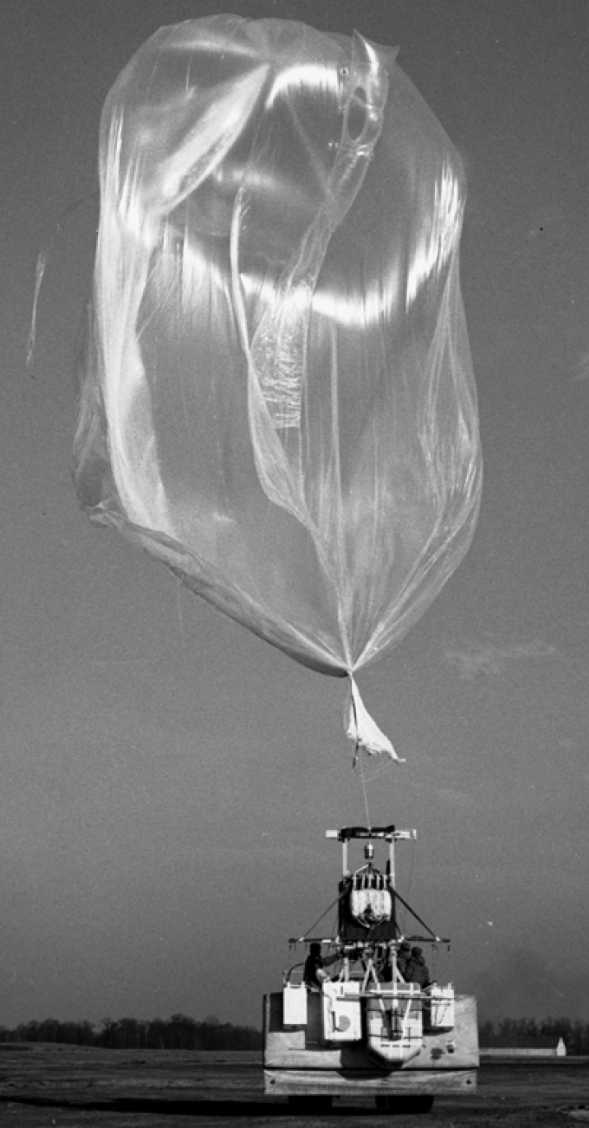
Test: The cover is called "White Whale"
The US Air Force seriously underestimated the difficulty of the entire balloon reconnaissance system. It was thought that the "Mole" would be put into practical use by the end of 1951, but it continued to fail in tests until 1952. In addition to the unstable performance of the pod at high altitude, the balloon itself was also unsatisfactory. The large balloon with a diameter of 39 meters often exploded due to the rapid ascent speed. In August 1952, the US Air Force terminated the balloon production contract with General Mills and switched to cooperation with Winzen Balloon Research and Development Company. Coincidentally, Otto Winzen, the German-American aviation engineer who created the Winzen balloon, originally worked for General Mills, and the manufacturing technology of polyethylene balloons was his patent. The balloon improved by Winzen was obviously much stronger. In July 1953, the U.S. Air Force officially renamed the "Gopher" to the WS-119L combat balloon reconnaissance system, code-named "Grayback", and began mass production of various components. At the same time, the units involved in balloon release, tracking and recovery also began to implement training. This series of giant balloon floating tests inevitably attracted public attention. The U.S. Air Force publicized that it was conducting a "White Whale" plan for high-altitude scientific research and meteorological investigation to cover up its tracks.
In January 1955, the U.S. Air Force temporarily formed the 1st Air Division, and under the name of "meteorological investigation", it was busy arranging a reconnaissance balloon release and recovery base. First, the 6926th Mobile Radio Squadron under the division set off in June and established a series of balloon release and tracking stations at air force bases such as Okinawa, Kansai, Guam, Clark in the Philippines, Pyeongtaek in South Korea, Midway Island, and Elmendorf in Alaska. In September, the US Air Force began to train balloon tracking personnel under the guise of the civilian "White Whale-Far East" plan and explore the operation methods.
Starting in the summer of 1955, the CIA released hundreds of small balloons filled with propaganda materials to Europe in an attempt to paralyze the Soviet Union. Then, in October of that year, the 1110th Air Support Group went to Europe to establish a balloon release base. The US Air Force originally planned to deploy balloons only in Scotland, but in order to obtain a wider reconnaissance area, it eventually established five release bases, namely, the Evington Naval Air Station in Scotland, the Oberpfaffenhofen Airport and Giebelstadt Airport in Germany, the Gardermoen Air Force Base in Norway, and the Incirlik Air Force Base in Turkey. The headquarters of the 1110th Group is stationed in High Wycombe, UK, responsible for coordination and command, and announced to the outside world that it would conduct "scientific research" on high-altitude balloons with long-term air time in the northern hemisphere.
From April to October 1955, the 456th Transport Aircraft Wing conducted a large number of air recovery training. The wing’s 50 C-119 transport aircraft have been modified to add a "beaver tail" rear door that can be opened and closed in the air at the rear of the cargo hold, so that a grappling hook can be extended in the air to hook the parachute of the balloon pod, and it is also convenient to recover the "cargo" from the water surface after it falls into the water. In order to cooperate with the 456th Wing, Lowry Air Force Base in Colorado released more than 100 balloons in 33 training exercises. These balloons were equipped with gasoline barrels filled with sand and concrete, but only 11 were recovered in the air, with a success rate of only about 10%. However, the US Air Force still made an assessment in December that the entire WS-119L combat balloon reconnaissance system has actual combat capabilities. By this time, about 2,500 balloons had been deployed to Europe, and the reconnaissance operation was codenamed "Grandmother’ Project.
Actual combat: "Grandmother" floating around
At the end of December 1955, President Eisenhower approved "Grandmother" to conduct reconnaissance on the Soviet Union, but put forward a requirement that made the US Air Force laugh and cry: the balloon’s flight altitude should not exceed 16,800 meters. This altitude is obviously lower than the design ceiling, which increases the success rate of Soviet air defense fire interception, and also makes it easier for the balloon to be disturbed by the air currents at the top of the troposphere. This decision seems to be a blind command by an amateur, but it is actually a cautious calculation by the US military and political leaders: the U-2 high-altitude reconnaissance aircraft under the control of the Central Intelligence Agency has already made its first flight, and balloon reconnaissance is only a temporary substitute before the U-2 is put into use, so it cannot fly too high to avoid stimulating the Soviet Union to develop more powerful air defense weapons and thus threaten the U-2.
On January 9, 1956, in order to avoid diplomatic disputes as much as possible, at the request of Secretary of State Dulles, the US Air Force issued a press release announcing the launch of a meteorological scientific balloon flight codenamed "White Cloud". The "scientific" balloon described in the press release was almost identical to the reconnaissance balloon - only the equipment pod was vague. On the 10th! The first batch of 8 balloons was launched from Incirlik, Turkey, and another one was released from Giebelstadt, West Germany; on the 11th, 9 were released from Giebelstadt; on the 12th, one was released from Evington, Scotland, and another 7 were released from West Germany. In the next 4 days, 10 balloons were released from various bases every day, and the number was increased to 20 per day on the 17th.
In the first two weeks of the reconnaissance operation, the US Air Force released a total of more than 200 balloons. By the 13th, 3 of the first wave of balloons floated out of Soviet airspace, all by C-119 Successfully recovered. In the following days, balloons continued to appear in the scheduled recovery airspace, accounting for 25% of the total number of releases. For a completely unpowered "fate-dependent" balloon, this survival rate is not low, "Grandmother" was a success.
Eisenhower and Dulles originally thought that the Soviet Union would immediately protest after discovering the balloons passing through, but unexpectedly, the Soviet Union did not respond throughout January. The Americans believed that the Soviet Union had no choice but to suffer in silence because of the balloons, so they pressed their limits. In late January, the US Air Force decided to increase the number of releases to 30 per day and then to 40 per day.
In fact, the Soviet Union had noticed it as early as the first batch of balloons passing through, and the Soviet military was not completely without countermeasures. As early as 1954, the Soviet Union finalized and put into production the KS-30 130mm caliber anti-aircraft gun, with a maximum firing height of 19,500 meters, but due to its high cost and low production, it was impossible to disperse and intercept the "Grandmother" over a vast territory. After a week of continuous tracking and observation, the Soviet Air Force summed up the rules. The altitude of the reconnaissance balloon was set to automatically release ballast when it dropped below 15,000 meters to rise again. If this short time window was used well, the Soviet MiG-15 and MiG-17 fighters could shoot down the "Grandma" at their maximum ceiling.
From the third week, the crew of the 456th Wing found that the number of balloons floating out of Soviet airspace dropped sharply, and by the end of January, almost all of them were wiped out. In addition to the Soviet Union’s increasingly effective interception of balloons, meteorological reasons also greatly hindered the "Grandma". The winter from the end of 1955 to the beginning of 1956 was the worst climate in Europe in the past 20 years, and the number of balloons released by various balloon bases was forced to be greatly reduced. The bad weather also affected the equipment, so that the few lucky ones who slipped out of Soviet airspace were difficult to recover.
On the other hand, the "Grandma" floating around was becoming increasingly difficult to fool the world. European countries that found balloons passing through lodged strong protests to the United States and ICAO because these balloons had posed a threat to civil aviation safety. As a result, the two release bases in West Germany were ordered to suspend operations for two days. Funny, on February 3, a balloon released from Gardermoen, Norway, flew over Oslo for no apparent reason! In the next two hours, rumors of UFO sightings were everywhere in the Norwegian capital and suburbs!
In view of the increasingly bad political impact, the Eisenhower administration began to seriously consider terminating the entire balloon reconnaissance operation in early February. The decisive blow came on February 4. After collecting enough hard evidence, Soviet Deputy Foreign Minister Andrei Gromyko formally notified the U.S. Embassy in Moscow to lodge a solemn protest against this serious violation of Soviet airspace: “The equipment suspended on the spheres in the air includes automatic cameras, radio transceivers and other devices for aerial photography… Investigations have shown that these spheres and the equipment they carry are made in the United States.
On February 6, Eisenhower ordered to stop releasing balloons, but asked the US Air Force to continue searching and recovering equipment pods around the world. The White House declared that "the US government is willing to popularize scientific knowledge to the public. The United States is hosting a meteorological survey carried out by microsatellites carried by high-altitude balloons..."
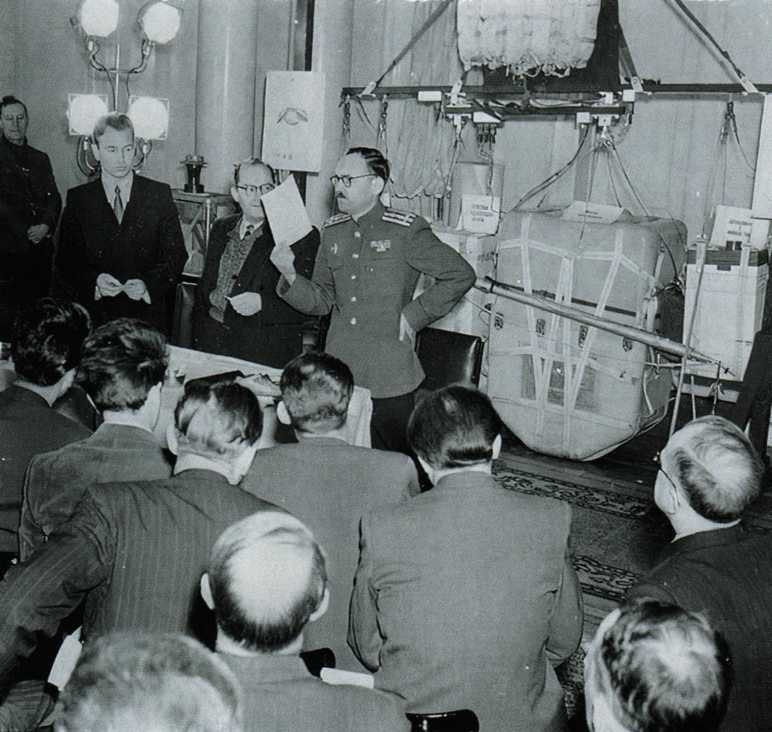
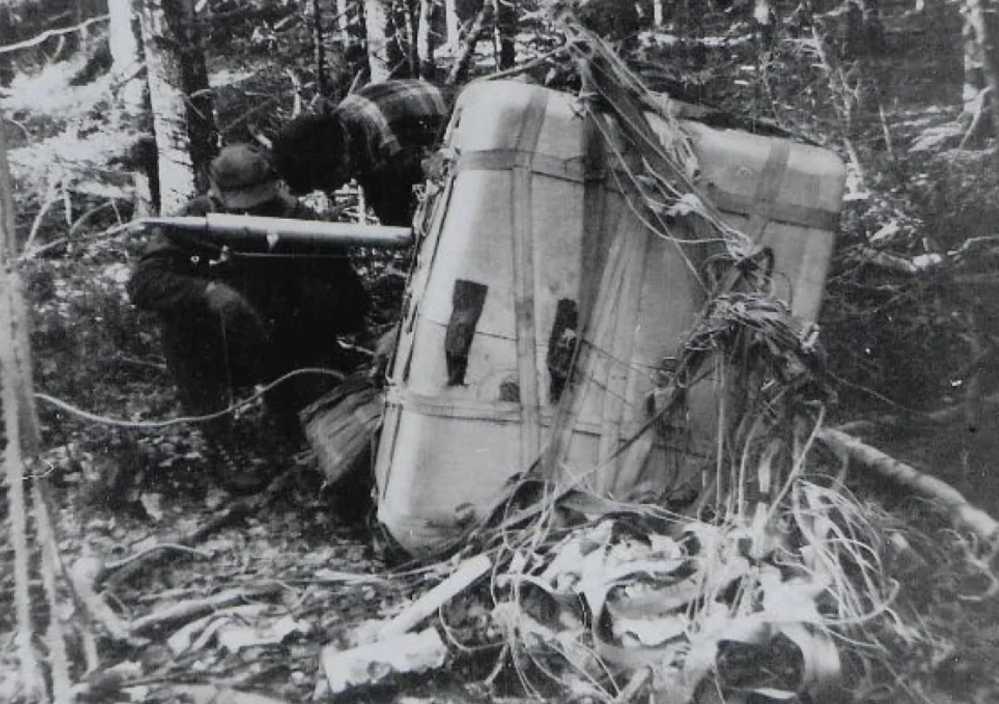
The White House then asked the Soviet Union to return the balloon pods that fell into its territory, and the US Army and Air Force claimed that fallen Soviet weather balloons were found in Japan and Alaska in recent weeks! In response, on February 9, the Soviet Union publicly exhibited dozens of balloon wreckage and complete equipment pods in Moscow, pointing out that these pods can not only be used for espionage, but also carry biological weapons. The White House did not respond. On February 29, the US Air Force ordered the termination of all balloon reconnaissance and recovery operations. On March 26, the 1st Air Division was ordered to transfer command, and each unit returned to its base and took the equipment back as surplus materials. This operation, which was originally planned to last for 6 months, ended hastily after only 27 days.
Aftermath: An unexpected harvest
In this unprecedented large-scale balloon reconnaissance operation in human history, the US Air Force released a total of 516 balloons, about 390 of which entered Soviet airspace, but most of them were blown away, and some fell or were shot down due to malfunctions. Only 44 pods were successfully recovered. The interpretation of the camera film was also quite disappointing. In addition to discovering a Soviet nuclear fuel plant in Siberia, the other films only showed wastelands, hills, deserts and large areas of clouds in the Soviet Union and inland China. It can be said that the "Grandmother" project itself was a complete failure.
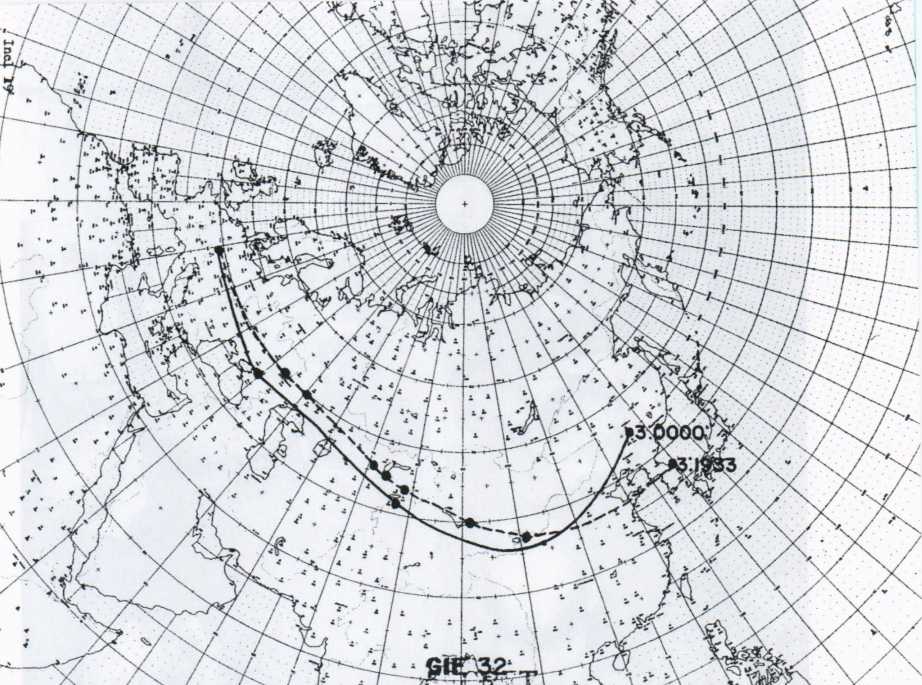
However, the US military did not gain nothing. First of all, the camera carried by the AN/DMQ-1 pod has excellent aerial photography effects. Before the emergence of spy satellites, the best and most complete photos of the Soviet interior that the United States could obtain were taken by it. These photos provided a very good reference for the U-2 reconnaissance flight six months later. Secondly, by tracking the drifting route of the balloon, the CIA and the US Air Force found out the high-altitude air currents over Eastern Europe and the Soviet Union and determined the best route for the U-2 to fly at high altitude.
Another beneficiary was beyond everyone’s expectations. By intercepting the "Grandmother", the Soviet air defense forces accumulated valuable high-altitude combat experience, which played an important role in the battle against the U-2 a few years later. More importantly, the Soviet Union obtained a large number of high-temperature and radiation-resistant films from the captured cameras. Before its domestic films overcame technical difficulties, Soviet satellites had been using these "gifts from across the ocean". In 1959, the Soviet "Luna 3" probe even took the first photo of the back of the moon, which was really ridiculous.
"Grandmother" was not the last balloon reconnaissance plan of the United States. In January 1957, the US Air Force proposed a WS-461L reconnaissance balloon system, which could float for a month at an altitude of 30,000 meters using the summer circulation from east to west. The pod also used a more advanced HYAC-1 high-resolution high-altitude camera. Based on the experience of WS-119L, the US Air Force reported in the spring of 1958 that WS-461L could be put into practical use. Based on the experience of WS-119L, Eisenhower was initially reluctant to use the WS-461L balloon.
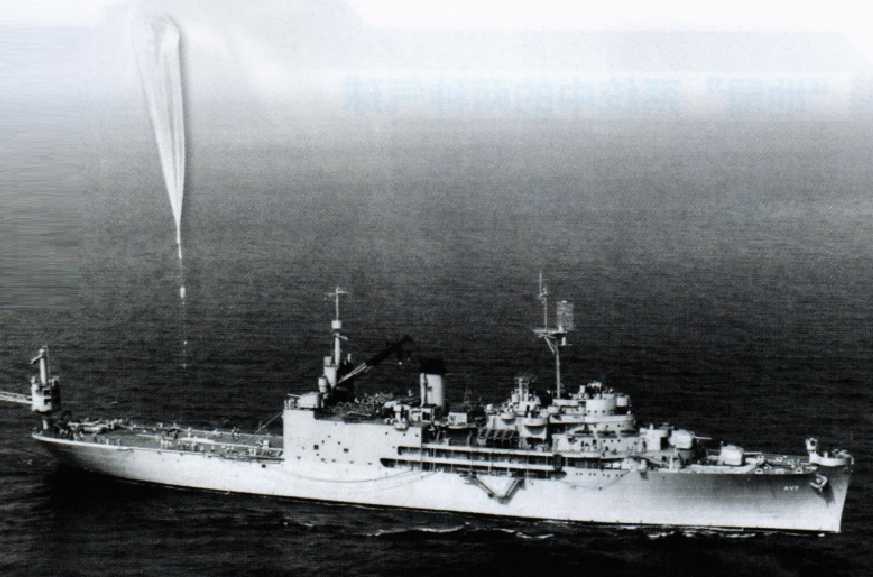
Desire eventually overcame reason. In order to obtain intelligence on Soviet intercontinental ballistic missiles, Eisenhower approved Operation "Furnace" in late June 1958. In mid-July, the US Navy’s "Windham Bay" (TCVU-92) aircraft transported the aircraft carrier to release three WS-461L balloons in the Sea of Japan. This time all the balloons floated out of the Soviet Union, but the result was still a failure.
The summer circulation in 1958 was slightly weak. Before the balloons reached Western Europe, the pod release timer was activated as set, and the pod and camera were dropped into Poland, which was within the Soviet sphere of influence. Once again, Eisenhower was very angry that he failed to gain anything. The embarrassed US Air Force had to terminate all balloon reconnaissance plans. "