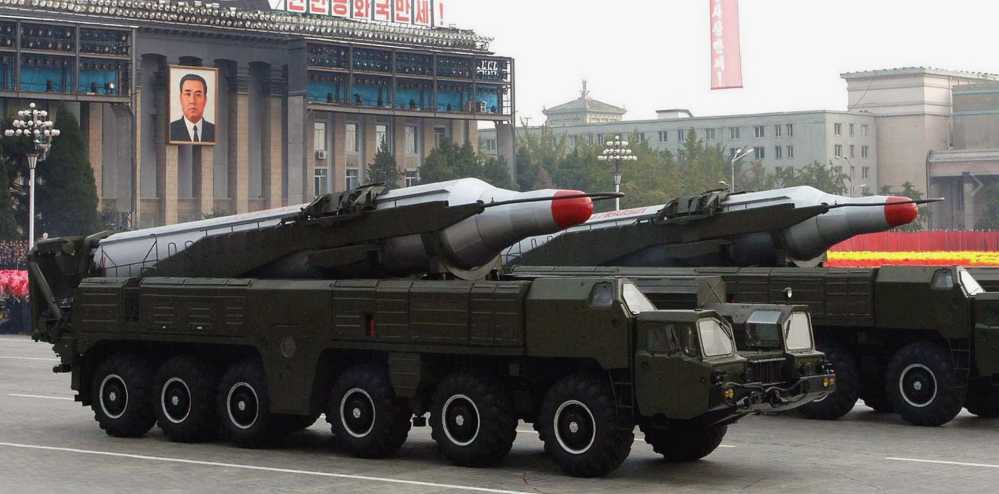
For a long time, due to the secrecy of North Korea’s weapons and equipment, it is difficult for the outside world to obtain accurate information about North Korea’s missiles. Before the 1990s, the US intelligence agencies named North Korea’s domestic weapons and equipment in the following ways: first, they named them according to the place where the weapon was discovered or tested (such as the "Gushan" cannon, the "Taepodong" missile, the "Sinpo" class submarine, etc.); second, they named them according to the year when the weapon was first discovered by the US reconnaissance system or the year when North Korea took the initiative to publicly display the weapon (such as the M-1985 light tank, the M-1992 wheeled armored vehicle, etc.); the third is to name them according to the official names revealed by North Korea, such as the "Cheonma" series and the "First Army" 915 tank, and the "Mars" 5/6 ballistic missile. During the Cold War, most of North Korea’s weapons and equipment were imported from the Soviet Union or China (the imported weapons and equipment were directly numbered with NATO or the internal numbers of China and the Soviet Union, such as "Hongqi" 2, "Haiying" 2, "Zhen" 1, etc.), and the originality was relatively low. The first two naming methods are obviously more arbitrary and lack systematicity and scientificity. For example, in the 1992 military parade for the 60th anniversary of the founding of the Korean People’s Army, several new weapons that had not been discovered before suddenly appeared. Therefore, there were both M-1992 23mm anti-aircraft guns (later proved to be twin-mounted 30mm self-propelled anti-aircraft guns) and M-1992 37mm twin-mounted self-propelled anti-aircraft guns. As the level of North Korea’s defense industry continues to improve, military parades are held more and more frequently, and new weapons and equipment are emerging in an endless stream. The situation in the past when new models were released every few years is gone forever. It is no longer appropriate to name the multiple new weapons that North Korea unveiled at the same time by year or place. Therefore, the United States specifically adopted the naming mode of KN-X (meaning the number of North Korea’s new weapons) for North Korea’s new missiles or rocket launchers to adapt to the needs of the development of the situation.
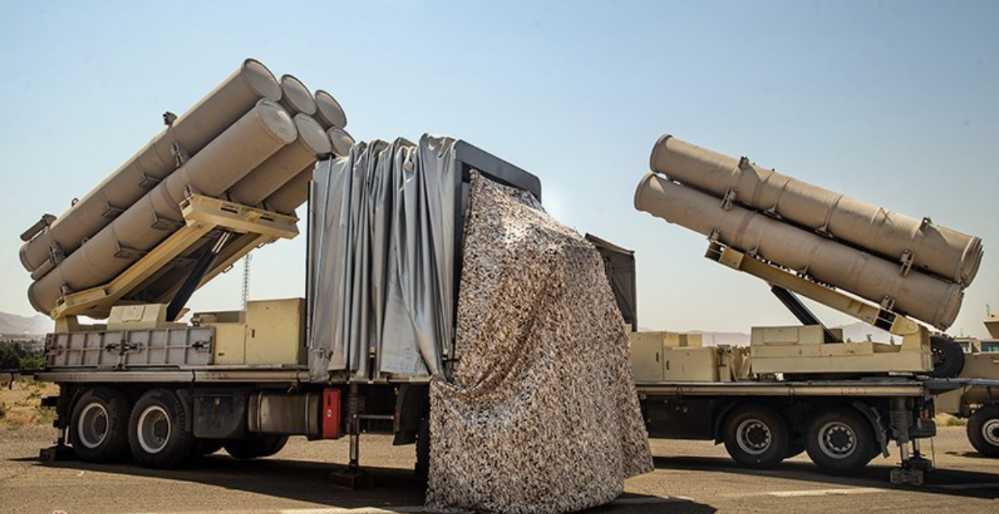
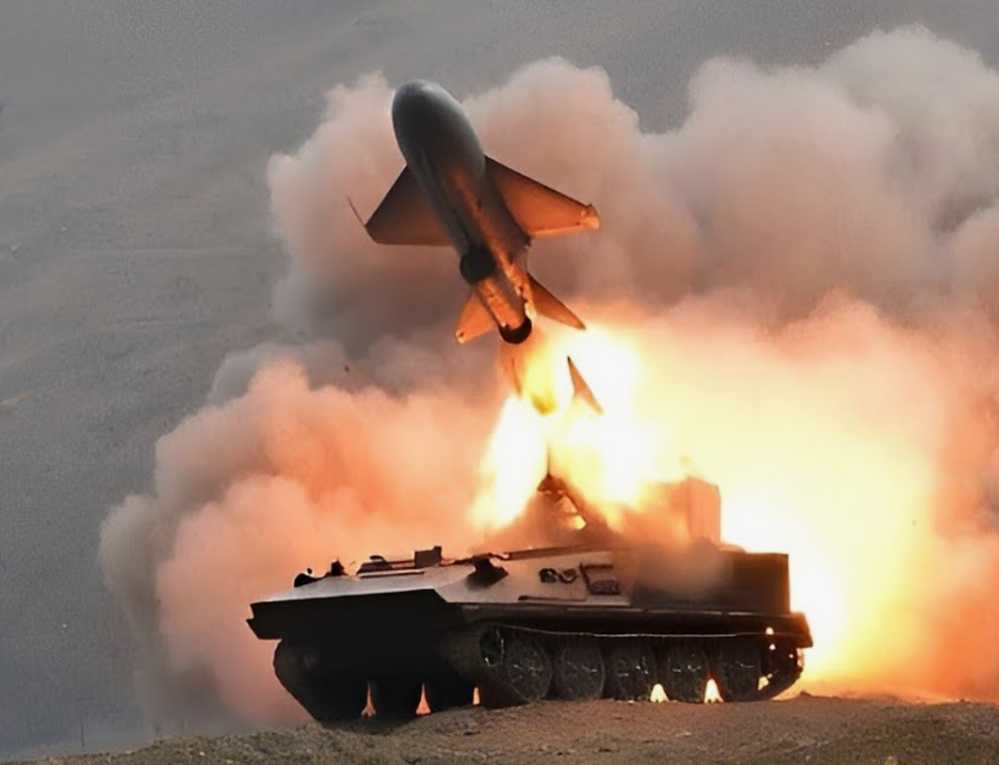
KN-01 missile During the "Misery March" period of North Korea in the 1990s, when North Korea’s economy was extremely difficult, they did not stop pursuing new weapon systems. U.S. and South Korean intelligence agencies believe that North Korea has been producing air-launched anti-ship cruise missiles or shore-to-ship missiles that can be carried on the Il-28 (H-5) bomber since the early 1990s, based on the Chinese CSS-C-3 (i.e., "Sea Eagle" 2). Prior to this, in the 1980s, the North Korean Navy had already introduced the "Styx" or "Upstream" No. 1 ship-to-ship missile and the "Sea Eagle" 2 (HY-2) shore-to-ship missile. The armored vehicle equipped with the "Sea Eagle" 2 was unveiled at the 1992 North Korean military parade. The missile and its launcher were installed on the same 6-pair tracked chassis (an improved version of the Soviet-made AT-S armored vehicle) as the M-1991 122mm closed turret self-propelled artillery (also known as the "Kim Chak" gun). In 1997, after replacing the new turbojet engine, the missile’s range was increased to 200 kilometers, which surprised Western intelligence agencies, so it was renamed AG-1 and later renamed KN-01. Iran has also introduced this tracked anti-ship missile launcher and its matching anti-ship missile (the Iranian version is called "Thunder"), but North Korea has not yet publicly released this new model of missile in its country. We can only indirectly understand the design of this type of missile through Iran’s display.
The South Korean Ministry of Defense said that from 2003 to 2007, North Korea conducted 10 launch tests of the KN-01 missile, increasing its range to 300 kilometers, which is three times the range of the previous "Sea Eagle" 2 missile. These missiles have been deployed in South Hwanghae Province. In addition, North Korea also installed the imitation "Styx" missile on the VTT-323 armored vehicle, transforming it into a shore-to-ship missile system to enhance the combat effectiveness of North Korea’s coastal defense system. Considering that North Korea’s anti-ship missile, which is a copy of the KH-35 "Uranus", is called "Venus" 3 (mounted on the "Cheonma" 216 tank chassis), the KN-01 and HY-2 shore-to-ship missiles that appeared before it may be called "Venus" 2. And the "Styx" series may be called "Venus" 1. The KN-01 anti-ship missile can carry a heavier warhead than the "Venus" 3, and when necessary, it can also use its long range advantage to attack targets anchored in enemy ports. Before North Korea unveiled its new long-range cruise missile, the KN-01 missile was one of North Korea’s important deterrent weapons.
KN-02 missile
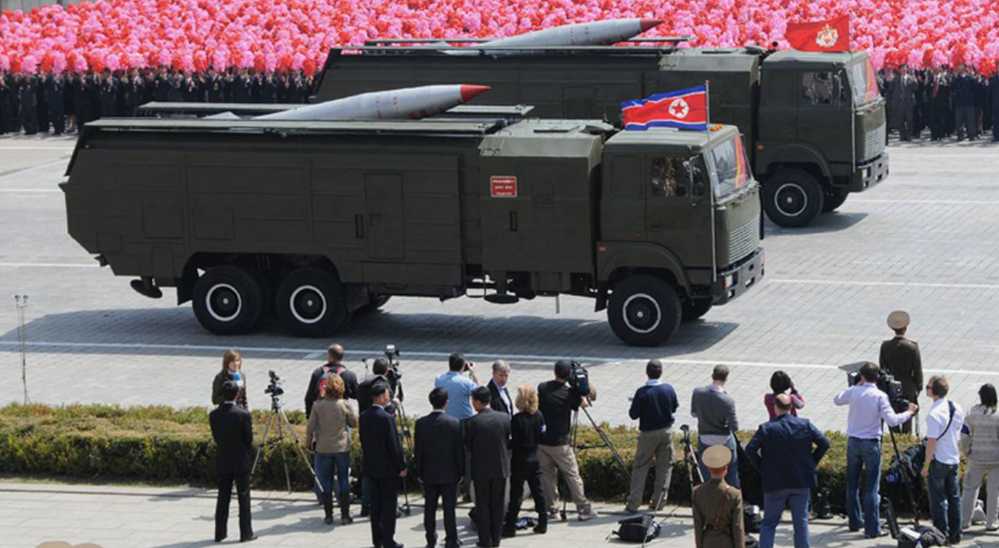
The KN-02 missile was first publicly unveiled at the military parade on April 25, 2007, marking the 75th anniversary of the founding of the Korean People’s Army. North Korea calls it "Mars" 11. From 2005 to 2013, North Korea launched more than 20 missiles of this type. At that time, this type of missile was the most accurate model in North Korea’s ballistic missile arsenal (the circular error probability was about 95 meters at a range of 100 to 120 kilometers), which could easily launch precision strikes on Seoul and Pyeongtaek, and was an important strategic deterrent weapon for North Korea. The missile was designed to deal with the US ATACMS missile, and its technical prototype was the Soviet-made SS-21 missile. In March 2022, Ukraine used an SS-21 missile to blow up a Russian "Orsk" tank landing ship anchored in the port of Berdyansk, proving that the missile still has a strong strike power. Due to the use of solid fuel, the missile launch preparation time only takes about 10 minutes, so it is difficult for the South Korean and US militaries to detect its launch vehicle. The KN-02 chassis is a modified Belarusian MAZ-630308-224MAZ630308-2436x4 or 6x6 commercial heavy truck, and each launch vehicle carries only one missile. The U.S. Army calls it "Toksa" (a transliteration of the Korean "Doksa", meaning "venomous snake"), and the name KN-02 is a tentative name given by U.S. intelligence agencies based on the order of their knowledge of North Korean missiles. In 1996, North Korea smuggled a batch of Soviet-made SS-21 missiles from Syria, after which North Korea developed the KN-02 through reverse engineering. The SS-21 is a short-range ballistic missile that the Soviet Union entered service in 1975 and can carry a 500-kilogram warhead. Since then, after continuous improvements, in the 1990s, Russia expanded its range to 185 kilometers. The Yemeni Houthi armed forces once launched the missile at the Saudi army, killing 152 people, including the commander of the Saudi special forces. In 2007, South Korea said: "If North Korea launches a KN-02 missile with a 500 kg warhead, it will destroy soft targets scattered over an area of about 3 to 4 football fields. Only 2 to 3 KN-02 missiles are needed to severely damage Osan Airport." However, in recent years, the ability to repair airports has been greatly improved. In the case of simple high-explosive bombs instead of biological or chemical bombs or dirty bombs, the airport runway can be restored and take off and land fighters in just 1 to 2 hours. Of course, if the North Korean missile hits a fuel depot, a command tower or an ammunition depot, that is another matter. The maximum range of the missile has been increased from the original 120 kilometers to 160 to 170 kilometers, and North Korea has also deployed more than 30 missile TEL (transport-erection-launch) launchers. Considering the total number of missile launchers deployed by North Korea, North Korea may have more than 100 KN-02 short-range missiles.
KN-03 missile
The US reports KN-03 as an improved version of Nodong MRBM ("Labor" or "Nodong" medium-range missile, or "Hwasong" 7). It may correspond to the name Nodong-1M that occasionally circulates on the Internet. It may refer to the improved "Hwasong" 7 (with a baby bottle pacifier warhead similar to Iran’s "Meteor" 3B or "Khader" missile, weighing about 650 kg) that participated in the 2007 military parade but was deleted from the TV broadcast. The missile was officially unveiled at the military parade on October 10, 2010 to celebrate the 65th anniversary of the founding of the Workers’ Party of Korea. North Korea’s state television broadcast the entire military parade live, which was the first time in North Korean history. North Korea’s top leader Kim Jong Il and Kim Jong Un, who has just been established as the third-generation leadership core, went on the rostrum together to watch the military parade. This is also Kim Jong Un’s first public appearance after being established as the third-generation leadership core.
According to reports, this military parade is the largest in history (before 2010), and all kinds of advanced weapons are on display. The "Mars" 10 missile, which was called the "Musudan" missile by the West at the time, was also officially unveiled at this military parade. The "Mars" 7 missile uses a 10x8TEL launcher that is improved from the MAZ-543 launcher. In the 1990s, Iran introduced North Korea’s "Mars" 7 medium-range missile and developed the "Meteor" 3 missile, which uses an engine that looks like an enlarged version of the "Scud" missile engine. The missile has a takeoff mass of 15,350 kg, a missile length of 15.54 meters, a diameter of about 1.25 meters, and a range of about 1,150 kilometers. The later improved version may be 1,300 kilometers (with an aluminum alloy body). The main target is the US military stationed in Japan.
On July 5, 2006, in order to distract the outside world, North Korea launched two "Mars" 7s at Musudan-ri at the same time as the "Taepodong" 2. In 2013, North Korean propaganda media reported that Kim Jong Il inspected the No. 65 factory in Tianchuan County, Jagang Province, and the missile appeared with a paint similar to the Pakistani "Ghori" missile. This is also the test site for the "Mars" 14. At 2:35 and 2:45 in the morning of March 26, 2014, two missiles of the missile were launched at a high angle with a range of 650 kilometers. At 5:55 a.m. on March 18, 2016, North Korea launched two missiles in Sukcheon County, one into the East Sea and one exploded in the air.
On July 19, 2016, three Hwasong-7 launchers were launched on a highway from Kaesong to Pyongyang in Hwangju County, North Hwanghae Province. North Korea released the launch footage. One of the missiles was an early model with a conical warhead, and the other two were later models with a "cone-column-skirt" warhead. At around 7:40 a.m. on August 3, 2016, North Korea launched two more missiles of the same type in South Hwanghae Province. The first missile exploded in the air, and the second missile launched 10 minutes later fell into Japan’s exclusive economic zone again. At the celebration of the successful launch of Hwasong-14 in 2017, North Korea released photos of the time. The paint job of the Hwasong-7 launched this time is very similar to the Iranian version. However, Iran’s Meteor 3 missile uses a semi-trailer converted from a commercial vehicle, which has poor maneuverability. North Korea once showed this trailer in a documentary. The Mars 7 made great contributions to North Korea’s foreign exchange acquisition during the period of the arduous march. The Taepodong 1 launched in 1998 used this type of missile as the first stage. The first stage of the Galaxy 2/3 rocket also connected four Mars 7 engines in parallel, plus four small helicopters, with a takeoff thrust of 120 tons. Iran’s Envoy rocket and Shenniao rocket also use the Mars 7 engine technology in the first stage: Iran’s current ballistic missile force is still the backbone of the Meteor 3’s many improved versions (typically represented by the Pillar missile, equipped with a mobile warhead).
KN-04 missile
The KN-04 missile is less well-known and has less information. It may refer to the "Scud" ER (extended range version, also known as "Scud" D or E, Scud 2) missile. It is an improved version of the Soviet-made "Scud" missile, which became known around 2005 and was improved by North Korea itself. It seems to be designed to make up for the shortcomings of the less reliable "Mars" 7 missile. Its range has caught up with the early version of the "Mars" 7, and it can hit parts of Japan, and it is cheaper. The warhead shape is similar to the "Scud" B missile. The diameter of the missile has increased from 0.88 meters of the "Mars" 5/6 to about 1 meter, and the range has increased to 1,000 kilometers. The engine remains unchanged, the missile body is made of aluminum alloy, and although the length of the missile has been lengthened to 12.8 meters, it can still use the MAZ-543 launch vehicle. North Korea’s internal number is "Mars" 9. The confidentiality level of this type of missile is also very high, and it has never appeared in a military parade. On September 5, 2016, North Korea launched three missiles of this type on a highway in Hwangju County, North Hwanghae Province. The missile became known to the outside world the next day, September 6, when North Korea released photos of the missiles. It was launched after hiding in a tunnel on the highway to avoid the surveillance of South Korean and American intelligence personnel. All three missiles fell within Japan’s exclusive economic zone. Its reliability is significantly higher than that of the "Mars" 7.
On March 6, 2017, North Korea tested four Hwasong-9 missiles at the same time in a field near Dongchang-ri, Tieshan County, North Pyongan Province. The accurate launch coordinates analyzed by the website 38 Degrees North are 39.6783277 degrees north latitude and 124.7120883 degrees east longitude. Kim Jong-un, the supreme leader of North Korea, highly praised the missile launch test. He looked at the ballistic missile launched into the air and said: "Now, the strategic army’s Hwasong artillery unit has skillfully organized and commanded fire strikes, and has effectively guaranteed the rapidity and consistency of fire strikes. Our ballistic missiles are so sophisticated that the flight (trajectory) of the four missiles launched at the same time is almost exactly the same, just like an aviation acrobatic flight team flying in formation." Kim Jong-un ordered the strategic army of the Korean People’s Army to comply with the requirements of the severe situation where actual combat may break out at any time, maintain a high state of mobilization, and make full preparations for mobility, position, technology and strikes, so that as soon as the order of the Party Central Committee is received, the missiles to destroy the enemy can be launched immediately. The range of the Yemeni Houthi armed forces’ "Volcano" 3 (later renamed "Zulfiqar") missile is also over 1,000 kilometers, and it has performed well in actual combat. It is not ruled out that it has received technical support from North Korea.
KN-05 missile
Previously, some websites called the "Mars" 7 missile KN-05, but now it seems that this statement is wrong. Since 2015, in the introduction of the KN-01 project, it is written that the KN-05 is an air-to-ship improvement of the KN-01. Since the air-launched version does not require a solid booster (weighing about 300 kilograms), the weight of the KN-05 missile is lighter than that of the KN-01. Referring to the design of the "Sea Eagle" 4 anti-ship missile, because its turbojet engine uses ordinary aviation fuel, the launch weight of the missile is reduced from 3,000 kilograms of the "Sea Eagle" 2. The weight of the Il-28 is reduced to 2,000 kg, and the air-to-ship type is 1,740 kg. The maximum bomb load of the Il-28 is 3,000 kg, which is enough to carry a KN-05 missile similar to the "Sea Eagle" 4. On October 7, 2008, the KN-05 missile mounted on the Il-28 light bomber was tested twice over the West Sea. In other words, the KN-05 is a missile confirmed in 2008, not the "Mars" 7. The picture of the missile has not been made public yet. It will give new life to North Korea’s old bomber fleet. In 2016, the missile was launched three times in a row,
KN-06 missile
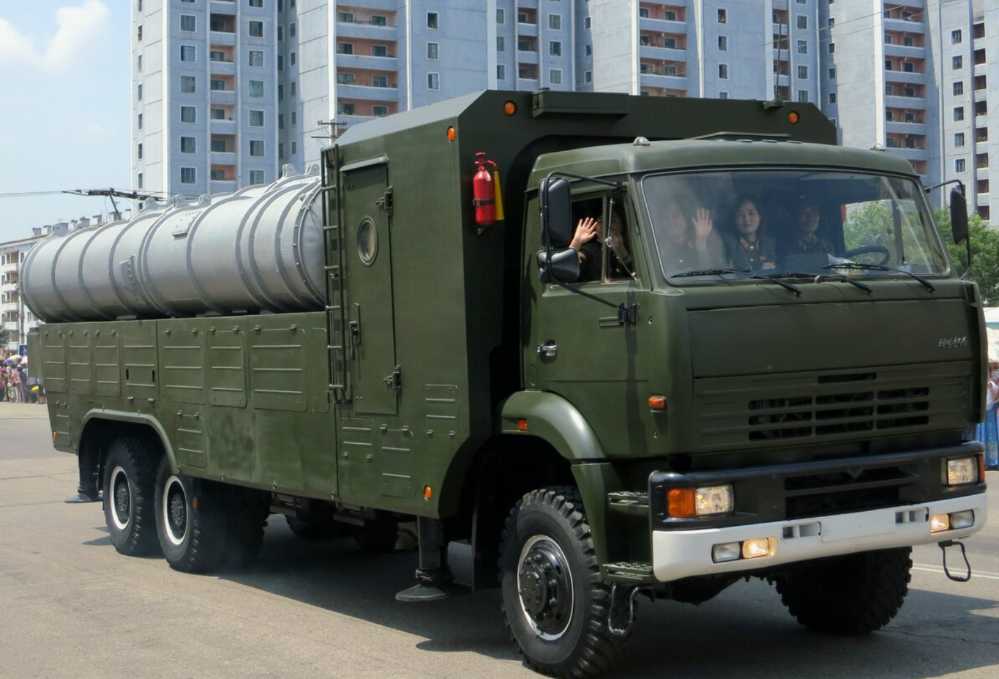
The KN-06 missile is well-known. It attracted worldwide attention as soon as it was unveiled at the military parade in October 2010. The design of its launch tube is very similar to the Soviet-made S-300 air defense missile. The internal name of this type of missile in North Korea is "Lightning" 5. North Korea has introduced air defense missiles from the Soviet Union and equipped the Korean People’s Army air defense forces since the 1960s. The earliest "Lightning" 1 is actually the Soviet S-75 (SA-2) air defense missile. Of course, North Korea’s SA-2 missiles are not all old equipment from the 1950s and 1960s. The "Volga" M air defense missile appeared in a North Korean documentary. This is an improved version of the SA-2 launched by Russia in 1995. North Korea is also working hard to mount the SA-2 on a mobile launch vehicle to improve the survivability of the missile. "Lightning" 2 is not introduced. It may be an improved version of the S-75 (SA-2) (or "Red Flag" 2). "Lightning" 3 is S-125 (SA-3) air defense missile, SA-3 (Pechora) missile is the main force of North Korea’s medium and short-range air defense missiles, equipped with 128 units, organized into 32 battalions with 32 to 35 guidance radars. Its range is 5 to 25 kilometers, its altitude is 0.08 to 14 kilometers, and its missile length is 6.1 meters (data from North Korea’s commentary board). North Korea’s latest improved version of SA-3 can achieve mobile launch. "Lightning" 4 refers to the S-200 (SA-5) air defense missile equipped by North Korea.SA The SA-5 air defense missile is 10.8 meters long (according to the data on the North Korean explanatory board), 0.85 meters in diameter, weighs 2,900 kilograms, and is huge. The SA-5 equipped by North Korea belongs to the S-200VE (the export version of the SA-5). The maximum range of the missile is 250 kilometers and the maximum altitude is 29 kilometers. Currently, North Korea is equipped with 9 battalions of SA-5 surface-to-air missiles. In the 1980s, with the help of Soviet experts, North Korea used it to damage the US SR-71 "Blackbird" high-altitude and high-speed reconnaissance aircraft.
According to the website opened by the North Korean state-owned trading company Zokwang Trading Company in 2019, the "Lightning" 5 has a range of more than 150 kilometers, is guided by a phased array radar similar to the S-300, and has an export price of US$51 million. As early as 2011, South Korean Defense Minister Kim Kwan-jin confirmed that North Korea successfully tested the KN-06 surface-to-air missile in the West Sea. This was the first test launch of the missile since it was first made public on October 10, 2010. The KN-06/Lightning 5 is usually placed in the launch tube. When launching, the launch tube is erected and a vertical cold launch method is adopted. The missile design is similar to the Russian 48N6E. In the North Korean weapons and equipment museum, the explanation board of this triple-mounted air defense missile states: "The missile body is 7.5 meters long, the flight speed is 7 Mach, the strike range is 360 degrees, the preparation time is 5 minutes, and the (radar) can track 100 flying objects at the same time." A truck can carry 3 launch tubes to deal with air strike targets such as cruise missiles and various high-speed aircraft. The system uses the "Taebaeksan" 686x6 truck independently developed by North Korea or the Russian KAMAZ55111 truck chassis. In addition, according to South Korean experts, North Korea also has a more advanced "Lightning" 6 air defense missile. Judging from the pictures revealed by the North Korean media, the diameter of the missile’s launch tube is larger than that of the KN-06/"Lightning" 5, and the range is longer. It uses a two-mounted launch vehicle, and the specific performance data is unknown. On April 7, 2015, two air defense missiles believed to be KN-06 were launched from the area near Hwajinli, Pyeongwon County, South Pyongan Province. North Korea did not release the photos. At about 12:45 noon on April 1, 2016, the missile was launched again. The next day, the "Labor News" published for the first time a photo of Kim Jong-un personally observing the test launch. North Korea displayed two launch vehicles and launched three missiles. Analysts said that Kim Jong-un tried to show North Korea’s air defense capabilities. On May 28, 2017, KN-06 was tested again in the area of Seondeok Airport in Jeongpyeong County, South Pyongan Province. However, given that the 2017 test launch mentioned "a series of defects that occurred last year... it is known that the system is not yet mature. It is reported that during this period, Kim Jong-un also instructed to further develop new surface-to-air weapons. Perhaps the result is the "Lightning" 6/7. North Korea’s propaganda says that the "Lightning" 6 can shoot down ballistic missiles or intercept early warning aircraft.
KN-07 missile
The specific information of KN-07 has not been made public. But it can be judged that it is a number set according to the new missiles disclosed by North Korea between 2010 and 2013. It is likely to refer to the "Musudan" missile that debuted at the 2010 military parade, which was later widely known as the "Hwasong" 10 medium-range missile. Iran also introduced North Korea’s "Hwasong" 10 missile technology and designed the "Khorramshahr" missile on its own. The take-off mass of the "Khorramshahr" series of missiles reaches 19,500 kg, which is 2 tons more than the "Pillar" missile. The warhead weight is increased to 1,500 kg, which is twice the mass of the "Pillar" missile warhead. The maximum range is increased to 2,000 kilometers. It uses a submersible main engine similar to the "Hwasong" 10 and a dual-combustion chamber engine. North Korea’s "Hwasong" 10 is not a simple copy of the Soviet-made R-27/SS-N-6 missile, but an enlarged version. Its launch mass far exceeds the 14.2 tons of the Soviet-made original. This is mainly because the North Koreans increased the length of the R-27 missile and improved its guidance control system and engine. Due to North Korea’s Hwasong-10 uses a smaller warhead than the Khorramshahr series, so the length of the Hwasong-10 missile is only 12 meters, and its diameter is still 1.5 meters, the same as the R-27 missile. On April 9, 2016, the Rodong Sinmun reported that Kim Jong-un directed the ground ignition test of a new type of intercontinental missile high-thrust engine. The outside world believed that North Korea may have successfully copied the engine of the R-27 missile and made improvements. Photos at the time showed that most of the combustion chamber and nozzle of this engine, which will be used in the first stage of the KN-08/Hwasong-13 missile, were immersed in liquid fuel. It is equivalent to two 4D10 main engines and dual-combustion chamber swing engines of the R-27 missiles connected in parallel, with a thrust of about 50 to 60 tons. At 5:30 a.m. on April 15, 2016, At 6:40 a.m. and in the afternoon of April 28, several test launches of the missile all failed. On the morning and afternoon of the 28th, the South Korean military also knew in advance that North Korea would launch missiles. On May 31, 2016, the fourth launch was restarted and failed again. This time, it is estimated that it exploded on the launch pad.
Due to the long interval between the first and third launches and the fourth launch, North Korea seems to have put a lot of effort into solving the shortcomings of the missile. Since 2021, some media have claimed that the continued failures at this time were caused by US cyber attacks. At 5:58 a.m. on June 22, 2016, the South Korean military discovered that North Korea launched another "Musudan" missile near Wonsan Gumma International Airport in Gangwon Province, but the missile exploded after flying 150 kilometers. Generally, the engine has been shut down and the missile head has been separated at this distance, so North Korea is likely to deliberately detonate the warhead. At 8:05 a.m. that day, North Korea launched another missile at the same location, and the missile flew 400 kilometers. Japanese media reported in subsequent reports that the highest point of the missile’s trajectory reached more than 1,000 kilometers, close to the highest trajectory of intercontinental missiles, and the test may have been successful. On June 23, the Korean Central News Agency released news that Kim Jong-un directed the test launch of the ground-to-ground medium- and long-range strategic ballistic rocket "Mars" 10 on site. This was the first time that North Korean official media publicly confirmed that the so-called "Musudan" missile was actually "Mars" 10. This test launch was the first success of the missile after five failed launches, and it also provided a firm scientific and technological guarantee for North Korea’s "future strategic weapon system development." The official North Korean announcement stated that the missile had a maximum flight altitude of 1,413.6 kilometers and accurately landed at a target point 400 kilometers away, and the warhead successfully re-entered the atmosphere.
Two launch vehicles participated in the test. Due to its high failure rate, some people often call it a "defective weapon", but in fact, there is a view that it failed because it deviated from the original design. That is to say, the normal trajectory of the missile should have flown at an angle of 45 degrees, but North Korea launched it at a high angle of 83 degrees, causing the rocket engine or missile body originally designed for 45-degree launch to be overloaded and malfunctioned many times. The reason why North Korea took the risk of failure to launch at a high angle is mainly because of the small land area of North Korea. It is necessary to control the landing point of the missile as much as possible within 500-1000 kilometers, so that North Korea can effectively monitor the entire flight of the missile and recover the flight data. If the flight distance of the missile exceeds 1000 kilometers, if the missile loses control, it may fall into the territory of another country, causing serious diplomatic problems, and even become an excuse for other countries to launch a war against North Korea. Previously, the "Mars" 7 also had a malfunction when launching at a high angle (the maximum flight altitude can be increased to 500-600 kilometers). If the "Mars" 10 is launched at a normal angle, its range can reach 3000 kilometers, which means that the missile will fly over the Japanese mainland. Since North Korea lacks ocean-going observation ships, whether the warhead can re-enter successfully or send back data will be a big problem. Later, when North Korea conducted test launches of the Hwasong 12, 14, 15, and 17 missiles, it also tried to control the missile’s range within 1,000 kilometers to facilitate data recovery. After confirming the reliability of its warhead reentry heat protection technology, the full-range test of the Hwasong 12 missile was carried out. As mentioned above, the high-trajectory test of the Hwasong 10 in 2016 was also an opportunity to test the reentry technology, which is crucial for the future development of intercontinental ballistic missiles. In order to enhance the controllability of the missile, eight grille tail fins were added to the tail of the Hwasong 10. This design is similar to the SS-21 missile and the SS-25 "White Poplar" intercontinental missile, and was later used in the improvement of the "Polaris" 1/2 two-stage solid medium-range missile. However, as the technology of North Korean missile vector thrust engines matured, this type of design (which would increase the radar reflection cross-section of the missile and make it easier to be detected by enemy radars) was cancelled on the more advanced "Polaris" 3/4/5 submarine-launched missiles. The low launch success rate of Hwasong-10 is due to the failure to solve the technical difficulties encountered when launching at high angles. High-angle launches put a great burden on the missile itself, especially the engine part, which is prone to cracks and liquid fuel is prone to leaking and exploding. If it is launched at a normal angle instead of a high angle or using solid fuel, the launch success rate will be greatly improved. Since North Korea is also clearly aware of this problem, its Pukguksong-2 missile was successfully launched soon after using a solid fuel engine.
KN-08 ICBM
The KN-08 ICBM (previously known as Nodong-C) was once one of North Korea’s most mysterious missiles. It was first publicly unveiled at the Sun Day parade on April 15, 2012. North Korea calls it "Mars" 13. The missile is about 2 meters in diameter and 19 meters long. The missile uses a three-stage liquid engine with an estimated range of 10,000~12,000 kilometers. The missile is mounted on a special wheeled chassis of the Chinese-made Wanshan WS5120016x12 configuration. The chassis may have used technology from the Minsk Automobile Plant in Belarus and has a payload capacity of 80 tons. The vehicle is powered by a Cummins KTTA19-C700 turbocharged diesel engine with an output of 700 horsepower. It is a commercial engine. The engine is installed behind and below the cab. It is matched with a ZF automatic transmission. This special wheeled chassis has a certain degree of off-road mobility, although it is mainly designed to travel on hard surfaces. In 2011, China exported a total of 8 Wanshan WS51200 transport vehicles to North Korea. The North Koreans converted these vehicles into missile launchers, installing hydraulic devices and control devices to set up missiles. The engine of the first stage of the "Mars" 13 came from the "Mars" 10, and the third stage engine was almost the same as the later "Mars" 14. The warhead is very similar to the "Mars" 12 missile. According to North Korean media reports on March 9, 2016, Kim Jong-un inspected missile-related military facilities, including a full-scale model of the nuclear warhead allegedly installed on the KN-08 missile. According to the analysis of the website 38 North Latitude, the location is the Taesung Machinery Factory. The engine of the missile was tested on the ground many times from 2013 to 2014, but the flight test of the whole missile has not been carried out. The missile is mainly to lay the technical foundation for later missiles and train scientific research and production teams. Its guidance, stage separation, shell manufacturing and engine control technologies were used in the development of the later "Mars" 12, 14, 15 and other missiles.
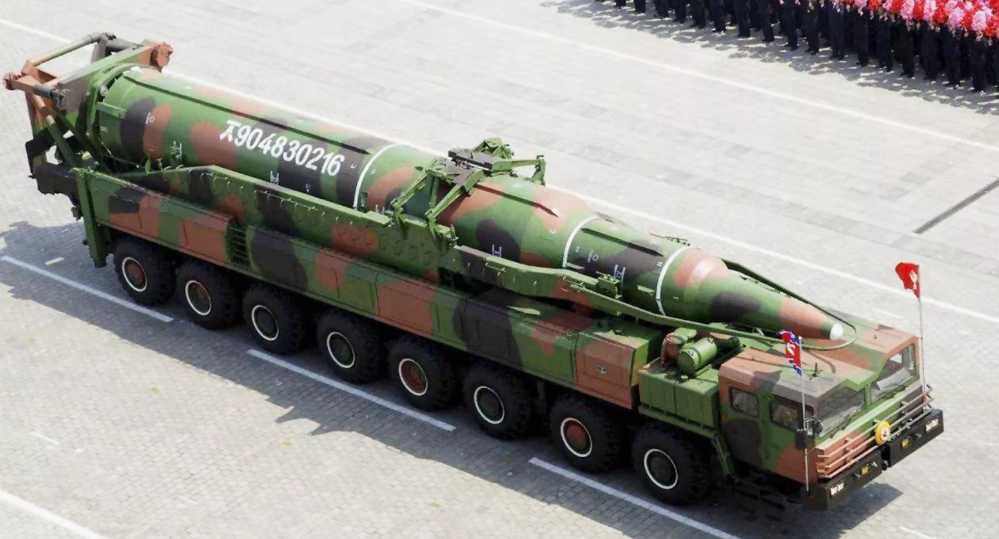
On October 15, 2016, North Korea failed to launch a missile at Fangxian Airport in Gucheng City, North Pyongan Province. At 7 am on October 20, another missile was launched, but it exploded again within a few seconds. According to South Korean government officials, satellite photos show that the TEL launch vehicle also exploded. Some people believe that the two test launches at the end of 2016 may be KN-08 missiles or a mysterious two-stage liquid missile, which is also launched by MAZ-547 and is as long as "Mars" 12. The first stage uses a submersible engine, and the second stage is the same as the third stage of "Mars" 13, with a cone-column-skirt design. This two-stage missile may be the initial version of the Hwasong 12. At that time, North Korea’s "318 Revolution" engine had not yet been successfully developed. North Korea may have used the submersible engine it obtained from the Soviet Union to develop this type of missile. American missile researcher Jeffrey Lewis said that the missile launched from Fangxian Airport was not the Hwasong 10, but the KN-08 missile, but he himself was skeptical and believed that the probability was 50% (it was more likely to be the primary model of the Hwasong 12, the two-stage version of the Hwasong 10). In July 2016, the Institute for Science and International Security in the United States released a report stating that a suspected uranium enrichment facility was found underground in Jiangjundae Mountain, about 45 kilometers west of the Yongbyon Nuclear Complex in North Korea, and it was speculated that there were 200 to 300 uranium enrichment centrifuges there. According to reports, Jiangjundae Mountain is located southeast of Fangxian Airport in Gucheng City, North Pyongan Province. There is an underground Fangxian Aircraft Factory, which is also believed to be a drone factory in North Korea. The report pointed out that the Fangxian Aircraft Factory once produced parts for Soviet-made MiG fighters in the 1960s, and the centrifuges also use high-strength aviation metal plates. The underground factory equipped with relevant equipment is suitable for installing centrifuge facilities on site, and it is easy to use in secret and avoid the verification of the International Atomic Energy Agency. The report also believes that North Korea has obtained a fairly high level of centrifuge technology by transferring the "Nodong" ballistic missile technology to Pakistan. North Korea claims that it has only built uranium enrichment facilities in Yongbyon, but there have been people who suspect that North Korea has or is operating uranium enrichment centrifuges in areas outside Yongbyon. North Korea’s missile test here is also conducive to the future realization of the combination of two missiles. On March 22, 2017, a missile believed to be "Mars" 10 (some people believe it is "Mars" 13) exploded again on the runway of Wonsan Geumga International Airport. Satellite photos show that there are explosion marks with a diameter of 100 meters on the runway. 38 Degrees North analyzed that the missile exploded during transportation or after erection. This failure caused North Korea to separate the launch vehicle from the launch pad when testing the Hwasong 12/14/15 missiles in 2017, after the missiles were erected, to ensure the safety of the precious launch vehicle. The low success rate of Hwasong 10 and its derivatives prompted North Korea to choose to develop a new intercontinental missile based on the "318 Revolution" or "Paektusan" engine. In August 2017, Kim Jong-un deliberately disclosed some information about the Hwasong 13 missile during his on-site guidance of the Chemical Materials Research Institute of the Ministry of Defense Industry, which seemed to mean that North Korea was still continuing to develop the Hwasong 13. At that time, the display board of the missile was released together with the mysterious "Polaris 3". This seemed to be a deliberate exposure of meaningless information to confuse the United States and South Korea. The "Polaris" 3 tested later was significantly different from the display board. At the conference celebrating the successful launch of Hwasong 14, North Korea had publicly released a picture of the suspected launch test of the land-based version of the "Polaris 3", which seemed to mean that the early land-based test of the "Polaris 3" might have failed. As for whether the Mars 13 will be tested in a new look in the future, or will disappear from the public eye, we can only wait for the test of time.
(To be continued)