
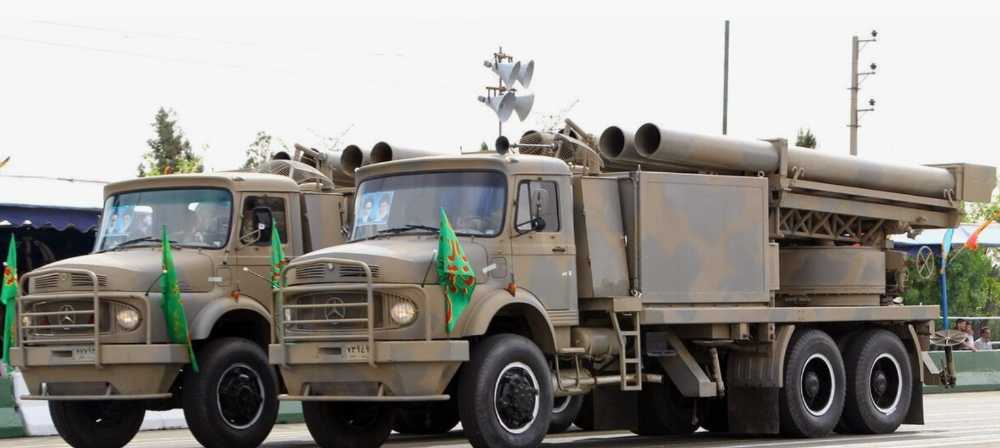
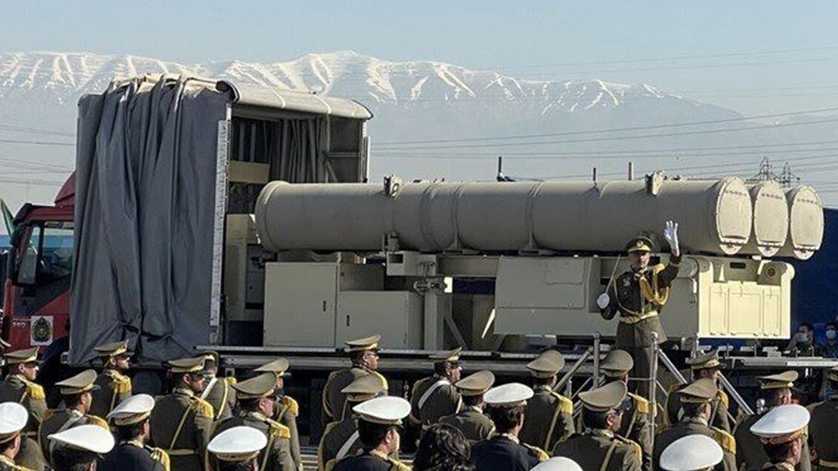
On April 11, 2023, to celebrate Iran’s Army Day, the Iranian Army displayed 1,084 pieces of weapons and equipment. Abdul Rahim Mousavi, commander of the Iranian Army, and Kiumars Haidari, commander of the Army Ground Forces, attended the unveiling ceremony. Although it was grand, most of the equipment was refurbished from old weapons, such as the "Chieftain" main battle tank and the BTR-60PB wheeled armored vehicle. However, Iran also exhibited its own Fath360 tactical missile system ("Victory" 360, translated as "Fateh"), Majid air defense missile system, "Karrar" tank and other new equipment with Iranian characteristics, which together supported the facade of the Iranian Army.
Development Overview
Iran attaches great importance to the research and development of army rocket launchers and tactical missile systems, and has achieved localization. For example, Iran developed the Nazeat tactical rocket based on the Soviet Frog 7 tactical rocket, introduced technology from North Korea to produce the Fajr-5 333mm 4-tube rocket system, and the Conqueror missile family that did not appear this time. The development of Iran’s solid rockets began with the imitation of the Frog 7 tactical rocket, and developed the Earthquake series of rockets (the range was increased to 200 kilometers, but the size was greatly reduced). After introducing foreign technology, Iran developed the Conqueror 110 missile in 2001. The missile is about 8.9 meters long and 0.61 meters in diameter. The missile weighs about 3.5 tons and the warhead weighs 500 kilograms. The early model has a range of about 200 kilometers, and the range of the subsequent improved model has been increased to 250 kilometers to 300 kilometers. The Conqueror 313 has reached 500 kilometers. The guidance methods of this series of missiles include: inertial guidance + satellite guidance, infrared terminal guidance, radar terminal guidance and other types, and the strike accuracy is reduced from 250 meters CEP to about 5 meters. On January 8, 2020, the Iranian Revolutionary Guard also attacked the US military base in Iraq with the "Conqueror" series missiles, showing very high strike accuracy, proving that its basic design is very successful. According to Defense World, during Iran’s attack on the US-controlled Assad Air Base in January 2020, Russia provided Iran with GLONASS access in retaliation for the US killing of Islamic Revolutionary Guard General Qassem Soleimani. Sources mentioned that Iran launched 19 missiles from its territory in that attack, 17 of which hit the target. In recent years, Iran has also developed a barrel-mounted launch version of the "Conqueror" series.
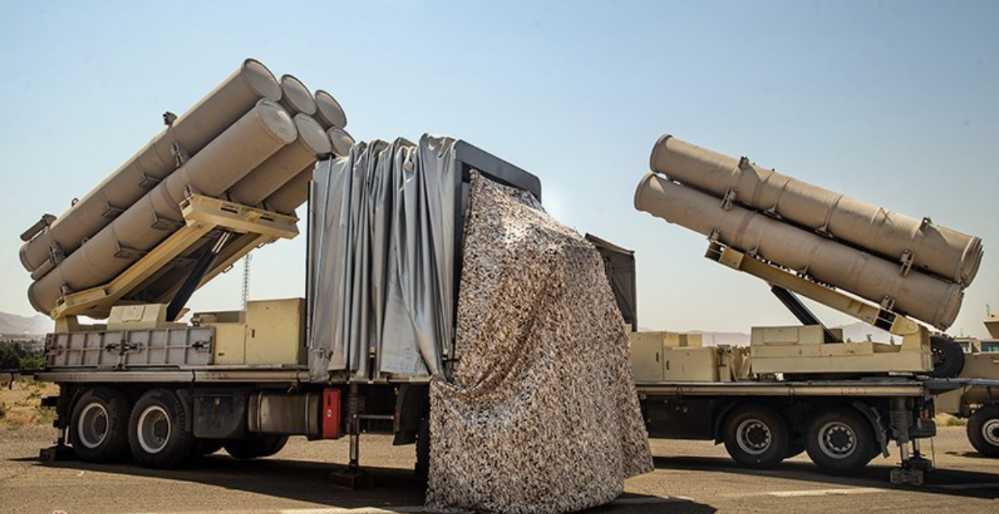
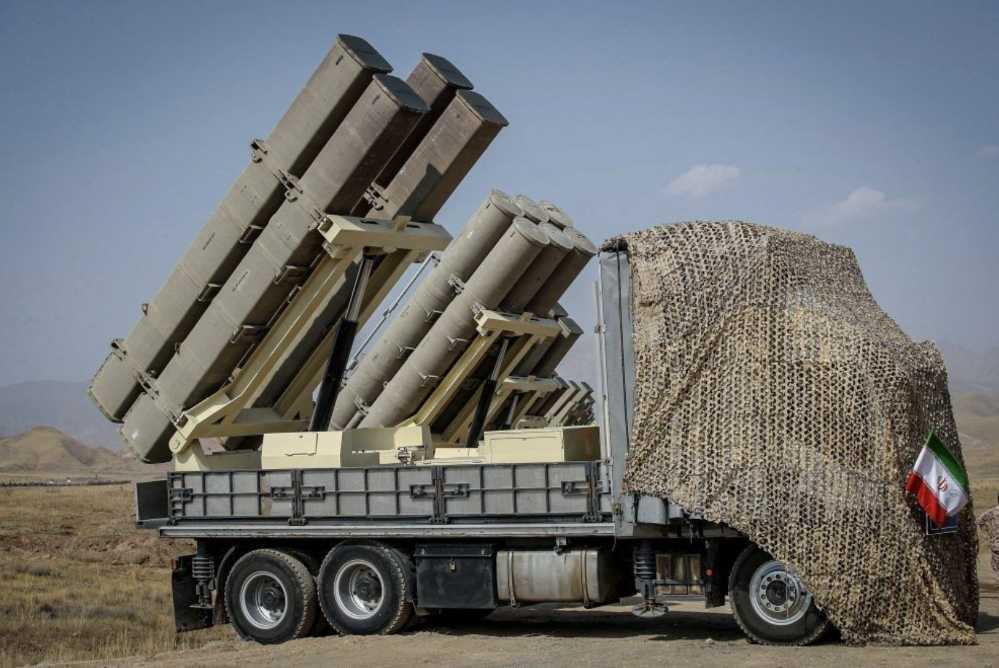
On May 24, 2009, the Iranian Ministry of Defense officially launched the production line of a 40mm automatic ship-borne anti-aircraft gun called Fath40. The maximum range of the gun is 12 kilometers, and the rate of fire is 300 rounds per minute. Najjar claims that the gun is completely independently developed by Iran, but some people suspect that it is an Iranian improved version of the Bofors 40mm/70 anti-aircraft gun. The Fath360 missile system on display this time also uses a new tube-mounted launch technology. It is said that its missile is only 4 meters long and about 0.3 meters in diameter. The total weight of the missile is 850~1100 kilograms, the warhead weighs 150 kilograms, and the range is 80~100 kilometers. The rear of the launch vehicle can be installed with 6, 4 or two launch tubes, and its combat capability is no less than that of the US military’s "HIMARS" wheeled rocket launcher. Retired US Army General Mark Hertling pointed out that the wheeled "HIMARS" is more flexible than the tracked M270 rocket launcher. Hertling mentioned that the maintenance and repair of heavy tracked systems such as the M270 are more challenging than the "HIMARS" rocket launcher. He also said that the smaller size of the HIMARS means fewer soldiers, easier training requirements and faster movement and reloading.
According to the New York Times, Ukraine has only 26 HIMARS launchers and an undisclosed number of M31 rockets, and Ukrainian soldiers have taken advantage of the speed and mobility of the HIMARS, allowing them to quickly reload ammunition while avoiding Russian anti-artillery fire. These advantages are also reflected in Iran’s Fath360 missile system, which helps implement Iran’s asymmetric warfare theory and maintain an effective combat force in the face of international sanctions, budget shortfalls and technological deficiencies. In an article for the Washington Institute for Near East Policy, Michael Eisenstadt pointed out that Iran’s military capabilities have made a major leap forward. He pointed out that Iran is still designing simple but powerful weapons, which allows it to quickly improve the combat effectiveness of its conventional forces in a short period of time. The lightweight wheeled configuration may make the Fath360 missile system more flexible in mobile operations in mountainous, desert and urban areas in Iran and the Middle East.
A careful observation shows that the Fath360 missile system is actually an improved version of the BM-120 missile disclosed by the Iranian Ministry of Defense and the Armed Forces Logistics Department in December 2021. The launch vehicle design and missiles of the two are almost identical, except that the previous rectangular launch box has been changed to a circular launch tube. The BM-120 and Fath360 missiles are actually more like a multiple rocket launcher system. They both use a 6x6 civilian truck chassis, and the rear of the launch vehicle can carry up to two rows of 6 missile launchers. The advantage of using a modular storage-launching integrated launcher is that it can be maintenance-free after leaving the factory, only regular inspections are required, it is easy to hoist, and it can be replaced at any time, which greatly reduces the reaction time of the system and enhances combat flexibility. The rear of the chassis also has a common compartment cover for ordinary trucks, which can conceal the missile launcher in peacetime, improve battlefield survivability and is very suitable for "missile guerrilla warfare". The missile can be launched remotely to ensure the safety of the operator.
According to the technical characteristics published in the Iranian weapons export catalog, the BM-120 missile has a diameter of 368 mm, a length of 5.175 meters, a take-off mass of 787 kg, a maximum flight speed of Mach 4, a range of 30 to 120 kilometers, and is equipped with a 150 kg high-explosive fragmentation (HE-FRAG), penetrating or cluster warhead. The missile adopts a pointed cone warhead + cylindrical body design, with a truncated triangular canard rudder at the front of the body and a truncated triangular tail + polygonal swept tail at the rear. This layout is in line with the "Conqueror" 110 series and can be considered as a smaller version. The Fath360 missile system is an improved version of the BM-120, and the warhead weight and aerodynamic layout of the two are the same.
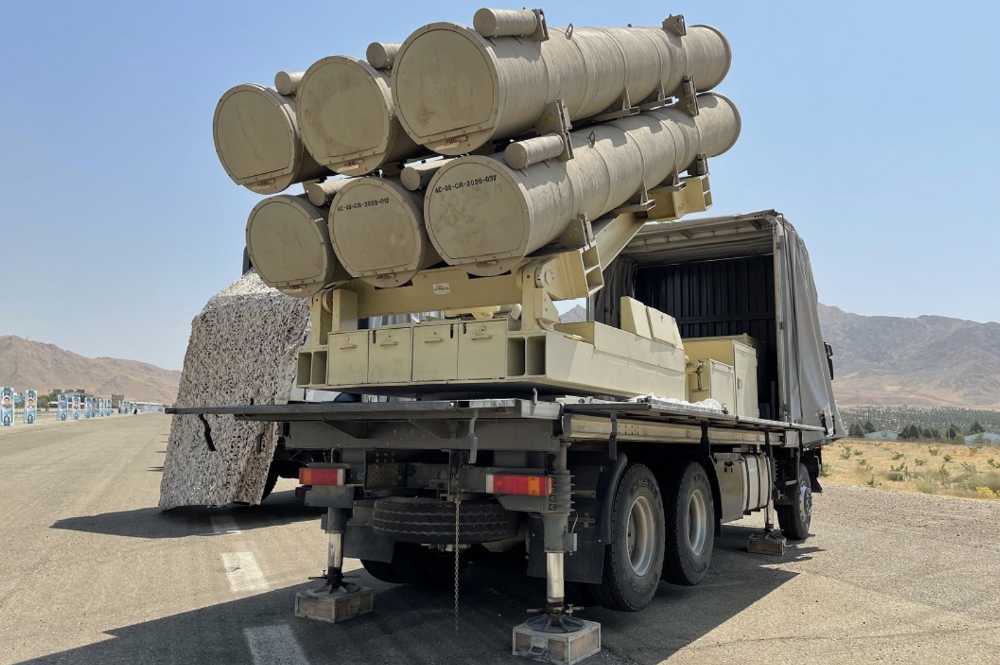
Fath360 uses a fixed wing design to reduce costs. Thanks to the proliferation of high-precision inertial guidance components, satellite navigation and positioning systems, microelectronic control systems and other dual-use commercial components, Iran can integrate high-precision equipment in the missile control cabin with a diameter of only more than 300 mm, thereby improving its strike capability. Iran claims that the missile uses inertial guidance (INS) + satellite navigation system guidance, and the circular error probability (CEP) is less than 30 meters. In the strike video, there are scenes of using air burst fuses to destroy targets, as well as scenes of direct ground drilling strikes. When hitting concrete buildings, it can make a 1.1x0.9 meter hole, which is quite powerful.
Iran News Agency reported that the Fath360 missile has been delivered to the Islamic Revolutionary Guard Corps. The two- and four-launch launchers enable the Islamic Revolutionary Guard Corps ground forces to launch precise short-range large-scale firepower at enemy air defense systems, while freeing up the Revolutionary Guards aviation forces to allow them to strike at longer distances. In September 2022, Iran launched several Fath360 missiles and an unknown number of Shahed136 suicide drones to bomb the entire Kurdistan region of neighboring Iraq, killing at least 14 people and injuring 58. On the 29th, U.S. State Department Deputy Spokesperson Vedant Patel confirmed that a U.S. soldier was killed in an Iranian missile attack in Iraqi Kurdistan. This shows that the Fath360 missile system is already capable of actual combat.
Overall design
Fath360 missile system can strike different targets at the same time, that is, it has a single-gun multi-target distributed precision strike capability. This places high demands on the missile’s command system, reconnaissance system, data link and soldier quality. This requires timely collection of enemy precise coordinates through the information reconnaissance network composed of preliminary reconnaissance or reconnaissance radar and drones to transmit to the command platform, and binding different firing elements to each missile through the data link system, so as to attack multiple targets in a short period of time, thereby achieving the effect of one shot, multi-point attack and simultaneous destruction. From 2017 to 2019, Iran used the "Conqueror" missile to strike terrorist targets. At that time, the Iranians sent drones to conduct reconnaissance and strike effect evaluation on the targets, which shows that Iranian drones can communicate with missile forces through data links to achieve "discover and destroy" strikes. At the launch position, the missile launcher is raised at a 45-degree angle at the rear of the truck, and all launch operations can be performed in the truck cab. The Fath360 missile system can be disguised as an ordinary truck, and the number of missile launch tubes can be adjusted. The missile has good performance in use. The performance of the missile refers to the easy operation, short preparation time, safety and reliability of the missile in combat use. It roughly includes transportation and maintenance performance and operational performance. The transportation performance is directly related to the size, mass, structural strength of the missile and the sensitivity of the missile components to transportation vibration and shock. When designing the Fath360 missile, the restrictions of transportation conditions on various parts of the missile were fully considered to ensure good transportation characteristics. The use of an integrated storage and transportation launch tube can protect the missile from uncertain factors during transportation. The missile is stored in a sealed launch tube, with short maintenance time and quick and easy detection, which can minimize the possibility of failure. The missile has a short launch preparation time, relatively simple requirements for meteorological conditions, and is easy to use.
Due to the full use of the mature technology accumulated by Iran in the development of the "Conqueror" series of missiles, the Fath360 missile has a simple and reliable structure and good processability, which can reduce the production and manufacturing costs of the missile and shorten the development cycle. The missile can be equipped with a penetrating warhead, which relies on the kinetic energy of the missile to penetrate the target’s protective layer to a certain depth and then explode, which can enhance the destructive effect on the target. In addition, the missile can also use a submunition warhead. The main advantage of the submunition warhead is that it can expand the coverage area of the target and improve the penetration capability without increasing the number of carriers. It disperses the damage energy concentrated in the overall warhead into the damage energy of several points, and according to the distribution law required by the target characteristics and damage effect, the bullet landing point is optimally distributed, thereby greatly improving the damage efficiency of the warhead. Submunitions can expand the coverage area of the target, especially when attacking soft-surface targets. The ultimate damage efficiency of the submunition warhead is determined by the power of the bullet and its landing point distribution. The landing point distribution of the bullet mainly depends on factors such as the ballistic characteristics of the submunition, the aerodynamic characteristics of the bullet, the submunition dispersion characteristics and the bullet dispersion height. Choosing an appropriate dispersion height can achieve the best distribution of bullet landing points.
Fath360 missile uses a solid rocket engine, which has the advantages of simple structure, reliable operation, easy operation, good safety, low cost, long-term storage, and rapid start-up. It uses a precise guidance and control system. The guidance system of the missile includes a guidance system and a control system. Guiding the missile and accurately hitting the target is the central task of the guidance system. In the process of the missile flying to the target, the guidance system continuously measures the relative position of the missile and the target to determine the deviation of the actual movement of the missile from the ideal movement, and forms appropriate control instructions based on the measured movement deviation. According to the control instructions provided by the guidance system, the control system generates a certain control force to control the missile to change its motion state, eliminate the influence of deviation, and correct the actual flight trajectory of the missile to make it as consistent as possible with the theoretical trajectory (reference trajectory) so that the missile can accurately hit the target. Among them, the guidance system is generally composed of a measuring device and a guidance computer. The missile attitude control system, also known as an autopilot, is generally composed of attitude sensitive elements, a control computer and a servo mechanism. The Fath360 missile is equipped with an inertial guidance system. The inertial guidance system uses the inertial elements on the missile to measure the motion parameters (such as acceleration, etc.) of the missile relative to the inertial space, and under the given initial conditions of the motion, on a completely autonomous basis, the guidance computer calculates the missile’s speed, distance, position and attitude parameters to form a control signal to guide the missile to fly along the predetermined trajectory. The measuring elements used in the inertial guidance system are gyroscopes and accelerometers. The former is used to measure angular motion relative to the inertial space, and the latter is used to measure linear motion relative to the inertial space. The two inertial elements are installed on the missile. The synthesis of the angular motion and linear motion they measure is the motion of the missile relative to the inertial space, so the position of the missile relative to the inertial space can be obtained. The position of the accelerometer on the missile should remain unchanged relative to the given coordinate system.
To be precise, the Fath360 missile uses a strapdown inertial guidance system. The key to the strapdown inertial guidance system is high-precision inertial measurement instruments, high-performance computers and software design. Its characteristics are that the inertial measurement elements accelerometers and gyroscopes are directly fixed to the missile body. These elements measure the missile’s angular velocity and linear acceleration along the three axes of the missile body coordinate system. The computer calculates the attitude matrix in real time, and transforms the axial acceleration information of the missile body coordinate system measured by the accelerometer to the navigation coordinate system through the attitude matrix. The missile speed and position are calculated through navigation calculation, and the orientation of the velocity vector in the navigation coordinate system is determined. At the same time, the attitude information of the missile is extracted from the attitude matrix for guidance and control. In the strapdown inertial guidance, converting the measured acceleration into acceleration relative to a fixed direction requires a large amount of calculation by a high-speed, large-capacity computer. Therefore, the strapdown inertial guidance system is equivalent to a hypothetical platform provided by the computer. However, since the inertial instrument is fixed to the missile body, the working environment is poor, which requires the inertial instrument to work reliably in harsh environments such as missile body vibration, shock and temperature. The inertial guidance system does not rely on any external information, is not interfered by the outside world, and does not emit any energy to the outside. It has strong anti-interference ability and good concealment.
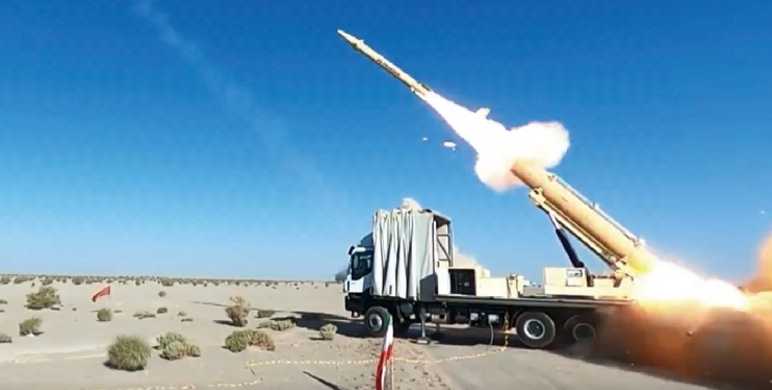
Fath360 missile uses a tilted launcher. This launch method changes the launch direction in real time. The height and azimuth of the launch device guide rail are adjustable. The missile’s engine can ensure that the missile obtains the required speed and thrust when it is launched off the track, so that the missile will not fall. The Fath360 missile relies on the deflection of the rudder to complete the control flight. It is not equipped with a gas rudder to reduce manufacturing costs, which is the same as ordinary guided rockets. In order to ensure the normal operation of the rudder during the flight of the missile, the aerodynamic characteristics of the rudder need to change smoothly. Therefore, the missile generally avoids the transonic section where the aerodynamic characteristics are unstable. The missile’s rudder surface usually starts to operate at supersonic speed. There are two sets of stabilizing wing surfaces, one large and one small, at the tail of the missile. The Fath360 missile adopts an X-shaped axisymmetric wing surface layout. Its main feature is that it can generate the same amount of lift in any direction, and the size and point of action of the lift are independent of the missile’s rotation around the longitudinal axis, that is, no matter how the missile rotates: the size and point of action of the lift remain unchanged. The lift generated by the missile tail in any direction has the characteristics of rapid response, which greatly simplifies the design of the control and guidance system. The Fath360 missile uses the canard aerodynamic layout of the "Conqueror" series, which is easy to arrange the parts. The missile rudder surface of the canard layout is placed at the head of the missile body, which is far away from the center of mass of the missile, that is, the longitudinal control force arm is long, and the rudder is efficient, so the rudder surface area can be smaller and the required steering gear power can be smaller. Since the deflection angle of the canard rudder surface is in the same direction as the missile wing attack angle, while the normal layout is opposite, the total lift of the canard layout is greater than that of the normal layout. However, the deflection angle of the rudder is in the same direction as the angle of attack of the missile, and the maximum angle of attack that can be used is limited. Since the rudder has a small wingspan and a small area, it has little effect on the downwash of its rear wing. However, since the canard rudder is in front of the missile wing, the lift generated by the rudder is almost offset by the lift reduced on the missile wing due to the downwash of the rudder, and the total lift of the whole missile is almost unrelated to the lift of the rudder. The canard has a large oblique blowing moment and poor lateral stability. Generally speaking, the rudder is not suitable for differential ailerons, and a separate aileron is required for rolling control. However, Iran did not design ailerons for its Fath360 missile, indicating that the maneuverability of the missile is still relatively limited, and it mainly relies on compressing the enemy’s warning time and reducing the size of the missile to improve its penetration capability.
Conclusion
Of course, the power of the Fath360 missile cannot be exerted by a single launch vehicle. In order to improve the air defense capabilities of its army, Iran has also developed air defense missile systems such as "Sahand" 3 and Majid. The Majid air defense missile is mounted on the chassis of the Iranian-made Aras-2 4x4 off-road vehicle. The vehicle is equipped with a 200-horsepower diesel engine, the vehicle’s maximum speed is 100 kilometers per hour, and the maximum road range is 500 kilometers.
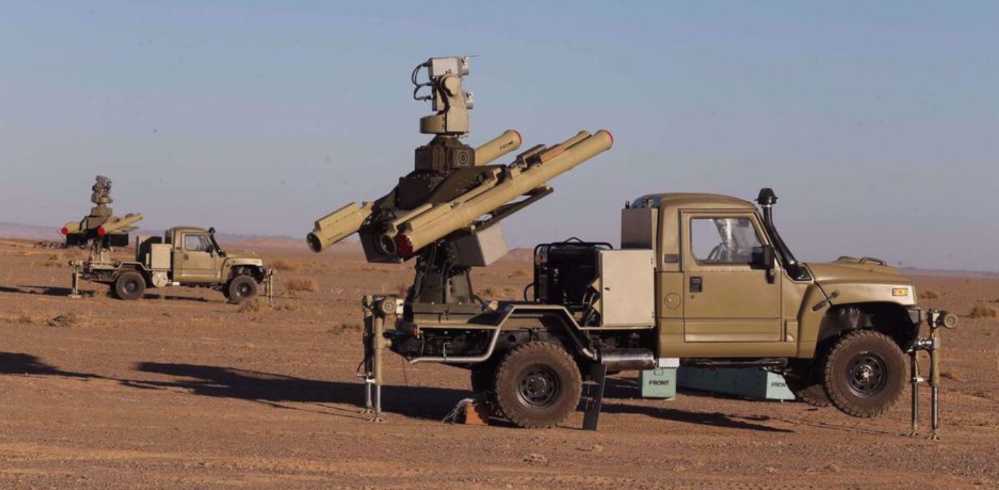
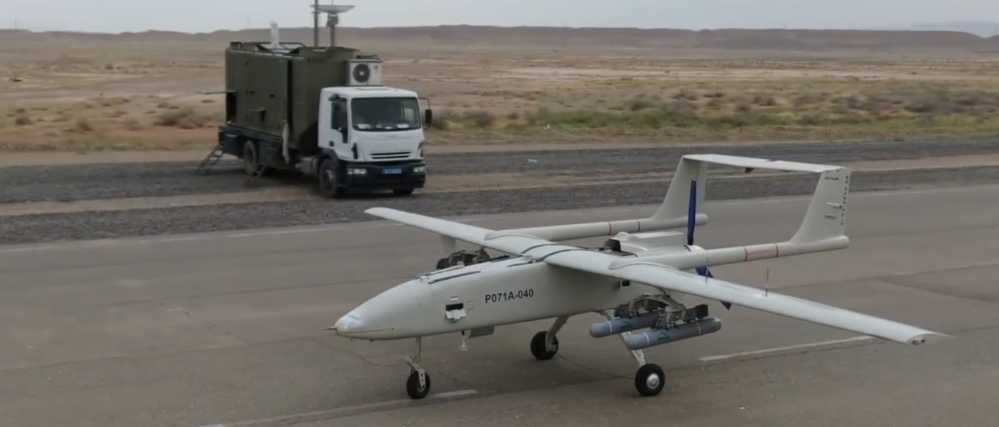
The vehicle is equipped with an independent and stable day and night optoelectronic search system. The optoelectronic detection system can rotate 360 degrees, the pitch angle is 0~12 degrees, the maximum detection range is 15 kilometers, and it can track four targets at the same time. The vehicle can carry four anti-aircraft missiles. This infrared-guided short-range missile has a diameter of 156 mm, a length of 2.67 meters, and a weight of 75 kg. It uses a smokeless rocket engine, has a range of 0.7 to 8 kilometers, a firing height of 220 meters to 6 kilometers, and a reaction time of 3 seconds. The missile can be fired and then left alone. The system can also be equipped with a Kashef-99 3D phased array radar, which has a detection range of 30 kilometers and can detect 300 targets at the same time. They can accompany the Iranian army in combat, provide an air defense umbrella, and increase the difficulty for the enemy to hunt down missile launchers such as Fath360. The Iranian Army Aviation also displayed the "Shafaq" missile installed on the "Kabri" helicopter. The missile is an improvement on the FM-80 missile and has a range of up to 20 kilometers. It can use semi-active laser guidance, the warhead weighs 13 kg, and the flight speed reaches 750 meters per second. The missile can destroy various tanks, armored transport vehicles, concrete fortifications and other targets. The armed helicopter can work with ground rockets or missile forces to launch attacks on the enemy’s depth or prevent the enemy from breaking through and protect its own deep targets. Iran also exhibited the "Mohajer-6" reconnaissance and strike drone that can cooperate with the Fath360 missile. Together, they constitute Iran’s new combat force.