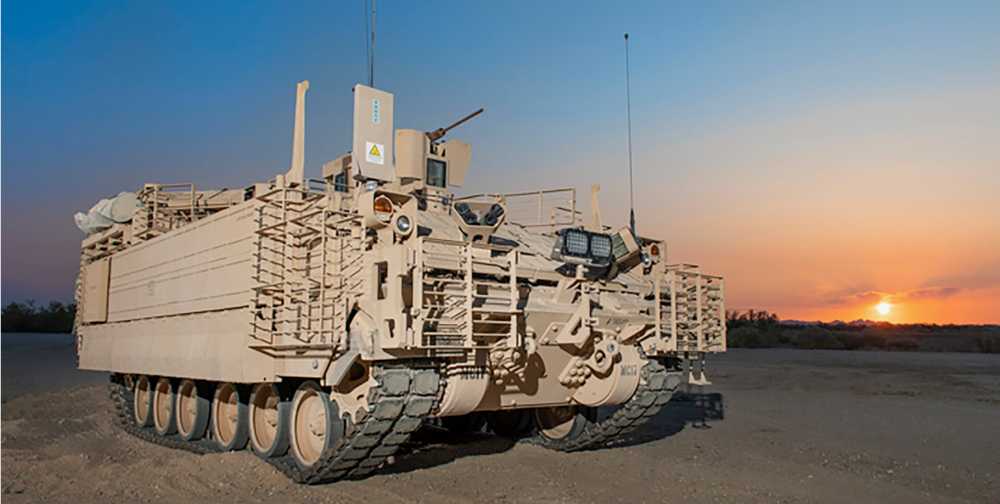

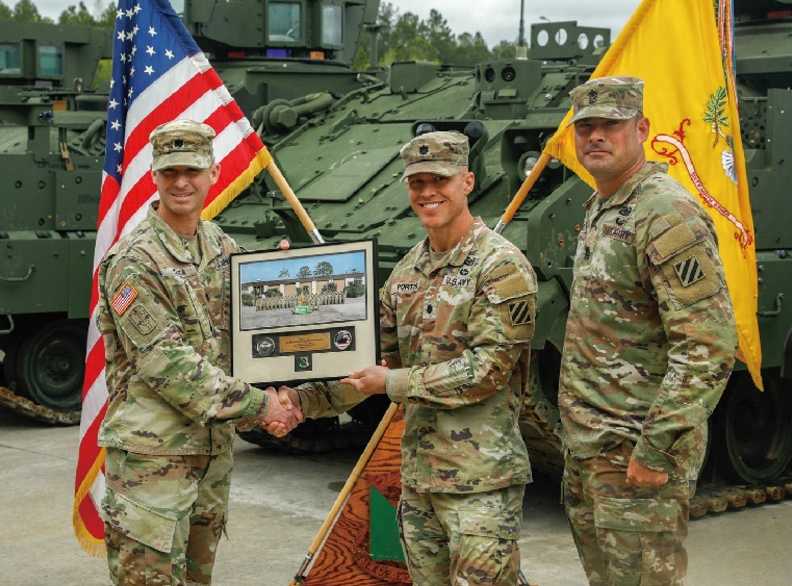
According to the U.S. Defense News website on March 15, the 1st Armored Brigade Combat Team of the 3rd Infantry Division of the U.S. Army recently received the first batch of AMPV "multi-purpose armored vehicles". This marks that the M113 armored transport vehicle, which has been in service for 63 years, has a total production of more than 75,000 vehicles, and has been equipped by the armed forces of more than 50 countries and regions, and is known as the "battlefield taxi", has finally ushered in a replacement.
Why does the M113 armored transport vehicle have such tenacious vitality? What considerations did the U.S. military have before deciding to replace it with the AMPV "multi-purpose armored vehicle"? What are the design features of this latest "battlefield taxi"? To clarify the clues, we must start with the design features of the M113.
Classic design
World War II was the first mechanized war of mankind. The steel torrent represented by tanks and self-propelled artillery became the main assault force of the army of various countries. However, war practice has shown that even tanks that combine firepower, mobility, and protection will fall into the embarrassing situation of "a tiger in a plain being bullied by a dog" if they are separated from infantry support. During World War II, the mechanized infantry of the US military mostly rode half-track transport vehicles to accompany tank attacks. This type of vehicle is not only complex in structure, but also fails to achieve the original intention of combining the advantages of wheeled vehicles and tracked vehicles, but instead magnifies the shortcomings of both. What is particularly unacceptable is that the half-track transport vehicle has no roof, and the side armor of the vehicle body is better than nothing, which actually cannot provide much battlefield protection for mechanized infantry.
In view of this, in the 1950s, the U.S. military began to seek a "vehicle that allows infantry to follow tanks and fight under protection" for mechanized infantry, and required "low cost and lighter than the M59 armored personnel carrier in combat." FMC, which participated in the bidding, began to develop two prototypes in 1956, the T113 with aluminum alloy armor and the T117 with steel armor. The former has an aluminum armor thickness of 31.75 mm (1.25 inches), and the latter has a steel armor thickness of 9.53 mm (0.375 inches), and the bulletproof capabilities of the two are comparable. Through comparative tests, the U.S. Army believes that aluminum armor is easier to weld, thicker armor makes the body more rigid, and the empty weight of T113 is 6% lighter than T117. Therefore, T113 was finally selected and finalized as M113 armored personnel carrier in 1960.
The M113 armored transport vehicle is an aluminum alloy welded structure. A wave-breaking plate is fixed on the front upper deck of the vehicle body. When floating, the wave-breaking plate is lowered to maintain the stability of the vehicle on the water. The vertical armor plates on both sides of the vehicle body are relatively high, and the freeboard height can reach 0.3 meters when floating. The right front part of the vehicle body is the power compartment, and the left front part is the driver’s cab. There is a hatch with a torsion spring above the driver’s cab, and 4 M17 periscopes are installed in the hatch. A useful M19 infrared periscope is hung on the vehicle body wall on the left side of the driver’s cab. It can be easily installed in the hatch when needed. The commander’s seat is arranged in the passenger compartment. The command tower in the middle of the roof is equipped with an M2HB 12.7mm machine gun with 2,000 rounds of ammunition and a high and low firing range of -21~+53 degrees and 5 M17 periscopes, which are operated by the commander. One soldier can sit behind the commander’s seat. Five soldiers sit face to face on each side of the passenger compartment. When not carrying soldiers, the M113’s passenger compartment can hold 6.54 cubic meters of various supplies.
The M113’s propulsion system consists of an engine, a transmission box, a gearbox, a control differential steering mechanism, a side drive, a linkage shaft and a direction joint. Except for the side drive, all assemblies of the power unit are installed in the power compartment. The power is transmitted to the left and right drive units through the differential and directly connected to the driving wheel. To facilitate the installation, disassembly and maintenance of the power unit, a hinged openable hatch is opened on the upper deck of the vehicle body, and an openable shutter is installed above the power unit. The engine, gearbox and transmission are integrated and fixed to the vehicle body using a three-point fixing method.
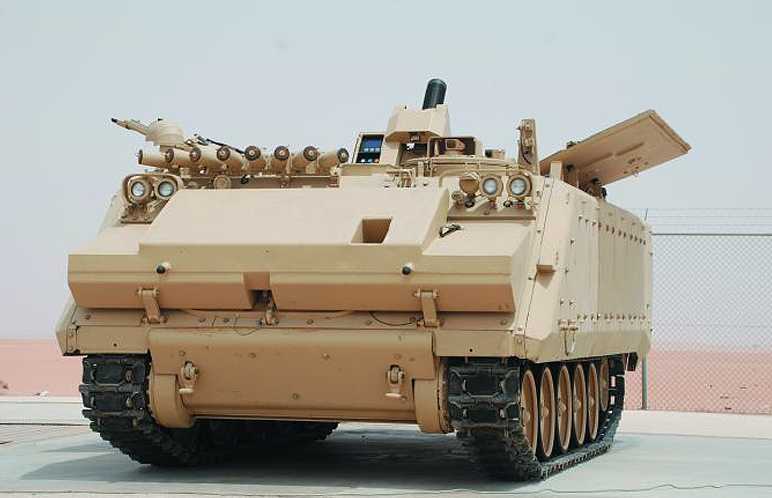
The M113 is equipped with a Christie-produced V-shaped, 8-cylinder, dual-row 90-degree angle 75M water-cooled gasoline engine, which has an output power of 160 kW at 4500 rpm. The engine fuel supply system includes a 302-liter fuel tank, a fuel pump, a fuel line switch, a solenoid fuel cut-off valve and a fuel filter. The engine cooling system consists of a fan, a water pump, an oil cooler and a 36-liter water radiator. The water radiator is installed at the exhaust louver window.
The transmission of the M113 includes a transmission box, an Allison TX200-2 semi-automatic transmission, a steering control differential and a side reducer. The power is transmitted from the engine to the transmission box through the transmission box. The transmission box has 6 forward gears and 1 reverse gear. Each forward gear has several shift positions, which can automatically shift according to the engine throttle opening size, vehicle speed and pre-selected gear range. The driver only operates the gear lever to change gears when necessary. The gear lever is easy to operate, and only 4 to 5 kilograms of force are required to engage any gear. The differential is installed in the front of the power compartment and connected to the gearbox through a universal joint coupling. The differential consists of a bevel gearbox, a steering device, a steering brake band and an output shaft. The left steering brake drum is connected to the left output shaft through a planetary gear system. The right steering brake drum is connected to the right output shaft in the same way. The output shaft is connected to the side drive through a drive shaft and a universal joint.
M113’s action device consists of a crawler propulsion device, a torsion bar suspension and a hydraulic shock absorber. The right crawler consists of 64 track shoes, and the left crawler consists of 63 track shoes. Rubber blocks are hung on both sides of the track shoes to reduce vehicle driving noise and protect the road surface. If driving on ice and snow, the rubber block can be removed to increase the adhesion between the track shoe and the ground. There is a rubber pin ear bushing in the pin ear of the track shoe. The angle generated by the relative movement between the track shoes will only deform the rubber pin ear bushing, but will not cause wear, impact and noise between the track pin and the track pin hole. The service life of the track shoe is extended to more than 4,500 kilometers. If the road conditions are good, the maximum service life of the track shoe can reach about 14,000 kilometers.
M113 has 5 road wheels on each side and no support wheels. The driving wheel is in front and the inducer wheel is in the rear. A cylinder hydraulic shock absorber is installed on each of the 1st and 5th road wheels. When the vehicle floats, it moves forward by the thrust generated by the track paddling. Two drainage pumps installed on the upper part of the vehicle body and under the bottom deck of the vehicle are used to drain the accumulated water in the vehicle when the vehicle floats. A metal mesh is installed at the water inlet of the water pump to prevent debris from entering and clogging and damaging the water pump. The two water pump outlets are located at the left front and right rear of the top of the vehicle.
M113 uses a 24V DC power supply system. Two 12V batteries connected in series are placed in the battery box located at the right rear of the passenger compartment to provide energy for the vehicle’s alarm and lighting devices, dashboard, signal lights and other electrical appliances. There are various manual switch indicators and automatic switching electrical switches on the dashboard on the left side of the driver. There is a signal panel under the front periscope directly in front of the driver, which is equipped with various signal indicator lights and alarm buttons.
Many branch models
M113 armored transport vehicle has excellent off-road mobility and can be airdropped, air transported and used amphibiously. It can be used for a variety of purposes by using different parts and modified roof structures, so it has been favored by Western armies since its launch. The US military signed a purchase contract for the first batch of 900 vehicles in 1959. In early 1960, the San Jose Arsenal of the Food Machinery and Chemical Company (FMC) was put into production and began to equip the troops. In 1962, an export contract for 1,132 vehicles was signed with the Federal Republic of Germany.
However, many problems were exposed after the M113 entered service. Based on the feedback from the troops, FMC designed and finalized the M113A1 armored transport vehicle in 1963 and put it into mass production in September 1964. The M113 that people usually refer to is actually the M113A1. The biggest difference between it and the M113 is that it is equipped with a 6V53 water-cooled diesel engine with a power of 158 kilowatts. This move not only reduces the risk of fire in the vehicle, but also increases the maximum range of the vehicle by 150 kilometers. In order to adapt to the diesel engine, the transmission of the vehicle was also changed to the Allison TX-100-1 fully automatic transmission. The device uses the FMC DS-200 controllable differential, which has three forward gears and one reverse gear. The steering mechanism has added the function of turning on the spot, which greatly improves the maneuverability of the M113A1.
During the long production process of the M113A1, the technical status of each batch is more or less different. Among them, some later production batches are equipped with 6V53T turbocharged diesel engines, with a maximum power increased to 191 kilowatts, and the transmission device is replaced with a TC-300 transmission. The suspension system adopts a torsion bar sleeve suspension, the vertical travel of the road wheel is increased from 150 mm to 229 mm, and the track blocks used by the LVTP-7 amphibious armored transport vehicle can be replaced. The upper part of the vertical side armor of the vehicle body is changed to an inclined shape, and two shooting holes are opened on both sides of the vehicle body to facilitate soldiers to shoot outward from the vehicle. Three periscopes are installed on each side of the vehicle body, two of which are located above the shooting holes. A periscope is also installed above the rear of the vehicle. The soldier’s seat was changed from a long bench to a height-adjustable single seat, and a ventilation fan was installed on the roof. An M39 or HS820 20mm machine gun can be installed on the commander’s tower, and the commander can remotely shoot from inside the vehicle.
Following the M113A1, FMC also improved the M113A2. The M113A2 suspension system uses new shock absorbers and high-strength steel torsion bars, and adds a shock absorber to the second road wheel. The vertical travel of the road wheel is 225 mm, the installation position of the inducer wheel is increased by 0.05 meters, and the height of the bottom of the vehicle from the ground is also increased to 0.425 meters. The M113A2 adds two sets of external fuel tanks on both sides of the tailgate to replace the internal fuel tank, thereby increasing the available volume in the vehicle and further reducing the probability of fire in the vehicle. In addition, this model also uses a new heater, improves the engine cooling system, and uses an independent expansion water tank to improve cooling efficiency.
The most modern model in the M113 armored transport vehicle family is the M113A3, which has an engine power increased to 205 kilowatts, replaced with an Allison X-200-4 transmission and a hydrostatic stepless steering mechanism. Its cab is equipped with a fork-shaped steering wheel, automatic gear lever and brake pedal, making it easier and more convenient for the driver to operate.
During its long service years, the M113 has developed a series of variants in response to the needs of the US military, forming a large vehicle family. Among them, the M106/M106A1/M106A2 series of 107-meter self-propelled mortar vehicles are equipped with an M30 mortar that shoots backwards on the M113 chassis. The direction of the firing range is 45 degrees to the left and 43 degrees to the right. There is an openable three-piece top hatch on the roof deck. The vehicle can accommodate 5 gun crew members and carry 88 to 93 107mm mortar shells.
M125/M125A1/M125A2 series 80mm self-propelled mortar vehicles have a similar structure to the M106/M106A1/M106A2 series, but the M29 81mm mortar has a 360-degree firing range, and the ammunition capacity has increased to 114 81mm mortar shells. It also has an M2HB 12.7mm roof-mounted machine gun for self-defense.
M163 "Vulcan" self-propelled anti-aircraft gun is an M113 with an M61A1 6-barrel 20mm "Vulcan" cannon installed, and the US Navy MK20 fire control system is added.
M548/M548A1 transport vehicle is a pure cargo transport vehicle based on the M113A1 and M113A2, with aluminum armor removed, and a load capacity of up to 6 tons.
M577/M577A1/M577A2 communication command vehicle, based on M113, increases the height of the passenger compartment, installs a gasoline generator set on the front of the roof, and carries a large canvas tent, which can be deployed and set up at the rear of the vehicle when necessary to form a more spacious command center. This series of communication command vehicles mainly serve as infantry and artillery mobile command posts and mobile communication command centers.
M113A1/M113A2 engine disassembly and assembly engineering vehicle, a small crane and a heavy winch are installed on the left side of the roof of the M113 series, and a large top hatch that opens to the right is on the right side of the roof. The vehicle is equipped with an engine used for an M113 armored transport vehicle and parts for maintenance.
M113A2 rescue tractor, a hydraulically driven winch and a traction hook for rescue traction are installed on the basis of the M113A2, and two hoes are installed at the rear of the vehicle. If rescue operations are carried out on soft terrain, a spare hoe can be added between the two hoes. The vehicle is also equipped with a hydraulic crane with a lifting capacity of 1.5 tons. The crane arm can be moved up and down by manually controlled hydraulic pumps and hydraulic cylinders.
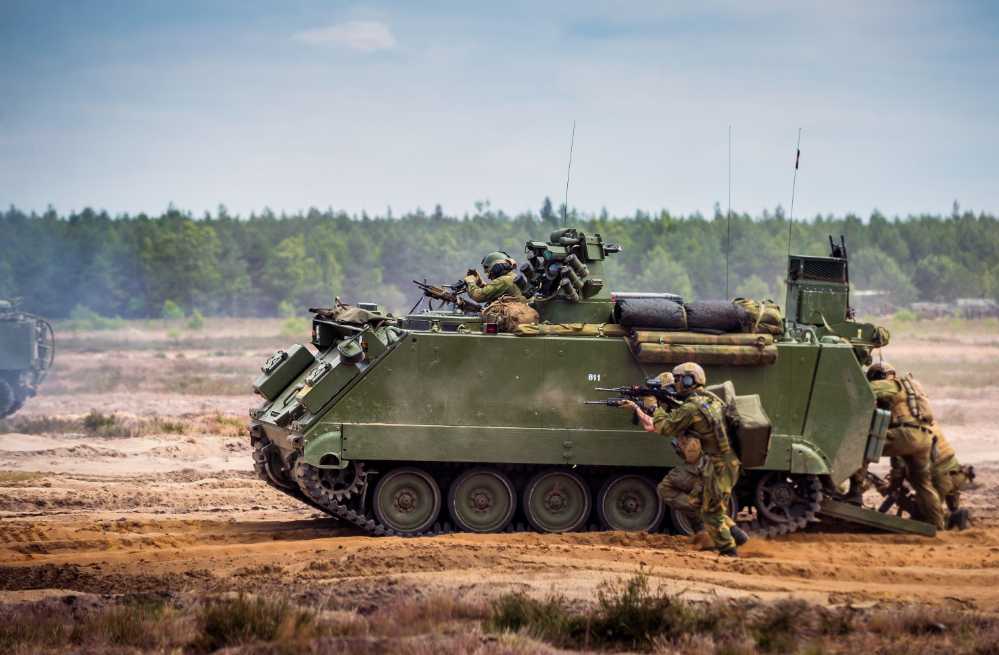
M901/M901A1 "TOW" anti-tank missile launcher is based on the M113 with an M27 turret, which integrates a twin-mounted "TOW" anti-tank missile launcher, a missile guidance system and an auxiliary generator set. The turret can be raised and lowered, and there are 10 spare "TOW" missiles in the vehicle. If necessary, the missile launcher can be removed and moved under the vehicle for use.
M981 integrated fire support vehicle is based on the M901/M901A1 "TOW" anti-tank missile launcher, with AN/TVQ-2, AN/TVQ-4 night aiming systems, ground navigation systems and communication equipment added.
The M1059 smoke screen vehicle uses the M113A2 chassis, with two M54 smoke screen generators added to its roof, an air compressor, a 44-liter atomizer tank and two oil pumps installed inside the vehicle
Versatility
The M113 series armored transport vehicles and their variants had excellent performance in the 1960s and 1970s, so they were adopted by the armed forces of more than 50 countries and regions, with a total production of more than 75,000 vehicles. According to statistics, the US military has purchased more than 24,000 M113s of various types and has been using them to this day. From 1960 to the present, for more than 60 years, the M113 series armored transport vehicles can be seen in all ground armed operations in which the US military has participated.
Except for the United States, the countries with the highest purchase volume are Israel (6,500 vehicles), Federal Republic of Germany (3,800 vehicles), Italy (3,500 vehicles), Turkey (2,000 vehicles), Sweden (1,475 vehicles), Saudi Arabia (1,260 vehicles) and Jordan (1,220 vehicles). Many countries have also purchased production licenses to produce and assemble the M113 series armored personnel carriers in their own countries.
However, gold is not perfect, and the M113 series armored personnel carriers are no exception. The most criticized feature of this model is its insufficient protection. On the battlefield in Vietnam, even the AK47 could penetrate the side armor of the M113 at close range. However, due to its inherent deficiencies, the combat weight of this model does not exceed 13 tons, so it is difficult to significantly improve the armor protection. This defect has become more and more fatal with the development of the times.
Thus, by the mid-1980s, the heavy task of accompanying the US military’s M1 series tanks in combat was replaced by the M2 "Bradley" series infantry fighting vehicles, whose combat weight can be expanded to more than 30 tons. However, the M113 armored personnel carrier still has a place in the US military equipment series because of its low price and wide range of uses.
Take the armored brigade combat team (ABCT), the most powerful of the three types of brigade combat teams in the US Army, as an example. Each of its subordinate combined arms battalions has 136 vehicles of various types, including 29 M1A2 main battle tanks, 36 M2M3 "Bradley" series infantry fighting vehicles, 27 M113 series armored personnel carriers, 32 "Humvees", and 12 various trucks. It can be seen that the US Army’s active M113 inventory is still considerable. In order to simplify logistics and improve protection capabilities, the US military urgently needs to replace the M113 series armored transport vehicles, and has set its sights on the chassis of the M2 Bradley series infantry fighting vehicles.
The load-bearing capacity of the chassis of the M2 Bradley series infantry fighting vehicles is more than 30 tons, and its development potential far exceeds that of the chassis of the M113 series armored vehicles. It is driven by a Cummins VTA-903T turbocharged water-cooled diesel engine. When the speed reaches 2600 rpm, the output power is 378 kilowatts, which is almost twice the maximum power of the M113.
The M2 Bradley series infantry fighting vehicles use General Electric’s HMPT-500 hydrostatic mechanical automatic transmission. Its characteristics are that part of the power is transmitted by the hydraulic system, and the rest of the power is transmitted mechanically, with the dual functions of stepless speed change and stepless steering. It combines the gearbox, steering gear, brake and reverse gear mechanism into one. It can be hoisted as a whole with the engine, which is easy to disassemble and assemble, and has good maintainability. The gearbox has 3 gears, the first gear is hydraulic continuously variable transmission, and the second and third gears are hydraulic mechanical continuously variable transmission. All three gears can achieve stepless steering.
The M2 "Bradley" series infantry fighting vehicle walking device adopts high-strength torsion bar suspension, with 6 double-rimmed road wheels with a diameter of 610 mm and 3 track rollers on each side, with the driving wheel in front and the induction wheel in the back. The maximum vertical travel of the road wheel is up to 355 mm, far exceeding the M113 series. The hydraulic shock absorbers are installed on the 1st, 2nd and 6th pairs of road wheels respectively. The forged track shoes are single-pin type and equipped with removable rubber pads.
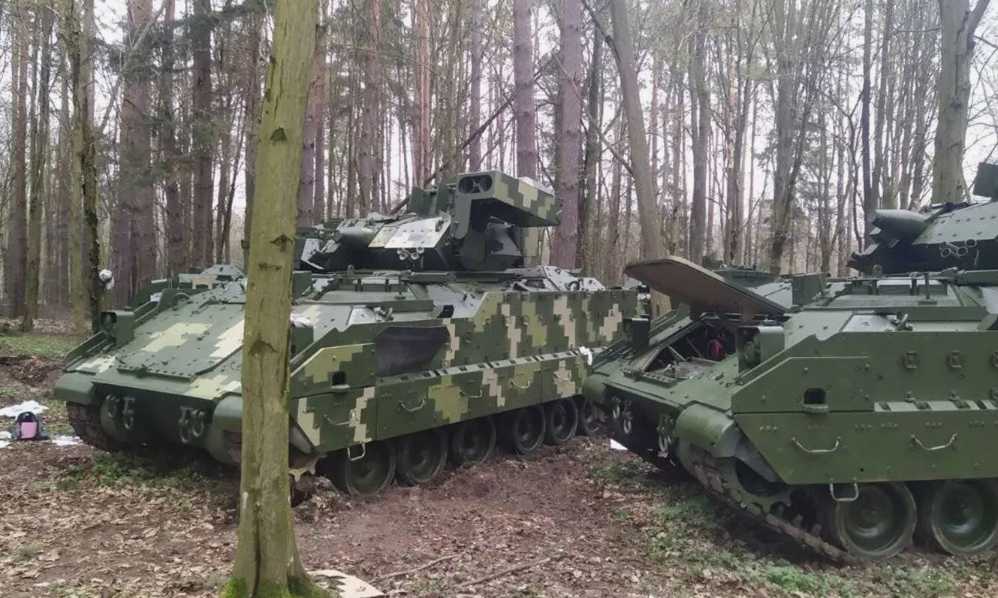
According to data released by the US, after adopting such a chassis, the M2 Bradley series infantry fighting vehicle accelerates from a standstill to 32 kilometers per hour in only 7.7 seconds; from a standstill to 48 kilometers per hour in 19 seconds; and from a standstill to 64 kilometers per hour in 25.2 seconds. This shows that its instantaneous acceleration is very good, which is conducive to improving battlefield adaptability and survivability.
In view of the fact that the main long-range fire support equipment of the Army, such as the M270, uses the chassis of the M2 "Bradley" series infantry fighting vehicle, the M109A7/A8 self-propelled howitzer, which is still under development, also uses the M2A3 infantry fighting vehicle’s 441 kW V8 Cummins VTA-903T diesel engine, gearbox, road wheel assembly, track, and balance elbow to replace the corresponding parts while keeping the M109 series chassis configuration unchanged. Therefore, when the US Army launched the AMPV "multi-purpose armored vehicle" project in 2012 to replace the current M113 series armored transport vehicles, it emphasized that it should be developed based on the chassis of the M2A3 "Bradley" infantry fighting vehicle that began production in 1997, and maintain a high degree of commonality with the latter.
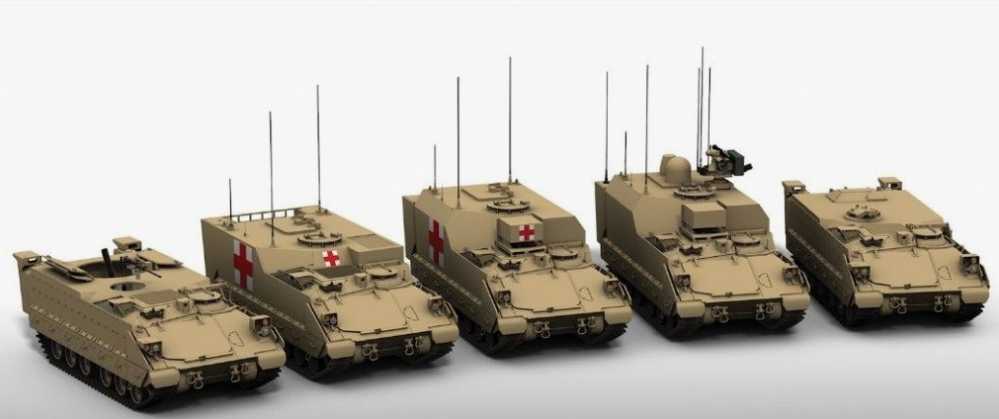
It is reported that the AMPV "multi-purpose armored vehicle" includes five sub-models: M1283 armored personnel carrier, M1284 armored material carrier, M1285 armored ambulance, M1286 armored command vehicle and M1287 120mm self-propelled mortar. Because the chassis of the M2A3 "Bradley" infantry fighting vehicle is both mature and advanced, the research and development difficulty of the AMPV "multi-purpose armored vehicle" is very low. It is nothing more than changing the shell of the former and adding some infrared night vision devices, digital maps, tactical information networks and other shelf equipment. Therefore, once the project, which is expected to purchase up to 2,897 vehicles, was launched, it triggered vicious competition between General Dynamics and BAE.
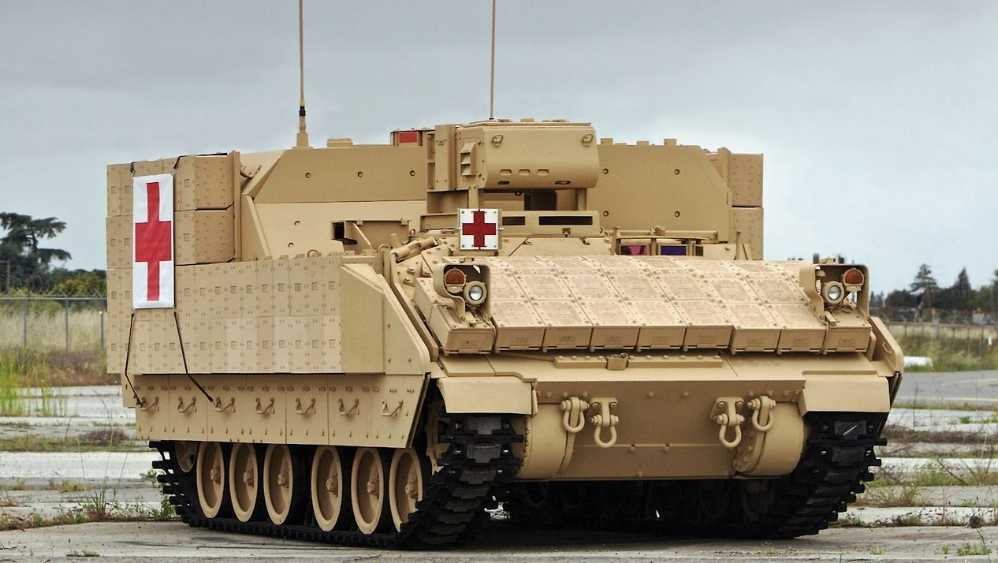
For comprehensive considerations such as connections, interest transfer and interest balance, the US Army clearly favored BAE in this bidding. After General Dynamics protested unsuccessfully in 2014, it silently withdrew from the bidding. Without a strong competitor, BAE unveiled the first prototype of the AMPV "multi-purpose armored vehicle" in 2017 and signed a low-speed production contract with the US Army in 2018. In 2022, the US military ordered 133 AMPV "multi-purpose armored vehicles" and required 72 of them to be delivered in the first quarter of 2023. As the project bidder, BAE plans to increase the monthly production of AMPV "multi-purpose armored vehicles" to 16 vehicles in 2023.
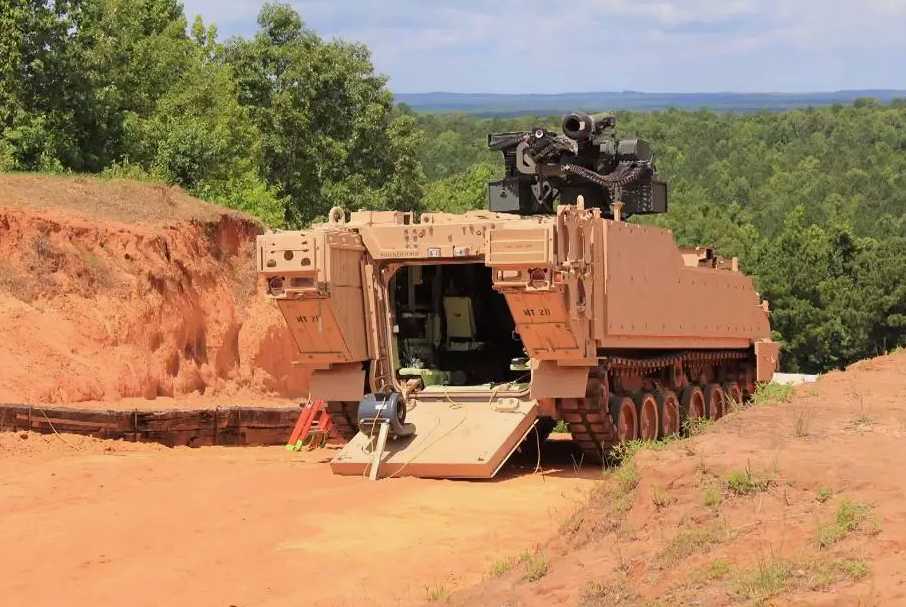
However, it is reported that the AMPV "multi-purpose armored vehicle" delivered to the 1st Armored Brigade Combat Team of the 3rd Infantry Division of the US Army was not a newly produced one, but a refurbished and modified M2A3 "Bradley" infantry fighting vehicle in stock, which inevitably makes people doubt its true performance. Moreover, the protection level of this series of vehicles can only reach the full NATO level IV, that is, the level of defense against 14.5mm bullets. Compared with its combat weight of about 30 tons, it can only be said to be mediocre. In addition, the GCV project used by the US military to replace the active M2 "Bradley" infantry fighting vehicle has not been settled yet. The M2 "Bradley" infantry fighting vehicles in stock have been converted into a new generation of "battlefield taxis" with greatly weakened firepower. If they suddenly have to face opponents of equal strength, doing so may be a loss-making move.