
The legendary German ace pilot "Red Baron" is leading a team to attack an Allied bomber. Suddenly, a rescue formation composed of Allied fighter planes appeared in front. As the two formations met, dozens of fighter planes soon became one. Against the backdrop of the blue sky and white clouds, the Allied and Central Powers’ planes kept rolling up and down, doing all kinds of dazzling stunts, and the two warring parties were fighting hard-until someone on the ground shouted with a loudspeaker: "Stop!"
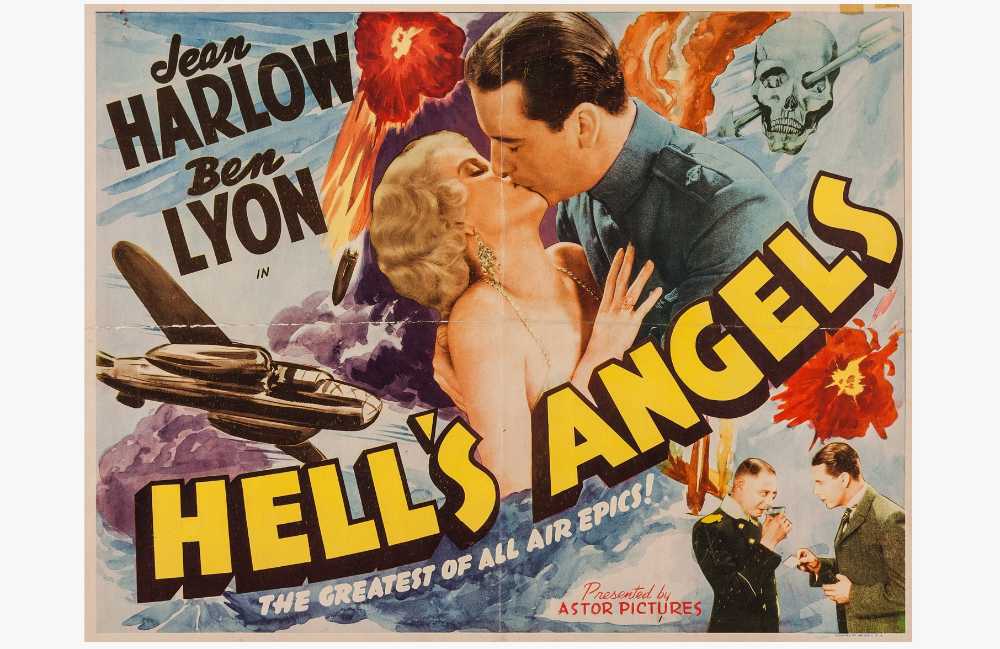
In fact, the above scene did not take place over the battlefield of the Western Front of World War I, but in the clear sky of California, USA. The person responsible for calling for a stop on the ground was none other than the investor of the movie "Hell’s Angels", a 23-year-old Hollywood novice director, and a wealthy millionaire-Howard Hughes.
Howard Robard Hughes Jr. was born in 1905 into a wealthy merchant family. His father, Howard Hughes Sr., was an outstanding inventor and a shrewd businessman. Hughes Sr. invented a new type of drill that could drill deeper into the ground to extract oil, and cleverly made huge profits from oil drilling companies by renting the drill (rather than selling it), becoming a millionaire. Due to his wealthy family, Hughes completed his first flight course at the age of 14 and fell in love with the feeling of flying. However, the good times did not last long. Hughes’ mother and father died of illness in 1922 and 1924 respectively. Howard Hughes, who was only 19 years old, inherited his father’s company and 75% of his assets alone and became a millionaire.
After being "forced to take charge" of the millions of dollars left by his parents, the ambitious young millionaire decided to go to the West Coast to try his hand in the film industry. In the following years, Hughes produced several films, some of which were poorly reviewed, and some good films such as "Two Arabian Knights" that won the Oscar for Best Comedy Film. After that, Hughes, who has always been very interested in aviation, decided to invest in a large-scale air combat film composed of a large number of real shots. He bought the script of "Hell’s Angels" from his friend Marshall Niland and hired him as the director of the film. "Hell’s Angels" officially began preparations for filming on October 31, 1927. However, shortly after the preparations began, the hot-tempered Hughes fired three directors one after another - he believed that these directors could not meet his standard requirements for air combat films - and finally decided to shoot the film himself.
Similar to today’s Hollywood popcorn blockbusters, the plot of "Hell’s Angels" can be said to be simple and easy to understand: a pair of twin brothers studying at Oxford University in the UK joined the British Royal Flying Corps under the wartime call and fell in love with the same girl. Later, the two of them jointly participated in the attack on the German Zeppelin airship during the war, and then volunteered to participate in a suicide mission to drive a captured German bomber to attack the German rear ammunition depot. Although the two brothers successfully blew up the German ammunition depot, they were shot down and captured by the "Red Baron" on the way back, and were eventually shot by the Germans for refusing to reveal the time when the Allies launched the attack-does this plot sound very familiar? Because 70 years later, the plot of "Pearl Harbor" directed by Hollywood director Michael Bay, who is nicknamed "Explosive Bay" by today’s movie fans, is almost based on the script of "Hell’s Angels"!
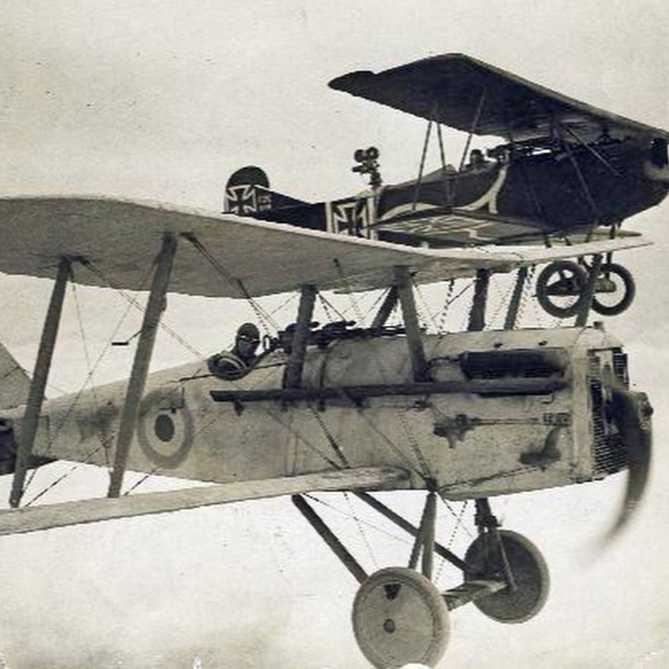
However, the focus of this movie is not this kind of assembly line plot that Hollywood has not changed for more than half a century, but the wonderful real-life air combat scenes. In order to obtain the most realistic World War I air combat shots, Hughes spared no effort to find a variety of World War I aircraft for the filming of the movie. He found top stunt pilot Frank Tomik and asked Tomik to collect as many World War I fighters as possible in the United States. After some searching, the crew collected five Fokker D.VI fighters, two Sopwith Camels and two S.E.5 biplanes. However, these less than ten aircraft could not satisfy Hughes’ ambition to shoot large-scale air battle scenes. Therefore, the crew modified other types of biplanes as props for long-range shooting: they used the JN-4 "Jenny" biplane to pretend to be an Avro 504 biplane, modified the appearance of the Taguanle Aviation 2000 to look like a Fokker biplane, and the highlight was to transform the only one built by the famous aircraft designer Igor Sikorsky!
S-29A passenger plane into the appearance of a German Gotha bomber in World War I - this "German bomber" will be used to shoot the climax of the bombing of the German ammunition depot and the final air battle in the movie. After a lot of patchwork, the "Hell’s Angels" crew used various methods to put together a 50 A large fleet of different types of aircraft - the number of aircraft is almost equal to that of a regular army aviation brigade!
In addition to the aircraft, Hughes also spent a huge amount of money to recruit a team of pilots with rich flying experience. Many of them are experienced stunt pilots, weather reconnaissance pilots who often fly in storms, and even real ace pilots who have fought in the battlefields of World War I! At the same time, although there is no shortage of airports in California, in order to ensure the confidentiality of the set, Hughes did not rent an existing airport for filming, but bought one in Northern California. At the beginning of the filming, the crew encountered a problem - although the scene of a large number of planes fighting in front of the camera was very spectacular, without background references, the audience had no way of realizing how fast these planes were flying, which would seriously reduce the perception of the air combat shots. In order to provide a good reference for the background, Hughes decided to shoot under weather conditions with more clouds. However, this also meant that the crew could only eat and shoot at the mercy of the weather. Photography work is often done on and off. On the bulletin board at Caddo Airport, the most common phrase is: "War postponed! Cloudless today!"
At the beginning of the filming, the crew encountered a problem - although the scene of a large number of planes fighting in front of the camera was very spectacular, without background references, the audience had no way of realizing how fast these planes were flying, which would seriously reduce the viewing experience of the air combat shots. In order to provide a good reference for the background, Hughes decided to shoot under weather conditions with more clouds. However, this also meant that the crew could only eat at the mercy of the weather, and the filming work was often stopped and started. On the bulletin board at the Caddo Airport, the most common sentence people saw was: "The war is postponed! There are no clouds today!"
Under the scorching sun in California, those daring pilots who were forced to stay on the ground and had nowhere to vent their mischievous personalities began to play tricks on their sponsor, the young Hughes. Once, they parked a biplane behind a temporary toilet at the airport. After seeing Hughes walk into the toilet, the guys suddenly started the engine of the plane and stepped on the accelerator. The toilet built with a temporary tent was immediately blown to the ground by the strong wind blown by the propeller. When the gray After Hughes climbed out of the ruins of the toilet, he was furious and immediately tore up all the work contracts of these pilots. However, such a group of excellent pilots were recruited with great difficulty, so how could they be dismissed? Therefore, when Hughes calmed down, he immediately reinstated these pilots.
In addition to these insignificant jokes, the crew waiting for the filming opportunity also experienced many tragic crashes-pilot Al Johnson crashed into overhead cables while flying a plane from Glendale to the studio to transport aircraft spare parts. He was severely burned in the accident and died the next day after being sent to the hospital. Pilot C.K. Phillips died in a plane crash while flying an S.E.5 aircraft. Even Hughes himself almost didn’t escape the clutches of death: when other pilots in the crew told him that the S-4 biplane could not complete a very challenging stunt roll. Hughes, who didn’t believe in evil, jumped into the cockpit and tried to challenge this impossible maneuver in one of the S-4 aircraft. As a result, the plane took him headfirst into the ground shortly after taking off. Although Hughes suffered facial fractures due to the impact, he was lucky to escape death.
When Hughes recovered, the filming of the movie continued. However, despite a whole summer, there were still few "clouds" in the sky over California. So Hughes began to prepare special effects shots involving the German Zeppelin airship, which would be used to show the scene of the Zeppelin air raid on London in the film. The filming was carried out in an airship hangar. The crew made a life-size airship cockpit scene and a miniature model of a German-made Berlin airship, and used smoke special effects and lens filters to simulate the effect of the airship shuttling through the night sky. From the perspective of the time, the special effects level of this scene is definitely the top level of Hollywood. In addition, some historical details inserted by Hughes in the scene - such as the air monitoring post set up in the UK to prevent Zeppelin airships, the ballast water in the stowage tanks that the German airships had to discharge when they needed to climb to higher altitudes, etc. - made this scene even more icing on the cake.
In a blink of an eye, the time came to October 1928. Hughes finally waited for the fluffy white clouds he wanted to see, and the "war" began. But there was a small problem - the cloud area that could be used for filming was far away in Auckland. So the crew hurriedly packed their bags and rushed to Auckland for filming. In order to capture this dazzling air battle scene, the crew installed cameras for filming on multiple aircraft to record wonderful shots from multiple different angles. At the same time, they also installed small cameras in the cockpits of some participating aircraft to capture the facial expressions of pilots when performing high-g maneuvers. During the filming process, Hughes collaborated with aerial photographer Harry Perry to choreograph a large number of unprecedented stunts. In addition, Hughes would board one of the follow-up planes and personally direct the filming of the fleet in the air. His unremitting pursuit of perfect real-life pictures eventually achieved the most amazing real-life air combat shots on the early Hollywood screen.
However, tragedy struck again in the last scene of the crash of the Gotha bomber. At that time, the crew planned to let the bomber climb to an altitude of 2,000 meters and then deliberately let the aircraft enter a stall spin. After starting the smoke generator, the crew responsible for flying the aircraft would abandon the plane and parachute. The crew hoped to use this dangerous method to shoot the scene of the bomber being "shot down" by the German army. But unfortunately, during the abandonment and parachuting process, Phil Jones, the mechanic responsible for operating the smoke generator, was trapped in the plane and failed to escape in time, and eventually died in the crash.
In addition to the fatal crash, Hughes also faced the challenges brought by the rise of sound films. With the rapid rise of sound films in Hollywood, silent films that once dominated the screen quickly became yesterday’s news, and "Hell’s Angels" was shot in silent film form from the beginning. Although the crew had burned nearly 2 million US dollars at the time and Hughes, who was responsible for the investment, was facing a bankruptcy crisis, in order to keep up with the times, Hughes was determined to remake all the literary parts into sound films, and the air combat parts, which were martial arts, were rescued by adding special effects, sound effects and dubbing. In order to reshoot the literary parts, Hughes invited another director, James Wheeler, to direct the filming-Wheeler later became famous for directing the movie "Frankenstein", but no one expected that "Hell’s Angels" was actually the debut work of this great director.
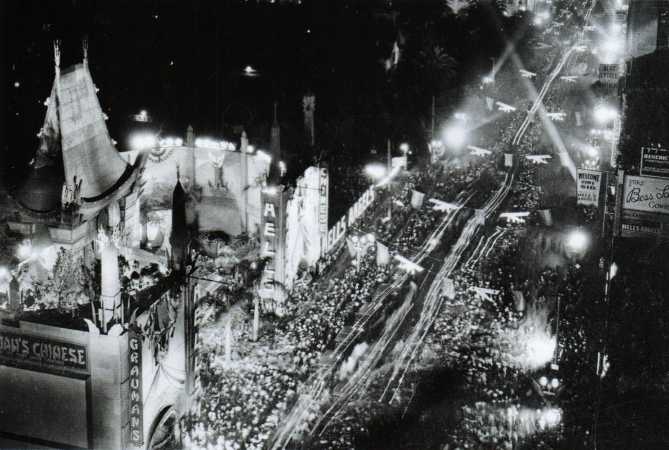
When "Hell’s Angels" premiered on May 27, 1930, this gold-eating beast had eaten up 2.8 million US dollars, becoming one of the most expensive movies in Hollywood at the time, and also earned Howard Hughes the nickname "Million Hughes". As the only investor in the film, Hughes, who was determined to complete the film, was nearly bankrupt. He also experienced a series of major setbacks such as divorce and stock market crash during the filming, but he finally made it to the end. On the day of the release of "Hell’s Angels", Hughes specially found a formation of 50 planes to fly over Hollywood Boulevard to cheer for the premiere held at Grauman’s Chinese Theater. On the crowded Hollywood Boulevard below, a line of cars consisting of various luxury cars stretched for nearly 2 kilometers: almost all the celebrities in the Hollywood film industry wanted to come and see the real appearance of this luxurious air combat blockbuster.
At the beginning of the film, many viewers were not interested in the mediocre literary part. But when the air combat began, the audience was immediately shocked by the huge German Zeppelin airships and the biplanes fighting each other in the air. A film critic from the Seattle Times described his feelings in the newspaper at the time, "The story of the movie is very old-fashioned, but when the air battle began and the Zeppelin rushed out of the clouds, everyone gasped. But the most exciting part was the real air battle scene in the second half of the film, with nearly 50 planes flying up and down in front of the camera. This is not just a movie, but an unforgettable experience." After the film ended, the audience in the Chinese Theater stood up and applauded Howard Hughes who was sitting in the front row for 20 minutes.
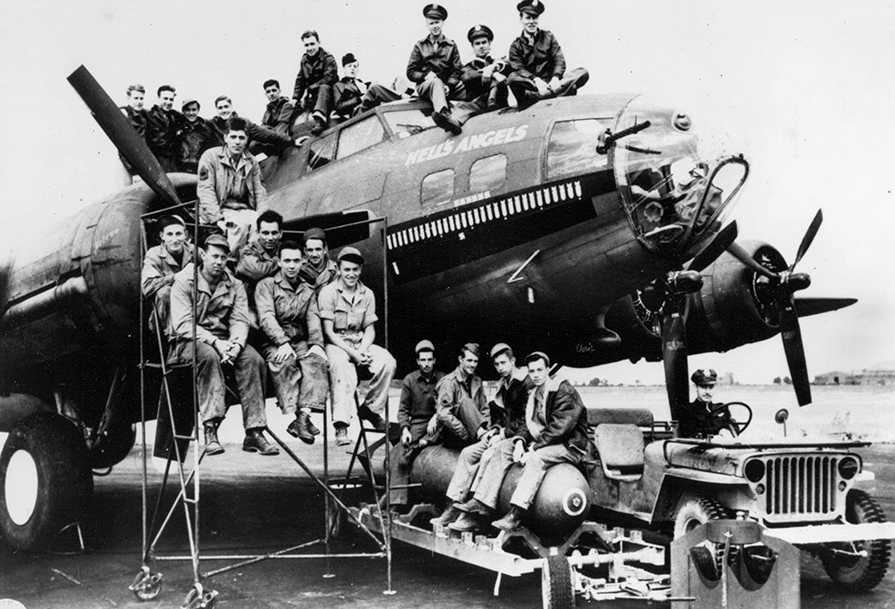
Although the box office of "Hell’s Angels" of $2.5 million did not make Hughes successfully recover his investment, he successfully inspired people’s enthusiasm for air combat and aviation through this movie. The term "Hell’s Angels" soon became synonymous with aviation and "cool". Its influence on aviation culture at that time was no less than that of another Hollywood air combat blockbuster with a large number of real air combat shots in the future - "Top Gun". More than ten years after the premiere of the movie, the first B-17 bomber of the US military to complete 25 bombing missions - commonly known as the "home mission" - in the European battlefield of World War II was nicknamed "Hell’s Angels". This nickname was eventually inherited by the 303rd Bomber Group to which the aircraft belonged and became the nickname of the group. At the same time, the nickname of the third squadron of the "Flying Tigers" led by Chennault over the Far East China battlefield was also "Hell’s Angels". After the war, a veteran who had served in the third squadron of the "Flying Tigers" renamed his motorcycle club "Hell’s Angels". To this day, "Hell’s Angels" is still the largest and most famous motorcycle club organization in the world.
For Howard Hughes, "Hell’s Angels" was just the beginning of the life story of this aviation tycoon. Hughes, who had endless passion for the aviation industry, devoted his entire life to the career he loved, and eventually wrote a splendid legend in the history of world aviation.