
The cockpit is really busy
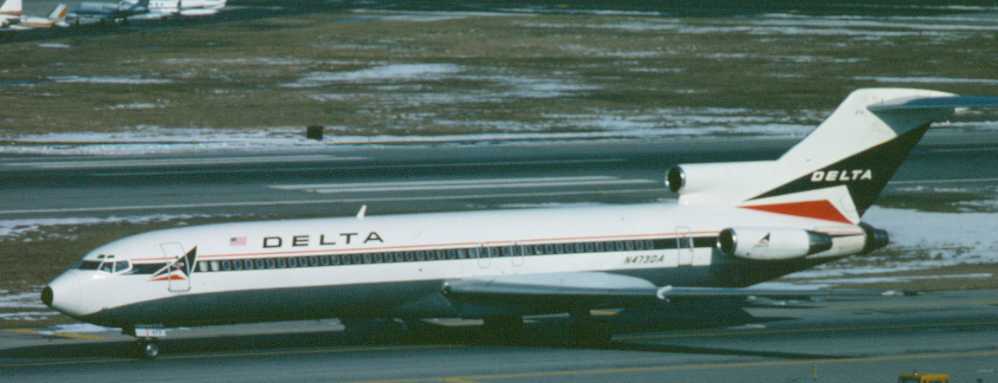
On August 31, 1988, Delta Air Lines Flight DL1141 flew from Jackson, Mississippi, to Salt Lake City, stopping at Dallas-Fort Worth International Airport. This is a Boeing 727-232 three-engine narrow-body jet airliner, registered N473DA, 15 years old, delivered to Delta Air Lines in November 1973. The aircraft is equipped with three Pratt & Whitney JT8D-15 turbofan engines, with a total flight time of 53,917 hours and a total flight time of 63,147 takeoffs and landings.
Dallas-Fort Worth International Airport (DFW) is located between Dallas and Fort Worth, spanning parts of Dallas and Tarrant County. The airport was opened in 1973, covers an area of 104,000 acres, and has 7 runways. Dallas Fort Worth International Airport is the largest hub airport for American airlines, with an average of more than 650,000 take-offs and landings per year. It is usually very busy, and it is common for flights to queue up for take-off. After taking off from Jackson, flight DL1141 arrived in Dallas at 7:38 and will then fly to Salt Lake City. By 1988, the "Quiet Cockpit Rule" had not been promulgated for a long time and was relatively new, and many pilots were already "experienced" before the rule was implemented. The enforcement of the rule was not easy, and it mainly depended on the captain, who was responsible for stopping other crew members from chatting. But in fact, violations were common in the cockpit.
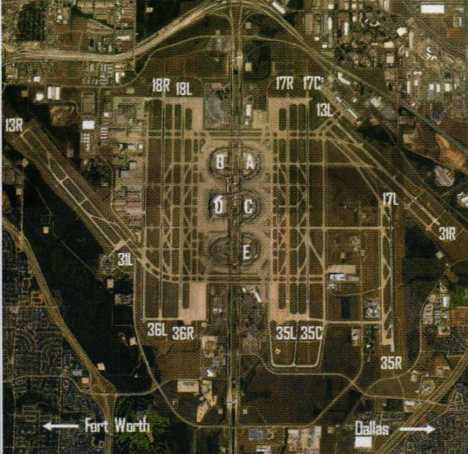
After the engine was started, the co-pilot Kirkland had been chatting in the cockpit about all kinds of things that had nothing to do with aviation operations. Captain Davis did not try to stop him. At 8:30, flight DL1141 taxied out of the gate and was assigned by the controller to take off from runway 18L. While waiting, Captain Davis decided to shut down one of the three engines to save fuel. He also asked Judd to notify the tower controller and let them know 2 minutes before obtaining takeoff permission so that there would be time to restart the engine.
Soon DL1141 Flight 1 was given taxi clearance, but had to give way to the plane in front of it. Flight engineer Judd began reading the taxi checklist, a list of tasks that needed to be completed before the plane took off. As Judd finished each item, co-pilot Kirkland had to take action and shout a response.
At this time, stewardess Dixie Dunn entered the cockpit. Kirkland and Dunn chatted for more than seven minutes, with Davis and Judd occasionally interjecting. The chat included the 1985 crash of Delta Flight 191 at this airport, the 1988 U.S. presidential election, and Kirkland’s military service.
When talking about the 1987 crash of Continental Airlines Flight 1713 in Denver, Kirkland said: "We forgot to discuss the dating habits of flight attendants so that we can record it on the recorder. You know, if we had an accident, the media would have some interesting gossip."
What Kirkland didn’t expect was that his joke would come true.
Editor’s note: Silent cockpit rule
It is common for pilots to chat and get to know each other after a day’s work, but the chat must end immediately after the engine is started, which is also known as the "Silent cockpit rule". In 1981, the Federal Aviation Administration (FAA) of the United States promulgated corresponding provisions in Federal Aviation Regulations Part 121 and Part 135, requiring crew members to only perform operations required for safe flight operations when the flight is taxiing, taking off, landing, and flying below 10,000 feet (about 3,050 meters). The regulations also prohibit all non-essential activities in the cockpit. The FAA emphasizes the "Silent cockpit rule" so much to prevent pilots from losing concentration and causing aviation accidents.
Something big happened
The chat ended after Judd made the cabin broadcast. Flight DL1141 was the fourth to take off. The pilot had just restarted the No. 3 engine when the controller informed them that they could bypass the three aircraft in front and take off directly. This left the pilot with almost no time to complete the taxi checklist and pre-takeoff checklist.
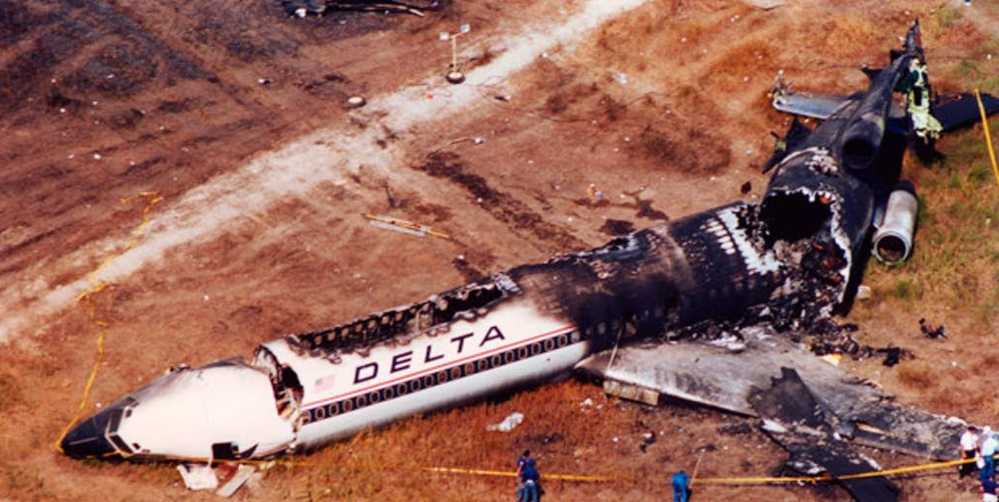
Flight DL1141 accelerated on the runway. As soon as the aircraft lifted the wheel, the fuselage tilted and the right wingtip scraped the ground. The aircraft swayed over the runway like a drunk. The engine compressor was surging and the aircraft could not gain altitude. At 270 meters from the end of runway 18L, the plane’s wing hit the instrument landing system (ILS) antenna, causing the fuselage to catch fire. The plane stayed in the air at an altitude of only 120 meters. After hitting the ground, it continued to rush forward under inertia, leaving a 240-meter long wreckage trail. The final crash site was about 980 meters from the end of the runway. From takeoff to impact, only 22 seconds passed.
The crash quickly caused a larger flame, and the cabin was filled with smoke. The people on the plane needed to start self-rescue actions as soon as possible. Airport rescuers arrived at the scene of the accident within 5 minutes, and reporters also brought their cameras to report the news. Afterwards, the rescuers counted and found that 14 of the 108 people on board had died.
Investigators from the National Transportation Safety Board (NTSB) of the United States quickly arrived at the scene to determine the cause of the accident. The wreckage of the plane was scattered over a large area, but people soon found the "black box" of the plane and sent it to the laboratory for data analysis.
Accident investigation
Investigators found that the wings and tail of the plane had wear marks left by rubbing against the ground. The tail skid is a protruding metal block at the tail of the fuselage. Its main function is to prevent the tail from directly touching the ground when the plane takes off at a large angle. The tail skid of the 727 aircraft rubbed the ground, which means that the aircraft’s wheel angle reached 10°, which is enough for the aircraft to climb safely. Why did Flight DL1141 crash?
Investigators also found that the wing tip of the right wing of the aircraft also rubbed against the ground. The wing tip and tail skid rubbed against the ground, which means that there was a big problem with the aircraft’s attitude. They began to sort out the reasons why the aircraft could not take off normally one by one. The first is weight. The total weight of Flight DL1141 is about 71.5 tons, while the maximum take-off weight of the 727 aircraft is 78.1 tons. After calculation, the investigators ruled out the problems of overweight and fuel tank balance. When the plane is flying, the wing generates positive lift, and the pressure on the lower wing surface is higher than that on the upper wing surface. Under the pressure difference between the upper and lower wing surfaces, the airflow on the lower wing surface will bypass the wing tip to the upper wing surface, forming a wingtip vortex. The larger the plane, the stronger the vortex. When two planes are close to each other, the vortex generated by the front plane will affect the plane behind.
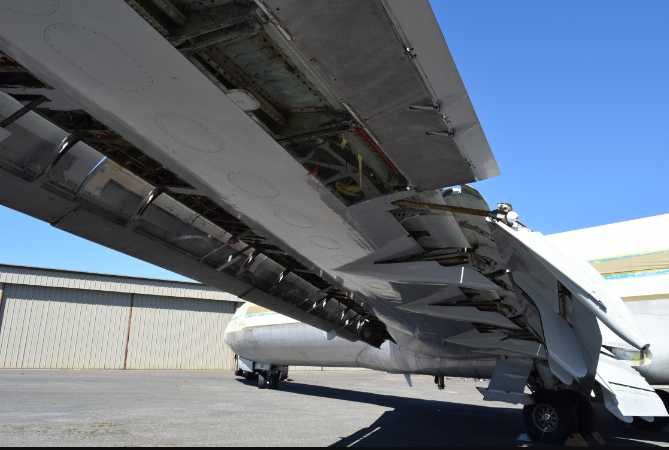
Flight records show that the previous flight of DL1141 was Delta Air Lines 1486 (DL1486), which is also a Boeing 727 passenger plane. The Federal Aviation Administration (FAA) stipulates that the minimum distance between two aircraft is 1,830 meters. When DL1141 took off, the two aircraft had already opened a distance of 2,135 meters. The vortex generated by the previous aircraft had a very weak impact on DL1141. Therefore, the factor of tip vortex was also ruled out. The accident investigation made a major breakthrough in the wreckage of the aircraft. Investigators found that the flaps of Flight DL1141 did not seem to be deployed. The flaps are lift-enhancing devices of the aircraft. They are movable surfaces installed on the wings. When deployed, they can change the curvature of the wing section and increase the lift of the aircraft. Although the aircraft can still take off with the flaps retracted, it requires a higher speed and the climb rate will be significantly reduced. At this time, if the pilot takes off at the speed of deploying the flaps, there will be problems.
The information of the flight data recorder (FDR) was quickly read out, but there was no data that the investigators wanted. The accident aircraft was equipped with a Lockheed 109-D recorder, which was a very old model. Its model certificate was issued on September 30, 1969. It only recorded more than 20 basic parameters, not to mention that it did not contain flap information.
The investigators began to visit Captain Davis, and representatives of the pilots’ union also participated. In the 1980s, many air crash investigations attributed the responsibility to the pilots. In the eyes of some people, this is the lowest cost approach. If it is a problem with the aircraft, the aircraft manufacturer and the airline will face billions of dollars in compensation. The pilot union representatives participated in the investigation mainly to protect the rights and interests of the pilots.
Davis told the investigator that they had released the flaps at the time. When the plane was lifting the wheels, he also heard two popping sounds, which he thought were similar to the sound of the reverse thruster opening. The engine reverse thruster is a device that is only activated when the aircraft is landing. The reverse thruster shortens the landing distance of the aircraft by changing the direction of the engine’s airflow. If the reverse thrust is turned on during the takeoff phase, the aircraft will naturally not be able to fly.
The investigator began to study the wreckage of the engine and found that the reverse thruster was turned off. Davis mistakenly heard other sounds as the reverse thruster being turned on. It seems that people’s memories are biased.
At this time, the information of the cockpit voice recorder (CVR) was also interpreted, and the investigator was shocked after hearing it. Investigators found that the atmosphere in the cockpit was relaxed, but the content of the chat was basically unrelated to flying, and the voice of the flight attendant appeared in the middle. The crew of Flight DL1141 did not follow the "silent cockpit rule" at all. The topics of their chat ranged from recent aviation accidents to the 1988 US presidential election, and even discussed what kind of birds were on the runway. At the same time, they also joked that they should leave some "interesting" information in the recording to prevent crashes. There was a lot of nonsense, but they rarely talked about business.
Investigators also found that the controller gave the "in position" instruction just after the aircraft engine started. Under normal procedures, pilots also need to perform taxi checklists and pre-takeoff checklists. The time left for the pilots was too rushed, and they may have forgotten to extend the flaps.
The cockpit recording shows that when the crew performed the check, they reported that the flaps were extended by 15°. They decided to find the brake screw of the flap system to find out. The position of the nut on the screw silently conveyed a message-the flaps were not extended. So why did the pilot think the flaps were extended? The investigator speculated that when the plane taxied to the end of the runway, Judd finished reading the taxi checklist and Kirkland responded immediately. The time was very short, less than 1 second apart. Kirkland may have responded subconsciously and did not carefully check each setting he repeated. 1 second is obviously not enough time to pull the flap lever into place. When doing a checklist, pilots need to focus on the work at hand. If they are distracted by chatting, they can easily miss the key setting steps. Kirkland was eager to complete the checklist items, making him think that he had adjusted the aircraft settings, but in fact, he was in danger.
Adding insult to injury
The investigator had one last question. If the flaps were set incorrectly, why did the aircraft’s takeoff warning system (TOWS) fail?
Due to the inevitability of human error, even if the aircraft goes through the checklist process, it may still be that the aircraft is not configured correctly. Therefore, most commercial aircraft are equipped with a takeoff warning system to remind pilots of possible fatal errors in the takeoff configuration. The 727 aircraft is equipped with this system, and when the aircraft is in the takeoff phase and the flaps are not extended, the system will sound an alarm. When the investigators tested the takeoff alarm system of the accident aircraft, they found that the system was sometimes effective and sometimes not, the parts inside were rusty, and the trigger switch was easily misplaced. In fact, the takeoff alarm system of flight DL1141 was just a decoration. It should have been the last line of defense, but it failed.

Accident review
Investigators combined various information to infer the full picture of the DL1141 flight accident. On the day of the accident, the DL1141 flight was lined up at 4 planes were waiting to take off behind: The pilot violated the "silent cockpit rule" and forgot to set the correct flap position. The controller’s sudden takeoff instruction made the takeoff checklist a piece of waste paper, and the pilot had no time to check the flap position. The plane took off on the runway with major safety hazards, and the failure of the takeoff alarm system completely pierced the last line of defense of the plane. When the pilot pushed the throttle, they had already walked into the abyss of the air crash.
The wind rises from the end of the green duckweed, and the waves form between the waves. The NTSB has long known that Delta Airlines has lax cockpit discipline. In 1987 alone, Delta Airlines had at least 6 serious incidents and attempted incidents, all of which pointed to pilot error.
First, a pilot accidentally turned off a Boeing 767 The two engines of the aircraft were damaged, causing the aircraft to completely lose power. Finally, the aircraft managed to restart the engines to escape danger.
Second, a Delta Air Lines Lockheed TriStar aircraft deviated from the scheduled route by 95 kilometers while flying over the Atlantic Ocean. The aircraft broke into the route of a Continental Airlines Boeing 747. The two aircraft, carrying a total of 583 people, were less than 10 meters apart at one point. Third, a Delta Air Lines aircraft landed on the wrong runway. Another aircraft landed directly at the wrong airport. Two other flights took off without the controller’s permission.
Any one of these incidents could have led to a major disaster. The series of accidents at Delta Airlines showed that even if there was no accident on Flight DL1141, disaster would have happened to other crews sooner or later.
On September 26, 1989, the NTSB released Final accident report of flight DL1141. It identified two possible causes of the accident: poor cockpit discipline caused the crew to fail to extend the aircraft flaps and slats to the correct takeoff position; the aircraft’s takeoff alarm system failed, the crew failed to receive a reminder, and did not set the takeoff configuration correctly.
The root cause of the accident was Delta’s slow implementation of its flight crew management reform plan. The FAA lacked sufficiently positive actions to allow Delta to correct known deficiencies, and there was also a lack of sufficient accountability for airline inspection processes.
The accident report requires modifications to the cockpit operating procedures in the safety recommendations section, and recommends that pilots visually confirm all inspection items and not miss any of them. The takeoff warning system of the 727 aircraft must also be improved
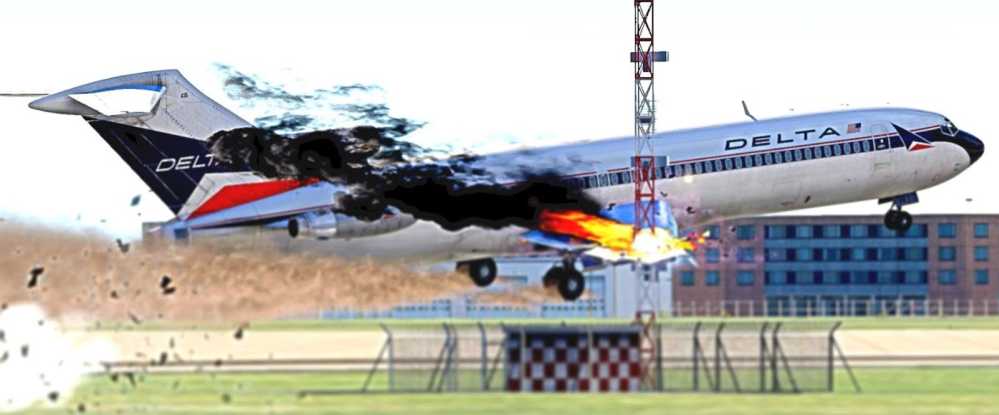
Aftermath of the crash
NTSB released the cockpit recording to the media during the public hearing on Flight DL1141, and the pilots’ casual conversation immediately became national news. Parts of the conversation were even edited in the text version to protect the pilots’ privacy, but the release of the recording made this practice meaningless. This also caused strong protests from pilots across the United States, who successfully lobbied to prevent the NTSB from releasing the original cockpit recordings of subsequent accidents. Since 1988, the original cockpit recording (CVR) can only be released when submitted as evidence in court.
After the cause of the accident was made public, Delta Air Lines fired the three pilots of Flight DL1141. Judd was later rehired, but Davis and Kirkland had to end their careers early. After the nightmare accident, Delta Airlines reorganized its entire training department, established new positions and command systems, and assigned new safety tasks.
NTSB has long believed that crew safety performance is initiated from the top down, and management must first be aware of its role in promoting a safety culture before a safety culture can be formed.
Delta Airlines has completely eliminated this culture that has been prevalent for decades but has always ignored the rules through a series of rectifications. Since the DL1141 flight accident, there has been no fatal aviation accident with similar causes.