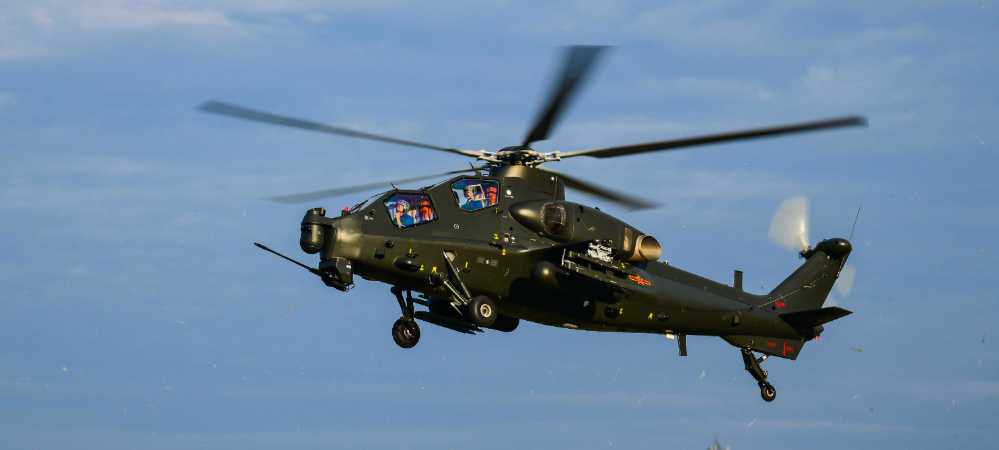

Compared with China’s fighter jets, China’s helicopter industry is still catching up with the world’s advanced level. China’s first armed helicopter, the Z-10, has been around for 20 years. Through the early Z-10 and Z-19 projects, China gradually mastered the design and system development capabilities of armed helicopters and solved the problem of whether there are professional armed helicopters. The Z-10 represents the Chinese military’s understanding of the tactical value of dedicated armed helicopters and the highest achievement of full-system practical application of China’s helicopter industry. Overall, the Z-10 is a medium-sized armed helicopter with decent performance. What are its future development prospects?
Is the turboshaft 9 basically enough?
First, let me give you the conclusion: the most direct problem that has always affected and determined the development of China’s Z-10 is the immaturity of the engine, and the indirect background is the current re-evaluation of the battlefield value of armed helicopters by various countries (that is, China doubts the value of armed helicopters and has never been determined to develop armed helicopters like developing stealth fighters, but in June 2024, China’s new heavy armed helicopter made its first flight. This site will give a detailed interpretation later).
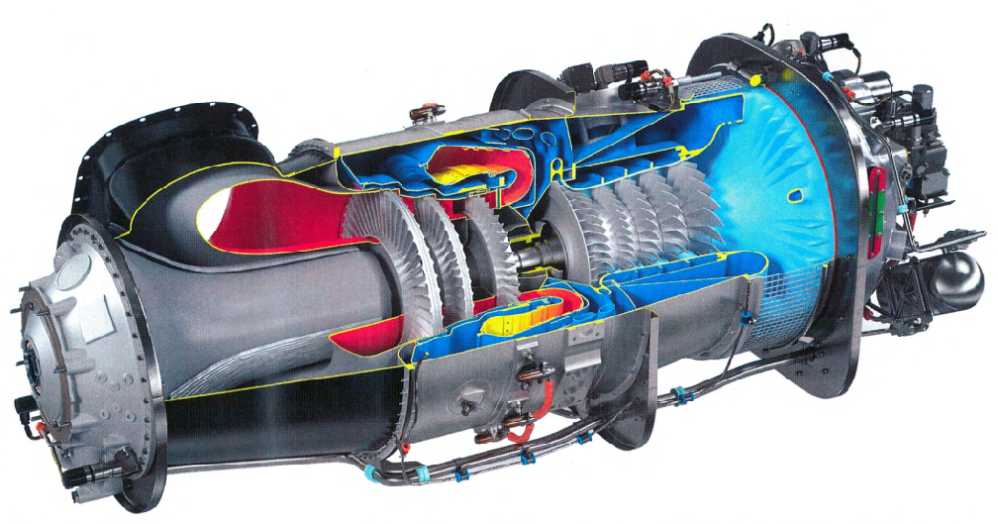
Similar to the bottleneck of high-power turbofan engines that China’s domestic fighters once faced, if the Z-10 wants to be on par with the world’s first-class armed helicopters, it also needs a strong "heart". It is said that it has considered a variety of turboshaft engines during the development process, including Russia’s VK2500, Ukraine’s TV3-117 and Canada’s PT6C-67C. PT6C-67C was used in all prototype test flights. However, under pressure from the United States, Canada stopped exporting PT6-67C to China, and the "heart" problem of the Z-10 will eventually have to be solved by China itself. In early 2011, Jane’s Defense Weekly reported that China successfully replaced the domestic turboshaft 9 engine for the Z-10, and believed that the engine may have technical assistance from Ukraine or Russia.
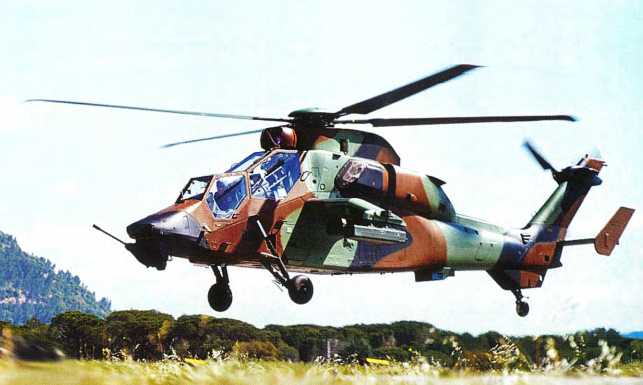
The single power of the turboshaft 9 reaches the kilowatt level, which is equivalent to the 958-kilowatt engine equipped with the European Tiger attack helicopter, but is inferior to the 1,300-kilowatt engine of the PT6-67C and the 1,400-kilowatt engine of the improved T-700 equipped with the AH-64D. For a 7-ton medium-sized armed helicopter like the Z-10, the turboshaft 9 is basically enough, but if you want to further increase the weapon mounting and armor protection level or install a millimeter-wave radar, it will be more difficult.
Shortcomings and root causes
The most direct manifestation of insufficient power on the Z-10 is the limited weapon mounting potential. This type of aircraft generally carries 8 "Hongjian" 10 heavy anti-tank missiles in one mission, which is equivalent to the AH-1 "Super Cobra", Mi-24 and "Tiger", but it is difficult to reach the maximum 16 heavy anti-tank missiles carried by the AH-64 and Mi-28.
In addition to anti-tank missiles, the Z-10 can also carry 57mm or 90mm rocket launchers under the short wings on both sides. In the escort mission mode, the rocket launcher on the inner side of the short wing can be replaced with the "Tianyan" 90 light air-to-air missile. The caliber of the Z-10’s cannon is 23mm, which is smaller than the 30mm caliber of the three heavy armed helicopters, the Apache Mi-28 and Ka-52. It is generally believed that the 23mm cannon is more suitable for anti-helicopter use, while the 30mm cannon is more suitable for suppressing and destroying enemy lightly armored targets. The reason why the Z-10 did not choose the 30mm cannon may also be related to the consideration of controlling the weight of the entire cannon system (gun, ammunition).
In order to ensure structural strength and maintain lift, as much weight as possible for weapon mounting, the Z-10 fuselage and rotor parts use a large amount of composite materials. It is said that the weight ratio of its composite materials is higher than that of the RAH-66 "Comanche" that the United States has discontinued. Such a large-scale use of composite materials has indeed reduced the weight of the fuselage, but the outside world has also been speculating that the protection capabilities of the Z-10 crew and fuselage need to be improved.
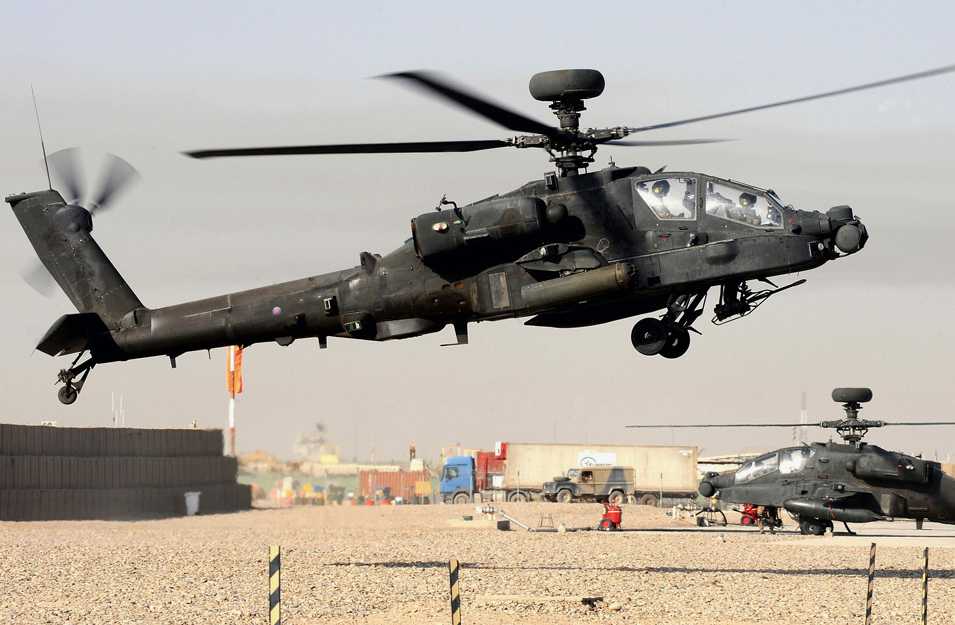
According to some media analysis, the Z-10 cockpit bulletproof glass can resist the penetration of 7.62mm ammunition, and the composite armor under the cockpit can also resist the shooting of 12.7mm machine guns. If the report is true, the above protection level can only be said to be good, but there is still a gap with the heavy armed helicopters of the United States and Russia. The key parts of the "Apache" and Ka-52 can resist the shooting of 23mm shells, and the key parts of the Mi-28 can also resist the attack of 20mm caliber ammunition. In addition, the Z-10 is not equipped with a pilot ejection seat similar to the Ka-52. The K-37 ejection seat of the Ka-52 has been verified in actual combat on the battlefield in Ukraine and saved the lives of many Russian crew members, but the system includes not only the ejection seat itself, but also a set of special propeller explosive bolts and other subsystems. If you consider equipping the Z-10 with a similar crew life-saving system, it is bound to further increase the weight of the entire aircraft structure.
Armor protection is only the last line of defense of the overall protection system of armed helicopters. Actual combat experience on the Ukrainian battlefield shows that modern armed helicopters facing massive low-altitude portable air defense missile attacks from the enemy must first avoid being hit as much as possible. Since 2017, a directional infrared countermeasure (DIRCM) system called L370 "Vitebsk" has been increasingly installed on Russian helicopters and attack aircraft. The system can detect incoming missiles within a radius of hundreds of thousands of meters and automatically fire blinding lasers and jammers in the direction of the missile attack. It has also been very effective on the Ukrainian battlefield. The system adopts a modular structure, and various components can be installed on existing helicopters or fixed-wing aircraft according to needs. The main modules include: L370-1 control unit, L150 "Pastel" digital radar warning receiver, L370-2 ultraviolet warning sensor, L140 "Response" laser warning sensor, L370-3S digital active jammer, L370-5 infrared jammer, UV-26 jammer launcher and active towed decoy. The Russian side once installed "Vitebsk" on the Mi-8 real machine and conducted live-fire tests on an elevated platform. With the engine running, the system successfully interfered with 20 incoming "Needle" missiles. But obviously installing such a complex soft defense system will also increase the weight of the fuselage.
The Z-10 currently in service is not equipped with millimeter-wave radar, which has almost become the standard configuration of the current new US and Russian armed helicopters. Taking the AH-64D "Apache Longbow" roof-mounted radar system as an example, it can cover a range of 8 kilometers, perform an omnidirectional scan every 6 seconds, and can simultaneously identify, distinguish and display up to 256 targets, and select 16 priority targets for transmission to the fire control computer. While attacking the target, the Longbow radar can also transmit the information of other targets to other helicopters or fixed-wing aircraft. According to the Americans themselves, the hit rate of the Longbow Apache is 4 times higher than that of the ordinary Apache, and the survivability is 7.2 times higher. If the Z-10 is equipped with such a radar, its battlefield monitoring, integrated reconnaissance and attack, firepower response, and survival probability will all be improved from the perspective of sensing alone, but such a radar is not light. Taking the Longbow as an example, it weighs 500 kilograms. When the US AH-64D is fighting on the Afghan plateau, it often has to dismantle the millimeter-wave radar and reduce the machine gun ammunition to ensure sufficient fuel carrying. The WAH-64D used by the British Army in Afghanistan uses the RTM322 engine jointly developed by France’s Turbomeca and Britain’s Rolls-Royce, which has a power of more than 1000 tons. 1500 kilowatts, so it can fight fully armed on the Afghan plateau, and its comprehensive combat capability is better than the AH-64D used by the US military. The surrounding threats faced by China’s armed helicopters also include the plateau combat environment, which will inevitably require breaking through the power bottleneck of the Z-10.
China does not lack relevant radar technology, but the basic model of the Z-10 obviously does not have more redundant power to install such a radar. The Z-19 armed reconnaissance helicopter can be equipped with such radars, and can further form a dual-aircraft formation with the Z-10, sending battlefield monitoring information to the Z-10 in real time through the data link, and then the Z-10 will implement firepower output. This is an effective and feasible solution, but it is indeed a forced solution. Using two medium and light armed helicopters to perform the tasks of a heavy armed helicopter, the cost-effectiveness, mission efficiency, and reliability of the system construction are all worth discussing.
Urgent need to improve the power level
From the above, it can be seen that the engine power is important for armed helicopters. The power bottleneck has actually affected the Z-10 The all-round performance from mobility, firepower, survivability to battlefield situation awareness. The relevant Chinese research and development units and the military must be very clear that the WS-9 engine is the top priority of the Z-10 full system project. The final installation and delivery can be said to be another strategic scientific research achievement of China’s aviation engine industry after the WS-10. Similar to the situation of high-power turbofan engines, there are only a handful of countries and companies in the world that can develop high-power turboshaft engines: Pratt & Whitney and General in the United States, Rolls-Royce in the United Kingdom, Turbomeca in France, and several companies in Russia/Ukraine (which have been basically destroyed in the war) almost completely monopolize the market. Among the existing armed helicopters, the TV3-117 turboshaft engines of the Mi-28N and Ka-52 have a single output power of more than 1,600 kilowatts, which is the best among all. The level gap between the WS-9 and TV3-117 is large, but after all, the problem of whether there is one or not has been solved. But for the Z-10 For the helicopter, there is still a strong demand for further improvement in power level.
If the rated output power of the engine is increased to more than 1,400 kilowatts, the four composite racks under the short wings on both sides of the Z-10 can fully mount 16 heavy anti-tank missiles, reaching the level of heavy armed helicopters; at the same time, it is not difficult to install millimeter-wave radar on the rotor and install additional armor on the existing fuselage. It will also be possible to replace the aircraft with a larger caliber cannon and install a directional infrared countermeasure system similar to the "Vitebsk".
Since the Z-10 entered service in 2012, there has been no news of deep improvement. The Air Force version of the Z-10K began to be equipped with the 15th Airborne Army and the Hong Kong Garrison in 2016. Its overall performance is basically the same as that of the Army Aviation version. After the 071 large dock landing ship and the 075 large amphibious assault ship entered service, it seemed natural for the Z-10 to be equipped with the Navy. The Army Aviation’s Z-10 did take off and land on the Navy landing ship many times during exercises, but there has been no more news about the Navy’s own ship-borne Z-10. Instead, foreign media once reported that China might purchase Ka-29 ship-borne armed helicopters and Ka-52 ship-borne helicopters from Russia.
If the Z-10 is put on board, it will inevitably need to strengthen the body structure and corrosion resistance, thus facing the problem of weight gain again. In the absence of further strengthening of the power system, it is obviously difficult to do so. This seems to be a logical explanation. In fact, under the original power conditions, the improvement and upgrade of the Z-10 was almost on the verge of the upper limit from the beginning. Therefore, everything must return to the origin-replacement of a turboshaft engine with greater horsepower and higher power-to-weight ratio.
The Z-10ME going global
It is a little surprising that the first deeply improved model of the Z-10 since its birth is the foreign trade version. At the 11th Zhuhai Air Show in 2016, the Z-10ME was exhibited to the public for the first time in the form of a model, and in 2017 it first went to the Dubai Air Show to participate in the exhibition. In November 2018, it debuted as a complete machine at the 12th Zhuhai Air Show for the first time. In mid-2022, Pakistan decided to purchase China’s Z-10ME, and the Z-10 was successfully exported.
Unsurprisingly, the most core upgrade and improvement of the Z-10ME is the power system. According to a report in Ordnance Technology in 2022, the aircraft "has been equipped with the latest improved model of the turboshaft 9 engine, with a maximum power of about 1,300 kilowatts and a high power-to-weight ratio, significantly improved flight performance, more powerful weapon load capacity, and leading combat capability in high temperature and plateau environments."
On this basis, other improvements to the Z-10ME have come naturally, such as the addition of 6 additional armor plates installed on both sides of the engine compartment, on both sides of the two pilots’ cockpits, and in three key areas of the electronic equipment compartment at the front of the nose; for example, the cannon ammunition carrying capacity has been increased by 3 times, and the weapon attachment points have also increased from the original 4 to 6, which has greatly increased the ammunition carrying capacity. The Z-10ME can even carry SW-6 small drones and CM-501XA small cruise missiles to perform tactical reconnaissance and strike missions; it can also hoist the "Canglang" light all-terrain assault vehicle to carry out three-dimensional operations; in addition, the Z-10ME is also equipped with a directional infrared countermeasure system similar to the "Vitebsk", which significantly improves its battlefield survivability in high-risk environments.
It can be said that after a comprehensive upgrade and improvement, the Z-10ME no longer has obvious shortcomings except for the millimeter-wave radar. From the photos circulating on the Internet, we can even see a Z-10ME with a top-mounted millimeter-wave radar installed, but considering that the improvement of the turboshaft 9 power system is limited after all, there is still uncertainty as to whether the millimeter-wave radar can be finally implemented. In fact, China is not without more powerful turboshaft engines. The turboshaft 10 engine that has been equipped on the Z-20 has a rated power of more than 1,500 horsepower and a good power-to-weight ratio. However, the fuel consumption of this engine is high, and the Z-10 is a medium-sized armed helicopter with a relatively compact structure. Can it be adapted to the turboshaft 10 without major changes to the original design? It remains to be seen.
New airborne ammunition
The actual use of armed helicopters on the Ukrainian battlefield shows that the survivability of armed helicopters will face severe tests after entering a high-risk battlefield environment. According to incomplete statistics, as of March 1, 2023, the Russian military’s Ka-52 and Mi-28, two ace armed helicopters, have confirmed losses of more than 20. Since the birth of armed helicopters, the most direct and effective tactic besides anti-tank-low-altitude continuous fire suppression/output has been unable to cope with the enemy’s highly concealed and dense low-altitude air defense firepower network. In this context, extending the range and autonomous attack capability of airborne ammunition, so as to have the "out-of-area strike capability" in low-altitude airspace, has become a realistic option-although this is inconsistent with the original functional attribute of the armed helicopter to provide close fire support to ground forces.
Z-10 may also face such a high-risk battlefield environment in the future, so its upgrade direction includes not only the helicopter itself, but also the upgrade of airborne ammunition.
In July 2021, the US military used an AH-64E "Apache Guardian" to launch an Israeli-made "Spike"-NLOS missile, which successfully hit a target 30 kilometers away in the test; Coincidentally, the armed helicopters of the Russian Aerospace Forces also used the "Product"-305 air-to-ground missile on the Ukrainian battlefield. The common characteristics of these two missiles are that the missile body is large in size, both have a range of 30 kilometers and non-line-of-sight guided attack capabilities, and use multi-mode seekers. Different seekers can be easily converted to attack different types of targets. In addition, both missiles have two-way data link guidance capabilities. The missile seeker field of view can be transmitted back to the onboard multi-function display through the onboard data link, and the missile can be directly tracked and guided in the form of "man in the loop". In a sense, "Spike"-NLOS and "Product"-305 have become the benchmark for the new generation of helicopter-borne anti-tank and offensive missiles.
In June 2022, CCTV’s National Defense Military Channel reported on the training work of a certain unit of the Xinjiang Military Region Army Aviation Corps in the "Military Report" column. The Z-10 equipped by the unit in the picture also carries a large-sized new air-to-surface missile with an optical window. This type of missile seems to be unable to be carried on a quadruple-mounted rack, but uses a twin-mounted rack. And it may be a new Chinese airborne ammunition similar to "Spike"-NLOS and "Product"-305.
Is there a battlefield demand?
If it is puzzling that the Z-10 has only seen major improvements after 10 years of service, then it is equally difficult to answer whether the PLA will replace or upgrade all of its self-use Z-10s to Z-10ME or higher versions. It must be pointed out that there is always a limit to the upgrade and improvement of compact aerial platforms such as armed helicopters. Even if a higher horsepower engine is installed, the original design of the Z-10 as a medium-sized armed helicopter determines its basic size and space. Although the expansion of the short-wing pylon function is relatively easy, it is not so easy to expand the capacity of the internal equipment. This brings up another question. Instead of further tapping the potential of the old platform, why not start the next generation of armed helicopters as soon as possible to completely solve the problem?
But will there really be a next generation of armed helicopters? Judging from the development of armed helicopters around the world, the future of this type of aircraft does not seem optimistic. The world’s second-generation armed helicopters, such as the AH-64, were equipped at the same time as the fourth-generation fighter jets of the major air forces. The United States and Russia already have fifth-generation fighter jets, but these two leading armed helicopter powers have no new generation of dedicated armed helicopters under development. The former RAH-66 "Comanche" helicopter of the United States was positioned for armed reconnaissance, but it failed to achieve success. The Future Attack Helicopter (FARA) project of the US Army, which is being bid by two major helicopter giants, Bell and Sikorsky, is also positioned for armed reconnaissance, and the goal is clearer. It will replace the OH-58D reconnaissance helicopter and fight side by side with the "Apache", and it is definitely not a replacement product for the "Apache". At present, the mainstream armed helicopters in the world are still the second-generation models and various improved versions of the United States, Russia and Europe, and other countries are basically in a follow-up state in research and development.
In other words, there is no so-called "third-generation armed helicopter" in the world, and there is no project. This is the cruel reality. What is the reason why armed helicopters are facing the crisis of a lack of successors today? We know that whether a weapon has sustained vitality and development potential depends mainly on two factors: one is whether there is a battlefield demand; the other is whether there is a better alternative. Although the possibility of a large-scale armored decisive battle between major powers after the Cold War is getting smaller and smaller, in local wars such as the two Gulf Wars, the Georgian War, the two Chechen Wars, and the Syrian Civil War, the armed helicopters of the US and Russian armies are still powerful and have played an important role. Even in the battlefields of Afghanistan and Chechnya after the end of major military conflicts, armed helicopters continued to perform air stabilization tasks with ease. In the Libyan War, the French Army’s "Tiger" armed helicopters showed their prowess in coastal operations. The facts of a series of low-intensity local wars have proved that the battlefield demand for armed helicopters still exists, but the second-generation, or even the first-generation armed helicopters, are sufficient to complete such tasks.
If a "third-generation armed helicopter" is developed, where will it go? How will it adapt to the future battlefield? The answer given by the Americans at first was stealth, but this path is not cost-effective. Because of the rotor structure, it is difficult for helicopters to achieve the stealth effect of fixed-wing aircraft. The most important function of armed helicopters is to continuously output firepower at low and medium altitudes, which requires a larger and heavier body and short-wing external racks, which are contrary to the principle of stealth. "Comanche" has a huge investment and a long development time. The stealth effect obtained in the end is not proportional to the sacrifice made in actual combat capability. Therefore, the real reason for its cancellation is not the change in battlefield requirements but the low cost-effectiveness. In the new FARA project, the US military requires the bidding products to have a higher flight speed. However, although Sikorsky’s S-97 can already fly at a "high speed" of 480 kilometers per hour, compared with fixed-wing manned aircraft or drones, how much significance does such a "high speed" have?
Low-altitude flight, difficulty in stealth, and low speed make armed helicopters inevitably fall into the dilemma of high risk and high combat damage once they face a high-confrontation battlefield environment. Today’s Ukraine has provided such a battlefield environment for the first time since the Cold War. Indeed, long-range ammunition such as "Spike"-NLOS and "Product"-305 can greatly reduce the risk of armed helicopters, but such ammunition is too heavy, too large and too expensive to achieve continuous firepower output and suppression, and armed helicopters are not the best choice in such low-altitude long-range strike missions.
Is there an alternative?
Is there a better alternative? The future army plan proposed by Rumsfeld when he was in charge of the Pentagon, the "Sinsekhi Transformation"-it seems that as early as 20 The answer was given years ago: the future army drones will be smarter and have stronger ammunition carrying capacity. Because of their higher flight altitude, they have better battlefield continuous monitoring capabilities than helicopters, and can even hover in a certain area for several consecutive days, and can detect and strike at any time. Fixed-wing drones have a higher stealth cost-effectiveness and no risk of casualties. The advanced data link system can be connected to the full-dimensional combat system including ground forces and play a role as a node. As for the vertical take-off and landing capabilities of armed helicopters, they are not irreplaceable. The future army drones envisioned by the "Sinsekhi Transformation" can be launched and recovered by ground launch vehicles, and the battlefield flexibility is no worse than that of helicopters.
The drones are paired with "Stryker" or a new generation of modular ground combat vehicles. The entire combat intelligence system, including drone nodes, can transmit platform intelligence to ground combat vehicles. Modular ground vehicles equipped with different ammunition requirements only need to consider launching strike ammunition with a longer range, higher accuracy, and faster firing rate. The heavy firepower delivery and killing efficiency far exceed the armed helicopters that are always subject to the earth’s gravity.
Based on the current equipment development and the actual combat situation on the Russian-Ukrainian battlefield, the "Sinsekhi transformation" is no longer a sci-fi picture. Using drones to transmit real-time intelligence to long-range precision artillery systems such as the "HIMARS" is already a routine battlefield operation, and reconnaissance and strike drones have long been put into large-scale use. Reconnaissance and strike drones such as the "Wing Loong" 2 and "Rainbow" 5 can also be equipped with 16 missiles, and have a much longer range and endurance than armed helicopters. The "Rainbow" 5, which uses a heavy oil engine, has a range of tens of thousands of kilometers and a flight time of up to 120 hours, which is incomparable to armed helicopters with a flight time of only three or four hours. Of course, the performance of reconnaissance and strike drones on the Ukrainian battlefield is also unsatisfactory. Facing the powerful field air defense system of the Russian army, the Turkish-made TB-2 drone failed to play the prestige in the Nagorno-Karabakh conflict before. After entering 2023, it basically disappeared. The United States, which has a large number of similar models, has not provided Ukraine with more such non-sensitive weapons. All this seems to indicate that the existing reconnaissance and strike drones may also be unsuitable for high-confrontation battlefield environments, but low-cost cruise missiles represented by "Lancet" and a large number of consumer-grade drones have shined, and may foreshadow the terrifying power of drone swarm attacks - and this is also not science fiction.
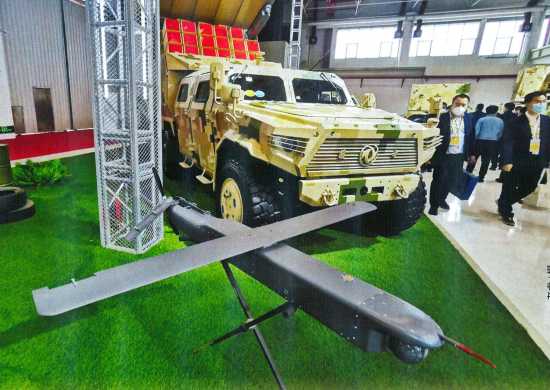
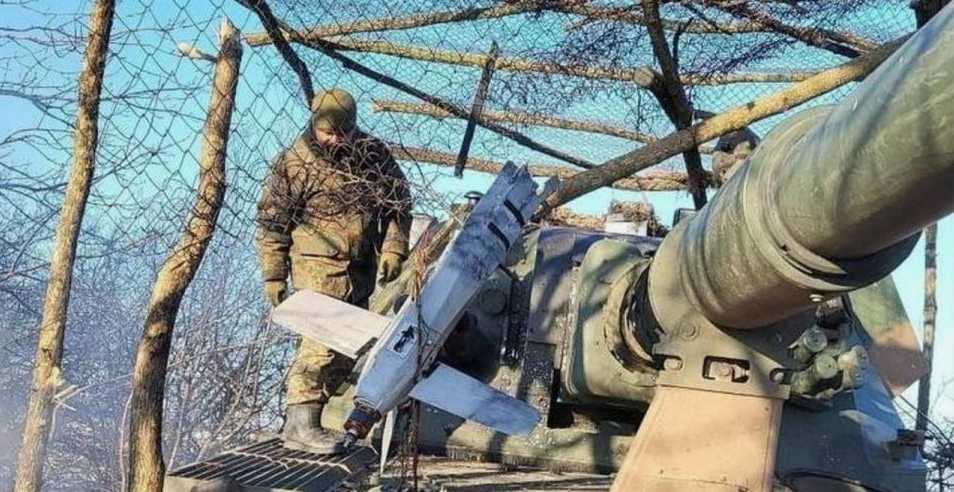
In 2021, CCTV released a video titled "China’s drone "swarm" system exposed, 200 can be deployed at a time". The drone "swarm" system developed by the China Electronics Technology Group Corporation’s Institute of Electronics Technology has appeared in the public eye. In the video, the drone is loaded into a 48-unit launcher, and the launch system uses a truck chassis to carry the entire system like a self-propelled rocket launcher. Through this launch system, drones can be launched continuously in a short period of time. After the drone is launched, its wings unfold, its own power system starts working, and then it forms a formation to fly to the target airspace, and autonomously fly over the target area to search for targets autonomously. Once the target is found, the drone will lock on to the target and launch a suicide attack. The video also mentioned that the drone "swarm" system can even use multiple launch vehicles to launch more than 200 drones at a time to form a larger "swarm", and has multiple mission capabilities such as precise formation, changing formation, ground reconnaissance and attack, and precision strike. In addition to being launched by ground vehicles, the "swarm" can also be dropped by helicopters.
Objectively speaking, the comprehensive lightweight army reform proposed by the "Sinsekhi Transformation" 20 years ago was too radical, and the US Army failed to implement it to the end after Rumsfeld left office. But specifically in terms of drones and the army’s informationized warfare, it can be seen that the relevant equipment and concepts have initially entered the practical stage. In such a battlefield environment, traditional armed helicopters seem to have a tendency to be marginalized, and the "non-traditional" weapons that can adapt to the new environment are still being explored. In this way, it is not difficult to understand why countries are not in a hurry to launch the next generation of dedicated armed helicopters.