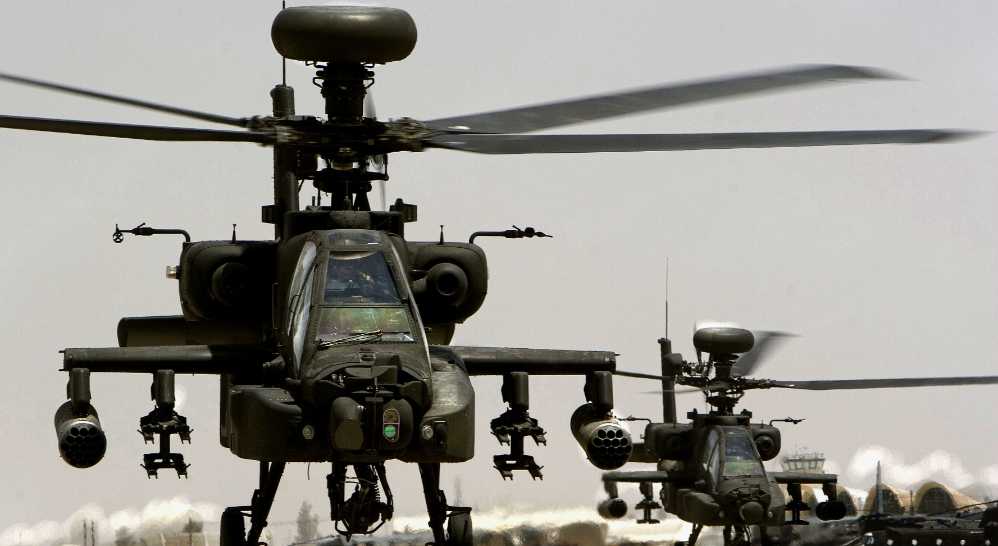
Last October, the U.S. Army announced that it would complete the replacement of the old Apache fleet with the new one by 2027. By then, hundreds of AH-64Ds in service (including "Longbow Apache" equipped with "Longbow" millimeter-wave radar, and "Apache" without millimeter-wave radar, the difference between the two is not big and the latter can be quickly installed with "Longbow" radar, so this article does not make a special distinction) will be replaced by the updated AH-64E and the US Army’s "Future Attack Reconnaissance Aircraft" (FARA). Considering that to this day, the AH-64D is still the benchmark for the development of heavy armed helicopters in many countries in terms of comprehensive performance, then the update of US military equipment is naturally a topic of interest.
The era of "Guardian Apache" is coming
With the exit of "Longbow Apache", the US Army Aviation is ushering in a new era. The new AH-64E was early numbered AH-64D Block3 and was also called "Guardian Apache". AH-64E actually began to enter the US Army service as early as 2011, and there is a corresponding version for export. Compared with the ones that are gradually being replaced by it Compared with the AH-64D "Apache", the enhanced capabilities of the "Guardian Apache" are mainly reflected in two points: First, the AH-64E has enhanced its maritime combat capabilities. If necessary, it can directly board amphibious combat ships for short-term ship deployment. At the same time, due to the upgrade of the avionics processor/software system with intelligent mission capabilities, the detection range of the "Longbow" radar has doubled, and it can track 128 targets at the same time, and can screen the top 16 targets according to the degree of threat. The ability to quickly lock and strike high-mobility targets on the sea surface such as small speedboats has also been enhanced; second, the AH-64E has improved its mission coordination capabilities with unmanned combat aircraft. The added UAV system tactical universal data link component (UTA) allows the AH-64E to receive the sensor data of the drone, and when necessary, it can act as the command aircraft of the drone, using Drones such as the RQ-7 Shadow collect battlefield intelligence on the battlefield, or directly command reconnaissance and strike drones to launch attacks.
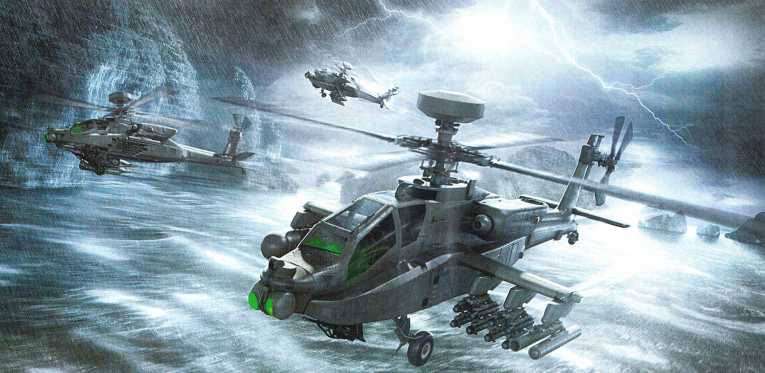
In addition, the AH-64E is also equipped with a new composite tail boom and rotor with a lifespan of 10,000 hours, upgraded with a power-enhanced T700-GE701D engine and transmission system, and installed with a redesigned ASPI upper exhaust nozzle, which uses the rotor downwash airflow to enhance the exhaust cooling effect, enhance the external red concealment, and improve battlefield survivability.
It is worth noting that the technical upgrade of the Guardian Apache itself has been ongoing since it entered service. At the Association of the United States Army Annual Meeting (AUSA 2022) in October 2022, Boeing launched the latest version of the Apache based on the AH-64E V6-most likely to be called the AH-64E V7. Its modernization improvements are mainly carried out in six aspects:
First, upgrade the transmission system and match the power of the improved turbine engine to improve the speed, range and efficiency of the new generation of attack helicopters.
Second, use modular open system architecture to maximize interoperability and accelerate the integration and deployment of advanced capabilities.
Third, improve the mission system to improve the interoperability between data networks, thereby reducing the cognitive burden of pilots during operation.
Fourth, improve sensor fusion technology to meet cross-domain data transmission in a confrontational environment and achieve better and more resilient communication connections
Fifth, enhance lethality, integrate long-range precision-guided munitions, "air-launched effects", small drones and future directed energy weapons.
Sixth, improve cost-effectiveness, adopt a fuselage with stronger performance and lower life cycle cost, reduce procurement costs and improve economic affordability, and achieve sustainable maintenance support.
FARA also has to support half the sky
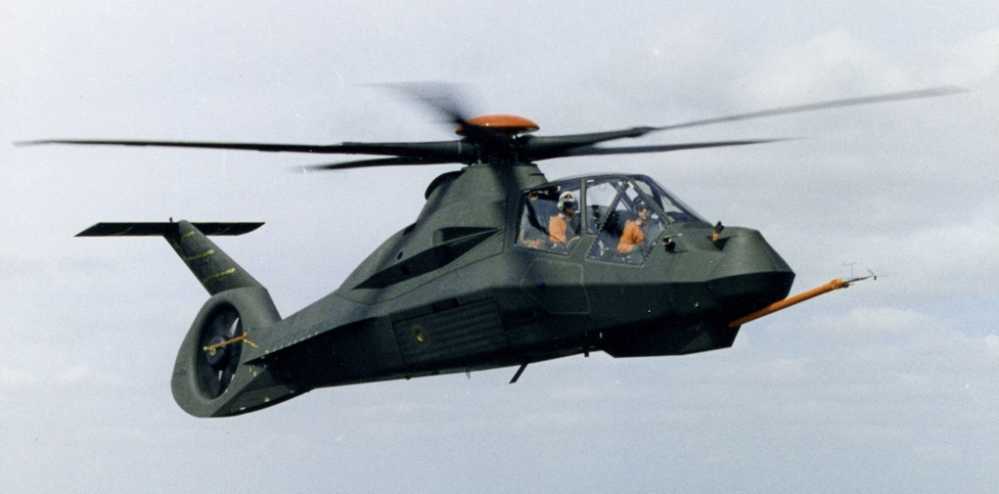
In the U.S. Army’s plan, the AH64D "Longbow Apache" will be replaced by not only the AH64E "Guardian Apache", but also a new generation of armed reconnaissance helicopters that will be mass-produced, namely the FARA project. Of course, this is a slightly complicated story. The OH-58D "Kiowa Warrior" that entered service in 1985 was a light reconnaissance helicopter that the U.S. Army once equipped with the "Apache" armed helicopter, responsible for identifying the enemy and providing target information for the latter. Since the OH-58D was based on the Bell 206A civilian helicopter, the single-engine design and light armor led to insufficient battlefield survivability, so the U.S. Army began planning the successor to the aircraft a long time ago. However, the process of seeking a successor to the OH58D was not smooth. The U.S. Army first hoped to replace the Kiowa Warrior with the sci-fi RAH-66 Comanche stealth attack helicopter. The RAH-66 project was officially launched in 1991 and is the first specially developed stealth helicopter in aviation history.
The U.S. Army plans to purchase about 1,300 RAH-66s to completely replace the OH-58D, greatly improving the concealment and efficiency of armed reconnaissance missions, as well as the survivability of the helicopter itself. According to the plan, the first RAH-66 will enter service in 2004. However, due to complex reasons, the RAH-66 project was seriously overspent and delayed, and the cost of each unit rose sharply. Finally, after consuming $8 billion, it was ordered to be terminated by the U.S. Congress. After the "Comanche" was discontinued, the U.S. Army urgently launched the Armed Reconnaissance Helicopter (ARH) project, trying to find a low-cost reconnaissance helicopter based on an off-the-shelf commercial helicopter to replace the already seriously outdated "Kiowa Warrior".
To this end, Bell and Boeing proposed the ARH-70 based on the Bell 407 civilian helicopter and the AH-6M based on the OH-6 respectively. After weighing the pros and cons, the US Army chose the ARH-70, which is more cost-effective. However, the ARH-70, based on a mature design, did not achieve low cost. In the development process, it also repeated the mistakes of the Comanche. The unit price rose to 14.5 million US dollars, which was 70% more than the original plan of 8.5 million US dollars, resulting in the cancellation of the aircraft in 2008. The failure of the ARH-70 completely deprived the US Army of a usable armed reconnaissance helicopter. The "Kiowa Warrior" had to be completely retired in 2016, and only some AH-64D or AH-64E could play the role of reconnaissance and attack helicopters, supplemented by the MQ-1C "Gray Eagle" reconnaissance and strike integrated drone. However, practice has shown that the effect of this manned/unmanned aerial vehicle combination can never catch up with the dedicated manned armed reconnaissance helicopter. Moreover, due to the large size of the original "Kiowa Warrior" fleet, if all heavy armed helicopters such as "Apache" are used to replace the blanks left by the "Kiowa Warrior", the operating cost will be staggering. Therefore, in the US Army’s plan, before 2027, some of the results of the FARA project will be manufactured to replace the part of the current hundreds of AH-64D heavy armed helicopters that undertake armed reconnaissance missions.
The FARA project hopes to enhance the US Army Aviation’s capabilities in attack and reconnaissance by comprehensively improving the lethality, agility, combat radius, survivability and sustainability of Army aviation equipment. According to the project requirements of the US Army, FABA will suppress the enemy’s long-range strike capability by increasing the range, allowing commanders to command in a relatively safe rear on the one hand, and to perform killing missions outside the enemy’s sensor perception range and weapon range on the other hand. At present, for the US Army, the FARA project is listed as the first modernization priority project of the US Army Aviation. The US Army requires FARA to be small in size, with a rotor diameter of no more than 12 meters, capable of high-speed flight (at least 333-380 kilometers per hour), and to specify the installation of General Dynamics XM915 cannon and a single General Electric T901-900 turboshaft engine (3000 shaft horsepower). The US Army also requires FARA to have a combat radius of 250 kilometers, a battlefield endurance of 90 minutes, a non-ground effect hovering altitude of 1220 meters at 35°C, and manned or unmanned optional. The aircraft can carry two "Hellfire" anti-tank missiles or rocket nests, and has a strong penetration capability. The avionics and mission systems adopt a modern open system architecture to facilitate future upgrades. In addition, in order to achieve the cost control goal of not exceeding the purchase price of the AH-64E "Guardian Apache", the stealth performance that was once extremely valued by the "Comanche" project is not required in FARA. Because the attack capability is greatly enhanced compared to the OH-58D "Kiowa Warrior", in addition to being used as an armed reconnaissance helicopter, the aircraft will also replace nearly half of the AH-64D "Longbow Apache".
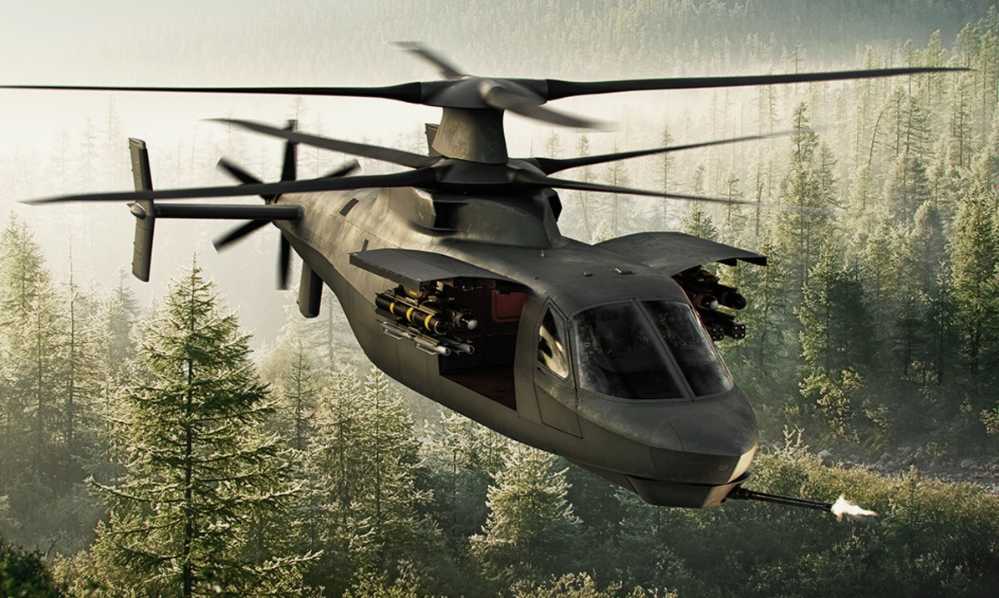
The FARA project’s request for proposals was released on June 22, 2018, and a total of 8 companies responded. By March 2020, the US Army announced that Sikorsky’s "Raider" X (Raider X) and Bell Helicopter’s Bell 360 "Indomitable" entered the third round of competition, which is the "finals". The prototypes of both companies are scheduled to fly for the first time in 2023, but their technical styles are very different. The structure of the "Raider" X is roughly the same as Sikorsky’s existing product S-97 "Raider" (which failed in the US Army’s "Future Long-Range Assault Aircraft" project, FLRAA). It consists of two counter-rotating rigid rotors to form a coaxial twin-rotor, and the tail of the aircraft uses a 6-blade propulsion propeller. Sikorsky said that such a configuration can ensure the good flexibility and agility of the "Raider" X. In addition, by adjusting the thrust of the tail propeller, the "Raider X" can directly change the flight speed in horizontal flight without affecting the flight. In terms of layout, the innovative design of the "Raider" X is to use a side-by-side two-seat, and the weapon bay is installed behind the cockpit. There are doors on both sides of the bomb bay that can be opened upwards, and the doors are equipped with weapon mounting short wings and launch racks, which can maximize the flexibility of choosing the type of mounted weapons. Bell The key systems and overall design of the 360 Indomitable are derived from the Bell 525 medium twin-engine civilian helicopter, which is a traditional helicopter configuration. However, Bell said that the 360 Indomitable can fully meet the speed threshold of 333 kilometers per hour required by FARA. And compared with the more complex compound helicopter design of competitors, the cost and development risk of the 360 Indomitable are lower.
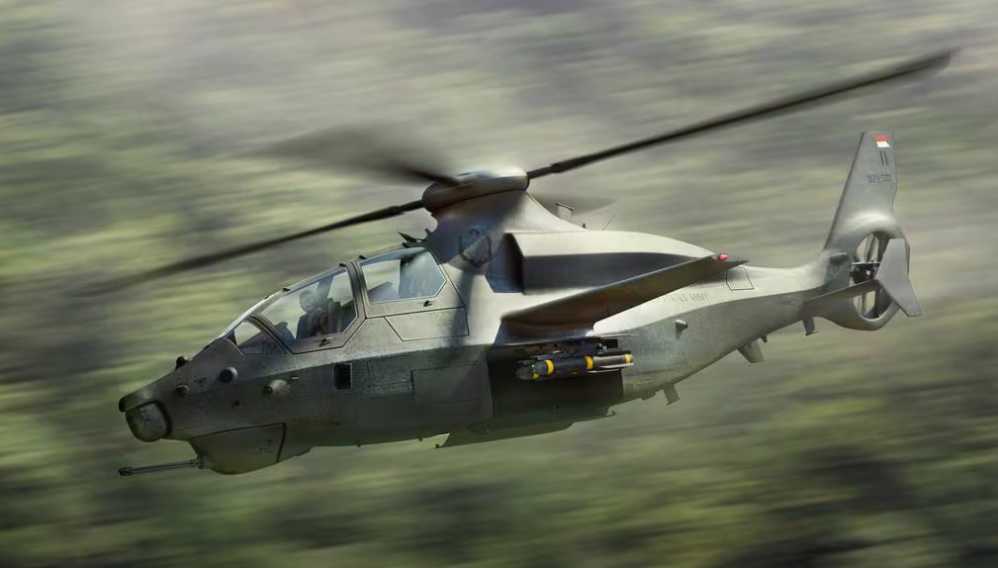
This 6.3-ton light armed reconnaissance helicopter has a tandem two-seat cockpit, a diamond-shaped fuselage section, a rotor head fairing, a retractable landing gear, an oblique ducted tail rotor, and a bomb bay design on both sides of the fuselage. It has the legacy of the RAH-66 Comanche of the year, indicating that the design of the aircraft takes radar stealth into consideration. The Bell 360 Indomitable is also equipped with a General Electric T901 turboshaft engine, which is installed on the left side of the fuselage, with the air intake on the left and the exhaust on the right, so as to greatly reduce the infrared characteristics. The oblique ducted tail rotor can generate a certain amount of lift while providing anti-torque, which helps to increase the efficiency of the tail rotor. The Bell 360 Indomitable is equipped with large wingspan short wings on both sides of the fuselage, which can provide 50% lift at cruising speed. Bell calls it a "design that can achieve the best propulsion capability without complex drive solutions. The short wings can also be used to mount additional weapons. In addition to the four "Hellfire" missiles in the bomb bays on both sides of the fuselage, the weapons of the Bell 360 Indomitable also include a 20mm XM915 cannon under the nose. In short, compared with the more innovative "Raider" X, the Bell 360 pays more attention to inheritance. It inherits the traditional, stable and economical helicopter design concept, focusing on reliable aircraft performance and low investment costs. It is not yet known who will win the FARA project bid, but no matter who wins the FARA, they will support the sky of the US Army Aviation in the next 15-20 years together with the AH-64E "Guardian Apache".
Extracting the surplus value of the "Longbow Apache"
New equipment is eye-catching, but the replacement of the old and new Apache fleet of the US Army Aviation means more. The retirement plan for hundreds of AH-64D "Apaches" is gradual. The US Army will cooperate with professional military service providers to complete the dismantling of 3 to 7 AH-64Ds per month, and the dismantled AH-64D parts will be properly preserved. This means that the retired AH-64Ds of the US military are likely to flow into the international market and continue to serve the national interests of the United States in another way. You know, although it is equipment eliminated by the US military, the AH-64D "Apache" is still a very valuable military asset.
According to the take-off weight, armed helicopters are generally divided into light armed helicopters, medium armed helicopters and heavy armed helicopters. Light armed helicopters are light, small and flexible, but their armor is thin and their firepower is not strong enough. In theory, it may be possible to take off with a lot of weapons, but this is at the expense of reducing the amount of fuel in the aircraft, and the endurance time will be greatly reduced. In actual use, light armed helicopters are more suitable for reconnaissance and patrol. They can only be used directly when it is advantageous or time is urgent. Heavy armed helicopters are the opposite. They have thick armor, strong firepower, fast speed and long range, and are suitable for heavy-handed strike missions. But for reconnaissance and patrol, it is a bit cumbersome, like using a butcher knife to kill a chicken. In an ideal situation, light and heavy should be matched, and each should be used to its strengths. Medium armed helicopters are between light and heavy. In an ideal situation, the cost is close to light and the performance is close to heavy. But in reality, cost and performance go hand in hand. It is even possible that due to the limit of take-off weight and excessive expectations of performance, the cost is close to heavy, but the performance is actually far from heavy. As the benchmark of heavy armed helicopters, the avionics of the AH-64D "Apache" may be slightly outdated, but this is not the key problem that cannot be upgraded. For armed helicopters, a good body with a strong body is always decisive. The AH-64D Apaches eliminated by the US military will surely become a hot commodity in the military trade market. In addition to regions like Taiwan that have always hoped to purchase more Apache heavy armed helicopters, many countries and regions, including the Pakistan Air Force, may also obtain these second-hand AH-64Ds. Arms sales have never been a simple business, but have always been deeply tied to politics. The US arms exports not only make a lot of money economically, but also become a tool for the US to implement its foreign policy and intervene in regional security situations. In any case, the AH-64D Apaches retired by the US Army will continue to serve the national interests of the United States in other forms.
The US Army has long been a flying army equipped with a large number of aircraft. Each US Army division has at least one combat aviation brigade with dozens or even hundreds of attack helicopters. At a time when great power competition is returning, the US Army is actively carrying out a new round of strategic transformation to cope with possible high-intensity wars. .