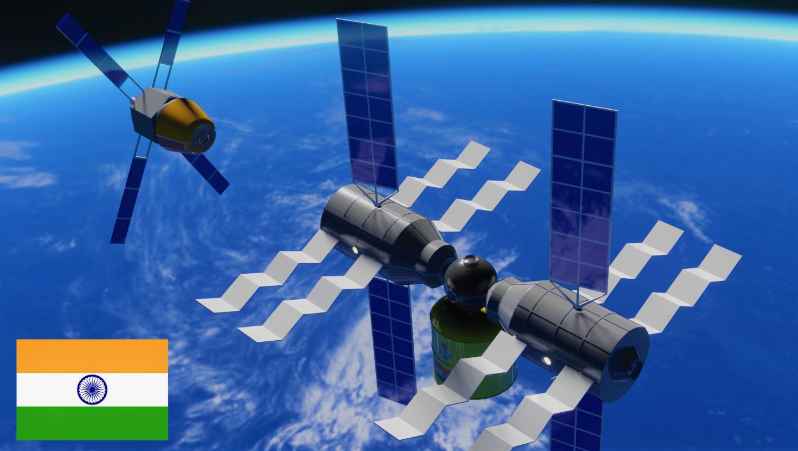

In terms of manned spaceflight programs, compared with Europe, the Indian Space Research Organization (ISRO) is much more high-profile. Taking advantage of the momentum of the successful soft landing on the moon, the space agency announced that it would not only conduct a manned spacecraft test flight soon, but also build its own space station. Judging from the current development, India may become the first emerging space country to break through manned spaceflight technology.
India independently conducts space activities and will not be subject to the United States like Europe and Japan. India has a unified and continuous space policy and will not be infighting like Europe. Although India’s industrial technology level is not high, it can get a lot of technical support from Russia and the United States. NASA has also made it clear that it will help India enter space. As for the relevant funds, although India’s per capita GDP is limited, as a country with a population of 1.4 billion, it can still squeeze out some money to implement manned spaceflight.
Impatient to start the space station plan
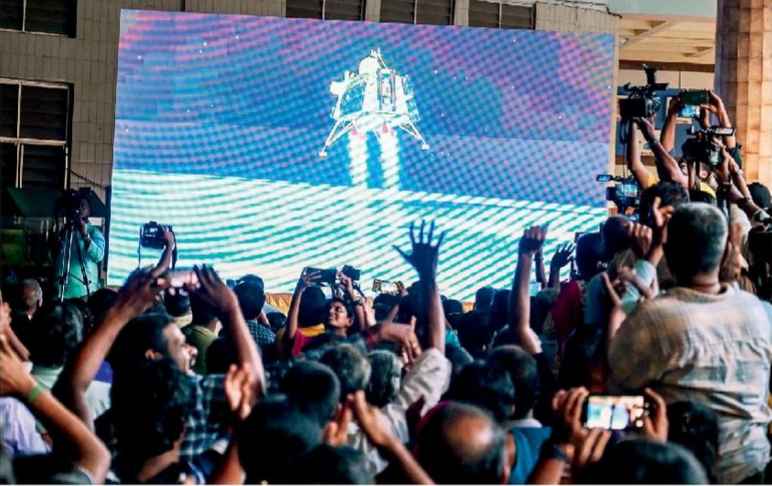
After India’s "Chandrayaan-3" successfully landed in 2023, the people of India were excited. The support rate of the Indian Space Research Organization has risen sharply. It not only re-emphasized the manned spacecraft project, but also took the opportunity to launch the Gaganyaan space station plan.
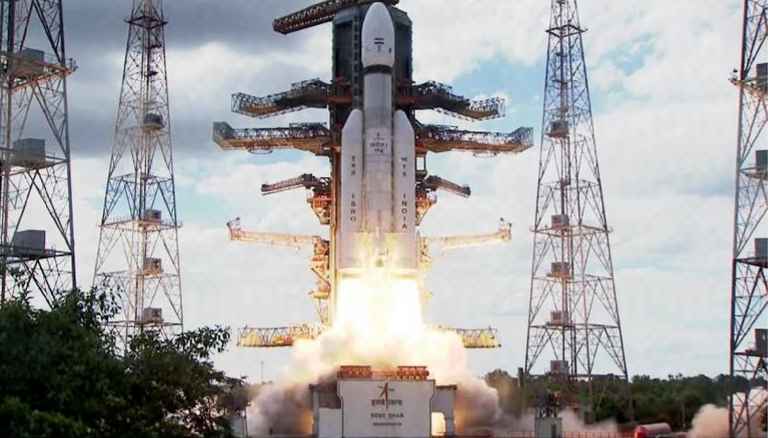
Indian Space Research Organization Chairman Somanat said at a public meeting that it plans to launch the first module of India’s independent space station by 2028. This module will be deployed in a low orbit of 400 kilometers, and astronauts can stay at the station for 15 to 20 days. Somanat said that the current LVM-3 rocket has insufficient thrust and the low-Earth orbit carrying capacity is only 10 tons, so the weight of the module launched in 2028 is set at 8 tons. After that, the Indian Space Research Organization intends to develop a more powerful new rocket. If approved by the government, the rocket will be successfully developed within 7 years, launching a large module weighing 20 to 25 tons, and building India’s own space station by 2035.
In fact, the Gaganyan space station plan was made public in 2019, but it was not noticeable at the time. The international community did not believe that India could complete the development of manned spacecraft and space station from scratch in such a short time.
In India’s manned space activities, there is a very important factor, that is, China. India believes that it is catching up with China at a high speed. Nitin J. Tikoo, defense analyst and editor-in-chief of India’s Eurasian Times, said: "If you look at the records of China and India side by side, you will get a clearer picture of India’s space station. From nuclear tests to anti-satellite tests, India has been catching up with China, and at a fairly fast pace. China conducted its first nuclear test in 1964, and India caught up in just over 10 years in 1974. China launched its first lunar exploration satellite, Chang’e-1, in 2007, and India launched Chandrayaan-1 in 2008. Ideally, now that China has deployed its own space station, India can also have its own space station by 2030."
The "Great Leap Forward" of Manned Spacecraft
Whether such a time comparison is appropriate or not is a matter of opinion. However, looking back at India’s pursuit of manned space capabilities, we can find a big "leap forward", that is, the choice of manned spacecraft.
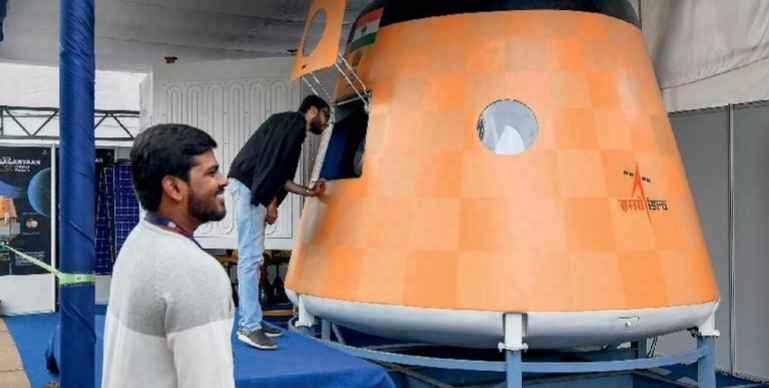
In 2009, when India first displayed a manned spacecraft prototype, it basically imitated the overall plan of the Soyuz spacecraft, adopting a similar aerodynamic shape and a three-person crew plan. But in 2020, before the first generation of spacecraft was successfully developed, the Indian Space Research Organization publicly released the design of the new spacecraft "Gaganyan", which is more similar to the manned Dragon spacecraft of Space Exploration Technologies Corporation, rather than the Soyuz spacecraft. The new generation of return spacecraft in the world basically adopts the cone plan, that is, the technical route opened up by the Apollo spacecraft, including the United States’ "Orion", "Manned Dragon" and "Starline", Russia’s "Sea Eagle", and China’s new generation of spacecraft. The same is true for the HTV-R abandoned by Japan and the "Nix" being developed in Europe. Although they have different choices in taper, they do not intend to follow the Soyuz plan.
But this means that the early development and testing of the Indian Space Research Organization’s spacecraft is equivalent to doing useless work. Although some technical foundations can still be transferred to the Gaganyan spacecraft, the overall cost is still very high.
However, India believes that it can make back the money. Speaking at the Indian Institute of Technology in Bombay, Somanath said that the Indian Space Research Organization has formulated a plan that will extend to 2047. "We can build a space station, we can send people to the moon, and we can create lunar-based economic activities in space."
Private investment in the next generation of rockets?
What rocket does India plan to develop to launch this new space station? At present, it has no official code name, but is called the Next Generation Launch Vehicle (NGLV). Somanath, chairman of the Indian Space Research Organization, said that they plan to introduce commercial capital for research and development, and it would be best if the Indian Space Research Organization did not invest a penny. According to the setting, NGLV has a geostationary transfer orbit carrying capacity of 10 tons and a low Earth orbit carrying capacity of 20 tons. It can be seen that NGLV is trying to reach the performance indicators of the Long March 5 rocket, but considering the capacity deficiencies of India’s basic industry, the Indian Space Research Organization still set the indicators a little lower.