The 617th Squadron of the Royal Air Force is famous in war history as the "Dam Buster". In May 1943, this bomber squadron launched a challenging air raid on the Ruhr Dam in Germany and became famous for its dramatic results. This article tells the story of the 617th Squadron after that.
Extreme joy leads to sorrow
After successfully destroying the Ruhr Dam, the next move of the 617th Squadron became a question for the British Air Force to think about. After all, this flight team was previously formed specifically for the task of air raiding dams. The head of the British Bomber Command, Air Marshal Arthur Harris, decided to retain the 617th Squadron and continue to use it in similar special operations.
The success of the air raid on the Ruhr Dam gave Harris great confidence in the 617th Squadron, and he determined that the "Dam Busters" were a diamond in his hand. He announced loudly: "I will make them a special mission unit... Whenever the Army or Navy wants to destroy a dam, a warship or something else, I will send out the 617th Squadron. ”
After the squadron leader Guy Gibson, who led the attack on the Ruhr, was transferred to the United States, George Holden became the new squadron leader of the 617th Squadron. This man was an "old bird" who had participated in 43 air raids on Germany. He had previously served as a wing commander. This time he took the initiative to downgrade to a squadron leader with only one purpose: to become a member of the "Dam Terminator".
The new mission soon arrived. The target was the Dortmund-Ems Canal in Germany, which was considered an important part of Germany’s domestic transportation system. The canal had been continuously attacked by the Allies since 1940, but it still maintained normal operation.
The 617th Squadron originally planned to use the "bouncing bomb" that destroyed the Ruhr Dam, but for safety reasons, it chose conventional aerial bombs. The first attack was on September 14 The mission was to be carried out on the night of the 15th, but it was aborted because the target airspace was covered with clouds, and another "Lancaster" bomber crashed into the sea on the way back.
The 617th Squadron, with high morale, was eager to establish new achievements, so Holden led the team to attack again the next night. Most of the crew members on the same "Lancaster" with him were the partners of the former squadron leader Gibson. However, this formation leader was very unfortunate. Soon after crossing the German border, it was hit by anti-aircraft guns on the right main wing. The "Lancaster" rolled straight to the ground, and all 7 crew members were killed. September 15th was Holden’s 30th birthday.
The rest of the bombers, led by the deputy squadron leader Captain Mick Martin, continued to search for the canal in the darkness and fog. Another "Lancaster" was hit, and the captain Les Knight asked Martin on the radio: "My two engines are scrapped. Sir, can I abandon the mission?" Knight then ordered the crew to parachute quickly, but he himself did not have time to do so.
The German anti-aircraft firepower that night was surprisingly accurate. The bomber piloted by Ralph Orsebrook fell into the canal after one wing was shot off. Bill Duval’s plane disintegrated in the air. The people on the British bomber did not even see the shadow of the canal... Only Martin and Dave Shannon briefly glimpsed the canal, but the bombs they dropped were completely irrelevant.
By the end of this tragic mission, the 617th Squadron had lost two-thirds of its strength, many of whom were witnesses of the Ruhr Dam raid. When Holden died, less than a month after he took over as squadron leader, Martin was urgently promoted to squadron leader, but he also received an order! All operations were suspended.
"Crazy idea"
The unique positioning of the 617th Squadron as a "special mission unit" was greatly impacted. It seemed that if the flight team continued to attack well-defended targets, they might be wiped out. And just when the future of the "Dam Terminator" was uncertain, a person who changed the fate of the 617th Squadron appeared, and this person was not even a soldier.
Barnes Wallis, a scientist and engineer, had long been trying to change the bombing strategy of the British Air Force. Faced with the heavy reinforced concrete structure, ordinary aerial bombs seemed to be unable to cause enough damage. After studying the impact of the explosion shock wave on concrete, Wallis believed that a 6-ton or even 10-ton "earthquake bombs" were designed to explode around the target instead of hitting it directly.
Wallis believed that when a large bomb exploded around the target, the shock wave it produced would severely damage the sides and bottom of the building, which would be more effective than dropping bombs directly on its thick protective top layer. Even if the bomb failed to seriously damage the target, it would create a huge underground cave, turning the target into a "dangerous building."
Not surprisingly, when Wallis published his first paper on the "earthquake bomb" theory in May 1940, it was generally ridiculed. The British Air Force insisted that its area bombing concept was effective, that is, 12 500 kg bombs made more sense than a 6-ton bomb. Of course, the British Air Force at that time did not have aircraft that could carry 6 tons of bombs or larger bombs.
By the time At the time when the 617th Squadron was hit hard over the German Canal, the British Air Force already had more than 1,000 four-engine heavy bombers. Airborne radar completely changed the face of night navigation. The Allies almost continuously dropped large numbers of bombs on the heart of the Third Reich, but the impact of the air raids on German ammunition production and troop morale did not seem to be significant.
The senior officials could not sit still. Sir Wilfred Freeman, the Minister of Aircraft Production of the United Kingdom, thought of Wallis, and the two had the following conversation.
Freeman: "Remember your discussion in 1940 about the 10-ton and 6-ton Is it a crazy idea to build a ton-class bomb?
Wallis: "Yes, I have more ideas."
Freeman: "Then when can you show me an unprecedented "earthquake bomb" that requires the use of special steel to ensure that it can be inserted into the hard soil near the target to maximize the destructive effect. At that time, there were only two metal foundries in the whole of Britain that could forge and harden this special steel, and these two factories were already in full production.
"If the factory facilities can help, the results will be shown to you in about four or five months." Wallis said, and then there was a series of communication, coordination and administrative instructions, and finally Wallis got what he wanted. The secret work of equipping the bomber with special large bombs began quietly.
"Ah, this is the ’tall cabinet’
While Wallis and his team were working hard, the 617th Squadron had a new commander, Leonard Cheshire. Cheshire, who focused on stimulating the potential of his subordinates, quickly won support, and the people in the squadron began to call themselves "Chehier’s cats."
Under Cheshire’s leadership, the 617th Squadron regained its vitality and achieved new results one after another. Starting in February 1944, the "Dam Terminator" was dispatched continuously, dropping bombs on targets such as the V-| missile launch site in northern France, Munich, and the railway marshaling yard in Brunswick. The assessment showed that the 617th Squadron had severely damaged the Munich Railway Marshalling Yard, with more than 90% of its bombs hitting the target. The damage caused by this air raid was greater than the sum of the previous rounds of attacks by the British Air Force and the US Army Air Force on this place.
One night in early summer, when Cheshire and his deputy, Major Les Monroe, were talking at the base, they saw a truck driving towards the munitions warehouse, with a tightly covered waterproof tarpaulin on the carriage. The two officers who were curious came forward to ask, and were told by the driver that it was the new boiler in the kitchen.
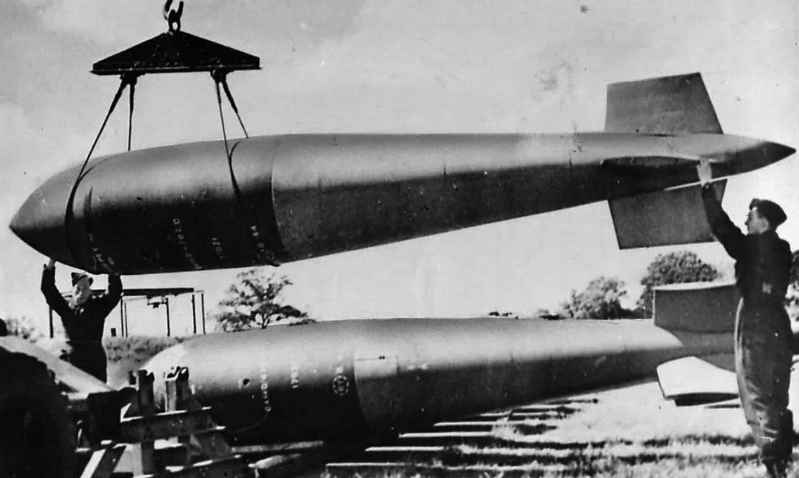
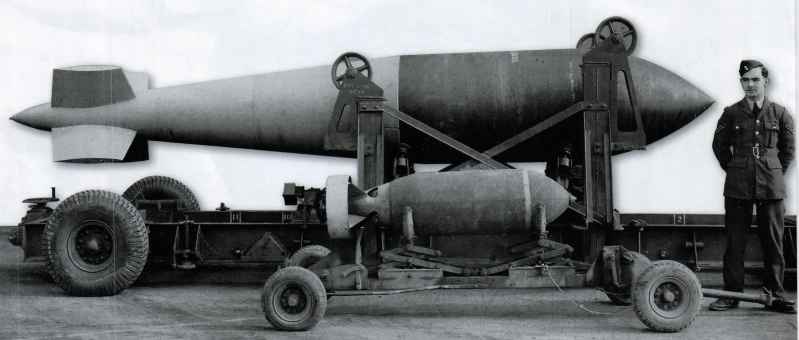
"Going to the kitchen? Then you’re going the wrong way," Cheshire said. Then he and Monroe pulled open the canvas, and what came into view were two metal monsters with pointed noses, strong bellies, and streamlined shapes. Monroe, who had heard of Wallis’s work, said in awe, "Ah, this is the ’Tall Cabinet’." Indeed, the truck was carrying Wallis’s 6-ton bomb, which was named "Tall Cabinet" because of its appearance. On June 8, Cheshire led 19 "Lancasters" to the Saumur area of France, and each bomber carried a "Tall Cabinet". The target of the 617th Squadron was the local railway culvert. After the Normandy landing, the German army was mobilizing armored forces from Calais to Normandy, and the Saumur railway culvert was a must.

The joint debut of the "Dam Terminator" and the "Tall Cabinet" was a great success. After the air raid, the area around the culvert mouth became a "moon surface", with multiple craters with an average diameter of 25 meters and a depth of 9 meters; the culvert did not collapse, but it was filled with rubble. It took the Germans six weeks to reopen the tunnel, but it was just in time to be occupied by the advancing Allied forces.
The next target was Mimoyec near Calais. Intelligence provided by the French Resistance indicated that the Germans were deploying a new type of "revenge weapon" there. The information was accurate. Thousands of workers were busy installing the extra-long-barreled V-3 artillery in a huge underground bunker. This artillery fired 136 kg shells with a range of up to 160,000 meters, and the impact point was locked in the London area.
Two forts were nearly completed, each consisting of 25 V-3 guns. If the forts were put into use, they would undoubtedly become a nightmare for the British. Moreover, the barrels and gun mounts were hidden underground, and the muzzles protruding from the surface were protected by steel shield bunkers, so ordinary air raids would hardly cause any damage.
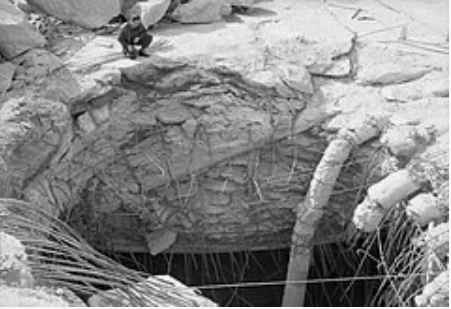
So Cheshire’s "Lancaster" took the "Tall Cabinet" to battle again on July 6. This time, the "earthquake bomb" played its role as its name suggests, the tunnel of the fort collapsed, and the underground structure was severely damaged. What’s more, a "Tall Cabinet" actually "hit the bull’s eye" and fell from a shaft to the bottom and exploded, perfectly creating the earthquake effect that Wallis mentioned. The Germans abandoned the V-3 artillery plan and admitted that "these facilities were not designed to withstand such bombs."
The largest and heaviest
After leading "Chesher’s Cat" to carry out 100 bombing missions, Cheshire himself was transferred away. His superiors believed that he had "done enough" and awarded him the Victoria Cross.
The successor squadron leader was Lieutenant Colonel Willy Tate, who "extremely despised danger". He maintained a similar combat intensity as Cheshire, allowing the 617th Squadron to gain new gains in operations against V-2 missile factories and launch sites, U-boat bases, canals and dams. The squadron is still the diamond drill that uses special bombs to attack special targets. During Tate’s tenure as squadron leader, the most memorable achievement of the 617th Squadron was against a giant ship. The German battleship "Tirpitz", which has long been regarded as a major threat by the British Navy, is hiding in the Norwegian fjord. Although Tate is eager to try, the hiding place of "Tirpitz" is too far for the "Lancaster" loaded with "Tall Cabinets".
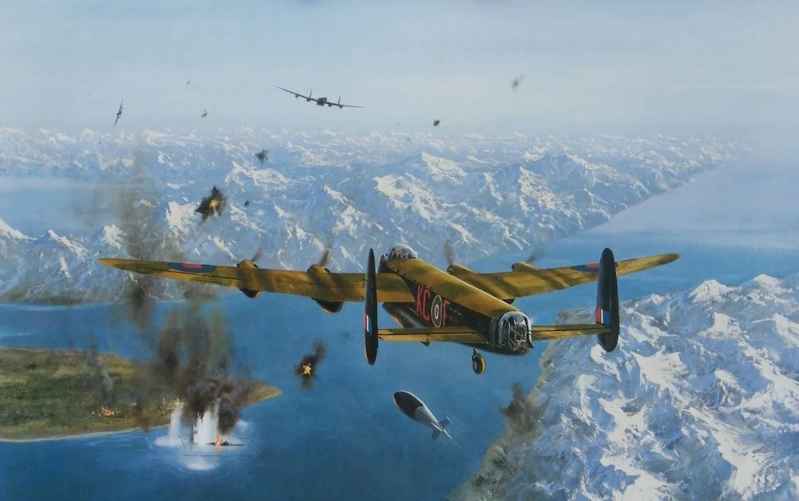
The opportunity came in November 1944. Aerial reconnaissance found that the German warship had moved to the Tromsø Fjord. If the "Lancaster" departed from Scotland, it could reach there. Tate led the bomber group on the 12th of that month. The bombing lasted for 3 minutes, and many "Tall Cabinets" played their power. After the bomb bay of the third main turret exploded, the German giant ship slowly turned over, just like the 617th Like the culverts, turrets and factories targeted by the squadron, the powerful Tirpitz could not resist the attack of the Tallboy.
In early 1945, Tait and Lieutenant Colonel Johnny Fauquier completed the handover of duties. The latter was the last squadron leader of the 617th Squadron during the war, and he had the opportunity to feel the power of larger bombs.
On March 14, the two Lancasters of the 617th Squadron were ready to take off, with Fauquier in one of them and the other piloted by the experienced Major Cadell. The two Lancasters were different in that the front and rear turrets had been removed, the radio equipment, the onboard toilet and the gangway were also missing, and several metal seats were even replaced with wicker chairs.
All these weight-reduction measures were to match the streamlined gray object protruding from the belly of the aircraft. It was more than 7.6 meters long and nearly 1.2 meters in diameter, with thick chains wrapped around it. This was the first use of the 10-ton super bomb "Grand Slam", Wallis’s new invention, the largest and heaviest bomb in World War II.
The target of the "Grand Slam" was the Bielefeld double-track railway viaduct near Bremen, which was an important supply line for the German defenders in the Ruhr Valley. Although the Lancaster had an amazing load, people were not sure whether it could successfully carry the Grand Slam. Unfortunately, Fauquier’s plane had an engine failure on the ground and had to withdraw from the mission.
Cadre did not want to miss the historic opportunity, so he insisted on going alone. After the bomb-carrying Lancaster took off, people on the ground watched in surprise as the bomber’s main wing began to show a downward arc, but in the end, the Lancaster gradually climbed higher and disappeared into the clouds.
At 16:28 pm, bombardier Clifford Cleaver pressed the release button, and the Grand Slam successfully left the cabin, and Cadre’s plane took off. Cleaver observed, "The bomb fell like a huge gray fish for 35 seconds and then fell into the swamp near the viaduct. "A huge mushroom cloud rose into the sky. The pilot of the Mosquito plane who was observing nearby shouted: "You did it!
Indeed, the "Dam Terminator" has made a new achievement: the railway bridge that had been standing tall before and had a 7-span structure with a length of more than 140 meters was blown up.