

In the 2019 Hollywood blockbuster "Angel Has Fallen" ("Olympus Has Fallen" Episode 3), there is a very impressive scene: the US President played by "veteran actor" Morgan Freeman encountered a drone terrorist attack while fishing. The accompanying security personnel were wiped out in the suicide attack of the drone, and only one personal bodyguard survived. International mercenaries used trucks to launch a large number of suicide drones carrying high explosives, which filled the sky. These drones rushed to their respective targets according to pre-set instructions. The well-trained and well-equipped security personnel were unable to resist the attack and were quickly wiped out in the successive explosions... The shocking drone "swarm combat scene" also became a rare highlight in this overall mediocre action movie.
Currently, the application of drones in the military has changed from a single task to a comprehensive task. The performance has been greatly improved. It can perform tasks all-weather and can also perform various complex tasks according to specific battlefield needs, such as battlefield data collection, reconnaissance electronic countermeasures, electronic induction, and attack. In particular, with the maturity of drone clustering technology, the scene of multiple groups of drones performing the same task at the same time has become the norm. These drone groups have a vivid name---"swarm".
Saturation attack
Although the actual effect is far less successful than in the movie, 2018 An actual combat operation at the beginning of the year actually previewed the above movie scene. Perhaps Roman Wolf, the director of "Angel Has Fallen", was inspired by this operation to arrange the above plot in the movie. On January 8, 2018, a group of uninvited guests came to the Russian military base in Syria. 13 attack drones swarmed in. Among them, 9 broke through the outer defense zone and flew into the Khmeimim Air Force Base, and the other 3 flew into the Tartus Port Naval Base for attack. The Russian air defense system was immediately activated, and the electronic warfare force successfully captured 6 drones, and 7 drones were shot down by the "Armor-S" air defense system on duty day and night, and the base suffered little loss. The scale of this "swarm" attack was small, and the drones used were relatively low-end, with neither intelligent cluster control nor corresponding electronic countermeasure capabilities, so the actual effect was average.
But if it is more than 100 Even more high-speed drones, each of which is equipped with high-energy explosives (such as octokin explosives), each drone is both an aircraft and a high-explosive bomb, and performs intelligent cluster control and high-speed penetration, combined with electronic jamming means. The existing air defense system will inevitably be put to a huge test when facing such high-tech saturated drone group attacks.
In this attack mode, compared with manned aircraft clusters, the speed, accuracy, mission flexibility and low-cost advantages of drone clusters in executing intelligent programs will be maximized. After combining cloud computing, big data, 5G technology and artificial intelligence (AI) technology, drones can quickly assemble in local areas to form a large-scale intelligent cluster advantage. It can not only carry out campaign strikes, tactical operations, special operations, but can even achieve strategic deterrence.
In addition, drone swarms can also cooperate with manned aircraft. For example, a manned stealth fighter at high altitude and 4 to 6 drones at medium and low altitudes form a combat group, and several combat groups are organized into a larger "swarm" to cooperate in combat, or drone swarms cooperate with large early warning aircraft and reconnaissance aircraft.
During land attacks, a "swarm" composed of hundreds of drones, equipped with different weapons and electronic equipment, uses intelligent cluster control to form attack waves locally to strike various campaign targets and special targets, such as airports, headquarters, core positions, etc. At present, the unit price of small drones is much lower than that of large drones. Modern air defense systems have great difficulty in defending dense small targets. If they want to defend against a firepower combat cluster composed of a large number of drones, the existing missile system interception channel will be saturated instantly, and the interception cost-effectiveness is also very low. In addition to the preset program, the future smarter drone swarms can even collect battlefield data in real time during the attack, make quick decisions in real time, determine defense weaknesses on the spot, and focus on attacking specific sensitive targets.
Therefore, the intelligent "swarm" attack of drones may even replace stealth fighters and beyond-the-horizon missiles and become the first choice for the first wave of offensive forces after the war. Once the drone "swarm" system is put into use in future wars, it will greatly improve the strike efficiency of the troops and reduce the risk of casualties. Compared with rockets and missiles, the use of drone "swarms" is more flexible. Missiles or rockets cannot be turned back, while drones can continue to hover over enemy targets until they find and destroy the target.
In the Nagorno-Karabakh conflict in 2021 and the ongoing Russian-Ukrainian war, we can see that both sides use a large number of drones to attack enemy targets. Since 2022 Since the end of the year, the Russian army has used a large number of improved Iranian low-end drones to attack the entire Ukrainian power system, with significant results. It is essentially a saturated "swarm" attack.
Not science fiction
In addition to "Angel Has Fallen", drone "swarms" have also appeared in many film and television works, such as "Sonic the Hedgehog" and "Spider-Man". When the audience sees the drone "swarm" omnipotent on the big screen, they often feel that this is just a movie, or even just science fiction, and it is still far away from us. However, this is not the case. The failed "swarm" that appeared over Syria in 2018 does not represent the true combat level of today’s military powers and drone powers. Two years after "Angel Has Fallen", the real drone "swarm" was realized in China.
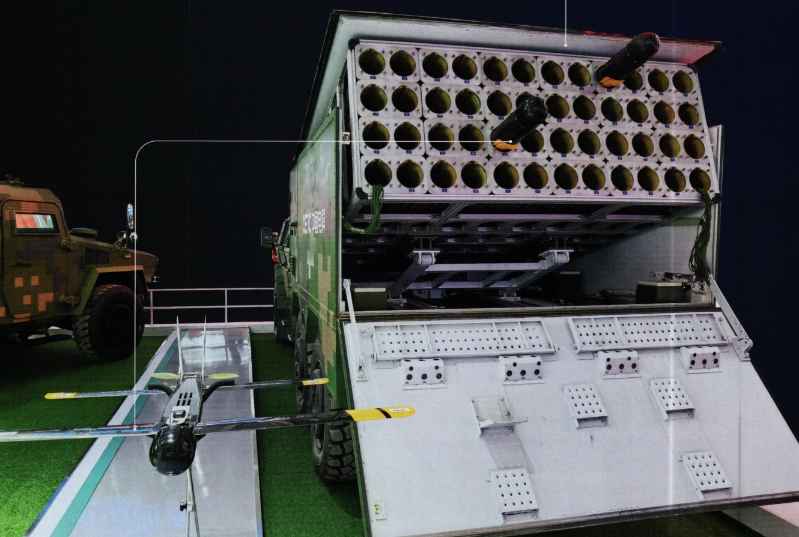
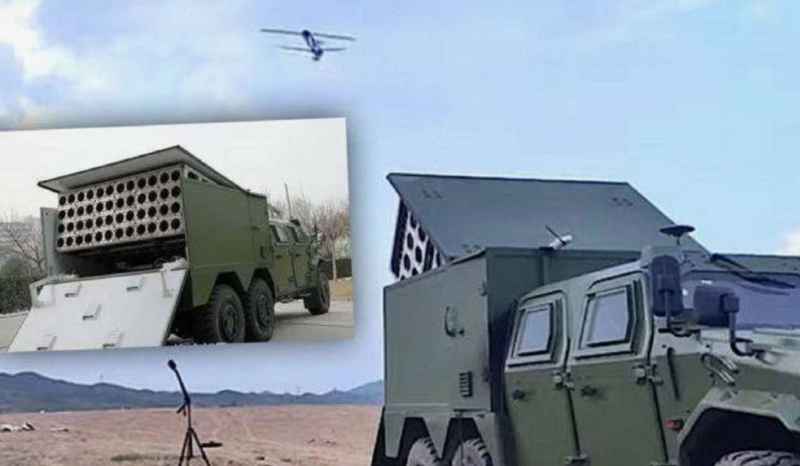
In 2021, CCTV’s WeChat official account published a post titled "China’s drone "swarm" system exposed, 200 can be dispatched at a time The drone "swarm" system developed by the China Electronics Technology Group Corporation’s Electronics Research Institute has appeared in the public eye. In the video, drones are loaded into a 48-unit launcher, and the launch system is carried on a truck chassis. The entire system is like a self-propelled rocket launcher. Through this launch system, drones can be launched continuously in a short period of time. After being launched, the wings of the drones unfold, and their own power systems start working. Then they form a formation and fly to the target airspace, and fly autonomously over the target area to search for targets autonomously.
Once the target is found, the drone will lock on to the target and launch a suicide attack. This scene is almost the same as "Angel Has Fallen". The video also mentioned that the drone "swarm" system can even use multiple launch vehicles to launch more than 200 drones at a time to form a larger "swarm", and has multiple mission capabilities such as precise formation, formation change, ground reconnaissance, and precision strikes, which doubles the strike effect. In addition, in addition to being launched by ground vehicles, the "swarm" can also be dropped by helicopters.
This drone system is likely to be a more advanced version of the CH-901 small drone/cruise missile system that Poly Group unveiled at the defense exhibition. The CH-901 small drone/cruise missile system first debuted at the 2016 Zhuhai Air Show. The system can carry a small search and tracking sensor to search for targets within 2 kilometers, and directly crash into enemy targets when necessary to detonate the airborne warhead. The CH-901 cruise missile can be launched in a container "swarm" mode or in a mortar-like manner! It is easy for a single soldier to carry and use.
The latest 48-unit drone "swarm" system was first exposed on October 13, 2020. At that time, the Electronic Science Research Institute of China Electronics Technology Group Corporation officially announced that the institute had recently launched relevant test flights and verification tests for the land-air coordinated fixed-wing drone "swarm" system.
In addition to China, the United States, Britain and other countries have also developed similar drone "swarm" systems. The U.S. Army, Navy and Air Force all attach great importance to drone "swarm" technology, and regard it as one of the five key technologies of the "Third Offset" strategy (a new round of high-tech military strengthening plan proposed during the Obama era, shelved during the Trump era, and restarted after Biden took office). To this end, the United States has developed a number of small drones for "swarm" operations, such as "Quail", "Coyote" and "Gremlins" in the past few years, and has conducted a large number of experiments. In early 2017, the U.S. military successfully used three F/A-18s to release up to 103 "Quail" micro-unmanned reconnaissance aircraft "swarms" in the air, and conducted a flight test lasting half an hour.
During the flight, fighter pilots guide drones through the system to complete reconnaissance and surveillance tasks. In the future, the U.S. Air Force is planning to use this technology on F-35 stealth fighters. In addition to reconnaissance, on April 26, 2021, the U.S. Navy disclosed in a briefing that in an exercise off the coast of California, the U.S. military used drone "swarms" to destroy a surface ship for the first time. It is reported that the U.S. Navy may be using Raytheon’s "Coyote UAV, which weighs 5.9 kg and is launched using a launch tube. The "Coyote" UAV is also the most mature "swarm" UAV system in the United States at this stage. Previously, the U.S. Navy has completed collaborative combat tests of 50 "Coyote" UAVs.
In order to further explore the feasibility of large-scale "swarm" UAV system operations, the United States is currently conducting a "super swarm" test of 1,000 UAVs, which will be dropped by C-130 transport aircraft. In the field of "super swarm" at the dry-wing level, China is also at the forefront of the world. China Electronics Technology Group Corporation has once organized a "swarm" test of 3,000 rotary-wing UAVs. China’s drone intelligent swarm technology has actually been put into practical use. In a CCTV news report several years ago, the Western Theater Command used drone "swarms" to provide logistical support for frontline soldiers.
All of this clearly shows that the drone "swarm" attack in "Angel Has Fallen" is by no means science fiction and is not far from reality.
Ready Player One
Movies are the presentation of dreams and the visualization of imagination. Movie technology, especially special effects technology, can allow the audience to see with their own eyes scenes that are difficult to appear or impractical in reality. In science fiction movies, creators will also try their best to give the above scenes a convincing presentation logic. For example, the famous director Steven Spielberg, science fiction films occupy an extremely important position in his brilliant career, such as "Close Encounters of the Third Kind" and " ET, Artificial Intelligence, Minority Report, etc. In 2018, Spielberg launched a visual effects masterpiece that is both sci-fi and nostalgic for Japan. The drone technology in it has even attracted more attention than the human protagonist itself. This movie not only allows us to see the potential for large-scale use of drones, but also provides the audience with a perspective on whether drones and the artificial intelligence behind them may backfire on humans in the future.
Ready Player One was released at the end of March 2018. In the movie, |O| the villain boss Sorrento sent a drone to hunt down the male protagonist Parsifal. Only 4 months later, this movie plot was actually staged in reality. On August 4 of that year, Venezuelan President Maduro was giving a speech at an outdoor event when he encountered an assassination attempt by explosives carried by a drone. The sniper next to the president shot down the drone, but the explosives dropped by the drone still injured the scene. 7 soldiers.
Maduro should be thankful that he encountered only a "lone wolf" assassination by a drone, rather than a "swarm" like in "Angel Has Fallen". The "Oasis Five" in "Ready Player One" can kill one or a few drones with baseball bats, but they can never deal with hundreds or even dozens of drones. And when humans in the future are really like in "Ready Player One", in an environment where all kinds of drones are embedded everywhere, who will dominate the operation of society at that time or drones?
Perhaps Spielberg hopes that people will not blacken drones, and perhaps wants to tell people that technology is neutral. The crew sent an Aerigon drone equipped with an ARRI ALEXA The film was shot with a professional camera mini (Alai Elisa Micro). Nowadays, aerial photography with low-cost drones has almost become a basic operation for film and television crews and even self-media. At the beginning of "Ready Player One", the director also deliberately added a scene of drones delivering food. It can assassinate humans, but it can also help people deliver food and express delivery. Drone technology is obviously constantly bringing people all-round convenience.
But it is still a double-edged sword, sometimes it can also hide murderous intent. In today’s China, when business giants such as JD.com, SF Express, and Alibaba are keen on building drone delivery logistics systems, many people still worry about the safety of drones, and it is not without reason: perhaps these flying "delivery guys" are being targeted by some hackers, who are keen to find relevant loopholes to hijack drones. Hijacked drones may be able to spy on human privacy, break into sensitive flight restricted areas, and even directly crash into a carefully selected target in groups.
Artificial Intelligence
In Spielberg’s other science fiction classic, "Artificial Intelligence" in 2001, the director took over a machine legend from the deceased master Stanley Kubrick. It not only has intelligence, but also has emotions, but it is not accepted by real humans. This story itself is very Kubrick, full of black and cold tragedy. Spielberg gave it more delicate warmth. For humans, it is of course best if the manufactured machines have intelligence, but it is another matter if they have emotions. Emotions include both evil and good, but no matter good or evil, for humans, machines with emotions will inevitably mean loss of control.
This is particularly evident in the field of military drones. On the battlefield of the future, if drones can completely replace manned aircraft, the premise must be that drones have advanced artificial intelligence that can cope with the ever-changing battlefield situation. For medium and large drones, this means that they will have independent combat capabilities comparable to manned main combat aircraft; and for drone "swarms", it means that the entire control system behind the "swarm" is highly intelligent. Only in this way can the performance potential advantages brought by drones with zero casualties and no need for life support systems become meaningful
In the transitional stage of the development of artificial intelligence, it is a more realistic and feasible option to use a small number of manned aircraft mixed with a large number of drones to form a combat formation. In March 2019, the first unmanned wingman verification aircraft XQ-58A "Valkyrie" of the US "Loyal Wingman" project successfully made its maiden flight. This type of aircraft will be mainly used to fight with the F-35 manned fighter. One "Lightning" 2 can command several "Valkyries" to perform tasks. According to the US Air Force Laboratory, the XQ-58A can provide reconnaissance and early warning information for the F-35 at a distance of thousands of kilometers (its range is 5,500 kilometers, more than twice that of the F-35A), and can carry long-range missiles to strike air and ground targets.
Coincidentally, on December 13, 2017, the US bimonthly "National Interest" published an article entitled "Russia’s "Killer" for F-22 and F-35", pointing out that the next generation of Russian air combat systems is likely to be composed of two manned fighters and 20 to 30 unmanned fighters. The above speculation was soon proved to be not groundless. In August 2019, we saw the Russian Air Force’s "Hunter" B UAV flying in formation with the Su-57 manned fighter during its test flight. This was immediately interpreted by the outside world as Russia’s exploration of the formation of manned fighters and unmanned combat aircraft.
At the end of August 2020, at the 6th International Military Technology Forum held simultaneously in many places in Russia and Armenia, the Russian Kronstadt Company also publicly displayed a "loyal wingman" called "Grom". The developer said that this type of aircraft can perform intelligence collection, ground strikes and electronic warfare missions, and will be used in conjunction with the Su-35 and Su-57.
However, the ultimate goal of the development of military drones must be to have completely independent artificial intelligence that can replace pilots and be able to cope with even the most complex air combat environment such as close-range "dogfights". In the visual range combat mission, the onboard computer must make the most reasonable tactical decision in the shortest time in a split second, which is obviously not possible with the current level of technology. But there is hope. On August 20, 2020, the "Alpha Dogfight" test competition held by the U.S. Department of Defense Advanced Research Projects Agency (DARPA) officially came to an end. Herron Systems won the championship and defeated the human pilots flying virtual F-16 fighter jets with an overwhelming advantage of 5:0 in the virtual air battle. Herron Systems said after the game that their AI algorithm has been simulated at least 4 billion times and has accumulated 12 years of experience. It should be pointed out that the "Alpha Dogfight" test also includes the teaming of drones and manned aircraft.
Of course, we cannot conclude that unmanned fighter jets can "dogfight" based on just one virtual "video game". As the series’s director, Merck, pointed out: "Al showed superhuman aiming ability. Although the experiment cannot determine the feasibility of AI fighters on the real battlefield, what we can see is that under certain restrictions, we already have an A1 that can work, which is a huge leap in itself."
Terminator?
What will happen when drones or other artificial intelligence devices finally have advanced intelligence comparable to that of humans? We can only guess now. There is no clear distinction between wisdom and emotion. Even if the emotions possessed by machines are "good", as in "Artificial Intelligence", it will also bring chaos to human society; and if the emotions possessed by machines are "evil", like James Cameron’s "Terminator", it is likely to mean disaster for humans. In fact, the use of unmanned equipment in war has clearly violated the three laws of robotics formulated by Isaac Asimov. At first glance, this seems to be a pedantic scholar’s view: but in fact there are indeed great hidden dangers. Since robots can be used to kill other humans, who can guarantee that they will not turn their swords against their own people. In the 2005 Hollywood movie "Secret Aircraft", the unmanned fighter jet code-named "Eddie" combines stealth, supersonic cruise, super maneuverability, vertical take-off and landing, and high intelligence. It can be said to be a super all-round fighter jet that is proficient in all kinds of martial arts. This should be the ultimate ideal appearance of the development of unmanned aircraft. However, it suddenly "awakened" and was struck by lightning during a combat mission with a manned fighter jet, which gave it the emotion of "evil". Rob Cohen shot a story similar to "Terminator". The difference is that in "Secret Aircraft", people finally defeated machines; but in the "Terminator" series, future humans can only become rebels against the "tyranny" of machines.