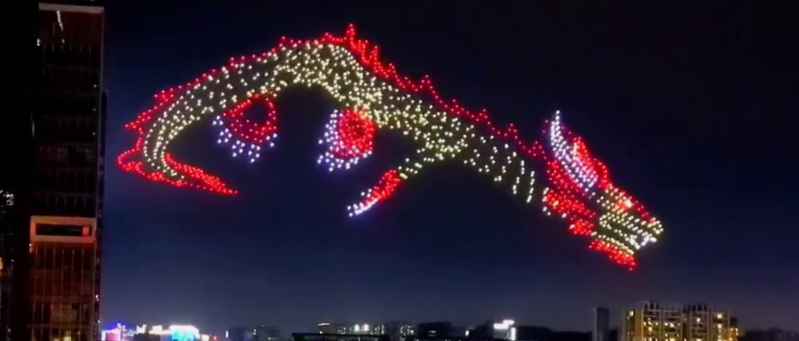

In recent years, drone performances have become a standard feature of large-scale events and festivals. How is the scene of constantly changing text and patterns achieved? What cutting-edge technologies are used? How much does a grand drone swarm performance cost? Today, let’s talk about these topics
Differential GPS--Key technology for dense formations
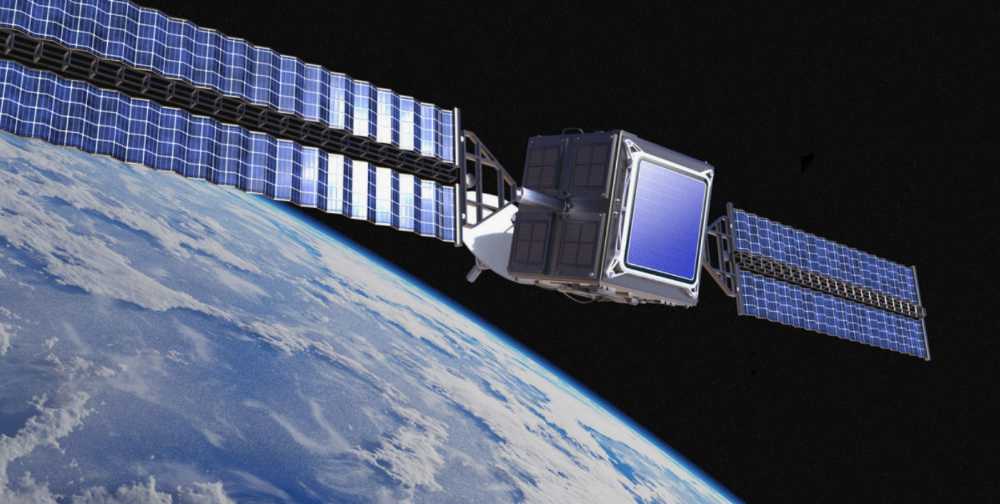
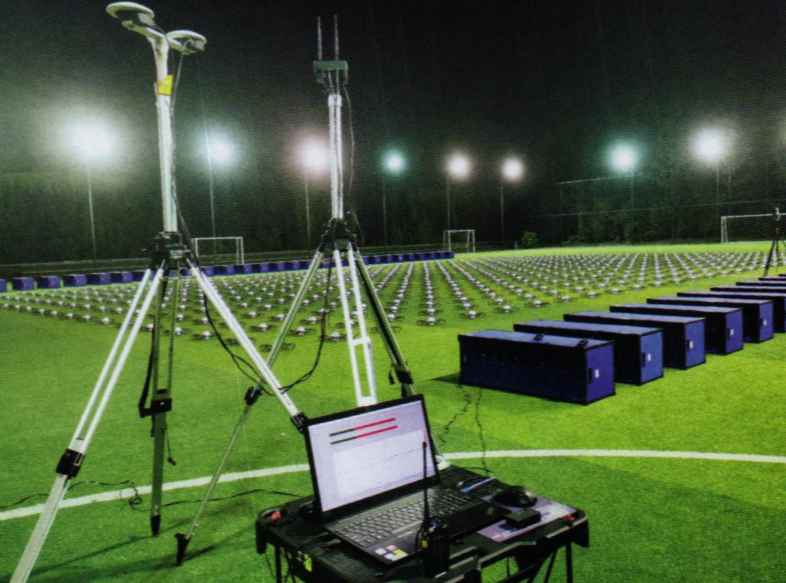
UAV flight must be supported by positioning services. However, whether it is GPS, "Beidou", or "GLONASS" and other satellite positioning systems, the accuracy of civil positioning is only 3-5 meters. If the influence of weather, environment and other factors is added, the accuracy is often even lower. For drone swarms, such positioning accuracy is simply not enough to command hundreds of drones to complete dense formation flight performances. In order to reduce errors and solve these problems, engineers thought of "differential GPS technology". The so-called "differential GPS technology" is simply to establish multiple GPS base stations with known precise spatial coordinates on the ground, and then perform differential operations with the real-time GPS satellite data, and send the error value to the drone flying in the sky. The drone uses the difference to correct its position in real time to obtain spatial positioning accurate to centimeters.
The advantage of differential GPS technology is stability. In fact, as a very mature technology, differential GPS technology has long been widely used in mapping, engineering measurement, agriculture, logistics, security, aviation, electricity and other fields. It can be said that with the support of this technology, drone swarms can easily complete commercial flight performances. However, differential GPS also has limitations, that is, it is necessary to build base stations on the ground, which has the impact of relatively limited operating areas.
The main reason for the low accuracy of satellite positioning systems
The common errors of receivers. For example, satellite clock errors, ephemeris errors:
Propagation delay errors. For example, ionosphere errors, troposphere errors, etc.:
The inherent errors of each user’s receiver. For example, internal noise, channel delay, multipath effect, etc.
"Time, place, and people" are all important
When you look up at the drone swarm performance and admire its smart and gorgeous flight, you may not know that the requirements of the drone swarm performance for the environment are often unimaginable. It can be said that every successful drone swarm flight performance is the result of the perfect combination of "time, place, and people"
Among the main factors affecting flight performances, weather factors are the first to bear the brunt. Many people have encountered such a situation. The drone swarm flight performance that was originally announced to be carried out was suddenly cancelled. In fact, this is because drone group flight performances must be carried out in a windless or weak wind (less than level 4) and clear weather environment. For small drones, it is not difficult to understand that strong winds will affect flight. What is puzzling is why the clear weather environment is also emphasized separately? Is it because cloudy nights will affect the viewing effect? The answer is not so. Industry insiders told the author that in addition to affecting the visual effect, cloudy weather may also cause GPS signal loss, and in severe cases it may even affect flight safety. In addition, the electromagnetic environment is also the key to determining whether the drone performance can be successful. On April 29, 2018, Ehang UAV Company successfully used 1,374 drones to complete a formation flight performance in the ancient city of Xi’an, setting a Guinness record for "the most drones flying simultaneously". However, just one day later, at the same location, 496 drone performances appeared "garbled", which once again put Ehang on the "hot search". The main reason for this "disaster" is the abnormal electromagnetic environment. When flying in formation, drones in the air will exchange information with the control console on the ground through 4G signals. May 1st was the first day of the Labor Day Golden Week. A dense flow of tourists from all over the country gathered near the city wall of Xi’an. Almost every tourist had a mobile phone and other terminal devices, which overloaded the 4G base station near the performance venue and caused "congestion" in the public network. As a result, the base station registered by the drone group restarted or lost power, and the RTK positioning data could not be updated in time. The drone could only switch to the normal positioning mode based on GPS+barometer positioning. The delay in communication eventually caused the drone performance to have local "garbled characters"
Abnormal electromagnetic signals are undoubtedly one of the most troublesome problems for drone groups when performing formation flight performances. There are many factors that affect electromagnetic signals. Dense buildings, large steel frame structures, large power generation and power supply equipment, high-power radars, as well as radio stations, signal transmission towers and other equipment will affect the communication and positioning of drones. In addition, an unexpected "hidden" detail is that in some seemingly perfect open environments, drones are inexplicably unable to complete the magnetic compass calibration before takeoff. The reason may be that there are strong electromagnetic sources such as large cables and subways under the take-off site, which makes the geomagnetic environment abnormal. In addition, in recent years, "performance accidents" caused by drone jammers have also been common. This is a man-made electromagnetic interference. The working principle of drone jammers is to transmit a more powerful signal of the same frequency band to the drone, so that it must make an emergency landing due to signal loss. Generally speaking, this technology is mainly used to combat "illegal" drones. Moreover, as an active interference, it does not have a good technical means of restriction.
Today, drone formation performances are lighting up the night sky of more and more cities. At a time when the tourism industry is accelerating its recovery, drone formations are creating new landscapes and new experiences with light shows and fireworks. However, the endless embarrassing moments have also made this emerging thing encounter "growing pains". To this end, in October 2021, Shanghai took the lead in issuing the first domestic group standard in the field of drone formation performances, filling the gap in the standardization of safe operations in the field of drone formation performances. Immediately afterwards, Shenzhen also officially issued the "Safety Specifications for Drone Formation Flight Performances" group standard to promote drone formation flight performances to standardized, standardized operations and innovative development.
"The brightest star in the night sky" is generally not cheap
In cities where the starry sky is rarely seen, drone performances are sometimes nicknamed "the brightest star in the night sky" by the audience. However, unlike natural stars that are free to everyone, these artificial stars are generally expensive.
In the early days of the development of the drone performance industry, the average cost of each drone flight in a drone flight performance was as high as 10,000 yuan, and the cost of a large-scale drone performance was even more than 10 million yuan. The high profits attracted a large number of players to enter the market. As market competition becomes increasingly fierce, the price of drone performances has begun to decline. Today, after a significant price reduction, the minimum charge for each drone flight is about 1,000 yuan.
When the price is "discounted" from tens of thousands to millions, drone flight performances are no longer out of reach. In addition to "Internet celebrity cities" and popular scenic spots, real estate companies, amusement parks and even wedding companies have begun to try to unlock this new way of playing.
Although there are more and more "affordable" drone flight performances, it is still expensive to create a large-scale drone performance with communication and influence. For example, during holidays such as the Spring Festival, National Day, and New Year’s Day, the total price of drone performances organized by local governments with multiple flights over city landmarks and gorgeous lighting and stage design is still as high as eight figures. Take the drone show in Xi’an in 2018 as an example. Its public bidding announcement shows that the funds for the "Spring Dance in Xi’an" city wall fighting drone light and shadow festival event are divided into two parts, one is the drone show project, and the other is the light and shadow stage show project. Among them, the transaction amount of the drone project reached 10.5 million yuan. In the eyes of laymen, drone formation flight performances can be said to be a "profitable" industry with a lot of money. If you are already gearing up to rush into this market to get a share, I must advise you to think twice. To create a company with drone formation performances as its main business, the initial hardware cost alone is not a small number. First, you need to buy drones in batches. Estimated at 2,000 yuan per drone, the rigid expenditure of 1,000 drones is as high as 2 million yuan. With drones, you also need to buy a certain number of batteries, RTK base stations, ground stations, as well as radio stations, communication integration equipment, switches, etc. Secondly, the company’s regular operating costs, such as rent, water and electricity, warehouses, employee wages, and storage, maintenance, and testing of drones are also rigid costs. When it comes to the flight show stage, there are also fees such as airspace declaration and venue rental waiting for you. Don’t underestimate these investments. As mentioned above, an influential drone swarm flight show often has to be "linked" with the city’s core landmarks, such as the "three-piece suit" on the Bund in Shanghai, the "small waist" in Guangzhou, the Qingdao Olympic Sailing, and the Victoria Harbor in Hong Kong, and the rental of these venues is also considerable. Finally, one thing that cannot be ignored is the natural loss of drones. As a small aircraft, drones will inevitably face battery aging and other situations after flying for a period of time, and strong winds and other weather conditions will also increase various unexpected losses. For example, on the evening of October 1, 2021, at Wanda Plaza in Zhengzhou High-tech Zone, Henan Province, hundreds of drones suddenly malfunctioned during the performance. Subsequently, these drones did not land slowly, but quickly smashed into the crowds and vehicles on the ground, and the scene was once very chaotic. After evaluation, the losses caused by this accident reached the million level.
It is worth mentioning that on social media, we often see news like "a drone flight show, the contract amount is as high as tens of millions of yuan". In fact: it is precisely because there are only a handful of cities that can hold high-standard drone group flight shows that such news is enough to attract public attention. What social media does not tell everyone is that many of the seemingly lively drone shows are public welfare projects.
It can simulate fireworks, but fireworks cannot simulate it
From two-dimensional plane to two-dimensional dynamic, and then to three-dimensional stereo, thanks to the improvement of programming technology, the space technology realized by drones is making great strides. Today, with the help of computer programming, as long as you can think of it, drone performances can be created almost in an imaginative way. It can be foreseen that in the short term, the "ceiling" of drone performances is mainly the design creativity and presentation effect of the main creative team. We can see that in just a few years, in terms of dynamic effects, the images of drones have evolved from the gradual fading effect of forming text patterns to being able to simulate the blooming of fireworks; in terms of composition, a drone show held in Wuhan not long ago showed the urgency of doctors and nurses pushing patients to run at full speed and race against time with just simple lines. With the advancement of technology, drone flight performances can even present special effects such as fireworks blooming under conditions where the venue allows. In the field of drone applications, light shows have the fastest commercialization process. Today, when environmental protection is emphasized, drone light shows are vividly called "green fireworks." In this regard, industry insiders said, "As an aerial media, it can simulate fireworks, but fireworks cannot simulate it. Compared with fireworks, drone light shows can carry more information, create more surprises, and design more interesting things." Global Information Research Institute analyzed that in 2021, the global drone light show market size will be about 170 million US dollars. It is expected that this figure will reach 719 million US dollars in 2028.
It is this new model of aerial performance that is showing great vitality in business. Nowadays, drones are developing towards smaller size, higher precision and faster speed. In drone flight performances, each drone is equivalent to a pixel. Small-sized, high-precision drones can change formations faster with the support of advanced flight control technology. With the improvement of differential GPS technology and drone flight control technology, the average spacing between drones is expected to be reduced from the current 2 meters to meters or even smaller. At the same time, the new lighting technology will reduce power consumption while increasing visual effects. In other words, future drone flight performances will not only have higher pixels, but also denser "frame rates", and the "animation" we see will be clearer, richer and smoother.