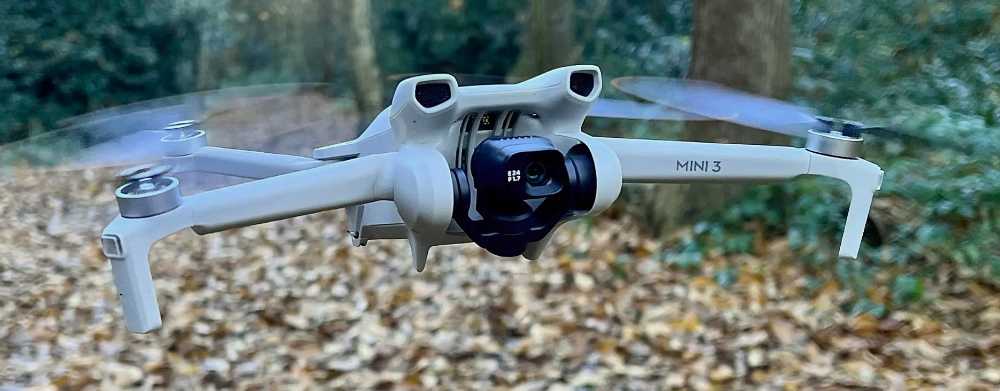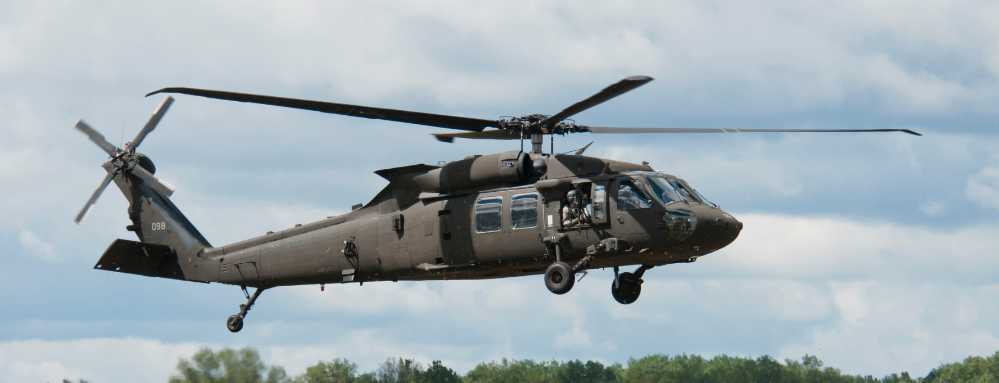


Once the concept of swarm drones was proposed, it attracted great attention and extensive research from all countries. The era of intelligent warfare has arrived.
There seems to be an insurmountable gap between mediocrity and magic, but relying on the bridge of "swarm", mediocre individuals can actually transform into magical colonies. The currently popular swarm drones are writing the legend of "turning mediocrity into magic" and may become the darling of intelligent battlefields.
In a sense, swarm drones are the product of bionics. Let’s start with biological clusters
Great because of clusters
If you are asked to list a few great animals, lions and tigers will name a lot, but you probably won’t say this name-ants. Yes, ants! Ants are a group of creatures, with only simple division of labor such as queen ants, male ants, soldier ants, and worker ants. They look very weak individually, but the power of ant colonies is extremely strong. Ants existed more than 100 million years ago. They were creatures of the same era as dinosaurs. During the past 100 million years, many seemingly powerful creatures were eliminated, but ants survived... Can you say they are not great? The greatness of ants depends on the power of the group.
Millions of wildebeests migrated in the Serengeti, 50 million red crabs on Christmas Island rushed to the sea like a tide, the desperate migration of salmon in Alaska every year, and the epic flight of monarch butterflies in North America... They shocked our hearts and made us feel the power of life and the magic of nature.
There are countless examples of biological group behaviors around us, such as pigeons flying across the blue sky, ants foraging, hardworking bees, and even various bacterial communities... All life forms of different shapes and sizes have certain group behaviors. Grouping is a life activity in which organisms complete the process of migration, foraging, nesting, defense, reproduction, etc. It is a common natural phenomenon. Where there is life, there is grouping, and life is great because of grouping.
So, what are the characteristics of biological swarm behavior?
1 Simplicity of the behavior subject. Generally speaking, the capabilities of individuals in a group or their behavioral rules are very simple. Each individual only performs one or several tasks and responds to external stimuli in a simple way. However, the biological swarm system is not a simple sum of individuals, but a doubling of capabilities through organization, coordination, and cooperation between individuals. African army ants are small and simple in behavior. They are no more than a speck of dust to a lion, but a group of 2 million army ants can eat a lion to the point of leaving only a pile of bones in a few hours.
2 The overall intelligence of the system. A single army ant cannot be said to have high intelligence, but the collective intelligence displayed by a large ant colony is amazing. How does a biological group acquire overall intelligence? It is learning! Individuals in the group adaptively change their behavior through the state of environmental feedback, and then complete the learning of strategies or experience to obtain the best adaptability to the environment. This experience of acquiring the best adaptability is the process of shaping overall intelligence.
Flexibility of action mode. When a flock of starlings encounters an eagle predator, they can quickly change their formation, leaving the eagle helpless; when a school of sardines is attacked by a swordfish, they will start to swirl, leaving the swordfish at a loss. Although the flexibility and stability of a system are often contradictory, biological groups have both characteristics. This wonderful mechanism is an important guarantee for biological clustering behavior.
4 Distributed organizational structure. Most biological groups do not have central nodes. Individuals follow simple behavioral rules and only have local perception, planning and communication capabilities. They exchange information with the environment and neighboring companions and change their behavior patterns in a timely manner to adapt to the dynamic environment.
In summary, under the relatively simple self-organizing interaction of individuals, biological groups show coordinated and orderly collective movement characteristics, and have adaptive and robust characteristics, so that the system as a whole has achieved an intelligence level that individuals cannot achieve. This is the mystery of biological clusters "turning mediocrity into magic", and it is also the source of our understanding of cluster drones.

The emergence of intelligent clusters
The concept of cluster drones comes from "cluster robots", and drones are originally a kind of robot. The term "swarm robot" first appeared around 1991, but its scope of use was very limited. This situation continued until 2003, when the term began to become popular.
Swarm UAVs were proposed as a new concept weapon in 2005. In August of that year, the U.S. Department of Defense released the "UAV System Roadmap 2005-2030", which divided the autonomous control level of UAVs into 1-10 levels, and pointed out that "fully autonomous cluster" is the highest level of autonomous control of UAVs, which was the first time to affirm the weapon value of swarm UAVs.
In May 2016, the U.S. Air Force released the "Small UAV System Flight Plan 2016-2036", which elaborated on the three swarm combat concepts of "swarm", "grouping" and "loyal wingman", among which "grouping" is man-to-man, "loyal wingman" is man-to-machine, and "swarm" is machine-to-machine. The report affirmed the military value and significance of swarm UAVs from a strategic level.
Why did swarm drones become popular around 2005? Because swarm drones are the product of artificial intelligence technology. Although artificial intelligence technology was born in the 1950s, its rapid iteration must rely on the progress of computer technology. Entering the 21st century, computer technology and microelectronics technology have developed rapidly, various algorithms have been rapidly iterated, and the continuous progress of drone technology, sensor technology and communication technology has led to the booming situation of swarm drones "blooming in all directions". Once the concept of battlefield-based swarm drones was proposed, it attracted great attention and extensive research from various military powers, and showed a booming development momentum because it has some asymmetric advantages that other weapon systems do not have, or it plays a subversive role in certain battlefield links.
Combat advantages of cluster drones
1 Autonomous combat As mentioned above, clusters often show high overall intelligence. The drones in the cluster form overall intelligence through "machine learning" between each other, and further promote the optimization and organic combination of the perception, decision-making, mobility, firepower and other functions of the drones in the cluster, effectively improving the autonomous coordination and control capabilities of the drones within the cluster, and thus comprehensively improving the autonomous combat capabilities of the entire cluster.
2More functions Clusters have a distributed organizational structure, just like an ant colony is divided into roles such as queen ants, male ants, soldier ants, and worker ants. Cluster drones can be equipped with different combat modules, so that a drone cluster can have multiple functions such as reconnaissance and surveillance, firepower strikes, electromagnetic interference, and combat assessment, and even become a relatively complete and relatively independent combat system.
3 Flexible response Biological clusters have strong environmental adaptability and respond sensitively to external stimuli and changes. Cluster drones inherit this feature and can keenly perceive battlefield information and respond flexibly in a timely manner. This characteristic is extremely valuable on the battlefield, especially for attacking fleeting time-sensitive targets. It is perfect.
4 The system is more robust. Biological clusters have both flexibility and stability, so they have strong robustness. The same is true for cluster drones. The robustness of their systems greatly improves battlefield survivability. Robustness is also commonly expressed as strength or robustness. When an APP software does not freeze or crash when you operate it incorrectly, do you like it? Yes, that is robustness. The battlefield value of the robustness of cluster drones is needless to say.
5 Cheap Cluster drones do not require complex life support systems, which saves money; they also do not require flight crew training, which saves money; single aircraft mostly adopts a simple isomorphic structure, with large batches and low costs. Compared with a fighter jet that costs hundreds of millions of yuan, it is simply a small price to pay. The cost of the entire cluster is not much more expensive, which saves money again. At the same time, swarm drones have a certain degree of subversion to traditional confrontation systems. Enemies often have to spend dozens or even hundreds of times the cost to deal with them... In this way, using swarm drones to cause trouble is like "fishing for carp with shrimps"?

What combat missions can swarm drones perform on the battlefield in the future?
1 All-domain sensitive strike
Sensitive response is a major feature of swarm drones. It has inherent advantages such as data sharing, formation control, situational awareness, and intelligent decision-making. If it is equipped with a variety of combat payloads, it can flexibly respond to battlefield emergencies and complete combat missions such as cluster reconnaissance, system confrontation, and firepower strikes. The combat range of the cluster will cover the entire space of land, sea, air, electromagnetic, network, etc. The attack methods will also present various styles such as autonomous combat of drones, human-machine collaborative combat, and drone-assisted combat, forming a situation of multi-dimensional strike in the entire domain, thereby destroying the enemy’s cross-domain joint capabilities and achieving combat objectives at a relatively low cost.
2 Saturation firepower attack
The biggest advantage of cluster drones is their huge number, which is just used for saturation attack. Saturation attack is to use absolute firepower advantage to continuously launch ammunition several times the number of enemy defense systems to attack important enemy targets at high density, so as to suppress the multi-target processing capability of the enemy defense system, and then make the enemy defense firepower channel "unable to hold on" and achieve the purpose of devastating strikes. The essence of saturation attack is to use the advantage of number to form an absolute firepower density and use absolute superior firepower to strike the opponent. Imagine what would happen if thousands of attack drones flew towards an aircraft carrier from all directions and up and down?
3 Cluster reconnaissance and surveillance
The terrifying thing about the army ant colony is not only that it has 2 million sharp mouthparts, but also that it is equipped with 2 million pairs of antennae that can perceive even the slightest changes in the surroundings. What are antennae? Antennae are sensors, which are the basic functional units for reconnaissance and surveillance. If hundreds or thousands of drones form a formation and use different types and standards of sensors equipped on each drone to conduct reconnaissance and surveillance on a specific target range, they will definitely be able to see the big picture and obtain comprehensive battlefield intelligence. In particular, this cluster reconnaissance deployment can obtain a large amount of "scattered situation", "fragmented information", "point information" and "fragmented intelligence", and then obtain accurate intelligence information through the fusion analysis of artificial intelligence algorithms such as big data.
4 Tactical deception and interference
As the saying goes, "all is fair in war", deception and interference have always been important tactical means, and cluster drones have unique advantages in being used for tactical deception and interference. In fact, as early as 40 years ago, Israel used drones for tactical deception in the Bekaa Valley operations, achieving astonishing results. The use of swarm drones in this regard can serve as bait, sending a large number of drones into enemy airspace to induce enemy radar and air defense firepower to respond, thereby exposing their positions; second, tactical feints to cover our intentions, interfere with enemy decision-making, and cause enemy mistakes; third, to serve as a cover drone cluster to form an electronic warfare formation, interfere with, suppress, and deceive enemy early warning radars and guided weapons, causing enemy systems to fail, and provide safe cover for our subsequent combat forces.
5 Intelligent Collaborative Joint
Modern warfare emphasizes joint operations, and swarm drones will play an important role in joint operations, coordinating with other combat forces to achieve complementary advantages. First, swarm drones and manned combat platforms can achieve joint operations, and a large number of low-cost drones can be formed into a front-line combat formation, while expensive high-performance manned combat platforms are deployed within a certain depth range. The two forces complement each other, achieve close contact through data links, and achieve deep integration through intelligent command systems. The second is the combination of unmanned clusters. Several unmanned aerial vehicle clusters are equipped with reconnaissance and surveillance, electronic warfare, firepower strike and other modules, and then form a large assault formation to penetrate deep into the enemy and carry out real-time strikes on key targets or high-risk targets.
6 Urban Clearance and Attack
Urban warfare has been described as "a war in hell", and has always been feared by military strategists. Just think of Stalingrad and Mariupol to know how tragic urban warfare is. Cities are full of tall buildings, streets, underground facilities, many obstacles, blind spots, poor communications, difficult deployment of troops, easy to defend but difficult to attack... The use of unmanned aerial vehicle equipment has brought new ideas to urban assaults. The drone clusters suitable for urban assault and clearing operations are probably more appropriately called "urban combat cluster robots". Not only do they have different flight platforms (including fixed-wing and rotary-wing), but they are also equipped with land robots, underwater robots, digging robots, wall-climbing robots, etc. to adapt to the complex urban environment. Different unmanned platforms are equipped with different combat payloads, including sniping, blasting, flamethrowing, detection, communication relay, staring reconnaissance... Despite the variety, the basic characteristics of the cluster have not changed, and even higher requirements are placed on its intelligence, autonomy, and flexibility, representing the highest level of artificial intelligence technology.
The new darling of the intelligent battlefield
For some weapon systems, it is not enough to understand them only from the application level. Only by analyzing them in the context of the grand era can we have a high enough position and deep enough understanding. Cluster drones belong to this type of weapon system.
Do you know? Human society is quietly undergoing a profound transformation--the intelligent transformation. Human society has gone through the mechanized era represented by steam engines and internal combustion engines, and has achieved a great expansion of human physical fitness! It is experiencing the information age represented by the Internet and precision guidance, and has achieved an unprecedented leap in human perception. The rapid development of intelligent technology represented by deep learning and autonomous decision-making is accumulating material and capability foundations for the intelligent era of "controlling energy with intelligence", and is about to enter a new development stage-the intelligent era.
In line with the social development form, the form of war will also evolve from mechanized warfare and information warfare to intelligent warfare. The so-called intelligent warfare is a new type of warfare that takes intelligent combat system as the main force form, autonomous combat as the main combat method, and "intelligence control becomes the core control of war. So, what is the relationship between swarm drones and intelligent warfare?
First, intelligent warfare is the product of the rapid development of intelligent technology, and swarm drones are also the materialized results of intelligent technology. The relationship between them is like that between "wheat fields and wheat seedlings";
Secondly, swarm drones should become one of the basic combat forces in the intelligent combat system;
Third, intelligent warfare provides a stage for swarm drones to show their prowess. Therefore, swarm drones are destined to be one of the characteristic weapons of intelligent warfare.
If the above inference is still a bit general, let’s further elaborate on the characteristics of intelligent combat.
Some military experts have summarized four characteristics of intelligent combat: unmanned combat platform, autonomous combat action, reconstructed combat system, and flexible combat method.
Intelligent warfare first manifests itself as unmanned platforms, that is, "unmanned platforms, manned systems". Undoubtedly, swarm drones meet the first characteristic.
The essence of intelligent warfare is autonomous warfare. Swarm drones are the result of bionics. Overall intelligence and autonomous action are their essential basic attributes, so they meet the second characteristic.
Intelligent warfare requires its structural system to transform from a traditional relatively fixed structure to a rapidly reconfigurable structure, and the distributed structure of swarm drones provides the possibility for rapid reconstruction of the combat system. Therefore, it also meets the third characteristic.
Intelligent warfare emphasizes winning by cleverness. Based on the sensor community of clusters, it relies on real-time data sharing and the blessing of superior algorithms. More sensitive response is one of the biggest advantages of swarm drones. Obviously, the fourth characteristic also meets
Therefore, swarm drones cannot be regarded as just a "little trick" in the drone family. It is the new darling of the intelligent battlefield-this is what we should know.

Keep moving forward and look forward to the future
Do you still remember the grand ceremony a year ago? The opening ceremony of the 2022 Beijing Winter Olympics was magnificent and the world was amazed. On the night of the Winter Olympics in Shenzhen, a cluster of 22 drones performed a creative 3D dynamic performance, outlining the flying snowflakes, the Winter Olympics emblem, and "Bing Dwen Dwen" and "Shuey Rhon Rhon" in the night sky... The cluster drones were accepted by the general public with such a gorgeous appearance.
In recent years, swarm drones have been showing their prowess in flight performances, express logistics, precision agriculture and other fields. Unfortunately, swarm drones are still at the stage of paper talk in their most important application scenario - the military field. But it doesn’t matter. "We should take a long-term view". This guy will definitely create brilliant battle examples one after another with his outstanding ability in the near future.
It takes a process for a classic weapon to mature from creativity, during which new problems will continue to be encountered and new inspiration will be inspired. As a new concept weapon, swarm drones may face the following issues in the future.
Data security issues. Remember the incident in 2011 when Iran captured the US RQ-170 drone? Data security is a matter of life and death! If the data security technology is not up to standard and a drone in the swarm is captured, it can lead to the destruction of the entire swarm. Therefore, data security technology is the lifeline of swarm drones.
Machine learning issues. Cluster drones are the product of artificial intelligence. The progress of artificial intelligence technology is inseparable from the promotion of machine learning. Machine learning is the source of algorithm evolution and the level of algorithm determines the intelligence level of cluster drones to a certain extent. In the future, deep learning technology may comprehensively improve the intelligence level of cluster drones.
Homogeneity vs. Heterogeneity. At present, most clusters use homogeneous structures, which can simplify the complexity of the system, but there are a large number of heterogeneous structures in many biological clusters. Observations show that clusters with heterogeneous structures are more sensitive. Some experts believe that heterogeneous structures will help improve the overall performance of cluster drones.
Decentralization vs. Hierarchical structure. Compared with the centralized hierarchical structure, the decentralized self-organization paradigm has its own advantages and disadvantages. In many animal societies, hierarchy often coexists with decentralized self-organization, which suggests that it is reasonable to introduce some form of hierarchical control, and perhaps also indicates the development direction of cluster drones.
Human-computer interaction issues. Behind any unmanned equipment, people play a decisive role, that is, the so-called "unmanned platform, manned system", and human-computer interaction has always been a key core issue. The emergence of swarm drones brings new challenges to human-computer interaction. The main difficulty is that the swarm is self-organized, and there is no clear entity for people to communicate with it. Studies have shown that a small number of "loyal agents" can determine the overall behavior of the swarm. Establishing a connection between people and "loyal agents" can solve the interaction between people and swarms. With the advent of the intelligent era, swarm drones are walking to the center of the stage. The good show is about to begin, and we look forward to it...