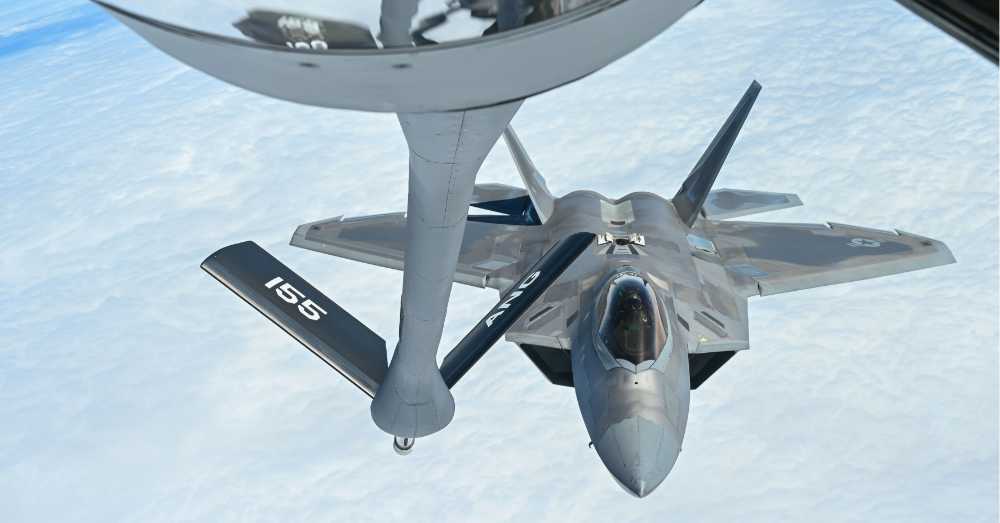

On January 31, the U.S. Air Force issued a request for information (RFI), requiring the industry to provide a design for the next-generation tanker (NGAS). NGAS is required to make its first flight around 2032 and be put into service around 2040. The RFI requires the technical details of NGAS to be able to operate at small and simple airports, have good survivability under high-threat battlefield conditions, and have the ability to receive and refuel in the air.
This will be the KC-Z plan of the U.S. Air Force. The KC-46, which is currently being mass-produced, belongs to the KC-X plan. The KC-Y is the "transition tanker" after the KC-46 to fill the shortage of KC-46. It is possible that the war between the KC-46 and the Airbus A330MRTT will start again, but the number will not be too large.
The U.S. Air Force has the largest tanker fleet in the world, the richest experience in the use of tankers, and the strongest dependence on tankers. The new thinking of the U.S. Air Force tankers is worth paying attention to.
The tanker belongs to the combat aircraft sequence, but it may be the most inconspicuous of the combat aircraft, but it is indispensable. In air warfare, the range is very important. In World War II, the German Me 109 had excellent maneuverability and firepower, but its range was not enough to even fight across the English Channel. It could not maintain enough air time over the British Isles, which made a large number of German bombers in the "Battle of Britain" unable to get effective cover. On the other hand, the US P-51 not only has excellent firepower and maneuverability, but also has enough range to fly back and forth from the British Isles to Romania, let alone the German mainland, effectively covering the strategic bombing of the B-17. In modern times, the Pacific is famous for "the devil lies in the existence of distance", which makes the US Air Force and Navy aircraft daunting. The existing KC-135 and KC-10 tankers are old, not to mention that they can only operate from Kadena in Okinawa and Anderson Air Force Base in Guam, and it is difficult to ensure reliable deployment in wartime.
In theory, any airport that can take off and land large civil airliners can operate conventional tankers, but a base is not just for taking off and landing tankers. It also needs sufficient fuel storage and suitable refueling facilities. Using the refueling pipe at a civil airport to refuel a tanker is like using the refueling pipe at a gas station to refuel a tanker. A low refueling rate seriously affects the dispatch rate. The tanker converted from a civil airliner is also very particular about the quality of the runway. Not to mention the potholes, the quality of the temporary pothole repair is not up to standard, which affects the operation, which also affects the dispatch rate in wartime. In addition, the tanker has problems such as command and control and guards.
Therefore, the US Air Force tankers deployed in the Asia-Pacific can only be dispatched from Kadena and Anderson. Only these two bases meet all the requirements for deploying tankers. But now, in terms of survivability, Kadena Base is completely within the range of China’s firepower strike. Even the Anderson Base, which is farther away, is a bit unreliable in wartime. The bigger problem lies in battlefield survivability. These tankers based on civil airliners have good economy and range, but they have no stealth capability and lack self-defense capabilities. In the face of ultra-long-range air-to-air missiles, they can only retreat far away. It is generally believed that US tankers need to be at least 1,200 kilometers away from the Chinese coastline to operate safely, but Kadena is only more than 500 kilometers away from the coast of Jiangsu and Zhejiang. In other words, after taking off from Kadena, the US tanker needs to retreat 700 kilometers deep into the Pacific Ocean to have enough safe airspace for refueling operations. For the US Air Force, such a deployment method is obviously absurd.
The US Navy is testing a new generation of MQ-25 "Stingray" carrier-based tankers, which will greatly reduce the pressure on the F/A-18EF to perform partner refueling missions. According to reports, 1/3 of the flight hours of the F/A-18E/F in the current carrier-based aircraft wing are used for partner refueling, which is very inefficient and substantially squeezes the combat use of the F/A-18E/.
The U.S. Air Force has been researching stealth tankers for a long time, and Lockheed Martin has even proposed a design for a tailless flying wing tanker. These requirements show the U.S. Air Force’s new conception of tankers.
The earliest practical aerial refueling was the KC-97 that Boeing used for the B-47 bomber. The B-47 was the first generation of jet bombers, with fast speed but amazing fuel consumption. The KC-97 was modified from the B-29 bomber, and its speed, range, and fuel capacity can still meet the needs. Later, when the B-52 appeared, Boeing newly developed the KC-135, which not only kept up with the speed of the B-52, but also perfected the hard refueling to facilitate large-volume aerial refueling. The last KC-135 rolled off the assembly line in 1965, and the fleet is being replaced by the KC-46: but progress is slow, and the KC-135 is still the main force of the U.S. tanker. KC-135 later evolved into Boeing 707, pushing Boeing to the throne of civil aviation, of course, this is another story.
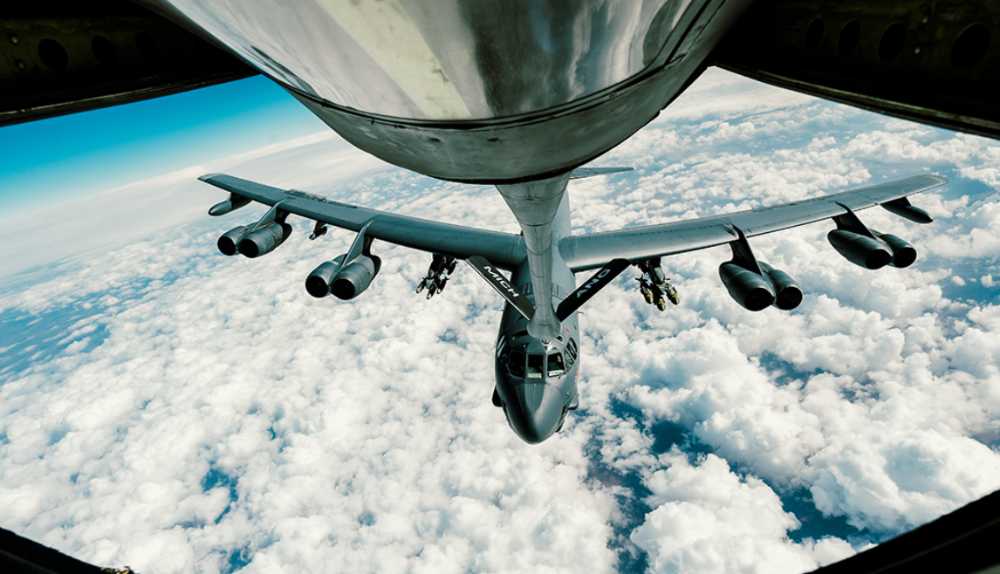
From the beginning, the US Air Force tanker served bombers, requiring a large amount of fuel to be transferred at a high transfer rate, so large aircraft were targeted from the beginning. Aerial refueling of fighter jets came later, but because of path dependence, hard refueling was also used.
In the future, there will be two technical routes for refueling aircraft: modification from civil airliners and modification from military transport aircraft. The United States and Europe are the former and China and Russia are the latter. The former is economical, and the proportion of onboard fuel to takeoff weight is large; the latter has the ability to operate at field airports and is easy to install military standard equipment (such as communications, self-defense electronic warfare, etc.), each with its own advantages. But both routes start with large aircraft
The US Navy’s carrier-based tankers cannot use large aircraft, but for carrier-based aircraft, carrier-based tankers are also considered heavy. Another difference is that carrier-based aircraft use hoses for refueling, the equipment is simple and light, but the fuel transfer rate is relatively limited.
For many years, the typical way for the US Air Force fighters to be dispatched is: the fighters are fully loaded with ammunition, and the fuel is reduced to ensure that the takeoff weight is not overweight. After takeoff, refuel in the air immediately, and then go to the battlefield after full fuel. There are other tankers patrolling and waiting at the edge of the battlefield. In actual combat, due to searching for opportunities and waiting, fuel consumption is much faster than ammunition consumption. When the combat fighters are short of fuel, they withdraw from the battle, reunite with the tanker, and return to fight after refueling. This greatly saves round-trip time and increases the effective number of fighters on the battlefield.
How to fight in wartime, how to practice in peacetime. Due to the high dependence on tankers, the insufficient number and deployment rate of KC-135 once forced the US Air Force to postpone and cancel the "Red Flag Exercise".
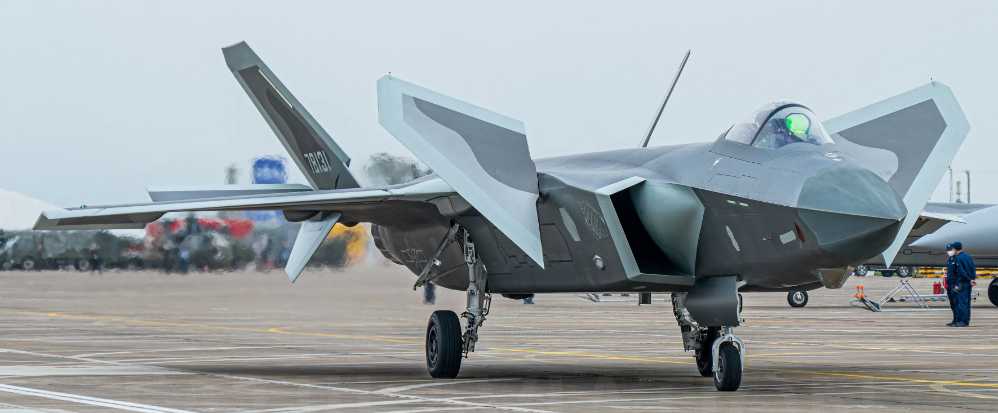
But this model does not work for opponents like China. If the tanker must be 1,200 kilometers away from the Chinese coastline, the heavily loaded US fighter jets will have difficulty even flying to the Chinese coastline, let alone deep into the hinterland and effective air time. This is impossible to fight.
Even at a distance of 1,200 kilometers, the tanker is not absolutely safe. The J-20 Bringing "Thunderbolt" 15. Makes the lingering U.S. tanker aircraft become turkeys waiting to be hunted. In several war simulations, the consequences of the shooting down of U.S. tankers were very serious, often causing multiple U.S. fighters on the battlefield to crash into the sea due to fuel exhaustion. This is unacceptable to the U.S. Air Force and Navy.
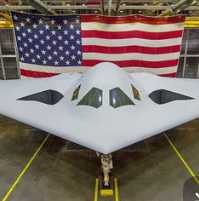
Stealth tanker is an idea, but the cost of large stealth aircraft is ridiculously high. The B-21 is smaller than the B-2 not only because of technological advancement, but also to control costs. The electronic system can be miniaturized, but the payload and range cannot be miniaturized. B-21 Only in these "hard indicators" are the requirements reduced to reduce weight and control costs.
Another idea is to decentralize, use smaller tankers to be distributed at the front, and relay refueling. Use large tankers to refuel the front tankers in the low-risk rear to maintain higher efficiency, and use small tankers to relay refueling in the high-risk front to maintain higher survivability. Because the target is small, it is relatively easy to achieve stealth, and the battlefield survivability is greatly improved. It can be deployed forward to increase the effective air time of American fighters. The requirement for KC-Z to receive refueling in the air comes from this.
Another idea is of course unmanned. The long-flight technology of drones is already very mature. Unmanned tankers can patrol for a long time at the front, which greatly exceeds the time that manned tankers can last. This is key to relay refueling and continuous presence. Drone refueling technology has been tested by MQ-25 It has been demonstrated and has reached a high enough technical maturity. Tankers may be one of the best applications of the long-endurance characteristics of drones.
A smaller tanker also means that there is only a limited amount of transferable fuel. This may be enough for fighters but not for bombers. This can be solved by multiple relay refuelings instead of expecting to be able to fill up at one time. This certainly increases the number of refueling operations, but with the help of automatic control and artificial intelligence, aerial refueling operations have changed from high-risk operations in the early years to routine operations now, and are more likely to become low-difficulty operations in the future.
In other words, the difference between new tankers and traditional tankers may be that between charging piles and gas stations. Gas stations are built in strategic locations, and passing vehicles stop to refuel and fill up at one time, but the number of gas stations is relatively small, and the distribution of larger charging piles is everywhere, but it takes a long time to charge one car at a time. However, if you drive all the way and charge all the way, it is not a big problem if it is not full, as long as there is a charging pile in front to continue charging.
Smaller tankers mean that they can be deployed at small airports and field airports. The US Air Force has finally realized the vulnerability of tanker bases. This is generally consistent with the idea of dividing forces and concentrating fire.
The latest RFI does not specify the aerodynamic configuration, and each manufacturer can freely choose according to requirements. The tailless flying wing will definitely be one of the candidates, but it may not be the most powerful candidate. The bomber adopts the tailless flying wing because it has the highest aerodynamic efficiency. All the fuselage structures are used to generate lift and the weight of the ineffective structure is reduced to a minimum. The tailless flying wing also has the best omnidirectional stealth capability, which is conducive to penetration and safe return. However, the tailless flying wing has higher requirements in aerodynamic design and structural manufacturing, and the cost is also higher.
The aerodynamic configuration of the Boeing MQ-25 "Stingray" has many considerations for stealth, but it still avoids the tailless flying wing. The slender wing is conducive to a higher lift-to-drag ratio, the shallow V-shaped tail reduces the difficulty of yaw control of the tailless flying wing, and the wide and flat central body not only provides a large internal volume, but also helps to learn from the mature barrel-wing technology. The "back-entry" air intake is the biggest technical risk, but for tankers that do not emphasize maneuverability, the risk is still controllable.
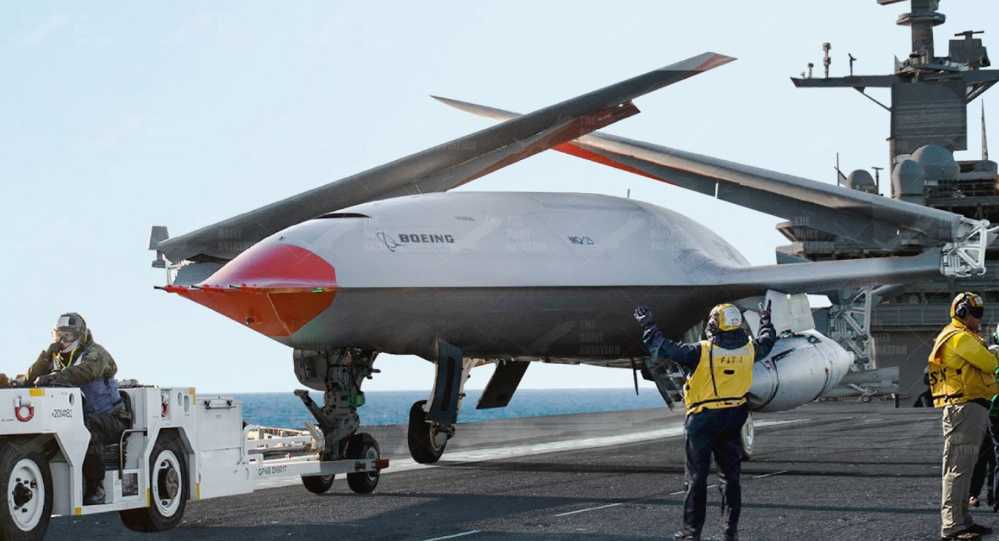
Even if the new generation of tankers have stealth requirements, this stealth capability is still fundamentally different from the penetration of bombers or the air superiority of fighters. Even if the tanker is deployed forward, it is still not necessary to approach the distance of close combat. Distance is always the biggest stealth comrade. Bombers and fighters cannot choose where to fight, but tankers can choose where to refuel.
In addition, fighters emphasize forward stealth the most. Once the side and back are exposed for a long time, it is time to accelerate out of the battle. Bombers emphasize omnidirectional stealth more, but the forward direction is still the most important. Tankers are not like this. In many cases, the side may be the direction that is exposed the most and the longest. The side radar reflection characteristics of the fuselage are very important, but the forward reflection characteristics of the wing are not so important.
The slender, slightly swept wings form a strong and stable reflection in a small forward angle range, but after the aircraft’s heading is properly adjusted according to the direction of the battlefield electromagnetic threat, this high reflection state can be fleeting. In the high battlefield electromagnetic environment noise, it can "hide in the city" and destroy the detection and lock of the opponent’s radar. The tailless flying wing also has a long straight edge, but it does not face the direction of travel.