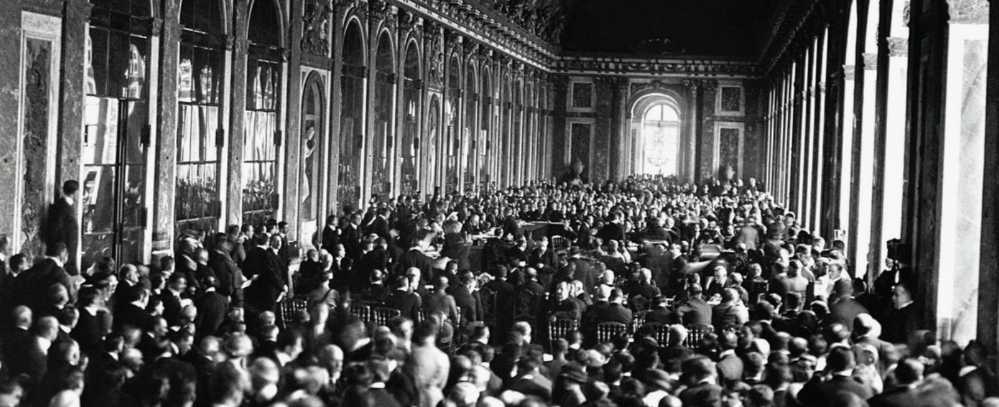

Although the "Versailles Treaty" ended the disputes among the great powers in Europe since the First World War, Germany, which retained a strong industrial base and the Junker officer corps system, still had the capital to make a comeback. After the collapse of the Austro-Hungarian Empire, the defeated Germany became the only powerful country in Central Europe. France, a country that could have restrained Germany, further shrank due to its own domestic political turmoil. After 1935, the British suddenly found that Germany had expanded again into a terrible source of war. At this time, Britain and France were weakened by the war and could hardly maintain their huge overseas colonial system. In the Asia-Pacific region, the British were even more unable to control the expansion of the power of the United States and Japan, and eventually fell into a final decisive battle to determine regional control. In addition, "fully armed victorious countries will soon gather from all over the world to the Paris Peace Conference, but there is an absentee among these countries"-the Soviet Union.
The entire Paris Peace Conference was just as French Marshal Foch said afterwards: "This is not peace, this is a twenty-year truce", which can be said to have come true.
At 17:50 on March 3, 1918, in the Brest Fortress, where the former Tsarist Empire defended against threats from the West, Sokolnikov, who had just succeeded Trotsky as the People’s Commissar of Foreign Affairs, signed a peace treaty aimed at stopping the state of war between the two sides with the "Allied Powers" delegation headed by German Foreign Minister Richard von Kuhlmann on behalf of the still-infant Soviet regime.
Although later generations highly praised the "Brest-Litovsk Peace Treaty", believing that it was the far-sightedness of the Soviet Central Committee headed by Lenin that made full use of the contradictions between the imperialist powers and won precious time and external conditions for consolidating the new proletarian regime. However, such a peace was too expensive for Russia. In addition to paying Germany a war reparations of up to 6 billion marks, the Soviet regime also had to give up Poland, Finland, Ukraine and the Polish coastal areas owned by the Tsarist Empire. Almost overnight, Russia’s nominal territory was reduced by 1 million square kilometers, and on that land there were 50 million people, 27% of Russia’s total economic output, 73% of iron ore, 75% of coal, 54% of industry, and 33% of railways.
Emperor’s Battle: The Victory Fantasy of the Second German Empire
On the morning of March 23, 1918, thanks to the bloody battles of the Allied ground forces in the Marne River, Verdun and other places, as well as the protection of the constantly improved anti-aircraft guns and fighter planes, the French capital of Paris gradually moved away from the hustle and bustle of war and restored its former tranquility and leisure as the European art capital. But at 7 o’clock in the morning of that day, a loud noise suddenly came from the streets in the north of the city. Since there were no casualties, the people did not mind at first. But with terrible explosions occurring in a corner of the city every 20 minutes, Parisians began to realize that they were facing an unprecedented attack.
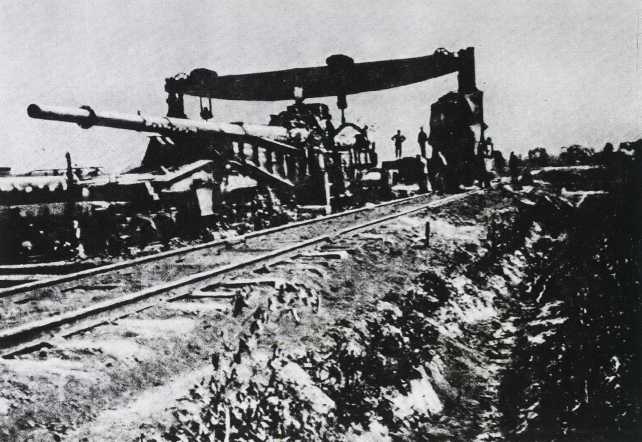
After exploring the explosion site and battlefield reconnaissance, the Allies finally discovered that the German Army had deployed three ultra-long-range artillery pieces called "Paris Cannons" on the Franco-German border 120 kilometers away from Paris. Although these artillery pieces had a slow firing rate and almost no accuracy, such attacks not only caused a large number of civilian casualties, but also demonstrated to the Allied camp to a certain extent: with the end of the war on the Eastern Front, the war machine of the Second German Empire will rush to the Western Front with all its strength, and this time they vowed to rush into Paris.
Although the German Army had begun to withdraw troops from the Eastern Front as early as the end of 1917, it would take a long time for dozens of elite division-level combat units to be transported from the front line in the heart of Russia to the Franco-German border even with the leading railway network in Europe. On the eve of the first roar of the "Paris Cannon", Germany still only assembled 194 divisions on the Western Front, barely overwhelming the "Allied" forces with 181 divisions in front of it (including 61 divisions of the British Army, 103 divisions of the French Army, 12 divisions of the Belgian Army, and 5 divisions of the US Army).
In a sense, time is on the side of the Germans. Because it only takes a few more weeks for the total strength of its Western Front to reach its peak of 230 divisions. But Ludendorff, the first quartermaster of the German Army, was unwilling to wait any longer. On March 21, the German Army took the lead in attacking the Somme River Basin, which had suffered heavy losses in July 1916, with a huge force of 71 divisions, attacking the British Expeditionary Force, which had only 26 divisions in the area.
Ludendorff’s strategic intention was to break through the Somme River area and quickly capture Amiens, the transportation hub in the rear, thereby separating the British and French forces. According to the long-standing "taken for granted" thinking of the German Army General Staff, the British Expeditionary Force would be forced to withdraw to its homeland after being separated. The German Army will take advantage of the situation and attack Paris directly.
In order to realize Ludendorff’s grand strategic plan, the German Army also used new tactics that had been practiced for a long time. The "Storm Commando", composed of elite infantry equipped with flamethrowers, new submachine guns, and steel plate bulletproof vests, rushed into the trenches built by the British army under the cover of high-intensity firepower preparation and slow-moving barrage shooting, and disintegrated the opponent’s defense through bloody and cruel close combat.
Faced with an unprecedented fierce attack, the British Expeditionary Force’s defense line on the east bank of the Somme River collapsed within a day. In the following two days, the German Army forced a full-line crossing of the Somme River while pursuing fiercely. The British, who were under tremendous pressure, had to lower their proud heads and ask for help from their allies, but at this time, the French, who were frightened by the "Paris Cannon" and the German Army’s auxiliary offensive in the Champagne area, were preparing to defend their capital with all their strength.
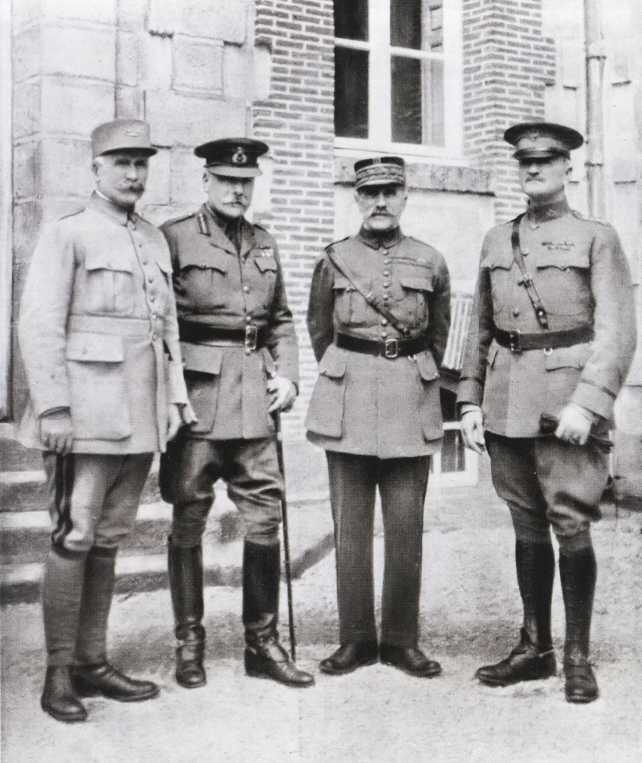
In view of the bad situation on the front line, on March 26, British Prime Minister Lloyd George, accompanied by Minister of Munitions Churchill and other wartime cabinet members, flew to Durand, a city in northeastern France, and held a firefight with French Prime Minister Georges Clemenceau, who was 76 years old but still had great power. Faced with an unprecedentedly bad situation, Britain and France, which had always been at odds with each other, abandoned all prejudices in a short period of time and jointly determined to form the Allied Western Front Joint Command with the offensive French Army Chief of Staff Ferdinand Foch as the core. It was a bit ridiculous that the military command was finally unified after four years of fighting, but this belated appointment reversed the situation to a certain extent. Under Foch’s coordination, the French Army rushed to Amiens in large numbers, and the British also stopped their continuous retreat. In contrast, the Germans, who had been advancing all the way, had to face the troubles brought about by the lack of logistical supplies and Ludendorff’s change of strategic determination.
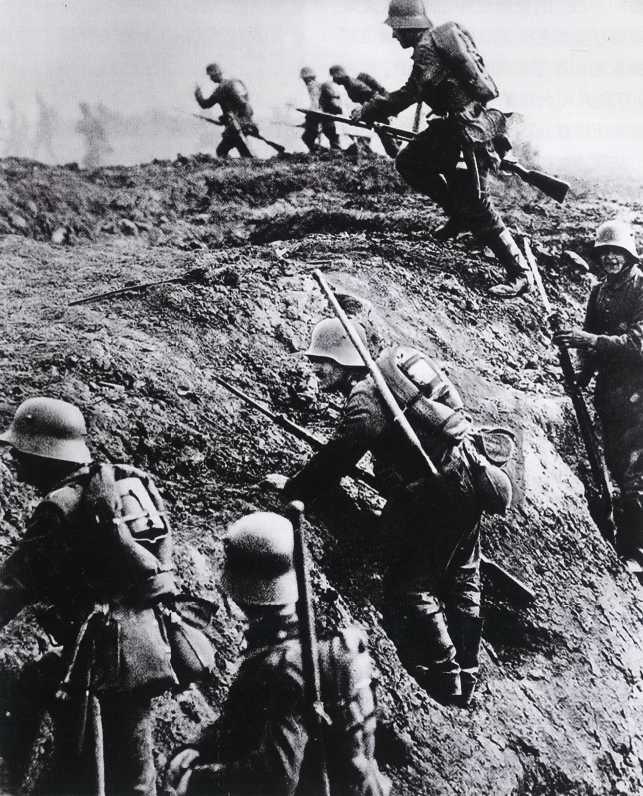
The glorious victory on the Somme front made Ludendorff begin to turn his attention to Paris, especially when the German Army captured the town of Mondidier, which was only 50 kilometers away from Paris, on March 27. Ludendorff began to forget himself and thought that his troops could capture Amiens and Paris, two important strongholds, at the same time and defeat the opponent in one fell swoop. But in the end, reality proved that this move was just a wrong attempt. On March 28, the German Army encountered stubborn resistance from the other side in Amiens and the suburbs of Paris. The fierce battle lasted until April 5, and Ludendorff, who saw that no further progress could be made, was forced to order a halt to the offensive.
In this battle, which the British called the "Second Battle of the Somme", the Germans undoubtedly made rich gains. 170,000 British Expeditionary Forces were left on French soil forever, and more than 90,000 people and a large amount of equipment and supplies were captured by the German army. But even with the 70,000 French killed during the same period, the German army, which suffered nearly 240,000 casualties in the offensive, did not gain much advantage in the personnel exchange ratio.
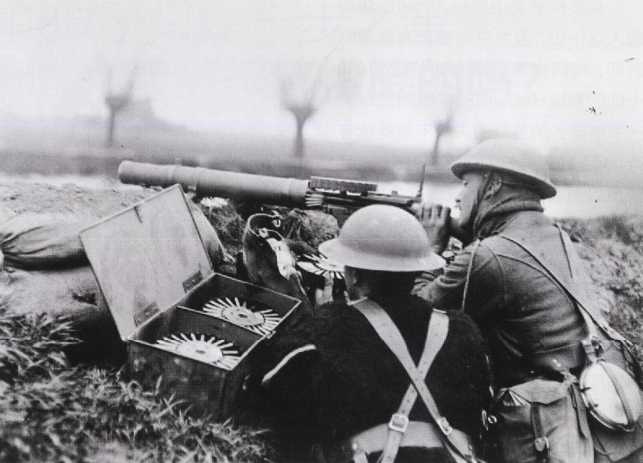
Unfortunately, Ludendorff did not seem to notice the rapid consumption of his own combat power. After a short break, starting from April 9, the German Army launched a new round of offensives in the Lys River Basin in Belgium, the northernmost part of the front line, trying to concentrate more than 30 divisions to break through the defense lines of the British, Belgian and Portuguese coalition forces in the area, and attack the main supply ports of the British Expeditionary Force along the coastline - Cairo, Dunkirk and other places.
Ludendorff’s offensive also caught the Allies off guard. The Portuguese, who were not strong in combat but were waiting to be rotated back to their country, were defeated in a short time. But in order to protect the way home behind them, the British Army fought very tenaciously. On April 29, the Germans had to withdraw again. Although later historians still dispute the specific casualties of both sides in this battle, the losses are still comparable from the data of each group.
In order to cover up his blind action in the Lys River Basin, Ludendorff revised the original strategic goal to involve the Allied forces’ deployment through feints on the northern front, and after the French Army successively reinforced 7 infantry divisions in the area, he unilaterally announced that the combat goal had been achieved, and began to prepare for an unprecedented full-scale offensive in the central area of the front.
On May 27, the German Army launched a concentric assault on Paris with 17 divisions commanded by Crown Prince William as the vanguard. It is not difficult to see from the time of the offensive and the number of troops invested that this military action has no direct connection with the so-called "feint" in the Lys River Basin. Although the German Army once advanced to Fort Thierry on the Marne River on May 30 with its skillful tactical application, the Germans had to stop the offensive again on June 6 as reinforcements from all sides of the Allied camp, especially the fully equipped 3rd Infantry Division of the US Army, arrived at the battlefield one after another. The 3rd Infantry Division of the US Army was thus awarded the honorary title of "Marne Rock".
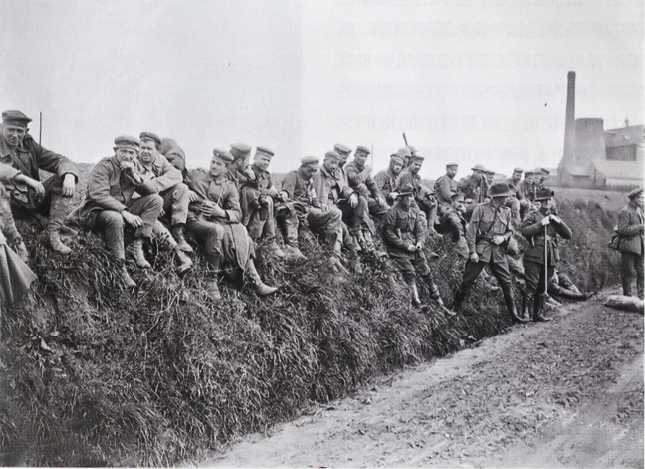
Although Ludendorff launched two large-scale offensives throughout June, trying to connect the three salient areas of the Marne River, Amiens and Champagne, thus forming a siege on Paris, the fresh troops mobilized by the German Army from the Eastern Front had been killed and wounded, and the huge war machine of the German Second Empire gradually lost power in the process of roaring forward. Only the "Paris Cannon" was still tirelessly pouring firepower on the distant target.
The series of offensives launched by Ludendorff at the turn of spring and summer in 1918 was officially called the "Kaiser’s Battle" by the German government at the time. It can be imagined that under such a magnificent and domineering name, the message received by most German soldiers and the people in the rear from the mainstream media was naturally from victory to victory. This war that brought them endless pain seemed to end in cheers at any time when they woke up. But from a military perspective, Ludendorff did not resolutely implement his strategic goals in this round of offensive, and a series of offensives did not form a joint force in the end. In the end, with the frequent reports of the "Emperor’s Campaign", the German Second Empire was on the countdown.
Yankee Offensive: The Arrival of the American Expeditionary Force
The reason why Ludendorff and the German Army under his control were unwilling to wait for more troops to be transferred back from the Eastern Front and were impatient to launch the "Emperor’s Campaign" was largely due to the fear of the imbalance of power between the two sides after the United States joined the Allied Powers. On April 6, 1917, based on a rational assessment of the direction of the war and a consideration of national interests, the U.S. House of Representatives voted 373 to 50 to approve President Wilson’s decision to declare war on the grounds that German Navy submarines had sunk American ships.
As the fastest growing emerging economy in the world at that time, the United States had a strong industrial system and abundant financial reserves, which were indeed daunting. However, the United States, which had not heard the sound of drums and drums for a long time since the Civil War, did not have much standing military force. In April 1917, the total strength of the US armed forces was only 196,000. Pershing, who was appointed as the commander-in-chief of the expeditionary force, led the US Army to the north of Mexico to fight against the peasant uprising led by Pancho Villa. In the end, he returned in defeat in front of the opponent’s guerrilla tactics.
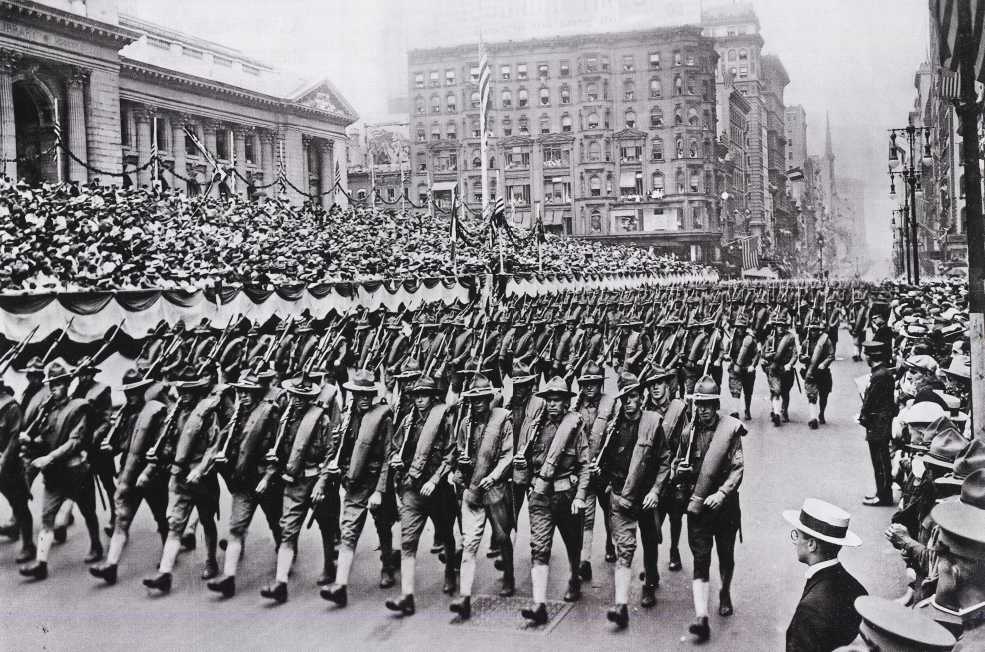
Although President Wilson quickly launched a nationwide conscription mobilization, Britain, France and other countries also spared no effort to provide weapons and equipment and training guidance for the U.S. military. But it is obvious that it will take a long time for the U.S. government to transform its huge population of working age into a qualified army. Therefore, the Allied countries once asked the U.S. government to break up the expeditionary force into battalion and company-level tactical units and directly incorporate them into the front-line divisions, or even directly join Britain as a supplementary soldier, which aroused strong dissatisfaction from the United States, and the action of continuing to increase troops to the European front was slowed down.
But the "Emperor’s Campaign" launched by Ludendorff has to some extent bridged the many contradictions within the Allied countries. With the formal establishment of the Allied Western Front Joint Command led by Foch, the American Expeditionary Force actually gained a status equal to that of the British, French and other countries. Faced with the front line that was constantly broken through by the German Army, Foch had to rely on Pershing’s Those U.S. Army divisions that had not yet been baptized by war went to "put out the fire." Facts have proved that although the U.S. Army lacks actual combat experience, it is strong in men and horses. With a full strength advantage of twice that of the British and French infantry divisions, it has become a bone that Germany can hardly chew for a while.
Seeing that the U.S. Army can still be used, British Prime Minister Lloyd George and French Prime Minister Georges Clemenceau, who were eager to turn the tide of the war, took Italian Prime Minister Orlando to write a joint letter to U.S. President Wilson in early June 1918. In addition to thanking and flattering, they also claimed that only the United States could reverse the unfavorable force comparison on the Western Front and asked the U.S. government to send more troops to the Western Front as soon as possible. 100 infantry divisions,
The unfavorable situation mentioned by Lloyd George and others was also clearly seen by US President Wilson. After the exchange of the "Emperor’s Battle", the total strength of the Allied Powers on the Western Front had dropped to 164 divisions, while Germany had assembled 230 divisions. If we look at it simply from the number of combat units, it is indeed necessary to invest another 100 divisions to re-establish the advantage, but the German Army also suffered great losses in a series of attacks. According to relevant statistics on June 1, 1918, the number of combat infantry of the German Army on the Western Front was actually only 1.64 million, not much more than the Allied Forces with 1.45 million combat infantry.
Therefore, the US government was not in a hurry to send a large number of troops to the European continent, but followed its own rhythm at a monthly rate. The Allies slowly increased their troops to Europe at a rate of 250,000 to 300,000. Although the speed of the Americans’ assistance did not satisfy the British and French governments, it was enough for Foch, the commander-in-chief of the Allied Western Front. According to Foch’s schedule, 29 US Army divisions would arrive on the battlefield by mid-July 1918, which was enough to launch a counterattack to drive the German army out of the suburbs of Paris.
On July 18, the Allied camp’s counterattack first started on the west side of the Marne salient controlled by the Germans. Although only 8 US Army divisions participated in this round of offensive, those strong American soldiers with strange accents and shotguns as their main close combat weapons still left a deep impression on the Germans. And attributed the series of setbacks that began from then on to the "Yankee ( Europeans derogatory name for Americans) offensive"
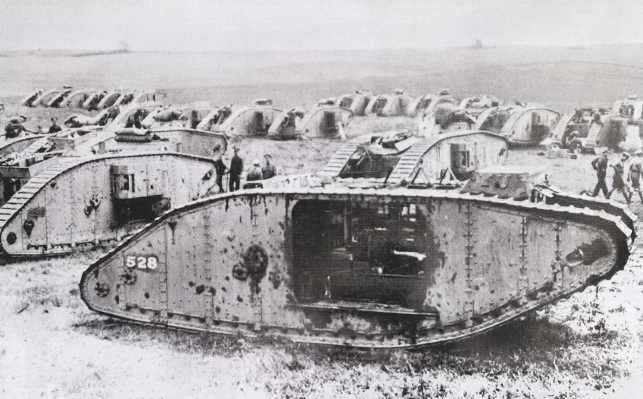
On August 8, two days after the German Army was driven out of the Marne River salient, the British Army equipped 600 tanks to the Canadian Army, which was affiliated with the Commonwealth combat sequence, and rushed into the German positions under the city of Amiens. Faced with the magnificent armored torrent, the fighting will of the German Army collapsed across the board, and many of them took the initiative to leave the battlefield. Ludendorff wrote in his diary: "August 8 was the darkest day for the German Army... The retreating soldiers even laughed at their colleagues who came to reinforce them, calling them ’troublemakers who delayed the war’... On many occasions, the officers lost their power and allowed themselves to be pushed around..." On August 14, Emperor William I, who had been receiving reports of defeats at the front, finally could not sit still. He personally came to Spa, a small town in eastern Belgium, and set the tone at the meeting of the German Empire’s Supreme Command that "favorable conditions for achieving peace should be sought as soon as possible."
In fact, ending the war "relatively decently" through peace talks had already become a consensus among the civil servants in the German government as early as 1917. After signing the Treaty of Brest-Litovsk with the Soviet government, German Foreign Minister Richard von Kuhlmann repeatedly stated in public that "the war cannot be ended by force alone." Unfortunately, the German Army, which was immersed in the "Emperor’s War" at the time, did not listen to these fair arguments at all. Instead, it kept accusing Kuhlmann and other civil servants of spreading "failure sentiments", so that Kuhlmann finally had to resign sadly on July 9. The German Army immediately pushed Paul von Hintz, the former ambassador to China who had served in the navy for many years, to the throne of foreign minister.
Although Hintz himself was quite politically skilled and also clearly realized that Germany was no longer able to fight. But it was inevitable that it would take time to sort out the clues when he suddenly took over. During this period when German diplomacy was at a standstill, the German Army, which prided itself on being tough, collapsed on the Western Front. Facing the fierce "Yankee Offensive" of the Allies, Ludendorff ordered the German Army to abandon the areas captured in the previous "Emperor’s Battle" and retreat to the "Hindenburg Line" to reorganize its defense.
In Ludendorff’s view, although the German Army at this time was not good at attacking the enemy, it should still be able to defend itself. Moreover, the "Hindenburg Line" had been standing on the Western Front for more than three years, and after repeated construction, it had long been impregnable. The Allies launched several fierce offensives, but all of them ended in failure. Therefore, the German Army should be able to rely on this line of defense to defeat the opponent again, and then seek the possibility of peace talks.
Unfortunately, Ludendorff ignored that even the strongest line of defense still needs people to guard it. Not to mention that the morale of the German Army was low and the soldiers had no fighting spirit at the moment, even if they wanted to fight again, the large number of elite soldiers who served as "Storm Commandos" lost in the "Emperor’s Battle" could not be replenished for a while. Under such circumstances, the seemingly insurmountable "Hindenburg Line" was ultimately just a rotten wall that could be easily toppled.
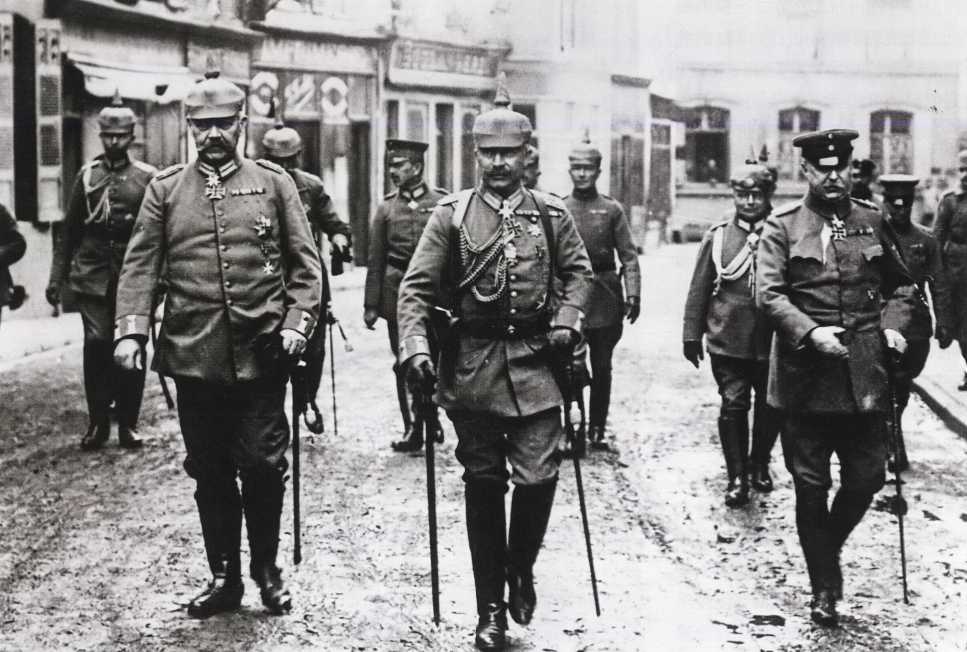
On September 26, 1918, the Allied Army, whose total strength had jumped to 220 divisions (102 French divisions, 60 British divisions, 42 American divisions, 12 Belgian divisions, 2 Italian divisions and 2 Portuguese divisions), launched a full-scale attack on the "Hindenburg Line" extending from the northern coast of Belgium to the Swiss border. The German Army, which had no power to fight back, retreated step by step. The unprecedented pressure caused Ludendorff, who claimed to be tough, to eventually suffer a mental breakdown. At the regular meeting of the German Army General Staff on September 28, Ludendorff gave an emotional speech, accusing everyone present except him. But such anger ultimately did not help. That night, the almost exhausted Ludendorff suggested to his nominal leader, Chief of the General Staff Hindenburg, to withdraw from all occupied foreign territories to create the possibility of peace talks.
Abandoned by friends and relatives: the collapse and rebellion of the German navy and army.
On October 3, the 75-year-old German Chancellor Hertling was forced to announce his resignation. This former professor of philosophy at the University of Munich did not have a high reputation in German politics. The reason why he was able to become the head of the German government in November 1917 was nothing more than his long-standing conservatism and his political stance of constantly advocating Germany’s victory in public, which made the German Army believe that he was the most suitable puppet candidate. When the German Army decided to kneel down and seek peace, this foolish old man was naturally useless.
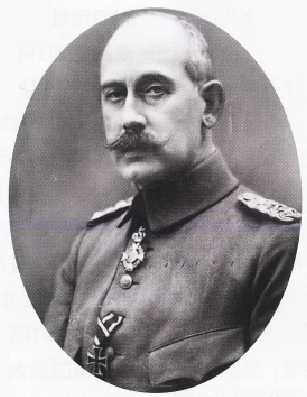
The person who succeeded Hertling as the German Chancellor was the famous "moderate" politician - "Prince of Baden" Maximilian. After the war, some Western historians believed that the reason why the German government chose Maximilian was because he had clearly opposed the German Navy’s "unrestricted submarine warfare" in the Atlantic, which made it easy for the US government to trust him. But if you analyze it carefully, it is not difficult to find that Maximilian was a spokesperson that could be recognized by the few political forces in Germany at that time.
Maximilian was born into a noble family, so he was naturally respected by feudal families all over Germany. In the early days of the war, he joined the army as the chief of staff of the 14th Army of the German Army, so he was also considered "one of their own" in the eyes of the German Army. More importantly, since Maximilian left the army for health reasons in October 1914, he has long served as the honorary president of the Baden branch of the German Red Cross, presided over the management of Allied prisoners of war in Germany, and was well received by Allied prisoners of war for his tolerant and easy-going personality.
However, the reputation among prisoners of war cannot really affect the decision-making of the participating countries. In order to open up the diplomatic field, Maximilian still had to seek to improve relations with the United States, which played a decisive role at this time. Therefore, how to respond to the "Fourteen Points" proposed by US President Wilson on January 8, 1918 became the focus of German diplomacy.
Maximilian determined that the "Fourteen Points" were not unacceptable to Germany, so he extended an olive branch to the Allied Powers on the basis of peace talks. Unfortunately, the Allied Powers showed a cautious welcome to this. On the one hand, US President Wilson sent diplomatic notes to the new German Chancellor three times from October 8 to 23, praising the goodwill signals sent by the German government to the parliamentary reform and release of political prisoners, and was willing to negotiate with Germany on the armistice. But at the same time, he hinted that the peace talks should be based on Germany’s reduction of arms and the abdication of Emperor Wilhelm II. On the other hand, the Allied forces, mainly Britain and France, were not moved by the German government’s call for peace and continued to capture cities on the battlefield.
The "Spring Offensive" (also known as the "Emperor Offensive")
Faced with such a situation, Ludendorff, who was unwilling to surrender, asked the German government to give up negotiations and fight the Allies to the end. But at this time, the army that once supported the empire had become a broken dog. In the whole month of October, the German Army only established one infantry division, but at the same time, 32 divisions were cancelled due to heavy losses. Under such circumstances, on October 26, William II followed Maximilian’s advice and dismissed Ludendorff from all his positions.
Perhaps clearing out such an ambitious war maniac like Ludendorff from the German Army was one of the few correct decisions made by William II in the First World War. But at almost the same time, the German Emperor made another bigger but irreparable mistake: he acquiesced to the so-called "October 24 Operation Plan" submitted by German Navy Commander Franz von Hipper.
After witnessing the powerful combat capability of the British Royal Navy in the Battle of Jutland from May 31 to June 1, 1916, the German Navy actually gave up the arrogant idea of engaging in a decisive battle in the North Sea with the enemy. A large number of surface ships were hiding in the military port, and they could only continuously dispatch submarine forces to show their presence by entering the Atlantic Ocean and sinking civilian ships. But after Maximilian came to power, in order to show his sincerity for peace, the German Navy was forced to withdraw all submarine forces back to the mainland.
The situation of being completely reduced to a rat in a cage made Hipper, who had just taken over as the commander of the navy in August 1918, feel humiliated and anxious. Out of the so-called "sense of military honor", Hipper formulated an unprecedentedly grand combat plan: to concentrate all surface ships of the German Navy at the end of October 1918, and with the cooperation of the submarine forces, forcibly raid the British mainland.
On paper, the German Navy at this time had 18 battleships, 5 battlecruisers, 14 light cruisers and 60 destroyers, and was still the second largest naval power in the world. But more than two years had already exhausted the fighting enthusiasm of those sailors. The ambition to surpass the British Royal Navy had transformed into an endless fear of the waters outside the naval port. Therefore, when Hipper’s operational plan was finally issued, the German Navy’s surface ship forces began to delay the time of the attack in various ways, and at the same time the sailors began to secretly connect.
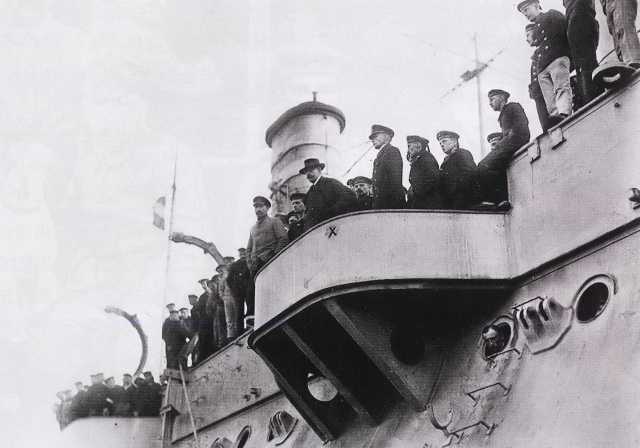
From October 28 to 30, sailors mutinied on the German Navy’s main battleships "Thuringen" and "Helgoland". Although they were suppressed soon, the original attack plan had to be postponed to November. But starting from November 1, a large-scale protest demanding the release of arrested sailors broke out in Kiel, the main naval port of the German Navy. By November 3, thousands of sailors and workers from nearby shipyards gathered at the Kiel Trade Union Building. When they were clamoring to march to the prison, German Navy Lieutenant Steinhauser, who was responsible for maintaining order, ordered to open fire on the crowd. Although this move caused 7 deaths and 29 serious injuries, it did not scare the angry masses. The protesters immediately launched a counterattack, and a massive armed uprising was launched.
By November 4, Kiel and its surrounding suburbs had changed hands. The uprising sailors and workers followed the example of Russia and established the first Soviet regime. This move was immediately responded to by the whole country. By November 8, armed uprisings had occurred in almost all major German cities. Faced with a situation that was completely out of control, William II fled Berlin in a hurry and came to the front line for refuge. But Hindenburg ruthlessly told the emperor to whom he had sworn allegiance: "I must advise your majesty to abdicate and go to the Netherlands."
It is worth mentioning that in fact, the decision to force William II to abdicate was not made by the German government and the army until the sailors’ uprising broke out in Kiel. As early as November 1, German Chancellor Maximilian had secretly called the feudal lords of various kingdoms in Germany to ask for their opinions on the abdication of William II. Obviously, in order to dispel the concerns of the Allies and achieve peace as soon as possible, the German Empire, which had long lost the support of the people, had become a burden that must be sacrificed.
A stab in the back? Rethinking the collapse of the Second German Empire
At 5 a.m. on November 11, the newly formed delegation of the German Republic signed an armistice agreement that was almost like a surrender in a train compartment in the Compiègne Forest. The exhausted soldiers climbed out of the trenches and foxholes and celebrated their victory or defeat in their own way-some prayed, some saluted, and some simply begged for cigarettes from their former enemies. In an army hospital in the rear, a German army corporal from Austria was indignant about the misfortune of his motherland.
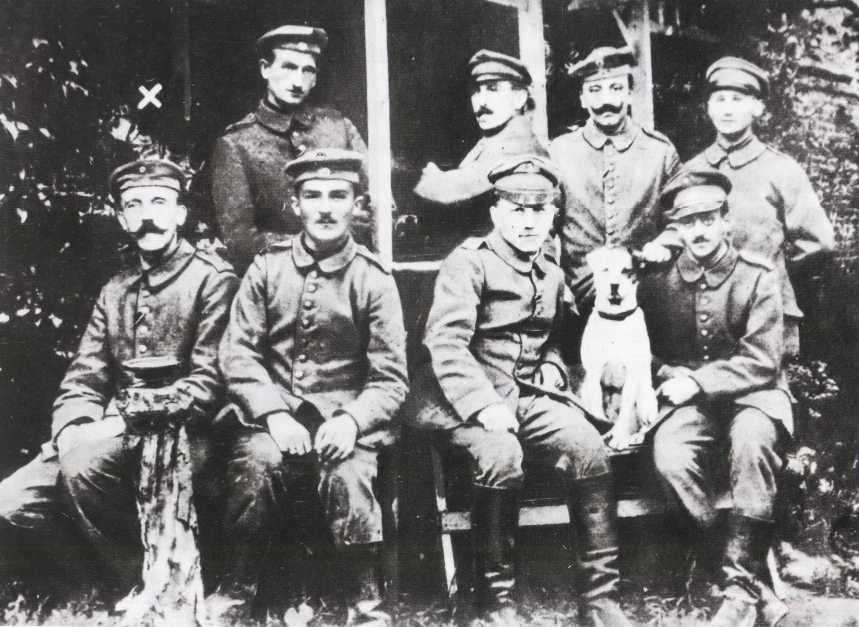
The 16th Bavarian Infantry Regiment, to which Corporal Hitler belonged, was bombarded by mustard gas chemical shells fired by the British Army near the village of Wilwick in Belgium on the night of October 13. Compared with many colleagues who died of suffocation due to inadequate protection, Hitler was undoubtedly lucky. In fact, the keratitis and temporary blindness caused by chemical weapons had recovered after a few weeks. But a series of bad news that followed caused Hitler to fall into "secondary blindness" that could not be explained medically. It is said that in order to treat his psychological trauma, the attending physician hypnotized him, so that he later insisted that he saw a series of "supernatural illusions" in despair, thus producing the delusion that "God will give great responsibilities to this person."
What kind of illusions Hitler saw, the world does not know. But from the perspective of ordinary German soldiers like him, the collapse of the German Second Empire overnight is indeed difficult for him to accept and understand. After all, in the minds of many soldiers who were sent away from the battlefield like Hitler, they seemed to be only one step away from victory throughout 1918. Even after the counterattack by the Allies, the front line was still in Belgium and France. Germany seemed to be quite far from being truly defeated. This difference in cognition eventually gave rise to the rumor of the so-called "stab in the back".
In the eyes of the German Army like Hitler, Germany’s defeat was not due to their failure in battle, but due to the navy’s fear of the enemy, unwilling to give up and fight; due to the shamelessness of the civil service class who rejected the so-called "patriotic generals" such as Ludendorff and insisted on surrendering to the empire; and due to the greed of the Jewish tycoons in Germany who had been hoarding goods for a long time, resulting in starvation and wailing everywhere.
But if we analyze it from a more rational perspective, it is not difficult to find that it was the German Army’s own arrogance and arrogance that really destroyed the Second German Empire. When the fragile Russian Soviet government had to sign the Treaty of Brest-Litovsk with Germany in exchange for a brief peace, Germany not only finally got rid of the two-front war that had been bothering it since the beginning of the war, but also gained the best grain-producing areas in Eastern Europe-Poland and the Ukrainian plains. If the German government can continue to maintain a defensive position on the Western Front and manage this vast occupied area carefully, then at least it can alleviate the domestic famine problem that has been wearing down the hearts of the people and the army to a certain extent.
Unfortunately, Germany, led by Ludendorff, The Junker officers did not have such patience and strategic vision. In their worldview, war was only a pattern of continuous attack, attack and attack again. Even if they were forced to choose defense, it was to accumulate strength for the next round of attack. How to maintain the development and survival of an army or even a country has never been within their scope of thinking.
It was precisely because of the lack of overall strategic considerations that the superior forces that Germany had finally gathered were quickly consumed in the so-called "Emperor’s War". In Ludendorff’s reckless battle, Britain and France temporarily stopped their long-standing intrigues, and the United States, which had intended to sit on the sidelines, also sent a large number of troops to Europe. So when the German army’s offensive was frustrated, it was no longer able to resist the The counterattack and counterattack of the enemy. Even the stubborn resistance relying on the "Hindenburg Line" was ultimately just a desperate struggle to delay time.
Compared with the strategic mistakes of Ludendorff and other German army leaders, the decision-making of the German Navy does not seem to have much to criticize. In the face of foreseeable defeat, handing over the powerful fleet that once held the hopes of countless people to the former opponent is a reality that every naval commander cannot accept. Hipper’s decision was to a certain extent the same as the Japanese Navy’s decision decades later in the battles of Leyte Gulf and Okinawa, which ordered the main fleet to charge into the enemy without air superiority cover.
It’s a pity that the grassroots soldiers of the German Navy are not as skilled as their Japanese counterparts. In the face of the leadership that said "fighting is glorious, not fighting is glorious, fighting is glorious", some "samurai spirit" of "loyalty to the emperor and the country" instinctively made the choice of "I will die if I die now, and I will die if I make a great plan. Waiting to die, how can I die for the country!" On the contrary, to a certain extent, the revolutionary flames ignited by the sailors of the Kiel naval port saved Germany to a certain extent. Because it was precisely because of the fear that Germany would become a socialist country like Russia, the Allies made the decision to negotiate an armistice with the German government in a short period of time, and secretly acquiesced to Hindenburg and other German army generals to continue to maintain control of the army so that they could return to the country to quell the rebellion.
The non-existent "stab in the back" is nothing more than a fig leaf for the Junker officer corps within the German Army. But from a higher historical dimension, we have to admit that there is indeed an invisible big hand controlling the war situation. A large and professionally trained standing army is the standard configuration of a powerful country in the industrial age. But few people notice that such a national army itself is incompatible with the monarchy. Therefore, the First World War was not a medieval struggle for hegemony, but a competition among emerging industrial capital to divide and dominate the world market and colonial system. On the surface, it was Joseph I of the Austro-Hungarian Empire, Tsar Nicholas II and German Emperor Wilhelm II who pressed the switch of the war, but it was always the powerful industrial capital of various countries that pushed the war behind the scenes.
The nature of capital is to pursue profit. If the opponent’s resistance can be quickly disintegrated and a war that can be decided within a few months is fought, it is objectively not a war that maximizes economic benefits. Because the demand came to an abrupt end just after it was stimulated, the powerful production capacity of the industrial age could not be released at all. From this perspective, a protracted, endless tug-of-war that devours all the human and material resources invested is more in line with the needs of industrial capital. Because the government needs to continuously increase industrial investment and issue orders for military supplies to ensure that a steady stream of patriotic young people are mobilized, or organized into fully equipped divisions and brigades to go to the battlefield, or sent to sea on brand new dreadnoughts, and then gradually consumed with the passage of time. It is precisely based on this point that, although most of the participating countries knew that the dream of a quick victory had been shattered after the autumn of 1914, no party was willing to extend the olive branch in their hands to seek peace.
However, as time went by, the huge casualties and shortage of supplies brought about by the war began to arouse dissatisfaction among the people of the countries. Due to the blockade of the North Sea and the Mediterranean, the overseas trade of the Allies almost stagnated. The lack of food and various industrial raw materials caused the powerful war machines and enthusiastic people of Germany and Austria-Hungary to gradually fall into famine and confusion in the face of insufficient income. In early 1916, both countries had to start implementing a strict rationing system for food and industrial products. The situation on the Allied side was not much better. In order to stop the powerful German armed forces, both Britain and France on the Western Front and Tsarist Russia on the Eastern Front suffered huge casualties. War-weariness spread across the board, soldiers began to flee the front lines, and workers took to the streets. But only when these dissatisfactions eventually converged into a revolutionary blowout, would capital panic and step on the brakes of war. But as everything returned to calm, the bloodthirsty greed would be reborn through the darkness of human nature...