
Q: In recent years, more and more military news have mentioned the concept of swarm drones. Can you first introduce to us what swarm technology is?
A: This is actually a concept proposed by foreign researchers when studying group behavior. It is called "Swarm" or "Collective" in English. "Swarm generally means that many individuals are integrated together to form a group. They are not necessarily organized, but may be a flock of birds"; while "Collective" emphasizes the integration of individuals with a purpose and the organized completion of the group mission. In recent years, with the maturity of drone technology, people have begun to pay attention to and are optimistic about the application prospects of drone cluster technology. In China, drone clusters (especially relatively small drones) are called swarm drones or drone swarms, which is a Chinese and figurative description of drone clusters. In fact, many new concepts from abroad will expand or change their connotations after entering China, such as drones. The original term "drone" generally refers to fixed-wing drones. However, with the development of technology, unmanned helicopters, multi-rotor drones, vertical take-off and landing fixed-wing drones, etc. have emerged. The connotation and extension of "drone" have expanded, and now it has become a general term for unmanned aircraft on board. Of course, there are other unmanned aircraft that are not called drones, such as unmanned airships. The concept of swarm drones is also similar, and it is considered a branch of the concept of "cluster".
Q: Can it be understood in this way that if many drones can complete a task together, it is considered a drone swarm?
A: The unmanned swarm mentioned here mainly refers to a group that is organized, coordinated, and has information exchange. It is not rigorous enough to call multiple drones that complete a task together a drone swarm in terms of connotation and extension. Let me give you an example. In recent years, many cities have held drone light shows, which are actually the composition and graphic transformation tasks completed by hundreds or thousands of drones. However, this light show does not use the intelligent coordination and information interaction technology of the swarm. There are two important characteristics of swarm technology: first, when the swarm is performing a task, the drones must communicate and coordinate with each other; second, the entire drone cluster does not have a fixed control center, or the entire system is a distributed center or a dynamically selectable center. As for the light show performance, the ground control station is the control center of the entire mission system. The control station is equipped with a pre-prepared script program. All drones only obtain the program command of the location they need to reach from the control station during the performance, and arrive at the specified location at the specified time; all drones only complete positioning according to their own GPS during the performance, and there is no coordination between them. For example, a group of drones compose a triangular pattern. During the performance, if a drone in a corner suddenly fails and creates a vacancy, the other drones just wait for the command of the control station. If the ground control station specifies several drones to fill the position, the drones that receive the command will fly over to fill the position, otherwise the corner will always be missing.
But if we adjust the way we work, the situation will be different. Let’s take the formation of a triangle pattern as an example. At the beginning, all drones do not determine their positions according to the commands of the control station, but determine their positions in the triangle according to their relative positions to each other. This is a bit like lining up in military training, and the instructor shouts: "Align!" All team members will look to the left, and then use small steps to fine-tune their positions, instead of the instructor determining everyone’s position. If a drone fails somewhere during a performance, the drone next to it will sense it immediately and automatically fill in. The drones behind will also readjust their positions in turn, and finally still form a triangle, but the points on the sides are a little sparser. This is the mutual coordination between drones. If it is such a light show, swarm technology is applied. Obviously, compared with the unified control method of the ground control station, Fengjun technology is much more advanced. It requires an intelligent algorithm rather than a fixed script program.
Q: So, drone swarms actually put forward higher requirements on the capabilities of individual drones?
A: Compared with traditional drone swarms, individual drones in drone swarms need to highlight at least two capabilities. The first is perception ability. This is easy to understand. If you want to cooperate with other drones, you must first be able to "see" each other’s every move; in addition, drones also need to have a certain judgment ability. After perceiving the actions of other drones, they must make a prediction of the other party’s intentions, and then determine how to cooperate. This requires individual drones to have the ability of interconnection, interaction, and intelligent perception and judgment
Q: Now, perception and judgment capabilities are How is the technology progressing?
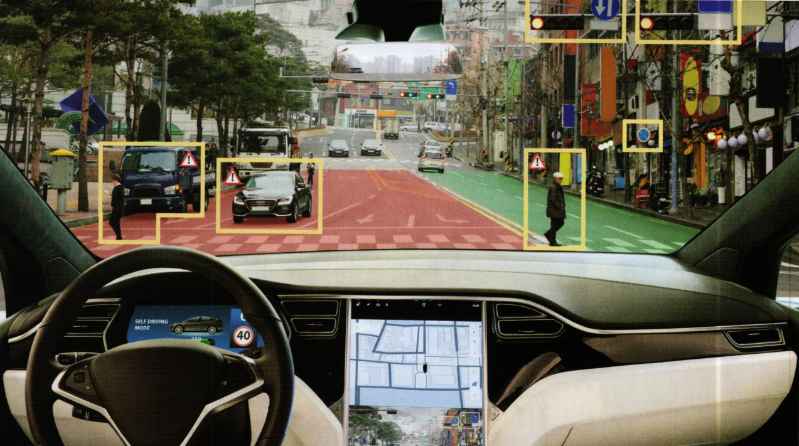
A: So far, the best aspects of machine intelligence are image and voice recognition capabilities, which are also the two main ways of perception for machines. Of course, this is first based on the huge progress in computer storage and computing power; in addition, thanks to the emergence of new artificial intelligence technologies such as convolutional neural networks, the autonomous learning ability of machines in perception has also been strengthened. However, in terms of judgment ability, the current ability of machines is far less than expected. At present, the judgment ability of machines mainly comes from some heuristic algorithm programs designed by humans. In other words, people have already anticipated the possible results, and the machine obtains information through perception and then compares it. Therefore, the judgment ability of machines is still relatively weak, and it is obviously not capable of dealing with relatively complex problems. What we need in the future is a judgment ability similar to that of humans, which is like a flash of inspiration - the brain can eliminate most of the interference information and make judgments on complex problems in a short time. Of course, people sometimes make wrong judgments, but in most cases, this judgment ability of people can still be trusted.
Q: So, the essence of swarm technology is artificial intelligence technology?
A: Yes. Let’s continue with the example of the drone light show just now. If the swarm drones have a certain learning ability, the situation will be different. Swarm drones will learn where to go according to the environment they are in, and independently choreograph performance movements. The performance effect is better than the performance arranged by humans based on their own experience, that is, it can be beyond people’s expectations, which is a very ideal swarm drone performance. In essence, the application of swarm technology is not limited to the field of drones. Unmanned vehicles and unmanned ships can all apply swarm technology.
Q: What is the relationship between the individual and the whole in a swarm drone?
A: For a swarm drone, the stronger the individual capability is, the stronger the collective capability of the entire swarm should be. Similar examples can be found everywhere in nature. For example, the individual capabilities of bees are very weak, so bee swarms can only complete simple tasks such as collecting honey and building nests. In contrast, wolves are much more capable. You will find that wolves have more complex organizational divisions and tactical coordination when hunting, and they can complete more complex tasks, such as capturing large prey. However, a group with strong individual capabilities may also be catastrophic if there is no coordination and organization, such as the stampede that has occurred in humans.
Q: There is a kind of intelligent cluster in the biological world that we know. What is the level of human cognition of intelligent clusters?
A: In animal groups, there is so-called cluster intelligence. For example, a single ant cannot cross a river. But an ant colony can cross the river after rolling into a ball; or a group of ants can carry a heavy object that a single ant cannot carry together. This is actually a collective behavior of the group after the monomers transmit information and cooperate with each other. It is certain that by giving the sub-cluster intelligence, the group’s ability will definitely exceed the individual ability. We are still in the initial research stage about the deeper reasons for the emergence of swarm intelligence. Swarm intelligence must be a fusion and superposition of individual intelligence, which is now also called swarm intelligence emergence. But what is the mechanism of swarm intelligence emergence? How to realize this kind of intelligence emergence in machine groups? Scientists are working hard on research and practice.
Q: In the movie "Angel Has Fallen", there is a scene of swarm drones assassinating the US president. Will the military field become an important application of swarm technology in the future?
A: Drone swarms have great development potential in both military and civilian fields. Because swarms have the characteristics of high efficiency, scale, and intelligence, they will show advantages such as strong anti-destruction, flexible distribution, and strong saturation compared to single or a small number of drones when performing group tasks. They can be applied to various tasks such as intelligence surveillance, reconnaissance, and multi-target strikes.
For example, micro-drone swarms can be used to resist and interfere with enemy radar systems, or deploy multiple sensors in a certain area. Even if one or several drones are lost, it will not have a significant impact. Different drones in a drone swarm can carry different sensors for coordinated reconnaissance to complete the task. Drone swarms can be used to implement coordinated precision strikes, effectively control the scale of war, drop bombs or weapons, and carry out suicide attacks. In the future, the ideal swarm force will no longer be a traditional weapon, but like a living soldier, the commander only needs to issue a general order. For example, to capture a bunker, the swarm can independently design tactics according to the characteristics of the terrain until the task is completed, and it is no longer necessary for people to control the drone to complete the confirmation and attack of the target.
Q: From the movie and some information, the United States has done a lot of research on swarm technology. What is its level and test situation?
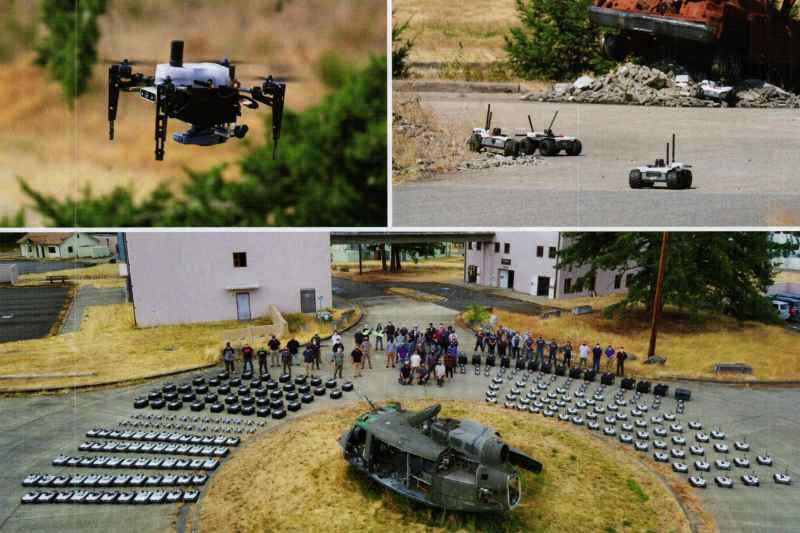
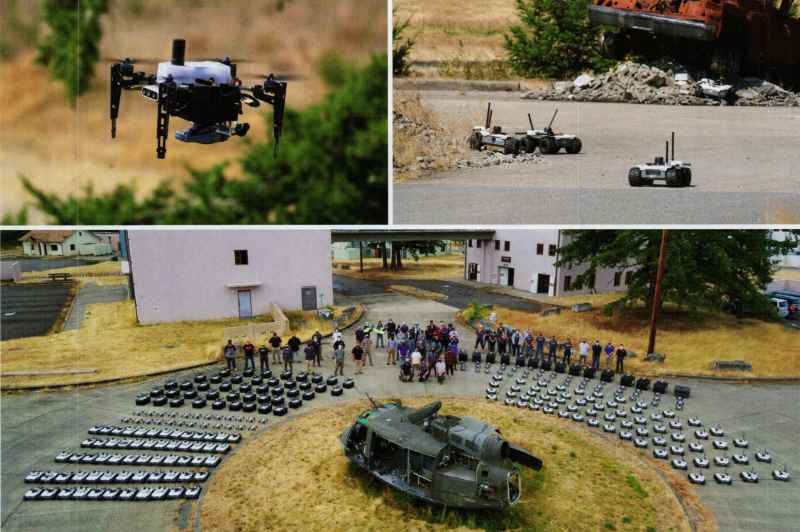
A: The United States has carried out a lot of work on the research and application of swarm technology and has made important breakthroughs. The Defense Advanced Research Projects Agency (DARPA) of the United States Department of Defense has deployed a number of swarm technologies, such as: The "Gremlins" project is committed to developing efficient and low-cost distributed air combat technology. It aims to launch a cluster of drones carrying reconnaissance or electronic warfare payloads outside the defense zone through a carrier aircraft, and through information sharing and coordination within the cluster, break through the enemy’s defense system to perform reconnaissance and electronic attack missions, and recover the surviving drones after completing the mission, so as to achieve reuse. These drones will be equipped with a variety of different payloads, with the characteristics of large quantity, small size, low price, and reusability. At the end of 2021, DARPA announced that the first successful test of the aerial recovery and re-launch of the "Gremlins" drone. Another example is the "Offensive Swarm-Enabled Tactics" project, which aims to develop and verify swarm tactics for swarms of more than 100 drones and unmanned ground vehicles, helping large unmanned equipment teams improve their capabilities in force protection, precision strikes, and intelligence, surveillance, and reconnaissance. Since its launch in 2017, six field tests have been held, with targets increasing in complexity and difficulty. The final field test was conducted in December 2021, with autonomous air and ground swarms deployed. Joint collaborative operations were achieved using two swarm system integration test platforms, using "virtual swarm agents and real agents in parallel to assist in real-world tasks, while using immersive swarm interfaces to implement swarm command and control.
Q: What are the technical barriers of swarm technology?
A: At this stage, the main problems faced by swarm drones are communication topology and communication bandwidth, as well as the intelligence of the individual units. Because drones in a swarm are required to cooperate with each other, a lot of information will inevitably be transmitted between each other. For humans, communication can be broadcast, with multiple receivers at once, but it will be a mess if there is no coordination and simultaneous voice. For machines, communication requires high bandwidth to maintain mutual coordination. In addition to the emergence of swarm intelligence, the intelligence of the individual unit is also important for communication. It is also closely related to bandwidth. The higher the intelligence, the simpler the communication information required, which will save bandwidth. For example, as children grow up and learn, their intelligence gradually increases. As long as the mother says, "Pack your schoolbag," the child will know to organize the pencil case first, then the textbooks and exercise books, and then put them neatly into the schoolbag. However, when a machine without intelligence is asked to do this, all commands must be included to tell the other party what to do first and what to do later, and the amount of data will naturally increase significantly. If the machine also has the intelligence of a child, it can also understand comprehensive instructions. In addition, if the distance between drones is far, the information needs to be transferred by one or even several drones in the middle: this is called single-hop or multi-hop information transmission. Every time the information jumps, the drone that transfers it will add a small section to the information, indicating that the information is forwarded through me. If it is a large-scale swarm of drones, the frequent multi-hop of information will inevitably cause an exponential increase in communication information, which will be a huge burden for communication.
Q: Will traditional systems be replaced by swarm technology in large numbers in the future?
A: This is not necessarily the case. Different systems will have their own tasks, and it also depends on what the final expected results are. The advantage of the swarm system lies in the swarming capability generated by mutual coordination. Even if individual drones are lost, it will not affect the capability of the entire swarm. However, the disadvantage is that the single-unit capability is relatively low, which makes the swarm not able to perform well in all tasks. For example, in anti-aircraft carrier operations, the price of high-performance anti-ship missiles is high. If a swarm of 100 drones is formed, the overall price is not low if the unit price of the drone is high. However, in actual combat, if a hypersonic anti-ship missile breaks through the fleet’s air defense network, it can directly sink an aircraft carrier. The swarm drones are limited by their own performance and it is difficult to sink an aircraft carrier. However, if some individuals break through the fleet’s air defense firepower network and drill into the engine air intake of the carrier-based aircraft to paralyze the takeoff of its carrier-based aircraft, they can also serve the purpose of countering the aircraft carrier. Therefore, the future battlefield will still be a comprehensive application of multiple weapon systems, and swarm drones may only be a tactical supplement.
Q: What is the future development direction of the swarm?
A: I think there are mainly two aspects of development. First, the development of the monomers in the swarm, such as the cost of mass production and the performance of the flight platform itself, which belongs to the improvement of hardware. The lower the production cost, the more conducive it is to mass manufacturing and building a large-scale drone swarm. The improvement of the platform’s flight performance - mainly the improvement of power performance and maneuverability, will increase the payload of the monomer, improve flight performance, make the monomer more capable, and then improve the capabilities of the entire swarm. In addition, and more core, is the development of communication and intelligence mentioned just now, which belongs to the improvement of informationization and software. Our goal is to make the cluster an effective organization, not a mob. The former is equivalent to a wolf pack, and the latter is equivalent to a flock of sheep. To build an effective organization, we must rely on the development of artificial intelligence.
Q: What are the countermeasures against swarm drones?
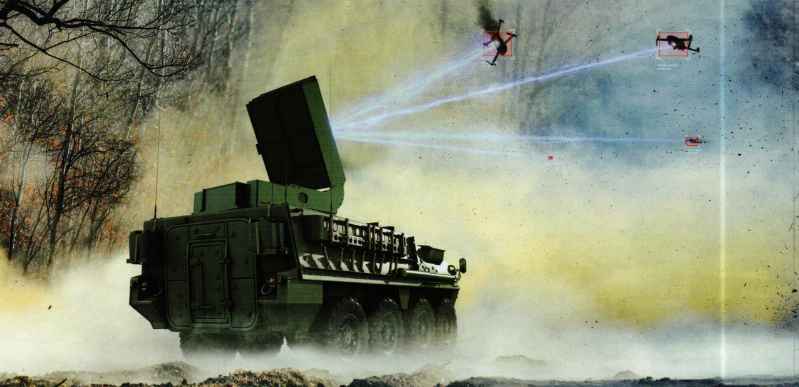
A: At present, the most effective anti-UAV means is high-power microwaves. By blinding the communication system and burning the onboard electronic system through high-power microwaves, the drone will lose control. However, the countermeasure technology of drones against microwave interference is also improving. By implementing electromagnetic protection on important parts of the fuselage, the effect of high-power microwaves will be greatly reduced. There are also many hard-kill means now, such as using lasers to shoot down drones. However, the laser itself has a large power requirement and air visibility problems. It must be continuously irradiated to burn through the drone, which is somewhat inadequate for dealing with large-scale and fast-moving drone swarms. Using drones to counter drones is also a possible idea. Of course, this technology is not mature at this stage. There have been similar competitions abroad, where a drone uses a net to capture another drone, but few have succeeded. However, as the technology matures, drones that specifically counter drones may appear in the future, and there may even be drone swarms that counter enemy swarms.
Q: What kind of competition is the “Smart Swarm” International Swarm Technology Competition?
A: The “Smart Swarm” competition is an international competition in the field of swarm intelligence jointly sponsored by the Chinese Society of Aeronautics, Beijing University of Aeronautics and Astronautics, Nanjing University of Aeronautics and Astronautics and other units. The competition will closely follow the application and actual needs of unmanned swarms, grasp the cutting-edge development trends, and promote the progress and development and innovation of unmanned system swarm intelligence technology by setting a series of competition tasks with clear mission objectives, great challenges and huge application value. The competition aims to encourage researchers to face unmanned swarms, study the emergence mechanism and operation mechanism of swarm intelligence, complete the established swarm collaboration tasks, promote research and use through competition, and drive the technical development and engineering application of unmanned swarms.
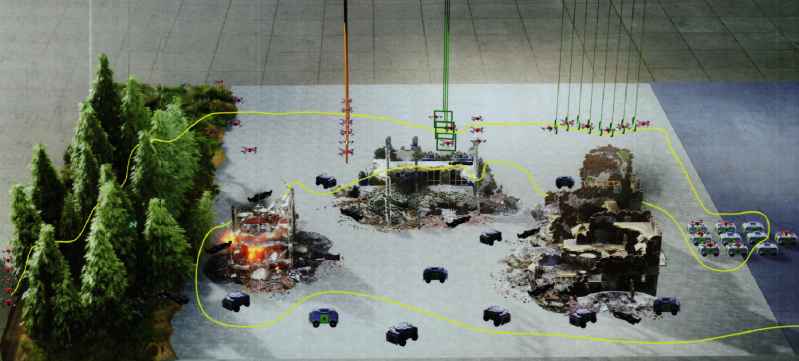
The first generation of tasks is based on post-earthquake rescue and focuses on the cluster capabilities of unmanned swarms in avoiding obstacles, quickly crossing formations, assembling, coordinating and autonomously searching and identifying rescue personnel, air-ground clusters coordinating and perceiving the target state in complex environments, air-ground clusters self-organizing dynamic task planning and allocation, and air-ground clusters cooperating to perform complex terrain rescue tasks. At the same time, in order to facilitate the simulation test of algorithms by the participating teams, we will launch a simulation system that integrates the competition mission environment vision and platform model, and look forward to outstanding performance by all participating teams.
Q: What is the difficulty of this competition?
A: The sign of the completion of the first generation of tasks is to complete the basic ability verification of rapid air obstacle avoidance and dynamic formation within the specified time, and to achieve mutual coordination of swarms and autonomous search for a certain number of rescue personnel, successfully demonstrating the strategy of cluster intelligent multi-task allocation. Among them, 6 drones need to maintain coordination and have certain decision-making capabilities, which requires the emergence of certain cluster intelligence. A single drone that finds a person in need of help will not score any points. The drone must notify other drones for collaborative confirmation. Only when more than two drones confirm one person in need of help can they score any points. In addition, there are six unmanned vehicles in the venue. The unmanned vehicles will provide information about the location of the person in need of help - this information may also be interference information. At this time, the drone swarm must decide on the search and rescue method, whether to rely entirely on its own capabilities to find the rescuer, or to take the risk of receiving interference information to obtain information from the unmanned vehicle. In short, there is only 6 minutes to complete the complex, highly dynamic obstacle avoidance formation and collaborative search tasks, which is extremely difficult.
Q: Does the competition have special requirements for drones?
A: The "Smart Leader Swarm" competition is about the intelligent collaborative control technology of drone swarms. The drone platform will be provided by the event organizer. Participants only need to prepare the mission control computer and intelligent control software for the competition, or even just submit the software and load it into the computer provided by the organizer for operation, without having to consider the issue of the flight platform.
Q: What are your expectations for the results of the "Smart Swarm" competition?
A: We have spent a long time designing, deliberating and conducting preliminary simulation verification on the competition rules. The results show that it is very difficult to complete the set task goals within two 6-minute periods based on the current level of swarm technology. I am afraid that it will be difficult for any participating team to make a breakthrough in the first year. According to our estimation, after the continuous efforts of the participating teams, some participating teams may be able to complete the competition as required in the next three years. When a breakthrough is made in the task, it means that the swarm technology has made substantial progress.