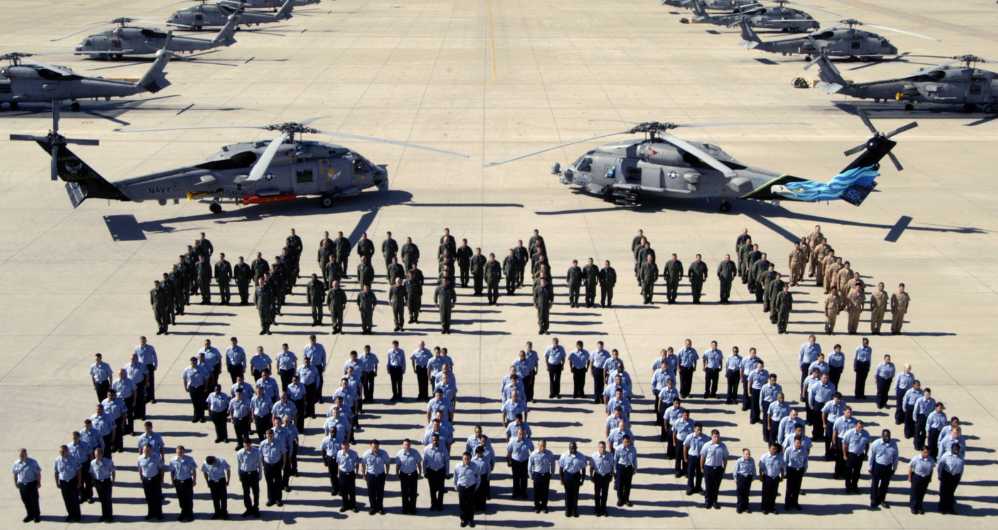

The Future Long Range Assault Aircraft (FLRAA) project in the United States has already been completed. As part of the six major modernization priorities of the Army proposed by the Chief of Staff of the U.S. Army, Mark Milley, the V-280 will completely replace the current helicopters in the 1930s, and undertake tasks such as air assault, maritime interception, medical evacuation, disaster relief and combat search and rescue. There is no doubt that after learning from the experience and lessons of the V-22, the new generation of V-280 will inevitably have a positive and far-reaching impact on the future combat deployment of the U.S. Army Aviation at the tactical level. As the largest procurement case of the U.S. Army in 40 years, the influence of the V-280 has far exceeded the military itself.
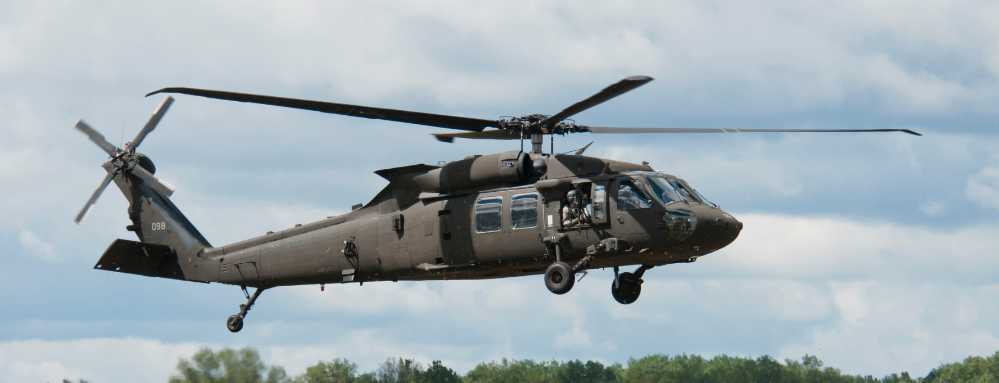
For many years, Sikorsky has been firmly in the top spot of the U.S. military helicopter industry with the good reputation of the "Black Hawk" helicopter. The victory of the V-280 means that Bell will grow into a competitor of the same level as Sikorsky (under Lockheed Martin) in the U.S. military helicopter industry. At present, Sikorsky has won orders for the "Black Hawk" series helicopters and CH-53K heavy transport helicopters, the latter of which has a unit price of up to 120 million US dollars. The second is Boeing, which produces CH-47 "Chinook" transport helicopters and AH-64 "Apache" attack helicopters. Currently, it mainly relies on overseas orders to maintain the production lines of the two models; the third is Bell, which just delivered the last AH-1Z attack helicopter to the US Marine Corps in November 2022, completing the order for 349 new H-1 series helicopters. Currently, there are only dozens of unexecuted orders for V-22s.
Since the 1980s, Sikorsky has relied on more than 4,500 domestic and foreign orders for the "Black Hawk" series of helicopters to almost squeeze its old rival Bell out of the military helicopter industry. The H-1 series of helicopters (AH-1 and UH-1) designed and manufactured by the latter was once the standard of the US Army Aviation in the Vietnam War, but as the Army Aviation fully replaced the "Black Hawk", the H-1 series of helicopters could only be supplied to the Marine Corps, which had fewer orders, and the overseas orders for this model were pitifully small. Fortunately, Bell and Boeing launched the usable V-22 after overcoming the technical difficulties of the tilt-rotor aircraft. Otherwise, Bell would really be marginalized. Initially, all orders for V22 came from the Marine Corps, a total of 360. After years of actual combat tests, although there were individual crashes, the overall performance on the battlefield was good. Later, the US Air Force and Navy received orders for 54 and 48 respectively. As for overseas orders, although there were rumors a few years ago that India, Japan and Israel had the intention to purchase, only Japan finally implemented 17 aircraft. It is expected that if there are no new orders in the next five years, the V-22 production line will be closed. In addition, there are no follow-up orders for the new H-1 series helicopters, and Bell has begun to slide to the edge again. Therefore, V-280’s winning of the FLRAA project is a "timely rain" that is vital to Bell’s life and death.
So, will Sikorsky decline because of losing the FLRAA project? Not within 10 years, but it is hard to say after 10 years. First of all, although the US Army’s promotion of the FLRAA project will greatly reduce the domestic orders of the "Black Hawk", the competitiveness of the aircraft among similar medium-sized helicopters in the world is still strong. "The Black Hawk has a more cost-effective maintainability and upgradeability than Europe’s NH-90 and EH-101, especially the latest carrier-based version of the Black Hawk - MH-6OR, whose comprehensive sea-based combat capability is difficult for European helicopters to achieve. Moreover, countries and regions with developed helicopter industries in the world have not yet officially launched a new generation of helicopter rotorcraft research and development projects. Even if Europe launches a new project in the next few years, it is customary for Europe to adopt a multinational joint research and development model, which will inevitably involve wrangling in terms of technology, funds and intellectual property rights - the Franco-German sixth-generation aircraft project has been wrangling for several years. Therefore, before Europe develops a new generation of helicopters/rotorcraft, the overseas orders for the Black Hawk may be several hundred more. In addition, Sikorsky has about 200 unexecuted orders for the CH-53K.
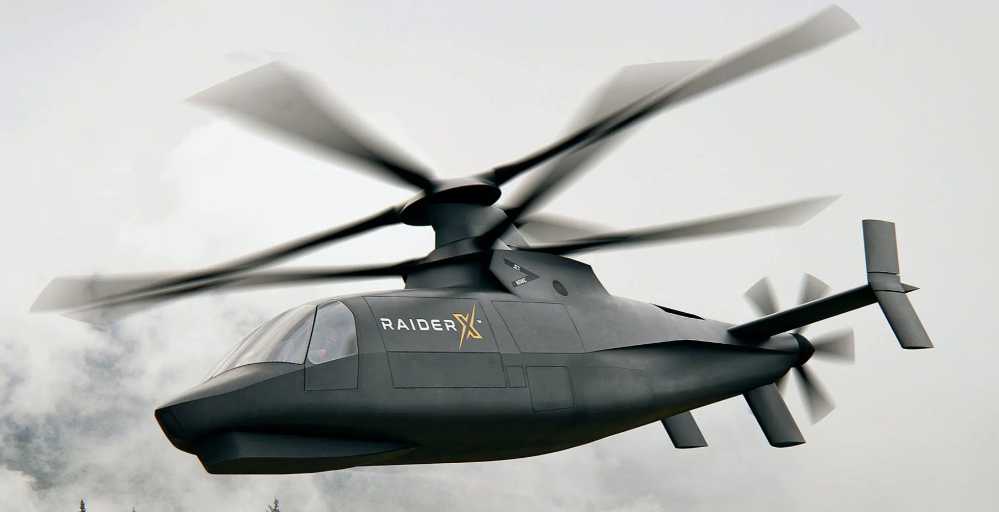
The US Army’s future armed reconnaissance helicopter project has not yet been settled, which has become Sikorsky’s biggest hope. In theory, Sikorsky’s "Raider" X plan, which adopts a coaxial twin-rotor configuration, is a better choice for the more traditional Bell 360 The proposal still has great technical advantages. Of course, even if the Raider X proposal wins, the FARA project is equivalent to a "dessert" rather than a "main course" compared to the FLRAA project, and it is difficult for Sikorsky to prosper in the long run. The FLRAA project means that Bell’s production line will prosper in the next 30-50 years and earn hundreds of billions of dollars. Sikorsky, which has been lackluster in the civil helicopter business in recent years, will undoubtedly face a major earthquake. Both its production and manufacturing capabilities and its design and development capabilities will be severely or even fatally damaged. In short, the result of the FLRAA project bidding is the beginning of the rewriting of the future of the US military helicopter industry, and Sikorsky’s future will "turn from light to dark"
As for Boeing, it seems to be a bit of a watchdog. Since Boeing is not FLRAA and FABA As the main contractor of the two projects, no matter which side wins, Boeing will become the subsystem supplier. As the saying goes, "If the east is not bright, the west will be bright." Perhaps Boeing is also eyeing the upgrade or replacement plan of the US Army’s "Apache" attack helicopter and "Chinook" transport helicopter. However, due to tight military spending, it is expected that the Army will not have any ideas about replacing these two active models within 10 years.
Although the FLRAA project is a "life and death situation" that "cannot afford to lose" for the main contractors at the top of the industry, for the entire US helicopter industry, especially for the large and small suppliers in the middle and lower reaches of the industry, it has more of a "loss in the east, gain in the west" meaning. Especially for large and medium-sized suppliers, no matter who the winner is, they cannot do without them to provide supporting supplies. In other words, for second-tier and lower-tier suppliers, no matter what the outcome of the bidding is, they will not worry about business.
From the analysis of the world situation, the FLRAA project will further consolidate the dominant position of the US military helicopter industry. The position of European competitors will be squeezed, especially the European military medium-sized helicopters with stronger competition will face unprecedented challenges. The only way out is probably to turn to the field of light (less than 4 tons) and sub-medium (4-8 tons) helicopters. After all, they are not in direct competition with medium-sized helicopters, and the procurement and maintenance costs are lower than medium-sized helicopters, which are especially suitable for use by small and medium-sized countries. Even the US military has purchased light helicopters from Europe, for example: the US military has purchased 478 UH-72B "Lakota", 84 AW-139 "Gray Wolf" and 130 TH-73A.
In the 1980s, Britain, France, Italy, the Netherlands and other countries jointly developed the NH-90 helicopter, intending to occupy a place in the world’s military medium-sized helicopter field. However, the aircraft has had many problems. Australia first retired 46 NH-90 helicopters early and replaced them with "Black Hawk helicopters. Soon after, Norway directly terminated the contract and permanently grounded the entire fleet to protest the low attendance rate of the aircraft. The failure of NH-90 taught the European helicopter industry a lesson. In fact, Europe has begun to lay out in the field of light and medium-sized helicopters. The French Ministry of Defense has begun to purchase 169 6-ton H-160M helicopters, which may lead a wave of replacement of military helicopters in small and medium-sized countries. In the future, the world’s military helicopter industry will form a special division of labor, that is, the United States will dominate medium and heavy models, while Europe will dominate light and medium models.
As for another helicopter industry power, the United Kingdom has begun to bet on both sides. According to reports, the United Kingdom joined the U.S. Army in July 2020. The future helicopter project, including the two sub-projects of FLRAA and FARA, plans to work with the U.S. military from 2028 Starting from 2017, the two countries will replace general-purpose helicopters, transport helicopters and armed helicopters, thereby strengthening the in-depth cooperation between the two militaries in the field of helicopters and the future joint combat capabilities of the two militaries. In November 2020, the UK also took the lead in signing the "Next Generation Rotorcraft Capability" project with France, Germany, Greece and Italy, but two years have passed and no results have been seen. It is expected that the possibility of the final dissolution is high.