
I will be completely independent
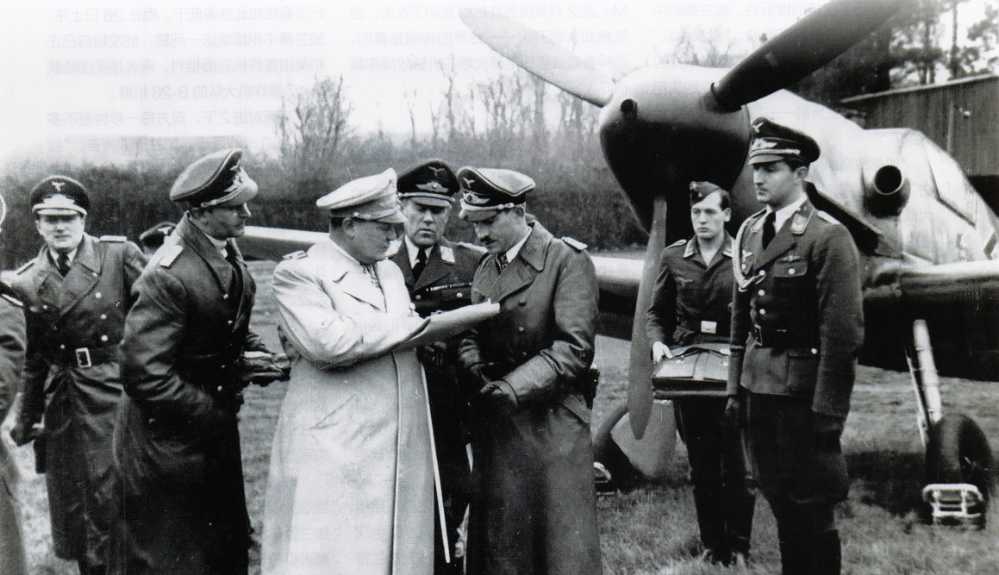
In early 1945, Adolf Galland, one of the most influential figures in the German Air Force and an ace pilot, was suddenly dismissed from his post as the Director of Fighter. In December 1944, after visiting several fighter units on the Western Front, Galland, the Director of Fighter, wrote a sharp report to express his shock at the "lack of leadership of commanders, inadequate training, and widespread dissatisfaction among pilots" in each unit. The report was submitted directly to the German Air Force Commander Goering, who responded by dismissing Galland on January 23, 1945, less than a month after receiving the report. For Galland, who had long been tired of the intrigues in the officialdom, this was a good opportunity to return to the front-line troops. After meeting Hitler and getting his approval, Galland began to form his own fighter squadron, which would use the latest product of German military technology-the Me 262 jet fighter. As Galland said, "This is the best fighter I have ever believed."
Galland had always done his own thing, and this time was no exception. He had full command of the flight unit he had formed at the last moment of the war, and he wrote: "My flight unit will not be controlled by any air division, air force or air force - I will be completely independent."
Goering "kindly" said that Galland could give the flight unit any name as long as it did not include the word "Galland". So Galland named the flight unit JV 44 Squadron, "44" was obviously to "commemorate" the front line tour that led to his dismissal.
Galland selected the Brandenburg-Brist base west of Berlin for JV 44. It was close to the military acceptance site of the Me262 and was also equipped with a considerable anti-aircraft unit. After obtaining the approval of General Karl Kohler, Chief of Staff of the Luftwaffe, JV 44 was officially launched, and ammunition, fuel, spare parts, tools, trucks, troop carriers, trailer cars and bicycles were transported to the Bristol base.
At the same time, with his own appeal, Galland successfully invited many famous ace pilots to join JV44, making this jet fighter squadron legendary even though it only existed for a few months - it will be known as the "expert squadron" in the history of air combat in World War II.
New tactics and new weapons
Galland received his first Me 262 on March 14. A week later, he released his own exclusive tactics for this jet - a tactical formation of 3 jets instead of the 4-plane squadron commonly used by the Luftwaffe. The convenience of this is that three Me 262s can take off side by side on a 60-meter-wide German standard runway, and maintain combat formation at the beginning of the mission without having to spend time in the air to re-form.
Soon after JV 44 was put into combat, Kohler asked Garland to move to the industrial area further south so that he could participate in the defense of fuel, weapons and aircraft factories. After inspecting the entire area in a BMW sports car, Garland decided that the large civilian airport in Munich-Riem would be the "new home" of JV44.
At the end of March, Garland and his men entered the Riem Airport, which had a large underground fuel depot, 3 heavy and 12 light anti-aircraft gun platforms, and a standard runway, which fully met the combat needs. Riem’s hardware conditions are indeed good, but the bad thing is that the enemy has also set its sights on this place.
The Allies identified Rim as one of their priority targets. On April 8, the airport was hit by intensive attacks by as many as 228 B-17 "Flying Fortress" heavy bombers. In this air raid, JV 44 lost 6 Me 262s, the tower, main hangar and administrative building at Rim Airport were all destroyed, and the casualties were close to 60.
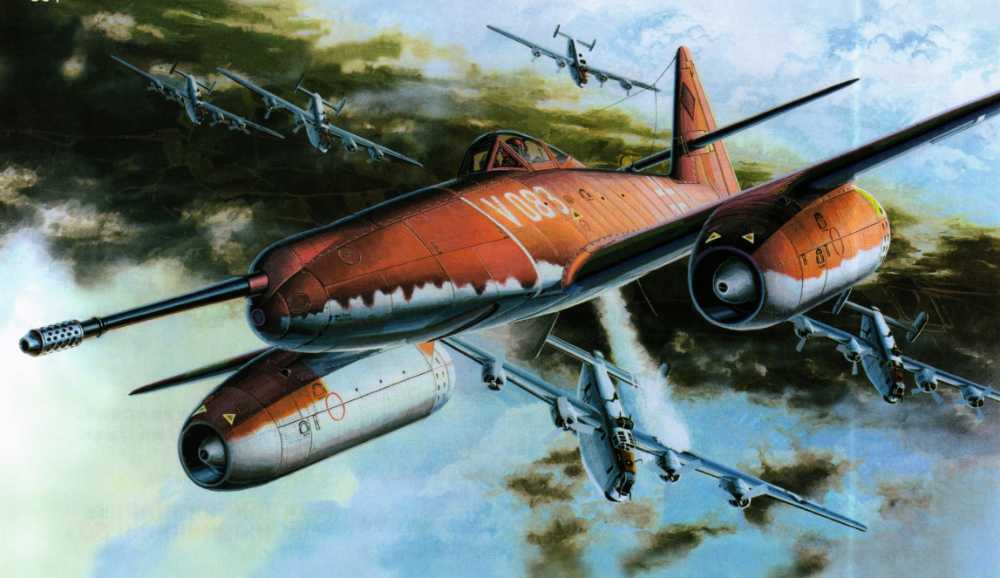
After such a setback, Garland’s squadron resumed operations on April 16. "The expert squadron flew 14 Me 262 sorties that day. In addition to conventional cannons, several jets also experimentally used R4M air-to-air rockets - 12 under each wing.
Galand personally led several jets to attack a B-26 medium bomber formation belonging to the 322nd Bombardment Group of the US Army Air Force. The ace pilot added a new victory to himself: shooting down two B-26s.
When JV 44’s 11 Me 262s took off on the morning of the 24th to intercept another B-26 formation, the R4M air-to-air rockets showed their power. Several German jets approached the American bombers from behind and fired rockets at the right time. A B-26 It was hit immediately, and observers saw that "its tail was broken, the main wing and the side of the fuselage were damaged, and the bomb bay door was broken open." The bomber rolled to the right and eventually crashed. Only one crew member survived.
In the air battle on the second day, Garand tested another experimental weapon, the MK214 50mm caliber aircraft cannon. But this test was not successful. Although the Me 262 equipped with this large-caliber cannon launched an attack on the US bomber group, the aircraft cannon failed to fire-the rumors in the industry were true. The mechanical failure rate of this seemingly powerful Mauser cannon was frighteningly high.
"Quite favorable"
The Allied air strikes were endless. At 11:30 a.m. on April 26, JV 44 dispatched another 6 Me 262, Garland once again led his men into the air to participate in the battle - this was his last mission in this war.
German pilots tried to intercept enemy planes in the Neuburg area on the Danube River. The sky was covered with clouds that day, which made the search very difficult. Under the interference of large clouds, it is usually difficult for pilots to accurately judge the relative direction and distance between their own aircraft and enemy aircraft, and it is even more difficult for jet pilots flying at high speed.
Lützow, an ace pilot of the "Expert Squadron", suffered from this situation. He missed the target several times because he flew too fast. Lützow once found Garland and blamed himself, saying that he did not expect that he would be so inefficient as a jet pilot. On the morning of the 26th, Garland did not have to worry about this problem. He found himself facing the American bombers head-on. The ones coming were the B-26 fleet of the 17th Bomb Group of the US Army Air Force.
Under high-speed confrontation, both sides shortened their flight time by almost 250 seconds. meters away. Galland was excited, "I dare not say that I did an ideal job, but I did lead my men to a fairly favorable shooting position." Having just turned on the firing safety of the Me 262, Galland, who was "as nervous and excited as usual," went into battle. He chose to fire the R4M rockets, but the rockets had no reaction.
It turned out that Galland forgot to turn on the second safety of the rockets, so they were not fired. "I was in the best shooting position at the time. I aimed and pressed the release button with my thumb, but there was no result. Every fighter pilot would go crazy in this situation. "Galand later wrote.
Fortunately, the Me 262 was also equipped with four Mk 108 30mm cannons, which were much more powerful than the 7.92mm machine guns and 20mm cannons that Garland was familiar with on the Bf 109 fighter. Garland fired with his cannons, and "the engagement may have lasted only a second," before a B-26 in the formation was hit and caught fire and exploded.
Galland, who was still not satisfied, aimed at another B-26. He passed by the side of the new target, fired and hit the target. At that time, the US bomber formation was already firing at full power, but the battle-hardened Garland did not care. He even slowed down! He wanted to find out whether he had hit the second bomber.
So, the hunter became the prey. The first one to target Garland was a neighboring B-26 Tech. Sgt. Henry Dietz, a gunner on the bomber. He later recalled, "I had never seen a jet before, and the German plane slowed down and I thought, ’This is stupid,’ because he ran right into my gun."
Dietz remembered the lessons he received at the Aviation Gunnery School clearly, "The most important thing is to shoot short, forget about the tracers - just look into your scope. "Dietz immediately opened fire, but missed. He continued to fire, "Higher, lower, I keep shooting..."
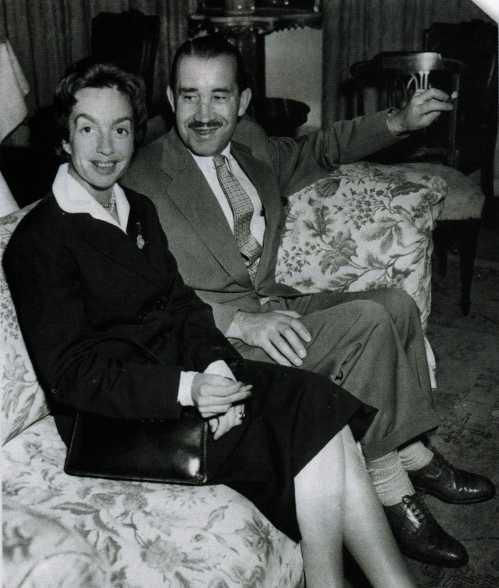
Survived
Although Dietz was in a favorable position, his shooting skills were not good. On the other hand, Garland, who did not realize that he was under attack, began to turn left. At that time, a more threatening enemy appeared.
Following Dietz, the P-47 escort fighter pilot flying above the B-26 group, from the 10th Fighter Group of the 50th Fighter Group, Lieutenant James Finnegan of the squadron also noticed Garland’s plane. When Finnegan looked down, "suddenly I saw an object whizzing through the formation, and our two bombers exploded.
Such a scene convinced Finnegan that "it must be a German jet." He was flying at an altitude of 4,000 meters at the time and estimated that the enemy plane was between 2,500 and 3,000 meters. Finnegan quickly turned left, made a broken S roll, and attacked the "German".
Garland also reacted and tried to disengage to the left, but it was too late. "Instantly, a burst of fire came and surrounded me. A Mustang caught me.
In the P-47 Thunderbolt fighter that was mistaken for a Mustang, Finnegan fired for about 3 seconds and saw the target’s right engine and wing root hit. "I glanced at the target, and the plane was camouflaged in green and brown, with some yellow spots. After returning, I reported it as a ’possible kill’."
Garland’s jet was hit, "With a sharp knock, my right knee was hit. The dashboard and some instruments were shattered, and the right engine was also shattered, its metal shell swaying in the wind... The left engine was also hit, and I could hardly control the flight.
After trying to lower the nose of the plane and pass through a cloud, Garland saw the road below and determined the direction back to Rim. He regained his confidence, habitually shook the wings, and began to approach. Since both engines were completely unresponsive, Garland took a gliding attitude, and his Me 262 approached the runway with a long tail of smoke behind it.
The ground control station sent a warning that "enemy planes are attacking the airport", but Garland had no choice. As soon as the landing gear touched the ground, Garland realized that the front tire must be flat, "It made a terrible squeaking sound when it rushed onto the runway at a speed of 240 kilometers per hour."
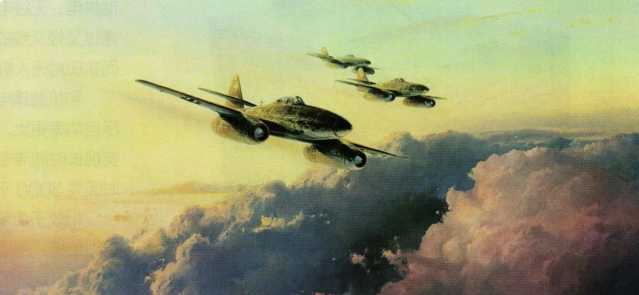
The runway was full of craters, and bombs and rockets dropped by American planes exploded everywhere. Garland’s plane rushed into a large crater and stopped. "It is an indescribable feeling of misery to leave the fastest fighter in the world in this way." A mechanic appeared and silently patted Garland on the shoulder, "He understood what I wanted to say better than anyone else." Garland said.
Unfortunately, Galland’s jet was shot down by a piston fighter, but fortunately, he survived. On May 4, the ground crew of JV 44 destroyed the remaining Me 262 by detonating grenades in the engine air intake; the next day, Galland surrendered to the Allies, and his "expert squadron" ceased to exist.