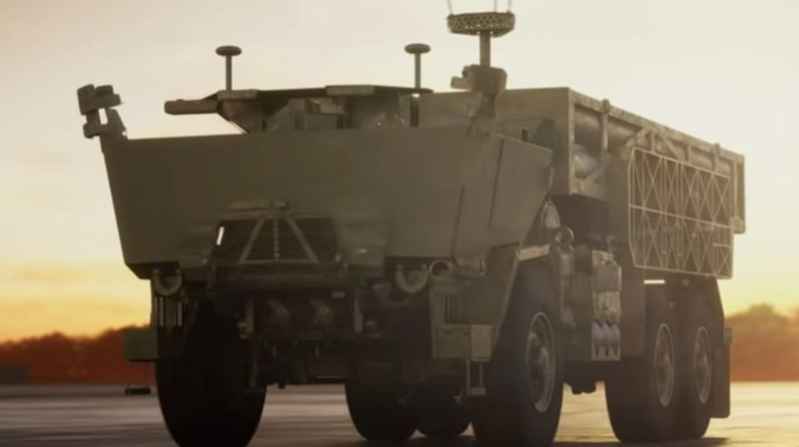

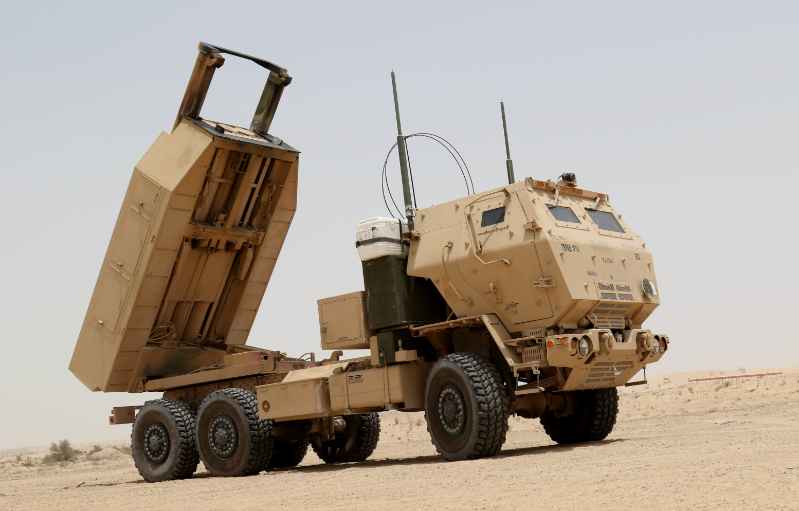
After recent practice on the battlefields of Russia and Ukraine, the M142 "HIMARS" rocket launcher has created its own myth on social media. However, in the eyes of the US military, the M142 has been in service for more than 20 years and cannot adapt well to the current or even future competition with China. Therefore, its upgraded replacement products have long been considered, and the unmanned version of "HIMARS" known as the "Autonomous Multidomain Launcher" (AML) is such a case.
With the continuous development of unmanned autonomous technology, the current military powers in the world are making every effort to develop a new generation of unmanned combat equipment. In addition to traditional unmanned combat vehicles, drones, unmanned ships and other unmanned combat equipment, unmanned short, medium and long-range strike systems based on unmanned autonomous technology have also begun to emerge in recent years. The US Army has already taken the lead in layout and has long been committed to researching various unmanned combat equipment in order to win the war with the least personnel investment and sacrifice in future operations. In 2019, the U.S. Army proposed to apply AI-driven unmanned autonomous technology to the corresponding field of beyond-visual-range precision ammunition in the future. Subsequently, the U.S. Army further proposed to apply a certain degree of unmanned autonomous technology to its M142 rocket launcher, or to develop a new unmanned rocket launcher based on this. The AML unmanned rocket launcher, which has now entered the deep testing stage, is such a product.
With the advancement of military technology, the combat power generation model has also changed from the combination of people and equipment to the combination of people and artificial intelligence. Although artificial intelligence itself does not have military attributes, neural networks have the ability to "see data patterns", and empowering traditional equipment platforms can bring "dimensional upgrade" advantages. In 2021, the U.S. military ended the war on terror and officially turned to great power competition with China and Russia. In fact, the U.S. military has gradually started the transformation process since the beginning of 2018. At present, the competition between major powers is becoming increasingly fierce. The U.S. military’s "crazy and radical emerging technology" under the "Third Offset Strategy" has once again become its life-saving straw for "wanting to turn the tide against the wind". The U.S. military’s reform this time has both short-term goals for 2030 and medium- and long-term goals such as 2035 and 2050. The core of seeking "system generation and cognitive generation gap" is the core theme of this U.S. military reform. The U.S. military’s military reform this time is by no means a "Star Wars-style smokescreen or sleight of hand". In the past three years, the term "reconstruction" has been used frequently in the intensive promulgation of various types of combat regulations, requiring officers and soldiers to change their thinking and never seek "limited, low-intensity, asymmetric" special military advantages, but focus on "big fight" preparations and seek to reconstruct system confrontation advantages. 2017 is known as the first year of knowledge. The U.S. Under the pressure of traditional "military threats" such as system destruction and regional denial, the military has gradually derived the concept of "mosaic warfare" inspired by the concepts of biological immunity, philosophy, and computers. The core content is to completely subvert the traditional equipment system and combat mode, connect the equipment system from single intelligence to group intelligence, and form a dynamic, fast, and adaptive killing network. The US military believes that the "disruptive" capabilities of the fourth industrial revolution technology should be quickly and fully utilized to rebuild the "absolute military advantage." In fact, the "visible and tangible" performance improvement of artificial intelligence and traditional high-tech equipment is extremely different in nature. The "performance" core of intelligent autonomous weapons and equipment is reflected in higher and deeper dimensions such as "cognition, connection, and insight." Although artificial intelligence is not magical, it can be powerful enough when used in the military field.
The US military top brass requires the entire army to develop new combat concepts based on new technologies, rather than using new technologies within the traditional combat system. The choice of these two routes is fundamentally different. In future wars, especially high-tech, high-intensity military conflicts between major powers, from the process of tactical deployment, campaign deployment, and strategic layout, any single technology or single weapon and equipment can no longer become a "panacea" that can be used everywhere. In fact, the evolution of combat styles also reflects the progress of human civilization to a certain extent. Future military struggles will inevitably be distributed combat operations between the two sides. The ability to resist intervention cannot be maintained permanently. The only real response strategy is to "fight head-on". There is no chance of winning if there is a disadvantage in the dimension. Therefore, the US military has always emphasized: emerging technologies such as artificial intelligence and autonomy must never be regarded as just auxiliary means to improve or make up for the current combat system, but to innovate new combat concepts based on new technologies and build a brand-new combat "system". It is also in this context that it is necessary to have a deep understanding of the intention of the US Army to actively develop the unmanned version of "HIMARS" driven by artificial intelligence--AML unmanned rocket launcher system.
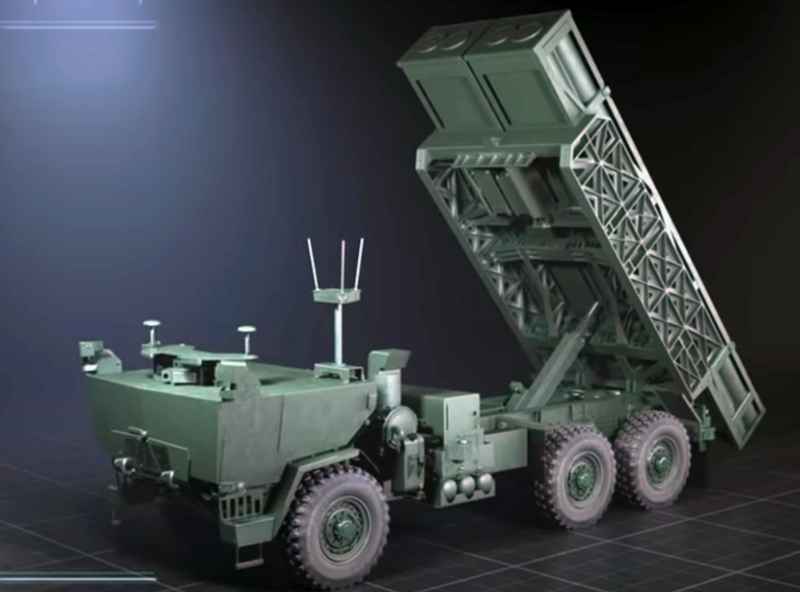
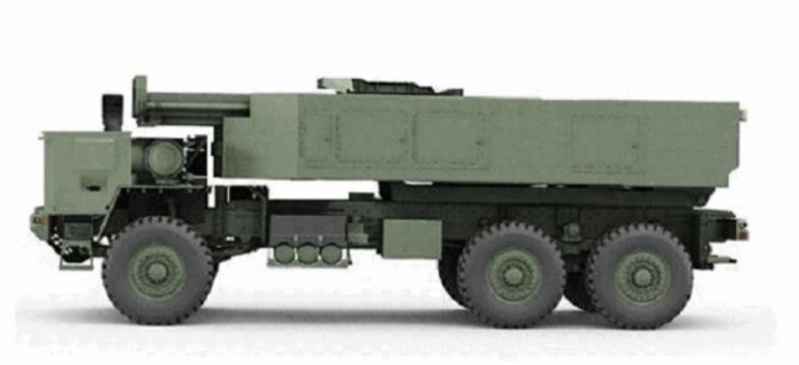
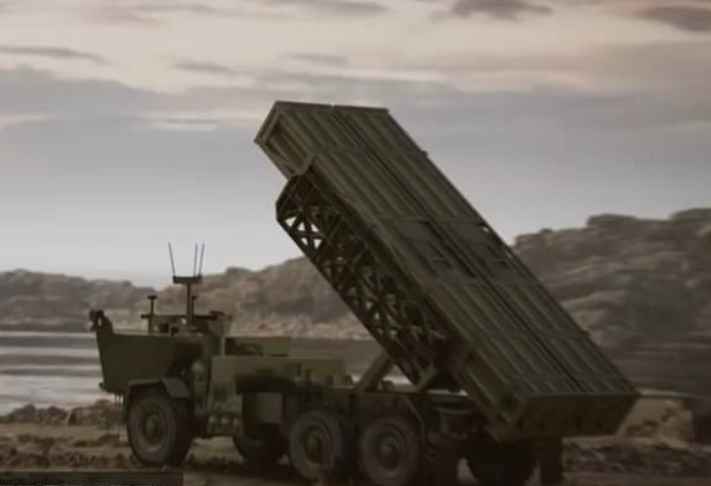
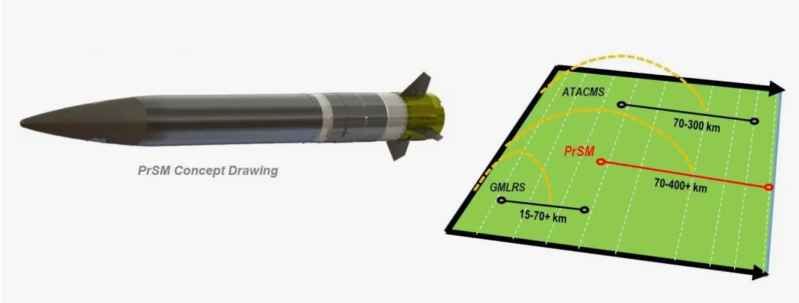
As a lightweight wheeled version of the M270 tracked multiple rocket launcher system, the M142 multiple rocket launcher system is originally committed to using more powerful mobility in exchange for better battlefield survivability, and thus gradually replaced the M270, which was famous for its "steel rain" coverage in the Gulf War. But whether it is the M270 or the M142, they are both manned beyond-visual-range ammunition delivery systems. Under the enemy’s counterattack, "man" itself is the biggest weakness of their battlefield survivability. So as early as 2017, the US Army hoped to remove this "weakness" of "HIMARS" and develop a new generation of unmanned multiple rocket launcher systems to replace it. In the requirements given by the US Army, this unmanned rocket launcher must have the characteristics of light weight and good maneuverability, and can be transported by medium-sized tactical transport aircraft such as the C-130 series that can take off and land at simple airports on the front line for rapid battlefield deployment. At the same time, the new generation of unmanned rocket launchers also requires the continued use of modular launch boxes with "storage, transportation and launch" functions, and the ability to launch "missiles and rockets on the same rack". Of course, since there is no need for manned driving and operation, the new generation of unmanned rocket launchers no longer needs armor protection for the cockpit, or the cockpit of the M142 can be completely cancelled, and the weight saved will be considerable. Based on this, the US Army believes that the ammunition load of the new generation of unmanned rocket launchers will be greatly improved compared to the M142, and can be "restored" to the level of the M270, carrying two 4-unit 227mm rocket modular launch boxes with "storage, transportation and launch" functions, while the manned M142 rocket launcher can only carry a 6-unit 227mm rocket modular launch box with "storage, transportation and launch" functions. In addition, the new generation of unmanned rocket launchers can not only use various 227mm rockets (such as: GMLRS precision-guided rockets, etc.) and ATACMS missiles currently in service with the US Army, but can also launch the new generation of long-range rockets with larger size and longer range currently under development by the US Army. At the same time, it also has the ability to launch the "Precision Strike Missile" (Prsm) currently being tested by the US Army. Prsm, like ATACMS, is a weapon developed by Lockheed Martin. According to the official website of Lockheed Martin, the cost of this envisioned precision strike missile is controllable and the maximum range can be extended to more than 500 kilometers. At present, all tests of this type of weapon have been successful, and Lockheed Martin has even claimed that Prsm can be upgraded again according to demand, such as extending the range and having the guidance capability to track mobile targets.
Langert, director of the U.S. Army Aviation and Missile Research, Development and Engineering Center, once commented that Prsm can save a lot of money, allowing the U.S. Army to adapt to new ammunition by making minor changes to existing equipment without having to purchase new launch systems. In fact, the size of the Prsm projectile was strictly designed according to the M142 storage and launch box from the beginning. A standard M142 storage and launch box can accommodate 2 Prsm, and the U.S. Army hopes that the new generation of unmanned multiple rocket launcher systems will continue to be compatible with the M142 storage and launch box. After several years of program demonstration, in 2020, the Aviation and Missile Research, Development and Engineering Center under the U.S. Army Combat Capabilities Development Command officially launched a new generation of high-mobility unmanned rocket launcher development plan, aiming to develop this new technical concept and explore the necessary technologies to determine its future development prospects. In January 2021, the U.S. Army signed a research and development contract with relevant units for an unmanned rocket launcher called the "Autonomous Multi-Domain Launcher" (AML). On June 16, 2021, the prototype of a new generation of unmanned rocket launchers based on the M142 long-range multiple rocket launcher was tested for the first time at the Yuma Proving Ground in Arizona, USA, and a shooting demonstration was conducted. This unmanned rocket launcher based on the M142 rocket launcher is also regarded as the prototype of the AML unmanned rocket launcher, which is used to verify some technical concepts involved in the AML unmanned rocket launcher. It is particularly important to point out that considering that the later models of the Prsm missile not only have a maximum range of 1,000 kilometers, but can also perform anti-ship combat missions, the AML unmanned rocket launcher will have the ability to accurately shoot large mobile targets at sea (such as aircraft carriers, destroyers, frigates, etc.) at long distances. In fact, such capabilities are more valued by the U.S. Army. For example, in the first test conducted at the Yuma Proving Ground on June 16, 2021, the focus of the U.S. Army’s drill was to shoot at mobile targets at sea. At that time, according to US media reports, the US Army troops responsible for the demonstration came from the Fort Bragg base in North Carolina, and were the 18th Field Artillery Brigade equipped with the HIMARS system. Brigadier General John Rafferty, who was in charge of the mission, said, "AML was deployed to the expected islands and reefs. First, 7 rockets were tested to simulate the PRSM attack on a mobile target 500 kilometers away at sea. Then the troops moved to another island and used traditional ammunition to launch a close-range attack to simulate supporting other troops in combat. The whole process took about 90 minutes..."
As an unmanned version of the HIMARS, the US Army’s new generation of "Autonomous Multi-Domain Launcher" (AML) has two key highlights: one is the unmanned autonomous capability; the other is the embedding capability of the mosaic combat concept. In the U.S. Army’s capability planning for AML, this new generation of unmanned rocket launchers can not only be used as an "outboard launcher" of the manned "HIMARS" system for battlefield use (that is, it can act together with the M142 rocket launcher in wartime and fight through various commands issued by the M142 rocket launcher. Enter the battlefield, launch, and then exit the battlefield by remote control), but also be used as a robot autonomous system to operate on the battlefield. In other words, entering and exiting the battlefield and even aiming and binding fire control data are completely autonomous, and only when deciding which target to shoot at does the "man in the loop" need to intervene. To this end, in addition to installing CCD cameras, laser radars, and global satellite positioning systems on the vehicle, and equipping it with necessary on-board artificial intelligence software in the form of a relatively complete on-board autonomous computing environment, AMI must also rely on the battlefield Internet of Things that the U.S. Army has been continuously promoting in recent years to provide sufficient computing power, data, and other resource support to achieve a greater degree of autonomous mission capabilities.
The battlefield Internet of Things is a huge intelligent network composed of intelligent systems and combat personnel. In this new elastic network, sensors, intelligent agents, robots, etc. will form "a combat cloud resource for my use". The artificial intelligence system will work closely with human soldiers to fight as a coordinated formation in a hostile environment with strong interference, forming a powerful system combat capability. The battlefield Internet of Things defined by the US Army is a group of interdependent and interrelated entities or "things", including sensors, actuators, equipment (such as computers, weapons, vehicles, robots and wearable devices, etc.), infrastructure (network facilities, storage and processors, etc.), analysis algorithms, information sources and battlefield personnel. Various entities can dynamically combine to support multiple mission objectives; adaptively acquire and analyze data, predict target behavior/activity, and have an impact on the physical environment; have self-perception, continuous learning, and autonomous working capabilities (including self-organization, self-configuration, self-adaptation, self-maintenance, and self-protection, etc.); in addition, various entities will interact with the network, humans, and the environment to enhance predictive decision-making, provide intelligent command and control, and battlefield services. In fact, some characteristics of the US Army battlefield Internet of Things strictly distinguish it from the civilian Internet of Things. For example, the battlefield Internet of Things is suitable for highly dynamic, mobile, and resource-constrained battlefield environments.
In the battlefield environment, network infrastructure (there may be no fixed infrastructure), energy, electricity, storage, computing, processing, communication, and bandwidth are all restricted, and the available time to achieve the mission is limited. The various functions and services of the battlefield Internet of Things should operate normally in this battlefield environment with severe resource and time constraints. For another example, the battlefield Internet of Things will be deployed in various geographical environments, usually in an environment with interference. There are two extreme cases here: one is a highly dense and chaotic giant urban environment; the other is a remote environment with sparse entities and very limited sensor and network coverage. The battlefield Internet of Things does not have a normal working mode, and its deployment scope and scale will be flexibly adjusted according to different geographical environments. A larger-scale battlefield Internet of Things means continuous capability integration, and the exploration and combination of new solutions should have a robust fault response capability or adapt to this mode of non-normal operation resources. In addition, the battlefield Internet of Things will be deployed in an environment with limited physical security and may also include entities owned or controlled by opponents. Therefore, it will have advanced cyberspace defense and information security measures to fully respond to attacks by intelligent opponents, as well as advanced intelligent analysis technology to handle conflict and deceptive data, identify enemy activities, and avoid various complex and persistent threats.
The embedding capability of the mosaic combat concept is another key point in AML technology. "Mosaic warfare" is a new combat concept proposed by the Strategic Technology Office (STO) of the Advanced Research Projects Agency (DARPA) of the United States Department of Defense in 2017. It is the latest war methodology proposed by the US military after the combat concepts of air-sea integrated warfare, multi-domain warfare, and distributed warfare. It is a combat system that can quickly assemble a complex kill network. Its idea comes from the mosaic puzzle. This puzzle is quickly assembled through fragment units with simple and consistent interfaces and diverse functions. The core concept is to break up various combat function elements and use advanced networks to build them into a highly decentralized, flexible, dynamic combination, and autonomous collaborative kill network, thereby achieving system combat advantages. With the help of this concept, various sensors, communication networks, command and control systems, weapon systems or platforms (regarded as mosaic fragments) are connected through network information systems to achieve rapid assembly of combat units and form a highly flexible adaptive dynamic kill network. The proposal of mosaic warfare did not come out of thin air. It is the sublimation and development of previous concepts such as "network-centric warfare", "full-spectrum warfare", "target-centric warfare", "multi-domain warfare" and cloud warfare. It reflects the US military’s continuous exploration of new combat concepts and its deepening understanding and practice. Network-centric warfare is a concept at the end of the 20th century. Its purpose is to solve the problem of interconnection and interoperability between units. It emphasizes high transparency and control on the battlefield, but the inherent "fog" in military conflicts will make the combat system formed by network-centric warfare fall into a quagmire. In addition, with the rapid development of weapons in various countries around the world, the US military has found that it is increasingly difficult to continue to widen the gap in weapons and equipment, and its cost-effectiveness makes the US military unbearable. It is necessary to introduce new technical means to meet the needs of the development of the US military under the condition of economic benefits. On the one hand, mosaic warfare can achieve "fog against fog" through its own improvisation combination ability; on the other hand, by disassembling integrated combat units into a large number of small-scale units with fewer functions, it will greatly reduce funding expenditures, which can better solve the two needs of reducing funding and adapting to "fog". The mosaic combat concept is actually a more advanced form of network-centric warfare. It not only has a cross-service nature, but also has become the main guiding principle for the research and development of weapons of various services in the U.S. Army. U.S. Army equipment, including the new generation of unmanned rocket launchers, is deeply influenced by the mosaic combat concept and is a typical technical equipment designed according to the distributed combat structure.
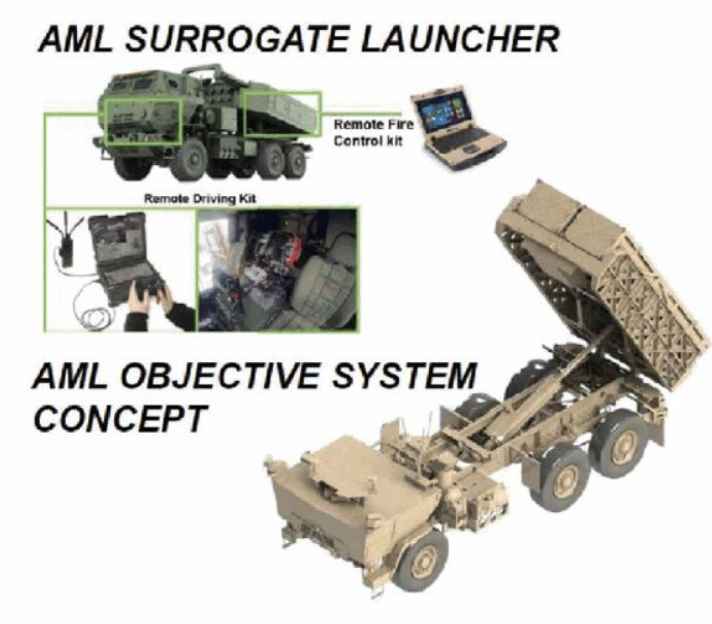
The distributed structure is to split the original large and complex system into several subsystems with simple structures, physical separation and single functions, which is a subversion of the integrated structure. Mosaic warfare uses distributed structures for weapons and equipment and force systems to disperse a large number of low-cost weapons and equipment with relatively simple functions and structures in various regions. Through information exchange, their functions are kept connected as one, which not only reduces the development risk and cost of the system, but also improves its battlefield survivability. In fact, through a large number of distributed structural elements, the core of the mosaic warfare combat capability generation is to quickly build a combat system that meets the needs of combat missions. Through functional modularization and reliable connection technology, "Mosaic warfare" can rearrange and combine a large number of dispersed combat elements in a very short time to build a combat system with different configurations and forms of expression, providing commanders with more creative ways and means to disrupt the opponent’s action plan and achieve their strategic goals. When a combat element or combination of elements in the system is destroyed, the system can still automatically respond quickly, forming a combat system that can be interconnected and adapted to battlefield scenarios and needs despite its downgraded functions. At the same time, the combat system can also disintegrate after completing the mission, releasing combat elements to prepare for the next reconstruction of the combat system. In a combat activity, there may be multiple "disintegration and reconstruction" processes of the combat system according to the adjustment and change of the mission. Therefore, in the research and development of the new generation of AML unmanned rocket launchers, the US Army particularly emphasizes that it can be embedded into the military or even cross-service combat system as a "mosaic fragment" at any time. For example, the ability to seamlessly integrate with the ISR resources provided by the F-35 fighter is a concrete manifestation of the embedding capability of the AML mosaic combat concept.
In the "mosaic warfare" war concept, the combat platform is "decomposed" into the smallest practical functional unit, and advanced data link and processing technology make it possible to integrate OODA (observation, positioning, decision-making, action) functions into different platforms. Under the premise of maintaining network connectivity, as long as a closed OODA loop can be formed, it can be used as an effective killing link. From this perspective, since the F-35 can play a vital role in network-centric warfare, and the AML platform with certain autonomous mission capabilities provides expendable firepower resources without having to worry about casualties, the shortest kill chain formed by the F-35 and AML has the ability to turn combat into such a picture: the opponent has a strong "anti-access/area denial" capability, and the large bases within 1,500 to 2,500 kilometers from the enemy’s coastline are no longer safe and reliable. Even large high-value targets such as aircraft carrier battle groups are forced to withdraw from the combat zone, and the remaining sea, land, and air forces can only be dispersed and distributed in a small-scale form. Against this background, a small number of F-35s are still able to win in air combat and then use air superiority to reverse the situation. With good low-detectability capabilities, strong situational awareness capabilities, and information collection, sorting and distribution capabilities, they position themselves as a highly mobile ISR platform that can escort themselves, and use invisible electronic hands to "grab" the multi-type ammunition on the distributed AML platform in the area, and throw it to the enemy’s vital points in depth...
The mosaic warfare concept integrates a large number of unmanned combat systems based on artificial intelligence, gradually expanding from situational reconnaissance and precision strikes to network attack and defense, electronic confrontation, and multi-source perception, using low-cost clusters to consume a large amount of opponent’s combat resources, making it difficult for the opponent to respond effectively. In the context of so-called great power competition, as a typical mosaic warfare embedded combat equipment, AML will reflect particularly important value in the archipelago warfare that the US Army has vigorously promoted in recent years. For China, the South China Sea is the key direction for the "breaking in" of modern powers. In particular, the actions of the United States in the vicinity of the South China Sea in recent years have attempted to trap China’s maritime forces with the "first island chain". The United States and Japan have pre-placed a large number of anti-submarine facilities in these waters, and have continuously exercised to strengthen the blockade and interruption capabilities, in order to block the South China Sea or the Yellow Sea area when the situation is tense. China is also adjusting its deployment to break through this situation. Both sides are constantly planning and preparing for future wars in the South China Sea.
At present, China has built a series of powerful island and reef defense systems in the South China Sea, which is a thorn in the throat for the US military. There is no huge space for the fleet to maneuver in the narrow waters of the South China Sea, and it is difficult for surface ships to hide their whereabouts. Geographical factors determine that the main focus is on the struggle for air supremacy. Although aircraft carriers can overcome geographical disadvantages, the water depth in the central part of the South China Sea is 3,000 meters. The United States has a large number of nuclear submarines, and the Chinese Navy’s anti-submarine capabilities are still weak. It is much safer to use aviation to control the South China Sea than to use aircraft carriers. Aircraft carriers use high mobility to perform tasks such as destroying enemy bases or mobile support tasks, so the struggle for air supremacy relies more on land-based aviation. In order to extend the combat range of the J-11 fighter jets to Zengmu Shoal, China has reclaimed land on Meiji Reef, Chigua Reef, Zhubi Reef, Yongshu Reef, Nanxun Reef, Dongmen Reef and Huayang Reef. Four of the seven islands and reefs are located outside, and three are in the inner ring. The inner islands and reefs are 80 to 190 kilometers away from the outer islands, and the distance between the outer islands is 80 to 290 kilometers. Zhubi Island is 800 kilometers away from Yongxing Island and now has an area of 4.11 square kilometers. Yongshu Island is 1,037 kilometers away from Hainan and 463 kilometers away from Vietnam. It now has an area of 2.69 square kilometers. Guadalcanal now has an area of 0.109 square kilometers, Huayang Island now has an area of 0.247 square kilometers, and Nanxun Island now has an area of 0.147 square kilometers. These islands are equipped with hangars, docks, helipads, defense positions, radar and communication facilities, underground water, oil, grain and ammunition storage facilities, warning radars and air defense and anti-ship missiles are also deployed, and they have become logistics support bases with ports and firepower bases with air and sea control capabilities. Zhubi Island, Meiji Island and Yongshu Island have all established airports with runways of 3,000 meters.
Five Nansha islands and reefs and Yongxing Island will be deployed with shore-to-ship missiles and even long-range cruise missiles in the future. Several sea-searching ground-wave over-the-horizon radars have been deployed in coastal areas to provide initial tests for the Rocket Force’s "Dongfeng" 26, "Dongfeng" 21D and other ballistic missiles. If it is connected from Hainan Island to 7 artificial islands and reefs, occupying 2/3 of the entire South China Sea, it means that almost the entire South China Sea will become China’s inland sea, which is obviously unacceptable to the US military. Therefore, the US military has been constantly deducing possible island-grabbing combat methods in recent years, among which the "HIMARS" and its unmanned version equipped by the US Army and the US Marine Corps will play an important role. For example, foreign media reported that as early as March 11-14, 2019, the US military conducted an island-grabbing exercise involving several major services on Ie Island near Okinawa. According to reports, the exercise intends to verify the US military’s future combat plan-the concept of "expeditionary advanced base operations" led by the Marine Corps. The U.S. Marine Corps Times described the exercise process in detail: The first to appear was the 353rd Special Operations Group of the U.S. Air Force, who secretly airdropped to Ie Island on a transport plane to conduct reconnaissance. With the cooperation of the reconnaissance unit, a company of the U.S. Marine Corps boarded an MV-22 rotorcraft and launched an "over-the-horizon landing raid" from 600 miles away, successfully seizing the island’s airport. To support this long-range raid, the U.S. Marine Corps also dispatched a KC-130 tanker for aerial refueling. Immediately afterwards, after the U.S. military established a supply point at the airport through airdrops, the Marine Corps’ F-35B stealth fighter jets immediately entered the airport to seize air superiority around the island. At the same time, the U.S. Army’s "HIMARS" rocket launcher system was also deployed at the airport. It can be quickly deployed using C-130 transport aircraft and has the advantage of range to destroy targets at sea and on land. After successfully clearing the surrounding enemy forces and seizing the island, the U.S. military used it as a base to launch a new long-range raid on another target island 900 miles away. The Marine Corps Times The Marine Times said at the time that although the US Navy Chief of Operations Richardson had not officially approved the concept of "Expeditionary Advanced Base Operations", the US Marine Corps had already begun small-scale testing. The report said that the essence of this new concept is to establish forward bases on Pacific islands to provide support for subsequent operations and quickly launch a new round of attacks. Dunford, then Chairman of the US Joint Chiefs of Staff, said: "The US military can deploy troops from the Pacific island chain, which is of great significance in the confrontation with China." Colonel Robert Brody, commander of the 31st Expeditionary Force of the US Marine Corps who participated in the exercise at the time, also said that the US military used long-range firepower, long-range distributed combat mode and advanced F-35 stealth fighters in this simulated confrontation with "opponents of the same level." He said, "This is a clear signal to the Chinese that we are not kidding." In fact, other foreign media speculated at the time that the new island-grabbing tactics practiced by the US military may be aimed at the South China Sea. "If the United States and China have a military conflict in the South China Sea, amphibious assault operations will be crucial. "Considering that AML was still in the demonstration stage at that time, the U.S. military used a manned version of the HIMARS in the 2019 island-grabbing exercise. However, from the nature of island-grabbing operations, unmanned AML is obviously a more ideal equipment. It helps to implement the concept of mosaic warfare in depth. After all, from the perspective of robustness, mosaic warfare is to link many low-cost, low-complexity modules or systems together. According to Metcalfe’s law, the "energy" of the network is proportional to the square of the number of nodes on the network. The disassembly of system units in mosaic warfare can greatly enhance the system’s anti-destruction capability. Is AMI worth paying attention to? The answer is obvious.
Since World War II, every war the United States has participated in has been fought in overseas areas far from its homeland. The U.S. military has always been based on deploying a large number of troops from the U.S. mainland to maintain the initiative in the war, gain freedom of entry and maneuver, and force the opponent to follow the rhythm. It has always been the "pacemaker" of the war. On the other hand, the United States attaches great importance to the innovation and research and development of combat concepts. In order to design and win every war, and to promote the development of industrial technology and the development of the U.S. economy, coupled with the media’s promotion, American think tanks are keen to study hot and difficult issues in the military field, put forward innovative ideas, and promote new concepts into combat theories and new technologies into combat practices. AML is such a typical product. The mass production of AML unmanned rocket launchers in the future will provide the U.S. Army with a cheap, flexible, easy-to-deploy, and consumable medium- and long-range strike equipment. In particular, since the AML unmanned rocket launchers are very suitable for use in archipelago combat environments and island-hopping campaigns, they will be able to significantly enhance the U.S. Army’s future anti-"regional denial/anti-access" and "land-to-sea" capabilities in regions such as the Asia-Pacific. In fact, in order to achieve effective and precise strikes, mosaic warfare must rely on intelligent unmanned combat platform technology. It is a powerful weapon that can hit enemy targets with a "heavy punch". Intelligent unmanned combat platforms are characterized by low cost, high efficiency, autonomy, and reusability. When combined with existing weapons and equipment, they can form a huge killing effect. As an important equipment planned by the US Army for future high-intensity battlefields, the new generation of unmanned rocket launchers, known as "autonomous multi-domain launchers", brings together two key elements of the US Army’s modernization strategy, namely non-contact and unmanned autonomy, and represents a development trend of the US Army’s land-based unmanned strike equipment. It is a concrete practice of the mosaic combat concept in the field of technical equipment.