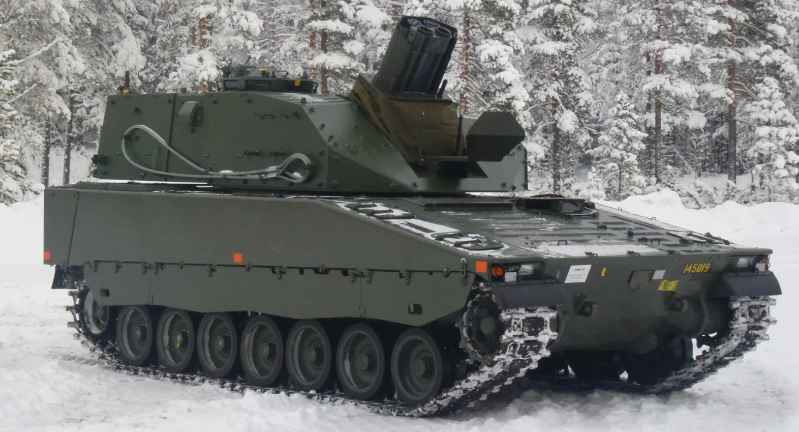
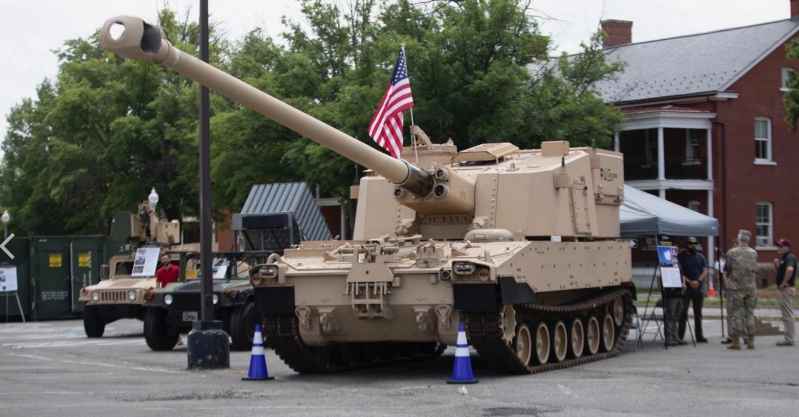

Because the air force is too strong, the US Army does not attach importance to the tradition of large-caliber barreled artillery. This is especially true after the end of the Cold War, when strategic competitors disappeared. However, with the return of great power competition, the situation has changed-the US military’s air superiority may be weakened and become unreliable. The US Army has to re-examine the value of field artillery. The traditional 155mm barreled artillery system has thus ushered in an opportunity for continued development. The new generation of M1299 155mm self-propelled artillery is such a product.
At present, the international order is in the most profound adjustment process since World War II, and the stability of the international system faces new opportunities and challenges. On the one hand, the rise of emerging powers has prompted the world pattern to develop in a more balanced direction, which is conducive to balancing the hegemonic behavior of hegemonic countries and maintaining the stability of the international order; on the other hand, the United States is unwilling to lose its hegemonic status and the "threat" posed by China’s rise to its status, and the risk of launching a preventive strike against China has increased. In fact, it is a consensus in international conflict research that power transfer easily leads to preventive wars. Especially when power transfer accelerates, the established countries are increasingly worried that the rising countries will change the existing international order after becoming strong, and at that time the established countries will have to accept the new arrangements. Therefore, the established countries will have a tendency to launch preventive wars. Taking the great power competition situation in Sino-US relations as an example, with the acceleration of power transfer, the competition situation and strategic environment between China and the United States are changing. In a related report published in June 2021, Rand Corporation once again emphasized that China is challenging the power, influence and interests of the United States, attempting to erode the national security and economic prosperity of the United States, and proposed that the United States should reflect on the "engagement strategy" adopted toward China in the past decades and face up to the "fundamental political competition" with the forces that challenge the United States’ dominance of the international system. What is worrying is that the strategic competition situation between China and the United States is not only showing an increasing trend in non-traditional security fields such as economy, trade, and technology, but is also likely to spread deeply to the military field. The U.S. Army’s renewed efforts in the field of large-caliber barreled artillery in field artillery is a relatively clear signal.
The next generation of 155mm self-propelled artillery that was once difficult to produce
The US Army’s new generation of 155mm self-propelled artillery has been difficult to produce for several times, which is a long story. As early as 1987, at the end of the Cold War, the US Army began to develop a new generation of tracked 155mm self-propelled artillery - this was the once famous "Crusader". The "Crusader" began to develop components and prototypes from 1987 to 1998. The prototype was developed in January 2000. It was originally planned to start mass production and equip the US Army from 2005 to 2008. The US Army is preparing to purchase 824 sets of "Crusader"

The entire "Crusader" system consists of the XM2001 155mm self-propelled howitzer and the XM2002 ammunition supply vehicle, using the same chassis. It has 24-hour all-terrain, all-round Weather combat capability. The chassis uses a large number of M1 main battle tank components. The combat weight is 55 tons, and it is driven by a British Perkins CV1500 diesel engine that uses fuel injection, composite materials and composite supercharging technology. The overall unit power reaches 27 horsepower/ton, the maximum road speed is 67 kilometers/hour, and the off-road speed is 48 kilometers/hour. The "Crusader" self-propelled howitzer is equipped with a 56-caliber XM297 gun. When firing grenades, the range is 40 kilometers, and when firing extended-range shells, the maximum range is 50 kilometers. Due to the high degree of automation requirements, the XM2001 155mm self-propelled howitzer turret has achieved an unmanned design. There are only three crew members in the entire vehicle. , all sitting side by side in the front of the vehicle. As for the matching XM2002 ammunition supply vehicle, it is also highly automated and does not require manpower. It only takes 10 minutes to replenish an ammunition base of 48 rounds. The XM2001’s propellant uses two types of combustible cartridge charging modules, XM231 and XM232. The small M231 module can cover a range of 3.4 to 12 kilometers, and the large M232 module is used to cover a range of 7.9 to 40.6 kilometers. Both the artillery and the ammunition vehicle use the latest vehicle-mounted networked information processing technology and have automated fire control and command and control capabilities. Therefore, the "Crusader" has superior range, accuracy, ammunition supply, mobility, informatization, and automation. The automatization and other aspects of the Crusader are greatly improved over the M109 series self-propelled howitzers in service with the US Army at that time. It can start shooting 15 seconds after receiving the order, fire 10 shells within 60 seconds, move to a new position 750 meters away after 90 seconds, and restart a new round of shooting after another 30 seconds. In fact, in order to meet the needs of high firing rate, the Crusader adopts a rare water-cooled barrel design. This allows the Crusader to fire 30 shells in the first 3 minutes. Only 3 Crusader can carry out an attack of 180 shells in 20 minutes, which is equivalent to the power of 18 M109A2 or 9 M109A6 Paladins.
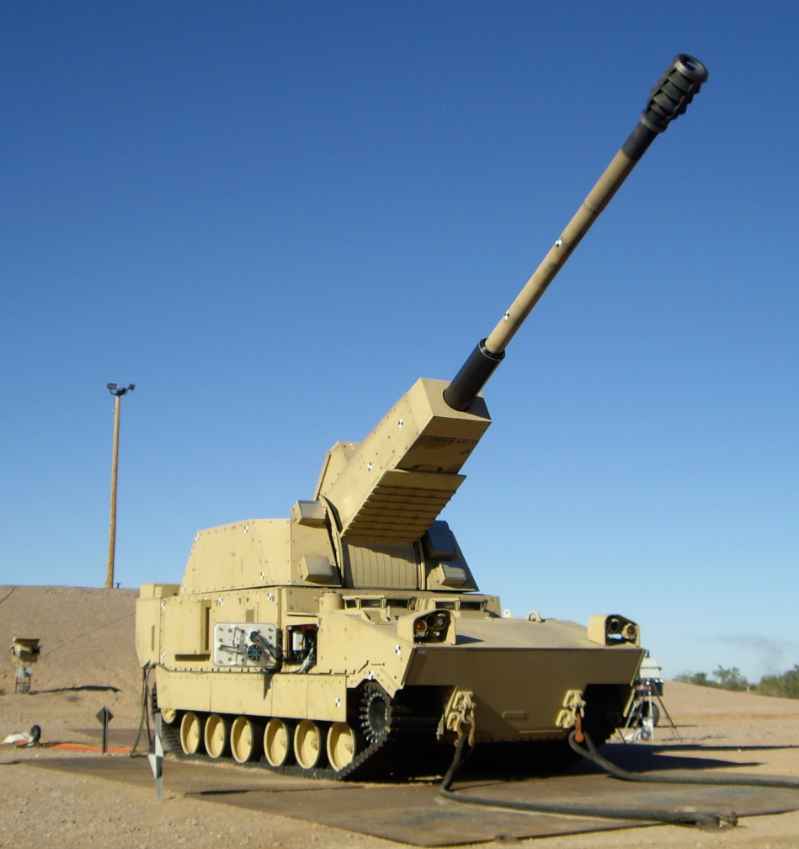
In early 1999, the US Army conducted a simulated combat exercise targeting the southern region of West Asia and the northern region of East Asia, which showed that when the combined arms combat forces were equipped with the "Crusader" self-propelled artillery, their combat effectiveness would increase by 52%, casualties from misfires would decrease by 30%, and enemy losses would increase by 36%. Unfortunately, the US military was deeply involved in the "war on terror" afterwards, and equipment such as the "Crusader" was not of much use. Therefore, after another evaluation in May 2002, the US military considered the "Crusader" too bulky and cancelled the project, which had cost $11 billion. However, after the "Crusader" 155mm self-propelled howitzer was discontinued, the US Army tried to regain a new generation of 155mm self-propelled howitzer system within the framework of FCS ("Future Combat System"), which is the so-called new generation of non-line-of-sight cannon (NLOS-C). NLOS-C is essentially a lightweight Crusader, with its combat weight reduced from 55 tons to 40 tons, so that it can be transported by C-17-class transport aircraft for strategic/tactical air transport. Although its combat weight is greatly reduced, NLOS-C still retains the basic technical features of the Crusader - such as the same unmanned turret design, excellent network-centric warfare capabilities and optimized use of precision-guided ammunition. Of course, for the purpose of air transport, the lightweight NLOS-C has also paid a significant price. For example, its firepower has been greatly reduced. The barrel has been reduced from 56 times the caliber of the Crusader XM297 to 38 times the caliber. Although it has reduced its weight by 636 kilograms, its range has also been reduced to 30 kilometers. In addition, in order to reduce weight, NLOS-C also uses some more expensive technologies than the Crusader, such as an unprecedented integral belt track. The entire track is formed in one piece, the main body is made of rubber, and the inner layer is mixed with high-strength Kevlar fiber and steel wire.
Compared to the traditional chain track of the Crusader, which is composed of multiple metal blocks pinned together, the one-piece belt track does not require various components required for track combination, such as pins, grooves, rubber pads, etc., eliminating the severe friction loss of traditional track components during driving, reducing the trouble of logistics maintenance and parts storage, and the weight is also much lighter. When driving, the driving noise and dust raised by the belt track are also much lower than those of traditional tracks, which is conducive to concealed operations. Because there are no gaps, the ground contact area of the belt track is larger than that of traditional tracks, and it has better maneuverability on soft terrain... However, while this kind of high-tech technology has greatly reduced the combat weight of NLOS-C, it has also objectively pushed up the cost. This has resulted in the fact that in addition to its excellent air transport capability, the cost-effectiveness of NLOS-C is not high. Therefore, along with the overall cancellation of the FCS program, the US Department of Defense officially terminated the US Army’s non-line-of-sight artillery (NLOS-C) project in December 2009.
The end of the war on terror and the embarrassment of transitional equipment
Whether it is the "Crusader" or NLOS-C, the reason why the new generation of 155mm self-propelled howitzers of the US Army after the end of the Cold War was difficult to produce was mainly due to non-technical factors-they were not applicable in the war on terror. After the "9.11" incident, the United States launched a global war on terror, which had a huge impact on the US Army. On the one hand, the resources of the US Army were greatly invested in low-intensity operations rather than in the construction of high-intensity battlefields. For example, a report released by the "Cost of War" project of the Watson Institute for International and Public Affairs at Brown University in the United States pointed out that from fiscal year 2001 to fiscal year 2020, the US government spent 6.4 trillion US dollars on the war on terror launched after the "9.11" incident. Such huge war expenditures will inevitably hinder the pace of traditional military construction. As a result, the US Army has never had sufficient resources to update major weapons and equipment, including the new generation of 155mm self-propelled howitzers. On the other hand, the new generation of 155mm self-propelled howitzers are not in tune with the battlefield environment of the war on terror. Although the U.S. Army has a new understanding of the value of traditional barreled artillery in the war on terror - the U.S. military has always been highly dependent on air strikes, but in the war on terror, it was found that the attached artillery has a faster response and is more proactive in use. More importantly, the cost of use is much lower than air support. Artillery can be on standby indefinitely, with almost no other costs except the time of officers and soldiers. But the operating cost of fighter jets on standby in the air is tens of thousands per hour. However, since the U.S. military is facing non-state armed forces in the war on terror, there are not many requirements for the mobility and armor protection capabilities of 155mm artillery. In this case, the new generation of 155mm self-propelled howitzers such as the "Crusader" or NLOS-C naturally appear to be incompatible with the battlefield needs of the war on terror.
However, with the end of the war on terror, the situation has become different. As mentioned above, after the September 11th incident, the United States adjusted the main challenge to national security from "a rapidly rising power on the Pacific coast" to "terrorist threats all over the world", and then launched the wars in Afghanistan and Iraq, defining international relations as "a trend of mutual cooperation between major powers". The war on terror and its strategy have greatly affected the direction of US military resources and the content of military construction. Until Obama’s last "National Defense Strategy Report" during his tenure, he still emphasized cooperation with China and international military strategic balance. However, the Americans have been persevering in fighting guerrilla forces that come and go without a trace in the Gobi Desert for more than ten years. From Iraq to Afghanistan, the United States has spent trillions of dollars and suffered tens of thousands of casualties in the war on terror, which has really consumed a lot of vitality, but has won precious strategic development opportunities for its other two major opponents, China and Russia. So much so that in 2017, relevant American think tanks conducted a comprehensive assessment of the various branches of the US military and believed that the US military was no longer able to defeat heavyweight opponents such as China and Russia in a specific combat area at the same time due to aging equipment and insufficient training. Take the case of the tracked 155mm self-propelled artillery as an example. After the successive failures of the Crusader and NLOS-C, the main barreled artillery equipment of the US Army’s heavy brigades is still the old face of the M109A6 "Paladin". The M109A6 "Paladin" is actually a type of Cold War equipment. In January 1984, the US Army decided to integrate the Howitzer Extended Life Program (HELP) and the Howitzer Improvement Program (HP) into a single program to ensure that the self-propelled artillery can still have better battlefield survivability before the next generation of self-propelled artillery enters service. The product of the HELP/HIP improvement program is the M109A6. By the standards of the 1990s, as an important member of the M109 series 155mm self-propelled howitzer family, the upgraded M109A6 has a very conspicuous performance. For example, the Kevlar bulletproof lining is installed inside the turret to improve the ability to protect the crew; the addition of a semi-automatic ammunition loading system can maintain a high sustained rate of fire. In addition, the M109A6 is also equipped with an automatic fire control system, a global positioning/navigation system, a single-frequency ground-to-air radio system, and an automatic artillery fire control system. The A6 configuration can operate independently without the need to cooperate with a fire command vehicle to carry out firing missions; on the contrary, the A6 can directly receive firing orders from the single-frequency ground-to-air radio system, and the fire control system calculates various firing parameters based on this, and then automatically adjusts the artillery elevation angle and firing azimuth to start the firing mission. It takes less than 1 minute from receiving the firing order to completing the firing preparation to firing the first round of artillery.
However, the advancedness 30 years ago has been greatly eclipsed 30 years later - both the Russian Army’s 2S19M 152mm tracked self-propelled howitzer and the Chinese Army’s PLZO5A 155mm self-propelled howitzer have formed certain advantages over the M109A6 in terms of main performance. In this case, the US Army is obviously in an awkward situation. As an emergency measure, the US Army launched the M109A7 155mm self-propelled howitzer.
In April 2014, the US Army received the first batch of low-rate initial production M109A7. The upgraded M109A7 is capable of providing fire support in any weather conditions. The U.S. Army plans to purchase 580 vehicles: a contract for the first batch of 48 vehicles was signed in 2017, and deliveries began in 2018; a contract for the second batch of 60 M109A7 self-propelled howitzers and 60 M992A3 ammunition supply vehicles was signed in 2019; a contract for the third batch of 48 M109A7 and M992A3 ammunition supply vehicles was signed in 2020. The M109A7 was originally called the "Paladin Integrated Management" (PIM) program, which focuses on using new technologies to improve performance while greatly simplifying logistics. Specifically, the hull, turret, engine and suspension system are upgraded to have better reliability, survivability, firepower and responsiveness than the M109A6. The M109A7 self-propelled howitzer is 9.7 meters long (gun forward), 6.8 meters long, 3.9 meters wide, 3.7 meters high, and has a combat weight of 35.38 tons. The gun does not use the chassis of the M109A6, but uses the same chassis as the M2 Bradley infantry fighting vehicle. The engine is a 600-horsepower Cummins turbocharged diesel engine, and the gearbox uses the HMPT-500 automatic gearbox of L3 Company, plus a new engine control system, steering system, power generation system, etc. Since the relevant parts are common to the Bradley infantry fighting vehicle, the cost and logistical burden are significantly reduced, while the mobility and survivability are improved. The bottom of the gun is 0.4 meters above the ground, the maximum wading depth is 1.0 meters, the trench width is 1.8 meters, the climbing and side slopes are 60% and 40% respectively, the maximum road speed is 61 kilometers per hour, the fuel carrying capacity is 545 liters, and the maximum road mileage is 322 kilometers. Although it is still necessary to manually load propellant and 41 kg of projectiles, the semi-automatic loader pushes the propellant and shells into the gun and closes the gun chamber, eliminating the negative impact of uneven force when manually pushing the propellant and shells, which improves accuracy to a certain extent. In addition, since the combat weight of the M109A7 is much larger than that of the M109A6 (the combat weight of the M109A6 is 28.35 tons), the shooting stability is better, which also helps to improve accuracy.
The display and control system inside the M109A7 turret is fully digitized, featuring the most advanced "digital backbone network" architecture, integrating a vehicle-mounted digital fire control system, an integrated navigation and inertial positioning system, and a multi-function computer with an integrated diagnostic program. Due to the greatly improved degree of automation, the firepower response time is also greatly shortened, and it can shoot and transfer quickly, greatly reducing the probability of enemy anti-artillery fire retaliation. Unfortunately, however, the M109A7 is essentially still a transitional equipment, and its quality is "not good enough". The most telling part is that the M109A7 continues to use the turret of the M109A6, the M284 howitzer with a 39-caliber barrel, and the M182A1 landing part. Therefore, although the M109A7 has better reliability, survivability, and firepower response capability, it cannot be called the "next generation", especially in the shadow of the Chinese and Russian PLZ05B and 2S35.
M1299--"Crusader" reconstructed by new technology
"Crusader" entered the final development stage in 2000, and the reliability of range, rate of fire, automatic loader and modular propellant was basically verified. However, just when the project was almost completed, in May 2002, then-US Secretary of Defense Donald Rumsfeld announced the cancellation of the plan, making this self-propelled artillery that was ahead of its time fall short. However, more than a decade later, the opportunity for the revival of the "Crusader" appeared again. Starting in 2016, the awakened US military immediately launched a "rectification of chaos" under the command of the then new President Trump, withdrew from the anti-terrorism battlefield, and added huge military budgets to increase investment in high-precision main combat weapons and equipment. All branches of the military, especially the The Navy and Air Force have proposed an ambitious military expansion plan, which will transform from winning local wars against medium-power opponents or terrorist organizations to preparing for a real great power war to meet the challenge from "equal opponents".

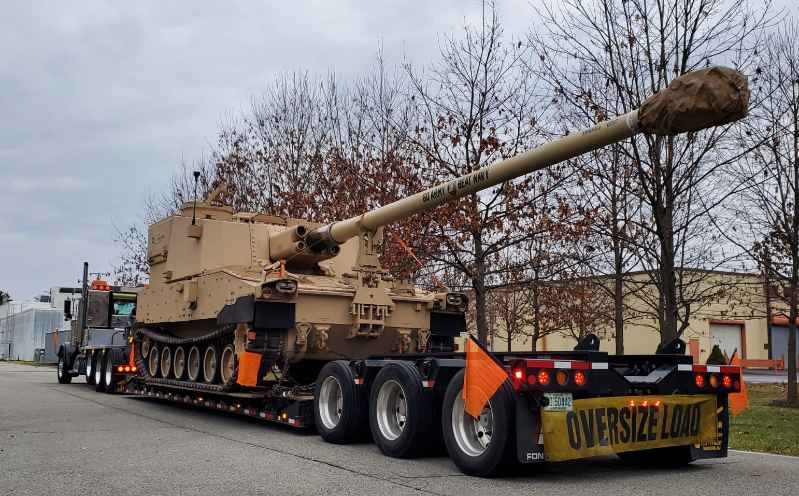
As an important equipment for the strategic transformation of the US Army, the 155mm tracked self-propelled artillery project, originally known as the M109A8, was launched. Interestingly, although the number of M109A8 seems to imply that this is an upgraded version of the M109A7, it is actually closer to the "Crusader" reconstructed with new technologies. On the one hand, the M109A8 uses a completely redesigned unmanned turret, which has deviated from the tradition of the M109 family and is exactly the same as the former XM2001. On the other hand, the M109 series has been continuously improved over the decades, but the basic layout has not changed. The improvements are basically centered on fire control, including the M109A7, the 39-caliber barrel has not been changed. The M109A8 plans to use the XM907 58-caliber barrel, which is highly similar to the XM2001 56-caliber XM297 barrel.
In fact, the long barrel implicitly implies the core intention of the US Army to develop the M109A8. The M109A8’s XM907 58-caliber barrel is as long as 9 meters, not only becoming the world’s longest barrel of the same level of self-propelled artillery, but also It objectively reflects the focus of the M109A8 research and development. After being equipped with the XM1113 rocket-assisted extended-range artillery shells, its maximum range will be as high as 70 kilometers, and it is expected to reach 100 kilometers in the end. The reason why the US Army wants to develop this super-range barreled artillery is said to be to improve the firepower response speed to time-sensitive targets at long distances, and also to suppress the increasingly long-range fire systems of the Chinese and Russian armies. Interestingly, the combination of the M109A8 unmanned turret and the XM907 58-caliber barrel, which focuses on the design of range, has also led to some more special design features, such as the issue of smoke extraction devices. After the propellant burns at high speed and pushes the shell out of the muzzle, there is still a large amount of residual smoke in the chamber and the barrel, which inevitably enters the turret when reloading. The smoke in the turret is not only harmful to the health of the gun crew, but also affects the operation. If there is residual propellant, it creates a closed but flammable environment, which is very dangerous. Therefore, in the traditional manned turret design, the smoke extraction device is standard. The barrel smoke extraction device is an annular cavity around the middle of the barrel. When the shell moves forward, the main gas pushes the shell forward in the chamber, but a small part of the high-pressure gas enters the annular cavity, forming a high pressure in the cavity. After the shell leaves the chamber, the muzzle pressure drops sharply, and the high pressure in the cavity forms an airflow toward the muzzle, forming a forward push and back pumping effect, which takes most of the smoke out. The rest depends on the ventilation fan in the turret. The barrel smoke extraction device is widely used in modern self-propelled howitzers, such as the German PZH2000, the Chinese 05/05A, the American M109, and the Japanese Type 99. However, this will cause a loss in range, and the M109A8 requires an extreme range on the one hand, and an unmanned turret on the other hand, so the smoke exhaust requirements are different, so it is not surprising that the barrel smoke extraction device is cancelled. This makes the M109A8 the only modern self-propelled howitzer that does not use a barrel smoke extraction device, which also simplifies the manufacture of the barrel, improves the rigidity of the barrel, and is conducive to the use of an extended barrel. However, smoke exhaust is still necessary because smoke is corrosive and it is not good for it to accumulate in the turret. However, after the turret is unmanned, the nuclear, biological and chemical protection requirements are greatly reduced, making it easier to use larger ventilation fans. This problem is relatively easy to solve, and the freed-up space can also be used to load more shells.

It should be further pointed out that due to the design emphasis, the maximum range of the M109A8 is likely to exceed 100 kilometers. With the advancement of technology, it is not difficult for barreled artillery to achieve an ultra-long range of 100 kilometers. For example, the range of China’s 05A self-propelled howitzer firing low-resistance bottom-bleed extended-range projectiles exceeds 50 kilometers, the range of rocket-assisted extended-range projectiles can reach 70 kilometers, and the range of rocket-assisted gliding projectiles can reach 100 kilometers. Therefore, some netizens joked that the 05-type can fire a shot from Pingtan Island in Fujian, and can hit Hsinchu City on the other side of the strait. As early as the Southeast Asian Arms and Equipment Exhibition in 2013, China publicly displayed a WS-35 guided artillery shell with a caliber of 155 mm. This is an ultra-long-range gliding guided artillery shell with a length of 1.6 meters and a total weight of 55 kg. It uses satellite/inertial navigation guidance, canard control + gliding wings + rocket range extension. There are 8 wings installed at the tail and four canards installed at the head. The shell flies in a gliding trajectory, and the wings are deployed when the shell flies over the apex of the trajectory. When only rocket boost is used and gliding wings are not used, the range can reach 70 kilometers, and the range when the gliding wings are deployed exceeds 100 kilometers. Considering that this is the distance that can be fired with a 52-fold caliber 155 mm barrel equipped with a new gliding guided artillery shell, if the M109A8 with a 58-fold caliber barrel uses similar range extension ammunition technology, its actual maximum range is likely to be underestimated.
In addition to the exaggerated range, the M109A8 also uses a redesigned fully automatic ammunition loading system, and the traditional screw-type gun door of the M109A7 is changed to a vertical wedge-shaped gun door. This progress increases the reliability and rate of fire of the artillery. The rate of fire is increased from 3 rounds per minute to 10 rounds. The mobility of the M109A8 has also been upgraded. Due to the longer range, faster rate of fire, stronger lethality, higher reliability and stronger survivability, the ability of the M109A8 will be more than 10 times that of the M109A7. The US military even tried to make the M109A8 have the function of direct-aiming guns so that it can strike targets within the line of sight of the front line, so as to have the ability to fight against enemy tanks. If the 155mm self-propelled howitzer is equipped with a suitable fire control system, it can fully play a huge role in anti-tank and direct-aiming fire support. A 155mm high-explosive grenade weighs about 50 kilograms, and one shot can destroy more than 40 tons of Russian T-90. If the turret of a large-tonnage main battle tank such as the US M1A2 or the German Leopard IIA6, which is more than 60 tons, is hit head-on, it can also make it lose its combat effectiveness immediately. It is precisely because the design of the M109A8 is too unorthodox compared to the M109 family that the US Army renamed it M1299 in early 2020. This is the new generation of 155mm self-propelled howitzers of the US Army in the true sense.
Compared with rocket launchers, the range of barreled artillery is still relatively short, and the firepower density during salvo is lower, but the ammunition cost is lower, the shooting accuracy is higher when it is unguided, and the firepower continuity is far greater than that of rocket launchers, which cannot be replaced by rocket launchers and tactical missiles. The combat range of the modern army far exceeds that of the Cold War era, and further improvement in range has substantial utility. Judging from the M109A617 artillery currently in service in the US military, the range of this artillery firing conventional shells is only 24 kilometers, and even the range of firing extended-range ammunition is just 40 kilometers. Although the fire control and accuracy of the M109A6/7 are excellent in actual combat, the range is indeed insufficient. In the past, the US military fought with others under the circumstances of technological superiority. Once they encountered an evenly matched opponent, and the enemy’s artillery was farther than their own, then accuracy and fire control alone would not be able to play a role.
Now the new generation of M1299 has the potential to reverse this situation at once, allowing the US military to have an ultra-long-range indirect aiming weapon system and objectively increase the uncertainty faced by the opponent through technological advantages, which is of great significance. You know, uncertainty is the essential attribute of the real world. In the 18th and 19th centuries, due to the great success of Newtonian mechanics, determinism occupied an absolute dominant position in science. It regards the entire universe as a deterministic dynamic system, moving according to certain, harmonious, and orderly laws. Knowing the initial conditions can determine everything in the future. According to the Newtonian mechanics theory system, given the initial state, the object will make a unique movement under the constraints of the laws of mechanics, and the movement is predictable and can be reversed.
All things are completely and uniquely determined at the first moment. With Poincare’s in-depth study of the three-body problem and the creation of chaos theory, the second law of thermodynamics reveals the irreversibility of time, and the Heisenberg uncertainty principle of quantum mechanics, it is revealed from the macro to the micro that the uncertainty of the objective world is an objective response to the essential characteristics of nature, a real existence in the objective world, and a natural form of existence in the universe. As a human social phenomenon occurring in the objective world, uncertainty is also an important essential attribute of war. Today, with the continuous development of high-tech and its widespread application in the military field, changes in the form of war have been triggered, making uncertainty present new forms of expression and development trends. This is reflected in the reality of the continuous deepening of the new generation of 155mm self-propelled howitzer project of the US Army, which is quite interesting.
Doubts still exist
Although the new generation of 155mm self-propelled howitzers, which are highly expected by the US Army, has a clear focus on range in its design. To this end, the M1299 uses two cutting-edge technologies - the new XM1113 rocket-assisted extended-range artillery shell and the longer-range XM907 58-caliber barrel, but many people still question its battlefield effectiveness. The main reason for this is that the XM1113 rocket-assisted extended-range artillery shell simply changes the back half of the shell space into a rocket-assisted extended-range engine (previously, the US military claimed that when using a 58-caliber artillery to launch this type of artillery shell, its maximum flight speed can reach hypersonic speed, so it is a hypersonic weapon that cannot be intercepted). Although the range extension effect of this rocket-assisted extended-range shell is 30% higher than that of the old extended-range shell that was installed in the 1980s, as an unguided artillery shell, it is questionable how much accuracy it can maintain at the extreme range. Of course, this problem may be partially solved by the M1156 guidance fuze (PGK), which is a device that can use GPS signals for positioning and correct the flight trajectory of the projectile through a small control wing surface on the head (the wing surface installation angle is fixed, and the control force in a specific direction is generated by adjusting the rotation speed, but because the control force is small, the correction range is limited). It is installed at the position of the original projectile fuze, so it is called a guidance fuze assembly. However, although this guidance fuze assembly can correct some projectiles to within 5 meters of the target in the test firing, in fact, its effect is still far less than that of ammunition such as the M982, which is specially designed like a missile. This is mainly because its ballistic adjustment ability is very limited, and precise aiming and correction are still required when firing. In other words, this projectile is actually still used as a conventional projectile. The role of PGK can only make up for some of the accuracy reduced by ultra-long-range shooting. It is not the same as the real precision guidance of the M982, and the accuracy improvement of the XM1113 rocket extended-range projectile is limited. The bigger problem is that the M1113 is basically the same in shape and weight as traditional artillery shells, but has less explosives. Although new insensitive explosives are used to increase the explosive equivalent, the power cannot be guaranteed. When the accuracy is poor at long range, the problem of insufficient power will be further magnified. All these have had an impact on the effectiveness of the U.S. Army’s new generation M1299 155mm self-propelled howitzer.
Conclusion
The United States is adjusting the focus of its national defense strategy from countering global terrorism back to the so-called "great power competition". There are objective reasons for this: First, the United States believes that the war on terror has achieved a basic victory. Although the U.S. military’s anti-terrorism iron fist has been difficult to stop, many related countries are still in chaos or even war, with economic decline and people living in poverty, but the terrorist network that can threaten the security of the United States has been in pieces; second, the unspeakable anxiety of the United States caused by the rise of China is becoming increasingly serious. China has not only strengthened its comprehensive national strength, but also its development model is very different from that of the United States. These have made the U.S. national defense strategy return to "great power competition". Obviously, we seem to see the shadow of the Cold War, or even a resurrection. The new generation of M1299155mm self-propelled artillery verifies people’s judgment in a more detailed way.