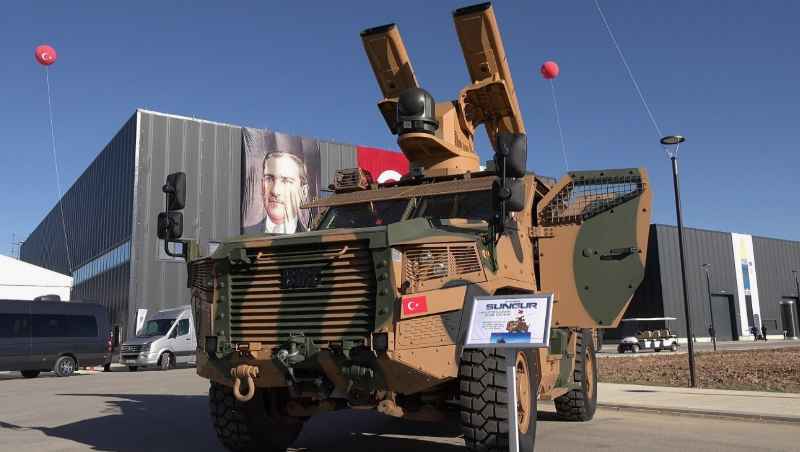
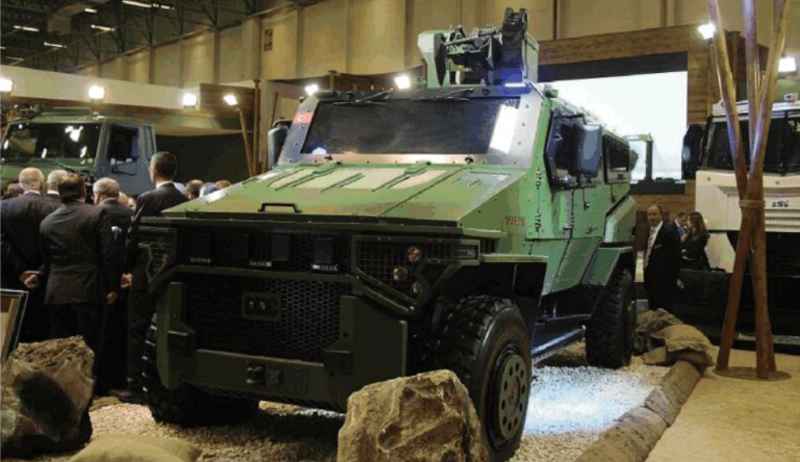
The 4th Azerbaijan International Defense Industry Exhibition-ADEX-2022 was held in Baku from September 6 to 8, 2022. Turkey’s BMC company displayed the "Vuran 4x4 multi-purpose armored vehicle" at its booth. This type of armored vehicle has strong body protection, strong mobility, great modification potential, and multi-functional characteristics. It will become one of the important equipment of the Turkish Army and its friendly countries.
Development Overview
Vuran is a mine-resistant ambush-resistant vehicle recently launched by Turkey. It is produced by BMC, which specializes in commercial trucks, buses and various military vehicles. With a history of more than 50 years, Turkey’s BMC company is one of Turkey’s large commercial and military vehicle manufacturers, with a comprehensive area of 250,000 square meters in Izmir Pinabaz. production facilities. The company was founded in 1964 in Izmir, Turkey. Since its establishment, BMC has contributed $10 billion to the Turkish economy and has produced more than 300,000 vehicles of various types. To date, BMC has delivered about 5,000 military vehicles to the Turkish Armed Forces, including 2.5-ton 4x4, 5-ton 4x4, 10-ton 6x6 tactical wheeled vehicles, mine-resistant ambush-protected vehicles and various logistics support vehicles. The company is one of the most important equipment manufacturers for the Turkish Armed Forces.
Not long ago, BMC designed and produced the "Hedgehog" (Kirpi) mine-resistant ambush-protected vehicle (MRAP), which received a large number of orders and was very popular. Hedgehog layout Similar to a heavy truck with armored protection. The vehicle can carry 13 military personnel, including a driver, commander, machine gunner and 10 infantrymen. It is characterized by a fully welded steel armored monocoque structure with a V-shaped lower part, which provides a high level of protection. Hedgehog was exhibited during the European Sartori Defense Exhibition in 2010. In 2009, the Turkish army ordered 468 of this type of vehicle. There are now 600 Hedgehogs in service with the Turkish Armed Forces. Hedgehog is also produced for the export market. The first customer was Tunisia, which ordered 40 vehicles in 2014. In December 2016, Pakistan also announced the purchase of Hedgehog. At the 2017 IDEF Defense Exhibition, BMC also displayed the Hedgehog 4x4 ambulance model, which can Safely and reliably transport emergency medical teams in and out of dangerous areas. The vehicle provides the same protection as all Hedgehog MRAP series. The internal layout can accommodate two stretcher patients and two ambulatory patients. It also has a 6x6 variant that can be used as a personnel transporter, combat vehicle, ambulance, command and control vehicle, etc. The Hedgehog MRAP can also be equipped with a mine clearance device, and a mechanical arm is installed on the right side of the front of the vehicle body for dismantling improvised explosive devices. In the summer of 2022, Turkey delivered 200 Hedgehog 4x4 armored vehicles produced by the Turkish BMC company to Ukraine. At the same time, Ukraine also received a variety of ammunition, including 155mm artillery shells, MAM-L guided bombs, MAM-C guided bombs and "Falcon" infrared imaging air defense missiles.
After the successful development of the Hedgehog Mine-Resistant Ambush Protected Vehicle, BMC continued to develop new products. The Vulan 4x4 armored vehicle was unveiled during the IDEF defense exhibition held in Turkey in May 2015. The Vulan multi-purpose armored vehicle participated in the European Sartori Defense Exhibition in 2016 and the Abu Dhabi International Defense Exhibition in 2017. The BMC Vulan 4x4 multi-purpose armored vehicle (MPAV) is developed for multiple purposes such as patrolling, surveillance, weapon carrying and security defense. This mine-resistant ambush protected vehicle was developed and produced to meet the requirements of the Turkish Armed Forces and Police. In July 2019, the first batch of Vulan armored vehicles was delivered to the Turkish Army. A total of 20 Vulan armored vehicles were delivered to the Turkish Army, which will be used to perform patrol missions and ensure the safety of convoys along the border. These new vehicles will enhance the operational capabilities of the security forces.
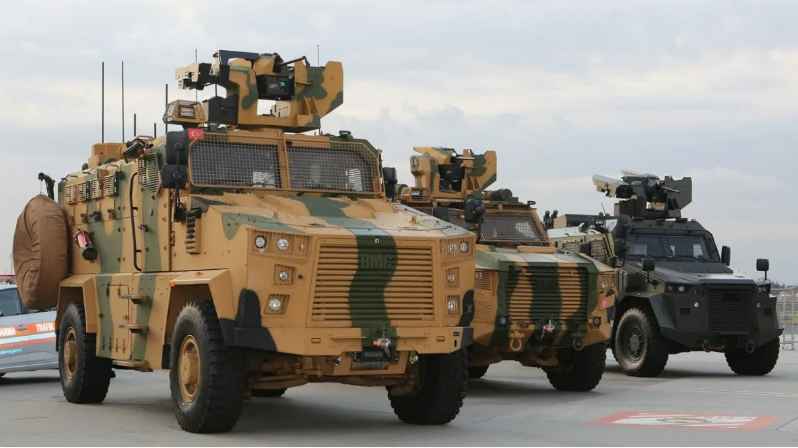
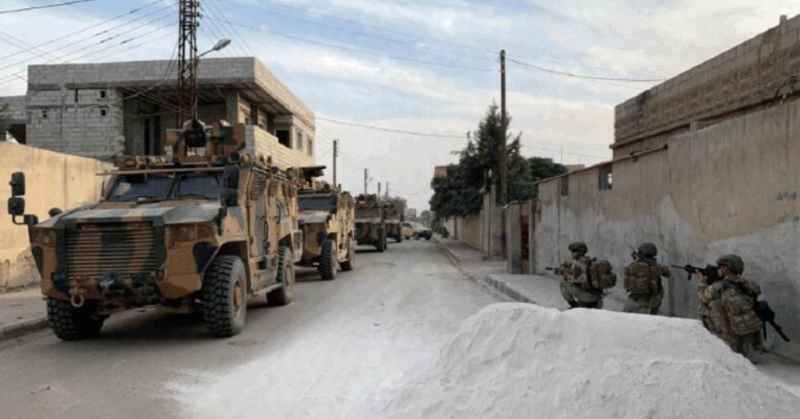
The Wulan armored vehicle is smaller and more compact than the Hedgehog. Its body shell adopts a monocoque design, made of armor plates instead of fixing them on a frame. The layout of the vehicle is divided into three main parts, with the engine compartment located at the front of the body, the cockpit in the middle (the commander and the driver), and the passenger compartment at the rear, which can accommodate 7 combat personnel. The Turkish military ordered 713 armored vehicles of this type, 512 of which will be equipped by the Turkish Army, and another 200 will be delivered to the Turkish Coast Guard. In 2019, at least 90 armored vehicles were delivered to the Turkish military. They appeared in the conflicts in Syria and Libya. Turkey donated some Wulan armored vehicles to Libya. Wulan armored vehicles were also sent to Tunisia and Turkmenistan. According to information published on the website of Daily Sabah on December 24, 2020, the Turkish defense industry exported $150 million of military equipment to Tunisia, including the Vulan, Hedgehog mine-resistant ambush-protected vehicles, the Edjer Yalcin wheeled armored vehicles produced by Nurol Makina, the optoelectronic systems of Aselsan, and the Anka medium-altitude long-endurance (MALE) drone. According to the 2020 Military Balance, the Tunisian armed forces have a total of 71 Eider Yalcin 4x4 armored vehicles, 9 Vulan 4x4 armored transport vehicles and 100 BMC Hedgehog MRAP vehicles. All these vehicles were delivered to Tunisia between 2014 and 2019. Ejder Yalcin is a 4x4 and 6x6 wheeled armored vehicle produced by NurolMakina, Turkey. The vehicle adopts a V-shaped body design with an integrated floating floor and explosion-proof seats to provide a high level of protection against mines and improvised explosive devices. It can accommodate up to 11 military personnel and has a payload of up to 4 tons.
According to a video posted on the YouTube account of the "Turkmenistan Chronicle" on February 26, 2018, the Turkish company BMC delivered "Amazon and Vulan 4x4 wheeled armored vehicles" to the Turkmenistan Armed Forces. The video was recorded during the visit of Turkmen President Gurbanguly Berdimuhamedow to a new border post near Sheikh Taba, close to the Afghan border. The video clip shows the "Amazon" 4x4 and Vulan 4x4 armored vehicles produced by the Turkish company BMC. The number of vehicles purchased by Turkmenistan has not been confirmed by official information. Turkmenistan displayed several foreign-made ground vehicles purchased for its army and special forces at the Independence Day parade held in December 2017. BMC" The "Amazon" 4x4 multi-purpose armored vehicle was first shown to the public at the European Defense Exhibition in June 2016. This armored vehicle can resist the threat of mines and improvised explosive devices. The vehicle adopts a traditional vehicle layout, with the engine compartment at the front, the cab in the middle, and the passenger compartment at the rear. The vehicle can carry 7 military personnel, including the driver and the vehicle commander, which is less than the Wulan 4x4 wheeled armored vehicle. The BMC "Amazon" adopts a monocoque structure, and the V-shaped bottom of the vehicle protects the personnel in the vehicle from mine explosions by deflecting the upward explosion shock wave away from the vehicle. The vehicle can also resist attacks from improvised explosive devices and artillery fragments that explode on the side of the vehicle body. At the 2017 IDEF defense exhibition, the "Amazon" armored vehicle was also equipped with a mobile laser area defense system, which is designed to destroy drones flying within 2,000 meters. Wulan wheeled armored vehicles often appear at major defense exhibitions together with the above-mentioned models.
Basic performance
The Turkish military has ordered a large number of Vulan vehicles, which are widely used. The vehicle has 2 passengers and 3 to 7 passengers. The vehicle weighs 16 tons, is about 6 meters long, 2.5 meters wide and 2.8 meters high. The main weapon is a 12.7 mm machine gun. The vehicle uses a 360-horsepower diesel engine, with a maximum road speed of 110 kilometers per hour and a maximum road range of about 700 kilometers. The vehicle has a climbing grade of 70% and a side slope of 30%. It can climb a 0.5-meter-high vertical wall, cross a trench width of about 0.5 meters, and wade to a depth of 80 centimeters. The Vulan 4x4 wheeled armored vehicle stands out among many competitors with its carrying capacity of 9 people (including the driver), high protection and mobility. The vehicle features a monocoque armored cab, bulletproof glass windshield, mine-proof and shock-absorbing seats, V-shaped underbody structure, remote-controlled weapon station and emergency exit hatch, and has strong mine protection and ballistic protection capabilities. The vehicle also has front and rear cameras, run-flat tires with automatic fire extinguishing system, central tire inflation and deflation system, air-conditioning heating and cooling system, and high riding comfort and safety. After BMC tested and analyzed the vehicle, various functions of the vehicle, especially the power components and axle layout, have been modified to further improve the performance of the vehicle. Various subsystems included in the tender specification are also integrated into the vehicle. These subsystems include the AselsanSARP remote-controlled weapon station, CBRN protection system, jammer, smoke grenade launcher, fire extinguishing system (for personnel compartment, engine compartment, vehicle exterior and tires), windshield grille, cable cutter and hydraulic winch. Thanks to its powerful engine, automatic transmission and independent suspension system, as well as its compact size, the vehicle has high mobility. It can perform a variety of tasks, including guarding checkpoints, patrolling, convoy protection, reconnaissance and border security. The vehicle has a fully welded steel armor structure. Its armor can withstand 5.56x45 mm bullets and shell fragments at a certain distance. By adding protective armor, the body can also withstand 7.62x51 mm armor-piercing bullets. This armored vehicle can withstand the shock waves generated by the explosion of mines and improvised explosive devices of a certain weight. It has a V-shaped bottom of the vehicle to weaken the destructive effect of the explosion. The passengers sit on mine-proof shock-absorbing seats. The vehicle can withstand the shock waves generated by the explosion of 6 to 8 kg of TNT explosives at any position under the body. In addition, the armored vehicle can also be equipped with a jamming system that can block the signal to detonate roadside bombs.
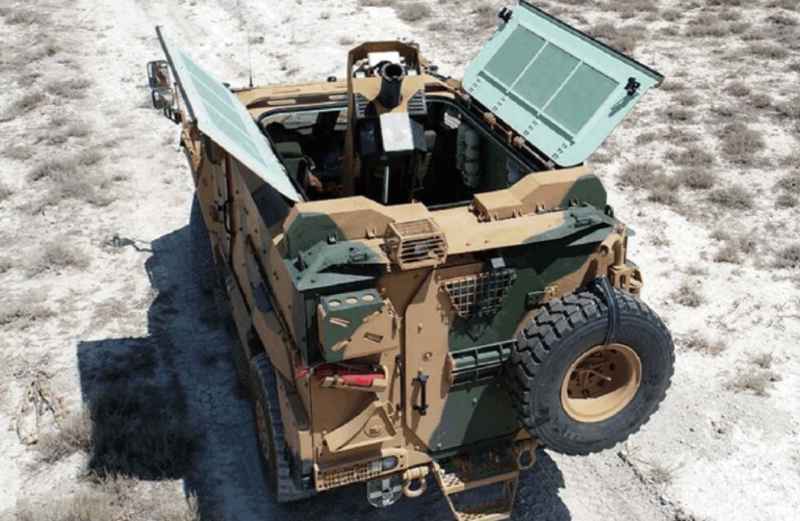
The armored vehicle can accommodate the driver, the commander and up to 3 to 7 passengers, depending on the model. The passengers can enter and exit the vehicle through the side doors of the body or the electric ramp-type tailgate at the rear. In addition, there are roof hatches for observation, shooting and emergency entry and exit. Most mine-protected vehicles are prone to rollover due to their high center of gravity, and the roof hatch can serve as an emergency escape. The Wulan will be equipped with a SARP remote-controlled weapon station designed and manufactured by Turkey’s Aselsan company. The turret can be equipped with a 7.62mm or 12.7mm machine gun, as well as a 40mm automatic grenade launcher. The SARP turret is equipped with a day and night observation system, an automatic tracking system, and a laser rangefinder. The turret can shoot fixed or moving targets on the move. The common Wulan cab is equipped with a remote-controlled weapon station equipped with a 12.7mm heavy machine gun, and the ammunition box is on the left side of the main weapon. There are also two smoke grenade launchers on the body. The vehicle uses many off-the-shelf automotive parts from BMC’s military trucks.
The front lights of the vehicle are built-in and protected by grilles. The bulletproof glass windshield and the bulletproof glass observation windows on both sides of the doors (2 on each side) can be equipped with anti-smashing wire mesh. A self-rescue winch and two towing rings are installed under the front air intake grille of the vehicle body. A spare fuel tank and a fire extinguisher are hung on the left side of the tailgate of the vehicle body, and a spare tire is hung on the right side. There is a towing ring on each side of the boarding ladder under the door. The passenger compartment of the vehicle can be used to install a 120mm mortar, turning it into a self-propelled mortar vehicle. Designed by Aselsan, the gun can automatically aim at the direction of shooting and is equipped with an automatic loading system. After the two hatches on the roof are opened, the mortar can fire quickly, and the hatches can be closed at ordinary times to protect the vehicle-mounted gun and ammunition. The mortar is installed on a 360-degree rotating turntable. Its lateral rotation and elevation are electrically driven; the integrated computer fire control system can improve shooting accuracy and reduce operation time. The mortar can fire 120mm high-explosive shells, smoke bombs and flares. The tailgate of the self-propelled mortar vehicle is changed to open to the right side for personnel entry and exit and replenishment of ammunition. The door of the cab is still retained, while the side door of the passenger compartment is cancelled, and the remote weapon station is also cancelled. This mortar can be integrated on various wheeled and tracked chassis, and can even be used as a fixed weapon (for permanent fortifications)
In May 2021, Ismail Demir, chairman of the Turkish SSB Defense Industry, tweeted that Turkish manufacturer BMC tested its Wulan tactical wheeled armored vehicle, which is being integrated with the new 107mm multiple rocket launcher system (MLRS) developed by Roketsan. It is capable of firing 12 107mm caliber rockets at a time. The system was developed by Roketsan in cooperation with the Mechanical and Chemical Industry Company (MKEK). The 107mm rocket launch tube is 0.9 meters long, and the rocket has a range of up to 8.5 kilometers, with high precision and great power.
The "Falcon" air defense missile system installed on Vulan
On February 26, 2021, according to the Daily Sabah, the head of the Turkish Defense Industry Office (SSB) said that Turkey’s Sungur (Sungur, meaning "Falcon") air defense missile completed a precision shooting test on a moving target at maximum range and altitude. In a statement published on Twitter, Ismail Demir said that the system was developed domestically by Roketsan, strengthening its role in the layered air defense system. The head of the SSB pointed out that the "Falcon" will be integrated into land, air and sea platforms through its portable capabilities. As early as July 2020, the system was ready to enter service with the Turkish Armed Forces (TSK). In August 2021, at the Defense Exhibition held in Istanbul, Turkey, Roketsan demonstrated the "Falcon" air defense missile system installed on the Vulan 4x4 armored vehicle. This new air defense missile system can be integrated on light tactical armored vehicles to strike close-range air targets.
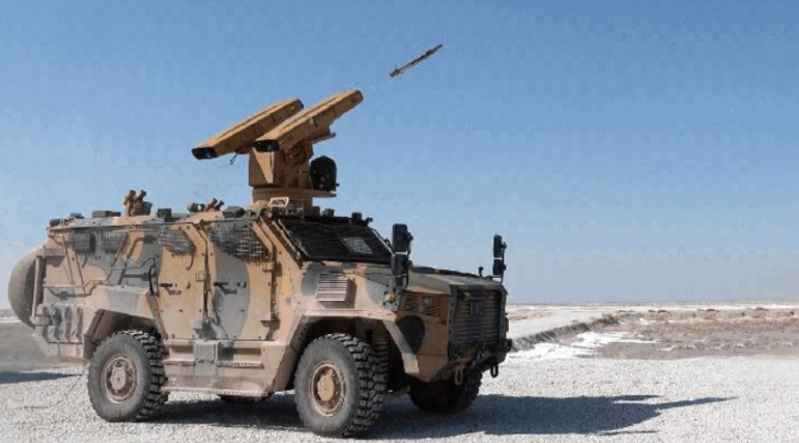
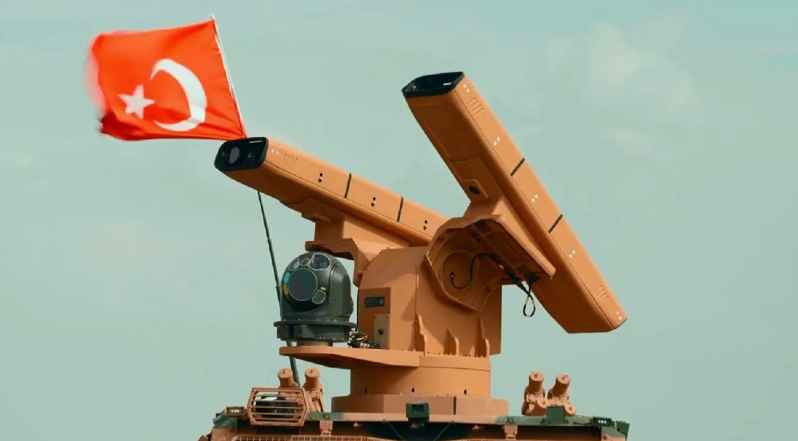
The system consists of a turret that can be equipped with two missile launch pods, equipped with optoelectronic detection equipment, and control equipment installed in the vehicle body. Each launch pod is capable of launching two "fire and forget" PORSAV infrared-guided missiles, providing ground forces with mobile, short-range air defense capabilities to defend against threats from cruise missiles, unmanned aerial vehicles (UAVs), low-flying fixed-wing aircraft and helicopters. The missile can attack air targets within a range of 500 meters to 8 kilometers and can reach a maximum flight altitude of 4 kilometers. It has the ability to fire while the vehicle is moving and can effectively detect, identify and track targets within a 360-degree range in both day and night conditions. PORSAV can also be used as a man-portable air defense system and will gradually replace the US FIM-92 Stinger missile used by the Turkish Armed Forces. Turkish experts developed the PORSAV missile based on the technology used by the HISAR and Stinger missiles. Its main advantage is that it uses an infrared imaging (HR) seeker instead of an infrared (IR) seeker. Ordinary infrared guided missiles are easily deceived by flares, while infrared imaging guided missiles are difficult to be deceived by similar countermeasure systems.
Infrared imaging is a real-time scanning technology, which, as the name implies, uses infrared rays for imaging. It analyzes the spatial distribution of the surface temperature of the scene into an electrical signal arranged in time sequence, and then displays it in the form of visible light or stores it in a memory. Infrared imaging guidance uses mathematical signal processing methods to analyze this type of graphics to obtain guidance information. This type of seeker is generally composed of an infrared camera, a graphics processing circuit, a graphics recognition circuit, a tracking processor, and a camera tracking system. Its working principle is: before launching a missile, the control station’s infrared forward-looking device first searches and captures the target, and displays the image on the control station display based on the slight difference in thermal radiation of various objects in the field of view. Once the target position is determined, the seeker begins to track the target, and the locking is divided into two types: pre-launch locking and post-launch locking.
After launching the missile, the camera captures the infrared image of the target and pre-processes it to obtain a digital target image. After image processing and image recognition, the target and background information are distinguished, the real target is identified and the false target is suppressed. The tracking device tracks the target image according to the predetermined tracking method, and sends the aiming command and guidance command information of the camera, so that the missile flies to the selected target. The detection of the infrared imaging guidance system relies on the different radiation rates of the target and the background, and the guidance information source is a thermal image, so it is extremely difficult to effectively interfere with it, and it is almost impossible to be interfered with. It has high sensitivity and spatial resolution. The infrared imaging system generally uses two-dimensional scanning, which is much higher than the one-dimensional scanning resolution used by ordinary imaging. Its detection distance is far. Infrared can easily penetrate haze, and the detection distance can be 3 to 6 times larger than that of visible light. It has high hit accuracy and can identify enemy and friendly targets. The information source used by infrared imaging guidance technology is the thermal image of the target. The slight differences in the target’s morphological structure can be displayed on the thermal image. Even hidden and camouflaged targets can be identified on images with better resolution due to the different radiation characteristics of various objects. Therefore, once combined with the onboard computer, the target can even be searched out from the target group. The infrared imaging system also has the characteristic of being able to work all day and night. The typical infrared imaging guided missile is the US military’s AIM-9X air-to-air missile. This missile is planned to be equipped on most US Air Force platforms, including the most advanced F-22 and F-35 stealth fighters. The fifth-generation staring focal plane array seeker it uses can achieve intelligent guidance and can effectively identify interfering heat sources and natural heat sources. The seeker of the Turkish PORSAV infrared imaging guided missile can provide a ±40-degree viewing angle and automatic target tracking capabilities. The missile can operate in a pre-launch lock mode and has a short flight time. It is equipped with a 3 kg high-explosive semi-armor-piercing warhead equipped with a tungsten ball bullet. The engine consists of a two-stage solid propellant system. The missile system is integrated with the HERIKKS-6 air defense early warning command and control system, allowing the Falcon air defense missile system to receive information from external radars and use it to launch attacks. The Falcon command and control system also has an Identification Friend or Foe (IFF) device to avoid accidentally killing friendly forces on the battlefield.

Conclusion
Vulan 4x4 multi-purpose armored vehicle is just a small microcosm of the progress of Turkey’s defense industry. According to the Sabah Daily in August 2020, the number of Turkish companies in the "Defense News Top 100", which is regarded as one of the most prestigious defense industry lists in the world, has increased to 7. Among them, BMC’s defense industry turnover in 2019 was US$533 million, ranking 89th, showing strong product design and marketing capabilities.