
On January 2, 1861, King Frederick William IV of Prussia, who had suffered a long-term stroke, finally breathed his last with great difficulty. Bismarck, who was recuperating at home, could not help but worry about his career when he heard the news. After all, the "Prince Regent" William, who was about to succeed him, had a deep prejudice against him...
"Wrong line" in the revolutionary wave
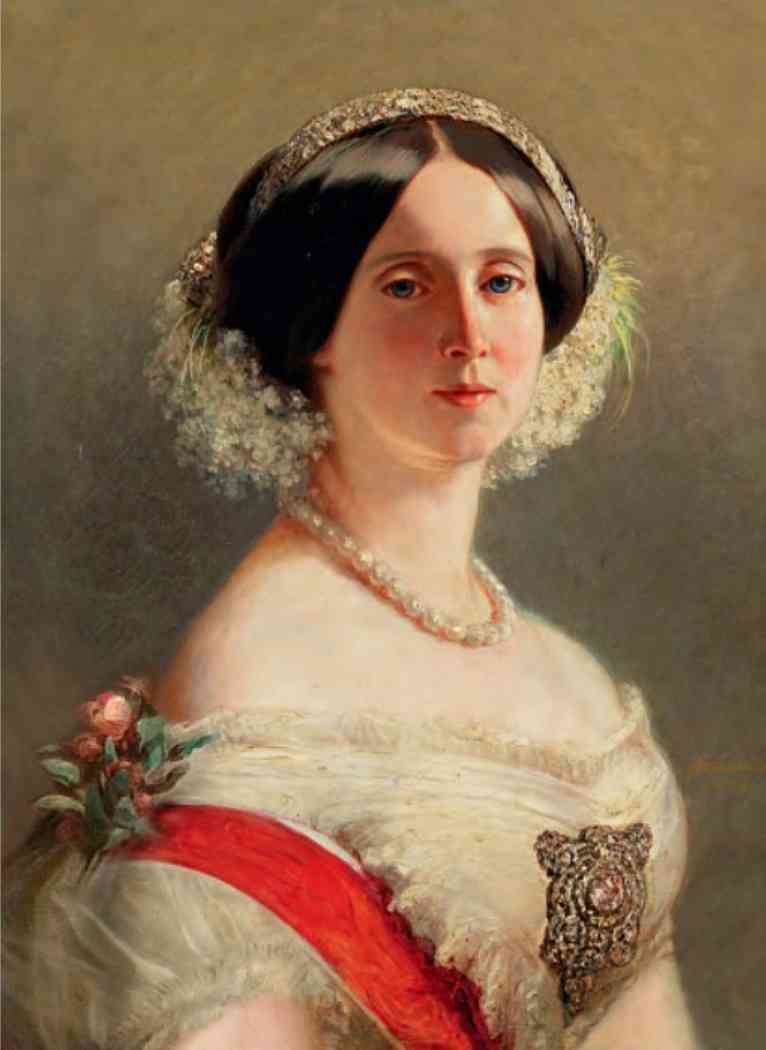
In fact, Bismarck and William I had a close relationship. In 1801, Ludwig Mencken, who had served as a cabinet secretary of Frederick the Great, died in Potsdam. In consideration of his many years of service to the Prussian royal family, Queen Louise personally summoned Mencken’s daughter to the palace to accompany the princes. This girl was Bismarck’s biological mother, Wilhelmine.
This relationship with the Prussian royal family benefited Bismarck a lot in his growth process. In the autumn of 1847, Bismarck, who was already famous in the Berlin State Parliament, "ran into" Frederick William IV in Venice while on his honeymoon with his new wife. The Prussian king, who was cold to Bismarck in public, generously invited the couple to dinner.
After a heart-to-heart talk at the table, Frederick William IV deeply agreed with Bismarck’s political views and agreed to go to the palace to discuss in detail after returning to Berlin. Bismarck, who was far from mature in politics at the time, was naturally moved by such a recognition. He couldn’t help but have some ambition to devote himself to the emperor.
But from the perspective of Frederick William IV, at this time, the revolutionary wave was surging and Prussia was also showing a trend of unrest. Bismarck, the son of his childhood playmate, was strictly speaking also considered an "old man in the palace". If the situation really came to a critical moment of life and death in the future, he might play a role, so he was arranged in advance and regarded as an idle chess piece.
Sure enough, after the revolutionary wave spread to Prussia in March 1848, Bismarck immediately regarded himself as a "wild conservative party", formed a militia in his hometown, and wanted to run to Berlin with his own dry food to protect the emperor. However, in the face of the surging public, Frederick William IV joined the parade with a small group of people, pretending to surrender to the revolution. The "Prince Prince" Crown Prince William ( Later, William I also fled to England to avoid disaster.
Such a sudden turn of events made Bismarck’s passion for loyalty to the emperor and the country go nowhere, and he made the most serious "route error" in his life: he ran to find Archduke Karl, the third brother of Frederick William IV, and begged him to come out to take charge of the situation. Archduke Karl, who was cunning and cunning, said that his succession should be after Fritz, the only son of Crown Prince William. For now, Fritz should inherit the throne, and he would assist in governing the country.
At this time, Bismarck was only thinking about turning the tide. His impatient mentality to make contributions to the emperor made him fall for it. He actually went to discuss with Crown Prince William’s wife, Princess Augusta. Princess Augusta was the daughter of Tsar Paul I. She had long wanted to follow the example of her grandmother Catherine II and rule the country from behind the scenes. She immediately said, "This plan is feasible." For a princess who wants to be in power, her husband is not dead yet, even the Prussian emperor is not dead, and the person on the throne is not the princess’s son. This kind of political thinking is too naive. A few days later, Frederick William IV stabilized the situation with his superb political skills. Crown Prince William, who fled to England, soon set out on his journey home.
Bismarck, knowing that he had caused a terrible disaster, hurried to the train station to welcome Crown Prince William back to the palace. After the two met, Crown Prince William praised Bismarck’s loyalty and courage in person, but also hinted that he knew everything that happened in Berlin. Bismarck felt like a thorn in his side when he heard this. Although Bismarck’s behavior in 1848 could be described as "making irresponsible remarks about the crown prince and plotting against the law", fortunately Frederick William IV only gave a conclusion that his various actions were "rash and immature".
Unsuccessful ambassadorial career
Eventually, Frederick William IV sent Bismarck abroad so that he could gain more experience in diplomacy. Bismarck also did a great job as the Prussian ambassador to Frankfurt. However, just as Bismarck was gradually finding his feet, Frederick William IV suddenly suffered a stroke in October 1857. Crown Prince William, who was acting as regent on behalf of his brother, dismissed Bismarck from his post and replaced him with Count Usedom, the Prussian ambassador to the Holy See.
Bismarck was still somewhat reckless at this time, and his best choice was to hand over his job obediently. However, he still had a sense of mission of "I want to serve the people of Prussia", so he ran back to Berlin and pointed out to Crown Prince William that Count Usedom was incompetent and his wife was a troublemaker. Little did he know that it was Countess Usedom’s wife who got the lucrative job in Frankfurt through Princess Augusta. Although Crown Prince William was not willing to say it clearly, he also put Bismarck, a thorn in his side, in his heart and sent him away to serve as Prussian ambassador to Russia in a few words.
Bismarck, who was full of resentment, had a hard time after arriving in St. Petersburg. First, he was only a second lieutenant in the Prussian reserve army, which made him lose face at the Tsar’s military parade. Later, he broke his foot while riding a horse. Bismarck, who was keen on dueling in college, didn’t care about his injuries, but he didn’t expect that he would need amputation under the treatment of a group of quack doctors in the Tsarist Empire. When Bismarck ran back to Berlin for treatment, blood clots had already flowed into his lungs, and he was so scared that he wrote a suicide note immediately.
However, this period of lingering in Berlin improved the relationship between Bismarck and Crown Prince William, which was somewhat attributed to the "Bismarck’s Blue Book" written by him in March 1858. In this 92-page national policy proposal, Bismarck believed that Prussia should take advantage of the national sentiment of the German region’s desire for unification and win the support of other states to fight against Austria. Although Crown Prince William may not fully agree with all the views in it, he also knew that Bismarck’s remarks were quite popular among the Prussian people.
However, for the superiors, "talent" does not mean "usable". After the death of Frederick William IV, Crown Prince William ascended the throne and became William I, and immediately asked Bismarck, who had just recovered from a serious illness, to return to his job as soon as possible. Seeing that his colleagues took advantage of the new monarch’s accession to the throne to be promoted, Bismarck’s reluctance can be imagined. However, William I also had his own sufficient reasons. After all, Bismarck took sick leave for one and a half years during his three-year term as ambassador to Russia, and his "KPI" (performance appraisal) was obviously not up to standard.
Although William I had enough reasons for his personnel arrangements, Bismarck obviously did not think much of it. After hurriedly going to St. Petersburg to punch in in early 1861, he returned to Berlin and began to seek the position of Minister of Foreign Affairs. Although William I was unhappy with such "running for office", he still valued talent, so he planned to appoint him as Minister of the Interior. Unexpectedly, Bismarck did not appreciate it, and had no choice but to transfer him to the position of ambassador to France.
Facing Napoleon III, the most arrogant and domineering monarch among all European monarchs, Bismarck, who was full of anger, was naturally in no mood to please him. The bickering between the two sides also added a lot of jokes to later generations. After that, Bismarck became even more unscrupulous. He first took the opportunity of going to the UK to attend the Second World Industrial Fair and boasted to British Prime Minister Palmerston that he would eventually unify Germany. After returning to Paris, he was said to have openly seduced the wife of the Russian ambassador to Belgium.
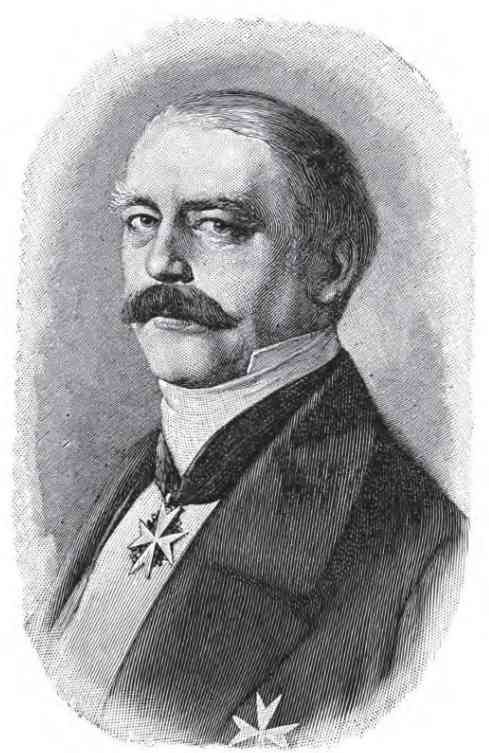
While Bismarck was enjoying his time in France, he was called back to Berlin by a telegram on the evening of September 17, 1862. However, Bismarck was not panicked at all, because he knew that this return would usher in an era that belonged to him...
The political puzzle of the Kingdom of Prussia
Although he knew that Berlin was looking forward to him, Bismarck walked quite slowly. He packed his luggage calmly, chose the most comfortable train, and arrived in Berlin on the morning of September 20. But he did not go to see William I immediately, but only came to the Babelsberg Palace on the Havel River, which was far away from Potsdam, on the morning of September 22.
In the biographies of Bismarck in later generations, most of them tried their best to exaggerate the embarrassment of William I at this time. Even the abdication edict was drafted. These epic-style texts were certainly intended to highlight the difficulty of Bismarck’s "being appointed in a critical moment". But if we read Bismarck’s memoirs carefully, we can easily find that there is actually another mystery. However, before exploring the truth hidden behind this turbulent historical meeting, we might as well first understand the various forces and their interests in the Prussian political arena at that time.
After the "half-baked" bourgeois revolution in 1848, the Prussian House of Representatives, which was originally like a "noble retirement home", also had clear-cut "conservatives" and "liberals". Among them, the "conservatives" are naturally the spokespersons of the landlord class. Although they cling to the old ideas of "kings are kings, ministers are ministers, fathers are fathers, and sons are sons", they have also painted them with new paint that keeps pace with the times. For example, "only by restricting personal freedom can true freedom be achieved" and "organized groups, not individuals, are the basic political units of the country"
Since the "Conservative Party" wrote "absolute Christian faith" into the party platform in 1859, they are natural allies with the religious leaders of Prussia. And because they emphasize the importance of agriculture, are extremely opposed to industrialization, and often criticize the emerging capitalism together with socialists, the "Conservative Party" has cultivated many supporters in the vast rural areas of Prussia.
The "Progressive Party" founded by "liberal" politicians in 1861 is diametrically opposed to the "Conservative Party". As a "fan club" of the 1848 Revolution, the "Progressive Party" actually has no original ideas in the field of policy. But with the banner of "Prussia should follow the example of civilized countries’ and become a truly parliamentary country as soon as possible", the "Progressive Party" can continuously gain strength from the emerging bourgeoisie, handicraftsmen, small businessmen, small officials and intellectuals.
Although there are many small parties in the Prussian House of Representatives besides the "Conservative Party" and the "Progressive Party", their influence is very limited in this country where constitutional monarchy is not sufficient. The old Junker families and the officer corps composed of them are still the ones who can really influence the direction of the country. Although the "abdication crisis" that William I is facing at this moment has a more complicated background, it is ultimately due to the Prussian army’s hostage-taking of the country.
"Abdication Crisis"
On April 23, 1859, the Kingdom of Sardinia’s spying and infiltration of Venice and other northern Italian cities under its control caused dissatisfaction with Austria, which brazenly issued an ultimatum to it. Three days later, the Second Italian War of Independence broke out. With the strong support of France and the response of the Italian people, the Kingdom of Sardinia quickly took the initiative on the battlefield.
The Austrian army’s retreat on the front line shocked the public opinion of the German countries. On the one hand, Austria is a member of the German family after all, so how could it let the "Italian cowards" raised by the French bully it so much? On the other hand, seeing that the Kingdom of Sardinia had the potential to unify Italy after defeating Austria, the German people, who also longed for unification, could not help but feel a little envious.
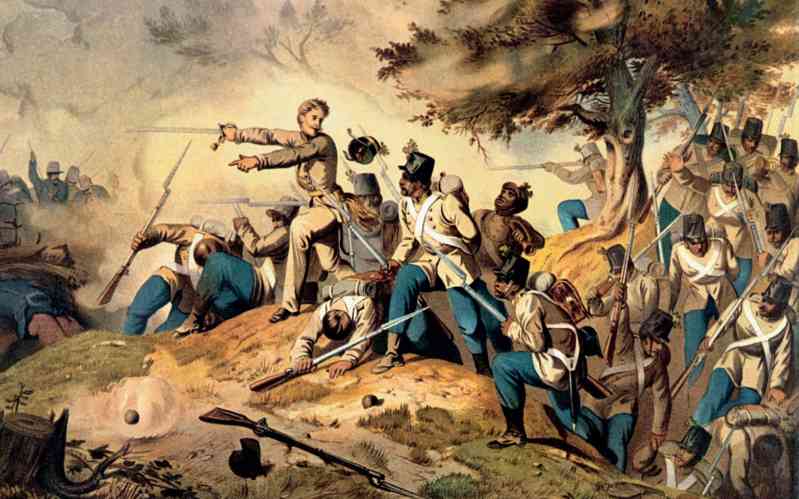
Although the Second Italian War of Independence was soon put to rest due to Napoleon III’s indecisiveness, the Prussian officer corps, who thought they could win the support of the people, seized the opportunity and submitted an ambitious military reform plan on February 10, 1860. On the surface, the military expansion plan of forming 39 infantry regiments and 10 cavalry regiments was not excessive, and the required military expenditure of 9.5 million was a bit difficult, but the Prussian government could afford it at that time. However, the Junker officer corps tried to abolish the independent status of the "National Reserve Army", which made the various forces in the Prussian Parliament uneasy.
On the surface, the main opposition came from the Progressive Party, because they believed that the "National Reserve Army" composed of urban residents was an important means to check tyranny in the future. The Junker Officers Corps intended to abolish it with ulterior motives to "disarm the people." But in fact, the "Conservative Party" was not interested in this plan. After all, "the grassroots officers of the National Reserve Army are all sons of local gentry. If they are disbanded on the spot, how can they intimidate the tenants in the future?
However, abolishing the militia and strengthening the regular army has been the main goal of the European army since the Napoleonic Wars." The Prussian House of Representatives could not say much about the development trend, and could only stick to the minor detail of extending the universal military service system from two years to three years in the military reform plan. The majority of young Prussians were unwilling to waste their best years in the barracks. Seeing someone speak up for them and hoping to be "liberated" a year earlier, they naturally followed suit.
Under the joint resistance of the "Progressive Party" and the "Conservative Party", this military reform plan was not approved until 1862. Instead, the "Hagen Motion" proposed by the "Progressive Party" to review the budget details of previous years was approved. It passed with 177 votes to 143. This time it was the turn of the Prussian government to sit still. After all, according to Marx’s masterpiece "Prussian Finance under Bodelschwenk and his companions", the Prussian bureaucracy was at the pinnacle of spending the budget. As a result, many ministers in the government resigned immediately.
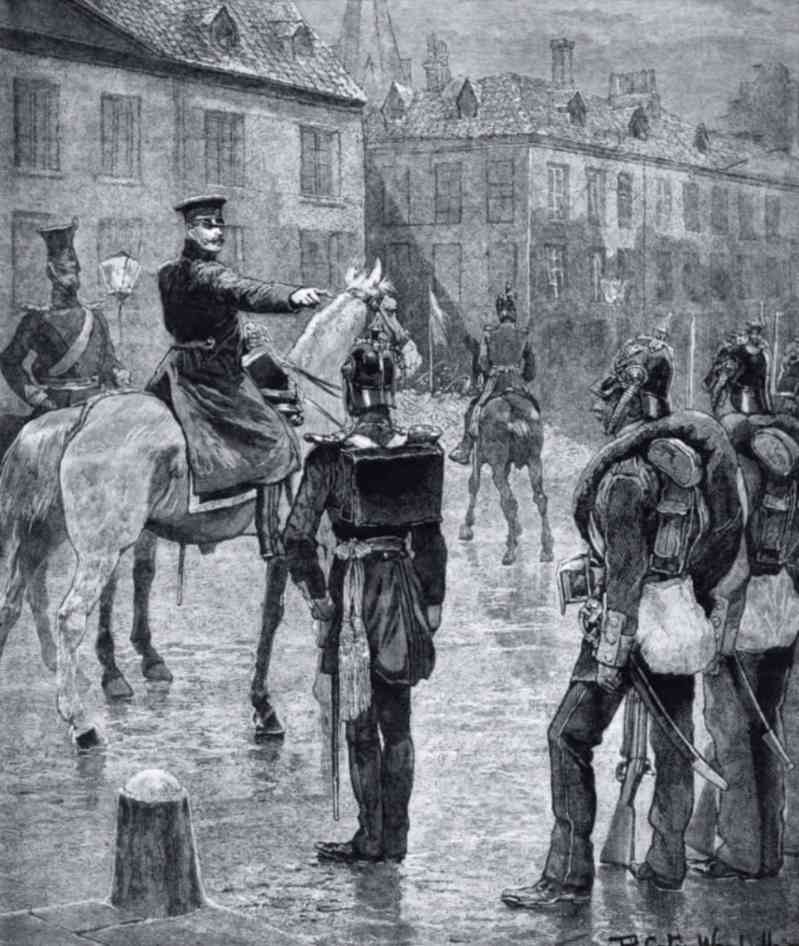
Seeing that the parliamentarians were so uncooperative, the Prussian Army dispatched 50 battalions to surround Berlin. Seeing this, William I had to order the dissolution of the House of Representatives on March 11, 1862 to avoid bloodshed. Unexpectedly, in the election in May, the "Progressive Party won a great victory, and the number of elected members increased from 109 to 135 seats. The situation further deteriorated.
Objectively speaking, the "Progressive Party" was not unaware that such a confrontation was not good for the country. However, the arrow was on the string and had to be fired. Although William I personally led his army into Berlin to suppress the people in 1848, and was known as the "Prince of Shotgun" since then, he also knew that the House of Representatives’ resistance was reasonable and legal, and that forcing them by force would not only be a laughing stock, but would also lose the trust of the world.
Such a dilemma made William I helpless and he could only pretend to announce his intention to abdicate. But his original intention was just to hope that the House of Representatives, the government and the army could sympathize with the monarch and take a step back. Unexpectedly, the power-hungry Queen Augusta thought that this was a rare opportunity and forced her husband to resign early so that her beloved son could take the throne early.
On one side was the House of Representatives and the army that refused to give in to each other, and on the other side was the bureaucratic system that collectively "dropped the ball". In front of him were the people who needed to be appeased, and behind him was his wife who needed to be guarded against everywhere. William I’s situation in the "constitutional crisis" was really a dilemma, trapped both internally and externally. So when someone suggested that Bismarck be recalled to discuss state affairs, he not only agreed immediately, but also regarded him as the only person who could turn the tide.
Why choose Bismarck
Why did William I place such high hopes on Bismarck, a foreign minister whom he once disliked? Many relevant biographies are vague about this point, but Bismarck himself gave us many clues in his memoirs.
First of all, although Bismarck was in Paris, he was very clear about the changes in Prussia. He even pointed out the way to resolve the situation many times in his correspondence with a close friend. In Bismarck’s view, the Prussian people were naturally martial and had no objection to expanding the army and preparing for war. The "Progressive Party" was constrained in the House of Representatives. At first, it could win some goodwill for pleading for the people, but if it kept holding on to some details, it would inevitably be criticized for "discussing but not deciding".
Based on an accurate analysis of the situation, Bismarck even suggested that this close friend intentionally extend the deliberation time of the military reform plan in the House of Representatives. Because "the longer the time is delayed, the lower the status of the parliament will be in the public’s mind", and in the end it can only "eagerly hope for concessions from the government in order to get out of the bad situation". Of course, Bismarck was not content to just direct the country behind the scenes. At the end of the letter, he recommended himself to this close friend, saying that if he was appointed as prime minister, then "a new force will appear in the battle sequence of the cabinet", and self-deprecatingly said: "My reputation for rashness and violence will help me."
In addition to being well versed in the struggle strategy of parliamentary politics, many years of diplomat career also gave Bismarck his own unique insights into the strategic opportunities facing Prussia at this moment. Although he did not stay in St. Petersburg for a long time, he had deeply felt that the Russian Empire had not yet recovered from the heavy blow of the Crimean War and was temporarily unable to go west. During his stay in Paris, Bismarck saw through the essence of the Third French Empire through close observation. Therefore, Bismarck was full of confidence in leading Prussia to complete the great cause of unifying Germany after he became prime minister.
In addition to his political talents, Bismarck was valued by William I to a large extent because of his performance in the political turmoil in 1848. Although Queen Augusta later threw all the "dirty water" of trying to support Fritz on Bismarck, people may have praised his "loyalty" in the future. Therefore, in William I’s view, Bismarck was a suitable candidate to pass a message to his restless wife.
As expected, Bismarck was invited by Prince Fritz as soon as he returned to Berlin. However, Bismarck was already a mature politician at this time. He was not in a hurry to show off, but modestly said that he had not read German newspapers for several weeks, and was so confused about his future that he "didn’t know where he would spend the winter." It was this show of clumsiness that made Bismarck successfully pass the final test of William I. Later, Bismarck learned from his close friend that William I had teased him: "This person (referring to Bismarck) is not very good, he has already met my son."
Taking the task in a critical moment and the means to break the impasse
Since William I was quite dissatisfied with Bismarck’s going to see the crown prince first, it was naturally impossible for him to open his heart directly when he summoned him. The king deliberately said with embarrassment: "I can’t find a prime minister who will not make me and them (referring to the Prussian government and army) submit to the parliament. Therefore, I have decided to abdicate." Then he pointed to the "Abdication Decree" that had been drafted on the table.
Bismarck knew that William I’s statement was just a retreat to advance. If he had really made up his mind to abdicate, why would he summon him? So he immediately replied: "Your Majesty, I have been preparing to join the cabinet since May. And I have no doubt that if other cabinet members resign because of my joining, we can also find a way to further enrich the personnel. Seeing that the other party was so sensible, William I asked directly: "If you are a cabinet minister, would you insist on reforming the army? Would you suppress the majority of the House of Representatives and its resolutions?" After Bismarck nodded repeatedly, William I immediately waved his hand and said boldly: "Then, my duty is to work with you to continue the struggle. I will not abdicate!"
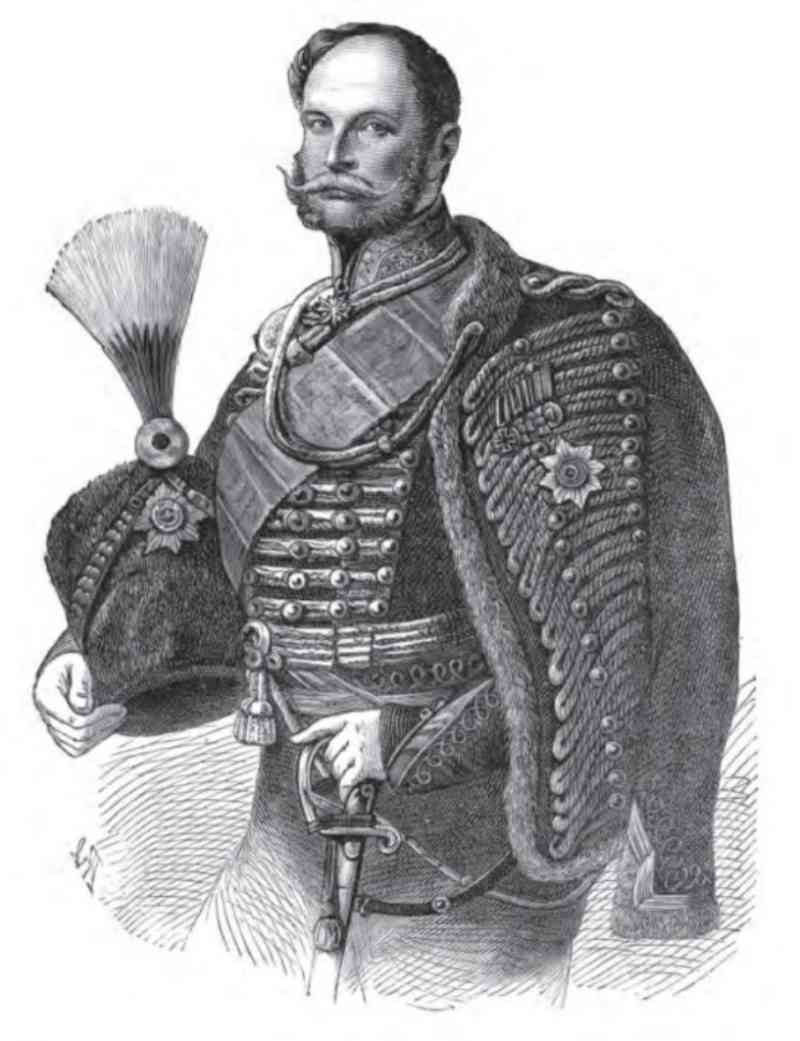
As a monarch, William I certainly could not put all his hopes on Bismarck alone. After that, he gave Bismarck an eight-page policy program in the garden. Bismarck knew that these contents were the political basis for him to become prime minister, and immediately stated: "I would rather perish with you than abandon your Majesty in the struggle with the House of Representatives. "William I was delighted to hear this, and immediately tore the outline into pieces. He followed Bismarck’s advice and stuffed the pieces into his pockets to burn them in order to prevent them from being obtained by people with ulterior motives. The next day, Bismarck was appointed as the temporary chairman of the cabinet. After a simple handover with the former Prime Minister Prince Ingelfingen, he quickly began to form a cabinet as Prime Minister and Foreign Minister. Objectively speaking, even if Bismarck had not stepped forward, William I would not have been willing to abdicate on his own. But Queen Augusta and Crown Prince Fritz still blamed Bismarck for another failure.
Crown Prince Fritz wrote bitterly in his diary: "Now he has no choice but to wait and see how long Bismarck can serve without making a fool of himself. "As Bismarck’s term of office became longer and longer, this hatred became more and more enduring, causing the mother and son to spare no effort to create obstacles in Bismarck’s governance.
The curse from the harem was indeed vicious, but the first thing Bismarck had to solve was the pending military reform plan. After discussing with his best friend, Bismarck finally made the Prussian Army make the maximum concession in the military reform plan: "Formally, the three-year military service is still retained, but the middle and upper classes are allowed to redeem the third year according to their wishes.
Although Bismarck’s plan ended the two-year-long entanglement to a certain extent, the House of Representatives controlled by the Progressive Party turned its attention to the military budget again. Little did they know that this move just stepped into the trap carefully laid by Bismarck. Because in the Prussian constitutional system, there is an upper house composed of noble elders above the House of Representatives. After manipulating the upper house to pass the relevant budget plan, Bismarck solemnly invited William I to make a dictatorial decision on the grounds that the two major parliaments disagreed and could only "respectfully ask for a holy judgment."
After William I readily approved the special funds needed for military reform, Bismarck immediately ordered the parliament to adjourn for three months in the name of the king. At this point, a fierce "abdication crisis" was temporarily eliminated by a "constitutional loophole." But Bismarck knew that he had only won a three-month rest period. If he could not quickly open up the diplomatic field, he would be faced with a more fierce siege.
Different paths of unification between Prussia and Austria
In the last week of October 1862, Bismarck returned to Paris, but this time he was no longer the ambassador to France, but the Prime Minister of the Kingdom of Prussia. Napoleon III naturally changed his previous condescending attitude and held a grand reception dinner for him. The French Daily even exaggerated and claimed that Napoleon III personally awarded Bismarck a Grand Cross of the Legion of Honor. Although Bismarck himself hurriedly came out to refute the rumor, he was good at taking advantage of the situation and was obviously happy for the outside world to have an illusion that Prussia was secretly allying with France.
Just While still lingering in Paris, Bismarck impatiently wrote a letter to the Austrian ambassador to Prussia, Richard Metternich (son of Clemens Metternich), declaring that although Prussia was willing to maintain good relations with Austria, if Austria dared to interfere in Prussia’s sphere of influence in northern Germany, then Prussia would not hesitate to take all means to fight back.
Unfortunately, Bismarck’s play of pretending to be powerful was eventually ruined. As soon as he left Paris, the French Ministry of Foreign Affairs sent a note to Prussia, stating that "if a war breaks out in the German region, France will give priority to protecting its own security and European peace." The implication is that France will not take a position in the future dispute between Prussia and Austria, and will not help either side.
Bismarck, who has not been able to scare the Austrians for the time being, can only change his strategy. He tried to use his friendship with Austrian Prime Minister Rechberg, who was once the ambassador to Frankfurt, to improve the diplomatic relations between the two countries. However, Rechberg, who was also the Austrian Foreign Minister, was also not a pushover. While he was playing coy with Bismarck, he was constantly promoting the all-German alliance based on the dual politics of Austria and Prussia.
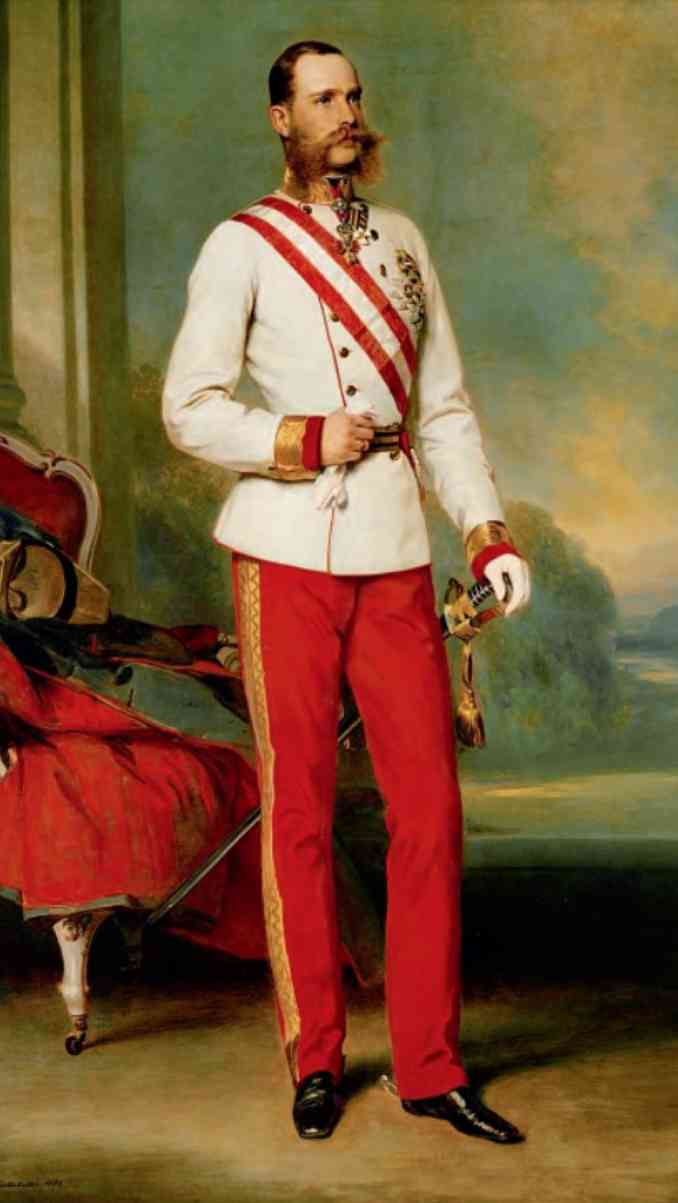
At this point, it is necessary to briefly introduce the unification trend in Germany at that time. Objectively speaking, since the Middle Ages, there have been military and political strongmen in the German region who have tried to change the scattered situation under the Holy Roman Empire. However, geographical barriers and cultural alienation eventually accelerated the centrifugal force of division. The religious reform movement launched by Martin Luther in 1517 made the northern Germans who believed in Lutheran Protestantism and the southern Germans who remained in the Catholic camp like water and fire.
The protracted "Thirty Years’ War" severely damaged Germany’s vitality. Although Prussia, far away from the main battlefield, took advantage of the situation to rise, it was unable to get rid of the dilemma of being clamped by Tsarist Russia, Austria, and France due to its inherent deficiencies. Although Prussia wanted to stay out of trouble during the "Napoleonic Wars", the French army, which eventually controlled most of Germany, still came to attack. After defeating the Prussian army in the Battle of Jena, they invaded Berlin and looted all of Frederick the Great’s decades of savings.
After two fierce battles in Leipzig and Waterloo, although the Prussian army defeated Napoleon, who was like a nightmare, facing the equally reborn and more powerful Tsarist Russia and Austria, Prussia was unable to compete and could only choose to lie low temporarily. And it was only under such a background that Prussia sought another path to unification besides force.
In 1818, thanks to the advice of German economist Friedrich List, Prussia took the lead in abolishing a total of 67 tariffs in its territory. In October of the following year, Prussia signed a tariff agreement with the independent states of Schwaldsburg and Sonderhausen, which was the "Prussian Customs Union". As time went by, the number of members of this organization increased, and eventually included the entire German region except Austria.
The economic leadership position gave Frederick William IV the ambition to unify Germany politically during his reign. He envisioned that through free consultation, the German states excluding Austria would form a federal state; the King of Prussia would serve as the "Emperor of the Empire" in the name of "Imperial Council" with the assistance of the "Advisory Group" composed of the monarchs of the other six powerful states.
As soon as Frederick William IV’s plan was proposed, it was opposed by the two powerful states of Bavaria and Württemberg in southern Germany, and other states were also on the sidelines. In the end, only 28 small states came to the alliance. Although Frederick William IV announced the establishment of the "German League" on March 20, 1850, and began to discuss and formulate the league constitution, he was forced to disband the "circle of friends" he had formed soon after due to the deterioration of the external environment.
I must damage something
Austrian Emperor Franz Joseph I always watched coldly as Prussia tried to unify Germany through political means. As a descendant of the Habsburg dynasty who once wore the crown of the Holy Roman Empire, Franz Joseph I wanted to revive his family business, but he knew that Austria was unpopular in northern Germany. The proud Germanic people were even more ashamed to be on par with Bohemia and Hungary under the rule of Vienna.
However, the Second Italian War of Independence in 1859 gave Austria an opportunity to return to the German family. Taking advantage of the German nationalists’ common hatred of the enemy, Austria began to advocate the "dual alliance theory", that is, Austria and Prussia, as the leaders of South and North Germany respectively, jointly formed a political community covering the entire Greater Germany region.
After some running around, the Austrian diplomatic department finally completed the preliminary preparations for the relevant plan. As long as Prussia joined in, the entire plan could be officially launched. For this reason, on August 2, 1863, Franz Joseph I pretended to be nonchalant and visited Prussian King William I, who was on vacation at the Gastein Spa, and casually invited him to attend a "Prince’s Conference" held in Frankfurt 14 days later.
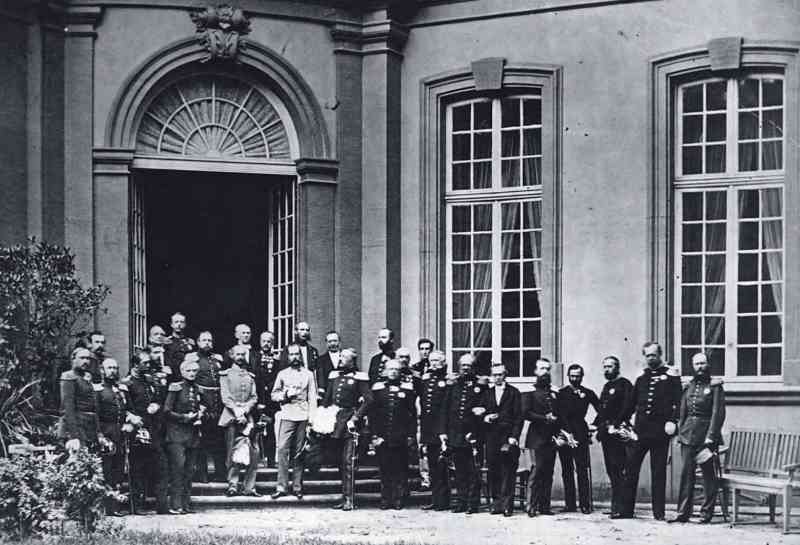
William I knew that this conference was not in line with Prussia’s unification method, but due to the etiquette between nobles, he was still prepared to go. Unexpectedly, Bismarck tried his best to stop him, and the two argued until the opening of the conference and still could not reach a consensus. Seeing that William I was late, Franz Joseph I simply sent the King of Saxony to personally welcome Prussia to the conference.
Thirty monarchs were waiting, and even a king was a messenger... How could I refuse? Unable to refuse the kindness, William I wanted to set off again. But Bismarck refused to give in, and the two argued until midnight before giving up due to exhaustion. Bismarck said that he finally convinced the king, but in the end it was his stubbornness that exhausted William I’s patience and time.
It is said that after returning to his room, Bismarck smashed a glass plate. Afterwards, he explained to his secretary: "I had to break something!" With Prussia absent from the "King’s Conference", the original ambiguity between the German countries disappeared, and political unification without war could not be implemented. Bismarck, who broke this situation, first thought of his close friend named Albrecht von Roon. Because in Bismarck’s eyes, Roon was the embodiment of the invincible Prussian Army.