
Seemingly tyrannical and tough, but in fact flexible
It is difficult for outsiders to understand why the "Compulsory Military Service Law" submitted by Army Minister von Roon could cause the Prussian government and parliament to tangle over trivial issues such as whether to serve for two years or three years for nearly two years, and even triggered a constitutional crisis. But the reality is so absurd that by 1862, the constitutional crisis in Prussia had developed to the point of being on the verge of breaking out. In the state parliamentary elections of that year, the liberals who repeatedly vetoed the government budget on the pretext of opposing the military service law won a great victory (230 seats out of 352 seats), and theoretically could overthrow the current Prussian government and force the implementation of a parliamentary cabinet. The severity of the situation made King William I, nicknamed "Prince Shotgun", also frustrated, and he once planned to retreat and use the conditions of his own resignation and the succession of the crown prince to the throne in exchange for the continuation of the royal rule. Only in the spirit of "trying it all out" did the king accept von Roon’s recommendation and appoint Otto von Bismarck, whom he did not like, as prime minister, trying to make a last-ditch effort with the parliament.
The new prime minister’s toughness exceeded the king’s expectations. He not only persuaded the king to give up abdication and made the king tear up the 8-page outline of reforms, but also went to the parliament to speak out: "The current major issues cannot be solved by speeches and majority resolutions - this is exactly the mistake made in 1848 and 1849 - to solve it, only iron and blood can be used!" Although Bismarck’s attitude of fighting the parliament to the end can be described as "loyalty and patriotism", his tough stance made the king uneasy. Just a few days after the "iron and blood speech", Bismarck went to the station to meet the king who had just returned from Baden-Baden. When he arrived at the station, he found that the king was sitting alone in the first-class ordinary box, feeling depressed. Bismarck had just started to report a few words when William I interrupted him and said: "How this will end, I have completely and accurately predicted it. One day, in the Square of the Opera, under my window, someone will chop off your head first, and then it will be my turn." After the excited king fell silent, the prime minister asked: "What happened next, Your Majesty?" The king replied puzzledly: "Later? Later we all have to die!" Bismarck then said righteously: "Yes, we all have to die, but we have to die sooner or later. Can’t we die more dignified? Your Majesty does not have to consider Louis XVI... Charles I drew his sword to defend his power... Will this not be recorded in history as a noble act? Your Majesty must fight and never surrender. "It was after listening to Bismarck’s incitement that William I "entered the role of an officer who fought with weapons for the royal power and the motherland" and "withstood the queen’s criticism and public opinion" and decided to stick to the path chosen by Bismarck.
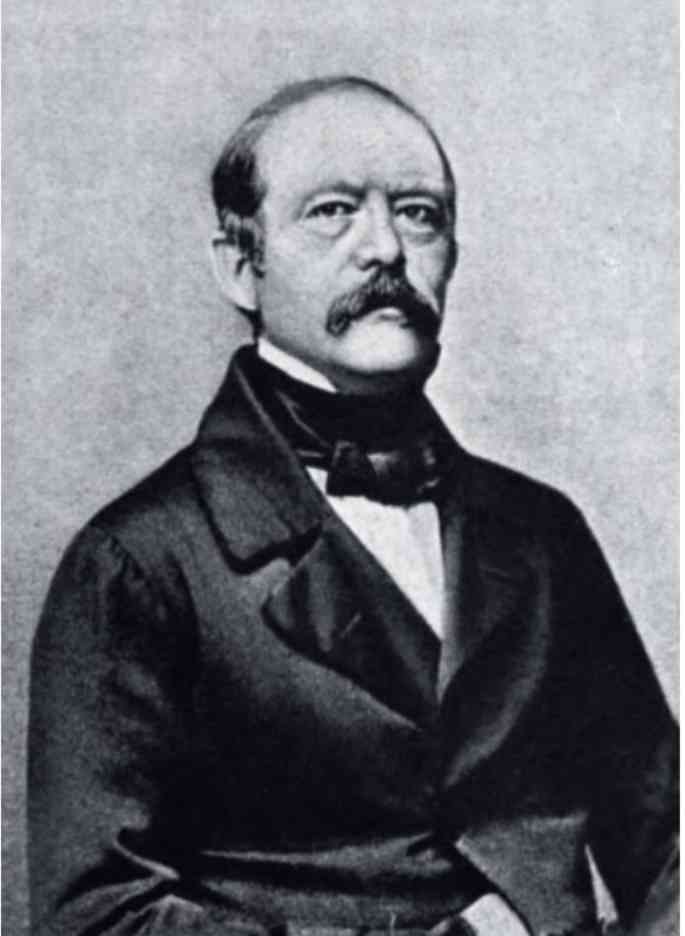
Apart from Bismarck’s self-whitewashing in the story, what shocked future generations was the huge difference between the King of Prussia and the Prime Minister in their judgment of the current domestic situation: the King was extremely pessimistic about the domestic situation, believing that the revolution was imminent and that he would become the Louis XVI of Germany; while the Prime Minister was full of confidence, firmly believing that the great cause could be accomplished and the rise of Prussia was just around the corner. The views of the King and the Prime Minister seemed to be contradictory, but neither of them was wrong, because their views precisely reflected the two sides of Prussia’s self-division at the time: on the one hand, the Kingdom of Prussia was extremely reactionary and conservative, full of crises, and a revolution could break out at any time; but at the same time, it was the beacon of Germany and the hope of countless people to achieve unification. Bismarck’s task was to grasp the most important one among the complex contradictions and push the entire situation in a favorable direction - subsequent events proved that he did it.
East-West differences, the root of the Prussian constitutional crisis
The crisis of the "Compulsory Military Service Law" that led to Bismarck’s rise to power began in February 1860. The reason was that the military service law enacted in 1814-1815 was no longer appropriate. According to the old military service law, every Prussian citizen needs to serve for 5 years (three years in the regular army and two years in the reserve army), and then transfer to the National Guard to serve for another 7 years. However, in the military mobilization of Prussia in 1859, the government found that the old universal military service system was already in name only. Many older married men were the subjects of the National Guard, but about 24,000 young and middle-aged people did not need to bear any military obligations. Therefore, military service reform was naturally put on the agenda of the Prussian government. According to von Roon’s plan, the reformed Prussian reserve army was merged into the regular army for a unified service of 3 years. The regular army was expanded from 140,000 to 217,000, and the National Guard was abolished.
In fact, the parliamentary opposition had no objection to the military service reform itself. They not only agreed to increase the number of conscripts to 63,000 per year, but even clamored to establish a Prussian navy before 1848. The key to the problem was the National Guard. According to the liberals, the shortening of the regular service period of soldiers actually meant a reduction in the armed forces that the king and the government could control, while retaining the National Guard meant that these local parliamentarians had bargaining power with the king. In other words, the two sides were not arguing about any technical issues at all, but the key issue of who had the gun. In July 1862, just before the crisis of the military service law was about to be decided, the Germanist Schulze-Delitzsch stated at the annual celebration of the Frankfurt Rifle Club that the German constitutional issue could only be resolved "when the people’s army in an armed country is backed by the parliament." He also said: "If we see that you (the people’s army) support us: our claims have a foundation and a future." William I commented on this incisively: "That’s it, it is now clear what they need: the army must become the army of the parliament. But they will see whether the army belongs to me or to you, Schulze-Delitzsch."
The Prussian liberals were confident that they could compete with the king on the issue of the army, and of course it was not without reason. The reason was the special national conditions of Prussia at that time. After completely defeating Napoleon in 1815, the European powers rewarded Prussia for its merits, and Prussia took back the large tracts of territory lost in the Treaty of Tilsit (1807). However, under the "goodwill" arrangement of the European powers, only 6% of the territories west of the Elbe River and Poland ceded in the Treaty of Tilsit returned to Prussia. As compensation, a large area of land located along the Rhine River and close to France (roughly equivalent to the two states of North Rhine-Westphalia and Rhineland-Palatinate in Germany today) was compensated. In between the two parts of the territory, small states such as Hesse and Hanover lay across, splitting the Prussian territory into two parts, which looked like a barbell stuck in Central Europe.
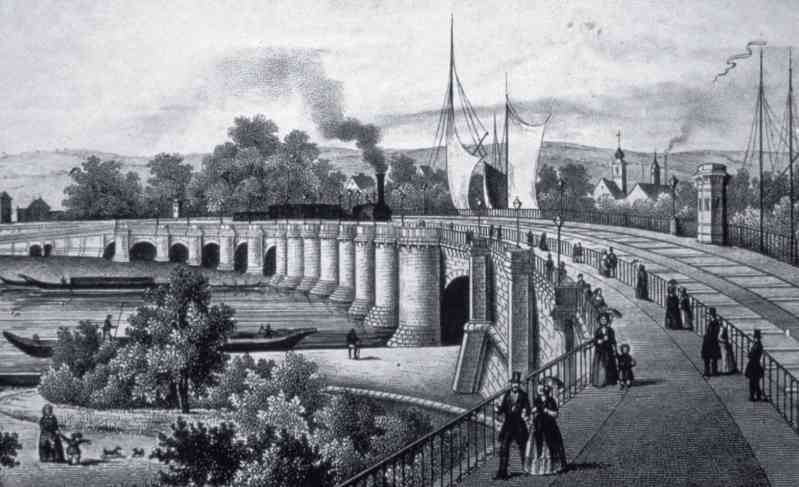
The territory was divided into two enclaves, which put Prussia at a disadvantage in geopolitics. The huge economic and cultural differences between the east and the west made the current situation of the country even worse: the eastern Brandenburg and East Prussia, where the royal family "rose", did not completely complete agricultural reforms until 1848 to abolish serfdom. The politics were conservative and the economy was backward; while the western Rhineland region, due to its border with France, was deeply influenced by the Great Revolution. The industrial revolution was launched first, and the economy was outstanding in Germany: by the middle of the 19th century, two of the four major railway transportation centers in Germany were located in the Rhineland (Cologne and Frankfurt). In Rhine Westphalia alone, there were 299,000 spindles, not to mention the coal mines in Westphalia and the earliest heavy industry in Germany-the Ruhr area, the heart of German industry in later generations.
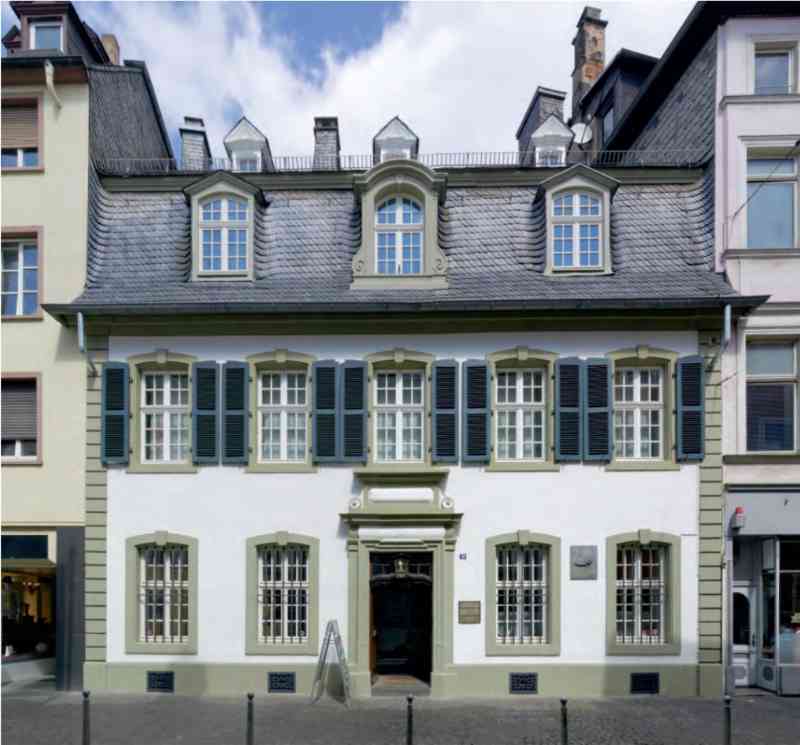
The economic situation of the weak east and strong west, and the almost irrelevant historical origins, made Prussia after the Vienna Conference like a "stitched monster", which was completely dependent on the political power in the east to maintain. In fact, people only need to look at the names of the revolutionary leaders and poets who came out of here to understand how much the western Prussian region disliked Berlin: Marx in Trier, Engels in Barmen, Heine in Düsseldorf, each of them launched a fierce struggle with the autocratic Prussian government. The developed economy of the Rhineland has also become the capital for the local liberals to challenge Berlin. After all, no matter what kind of reform Berlin wants to implement, it is always inseparable from the economic transfusion of the Rhineland. If it does not compromise politically and does not get the support of local industry and commerce, let alone pass any fiscal budget, even Prussia itself is likely to fall into division. The Parliament repeatedly rejected the budget under the pretext of the "Military Service Law" to force William I into a dilemma. This is the root cause.
Soft and hard tactics to deal with parliament
On the surface, it was a struggle between parliament and the government, but in reality it was a deep-seated division between the East and the West in the country. This was the essence of the first crisis Bismarck had to face after taking office. However, Bismarck, who was determined and violent, did not seem to take the problem seriously. He calmed the crisis with an almost rude attitude: after delivering a provocative iron-blooded speech, Bismarck announced the withdrawal of the government budget, claiming that he would handle national financial affairs without a constitutional budget. The insulted House of Commons declared Bismarck unconstitutional, but the House of Lords rejected the resolution of the House of Commons, and the parliament adjourned without resolving any major issues, just as Bismarck had said. Then the action-oriented Bismarck confidently announced that according to the Prussian Constitution, all laws, including the budget, required the unanimous approval of the king, the House of Lords and the House of Commons, but "the Constitution does not specify which party should yield when the three parties disagree." Therefore, the government led by him could take necessary measures to maintain the operation of the country according to the "loophole theory" (Die Like) when the country was deadlocked - that is, whether the parliament approved it or not, the government would continue to levy taxes.
Bismarck’s tough measures naturally caused a backlash in parliament. The liberals condemned the government for violating the constitution, and the big industrialists in the Rhineland and Westphalia submitted petitions to the king on the constitutional situation. Many intellectuals either called on Bismarck to respect “the belief in a solid moral and legal order” (Rudolf Genest), a jurist, or lamented to each other that “this means the end of the Prussian state and freedom” (Droysen). The leader of the parliamentary Progressive Party, Max Folkenbeck, declared: ‘I think he (Bismarck) is the most dangerous prime minister for the freedom and happiness of Prussia. ” When the Bismarck government’s policies of strictly restricting freedom of the press and prohibiting city councils from drafting petitions and petitions were successively introduced (June 1863), even Crown Prince Frederick could not sit still and publicly distanced himself from the matter, saying, “I know nothing about these decrees... I was not at home. I did not participate in the discussion of the formulation of these decrees. ”
However, Bismarck completely saw through the nature of this group of German petty bourgeois liberals. He ordered the dissolution of parliament and re-election. Although the opposition had more seats in the parliament after the re-election, Bismarck’s simple and crude countermeasure was to let the government levy taxes and spend all the government funds it deemed necessary. Although it was fiercely attacked by all parties, no one dared to stand up and refuse to pay taxes. Apart from clamoring, the parliament did not take any practical actions, such as calling on the people to resist taxation. Bismarck solved the constitutional crisis almost without bloodshed.
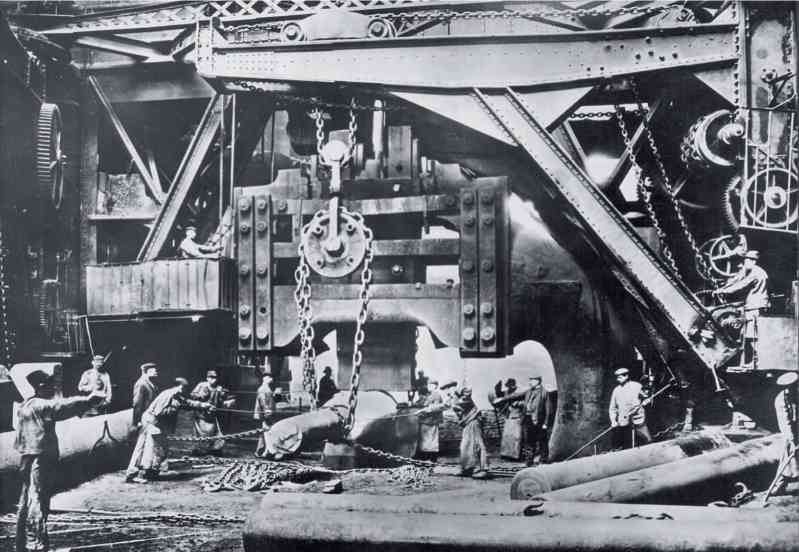
Bismarck’s quick and decisive approach made the Prussian political arena in 1862 and 1863 look like a farce with a strong start but a weak end, but at the same time it also made people suspicious. Did he know nothing about domestic affairs and was just gambling like a gambler? But this is too much of an underestimation of him. In fact, Bismarck’s handling of the Prussian constitutional crisis foreshadowed his style of handling domestic affairs throughout his career. It seemed rough, but in fact it was shrewd and calculating. As far as this incident was concerned, Bismarck was smarter than everyone, including the king, in that he not only saw through the weak nature of the liberals, but also He also saw through the highest political demand of the liberals and even all Germans at the moment - unification. He firmly believed that as long as he firmly grasped the great cause of "unifying Germany", no matter how the two halves of Prussia were divided, they would unite under this banner. He also correctly estimated that as long as he really set about solving the most important contradiction - unifying Germany, the bourgeois liberals in Prussia would sooner or later be willing to bow down at his feet, and even the bourgeoisie in other German states would flock to become his supporters.
Things turned out to be exactly like this. Bismarck, who had completely understood the petty bourgeoisie of Prussia, always put on an arrogant attitude of "If an enemy falls into my hands, I will destroy him" before launching the war of unification, and was sarcastic. The Prussian parliament re-elected the Prussian parliament on October 28, 1863. The anti-government liberals and the Progressive Party won an overwhelming majority and passed a resolution to abolish Bismarck’s emergency press decree and declared all of Bismarck’s policies unconstitutional. However, as Bismarck declared, the government did not consider the "speech and the resolution passed by the majority" of the parliament at all, and levied taxes, expanded the army, and implemented military reforms. At the end of the year, Bismarck used this armed force that the government had grown up on its own as a backing to provoke the Schleswig-Holstein dispute and lead the German national sentiment to the track he set.
In 1864, after Prussia won a great victory in the war against Denmark, Bismarck timely leaked that he would unify the Elbe states with Prussia. Prussian politics quickly turned around, and a large number of influential bourgeois liberals and intellectuals, led by historian Tretzke, began to loudly praise the government for taking the first step towards unification. After Prussia conquered Austria in 1866, all of Prussia was conquered. In the lower house parliamentary elections of that year, the conservatives won 100 seats from the liberals, which indicated that the Prussian bourgeoisie had actually surrendered to Bismarck.
Just when the government won a great victory, Bismarck unexpectedly became amiable. He took the initiative to lower his profile and seek reconciliation with the parliament. He sensibly proposed a so-called "amnesty bill", asking the parliament to "amnesty" his government for the "unconstitutional" actions taken without the consent of the parliament in the past four years, so as to achieve reconciliation between the government and the parliament. The parliament, which was manipulated by him with both soft and hard tactics, accepted the "amnesty bill" with almost tears of gratitude, and ratified all the "unconstitutional" government expenditures in the previous four years, and even increased the government expenditures in 1866 to 154 million thalers. At this time, Bismarck was no longer the "most dangerous prime minister", but the great "Atlas" of Germany. Many liberals even said that it was not the parliament that "pardoned the Bismarck cabinet, but history itself that pardoned the Bismarck cabinet."
The reactionary prime minister who implemented progressive policies
In a sense, the intellectuals in Germany throughout the second half of the 19th century, whether in Prussia or other principalities, were in a serious state of schizophrenia. In their political ideals, they advocated constitutionalism, parliamentary system, and separation of church and state, and opposed theocracy, autocracy and feudalism; but in political reality, they were eager to realize the German-Italy They were mocked by the times because they wanted to unify Germany and put it into action. The politically reactionary Prussia was the country with the strongest desire to unify Germany. The internal thoughts in Germany during this period were extremely complicated: many people were against militarism and conservatism, but they had a good impression of Prussia; others were fiercely against Prussia, but they were the mortal enemies of progressives. It was this ideological confusion that left Bismarck with a huge space for activities, allowing him to easily deal with various domestic issues by forming alliances among various factions in society.
In essence, Bismarck was a Bismarck was a stubborn conservative who not only regarded socialism as a scourge, but also disgusted bourgeois liberalism. However, as a politician, his views and attitudes on domestic political factions often gave way to his highest political goals - in the Prussian period, he used force and diplomacy to unify Germany; in the imperial period, he used all means to maintain the unity of Germany. Therefore, people can see that no matter what Bismarck’s own political views were, he took "real politics" as the principle when dealing with domestic issues, never rejected cooperation with those with different political views, and even implemented their demands as government policies. During the Prussian period, although Bismarck did not like bourgeois liberals, he adopted their opinions to promote the development of capitalism, thereby strengthening Prussia’s national strength, and tried every means to promote the economic policy of industrial development and promote the internal transformation and reform plan of the customs union. Bismarck, who always believed that "universal elections are counter-revolutionary", actually took the initiative to establish a customs union parliament in the customs union based on the principle of majority and direct election of residents - this incident became an example of Bismarck boasting about the superiority of the Prussian system: "What do the princes of small states want? Their governments are more reactionary than me!"
If cooperation with bourgeois liberals was still within people’s expectations, then cooperation with socialists seemed a bit shocking. In 1862, as soon as Bismarck became prime minister, he secretly contacted Lassalle, one of the leaders of the German socialist movement at the time. Between May 1863 and April 1864, the two had six secret contacts and then kept secret correspondence for a long time. Bismarck’s motive was simple. At that time, he was struggling with the parliamentary liberals, and Lassalle’s promise of "Give me universal suffrage and I will give you one million votes" would undoubtedly help him overwhelm the liberals. He contacted Lassalle with the attitude of "What can the poor devil offer me?" Lassalle’s purpose was more complicated. He hoped to achieve German unification under the leadership of Prussia, and at the same time imagined that under his suggestion, Bismarck would implement direct "socialist" intervention in Prussia, that is, "state-assisted" workers’ cooperatives, promulgating universal suffrage, and turning "a privileged monarchy into a monarchy of society and revolutionary people" to achieve "socialism"
Although this cooperation, which was destined to be short-lived, ended prematurely with Lassalle’s accidental death in 1864, people must see its far-reaching impact. After the establishment of the Second German Empire, Bismarck’s true colors were exposed. He persecuted socialists and suppressed the socialist movement through the Anti-Socialist Law. At the same time, he also carefully concocted three social insurance laws: the Sickness Insurance Law (1883), the Accidental Disaster Insurance Law (also known as the Accidental Work Injury Insurance Law), and the Old Age and Disability Insurance Law (1889). The Sickness Insurance Law stipulates that capitalists pay 30% of the insurance premium and workers pay 70%, which is managed by workers’ organizations and free medical care; the Accidental Disaster Insurance Law stipulates that capitalists are responsible for the medical and funeral expenses of workers injured at work, and pay allowances to the families of the deceased; the Old Age and Disability Insurance Law is a mandatory law, which stipulates that the "beneficiaries" are industrial workers, agricultural workers, handicraftsmen and civil servants. Bismarck’s social security law has a cross-era impact. The Accidental Disaster Insurance Law was even rejected by Congress twice in 1881 and 1882, precisely because the Liberals and Progressives in the Congress believed that the bill was too "socialist".
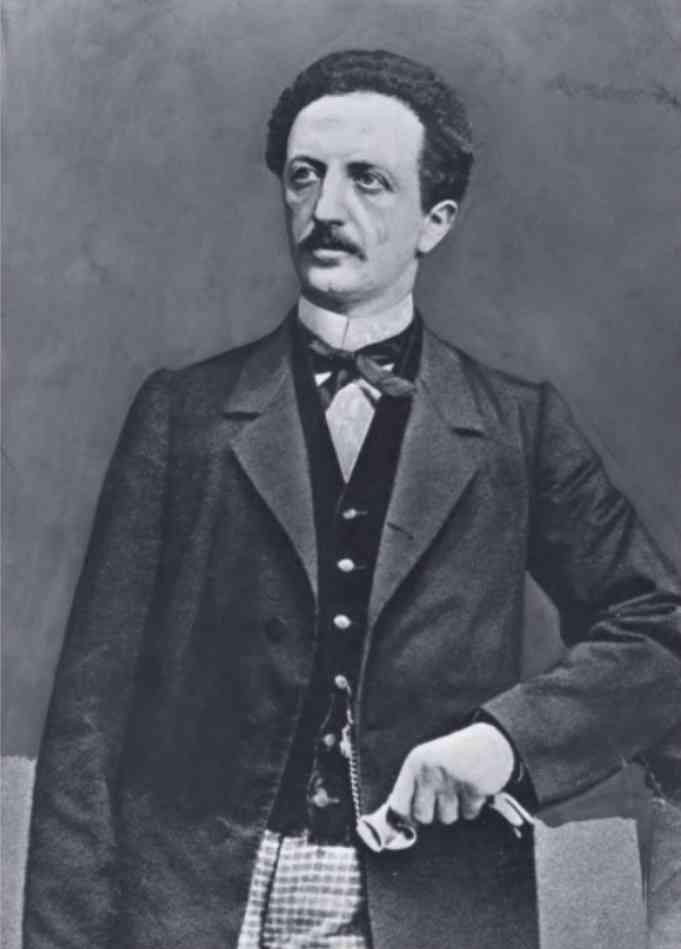
The anti-socialist iron-blooded chancellor was the first in the world to propose a social security bill with a socialist color. Regardless of his motives, he objectively practiced some of the ideas of Lassalle and other pioneers of socialist operation. This incident clearly reflects Bismarck’s principles on domestic issues-except for achieving and maintaining German unity, there are no principles. In order to achieve his goals, he can use both soft and hard methods to deal with any political faction in the country at any time: when he needs to strengthen armaments to achieve armed unity, he can go head-to-head with the bourgeois liberals; when he needs to ease internal contradictions and maintain unity, he will not hesitate to adopt the socialist political views of the "devil" in his mind. Judging from the results, when the call for unification overwhelmed all contradictions, Bismarck’s tricks worked well. Although Prussia, led by him, "implemented a disgusting police brutality, it was the only savior that could free Germany from the Jesuits and political reactionaries." However, when Bismarck truly unified the fragmented Germany within the empire and began to act as the empire’s paperhanger to deal with various internal contradictions, these tricks did not work so well. After the establishment of the empire, the original overwhelming demand for unification was achieved, and Prussia instantly fell from the position of "the sun of the German solar system." At this time, the two ideological struggles launched by Bismarck to consolidate the empire: the cultural struggle against Catholicism and the struggle against the socialists, both ended in disastrous defeat. In the end, domestic issues became Bismarck’s weak spot and one of the important reasons for his resignation. The myths surrounding Bismarck gradually faded, and he changed from "German Atlas" to a stubborn and reactionary old Junker.