ChatGPT is very popular. This artificial intelligence (AI) chat software, which was launched on November 30, 2022, exceeded 100 million users in just 2 months. In contrast, Instagram had less than 1 million users 2 months after its launch. The reason for such explosive growth is that without the use of specific tools, ChatGPT’s performance in certain specific tasks is almost the same as that of ordinary people. Even many universities in the United States have been forced to issue a ban on ChatGTP-stricken students are strictly prohibited from using this software to complete homework or papers because sometimes even experienced professors cannot tell whether the articles they see are completed independently by students or written by AI.
The military field has always had the strongest demand for high technology. In fact, many concepts or prototypes of high technology often originate from military needs. For example, the Internet that we cannot live without today originated from the "ARPANET" established by the US Department of Defense in 1969. The origin of AI is relatively long and complicated, and it did not come directly from a specific plan of the US Department of Defense. But in the early stages of the development of this technology, it was also funded by the US military. In 1963, the then US Department of Defense Advanced Research Projects Agency (ARPA for short, later changed to the US Department of Defense Advanced Research Projects Agency, DARPA for short) funded many AI research project teams including MIT, Carnegie Mellon University and Stanford University. Based on the software and hardware conditions at the time, ARPA did not expect any substantial returns on investment in the short term. According to Rick Reed, the then director of ARPA, they "funded people, not projects."
Today, the success of ChatGPT represents that the technical level of AI has reached a new level. Compared with the "Alpha Go" that only played chess back then, ChatGPT has begun to try to help people solve practical problems in life in an all-round way. At the same time, this also means that from the perspective of technological maturity, AI has the ability to influence future military operations.
The impact of AI on future wars may be as follows:
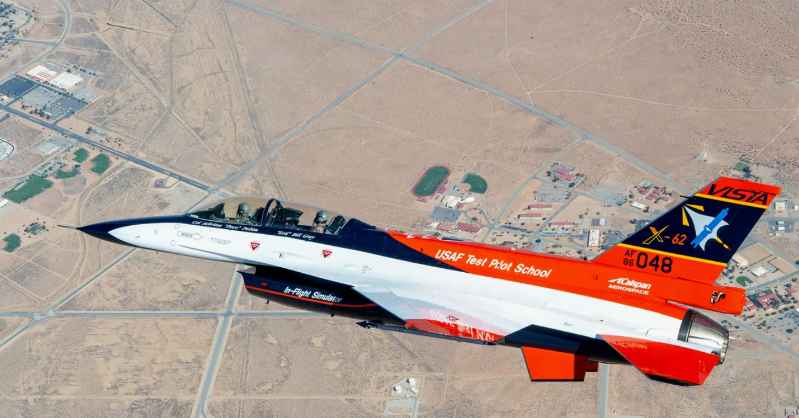
First, make traditional combat platforms more automated. The U.S. Air Force’s research in this area has already yielded initial results. In the ultimate simulated air combat challenge held by DARPA in August 2020, the AI pilot defeated the human pilot code-named "Banger" 5:0. You should know that Banger is not a rookie, but a flight instructor with rich combat experience. In addition, according to a report by foreign media on February 13, Lockheed Martin used an AI pilot to fly the X-62A variable stabilizer for more than 17 hours in December 2022. Perhaps, the current technology is only one step away from realizing a real-machine competition between AI pilots and human pilots. Of course, it is almost impossible for A1 to completely control the F-16 in actual combat, but AI can become the strongest "assistant" for pilots. According to U.S. Air Force Colonel Javorsek, "With this technology, pilots can spend less time training their fingers and more energy on training their brains."
Second, new combat modes will emerge. For example, cluster collaborative combat based on swarm technology. Third, high-precision and intelligent decision support. AI can provide more accurate and comprehensive intelligence information, as well as better battlefield monitoring and intelligence analysis. Decision makers can understand the battlefield situation more clearly and make more correct decisions.
Fourth, provide more objective and accurate war games for decision-making groups before the war
Of course, the large-scale application of AI technology on the battlefield has also caused many experts to worry. For example, the use of AI in war brings ethical and legal challenges-do machines have the right to kill without human decision-making? In addition, some experts question whether we can maintain control over AI troops. 40 years ago, robot rebellion could only appear as a plot in the movie "Terminator". Now we have unknowingly approached the era depicted in "Terminator".