
Where is Germany
In the early 19th century, the famous German nationalist poet Ernst Moritz Arndt once wrote passionately, "Listen: Where the German language is heard, there should be German land." Unfortunately, the idealized "linguistic nationalism" is inevitably hit by reality. The Alsatians speak German but are loyal to Paris, which is a negative example. Another realistic problem is, what if "there" is not only German.
Specifically, it is Schleswig-Holstein. Lord Palmerston, an "old man" who has been active in British politics for decades, once asserted around 1862 that "In all of Europe, not long ago, only three people understood the Schleswig-Holstein issue-i-Prince Albert (the husband of Queen Victoria of the United Kingdom), an old Danish man and me. But unfortunately, Prince Albert died not long ago, the old Dane went to a lunatic asylum, and I? I completely forgot what the problem was there. "
What is going on? Schleswig-Holstein is located in the central and southern parts of the Jutland Peninsula between the Baltic Sea and the North Sea. It was originally two independent duchies in the Middle Ages. As for Holstein in the south, its residents are basically Germans, with Schleswig in the north as the main population. The northern part is mainly Danish, while the southern part is mostly German.
On the surface, it seems that at least there is no problem with Holstein being included in "Germany". The problem is that in 1460, Danish King Christian was chosen as the heir to Holstein and Schleswig. From then on, the two duchies were united under the rule of the Danish king, who served as the Grand Duke of both duchies. Not only that, in 1481 Denmark passed a bill claiming that Schleswig and Holstein should "never be separated". According to the wishful thinking of the Danish rulers at the time: "Schleswig is an ancient Danish territory. By combining the two states, Holstein will be bound by Denmark forever. "The actual situation is also true. When the two places are taken together, as many as 70% of the residents speak Danish. Whether Schleswig-Holstein can be counted as "Germany" is questionable again.
The 1815 Treaty of Vienna specifically stated that Holstein was a member of the "German Confederation". On the one hand, this opened the door for the Danish king to intervene in Germany’s internal affairs in the name of "Grand Duke of Holstein" (the British king did the same thing with the title of "King of Hanover"). But on the other hand, this was contrary to the historical documents that Schleswig and Holstein should "never be separated", resulting in endless troubles. On the one hand, the German nationalists demanded that Schleswig be dragged into the "German Confederation" as well. On the other hand, the Danish government was also troubled by the fact that these two places were only the personal territory of the Danish king rather than the territory of the Danish state.
In 1848, the Danish authorities, unable to hold back any longer, promulgated a new constitution, legally incorporating the three duchies of Schleswig, Holstein and the neighboring Lauenberg into the Kingdom of Denmark. As a result, this triggered an uprising, followed by Prussian military intervention. Tiny Denmark was certainly no match for Prussia, an "army with a state." But the great powers did not allow Prussia to gain access to the North Sea. For example, Nicholas I issued a typical Russian threat: "If he does not end the war against Denmark, we will march into Prussia." In the end, Prussia was forced to withdraw its troops. An international treaty signed in London in May 1852 reaffirmed the pre-war status of the three duchies: they were returned to the Danish king on a dynastic basis, but the treaty explicitly prohibited the three duchies from being incorporated into Denmark.
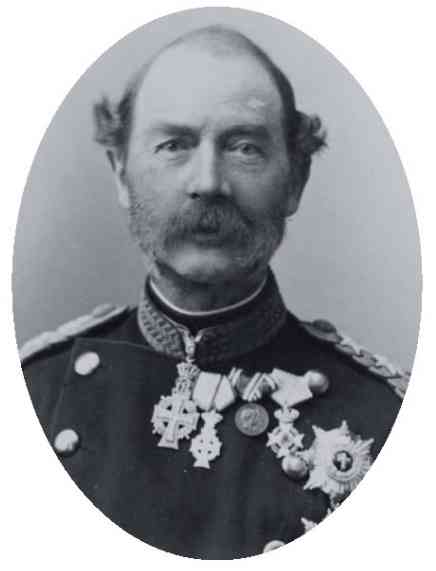
This certainly did not fundamentally solve the problem. In March 1863, King Frederick VII of Denmark was again under domestic pressure and attempted to take advantage of the fact that European countries were busy with the Polish uprising to try to merge the three duchies into Denmark again. This time, the Danes decided to start with Schleswig, where the proportion of Germans was relatively low, and promulgated a constitution that was actually equivalent to annexing Schleswig and enjoying a new privilege in Holstein and Lauenberg.
This move once again detonated the time bomb of "Schleswig and Holstein must never be separated". The Danes are really playing tricks on themselves. The local Germans not only refused to swear allegiance to the Danish king, but also turned to the German Confederation for help. The German Confederation and nationalists in various states also believed that this was a matter of "national honor" and demanded that the two principalities be liberated from Denmark and become German territory. Various propaganda machines were working at full capacity to "bombard" the new Danish constitution, and various political forces also rushed to act as "national pioneers". For a time, the entire German Confederation was swept up by the wave of nationalism. People from all over the country opposed Denmark’s illegal annexation and demanded that the "Confederation" intervene directly.
Can the "Confederation" intervene? From a legal point of view, it is indeed possible-after all, the purpose of the so-called "German Confederation" clearly states "to maintain Germany’s external and internal security" and "to maintain the independence and inviolability of the German states." But everyone knows that the "Confederation" is not a sovereign state after all. To truly achieve these two points, it must rely on the military force of the two most powerful members-Austria and Prussia.
Threats and inducements
Bismarck saw an opportunity. In fact, he had no interest in whether Schleswig and Holstein joined the "German Confederation" because that would only expand the anti-Prussian forces. The Prussian Prime Minister and Foreign Minister was only interested in using the nationalist enthusiasm of the German people to turn these two places into two provinces of the Kingdom of Prussia. When the elderly King William I admitted that he had no power over the two duchies, Bismarck sneered: "Did King Frederick, the Elector of Brandenburg, have any power in Prussia and Silesia in the past? The entire Hohenzollern family is expanding its territory.
According to Bismarck’s wishful thinking, taking Schleswig and Holstein through a war is like "killing two birds with one stone". First, it can be used to enhance Prussia’s prestige among the entire German nation, regard Prussia as the "savior" of the German nation, and win the support of German nationalists for Prussian policies; second, it can also prepare the Prussian people for the upcoming larger-scale dynastic war. You know, except since the fall of Napoleon (1815), the Prussians have been away from large-scale wars for half a century. The younger generation no longer believes in the "strange talk" of the old people who still remember the past wars, such as that people can sleep peacefully on the bare ground (not on a warm bed) on the battlefield...
Of course, Bismarck was also very clear that if Prussia intended to attack Denmark alone, it would definitely cause public outrage, with the European powers attacking in front and the guns of its old enemy Austria aiming at it from behind - just like what happened in 1848. Therefore, Bismarck’s strategy was: "My approach to foreign policy today is the same as the approach I used to use when hunting waterfowl in the past. I will never focus on the grass before I carefully test it with my feet."
The issue of Schleswig and Holstein is indeed a matter of great concern. But Bismarck also saw that the great powers were by no means monolithic. Tsarist Russia, which once regarded itself as the European gendarme, suffered a disastrous defeat in the Crimean War (1853-1856), and its reputation on the European political stage plummeted. The "double-headed eagle" turned its eyes to the East. In addition, Tsar Alexander II, who was busy with domestic reforms, had a good impression of Prussia - Prussia supported Russia in suppressing the Polish uprising in 1863. Therefore, the Petersburg court made a guarantee not to take military action against Prussia.
Another good news is that France also has no intention of intervening. Napoleon III was sending troops to Mexico at the time and was busy with his own affairs. In addition, Bismarck At the end of 1863, it was hinted that the west bank of the Rhine might be ceded to France. Therefore, the French appeared as mediators from the beginning on the issue of Schleswig and Holstein. Napoleon III proposed to distinguish the two principalities according to ethnic boundaries, that is, the part of the principality separated from Denmark should be free to control its own destiny. In fact, this was also the final solution to the Schleswig and Holstein issue after the end of World War I: the areas where Danes were the majority belonged to Denmark, and the areas where Germans were the majority belonged to Germany. Prussia accepted this suggestion, but Denmark firmly opposed it. As a result, France’s mediation failed and it simply gave up.
In this way, the only "power" that Denmark can rely on is Britain. Although the "Empire on which the Sun Never Sets" was in its heyday, land warfare has never been its forte. Without the cooperation of continental allies (such as France), it is difficult to achieve anything with its own tens of thousands of land forces. Moreover, it also wants to use Prussia to contain the two continental powers of France and Russia, so it did not intervene with all its strength. Bismarck also made sweet words at the right time to make Downing Street more assured: he never wanted to incorporate the two principalities of the Elbe River (referring to Schleswig and Holstein) into the Prussian territory, and Britain did not have to worry about the North Sea and the Baltic coast falling into the hands of Prussia, which is more powerful than Denmark.
For Bismarck, after winning the support of Britain, France, and Russia, the only thing he needed to worry about was Austria, which also belonged to the German Confederation. Austria has always wanted to maintain its leadership in the German world and is in fact Prussia’s most important enemy. If Prussia wants to attack Denmark, it must pass through Austria. Bismarck’s extraordinary ability, which best reflects his diplomatic strategy and skill, is that he can use threats and inducements to turn enemies into friends according to needs.
At that time, facing the flames of German nationalism ignited by the Schleswig-Holstein issue, the Austrian Empire, which has always claimed to be the leader of the German Confederation, was in a rather embarrassing situation. As the ruling nation, the Germans were an absolute minority in this Central European empire. Vienna therefore did not dare to explicitly support the demands of the German nationalists in the dispute between the two principalities, fearing that it would cause non-German settlements in the country to follow suit. Therefore, Bismarck began to display his superb political skills. He first threatened Vienna that Prussia was willing to take on the so-called "liberation of the two principalities" alone, which was the most in line with the German people’s sentiments at the time.
Bismarck knew that Austria would never agree to this. Austrian Emperor Franz Joseph believed, not without reason, that if Prussia alone resolved the Schleswig-Holstein issue, Prussia will undoubtedly become the overlord of the entire Germany. However, due to national sentiment, Austria is not convenient to openly oppose Prussia, because that is tantamount to "cutting off from Germany". So Bismarck immediately extended an olive branch to Austria: Austria and Prussia formed an alliance and jointly went to war against Denmark. The future of the two principalities of Schleswig and Holstein can only be resolved through consultations between Prussia and Austria. For this alliance proposal, Austria can only accept the weight, which has not happened in the past 20 years. "On the afternoon of January 17 of the following year, the Prussian-Austrian alliance was formally signed on Wilhelm Street in Berlin. The day before, Prussia and Austria jointly issued an ultimatum to Danish King Christian IX, declaring the newly announced new constitution invalid within 48 hours.
48 hours was too short, and even from a purely administrative point of view, revocation was extremely unlikely. There is reason to suspect that Bismarck did not actually want Denmark to accept the ultimatum, but instead wanted a war. Anyway, the Danes have been completely isolated. The British government, which they had placed high hopes on, refused to provide any assistance. As for Denmark’s "Scandinavian brothers", although King Charles XV of Sweden promised to send reinforcements, the Swedes (including Norway) were just lip service. After many beautiful speeches at many grand banquets in Scandinavia and after the poets wrote countless auspicious poems, Denmark naturally hoped that they would take action, but they still ended up isolated and helpless.
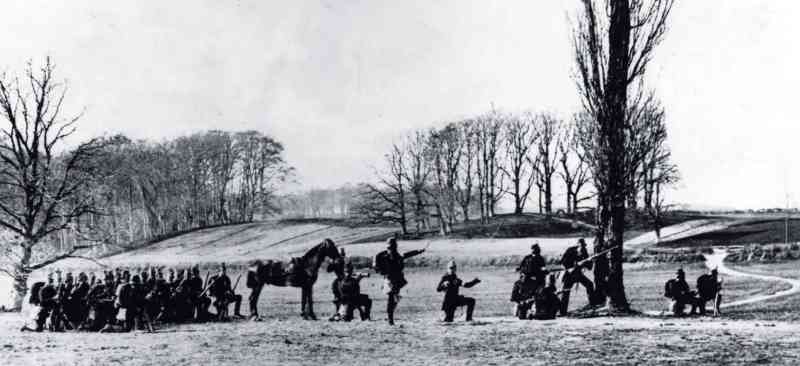
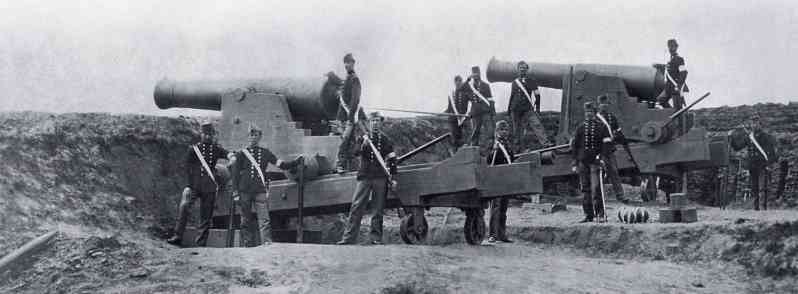
A war that Denmark had no chance of winning began. In terms of military strength, the Danish army consisted of about 4 divisions, about 38,000 people. The Prussian-Austrian coalition forces it had to resist totaled more than 60,000 people (of which Austria sent 23,000 troops). Not only was the number of troops at an absolute disadvantage, but the equipment of the Prussian army was also far beyond the reach of its opponents (and allies). The Danes were still using muzzle-loading rifles, while the Prussians had breech-loading rifles, which could not only fire more than twelve bullets in the time it took the Danes to fire one bullet, but also shoot more accurately and farther. The same was true for cannons. Almost all the cannons equipped by the Danish army were old-style muzzle-loading cannons. However, most of the opponent’s cannons were breech-loading cannons, so their range was much longer than people imagined at the time: Prussian cannons could fire beyond the range of Danish artillery and hit targets behind the Danish defense line.
Even the "geographical advantage" of the front line was not on the Danish side. As soon as the war broke out, the Danish army took the initiative to withdraw from Holstein, indicating that they had no intention of holding on to this member state of the German Confederation. On the southern border of Schleswig, the Danish army set up a line of defense along the medieval defensive dike ("Dannevelke"). This line of defense could not stop the enemy. First, the ancient dike had long collapsed or been washed away by rain, so it only existed on the map. Second, the Danes had originally hoped that the peatlands and swamps in the west of the Jutland Peninsula would stop the enemy’s invasion, so they only needed to defend the eastern border. But by the winter of 1864, the grass and swamps had all frozen and became as solid as other places. The Danes had to defend too long a line to stop the enemy with overwhelming numbers and equipment.
On February 1, 1864, the Prussian-Austrian coalition invaded Schleswig and the war broke out. Surprisingly, the Danes still repelled two small-scale attacks. This was "thanks" to the fact that the younger generation of Prussian soldiers were not as good at fighting as their predecessors. Prussian young men, who had always given people the stereotype of being strict and disciplined, mutinied at the station where they were enlisting because they were tired of war. The police had to work very hard to quell the anti-war riot and stuff the new recruits into the carriages and send them to the front line. On the battlefield, the combat effectiveness of the Prussian army seemed even inferior to that of the Austrians, so much so that Bismarck was heartbroken: "We are simply being laughed at!" But from another perspective, this verified Bismarck’s foresight. The Prussians did need to "warm up" against the weak opponent Denmark and regain the feeling of the battlefield. Engels, the revolutionary mentor, also noticed this: "Prussia also had an additional purpose in this war, which was to test the army that had been trained according to new principles since 1850 and reorganized and strengthened in 1860 in front of the enemy.
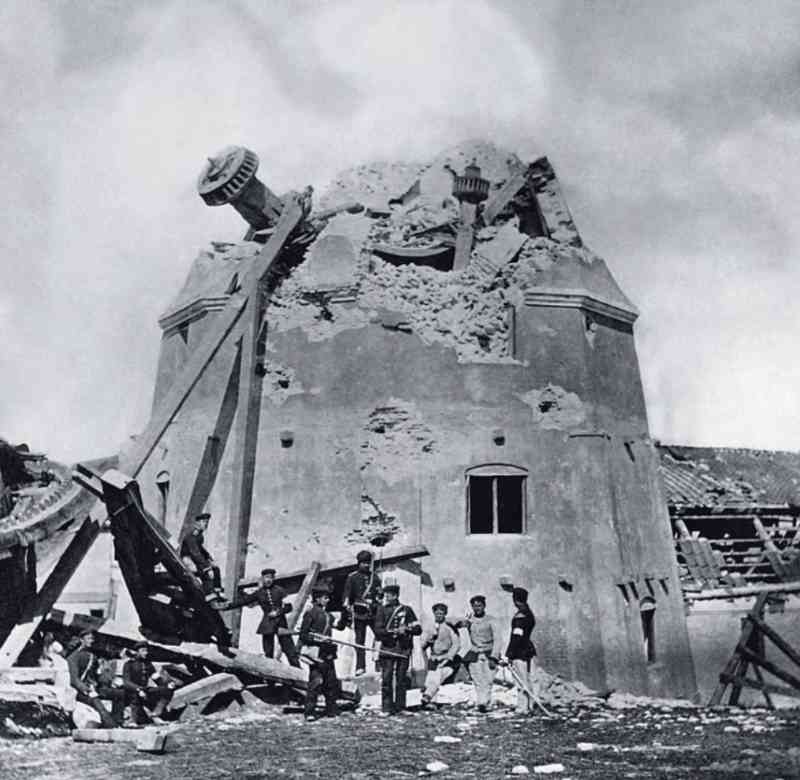
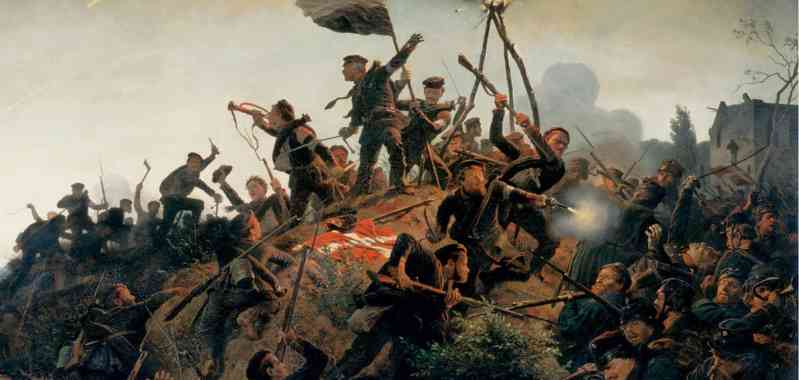
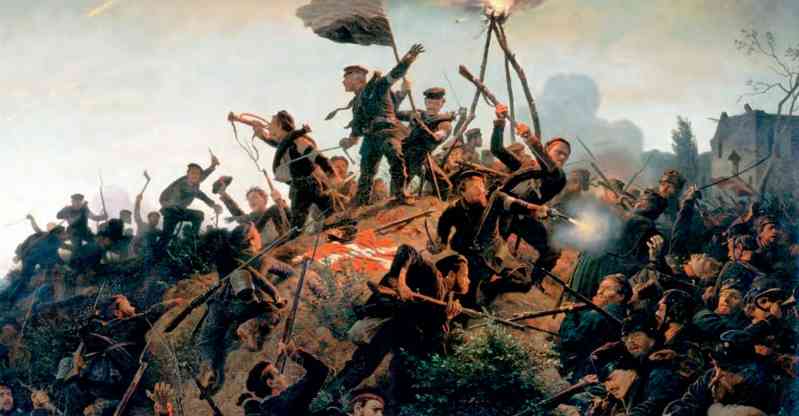
Thus, by the spring of 1864, the Prussian army had gained combat experience and began to win victory after victory. Only three weeks after the war began, the Prussian-Austrian coalition had penetrated deep into the Jutland Peninsula (the mainland part of the Danish territory), and in mid-April, the Prussian and Austrian armies had controlled all Danish military positions. The Battle of Güpell broke out on April 18, and the Danish army suffered another disastrous defeat, with a total of 4,486 casualties, including missing, and about 1,700 deaths.
Due to military failures and the lack of diplomatic help from other countries, Denmark was forced to sue for peace on July 12. The Treaty of Vienna was signed on October 30, 1864, and Denmark officially gave up the three duchies of Schleswig-Holstein and Lauenberg and handed them over to Prussia and Austria for disposal. This meant that the land area under the rule of the Danish king was reduced by 40%, and its population was reduced from 2.6 million to 1.6 million (about 38.5%). The Kingdom of Denmark, which once ruled all of Northern Europe, has become one of the smallest countries in Europe after the war. Pessimistic observers even believed that it would sink completely and be destroyed, and might be divided up by Germany and Sweden. Although this was ultimately proven to be alarmist, the disastrous defeat still left a terrible memory for the Danes, so much so that the thought of a new war with powerful neighbors (Prussia, Germany) became extremely desperate. For more than a century thereafter, Denmark actually gave up the use of force, and even chose to surrender without a fight when faced with the invasion of Hitler’s Germany in World War II.
Clever trap
The war between Prussia and Austria against Denmark ended. This was a great victory for Germany. As Engels pointed out: "Schleswig-Holstein was ’liberated’, the Warsaw and London Protocols, by which Germany was humiliated by Denmark, were torn up and thrown at the feet of the powers, who remained silent... No ruler would think of invading German territory."
However, Bismarck’s grand plan had just begun. Before this war, he fully realized that the "alliance" with Austria was only a temporary measure: "I don’t trust Austria very much, but I think that at this time we’d better get its help and support. As for whether to part ways with it in the future and for what reasons, it must be left to the future to decide."
In fact, more than parting ways, Bismarck’s ultimate goal is what he said in 1862: "Dissolve the German Confederation, put the small states under my influence, and thus achieve German unification under the leadership of Prussia." In order to find a war excuse to turn against Austria, which served as the chairman of the German Confederation Parliament, the small Schleswig and Holstein once again became important bargaining chips for the Prussian Prime Minister.
According to the pre-war agreement, the fate of the two principalities will be "jointly determined" by Prussia and Austria. In the Austrian health resort of Gastein, Prussians and Austrians sat down at the table together and happily began to divide the spoils. The Prussians were naturally determined to take Schleswig, because after annexing the principality, their fleet could enter the Kiel Harbor, and later they dug the Kiel Canal that runs through the North Sea and the Baltic Sea... But Holstein was like a "chicken rib" to the Austrians - it was too far away from the Austrian mainland. "Vienna could have easily bitten its own elbow, but occupying Holstein was another matter." For this reason, the Austrians suggested that Prussia could also annex Holstein, and in exchange Prussia could cede a piece of land adjacent to Austria to the other side.
From the perspective of a third party, this suggestion is reasonable. Prussia and Austria each get what they want, and neither interferes with the other. The problem is that "non-interference" is exactly what Bismarck wanted to avoid. Therefore, he flatly rejected Austria’s suggestion, on the grounds that "the Hohenzollern dynasty has an instruction: any land we have in our hands must never be given to others at any time." This sounds good, but in fact, people who are not forgetful still remember that Prussia "gave away" a lot of land because of its defeat in the Napoleonic Wars.
In this way, the small "Holstein" became a "hot potato" that the Austrians wanted to throw away but couldn’t. In the final "Gastein Agreement" (August 14, 1865), it was stipulated that the sovereignty of Schleswig and Holstein was shared by Prussia and Austria. But at the same time, Berlin and Vienna decided to implement administrative "division" of the territories of the two principalities: Holstein was under the management of Austria; Schleswig was under the management of Prussia. Each established its own administrative authorities. King William I of Prussia was satisfied. Bismarck, who had made great contributions to the country’s expansion, was made a count and awarded the Order of the Black Eagle.
Later, an Austrian politician called this agreement "an unfathomable maze." Because a look at the map shows that the two small principalities have become enclaves": Prussia and other small states under its influence are between Austria and Holstein. And between Prussia and Schleswig is Holstein under Austrian control. From a geographical point of view, such a division is not to solve the contradiction but to create contradictions, and has become the source of constant friction between Prussia and Austria. Engels commented on this: ’The peace treaty stipulates that the two principalities are to be jointly managed by Austria and Prussia; therefore, a purely temporary situation is formed, which is bound to cause conflicts one after another, allowing Bismarck to strike a serious blow to Austria at will.
And this is exactly what Bismarck really meant. As a Machiavellian politician, Bismarck did not mind destroying the Gastein Agreement. In his view, this treaty is nothing more than "a piece of wallpaper covering the cracks." "The problem we are facing here is that it can be used as an excuse to start a war at any time as long as the political situation in Europe permits. "The ultimate purpose of this deliberate trap was to create an unsolvable difficulty, making the "brothers’ battle" between Austria and Prussia inevitable, so as to achieve further steps for Austria and Prussia to unify Germany. No wonder many years later, he still said with relish: "Schleswig-Holstein is my greatest diplomatic achievement."