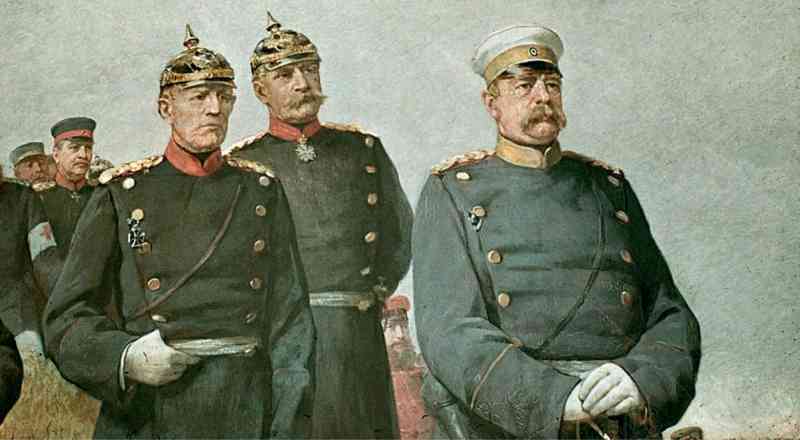

Bismarck was called the "Iron and Blood Chancellor" largely because of an impassioned speech he made at the beginning of his term. But everyone can say bold words, but only those who can truly turn their harsh words into reality can win the praise of "well-deserved". Iron and blood, these two simple words, represent the embodiment of a country’s highest will - armed forces.
Prussia’s economic boom
On September 30, 1862, Bismarck, who had just been appointed Prime Minister and Foreign Minister of the Kingdom of Prussia, excitedly came to the Prime Minister’s residence at 74 Wilhelm Street, Berlin. Today he will preside over the National Budget Committee’s review of various government expenditures in 1863. And it was this "difficult" budget that prompted Bismarck to jump from ambassador to France to the head of Prussia.
The main currency unit of Prussia at that time was still the silver coin "thaler" forged during the Holy Roman Empire. However, the Imperial Thaler, which weighed 29.2 grams and contained 93.7% silver, had already withdrawn from circulation. With the expansion of the "Prussian Customs Union", the Prussian Thaler (weighing about 22.2 grams and containing 75% silver) circulated in northern Germany gradually merged with the "Agreement Thaler" (cast in Austria, originally weighing 29.53 grams and containing 87.2% silver) in southern Germany. Through the "Vienna Monetary Agreement" of 1857, the common currency in the German region was unified into the "Union Thaler" with a weight of 18.52 grams and a silver content of 90%
As the leading state in the German region, Prussia’s strength is naturally built on a strong economic foundation. According to relevant records, at the end of Frederick the Great’s reign, Prussia’s annual fiscal revenue was only 7 million thalers. But in the 1840s, when Marx criticized Finance Minister von Bodelschwenk, Prussia’s annual fiscal revenue was above 70 million thalers. Although there was inflation, a rough calculation shows that Prussia’s economic size has increased by more than 10 times.
Where did all this money come from? According to Marx and Engels’ analysis, the rapid growth of Prussia’s economy originated from two powerful engines: agricultural reform and industrial investment. In 1810, in order to fight against Napoleon, Frederick William III, then King of Prussia, issued the famous "October Decree", announcing the abolition of serfdom in all manors. So far, capital and population that had been imprisoned on the land for a long time have been able to circulate rapidly.
After the serfs who "turned over and sang" obtained land, they became a new source of tax revenue for the country. According to Engels’s estimate: "The amount of money that the peasants paid to the nobles and government offices in order to get rid of the taxes and labor service illegally imposed on them was at least 300 million thalers. (Volume 21 of "Collected Works of Marx and Engels": "History of Prussian Peasants")
In addition to paying taxes, Prussia’s agricultural reforms also greatly liberated productivity. Grain and cotton harvested from the fertile black soil were continuously sent to ports and transported to Britain in exchange for real foreign exchange. These incomes, along with the financial capital flowing in through banks and stock exchanges, further promoted the development of Prussian industry:
"From 1840 to 1854-1855, investment in railways alone increased from 19 million Prussian thalers to 154 million thalers. The cost of the railways now under construction is set at 54 million thalers; in addition, the government approved the construction of new railways at a cost of 57 million thalers. From 1849, 87 joint-stock companies appeared with a capital of 83 million thalers. From 1854 to 1856, 9 insurance companies were registered with a capital of 22 million thalers. In these two years, another 6 joint-stock companies opened a large number of textile factories with a capital of 10.5 million thalers." ("The Complete Works of Marx and Engels", Volume 11, "Prussia")
A wealthy country naturally needs a strong army. It was with a strong economic foundation that on February 10, 1860, at the behest of then-regent William I, the Prussian government submitted a military reform plan with a total budget of 9.5 million thalers to the House of Representatives. Objectively speaking, although Prussia has long been regarded as a synonym for "militarism" by other European countries, the size of its army has not increased much since the Napoleonic Wars.
Among the powerful countries on the European continent at that time, the Prussian army had only 140,000 people, which was a big gap compared with the 990,000 Russian army, 420,000 French army, and 310,000 Austrian army. For this reason, William I, who had been in the army for 50 years, advocated the expansion of the army at the beginning of his reign and intended to extend the service period of soldiers.
William I’s idea was not a fantasy. After all, the Prussian army was still recruiting soldiers according to the military service law of November 21, 1815. In 1815, there were 11 million registered citizens in Prussia, and 40,788 people were recruited each year. By 1858, due to the liberation of serfs and natural population growth, the total population of Prussia had reached 18 million, and the number of additional troops should be increased proportionally to 65,000. However, such a reasonable military expansion plan was resisted by the Prussian House of Representatives and failed to be approved for a long time, and eventually even triggered a constitutional crisis that almost caused William I to abdicate.
"Iron" and "Blood"
After receiving the order, Bismarck had to solve this long-standing political problem first. Unexpectedly, at the beginning of the meeting, several members of parliament, led by Baron Falkenbeck, made what they called "high-sounding speeches" with sarcasm
Although they did not directly oppose the expansion of the army, they listed the economic data of Prussia’s bumper harvest of agricultural products exported to Britain. They introduced the development of artillery in European countries in recent years and satirized that the Prussian army at that time was still dominated by infantry and remained in the backward stage of the medieval Junker nobles commanding a group of farmers. The implication is that instead of recruiting more young and strong people to join the army, it is better to let them stay in the fields to farm. If the country really has money, it might as well use it to buy a few more new cannons.
These irresponsible words greatly stimulated Bismarck, who was already stubborn. He first complimented Baron Folkenbeck, and then bluntly pointed out: "The reason why Germany dared not neglect Prussia was not Prussia’s liberalism, but its strength..." Then Bismarck looked back on history and said proudly: "Prussia must gather its strength and hold it in its hands until the favorable opportunity comes, which has come again and again and has been missed. Since the Treaty of Vienna, our borders have not been properly designed for a sound political collective."
Speaking of excitement, Bismarck said more decisively: "The current major issues cannot be solved by speeches and majority resolutions - this is exactly the mistake made in 1848 and 1849 - it can only be solved with iron and blood!" As soon as Bismarck said this, the scene was immediately silent. It’s not that the parliamentarians were impressed by Bismarck’s momentum, but they were good at choosing words and sentences and keenly captured the ambiguity and flaws in this impromptu speech.
The pain point of Prussia
What exactly is wrong with Bismarck’s words? "Iron" and "blood" are indeed eye-catching, but more importantly, the two sensitive words "Vienna Treaty" and "1848 and 1849" appeared in it.
In 1814, on the corpse of Napoleon’s Empire, the heads of major European powers gathered in Vienna, the capital of Austria, and held a long meeting aimed at dividing spheres of influence. Although most of the time of this summit was more like a luxurious party of the European royal family, even the Austrian Prince Metternich who presided over the meeting said self-deprecatingly: "No resolutions are made in the meeting, only dancing in the meeting." But under the surface of harmony, European countries have their own calculations.
Prussia formed an alliance with Tsarist Russia, intending to annex Poland and Saxony respectively. However, this plan was fiercely opposed by other powers. On January 3, 1815, Austria and Britain linked France, Hanover, the Netherlands, Bavaria and other countries, threatening war to force Prussia and Tsarist Russia to make concessions. Tsar Alexander I, who did not hesitate to condescend and personally fight, could answer proudly: "I have 200,000 troops in Poland, who will try to drive me away!" But Prussia, which was seriously injured in the "Napoleonic Wars", did not have such confidence.
In the end, the Tsarist Russian Empire was only slightly reduced by Poland. But Prussia only got 2/5 of Saxony. Although as compensation, the powers allowed Prussia to annex the "Rhineland-Westphalia" in western Germany, this territorial exchange was a source of endless trouble for Berlin. At this point, the Kingdom of Prussia was forcibly divided into two parts, the East and the West, with the Kingdom of Hanover, owned by the British royal family, lying in the middle.
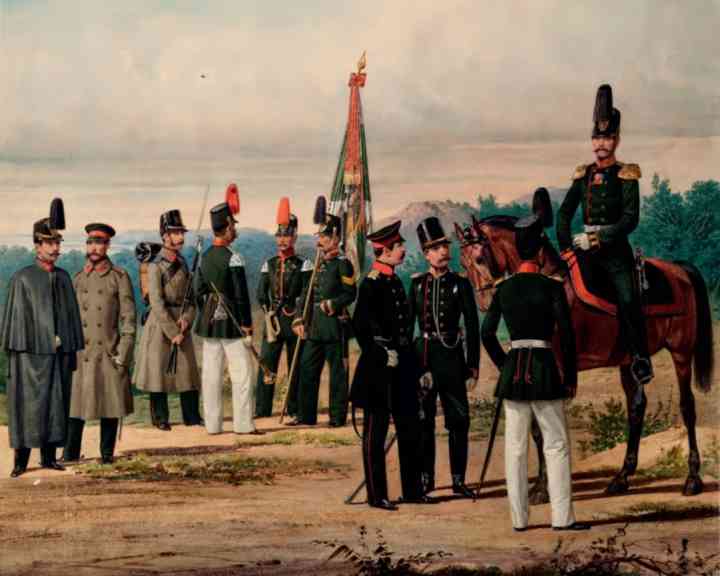
What made the Prussians even more dissatisfied was that the Vienna Conference maintained the disintegration of Germany. Although nominally a five-power committee consisting of Austria, Prussia, Bavaria, Hanover and Württemberg directly led a political union consisting of 38 states and free cities. However, there were three non-German monarchs in this so-called "German Confederation". Through the possession of the Kingdom of Hanover, the Duchy of Holstein and the Grand Duchy of Luxembourg, Britain, Denmark and the Netherlands all had a "back door" to interfere in Germany’s internal affairs.
The Vienna Conference’s redivision of the German territory naturally aroused strong dissatisfaction among the Germanic national elite. In the following decades, protests and uprisings under the banner of "unity and freedom" occurred one after another, and finally reached a climax in the "Year of Revolution" in 1848, and even Austria and Prussia were not spared.
Relying on its powerful armed forces and Frederick William IV’s smooth political skills, Prussia took the lead in quelling domestic unrest. However, facing the "Imperial Constitution" passed by the "All-German National Assembly" in Frankfurt on March 28, 1849, Frederick William IV, who was elected as the "German Emperor" with 290 votes in favor and 248 abstentions, was unwilling to "pick up the crown in the ditch".
The reason why Frederick William IV gave up the throne that was almost within his reach was not only because he was dissatisfied with the "Imperial Constitution" that restricted the emperor’s power, but more importantly, the king clearly knew that Prussia was not yet ready to unify Germany at this moment, and its armed forces were not enough to resist the interference of Austria, Tsarist Russia and other powers, and it was also unable to suppress the possible backlash from various states.
Under the situation where Frederick William IV refused to recognize the "All-German National Assembly", the Prussian army became the vanguard of maintaining the state of division in Germany. In early June 1849, Prussia, Hanover and Saxony formed the "Three Kings Alliance" and launched an attack on the civilian armed forces that controlled the "Baden-Palatinate" region and supported the "Imperial Constitution", and finally forced the latter to surrender on July 23.
Knowing the above pain points, we can understand why the participating members of parliament walked out of the Prime Minister’s residence and eagerly reported Bismarck’s speech to the media. In order to attract attention, the Prussian newspaper deliberately reversed the order of "iron" and "blood", which also showed the bloodthirsty nature of the new prime minister. It is also said out of context that although Bismarck was speaking impromptu in private, it can better show his true thoughts: the reason why this loyal servant of the Hohenzollern family strongly advocated the expansion of the army was to suppress the people internally and to launch wars externally.
Once the content of the "Iron Blood Speech" was disclosed, it really triggered a wave of criticism against Bismarck in Prussia. It should be noted here that under the education system at that time, most of the people who could afford and understand newspapers were the bourgeoisie who had received a systematic education. In their eyes, Bismarck’s suppression of the people might not have much to do with them, but his intention to start a war abroad would disrupt their comfortable lives.
In the eyes of these Prussian elites, if Prussia wants to unify Germany by force, it will inevitably invite interference from Austria, France, Tsarist Russia and even Britain. From the comparison of military strength, Prussia is not strong enough to deal with any of the above powers alone, not to mention that its own country is located in a place where four wars are fought and divided by the east and the west. Once the war starts, it will inevitably be attacked from all sides, and the result can only be more miserable than the "Seven Years’ War" in which Frederick the Great participated.
Close friends and generals
Bismarck’s confidence comes from the trust of William I, the "first officer of Prussia", and to a large extent from the strong support of the Prussian army for Bismarck. In fact, just after the National Budget Committee was dismissed, Army Minister Albrecht von Roon immediately found Bismarck and joked: "Old Brother, you are too careless. You are so impulsive and irrelevant. You will only give people excuses! You have only been in office for a week! Can’t you just pretend to be stupid and take your time?" These words are obviously not complaints but slightly approving ridicule. After all, he and Bismarck have been close friends for nearly 30 years.
According to Bismarck’s memoirs, he met von Roon, who was 12 years older than him, in 1833. Interestingly, from von Roon ’s resume, he happened to be seconded to the Berlin Geological Bureau because he was dissatisfied with the inefficiency of the Prussian Army. Because he no longer had the status of an officer, von Roon, who was assigned to perform field mapping tasks, had less convenience and could only temporarily live in the Bismarck family’s manor.
It can be imagined that von Roon, a young officer who was not appreciated for his talent, met Bismarck, an ignorant boy who was curious about the outside world. The two people under the same roof soon established a deep friendship in the wantonness of "waving their hands and scorning the marquis of the past". Although the two soon went their separate ways and showed their strengths in their own fields, at some key points in Bismarck’s life afterwards, von Roon, a close friend, would always suddenly appear and give him guidance.
In 1836, due to the wide acclaim of his monograph on the military geography of the German region and the whole of Europe, von Roon was transferred back to the Surveying and Mapping Bureau of the Prussian Army General Staff. In the following In 12 years, von Roon devoted himself to academic research, published three sequels to his three-volume "Principles of Natural, National and Political Geography", and was promoted to major.
However, in 1847, when Bismarck was infamous for his inappropriate remarks at the Confederation Congress and could only temporarily stay away from the public eye through his honeymoon, von Roon still resolutely rushed to Merano in northern Italy to meet him. According to some biographies, the two then "held serious political talks on the poplar-shaded avenue with mountains in sight." Shortly after this meeting with von Roon, Bismarck "coincidentally" met Frederick, who was on vacation in Venice. 41
Although Bismarck only said lightly that he "stayed at the home of my friend Ron" when describing his performance in the political turmoil in Prussia in 1848, von Ron was already an advisor to the "third prince" Prince Karl at that time. It was under von Ron’s help that Bismarck, who had never had much contact with the military before, visited Prussian military veteran von Mollendorff and Berlin garrison commander von Prittwitz.
After the situation finally calmed down, Bismarck was appointed as the Prussian ambassador to Frankfurt, and von Roon also stepped out of the shackles of the academic school and followed William I to command the Prussian army to besiege the "Baden-Pfalz" area. With his familiarity with military geography, he emerged and rose rapidly in the following years. In 1850, von Roon was promoted to major general, and in 1859 he was promoted to lieutenant general. As a member of the Army Reorganization Committee and Minister of the Army, he began to promote the comprehensive reform of the Prussian army with the support of veteran Bittenfeldt and Chief of Staff Moltke. The reform plan mentioned above, "extending the service period of the army from 2 years to 3 years; abolishing the National Reserve Army; replacing the equipment of the standing army, and allocating 9.5 million thalers as military expenses every year from next year", was proposed by Roon in the House of Representatives.
Despite the experience of being Prussian ambassadors to Russia and France, the communication between Bismarck and von Roon has never been interrupted. Judging from the contents of some letters disclosed by Bismarck in his memoirs, the two not only exchanged their views on the current situation in depth, but also often encouraged each other. Based on the wording habits of European nobles at that time, some of the contents are even disgusting to read.
What makes future generations most imaginative is that the military reform bill could not be passed in parliament, William I was deeply trapped in the "abdication crisis", and von Roon, who commanded the Prussian army and navy, was also at a loss. The first thing he thought of was to recall Bismarck. And the telegram of "delaying the crisis, come quickly" that played a vital role in Bismarck’s life and even the fate of Prussia was sent by von Roon in the name of his nephew. Bismarck even admitted in his memoirs that this signature was a code that he and von Roon had agreed on long ago.
Although we can no longer speculate what other unknown secrets there are between Bismarck and von Roon, it is certain that their relationship has long gone beyond the scope of ordinary friendship. This may be a sworn brotherhood. Bismarck’s ability to become prime minister was largely due to Roon’s recommendation to the king; it was also because Bismarck believed that von Roon, the leader of the Prussian army, could support him that he dared to speak impromptu at the National Budget Committee. Soon, a crisis from the East made Bismarck’s "iron-blooded speech" no longer regarded as "inappropriate remarks", but was widely praised by the Prussian people.
Railways, telegraphs, and the General Staff
In January 1863, the largest national uprising in history took place in Poland. As the rebels had been plotting for a long time, the uprising soon spread like wildfire, and the Russian Empire was forced to continuously send troops to Poland. Bismarck reacted strongly to this. In addition to his Junker aristocratic nature of hatred for Poland, he was more worried that the flames of the Polish uprising would spread to Prussia, further delaying his grand plan to unify Germany. However, the rapid response of the Prussian army quickly dispelled his concerns. Under the dispatch of Chief of General Staff Moltke, four elite Prussian corps quickly assembled from Western Prussia and other places to the Prussian-Russian border area.
The full name is Helmut Karl Bernhard von Moltke, who was an outlier in the armies of all European countries at that time. Because before he officially became the Chief of Staff of the Prussian Army in 1857, he had never really commanded any Prussian troops, even just a division, a regiment or even a battalion. Because in a sense, he was not a Prussian.
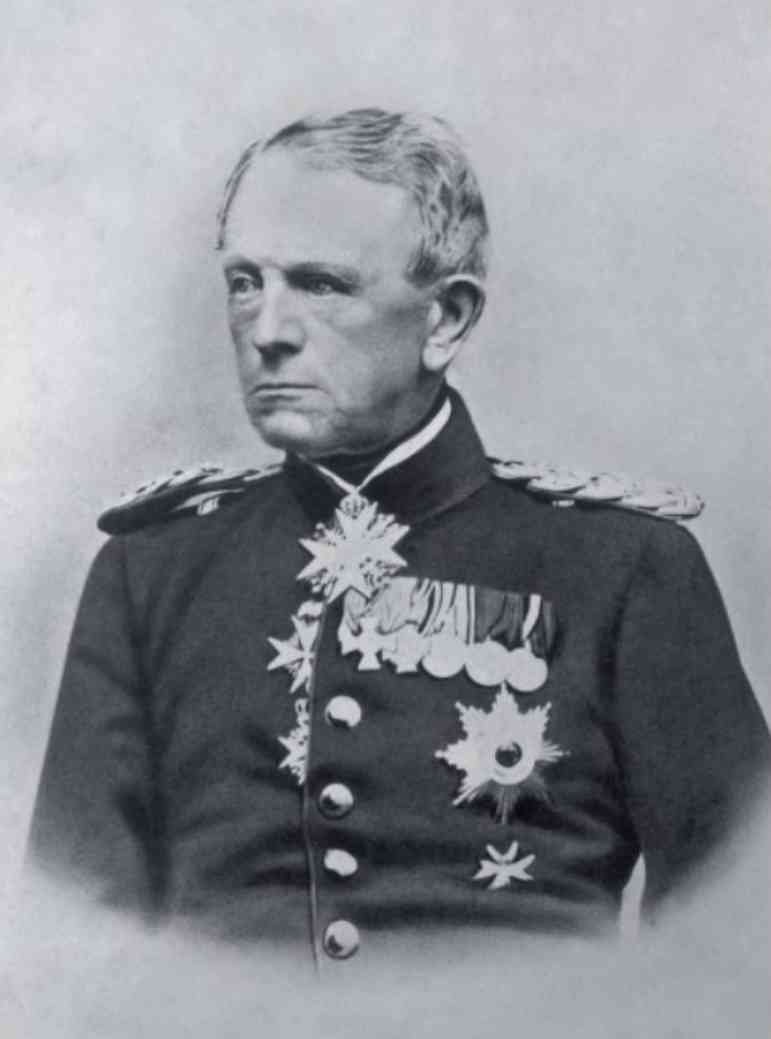
Moltke was born in Parchim, Mecklenburg on October 26, 1800, but his father went to serve in the Danish army after he went bankrupt and was once promoted to general. Therefore, when Moltke was young, he received education in the Royal Danish Military Academy, and later served as a second lieutenant in a Danish infantry regiment. It was not until he visited Berlin in 1821 that he had the idea of returning to his roots, and resolutely transferred to the Prussian Army the following year.
According to Moltke’s idea, if a wanderer like him returned, the Prussian Army would certainly make great use of him, so as to set an example for recruiting talents. Unexpectedly, the Prussian Army placed him in the "Frankfurt Guards Infantry Regiment" on the Oder River as a second lieutenant. But when Crown Prince William first saw this skinny and slender young officer at the military parade, he casually said, "This Dane is not a good material." Moltke was put on a separate list and drew maps in the Surveying and Mapping Bureau of the Prussian Army General Staff for a full 7 years.
Objectively speaking, Moltke’s time was not wasted. In the Surveying and Mapping Bureau of the Prussian Army General Staff, he became familiar with all the basic work of the General Staff. The changes in the strategic concepts and war forms of the Prussian Army also gave Moltke, who was good at map work, a place to use his skills.
In 1815, Clausewitz completed his classic work "On War", and the advent of this war theory had a decisive impact on the growth and development of the German officer corps for nearly a hundred years thereafter. Clausewitz believed that the situation of future wars should be It is to use all forces without scruples to quickly crush the enemy’s heavy troops and even national structure. This concept of the first battle is the decisive battle undoubtedly means that the Supreme Command cannot formulate a plan after the war starts, and everything must be prepared in advance. In the process of drawing countless battle maps, Moltke has actually commanded thousands of troops to attack each other thousands of times.
In 1835, Moltke’s talents were finally recognized by the top leaders of the Prussian Army, and he was sent to the Ottoman Empire as a military adviser. Interestingly, from this point in time, von Roon, who was transferred back to the General Staff Mapping Bureau in 1836, was probably to fill the vacancy left by Moltke. In 1842, Moltke, who returned to Prussia, was finally promoted to major. But he still did not have the opportunity to enter the front-line troops, but was transferred to the construction site of the Hamburg-Berlin railway as a mapping expert. But it was during the period thereafter that Moltke fully realized the great prospects of railways in future wars.
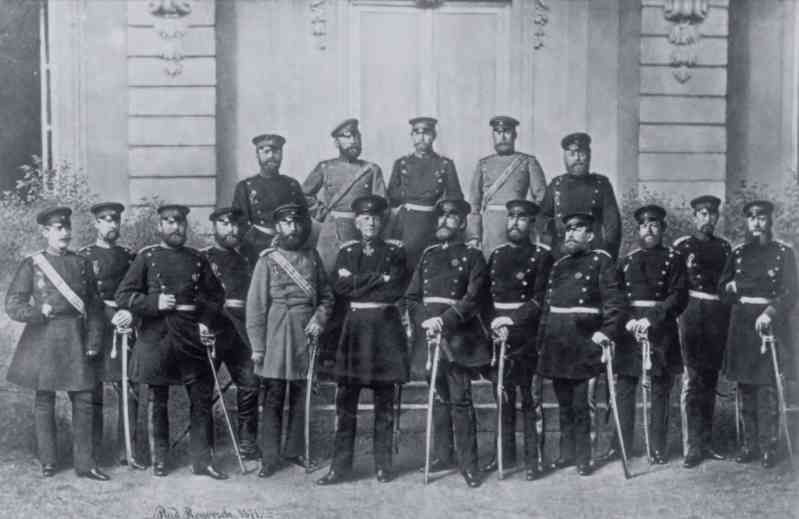
In Moltke’s view, the popularization of steam locomotives and railway networks and the widespread use of wired telegraphs made long-distance mobility and multi-channel coordination of troops possible. In the past, Napoleon usually chose to assemble troops before the battle due to the lack of road networks and communication means. The idea of dispersed advance of the famous Prussian general Gneisenau was also limited for the same reason. Moltke believed that in the future, each unit would disperse on the outside until the battle.
If it was just a simple theoretical innovation, Moltke would certainly not have become the Chief of Staff of the Prussian Army. After becoming the adjutant of Crown Prince William in 1855, Moltke began to gradually infuse the future Prussian king with his thoughts on war and his opinions on the reorganization of the General Staff. Eventually, the other party was relieved to hand over the General Staff to him after he became the regent.
In the following years, Moltke expanded the size of the Prussian Army General Staff. While updating the weapons and equipment of the front-line troops, he also incorporated railways and telegraphs into the daily training system of the troops. As a technical officer, Moltke also absorbed many professionals in statistics, national economics, geography, and surveying into the Prussian General Staff.
It was with the strong military force as a backing that Bismarck could send a special envoy to St. Petersburg to propose to Tsar Alexander II a plan for the Russian and Prussian armies to jointly suppress the Polish insurgents. Although Tsar Alexander II had to call William I uncle from the perspective of family ethics, international politics was not a family affair after all. On the one hand, the Russian army did not want to share their honor and spoils; on the other hand, the rapid assembly of the Prussian army also made Alexander II quite afraid of it, so he could only politely decline Bismarck’s "good intentions" to avoid inviting wolves into the house.
On February 8, 1863, General Alvensleben, the plenipotentiary representative of William I, and Russian Foreign Minister Gorchakov signed a military cooperation agreement in St. Petersburg for the two countries’ armies to eliminate Polish insurgents along their borders and exchange intelligence on the Polish independence movement. This "Alvensleben Agreement" not only meant that the friendship between Berlin and St. Petersburg was consolidated, but also eliminated Prussia’s worries in the East. Bismarck could finally let go and do a big job in the other three aspects.