
In addition, the full text of the Chinese observers’ thoughts on the Russian-Ukrainian war is reproduced here
This war is a war that tears the world apart, and a new East-West relationship is taking shape. The indisputable fact is that the world will never be the same again.
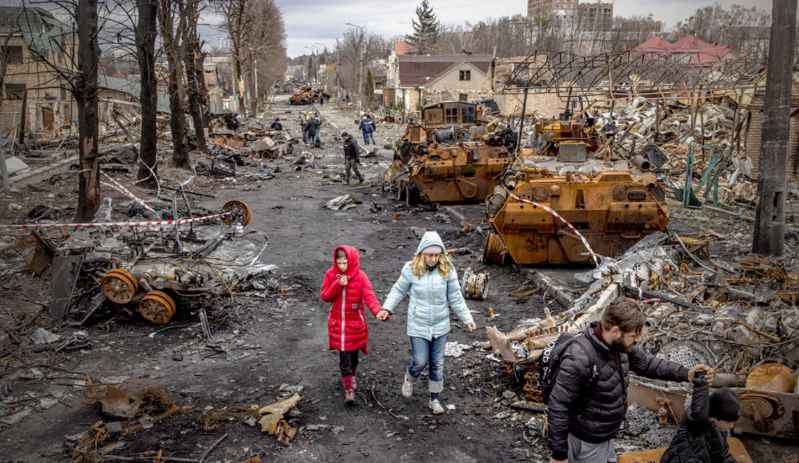
The war was brutal and you came and I went
On February 24, 2022, Russian President Putin announced a "special military operation" against Ukraine. At first, the Russian army launched assault operations against Ukraine in three combat directions at the same time-the Russian army on the eastern front, with the cooperation of pro-Russian armed forces in Luhansk and Donetsk, controlled the entire territory of Luhansk and Donetsk, and at the same time besieged Kharkiv in northeastern Ukraine, striving to connect with Luhansk. The focus of the Russian army on the northern front is to go west through Sumy Oblast and south through Chernihiv Oblast, and attack the Ukrainian capital Kiev from two directions. The Russian army on the southern front mainly attacked northward from the Crimean Peninsula, striving to form a pincer with the Russian army on the eastern front and encircle the Ukrainian army east of the Dnieper River.
The Ukrainian side blocked the enemy layer by layer, and after receiving a large amount of Western aid, it basically withstood the fierce first wave of the Russian army’s offensive. Among the three combat directions of the Russian army, except for the relatively quick capture of Kherson on the southern front, it failed to completely crush Ukraine’s resistance. The Russian airborne troops on the northern front failed to fight for the airport near Kiev and failed to establish a solid foothold. By mid-April 2022, the Russian army had to completely abandon the northern front and focus on the eastern and southern fronts.
After that, the Ukrainian army gradually accumulated strength and used a large number of advanced weapons assisted by the West to launch a counterattack to recapture the entire Kharkiv Oblast and the city of Kherson on the southern front. On September 23, Russia copied the Crimea model in 2014 and planned a "referendum" for the four Ukrainian states of Luhansk, Donetsk, Zaporizhia, and Kherson to join Russia, but "the referendum results have not been recognized by the international community, including our country.
Since January 2023, the Russian-Ukrainian war has entered a new stage and is still developing. The Ukrainian army’s counterattack has been insufficient. The Russian army on the eastern front has basically stabilized its position, first shrinking its forces and then counterattacking locally. At the same time, the situation on the southern front has basically remained stable. On January 17, 2023, Putin announced that the Russian army would be expanded to 1.5 million, and mobilize the whole country. According to various intelligence data, both sides have assembled a large number of troops on the eastern front, and are making final preparations for the upcoming war. The outcome will basically determine the outcome of the entire Russian-Ukrainian war. Will the Russian army launch another flank offensive on the southern front and use a "left hook" to flank the Ukrainian army on the eastern front? It will be judged and thought about later.
Return to the traditional battlefield
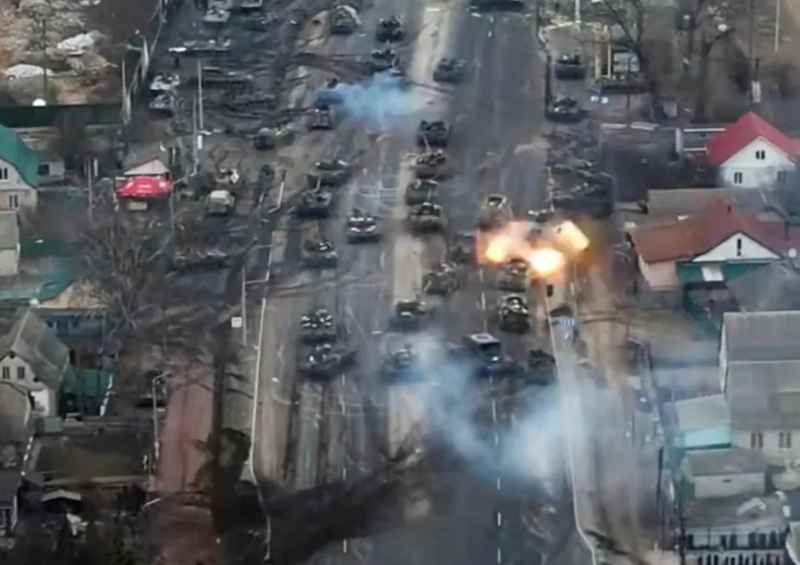
From the large number of pictures disclosed on the Internet and social media, aerospace technology and weapons are widely used in this war, but basically land combat is still the core means, and the front line needs to be fought for inch by inch. Neither side has gained absolute air supremacy. Russia launched missiles to attack major Ukrainian cities, and shot down and destroyed many Ukrainian aircraft in the early stages of the operation, but it did not suppress Ukraine’s combat capabilities. On the contrary, Ukraine, which is relatively weak, made full use of large and small new and old drones, flexible tactics, and took the initiative to dilute some of the Russian army’s air advantages at the battlefield level.
The "air decisive victory" scenes like the US attack on Iraq and bombing of Kosovo did not appear in the Russian-Ukrainian war, and the battlefield seemed to return to a traditional land battle style. The Russian army turned the annihilation war into a stalemate, fully exposing its shortcomings. The problems of the air force are mainly reflected in the aging of equipment, insufficient informationized combat capabilities, and a significant decline in flight training levels due to economic influence. Ukraine and the Western world seized the opportunity and launched waves of cognitive operations, unprecedentedly dwarfing the Russian army and its combat capabilities.
The Russian-Ukrainian war is essentially a struggle between the two sides for their respective development interests based on the traditional geopolitical map. Russia has historically had the "habit" of building strategic defense lines on the territory of other countries. In the early days of World War II, the Soviet Union launched wars against Poland and Finland, and established the Warsaw Pact as the leader after the war, stationing troops in various Eastern European countries. The starting point of decision-making is the same. Ukraine’s loss of Crimea has intensified its sense of security anxiety, and seeking to join NATO for asylum has become the mainstream consciousness of the elite group. In addition, its eastern part is an industrial area, and its southern part is adjacent to the Black Sea and has an outlet to the sea. It is the lifeline of the country’s survival and will never be easily given up.
Facing the severe situation of NATO’s continuous eastward expansion and the possibility of accepting Ukraine, Russia is like a thorn in the back and will inevitably play the first hand. The real interests of the two sides are contradictory. Under the instigation of their own rising radical nationalism, there is no possibility of seeking a compromise solution. This not only determines that war is inevitable, but also determines that the war will inevitably revolve around the competition for land territory. What’s more, the United States and Britain have taken the "offshore balance" strategy to the extreme, awakening Europe’s fear of the re-emergence of the "new Soviet Union" and even the Tsarist Russian Empire, and successfully organized a group to aid Ukraine. The return of the Russian-Ukrainian battlefield to the competition for a city, a pond, or even a village and a town has its own development logic.
Air supremacy is still the most important
Since Russia and Ukraine are basically fighting a land war, then, after the germination of World War I, the verification of World War II, and the subsequent improvement and update of the "air supremacy" series of theories in local wars, are they outdated? Of course not.
During the Gulf War, the US military implemented Colonel John Warden’s "five-ring" combat thinking. The first wave of air strikes focused on the Iraqi leader’s residence, the combat command center, the air defense early warning system, and the C4ISR system, based on destroying the enemy’s "central nervous system". Before the Iraqi army received the combat order, the command system had collapsed and the war could not be fought, which laid an absolute foundation for the US military to quickly establish air superiority. On the other hand, at the beginning of the Russian-Ukrainian war, the Russian Air Force always dispersed the insufficient precision-guided munitions and insisted on attacking tactical-level targets, which is indeed puzzling. There are at least several possibilities for this situation.
The first is that the Russian high-level intelligence was distorted, and they fantasized that the scale was controllable. They tried to fight for peace and win quickly from the beginning. They really distributed firepower according to the concept of "special military operations" and let go of the opponent’s decision-making team, intelligence network, and command system, and focused on attacking the enemy on the front line. The second is the influence of combat theory. The combat style is old-fashioned and follows the tactics of World War II. The air force is used as the front-line fighter aviation and bomber aviation to cooperate with the ground forces, thereby further dispersing the air power. The third is other possibilities. After all, Russia is one of the few air powers in the world. Why is it so difficult? There must be profound reasons.
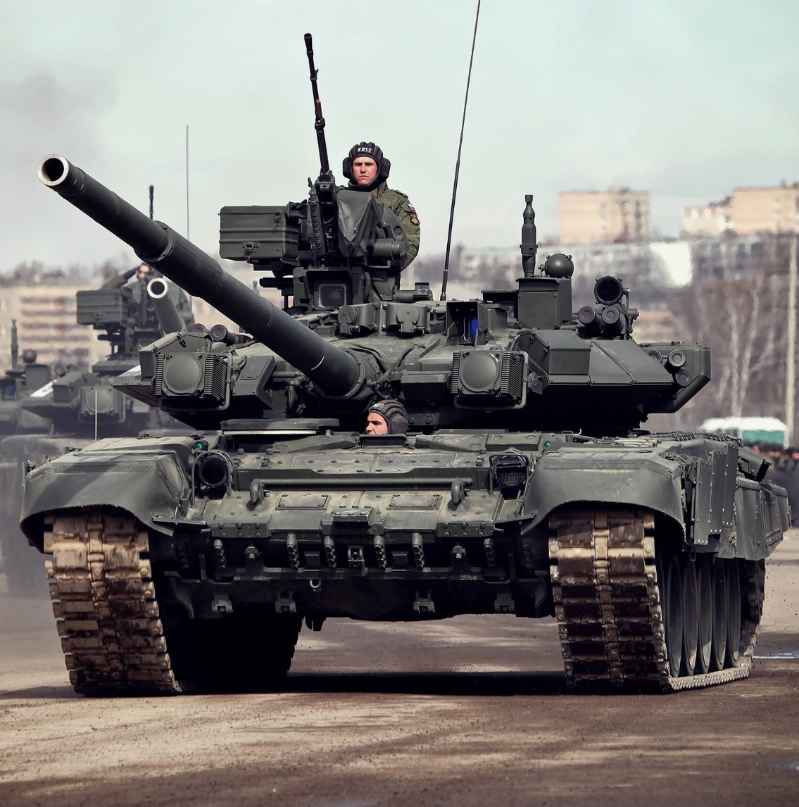
Military affairs, as a science, are obviously not metaphysics, and their operation naturally has rules to follow. If it is only attributed to the decline of Russia’s national strength and the lack of money to develop advanced aviation equipment including drones, it is definitely biased. The wars that Americans can fight cannot be fought by Russians. If the Russians don’t fight well, will the Americans win? We may not forget that the United States lost the entire war in battlefields such as Korea, Vietnam, and Afghanistan even though it had "air superiority". Every war is mixed with very complex factors. How to fight, what to fight with, and what to fight like, in addition to the technical level, there are many influencing factors. Let’s give examples.
In October 2015, at the Moscow Air Show, the author and his colleagues had the honor to interview on site. Looking around, except for the Su-57, which is a newly developed fifth-generation fighter, the "Soviet" air force equipment is basically familiar faces in the Cold War, and there are not many new ideas and new models. That year happened to be shortly after the "referendum" of Crimea joining Russia. Russia and Ukraine broke up completely. Ukraine did not participate in the exhibition. The scale of the air show was not very large.
In 2015 In 2008, the U.S. military’s reconnaissance and strike drones such as the Predator and Reaper were already popular. China’s Rainbow and Wing Loong series of drones were also exported and showed their skills on the battlefield. But what about the Russian reconnaissance and strike drones? Walking around the air show, apart from the concept model in the exhibition hall - the S-70 that looks similar to the Su-57 today - there are also many other drones that can be used. Drones, most of them are concentrated in a few booths such as Tupolev, not only in limited quantity, but also in the fields of observation, reconnaissance, artillery calibration, etc. The richness of exhibits and the number of state-owned and private drone companies are not as good as our Zhuhai Air Show.
Obviously, in terms of drones, the Russians have fallen behind the world. Is financial tension the reason for Russia’s slow response? There may be an impact in this regard. But on the battlefield between Russia and Ukraine today, even the drones of Turkey and Iran can be deployed in all directions. What does this mean? No matter how weak Russia is, its financial resources are always above the above two countries. Is there a technical threshold? Russia has its own GLONASS navigation satellite, and its world-class mathematical and scientific talents should be able to develop a few drone algorithm control software. Once the two core technologies of navigation and control of drones are solved, it will not be a big problem to create a reconnaissance and strike drone with excellent performance.
But from 2015 to 2022 when the Russian-Ukrainian war broke out, 7 Years have passed, and Russian drones have not made much progress from an industrial perspective. We can only guess that in the face of advanced technologies such as drones and even artificial intelligence that may affect the future, the Russians’ decision-making mechanism is somewhat slow to respond, or the ability to correct errors in a timely manner is a bit low, but it is not just drones that are affected? At the beginning of 2023, Russian President Putin publicly criticized Deputy Prime Minister Manturov, who was in charge of the aviation industry, exposing the grim fact that Russian aviation manufacturing companies lack government orders. In the war, the front line lacks equipment because companies have no orders. So how and where did the government’s defense budget money go? Further, what caused this situation?
War itself is the yardstick for verifying everything. There are indeed many issues worth thinking about in many fields, including equipment technology, combat theory, and troop construction, including political, economic and social levels. The American practice of "air supremacy" is not completely suitable for the Russian-Ukrainian battlefield, but for the soldiers on both sides of the ground battle, whoever’s combat aircraft can deafen and blind the opponent’s "perception" ability in the first time, and whose drone can get intelligence first and launch fire to destroy the target, is likely to survive. This is the most realistic and universal meaning of "air supremacy" to the soldiers.
"Five-ring" target theory
Colonel John Warden (1943) of the United States Air Force, an important figure in the academic theory of the United States Air Force, developed the "air supremacy" theory and presided over the formulation of the 1990 air combat plan against Iraq. He regarded the enemy as a system and proposed the five-ring strike theory, dividing the enemy targets into five concentric circles according to their importance.
The core of the innermost ring is the enemy leader, including its command structure, military and civilian communications, radio and television systems, etc.;
The second ring is the key elements supporting the enemy system, including key enterprises such as electricity, oil, and military industry;
The third ring is the infrastructure supporting the war, such as roads, bridges, and airports;
The fourth ring is the morale of the enemy people;
The outermost fifth ring is the enemy armed forces.
The essence of the five-ring theory is "capture the king first", the purpose is to disable the enemy’s system, not just to destroy its military power. However, the order of attack depends on the specific conditions. For enemy field forces that seriously affect the achievement of their own combat objectives, the order of attack will often be relatively advanced.
Everything is starting to change
Apart from some confusion, what has changed in the Russian-Ukrainian war?
The rise of drones has changed the rules of engagement.
The reality of the Russian-Ukrainian battlefield has made the military of various countries realize that drones are already essential equipment for combat. In particular, low-cost drones will be developed from medium and large-scale campaign-level equipment belonging to the Air Force to combat-level equipment for multiple arms. Among them, low-cost drones can be modified on the basis of small civilian drones and become equipment for company or even squad use, solving the problem of ground infantry units needing "real-time support" when it is difficult to call for "air support", achieving real-time detection and communication of intelligence, and when necessary, they can also mount light firepower such as grenades, rocket launchers, individual missiles, and ordinary guns to attack key enemy targets. On the battlefields of Russia and Ukraine, small, cheap civilian drones that have been modified have obtained on-site videos, provided target information to friendly forces, and even dropped "badminton" bombs directly on opponents. There are countless similar scenes, which once again verify that the basic logic of war is to seek to win. Whether weapons are advanced or not is relative, but whether people’s subjective initiative can be developed is absolute.
The era of cyber warfare and intelligent warfare has begun.
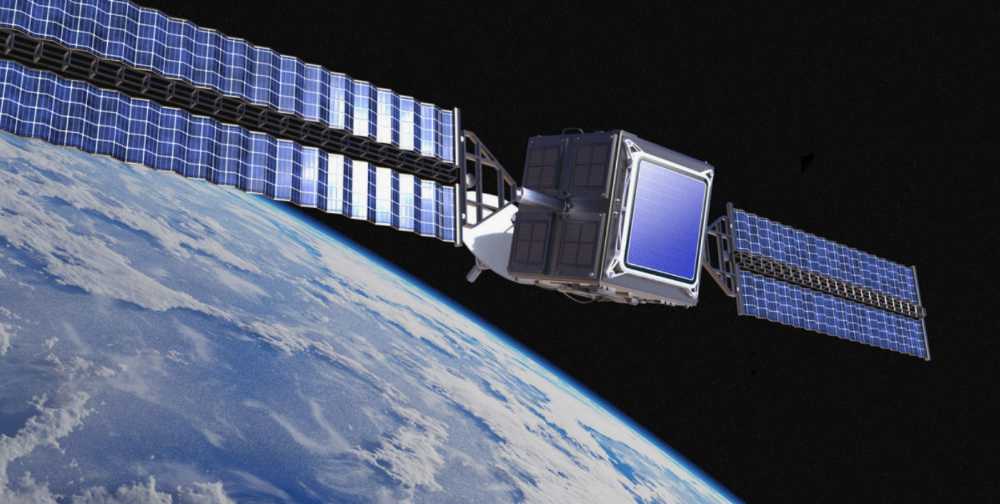
The Russian-Ukrainian war ushered in the era of Internet warfare 1.0. After the initial chaos, the Russian army began to include civilian communication facilities that supported Ukraine’s long-term operations in its strike range. At this time, the "Starlink" terminal equipment that Musk assisted Ukraine played an important role. In addition to being able to quickly restore communications in the war zone, "Starlink" has also become the eyes of the Ukrainian military and civilians to detect Russian targets. After specially developed mobile phone APP software, intelligence can be shared online. In this way, a combat mode similar to "Didi Taxi" was born, based on location, discovering needs, and dispatching orders.
The Russian-Ukrainian war became the first war involving artificial intelligence. American high-tech companies provided the Ukrainian army with an "advanced algorithm combat system", which can summarize a large amount of Russian military information and then summarize and analyze the Russian military’s combat laws through artificial intelligence algorithms, and even simulate the "thinking mode" of Russian commanders. Once "artificial intelligence" is highly integrated with a certain party’s combat system, the corresponding combat effectiveness will multiply exponentially. A new generation of war has arrived, and "electromagnetic dominance" has surpassed the concepts of "electronic confrontation" and "electronic warfare" and has a new dimension. The curtain has been raised. Any slowness and neglect will only lead to more painful lessons.
Cognitive warfare has become the "sixth battlefield" besides "sea, land, air, space and electricity".
As early as 2014, after Russia occupied Crimea, Russia and Ukraine launched cognitive warfare on the Internet and social media. After the full outbreak of the war in 2022, cognitive warfare reached its peak, even affecting the Chinese network and triggering confrontation among netizens. Under the premise that the English Internet occupies an absolute dominant position, Russia has basically lost its voice, and in key scenarios, it has become a minority on the Internet, or even a silent party.
The world pattern is about to change dramatically.
The formation and change of the world pattern are all accompanied by major historical events. In 1648 in the 17th century, the "Thirty Years’ War" between the European Protestant League and the Catholic League ended, forming the "Westphalia" Treaty system, which basically laid the foundation for the modern European pattern. The First World War gave birth to the "Versailles-Washington" system, which ensured a short-term peace in post-war Europe, and its excessive exploitation of Germany became the root cause of the rise of the Nazis and provoked the Second World War. The Yalta system, which was born out of the Second World War, protected the interests of the victors in the form of the United States and the Soviet Union dividing their spheres of influence in Europe. In the post-war world, there were wars in places where the Yalta system could not restrain, such as Asia, but most of the time it was generally peaceful. But after the Cold War, NATO continued to expand eastward, and the foundation of the Yalta system has been shaken. The outbreak of the Russian-Ukrainian war is obviously a key node. If the Yalta system fails and disintegrates, then what can restrain nuclear powers such as the United States and Russia, and what can prevent mankind from falling into disaster again? After more than a hundred years of revolution from the 19th to the 20th century, the Chinese nation finally got rid of the oppression of the great powers and gained national independence. Our ultimate goal has always been to seek national rejuvenation. Some countries that do not want to see China become strong and united have been stigmatizing us, forcing us to admit that we "support" Russia and become their "enemy", and then use Russia and Ukraine to disrupt the Taiwan Strait and find excuses for promoting the so-called "Asianization" of NATO. And some people in China, for some reason or without knowing the truth, have drawn lines based on their positions and sprayed endless saliva at their compatriots.
Since the outbreak of the Russian-Ukrainian war, China has never taken sides with either Russia or Ukraine, and has always advocated peace rather than fighting. China advocates that the purposes and principles of the UN Charter should be observed, and the international system with the UN at its core and the international order based on international law should be maintained. The sovereignty and territorial integrity of all countries should be respected, and the reasonable security concerns of relevant parties should also be respected and resolved. It can be said that China is fair and has a clear position. More importantly, we will never allow any external forces to use the Russian-Ukrainian war to interfere in the Taiwan issue, which is China’s internal affairs!
The storm is coming, but the goal remains unchanged and the determination is firm. Only by clarifying the general context of development can we achieve a broad vision and move forward for the great rejuvenation of the Chinese nation.