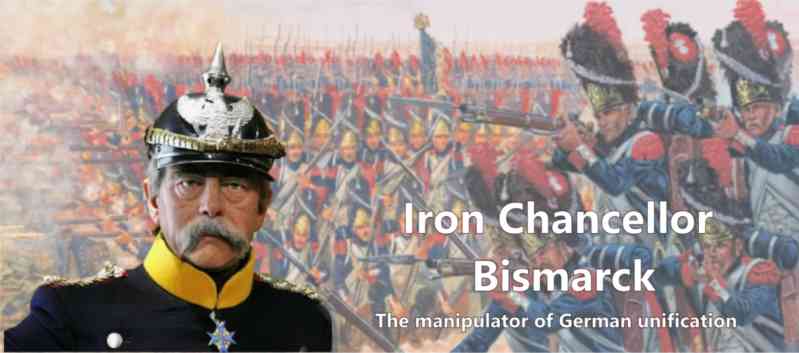

What is Germany? This question is easy to answer in modern times. It is the Federal Republic of Germany west of France, east of Poland, and north of Switzerland. But before the establishment of the Second German Empire in 1871, there had never been a political entity called Germany in history.
"Germany" (Deutsch) comes from the Old German word "people" (Diot), referring to the residents east of the Rhine. For thousands of years, Germany has referred more to the people and language rather than the regime. Even the so-called "First German Empire" in the historian world is only the "Holy Roman Empire of the Germans" in history, not Germany. As the German poet Goethe lamented: "There is not a city, not even a place, that we can say with certainty: This is Germany."
In the feudal era, Europeans used royal or noble territories as the basis for national border division, and the German land was divided into a variety of 300 states and thousands of territories. Although the states are small, they have everything. Merchants who want to do business by land need to apply for passports, get approval documents, exchange for more than a dozen different currencies, and pay a lot of taxes or even bribes. But if you go by sea, you can use the Baltic Sea and the North Sea to conduct free trade with the Netherlands and England. Over time, the northern Germans who are located in the coastal plains and believe in Protestantism and the southern Germans who are located in the inland mountains and believe in Catholicism have split, and it is difficult for them to achieve unification through their own strength.
In the 18th century, the Enlightenment spread to the entire European continent, and more and more bourgeoisie and urban civilians began to think: Why do we have to determine the national borders according to the will of the monarch and the nobles? Why can’t people of the same language and race live in one country?
The concept of nation-state was further strengthened in the Napoleonic Wars in the early 19th century: a nation-state that had experienced the bourgeois revolution had such powerful energy that it could sweep across the European continent on its own and disintegrate the German Holy Roman Empire in 1806. The Germans had suffered and could no longer tolerate the division of their motherland, and hoped to establish a unified German state. After Napoleon’s defeat, the Vienna Conference in 1815 decided to establish the German Confederation. Although it was only a diplomatic platform for the states to discuss matters and did not have state functions, after all, there was an organization named "Germany" and the Confederation Parliament was established. The German states gradually realized the possibility of unification.
The leader of German unification was Otto von Bismarck, the "Iron Chancellor" of the Kingdom of Prussia.
Alternative Junkers: Junkers’ transformation and early career
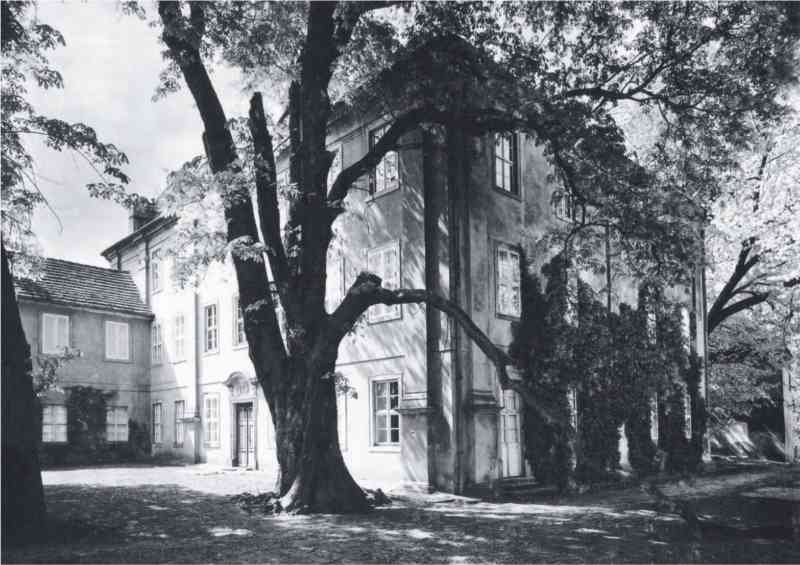
The Bismarck family lived in the Schoenhausen estate, more than 100 kilometers west of Berlin, for generations and was a famous local Junker (German for "landlord"). In the feudal era, Junkers were not only the owners of the land and the commanders of agricultural production, but also the "masters" of the peasants. Junkers had the right to collect labor and taxes from peasants, exercise judicial and police powers, and could even turn the entire family of debt-ridden peasants into serfs. The Junkers were the masters of a village and a piece of land, and the King of Prussia had to win them over and grant many important positions, especially military positions, to the Junker class. According to statistics in 1806, 6,166 of the King of Prussia’s 7,166 officers were Junkers.
Entering the 19th century, France, which had completed the bourgeois revolution, grew rapidly, and Napoleon forced Prussia to cede land and pay compensation. After learning from the painful experience, in October 1807, Prussian Chancellor Stein, modeled on the British constitutional system, instigated the promulgation of the "October Edict", allowing Junkers and civilians to buy and sell land with each other, allowing farmers to leave the manor as freemen and marry freely, and no longer forcing farmers to work for Junkers. Obviously, the goal of the reform is to destroy the land and peasant system on which the Junkers depend for their livelihood.
But top-down reforms are bound to be incomplete. Prussian reforms are intermittent, and reforms are both crises and opportunities to gain benefits. Take land as an example. Although the "October Edict" allows Junkers and civilians to buy and sell land, many places only allow Junkers to buy land, but restrict the freedom of civilians to buy land. Then there must be far more sellers than buyers, and housing prices will fall sharply. Bismarck’s father Ferdinand seized the opportunity and bought the Kniphof estate (now in Poland) from his cousin’s widow for 890 thalers, which was only equivalent to one and a half months’ salary for a Prussian company commander.
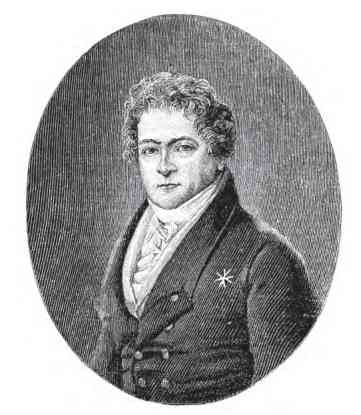
In order to run the new estate, Ferdinand led his family to move to Kniphof, and the original Schönhausen estate was handed over to the housekeeper. After moving, Ferdinand was less and less focused on wheat harvesting like the Junker landlords in the past, but adjusted the products according to market conditions. Ferdinand used a large amount of land to raise sheep and sold wool to Britain by sea to make money. Like other Junkers of the same era, the Bismarck family accepted the capitalist mode of production and transformed towards the bourgeoisie.
While his father was busy and hard-working, Otto von Bismarck also entered his youth, but his path to promotion was by no means smooth.
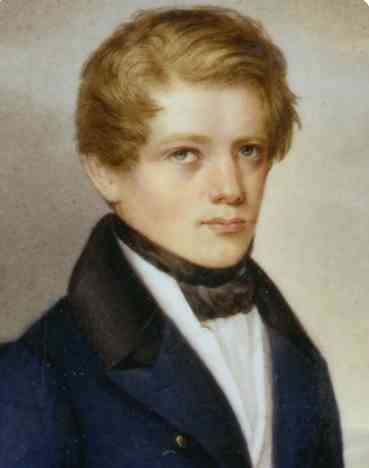
In 1834, Bismarck, 19, graduated from university and set a "three-step" career plan: pass the Prussian civil service exam and work as a trainee judge in the Berlin Court; after one year of internship, strive to be assigned as a judge; then take the exam for the Ministry of Foreign Affairs and strive for an opportunity to be stationed abroad. It should be said that the first two steps of the "three-step" plan were relatively smooth: in May 1835, Bismarck passed the first-level judicial examination and practiced in the Berlin Court; then in July 1836, he passed the second-level judicial examination and came to work in the Aachen Court. However, in the key step of becoming a diplomat, he was hindered by the Ministry of Foreign Affairs.
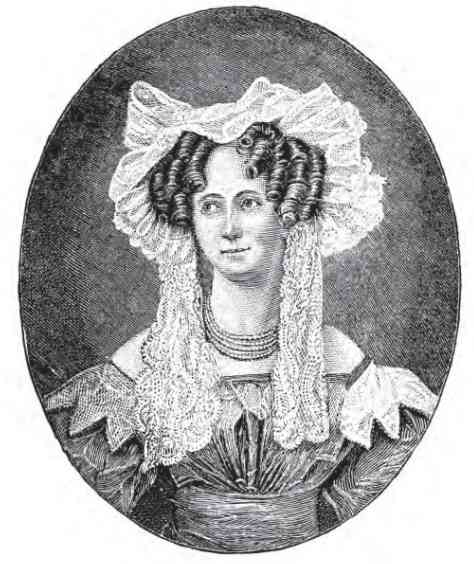
Bismarck’s memoir "Thoughts and Recollections" mentioned that during this period, "few Prussian diplomats were born in Prussia. The son of a foreign ambassador to Berlin could use his birth to bring himself many privileges." At that time, Prussian civil servants and rural Junkers were two different classes with similar status but despised each other. The former were urban bureaucratic upstarts attached to the royal power, and the latter were rural old nobles with land ownership. Interestingly, Bismarck’s mother Wilhelmine was born into a Prussian civil servant family and had a good literary education. Therefore, throughout her life, her mother looked down on her father Ferdinand, who could not recite a few poems. With marriages in such a mess, we can imagine how much discrimination Prussian civil servants had against rural Junkers entering the diplomatic system: diplomats had to know French, have literary literacy, and be able to attend French balls, while rural Junkers were uneducated local rich people, so how could they be diplomats?
Since there was no way to enter the diplomatic system through formal channels, Bismarck took a different approach, hoping to use marriage to improve his social status. Just five weeks after taking the oath of office in August 1836, Otto couldn’t wait to pursue Laura Russell, the niece of the Duke of Cleveland of England, who was on vacation in Aachen. The Duke of Cleveland’s annual income of 37,500 pounds (about 250,000 thalers) was more than 12 times that of the highest-level Prussian civil servant (about 20,000 thalers). If he could marry the Duke’s niece, his living standards would naturally improve by several levels, and he could also use Britain’s political resources.
However, the reality was very bleak. Bismarck later learned that Laura was not the niece of the Duke of Cleveland, but the illegitimate daughter of the Duchess. This hit him hard and he ended the relationship immediately.
But his efforts were not over yet. In July 1837, Bismarck began dating a British lady, Isabella Lorraine. Isabella’s father was a bishop in Leicestershire, England, and the owner of three earldoms. However, according to the regulations of the Church of England for bishops, his income could only be salary and could not be inherited after his death. Seeing that there was no profit, Bismarck also gave up this relationship.
The class failed to improve, and debts rolled in. In order to enter the upper class, Bismarck did not hesitate to borrow money to give to two British noble women. Especially during the days of dating Isabella, Otto took her out for a month’s tour, from the German states to France, and there were many romantic scenes such as moonlight dinners on the way. Love costs money, so Bismarck wanted to turn the tables by gambling, but he lost 1,700 thalers in one go, which was equivalent to losing two manors in his hometown.
Otto was frustrated by the huge debt. He quit his civil service job and left Aachen in disgrace. The only way to pay off the debt was to give up fantasy, go home to farm, and accumulate wealth bit by bit. In 1839, his mother Wilhelmine died, and his father Ferdinand decided to move back to his hometown in Schönhausen. Bismarck took over the Knipphof Manor and began a mediocre rural Junker career for nearly ten years.
However, no one expected that rural life would give him a chance to be reborn.
In order to relieve the boredom of rural life, Bismarck joined the local Pietists in 1843 after being introduced by a friend.
The Pietists are one of the four major Christian Protestant sects reviewed in Max Weber’s famous book "The Protestant Ethic and the Spirit of Capitalism". They advocate piety to God, restraint of desires and self-reflection in daily life. "Piety to God" leads to "reverence for every job given by God" and "abstinence and reflection" leads to the focus on production efficiency and rationalization reforms, which gave rise to the 18th century Prussian Enlightenment thought and the embryonic form of capitalism.
But seeing the turmoil after the French Revolution in 1789, the Pietists stood on the opposite side of the bourgeoisie. After all, the Pietists were mainly Junkers who transformed from landlords to the bourgeoisie. They did not reject capitalism, but their main goal was to preserve the local privileges of the Junker class. The Pietists carried out public relations activities in the Prussian court and army, and Prussians were often invited to Berlin’s gatherings. Civil servants and court members, even King Frederick William IV, often participated before he ascended the throne in 1840.
Why did Bismarck join this circle? It’s simple. Adolf von Taden, the core figure of the Prussian Pietists, lived in the manor next door. In February 1843, Bismarck came to Taden’s house for the first time to attend a Pietist family gathering. In the next two years, he participated in the gathering many times, showing his knowledge and eloquence beyond the rural Junkers, and attracted the attention of many important Pietists, including 50-year-old Ludwig von Gerlach.
Ludwig von Gerlach was a close minister of the King of Prussia. His brother Leopold von Gerlach (Leopold von Gerlach) was a long-time friend of the king. Both of them were core figures in the rural Pietists’ public relations with the Prussian court. In 1844, Ludwig von Gerlach was transferred to the Magdeburg Court of Appeal, where the Bismarck family’s Schönhausen estate was under the jurisdiction of the court. In 1845, his father Ferdinand died, and Bismarck traveled back and forth between the two hometowns. Fate seemed to have pulled the two people together: one of Bismarck’s homes (Kniphof) was in the Pietists’ territory, and the other home (Schönhausen) was under the jurisdiction of Ludwig von Gerlach’s court. Bismarck had more connections with the Gerlach brothers and was able to return to officialdom.
In December 1846, Bismarck was appointed by the Magdeburg government as the general manager of the dike to prevent the flood in February of the following year. During this period, he was engaged to Johanna von Puttkamer, a Pietist, and his interests were tied to those of the Pietist Junkers such as the Gerlach brothers. Then in May 1847, Bismarck was elected as the Chief Councillor of Magdeburg and went to Berlin to attend the first Prussian Federation Parliament.
The reason for convening the Federation Parliament was that Prussia wanted to build the Berlin-Königsberg railway. According to the National Loan Act of 1820, large loans must be approved by the "Imperial Estate Representatives" before they can be passed, so the King of Prussia summoned national representatives to Berlin. But at the beginning of the meeting, the liberal members of parliament gave a long speech, using the "Glorious Revolution" of 1688 in Britain as an argument, demanding that the King of Prussia establish a constitutional monarchy, otherwise he would oppose the loan for building the railway.
Faced with the surging calls for constitutionalism from the Prussian liberals, the 32-year-old Bismarck expressed his opposition: Britain’s Glorious Revolution was completed after "a century of revolution and civil war", and Prussia’s "national conditions" were completely different. "The Prussian king did not hold virtually unlimited royal power by the people but by the grace of God."
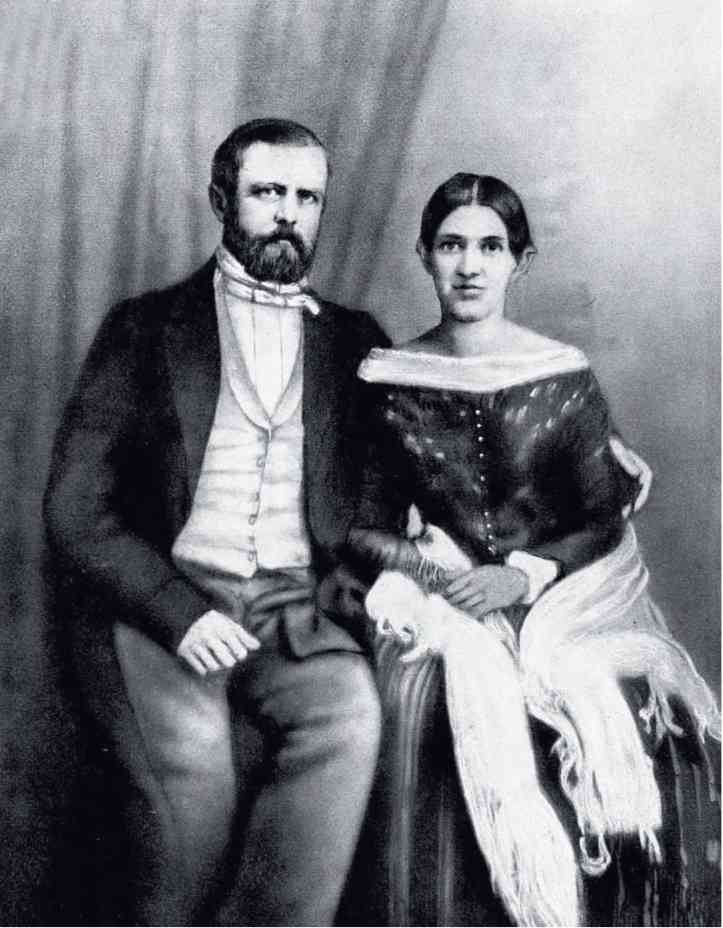
In his speech, the "anti-constitution" argument reflected the results of Bismarck’s early thinking, and the "divine right of kings" thinking showed the interests of Pietists such as Gerlach: once the Prussian constitution was established according to the ideas of the liberals, it would inevitably weaken the local power of the Junkers and thus destroy the Pietists’ Christian worldview. In order to preserve the Junkers and maintain the ideal world of the Pietists, the Prussian political group later known as the "conservatives" gradually emerged. Bismarck was good at manipulating words, and he denounced the liberals’ call for a constitution as "the boring nonsense of the Rhine wine salesman policy", winning the applause of the Junkers, "many strangers shook hands with me in a friendly manner". Most rural Junkers had little culture, let alone speeches and debates, but Bismarck had received higher education and had experience in court. His arguments made the conservatives feel close and promoted the conservatives to unite.
However, the call for a constitution was deeply rooted in the hearts of the people, and Bismarck’s debate was not enough to win a majority of votes for the conservatives. At the end of June, the Federal Parliament rejected the railway loan, and the king had to dissolve the parliament and accept the Russian loan to build the railway. The contradiction between conservatives and liberals became increasingly serious, and then triggered the Prussian Revolution in the European Revolution of 1848.
On March 18, 1848, a revolution broke out in Berlin, like other European cities, forcing King Frederick William IV to accept the people’s demands: restart the cabinet system, allow the drafting of a written constitution, and elect the Prussian National Assembly in a more equal manner.
When the revolution broke out, Bismarck was still at home in Schönhausen. Upon hearing the news, he quickly organized a villager armed force and prepared to march to Berlin to "serve the king." On March 21, he came to Potsdam, the Prussian military capital, and asked the Crown Princess Augusta, who had fled there, to "serve the king." However, the revolutionary movement in 1848 was surging, the king’s opinion was unclear, and Crown Prince William fled abroad. Lady Augusta could not see the situation clearly and could only refuse Bismarck.
Bad news came one after another. On March 25, the king came to Potsdam and asked the army to cooperate with the constitutional action; afterwards, in the Second Federal Parliament, the conservatives were almost voiceless in the face of the surging revolutionary wave, and Bismarck only made a few unsuccessful inquiries. In the Revolution of 1848, the conservatives suffered a major blow. The conservatives did not disappear. The Gerlach brothers secretly established a small royalist group called the "Court Party", which absorbed a large number of conservatives to join. At the end of June, they secretly established the "King and Fatherland Association", and at the end of July, they united with the Junkers of various provinces to establish the "Property Protection League", which initially formed the German conservative party. Bismarck not only participated in the formation of the party, but also contributed to the newly issued conservative newspaper "Neue Prussian Newspaper" and put forward opinions on running the newspaper, becoming "an active and talented adjutant of the Court Party Command" in Gerlach’s eyes.
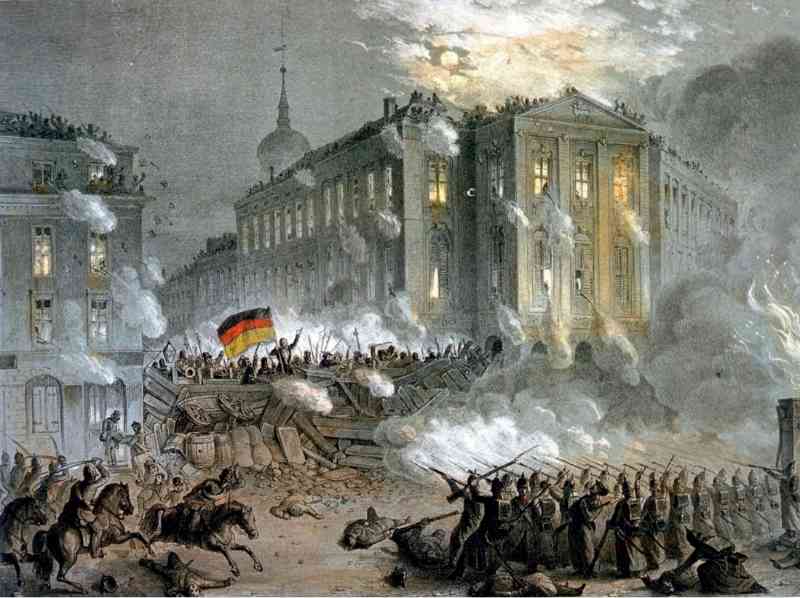
After several months of preparation, the court party contacted Prussian officers and suddenly sent troops to Berlin on November 10, 1848, disbanded the armed forces of Berlin citizens, moved the Prussian National Assembly out of Berlin and dissolved it, and then promulgated a Prussian constitution in early December that retained most of the monarch’s power. Although the Prussian conservatives failed to prevent the introduction of the constitution, at least they resolved the Berlin riot without bloodshed, and the constitution basically met the interests of the conservatives, and the conservatives fought back successfully. Subsequently, Bismarck got his next political opportunity: serving as Prussian Minister to the German Confederation.
Aftermath of the Revolution: Fighting Austria in the Confederation Parliament
During the revolutionary movement of 1848, hundreds of bourgeois people in Germany went to Frankfurt to spontaneously form a constitutional assembly to discuss the establishment of a unified constitutional "empire" and abandon the loose German Confederation composed of aristocrats. In June 1848, the Frank Constitutional Assembly elected the "Imperial Regent" and appointed a temporary central government. In March of the following year, the "Imperial Constitution" was promulgated. Although this regime was like a castle in the air and was not recognized by any German state, it pointed the way for German unification and constitutionalism in the revolutionary wave of 1848.
Interestingly, among the 574 representatives of the Frankfurt Constitutional Assembly, there were only 2 representatives from Austria, the traditional German overlord, while 141 representatives from Prussia participated. On March 28 of the following year, the Constitutional Assembly elected the King of Prussia as the "Emperor of the Germans", and the "Small German Plan" was put into practice.
In an ideal state, all German states should belong to one country and be unified by Austria, that is, the "Greater German Plan". However, after several centuries of development, Austria has occupied many areas of the Balkan Peninsula and accommodated many ethnic groups. The "Greater German Plan" requires the establishment of a German nation-state, which naturally requires Austria to give up these minority gathering areas, so Austria is not keen on German unification. The Germans were very disappointed with Austria, so the "Small German Plan" appeared: unify other German states with Prussia as the core, and then form a confederation with Austria - in fact, exclude Austria from the German nation-state.
Of course, in the 1848 Revolution, the King of Prussia still refused the title of "Emperor of the Germans". After all, the Frankfurt Constitutional Assembly was spontaneously established by revolutionaries, and was later disbanded due to threats from the Prussian and Austrian armies. However, the idea of the "Small German Plan" inspired Prussia. In August 1849, Prussia quickly formed the "Three Kings’ Alliance" with Hanover and Saxony, and in March 1850, it attracted more than 30 German states to convene a constitutional convention to exclude Austria and form a country. However, Austria did not want to give up its dominance over the German states, so it joined Russia to oppose the "Small German Plan" and Prussia had to disband the constitutional convention.
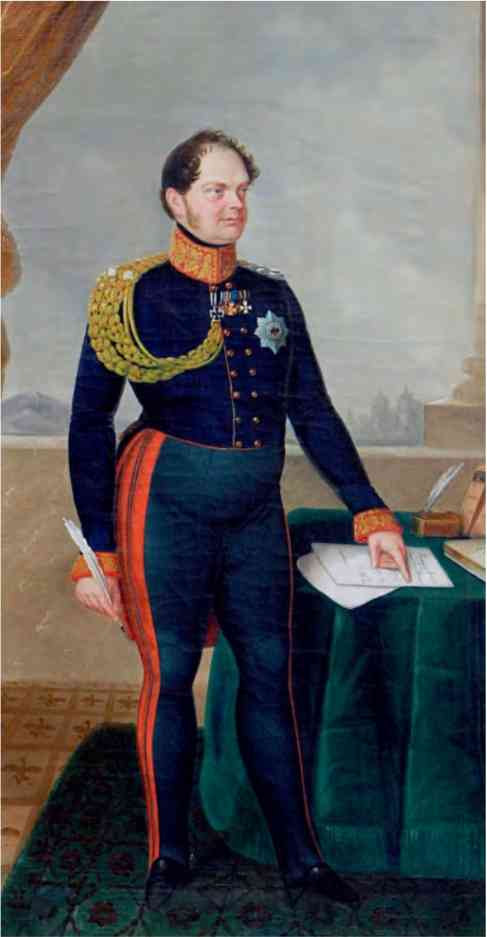
Austria had no intention of the "Greater Germany Plan", and Prussia gave up the "Small Germany Plan", so the two states restored the German Confederation that had been suspended since 1848 in May 1851. As the Prussian conservatives returned, Bismarck was also reused and became the first Prussian envoy after the revival of the German Confederation.
The ambassadors abroad were among the senior Prussian bureaucrats, and their annual salary was generally 21,000 thalers, but when Bismarck came, it was immediately reduced to 18,000 thalers for no reason, and Bismarck was required to pay for the rent. It is obvious that Bismarck, a country Junker, had turned into an ambassador abroad, which greatly displeased the Prussian civil service, and naturally made things difficult for Bismarck in various ways.
Bismarck did keep many of the habits of a country Junker. According to the custom of the Pietists, Bismarck and his wife had dinner at 5 pm every day, which declared that they had no chance to participate in the aristocratic nightlife. In addition, although Bismarck knew French, his wife had never left her hometown and never learned French throughout her life, so she was naturally out of tune with the aristocratic circle in Frankfurt.
But this was not important, because Bismarck had already climbed up the high branches of the Gerlach brothers. During his tenure as ambassador, all of Bismarck’s diplomatic reports were first handed over to Leopold von Gerlach, the chief military officer around the king, and then handed over to the Prime Minister and Foreign Minister in accordance with official procedures. This move clearly violated the general principles of the bureaucratic system, but it allowed Bismarck to continue to gain the trust of the court.
With a backer, Bismarck could be as temperamental as he wanted in the German Confederation. In March 1852, Bismarck smoked during the Confederation Conference, breaking an unwritten rule of the Confederation Conference: only the Chairman of the Confederation Committee and the Austrian Minister had the right to smoke during the conference. Bismarck has been practicing his own proposition published in the Neue Prussian Newspaper: "Prussia must obtain equal rights with Austria and priority over other German states in every respect."
It was also on the Austrian issue that Bismarck and the Prussian conservatives had a rift. In the eyes of the Gerlach brothers, Austria and Russia were natural allies of Prussia, and the "Holy Alliance" originated from the Napoleonic Wars must be maintained. But during Bismarck’s participation in the German Confederation Conference, the biggest opponent was the Austrian envoy, and the relationship between the two sides even deteriorated to the point of mutual personal attacks. He did not regard Austria as a friend in public or private. Later, Bismarck won over small and medium-sized states and always excluded Austria from the German Customs Union led by Prussia. This made the economic relationship between Prussia and small and medium-sized German states closer, and Austria became more and more like an outsider. The success of the Austro-Prussian War in 1866 also benefited from this.
Even at that time, the overall situation was getting worse for Austria. In 1853, the Crimean War broke out between Russia and the Ottoman Empire, and the Russian army entered the Danube River Basin, threatening Austria’s security. In the war, Austria turned to stand on the side of "enemy countries" such as Britain and France, and the Prussian conservatives also chose Support Austria. Austria itself did not have enough troops to attack Russia, and in January 1855, it applied to mobilize half of the German Confederation’s army to fight against Russia. Originally, this proposal could be passed, but Bismarck cleverly changed the text, requiring the purpose of mobilizing the army to be changed from "against Russia" to "against dangers in all directions", so that the German Confederation army could not be used alone to attack Russia, and lost the legal basis for sending troops. Since the small and medium-sized states in Germany were unwilling to be enemies of Russia, they all agreed to the amendments proposed by Bismarck. Bismarck’s leadership of the small and medium-sized states against Austria was a victory in the first battle. Austria lost Russia’s trust and failed to send troops together with Britain, France and other countries. Its position in continental politics slowly declined; Russia began internal reforms after its defeat in Crimea in 1856, and had no time to take care of Prussia. Both sides could no longer prevent Prussia from uniting the small and medium-sized states in Germany to implement the "Small Germany Plan".
Although Austria’s power was weakening, Bismarck knew that simply getting rid of Austria itself would not achieve German unification. In addition to maintaining relations with Russia, Prussia needed a new ally to form a new Triple Alliance. He targeted Napoleon’s nephew, Napoleon III, the emperor of the Second French Empire. In 1855, he took the opportunity of the Paris World Expo to visit France and met Napoleon III for the first time.
But his relationship with France also led to a break with the Prussian court party.
Real politics: parting with old allies
The 1848 Revolution was the stage for the rise of many great men: Marx and Engels published the famous "Communist Manifesto" in order to organize the workers’ movement: After the Vienna Urban Revolution, Austrian Chancellor Metternich fled, and the young monarch Franz Joseph I ascended the throne and began a 68-year rule: After the Berlin Urban Revolution, Crown Prince William fled for a time, returned to Prussia in 1849, and personally led the army to suppress the rioting people. He was called "Prince of Shotgun", and he was also the later German Emperor William I.
The most dramatic performance is Napoleon III. Napoleon III is Napoleon’s nephew. After the Paris Urban Revolution in 1848, he took advantage of the trend to be successfully elected as the first democratically elected president of France. But his ambitions were not limited to this. In December 1852, he forced the French Parliament to crown him as the "Emperor of the French People" and the monarchy was restored. After coming to power, Napoleon III was keen on European affairs and intervened in the Crimean War between Russia and the Ottoman Empire. This practice reminded the Germans of the shame during the Napoleonic Wars, and Bismarck’s move to get close to France was naturally regarded as treason.
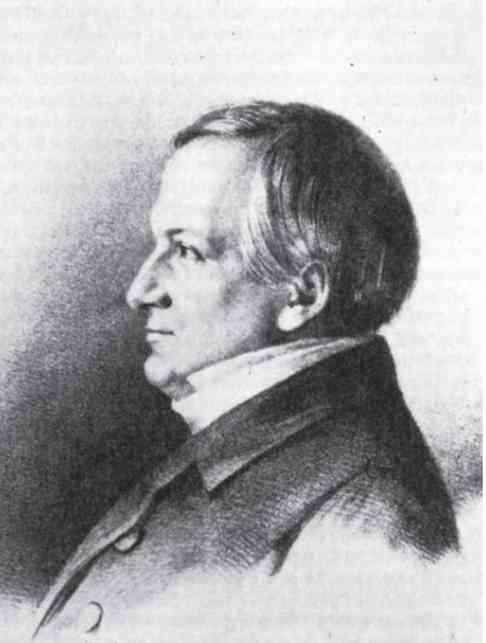
The Prussian court party was furious when they learned that Bismarck had privately gone to France to meet Napoleon III. Leopold von Gerlach accused him of "going to Babylon, where the devil is", and repeatedly reiterated that "the Bonaparte family and Bonapartism are our greatest enemies". After all, the Napoleonic Wars almost dismembered Prussia, and the Gerlach brothers who personally participated in the war certainly could not allow Prussia to have a connection with a certain Napoleon. More importantly, after the French Revolution in 1789, France was regarded as a "revolutionary" country by Prussia. Even though Napoleon III was crowned emperor, he was still regarded as a label figure who subverted conservative Europe.
In May 1857, Bismarck and Leopold von Gerlach wrote two letters to systematically sort out the differences between the two in thinking habits, ways of thinking, and domestic and foreign policies. He said that he did hope that Prussia and France would form an alliance, but "France attracted me only because its geographical location affected my motherland. We can only formulate policies based on the current France." "Opposing revolution is also my principle, but if Louis Napoleon (Napoleon III) is regarded as the only representative of revolution, it is a misunderstanding of this principle... In today’s political arena, how many people are not rooted in revolutionary soil?
Bismarck’s two famous letters reflect a new "real politics" thinking: domestic and foreign policies should not be determined by religious beliefs, conservative or innovative ideas, or past hatreds, but should be determined according to real political needs. "Real politics" may be a recognized standard today, but in that era of religious atmosphere and conservatism, most politicians could not understand it. Bismarck’s awareness of this principle means that his understanding of politics has exceeded that of ordinary politicians, and it also laid the foundation for his thinking as a guide to German unification.
Just in 1857, King Frederick William IV of Prussia suffered a stroke, and the court party was in danger of disintegration. It was difficult for the Gerlach brothers to directly suppress Bismarck. In October 1858, Crown Prince William became regent and immediately promoted Bismarck to ambassador to Russia. From this year on, Bismarck stopped communicating with Leopold von Gerlach and gradually drifted away from his old employer.
In May 1860, Bismarck and Leopold von Gerlach communicated with each other for the last time. At this time, Napoleon III cleverly manipulated the Italian Unification War to weaken Austria’s power. Prussia wanted to stand on the side of Austria and send troops, but failed to participate in the war due to its poor military mobilization capabilities. Bismarck still advocated an alliance with France and opposed Austria, and Leopold von Gerlach advised as an "old friend": "I am particularly disappointed with your sharp attitude towards Austria. You put yourself in a dilemma between power and revolution. You are making fun of the idea of an alliance with France and Piedmont."
Bismarck replied coldly: "France is 100% likely to be a questionable ally, but I must always keep this possibility open. If 16 of the 64 squares in a chess game cannot be placed from the beginning, then the game cannot be played."
This was Bismarck’s last communication with his former sponsor, and it also announced that Bismarck officially bid farewell to his immature youth and entered a new era with "real politics" as the main way of thinking. During his tenure as ambassador to Russia (1858-1861), he had more and more frequent contacts with Army Minister Roon and Army Chief of Staff Moltke, and together they became the "iron triangle" that supported Prussian King William I and founded the Second German Empire.
Related reading - null
- null
- The King and His Prime Minister-William I’s Helpless Choice
- Behind the Iron-Blooded Speech-Roon and Moltke: Supporters from the Army
- Apart from unification, the iron-blooded chancellor’s administration had no principles
- Foreshadowing of the separation of Austria and Prussia - the Danish War, in which the strong bullied the weak