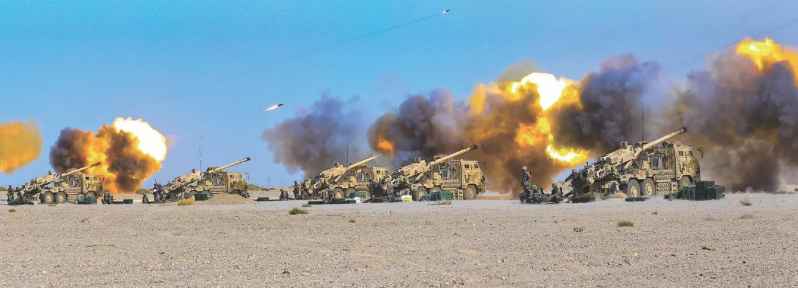

Since its birth, modern artillery has become the mainstay of the army’s fire support and has won the reputation of "God of War" in war practice. Even at the moment when "air-ground integrated joint operations" are popular, artillery is still an indispensable and important fire support force in modern warfare due to its quick response and strong continuous combat capability. Because of this, anti-artillery operations aimed at suppressing and destroying enemy artillery have become an important combat style in high-intensity wars and are highly valued by all countries. So, since the emergence of this combat style, what changes has it undergone, and what kind of development trend will it present in the future?
Sound and light detection
In the initial anti-artillery operations, artillery scouts discovered the location of enemy artillery positions, determined their precise coordinates, and provided relevant data to their own artillery.
Artillery scouts are the most technically demanding branch of artillery. However, they are not like the scouts in people’s traditional concepts, who are proficient in the operation of various light weapons and are proficient in grappling and fighting. The main equipment of artillery scouts is steering wheel, gun mirror, calculating disk, rangefinder, compass, military map, benchmark, tape measure, command ruler, protractor, coordinate ladder, telephone, stopwatch, etc. The weapons they are equipped with are limited to self-defense. Their main training subjects include equipment use, map reading and use, night target capture, continuous measurement of battle formation, forward calculation, reverse calculation, marching according to the map, sorting out joint measurement results, visual distance, stopwatch distance measurement, observation of bombing point, indication and acceptance of targets, etc.
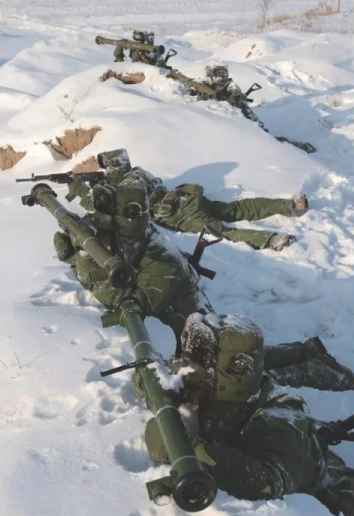
In wartime, scouts first choose a position with good sight, easy observation, easy evacuation and concealment, easy camouflage, and easy organization of defense against enemy tanks on the commanding heights at the front of the battle zone, and avoid independent and obvious objects and open areas to open a basic observation post. Then, according to the terrain, a side observation post is set up 300 to 500 meters to the side of the basic observation post to make up for the blind spot of the basic observation post, and once the basic observation post is discovered, suppressed or destroyed by the enemy, it will take over the basic observation post to perform reconnaissance tasks.
After the observation post is set up, the artillery scout needs to set up a steering wheel to accurately return to the north, and then correct the steering wheel according to the magnetic declination on the military map, so that the direction measured by the steering wheel is consistent with the military map, and the reference firing direction of the artillery is set on the steering wheel, and then the straight-line distance between the subjective and side views is measured, and the side view is given a reverse division. After that, according to the azimuth objects with known precise coordinates that can be observed in the war zone, the intersection measurement method is used to determine the coordinates and elevations of the basic observation post and the side observation post. At the same time, the map-fixed stand method is used to determine the coordinates and elevations of the two observation posts on the map, and compare them with the data determined by the intersection measurement method. If they match, the relevant preparations are completed.
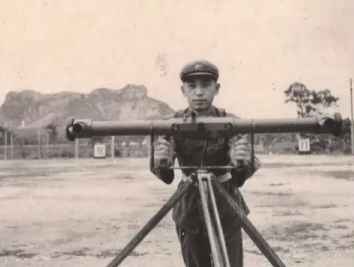
After that, the artillery scouts used high-magnification optical instruments to observe the battlefield. Once the enemy artillery shooting flashes and smoke were found, the two observation posts conducted intersection operations. At this time, the two observation posts and the target formed a triangle together. When the straight-line distance between the two observation posts is known, as long as the two observation posts respectively measure the angle between the line connecting the two observation posts and the target and the straight line between the two observation posts, the sine, cosine, tangent, cotangent, secant, and cosecant theorems in trigonometric functions can be applied to calculate the distance between the two observation posts and the sun mark. This data is called the observation distance. After that, the calculation soldiers used the firing director, calculation disk, and various element rulers based on the intersection division and observation distance reported by the scouts, and used one of the simple method, precise method, result method, and projectile measurement method to quickly calculate the firing elements of their own artillery and pass them to the artillery unit responsible for anti-artillery operations. After that, the scouts must also measure the direction and distance deviation between their own artillery explosion point and the target, so that their own artillery can correct the shooting parameters.
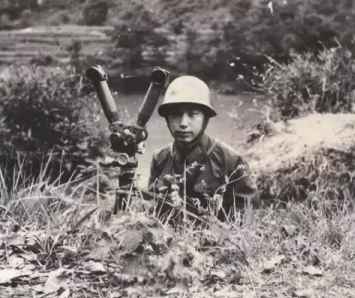
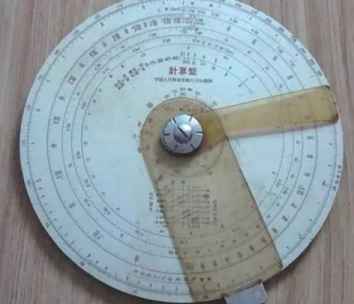
When fighting against artillery at night, in the era without night vision observation equipment, artillery scouts first determine the approximate direction of the enemy artillery based on the muzzle flame when it is fired, use the stopwatch photoacoustic measurement method to determine the distance between the observation post and the enemy artillery position, and then use the steering wheel to determine the direction of the enemy artillery. The so-called stopwatch distance measurement method is a single observation distance method for artillery scouts, which is mainly used at night when the muzzle flame of the enemy artillery can be seen and the sound of the enemy artillery can be heard. The specific operation method is to press the stopwatch immediately after seeing the muzzle flame of the enemy artillery, and stop the stopwatch after hearing the sound of the artillery. The stopwatch reading is multiplied by the speed of sound to get the distance from the enemy artillery position to the observation post. When the ambient temperature is 0 degrees Celsius, the speed of sound is 331 meters per second. For every 1 degree Celsius rise in ambient temperature, the speed of sound increases by 0.6 m/s
During World War II, in addition to the establishment of basic observation posts and side observation posts, mobile observation posts and observation posts behind enemy lines also appeared in anti-artillery reconnaissance operations. After the war, due to the improvement of artillery observation equipment, the scope of artillery observation post reconnaissance was expanded, and the accuracy and speed of reconnaissance operations were greatly improved. After the artillery was equipped with night vision equipment in the 1960s, the effectiveness of observation post reconnaissance at night was significantly enhanced, reducing the impact of poor visibility on reconnaissance. The use of artillery rangefinders to determine the target position by single observation has received attention and gradually become the main operating method. Artillery armored reconnaissance vehicles began to be used as mobile observation posts, which can be used for reconnaissance during mobility. In the 1970s, with the application of laser rangefinders, night vision equipment, electronic computers and digital transmission and communication technology to artillery observation post reconnaissance, the reception, processing and transmission of target intelligence were automated, which significantly improved the anti-artillery reconnaissance capability.
Radar positioning
However, despite the above-mentioned improvement measures, artillery scouts still have to rely on experience to judge the direction when facing the sudden attack of enemy long-range artillery, and it is difficult to make correct judgments and reactions in the first time. Therefore, artillery reconnaissance radars that make up for this fatal weakness have entered the war stage.
Artillery reconnaissance radars, also known as artillery position reconnaissance radars or artillery position reconnaissance and calibration radars, detect the flight trajectory of artillery shells in the air through radar waves, and can accurately calculate the position of enemy artillery weapons (such as rocket launchers, howitzers and mortars) to carry out anti-artillery operations. For military fans, when it comes to artillery reconnaissance radars, it is easy to think of the British "Simberling" radar that was very popular on the battlefield in the 1980s.
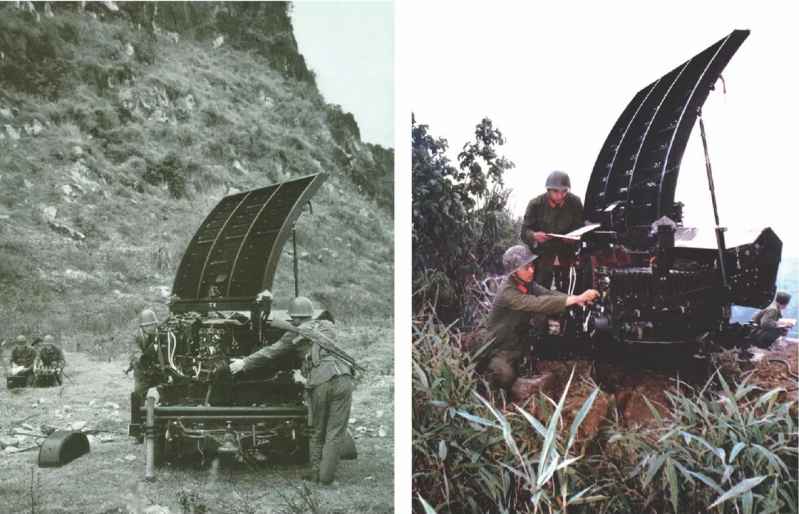
The "Simberling" radar was developed by the British Thorn Electronics Company. It is the second-generation artillery reconnaissance radar after the "Green Shooter". The system weight has been reduced from the former’s 1,800 kg to 390 kg. The radar operates in the X-band, with a system power consumption of 1,200 watts, an average failure-free time of 200 hours, high reliability, and simple operation and maintenance. The system not only has self-test equipment, but also has an in-machine target simulator for training. Its detection range for 81mm mortars is about 10 kilometers, and the detection range for 120mm mortars can reach about 14 kilometers. The detection range for howitzers can reach up to about 20 kilometers, the system response time is 12 seconds, and the positioning accuracy is ±40 meters (reconnaissance mortar positions).
The "Simberling" radar had just been put into service when it caught up with its first "big test" - the Falklands War between Britain and Argentina. In mid-May 1982, the British Royal Light Armored Battalion, which landed on the Falklands, used two "Simberling" artillery reconnaissance radars and an artillery company with eight 81mm mortars to accurately destroy the 105mm and 155mm howitzer firing positions of the Argentine army on the hills around Darwin Port, and the attack was launched on a stormy night. "The Zimberlin radar accurately locked onto the flight trajectory of the projectiles fired by the Afghan howitzers and inferred the Afghan artillery positions 5 kilometers outside the port. The British 81mm mortar group fired rapidly in the dark night and ended the battle in just 5 minutes. In theory, the 81mm mortars equipped by the British Army are far from being comparable to the Afghan 105 and 155mm howitzers in terms of caliber, range and power. However, with the support of the artillery reconnaissance radar, a "combat force multiplier", the British Army defeated the large-caliber howitzers with smaller caliber mortars.
After that, in a 10-year border conflict at the junction of East Asia and Southeast Asia, the users of the Zimberlin radar stored the electronic terrain map of the war zone in the computer connected to the radar. As long as the radar By measuring the three points of the enemy projectile’s flight trajectory and combining it with the wind speed in the battle zone, the enemy’s artillery trajectory can be quickly solved, and then the enemy’s artillery position can be marked on the electronic terrain map. The positioning accuracy can be improved to ±10 meters, and even the enemy’s artillery trajectory and local terrain can be combined to infer the specific model of the enemy’s artillery, thereby establishing an unshakable support firepower advantage.
By the time of the Iraq War in 2003, the various howitzers, rocket launchers, mortars and anti-tank missiles of the US artillery were basically supported by the automated command system. The command of the US ground artillery has moved from automation to informatization. During the war, the "Afaz" field artillery tactical data system and the "Takfa" tactical command system used by the US ground artillery units can directly receive artillery reconnaissance radars, automatic The digital information provided by the weather station, target positioning indicator, drones, and calibration aircraft automatically completes tasks such as target intelligence processing, firepower planning, shooting command, firing team status, and ammunition statistics. It takes no more than 15 seconds for the command post to send firing parameters to the artillery from the time it receives the firepower call. In addition, the artillery’s battlefield information acquisition capability is also very strong. Its artillery position reconnaissance radar has an effective range of 50 kilometers, and can reach 150 kilometers when using drones. Taking advantage of this advantage, the US artillery can not only provide timely firepower support to the ground assault forces at the first time, but also immediately suppress the Iraqi artillery with firepower as soon as it "shows up", making it impossible for it to organize an effective firepower counterattack.
In addition, the artillery and the command must communicate through radio stations or wired communications. Therefore, Through radio reconnaissance positioning, code breaking or scouts monitoring behind enemy lines, the enemy’s hidden artillery positions can also be discovered.
Countermeasures
At the end of the Cold War, the Soviet Union’s anti-artillery capabilities reached their peak. According to the data disclosed by the famous "West-81" exercise, the proportion of enemy artillery positions discovered by various Soviet reconnaissance means was 60% by artillery scouts’ optoelectronic reconnaissance means, 20% by artillery position reconnaissance radar, and 20% by aviation reconnaissance. When a Soviet motorized infantry division or tank division acts as the "spearhead" of the army’s attack, it can receive fire support from 17 artillery battalions. After NATO artillery fire blocking shooting, the Soviet anti-artillery firepower can pour more than 600 artillery shells and rockets into the firing NATO artillery positions within 5 minutes, covering an area of 400 meters x 250 meters.
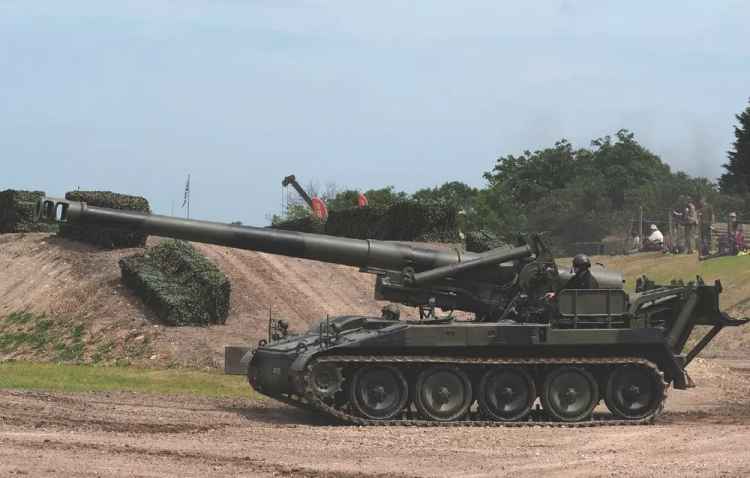
Faced with such fierce anti-artillery firepower, artillery units of various countries have also explored many ways to improve their battlefield survivability. For towed artillery units, because their deployment and withdrawal time is more than 10 minutes, it is difficult to evacuate in time once the enemy detects the exact location of the position, so special attention is paid to camouflage when building positions. Wired communication is used as much as possible between the launch position and the firing command center. When radio communication must be used as a last resort, low-power radio stations and directional antennas should be used as much as possible, and the communication time should be compressed to less than 25 seconds. In addition, fake positions, fake radio stations or remote-controlled radio stations can be set up to confuse the opponent in order to achieve the purpose of hiding the truth and showing the false.
In the construction of towed artillery positions, irregular evacuation configuration methods are used to replace the traditional one-line method. For the same 6-gun artillery company, the scale of the position is 100m x 200m when deployed in a line. According to calculations, the enemy’s anti-artillery firepower only needs to pour 600 shells in 5 minutes to cause 30% casualties. If the 6-gun artillery company is divided into two, each of which is controlled by a firing command center with 3 guns, each such firing unit occupies a position of 200m x 200m. The entire artillery company position is located in an area of 600m x 600m. If the enemy’s anti-artillery firepower wants to achieve the same suppression or destruction effect, it will take 10,400 rounds of ammunition.
After the modernization of artillery fire command means, artillery can fully achieve "dispersed configuration and concentrated firepower". In order to increase the difficulty of enemy anti-artillery operations, towed artillery should try its best to avoid test firing and directly implement effective firing. In the case of a test firing, the benchmark gun should also be designated to occupy a temporary firing position far away from the firing position to conduct a test firing, and then the firing parameters should be corrected according to the distance and elevation difference between the temporary firing position and the basic firing position. If necessary, some artillery should be deployed to maneuver on the battlefield, and disruptive firing should be carried out during short stops to confuse the enemy’s artillery reconnaissance radar. Self-propelled artillery in the early years was essentially just a self-propelled gun carriage. In addition to its better mobility than towed artillery and greatly shortened deployment and withdrawal time, its firing command method is no different from that of traditional towed artillery. It was not until the 1980s that, with the development of satellite navigation and positioning technology and automated command systems, The situation is very different when self-propelled artillery can accurately determine its own position and direction of travel at any time. As long as the artillery firing command center transmits the target information to the self-propelled artillery through an encrypted data link, each gun can calculate the firing parameters by itself, enter the position to fire by itself, and then quickly move without waiting for the enemy’s artillery fire to counterattack. According to the battlefield experience gained in test exercises and some local conflicts, the range of activities of a self-propelled artillery company on the battlefield can reach about 15 square kilometers, which greatly improves its own safety.
However, with the substantial increase in the proportion of precision-guided artillery equipment, the shooting efficiency of anti-artillery firepower has also risen. Although self-propelled artillery can defend against artillery fragments, it may also damage its complex and sophisticated on-board equipment when encountering near misses, thereby making the self-propelled artillery lose its combat capability. Not to mention that after being directly hit by precision-guided artillery shells, the self-propelled artillery will be directly blown back to the state of parts.
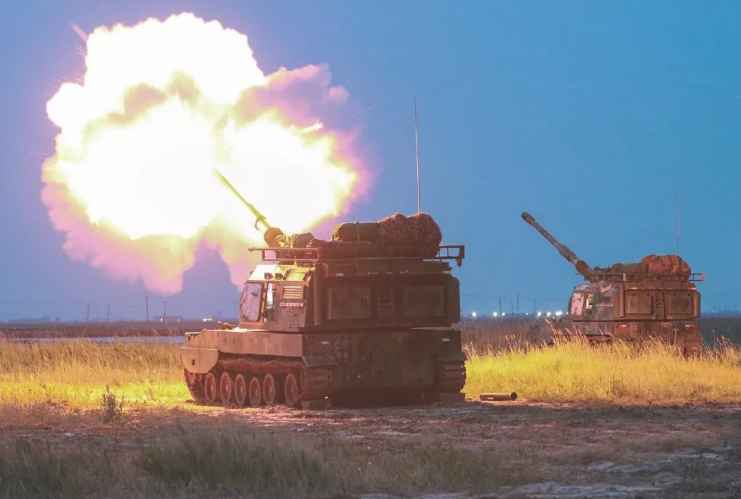
In view of this, the time from the first shot fired to the withdrawal of a modern self-propelled artillery on a position is determined by the opponent’s anti-artillery combat capability. For example, according to the information revealed in the 2018 edition of the US Army teaching manual, its TPO-37 artillery reconnaissance radar can measure the position of the enemy artillery within 10 seconds after it opens fire, and complete the coordinate correction work within 45 seconds. The firepower dispatch then takes 35 seconds, and the artillery performing anti-artillery combat missions takes 30 seconds from receiving the information to firing the first shot. In other words, the fastest theoretical response time of the US military’s anti-artillery combat at this stage is about 120 seconds. This is why many countries strictly limit their combat time on a position to about 90 seconds when compiling self-propelled artillery combat procedures.
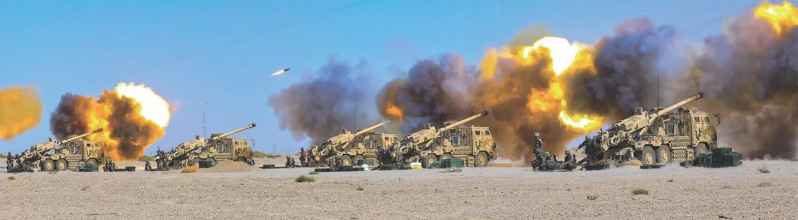
Affected by this, the traditional towed artillery with a long withdrawal time has shown a clear trend of being replaced by vehicle-mounted artillery. After the optimized design of the vehicle-mounted artillery, its cost can be lower than the sum of the unit prices of artillery and mobile vehicles. Moreover, after being equipped with a semi-automatic loader, automatic data transmission system, LCD display terminal, and barrel temperature detector, its firepower response speed and combat effectiveness are far superior to traditional towed artillery. Although its protection performance is still not comparable to that of self-propelled artillery, it is relatively cheap, has a high cost-effectiveness ratio, and can be equipped in large quantities.
Not only that, some advanced long-range rocket launchers can not only achieve meter-level shooting accuracy, but also deliberately lower the initial trajectory after launch, and only rise sharply after a considerable distance from the orbit, entering the traditional parabolic trajectory. Even if the artillery reconnaissance radar is equipped at the front of the confrontation between the two armies, it can only capture the mid-stage or even terminal trajectory data of such long-range rockets, and the artillery position information calculated by this is very different from the actual situation. If the anti-artillery firepower is fired according to this fake artillery position information, it will only be a waste of time.
Take a different approach
With the rapid development of ordnance technology and the improvement of artillery tactics, traditional anti-artillery operations have encountered unprecedented severe challenges. The key is that artillery can compress its own combat time based on the enemy’s anti-artillery combat reaction time, so as to always be one step ahead to get rid of the threat of anti-artillery firepower. As for other camouflage and deception methods, they are just icing on the cake.
So, can we further shorten the reaction time of anti-artillery operations, thereby forcing the enemy’s artillery operations to shorten their time, resulting in a significant reduction in shooting effectiveness and a significant reduction in the degree of threat to our side? If we examine the anti-artillery operations process link by link, we can find that because the technical level of artillery reconnaissance radars has reached its limit, there is no room for compression in its reaction time. And the preparation time of our artillery for anti-artillery operations is also difficult to tap. The time required from the shells leaving the barrel, the rockets leaving the orbit, to hitting the enemy’s artillery positions is also impossible to shorten. From the current technical level, the potential for further compression of reaction time in other links between these two links is also extremely limited. Even if air interdiction aircraft are used to carry out air strikes on enemy artillery, it is difficult to substantially improve the reaction speed of anti-artillery firepower due to the complicated communication and coordination procedures between the current services.
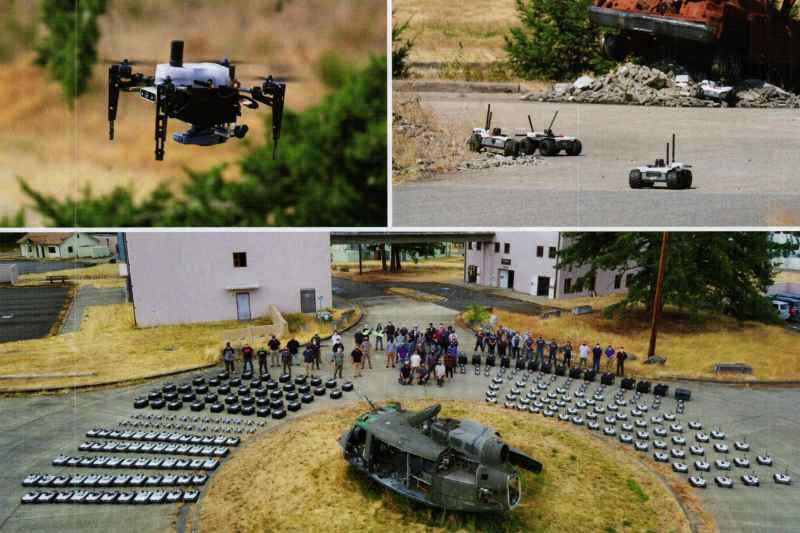
However, what if we jump out of traditional thinking and directly save all the links in the middle? Then the situation will be very different, which can be called a revolutionary change. The technical means that can make anti-artillery operations discover such revolutionary changes have already appeared, that is, high-altitude long-endurance reconnaissance and strike integrated drones.
Currently advanced high-altitude long-endurance reconnaissance and strike integrated drones can cruise at an altitude of more than 10,000 meters, stay in the air for up to several days, and can carry more than 10 small ground precision strike ammunition. If each such drone is responsible for monitoring an area with a radius of 20 kilometers, then its control range exceeds 1,200 square kilometers.
It is well known that the higher the flight altitude, the smaller the types and number of air defense weapons that can pose a threat to it, and the sparser the density of air defense firepower. UAVs do not require pilot life support systems and are not required to have high maneuverability. Therefore, the aerodynamic configuration and manufacturing materials can be tilted towards the requirements of stealth design. In addition, after reaching the designated control position, such UAVs are not required to have a high cruising speed. Therefore, such targets with small radar reflection cross-sectional area, weak radar echo intensity, and slow moving speed at high altitudes are also difficult to be caught by the air defense missile supporting radars designed to counter medium-high altitude, medium-long-range and high-speed incoming targets. Therefore, they have higher battlefield survivability performance. Even if there are losses, there is no concern about the loss of pilots. UAVs can be quickly dispatched to fill the position and eliminate the air defense missile positions that have exposed their positions due to firing.
Judging from the current level of optoelectronic detection instruments, the smoke and fire generated by ground artillery firing cannot escape the "eyes in the sky" at an altitude of 10,000 meters. Even if the gun is not fired, the infrared characteristics of the engine of self-propelled artillery truck guns and towing vehicles are also very obvious when they are driving. Since the process of coordinate correction and firepower dispatch is omitted, small ground precision strike ammunition can be launched as long as the target is found. Therefore, ground artillery is helpless against this kind of anti-artillery firepower that "drops from the sky" at the first time. At least at this stage, it is difficult to find a solution to crack it, both technically and tactically. At present, the number of bombs carried by high-altitude and long-endurance reconnaissance and strike integrated drones is enough to completely wipe out an artillery company or basically wipe out an artillery battalion. It should be said that ground artillery has ushered in a real "nemesis"
However, high-altitude and long-endurance reconnaissance and strike integrated drones with a large enough ammunition load are expensive, and not every army can easily equip hundreds or thousands of them. Therefore, there is now a cheaper but more difficult to defend against anti-artillery combat means-cruise missiles.
Unlike high-altitude, long-endurance reconnaissance and strike drones, cruise missiles are disposable, so they not only save the recovery system, but also have more relaxed requirements for the selection of materials and accessories, as long as they can meet basic needs. Recent local war practices have shown that even if a large number of civilian products are used to build cruise missiles, their performance cannot be underestimated, and their cost-effectiveness is even higher. In wartime, as long as a large number of cruise missiles are fired into the enemy’s front and rear, the target confirmation procedure can even be omitted. As long as a ground mobile target with an infrared radiation source is found, it will dive in and "burn everything together." This will not only make the enemy artillery units at a loss, but will also greatly change the form of war, forcing every component of the modern combat system to seek how to deal with this "irrational" tactics of "random punches".
Of course, whether it is new concept weapons or new combat concepts, they are essentially phased products in the process of confrontation between the two systems of war. The level of spear and shield both rises in a spiral in the confrontation. Therefore, there is neither a shield that can never be pierced, nor a spear that is always impenetrable. Therefore, it is possible that the current survival difficulties of ground artillery will be solved in the future. By then, anti-artillery operations should "change according to the enemy" and continue to seek more effective technologies and tactics.