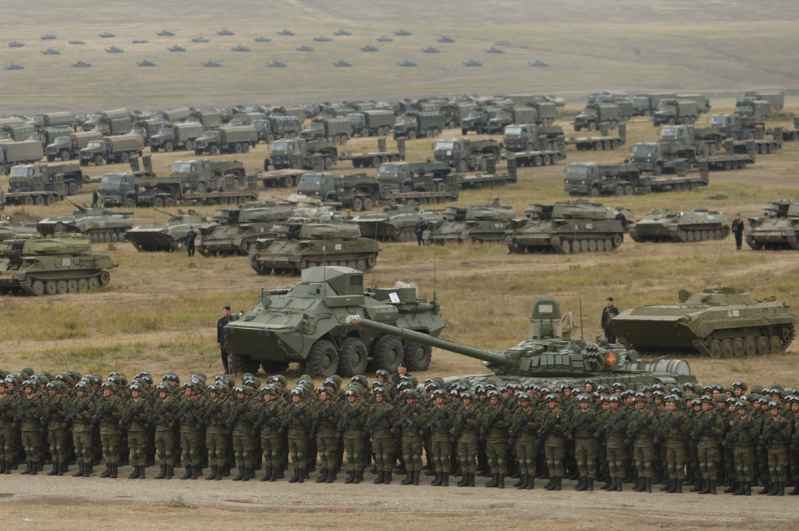

The battalion tactical group is a characteristic product of the Russian Army’s construction in recent years. It first showed its edge in the Ukrainian crisis in 2014, and became one of the main force styles of the Russian Army in the Russian-Ukrainian conflict in 2022. The Russian Army’s battalion tactical group is a form of force organization, not a fixed organization, and can be adjusted according to different tasks. Many comments believe that the poor battlefield performance of the battalion tactical group, in addition to the imperfections in the organization form, the fundamental reason lies in the incompleteness of the Russian military reform and the miscalculation of the future combat environment and the situation of the imaginary enemy.
After the outbreak of the Russian-Ukrainian conflict, many military commentators have conducted various studies and discussions on the Russian Army’s battalion tactical group (BTG), and have different evaluations of its battlefield performance. Generally speaking, most of them are negative. This article will discuss why the Russian Army adopted the battalion tactical group as a formation and the reasons for its poor performance. Due to space limitations, this article only discusses the problems existing in the motorized infantry brigades of the Russian Army after the "new look" military reform.
The emergence of the battalion tactical group
First of all, it should be made clear that the battalion tactical group of the Russian Army is a form of organization rather than organization. The organization is fixed, but the organization form is not fixed. For example, the motorized infantry brigade of the Russian Army after the "new look" military reform generally has a staff of about 4,400 people (different equipment will lead to different staff numbers), but the number of battalion tactical groups is not fixed. For example, if there are two Russian motorized infantry brigades on the battlefield, the number of combatants and equipment they have invested can be estimated, but if the Russian Army invests in two battalion tactical groups, unless the specific organization form of the two battalion tactical groups can be clearly known, it is difficult to estimate how many personnel and equipment the Russian Army has invested. The difference between the two not only makes it difficult for the outside world to use the number of battalion tactical groups to estimate the Russian Army’s troops and equipment, but in fact it is also the root cause of the poor performance of the battalion tactical group on the battlefield this time. To clarify this question, we must first talk about why the battalion tactical group appeared.
Tracing back to history, the Soviet army began to study how to strengthen the combat effectiveness of battalion-level units since the Cold War. The Soviet army often implemented multi-arms synthesis based on regiments, that is, in the Soviet era, battalions were single-arms systems, including motorized infantry battalions, tank battalions, and artillery battalions. In this case, if you want the battalion-level units to perform more complex combat tasks, you need to strengthen them. For example, if a Soviet motorized infantry division wants its subordinate motorized infantry battalions to perform high-risk tactical airdrop tasks, it needs to be strengthened. In theory, this motorized infantry battalion can be strengthened with 1~2 artillery companies (including 8~16 D-30 122mm howitzers), 1 anti-tank missile platoon (3 BRDM-2 anti-tank missile launchers), 1 engineering platoon (with mine-laying capabilities) and 1 chemical radiation reconnaissance squad.
In the same era, if you want to encircle and annihilate such a motorized infantry battalion that suddenly appears in the rear, you need to use at least an armored infantry regiment with a main battle tank company. If the Soviet motorized infantry division wants to use a motorized infantry battalion as an assault detachment, it will also strengthen it with a tank company, an artillery battalion anti-aircraft company, an anti-tank missile platoon, a mortar company, an engineering company, a flame bomb launcher class, and a chemical radiation reconnaissance class. Seeing this, do you feel that you have found the source of the Russian battalion tactical group?
In fact, the essence of the Russian army’s current battalion tactical group is to strengthen the motorized infantry battalion, but this kind of pre-war reinforcement has been determined in a semi-fixed way. The reason for this situation should be found in the two aspects of the Russia-Georgia conflict and the "new look" military reform.
In the early stage of the Russia-Georgia conflict in 2008, the Russian 58th Army did not expect the Georgian army to launch a surprise attack. Only three battalion tactical groups that had just completed anti-terrorism exercises (the battalion tactical groups of the independent 429th, 503rd and 135th motorized infantry regiments of the 19th Motorized Infantry Division, which were temporarily organized by the Russian army to deal with anti-terrorism operations in the Caucasus direction, are essentially different from the semi-fixed battalion tactical groups after the military reform) could be put into battle in time. It was these troops that entered South Ossetia in time on August 8 to stabilize the defense line and buy precious time for the Russian army’s main force to deploy later.
The apparent victory of the Russia-Georgia conflict did not ease the anxiety of the Russian army. In fact, the slow response of the 58th Army at the beginning of the battle was a problem that no one could ignore. The powerful garrison did not play a sufficient deterrent role. This was also the biggest motivation for the Russian Army to start the "new look" military reform under the auspices of then Defense Minister Serdyukov.
In order to improve the combat readiness of the Russian Army and the speed of peace-war transition, Serdyukov carried out drastic reforms on the Russian Army, including "division to brigade". He reduced the original military district-army-division-group system of the Russian Army to military district-army-brigade-battalion, which not only changed the battle tactical unit from division to brigade, but also changed the smallest synthetic unit from regiment to brigade. =From the perspective of the reform goals, Serdyukov hopes to improve the combat readiness of the Russian Army and its rapid response capability by "slimming down" the command level, and expects that through the reform, the combat readiness brigades with high combat readiness levels can meet the requirements of being able to be deployed within a few hours. Looking around the world, before he promoted the military reform, the US Army had already completed the reform of modular brigades, and its performance in the battlefields of Iraq and Afghanistan was also remarkable. In theory, reducing the division to a brigade can indeed improve the rapid response speed of the troops. After all, the establishment of the "new look" motorized infantry brigade is only 4393 people, while the establishment of the Russian motorized infantry division before the military reform reached 13548 people. Although the Russian army basically did not have a fully staffed motorized infantry division before the military reform, the number of motorized infantry divisions that were short of staff still exceeded 10,000. For example, the actual number of the 19th motorized infantry division that participated in the Russian-Georgian conflict reached 11,240. Therefore, the "new look" motorized infantry brigade has about 1/3 of the old motorized infantry division’s staff, and it is also a reasonable effect to greatly improve the rapid response capability. But the question is, in addition to the response speed, can the reformed motorized infantry brigade take on the heavy responsibility of the campaign and tactical corps? Obviously, Serdyukov thinks it can, and he plans to equip the reformed motorized infantry brigade with a stronger support unit to solve this problem.
From the perspective of the reform goals, Serdyukov hopes to improve the combat readiness and rapid response capabilities of the Russian Army by "slimming down" the command level, and expects that through the reform, combat readiness brigades with high combat readiness levels can meet the requirements of being able to be deployed within a few hours. Looking at the world, before he promoted the military reform, the US Army had already completed the reform of modular brigades, and its performance in the battlefields of Iraq and Afghanistan was also remarkable.
In theory, reducing the division to a brigade can indeed improve the rapid response speed of the troops. After all, the establishment of the "new look" motorized infantry brigade is only 4,393 people, while the establishment of the Russian motorized infantry division before the military reform reached 13,548 people. Although the Russian army basically did not have a fully staffed motorized infantry division before the military reform, the number of motorized infantry divisions that were short of staff still exceeded 10,000. For example, the actual number of the 19th motorized infantry division that participated in the Russia-Georgia conflict reached 11,240. Therefore, the "new look" motorized infantry brigade has about 1/3 of the personnel of the old motorized infantry division, and it is also a reasonable effect to greatly improve the rapid response capability. But the question is, in addition to the reaction speed, can the reformed motorized infantry brigade bear the heavy responsibility of the campaign tactical corps? Obviously, Serdyukov thinks it can, and he plans to equip the reformed motorized infantry brigade with stronger support units to solve this problem.
According to the establishment of the reformed motorized infantry brigade, in addition to 3 motorized infantry battalions, it also has 1 tank battalion, 2 howitzer battalions (equipped with the division-level 2S19 152mm self-propelled howitzers), and 1 rocket artillery battalion (equipped with 122mm 9K51 "Hail" multiple rocket launchers), 1 air defense battalion (equipped with "Tor" M2 short-range surface-to-air missile system), 1 air defense missile/anti-aircraft artillery mixed battalion (equipped with "Arrow" 10M2 air defense missiles and 2K22M "Tunguska" combined air defense system), 1 anti-tank battalion (mixed with anti-tank missiles and anti-tank guns), 1 supply battalion, 1 maintenance battalion, 1 communications battalion, 1 engineering battalion, 1 reconnaissance company artillery command/reconnaissance company, 1 electronic warfare company, 1 chemical defense company, and 1 medical company. The brigade also has 1 sniper platoon and 1 intelligence platoon directly under its jurisdiction.
Compared with the Russian motorized infantry division before the military reform, the reformed motorized infantry brigade can be said to be a reinforced brigade supported by some divisional forces. In theory, it can indeed be used as a campaign tactical unit in combat. When Serdyukov served as Minister of Defense, he reorganized the main body of the Russian Army into 118 standing brigades with good mobility and strong combat effectiveness, requiring these brigades to march to the assembly area with all personnel fully equipped within 8 hours after receiving the order. The Russian Army after the military reform has indeed proved in the exercise that the speed of the "new look" motorized infantry brigade and tank brigade is much better than the motorized infantry division and tank division before the military reform. But the problem is that whether a unit can be used as a campaign tactical unit does not entirely depend on its speed of deployment, but also on whether it has sufficient combat effectiveness, which is exactly the biggest problem after the "division to brigade".
The first is the contradiction between the combat area and the insufficient number of motorized infantry/tank soldiers. According to the requirements of the Russian army at that time, the combat area of a "new look" motorized infantry brigade was 50x50 kilometers. If the brigade’s firepower (including barreled artillery and multiple rocket launchers) could barely cover this range, then the three motorized infantry battalions under a motorized infantry brigade would only have 1278~1530 soldiers at full strength (due to different equipment, the number of establishments is slightly different). Even if the reconnaissance battalion is added, the number of soldiers that can be deployed in combat will not exceed 2,000. These troops are scattered within a range of 50x50 square kilometers, and their low density is conceivable.
In comparison, before the military reform, the motorized infantry regiment of the Russian Army’s motorized infantry division also had three motorized infantry battalions under its jurisdiction, with a combat force of 1,557 people (including the regiment’s reconnaissance company). The defense section of a motorized infantry regiment was 10 to 15 kilometers wide and 10 kilometers deep. If it served as the first echelon of the division, the offensive depth of the motorized infantry regiment was only 5 to 8 kilometers, and the width did not exceed 5 kilometers. In other words, Serdyukov asked the "New Look" motorized infantry brigade to use the strength of a motorized infantry regiment to perform tasks that originally required a motorized infantry division, which was obviously impossible.
What is even more fatal is that this is only a manifestation of the problem. There is a more fatal shortcoming hidden in Serdyukov’s "division-to-brigade", that is, he failed to complete the reform of the synthetic battalion. In most countries that promote "division-to-brigade", in order to improve the combat effectiveness of the brigade, they will inevitably take the path of "synthetic battalion". This means that when the brigade assumes the combat mission of the original division, the battalion must also assume the combat mission of the original regiment-level unit. But unfortunately, due to budget constraints and the slow progress of military professionalization, even today, more than half a year after the outbreak of the Russian-Ukrainian conflict, the motorized infantry battalion under the Russian Army’s "New Look" motorized infantry brigade is still a single-arms battalion, not a synthetic battalion.
This means that the burden of the commander of the "new look" motorized infantry brigade of the Russian army is extremely heavy. He not only undertakes the tasks of the original motorized infantry division commander, but also has to take into account the tasks of the original motorized infantry regiment commander. After all, under the conditions of modern warfare, even if low-intensity anti-terrorism combat missions are carried out, close coordination of multiple services is required to complete them. It is not enough to simply strengthen the motorized infantry battalion with the brigade support unit. It is difficult for the battalion commander who has not received multi-service coordination training and has no supporting staff team to exert the combat effectiveness of the strengthened troops. In other words, the "new look" motorized infantry brigade can only exert its full combat effectiveness when it is deployed on the battlefield as a brigade. However, since its combat area far exceeds the level of the motorized infantry regiment before the military reform, there is an irreconcilable contradiction between the troops and the combat area. This contradiction is superimposed on the contradiction that the motorized infantry battalion has weak independent combat capabilities and lacks the ability to command and coordinate multi-service operations. A fatal flaw has emerged, that is, the actual combat effectiveness of the Russian army’s "new look" motorized infantry brigade is only slightly better than the motorized infantry regiment before the military reform, and is far from meeting the requirements of replacing the motorized infantry division.
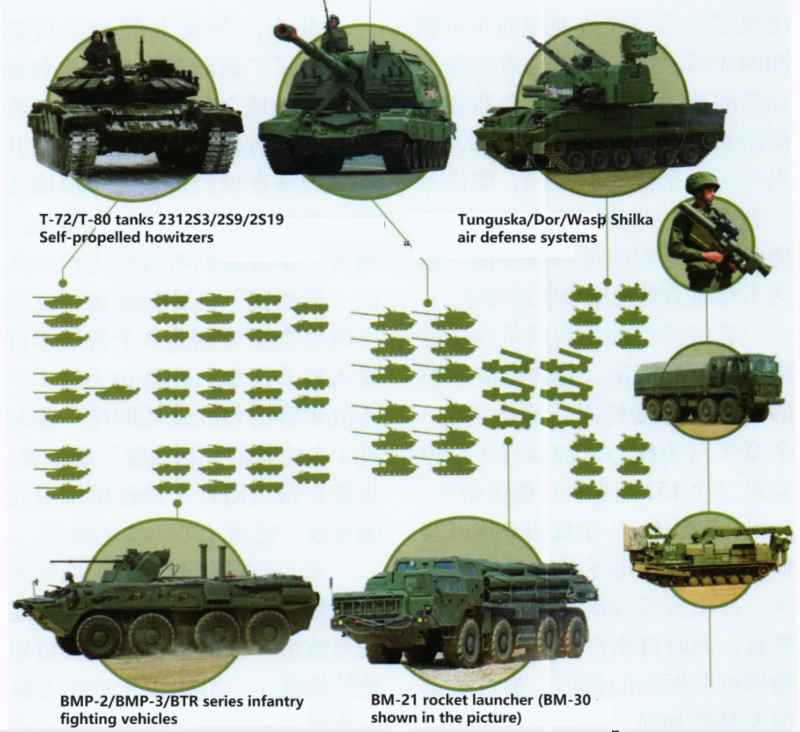
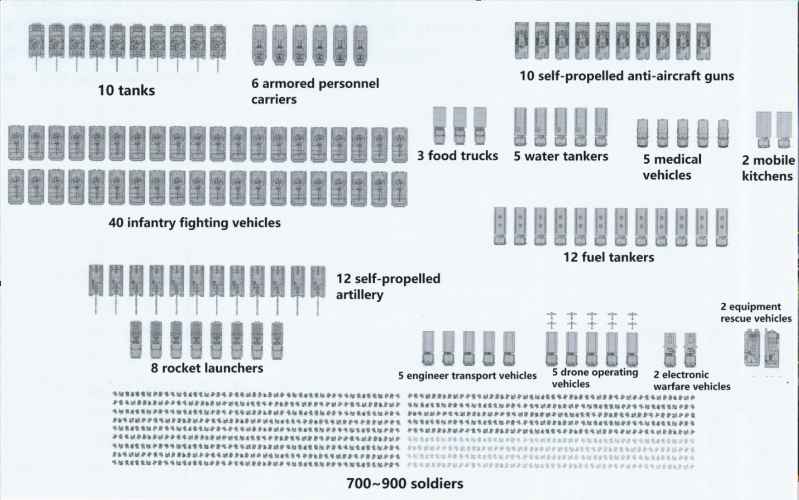
The emergence of the battalion tactical group is to solve this fatal flaw. First of all, the battalion tactical group has a high degree of synthesis. It is usually based on a motorized infantry battalion, reinforced by a tank company, a 152mm self-propelled howitzer battalion, a rocket launcher company, an anti-tank company, and reconnaissance, air defense, electronic warfare, logistics and other units. The brigade commander or deputy brigade commander serves as the group commander. At the same time, the group headquarters is also strengthened by the command, staff and communication personnel sent by the brigade command. In terms of its degree of synthesis, the Russian army’s battalion tactical group is higher than the US military’s synthetic battalion.
Secondly, the emergence of the battalion tactical group partially solved the contradiction between the number of personnel and the combat area of the "new look" motorized infantry brigade. Since the battalion tactical group has strong firepower, its combat area theoretically exceeds that of the original motorized infantry regiment and is closer to the "new look" motorized infantry brigade. For the "new look" motorized infantry brigade, which has a strong support unit, the entire brigade can be divided into two battalion tactical groups for combat. In theory, even if the combat area of these two battalion tactical groups cannot exceed that of a complete "new look" motorized infantry brigade, it can be close to the Russian army’s requirements for it to the greatest extent, achieving the effect of 1+1>2.
Finally, it partially alleviated the problem of insufficient manpower in the Russian army. Whether before or after the military reform, the Russian Army has been plagued by a shortage of manpower. On the one hand, due to the slow progress of the military professionalization in recent years, the Russian Army has always lacked enough contract soldiers; on the other hand, the Russian Federation shortened the compulsory military service period to 12 months after 2008, which aggravated the problem of manpower shortage. The battalion tactical group can gather the limited contract soldiers of the entire brigade together for organization, which objectively not only ensures that the "new look" motorized infantry brigade has a shorter mobilization time, but also ensures that the entire brigade has a core combat force with high quality.
The poor performance of the battalion tactical group and the problems of the Russian military reform
Objectively speaking, it is normal for the battalion tactical group of the Russian Army to perform poorly in the Russian-Ukrainian conflict. Looking at the world, even if the Russian Army is replaced by the US Army, the situation may not improve (not considering the factor of the US Air Force participating in the war).
Since the end of the Cold War, the development of the army of various countries has actually revolved around two cores: one is the lessons learned from the Gulf War; the other is the shrinking defense budget of various countries. The former has attracted great attention to the small-scale highly deployable (not highly mobile) army, and the latter has made the miniaturization of the army an irreversible trend. Coupled with the success of the air strikes on the Federal Republic of Yugoslavia, the armies of various countries no longer pursue winning a high-intensity and long-term armed conflict alone. Take the US Army as an example. Without absolute air superiority, neither the heavy armored brigade combat team nor the medium Stryker brigade combat team will perform better than the Russian Army’s "new look" motorized infantry/tank brigade on the Russian-Ukrainian battlefield.
The problem is that the US Air Force is also not sure to achieve the same achievements as in the Iraq or Afghanistan wars on the Russian-Ukrainian battlefield. Public opinion controlled by Western media always wants people to believe that the US military and its allies won the war by relying on precision-guided weapons. But in fact, even on the battlefield in Afghanistan, the US Air Force used a large number of unguided munitions, and the distance at which it threw precision-guided munitions was mostly within the defense zone. If it faced the Ukrainian air defense system directly, the US Air Force’s loss rate might be equally frightening.
From this perspective, both the US Army’s synthetic battalion and the Russian Army’s battalion tactical group are more suitable for low-intensity battlefields, rather than the current Russian-Ukrainian conflict. The poor performance of the Russian military camp tactical group is the result of multiple causes, that is, the adverse consequences caused by the superposition of multiple negative factors, including but not limited to the following aspects.
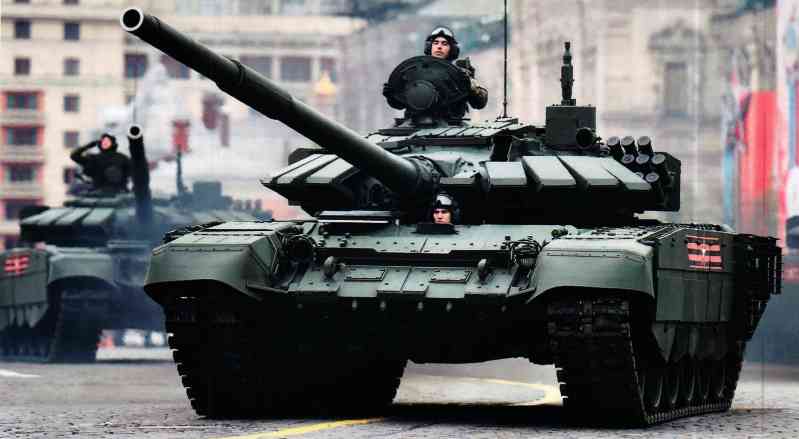
There are few mobile forces on the front line. Taking the strongest BMP motorized infantry battalion as an example, it has only 426 soldiers, equipped with 37 BMP-3 infantry fighting vehicles, and reinforced with 1 tank company (equipped with 10 T-72B3M main battle tanks). This is all the mobile forces it can deploy, and the width of the area responsible for defense is usually more than 10 kilometers. It can be said that the core of the Russian battalion tactical group is not motorized infantry and main battle tanks, but 152mm self-propelled howitzers and 122mm multiple rocket launchers. Once the Ukrainian army concentrates its superior forces and rushes through the weak frontier positions of the Russian army under fierce artillery fire, or bypasses the frontier positions, the retreat of the battalion tactical group is almost inevitable.
Command is too centralized. Due to the low level of informationization of the Russian army, the battalion tactical group mainly adopts a centralized command mode, that is, all combat operations are carried out around the group commander, and all information will be gathered to the brigade commander or deputy brigade commander in charge of command. This centralized command mode is very easy to expose the position of the commander once it encounters strong aerial reconnaissance or electronic reconnaissance, and then be killed by enemy fire. This is also one of the reasons why the casualties of senior officers in the Russian army were relatively large in this conflict.
The gaps between the tactical groups of each battalion are large. This is mainly because the Russian army cannot send conscripts to fight across the border, resulting in the "new look" motorized infantry brigade relying on a limited number of contract soldiers to fight. Originally, one motorized infantry brigade could form two battalion tactical groups, but due to the small number of participating soldiers, only one battalion tactical group could be barely put together to fight. This directly led to the fact that although the Russian army on the front line had many numbers, in fact, there were large gaps between the tactical groups of each battalion. It was far from enough to rely solely on artillery fire to fill the gaps. Once the Ukrainian army obtained strong external information source support, it might seize this gap and use armored forces to implement shallow depth and rapid detours, leading to the collapse of the Russian defense line.
Poor sustained combat capability In theory, the sustained combat capability of the Russian motorized infantry brigade is not bad. Even if the troops are drawn to form two battalion tactical groups, the brigade commander still has a motorized infantry battalion reinforced with a tank company, which can be put into battle in an emergency. But the question is, even if the reinforced motorized infantry battalion equipped with 47 armored vehicles is put into battle, how much impact will it have on the war situation? The answer is probably not too big. After all, the Russian-Ukrainian conflict itself is a rare high-intensity confrontation after the Cold War. The Ukrainian army that can break through the Russian front or implement a roundabout penetration will not have too few troops and equipment. It is difficult for the Russian army to quickly repel it with one motorized infantry battalion. What’s more, due to the dual influence of the shortage of personnel and the inability of conscripts to fight abroad, how many troops will the Russian motorized infantry brigade have left as a reserve after forming a battalion tactical group is probably also a problem that needs to be considered. At least judging from the recent large-scale retreat of the Russian army in the direction of Kharkov, its reserve troops on standby in depth are not enough in terms of size or equipment to repel the attack launched by the Ukrainian army with armored personnel carriers as the main force, and its weakness is obvious.
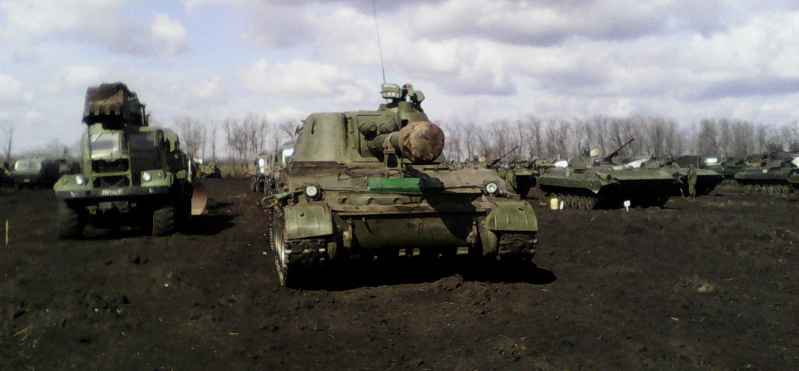
Judging from the battlefield performance of the Russian-Ukrainian conflict, the Russian military’s "New Look" military reform is not successful, especially the "division to brigade" reform strongly promoted by Serdyukov. The performance of the "New Look" motorized infantry brigade is not better than that of the motorized infantry regiment before the military reform, and is far from being able to replace the motorized infantry division. Its excellent rapid deployment capability cannot cover its poor combat effectiveness. If the Russian-style synthetic battalion represented by the battalion tactical group performed well in the conflict in eastern Ukraine, then its performance in the larger and more intense Russian-Ukrainian war can only be described as unsatisfactory.
The problems of the "new look" motorized infantry brigade cannot be entirely blamed on Serdyukov. His "division-to-brigade" has a premise, that is, the planned Russian Army will be a force composed mainly of professional soldiers (contract soldiers). Only on this basis can the construction of synthetic battalions be promoted and the goal of "division-to-brigade" be truly achieved. But the problem is that even today, the professionalization of the Russian army is still very slow, far from the planned scale. From this perspective, Shoigu’s partial restoration of the division-level system after he became the Minister of Defense was also a helpless move. After all, in theory, the motorized infantry division has a stronger sustained combat capability. Even if each motorized infantry regiment draws out part of its forces to form a battalion tactical group, the division commander will still have a reserve team. Compared with the motorized infantry brigade, the reserve team in the hands of the motorized infantry division commander is not only strengthened with 152mm self-propelled howitzers and 122 millimeter multiple rocket launchers, and more main battle tanks. After all, in theory, the Russian motorized infantry division has an independent tank battalion under its jurisdiction. When forming a battalion tactical group, each motorized infantry regiment only needs to use the tank company of its regiment, and does not need to apply to the division commander for more main battle tanks.
Of course, the above assumptions are only theoretical. The motorized infantry division is also limited by the small number of contract soldiers and the lack of conscripts, but it is slightly less affected by its large number of staff. This is also the reason why Russian President Putin announced that he would mobilize 300,000 reserve soldiers. Without sufficient mobile forces, there can be no stable front, let alone active offense. It can only retreat step by step under the Ukrainian army’s multi-point breakthrough tactics.
Guest Objectively speaking, the reason why the "new look" military reform of the Russian Army has so many problems is that the core is that the reform has only been halfway completed. The organizational reform has been completed but the supporting military professionalization has not been completed. After Shoigu became the Minister of Defense, he was also restricted by the sluggish economy of the Russian Federation and Western sanctions, which slowed down the professionalization process of the Russian Army.
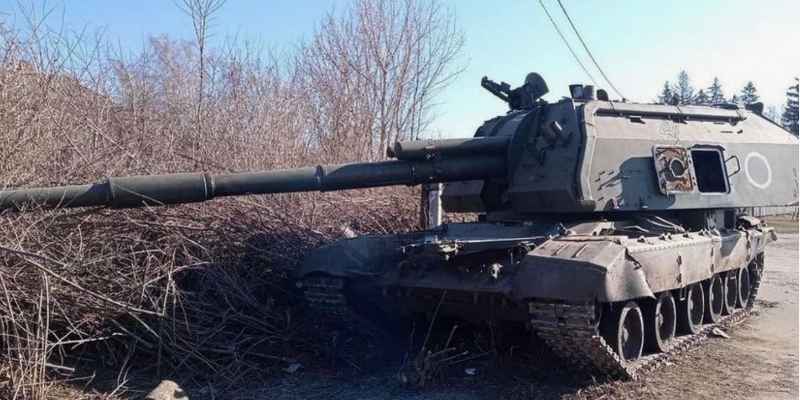
From another perspective, even if the Russian army has completed professionalization and its "new look motorized infantry brigade has successfully transitioned to the level of a synthetic battalion, its battlefield performance may not be too good. The reason is that both the modular brigade combat team of the United States and the "new look" brigade of the Russian army are only suitable for a fast but low-intensity military conflict. In other words, they are more suitable for a "security war" or "enhanced security war" rather than a high-intensity, long-term battlefield confrontation. After all, in terms of the current equipment level of the army of various countries in the world, it is unrealistic to require a 5,000-man force to have the combat capability of 13,000 people. The reason why the US military performs well is that its core firepower output has long been transferred to air power, and the combat missions undertaken by the army are relatively limited. Taking the US Stryker Brigade Combat Team as an example, a brigade equipped with only 18 155mm M777 ultra-light howitzers is impossible to independently control a 60x60 km combat area. We can even think that under the premise that the US air force does not seize the air superiority of the campaign, the combat effectiveness of the Stryker Brigade Combat Team may even be lower than that of the Russian "new look" motorized infantry brigade.
The biggest revelation that the Russian-Ukrainian conflict has given to the armies of various countries in the world is that military reforms must be targeted, with a clear imaginary enemy, and the combat effectiveness of the imaginary enemy must be carefully evaluated. The imaginary battlefield environment must be carefully evaluated. Taking Russia’s "New Look" military reform as an example, if we carefully analyze its future combat environment, imaginary enemy and its own economic strength, then whether to vigorously promote the "division to brigade" is probably worth discussing. Assuming that the division to brigade reform was not fully implemented at the beginning, but a more stable division-brigade combination system was adopted, and several rapid reaction brigades were built in a targeted manner while maintaining the division-level system, then perhaps the Russian Army would perform better in the Russian-Ukrainian conflict today.