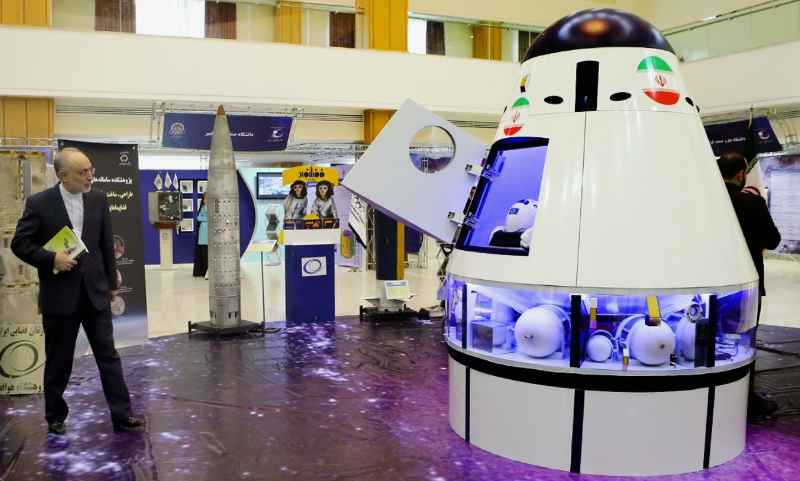

There are still some countries that plan to send people into space, such as Iran, Saudi Arabia and the United Arab Emirates in the Middle East. Iran has been working hard to develop its own space capabilities, but judging from Iran’s current industrial capabilities, it still has a long way to go.
As the two richest countries in the world, Saudi Arabia and the United Arab Emirates also have their own manned space programs, but they do not manufacture rockets, spacecraft and space stations themselves, but purchase manned flight services from other countries to fly to the International Space Station. The current first choice is of course the manned Dragon spacecraft of Space Exploration Technologies Corporation. Although they do not plan to develop their own spacecraft, selecting and training astronauts is also a huge project. For many small and medium-sized countries, it is already worth being proud of if one or two of their own people have been to space
Iran, which has been ignored
Few people care about the fact that Iran also has a space agency, and it is quite active. Although the funding is not much, only tens of millions of dollars, the Iranian Space Agency still strives to develop rockets and satellites, and even return capsules, and launch them into space.
The Iranian Space Agency is also pursuing its own manned spaceflight capabilities, which include two main directions: first, suborbital animal flight tests, and second, the development of large rockets and spacecraft.
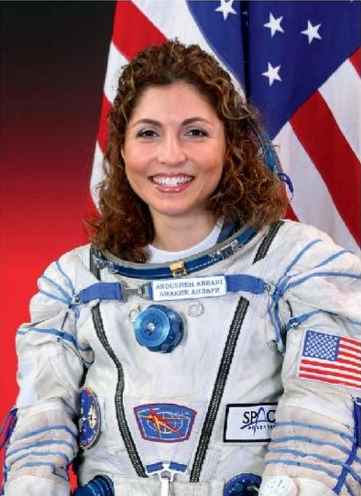
Iran’s manned spaceflight ambitions have a long history. On June 21, 1990, the Soviet Union and Iran reached a principle agreement to send Iranian astronauts to the Mir space station, but the agreement fell through due to the disintegration of the Soviet Union. On November 21, 2005, Iran’s Islamic News Agency stated that it would independently carry out manned spaceflight programs. On August 20, 2008, Reza Tajpour, head of the Iranian Aerospace Industries Organization, revealed that he intended to form manned spaceflight capabilities within 10 years and become a leading space power in the region by 2021. In August 2010, President Ahmadinejad announced that Iran’s first astronaut should be launched no later than 2019, and the first suborbital space flight should be carried out in 2016. However, neither of these goals was achieved.
The Iranian Space Agency was well aware that it did not even have a medium-sized launch vehicle, and it was unrealistic to directly launch a manned space program. Therefore, on February 3, 2010, the Iranian Space Agency launched the Exploration-3 rocket, launching a mouse and several worms into suborbital space. Several small animals enjoyed the treatment of live broadcast in orbit and returned to Earth alive. Iran thus became the sixth country in the world to send animals into space.
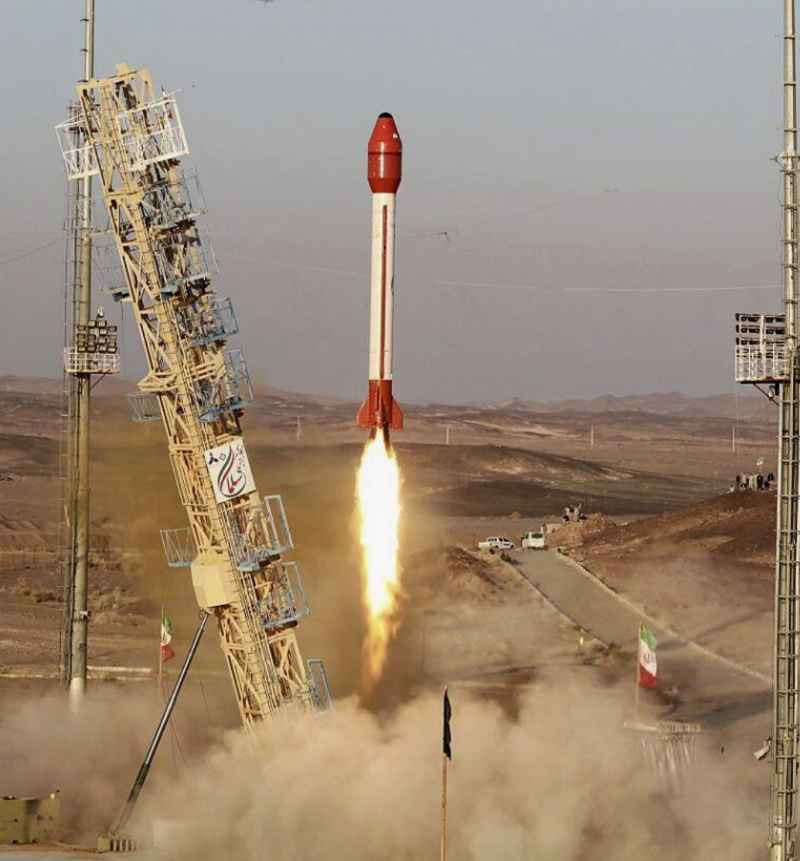
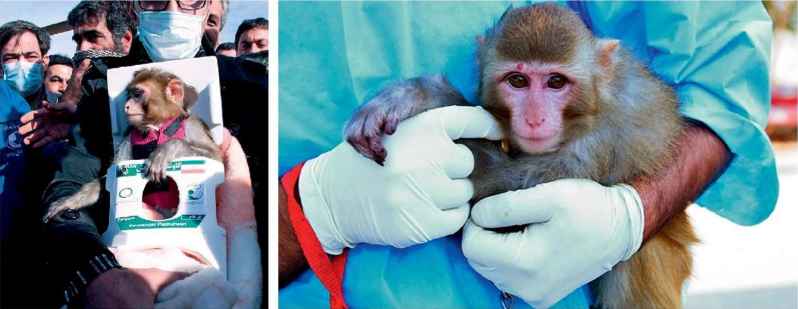
On March 15, 2011, Iran launched the Exploration-4 rocket, carrying an experimental cabin that could carry monkeys, but it was empty. Six months later, the Exploration 5 rocket was launched, but the flight failed and the monkey did not survive. After two years of efforts, in 2013, the Iranian Space Agency launched another monkey, which reached an altitude of 120 kilometers and returned safely in the Pishgam capsule. On December 14 of that year, Iran sent another monkey, Fargam, into space and returned safely. Such success inspired the Iranian Space Agency. On December 6, 2023, Iran launched a 500-kilogram return capsule, Salman, which reached an altitude of 130 kilometers from the earth’s surface. It is said that the rocket, recovery device, speed control system, protective cover, aerodynamic design and life support system have all been tested.
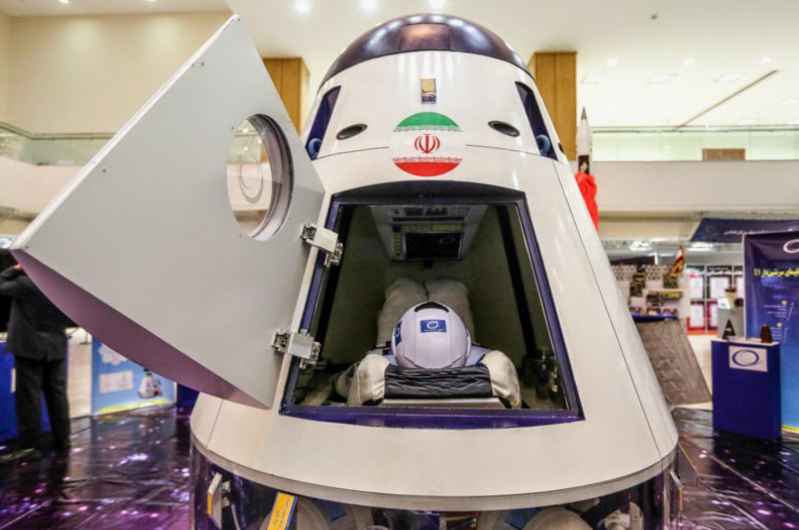
On February 17, 2015, Iran unveiled a manned spacecraft model, but then shelved it indefinitely. The plan was restarted in 2021, intending to send humans into space by 2026. However, by the end of 2023, this node was postponed to 2029.
According to Iran’s own industrial capabilities, it is of course very difficult to independently develop manned space capabilities. However, in the Russian-Ukrainian conflict, Iran gave Russia strong support and was almost the only country that openly exported arms to Russia. Russia also reciprocated by providing Iran with a large number of military aircraft. As for whether it will transfer some manned space technology, it is still uncertain.
The first flight of Saudi astronauts
The Saudi Space Agency’s project is called the Sustainable Human Space Flight (HSF) program, which is mainly to train Saudi Arabia’s own manned space backbone. The first mission is the AX-2 mission of Axiom Space, which will take off on May 21, 2023 and head to the International Space Station. Two Saudi astronauts, Ali Alkani and Rayana Barnawi, boarded the ship as mission experts. Among them, Barnawi is the first Muslim woman in history to enter space and an expert in stem cells and tissue regeneration. Alkani is a pilot. According to the Saudi Space Agency, his main task is to support and guarantee Barnawi’s flight.
The Ax-2 mission was originally scheduled to stay at the International Space Station for 10 days, but due to the delay in the launch of the Falcon Heavy rocket, the mission was changed. Axiom Space and NASA agreed to shorten the mission by two days to avoid colliding with subsequent missions. During this tense period, the two Saudi astronauts conducted some experiments, most of which were related to life sciences, including blood, mitochondria, pupillometry, electroencephalogram, optic nerve, changes in the brain under microgravity, cell science experiments, etc., and also took time to do microgravity science education for Saudi teenagers.
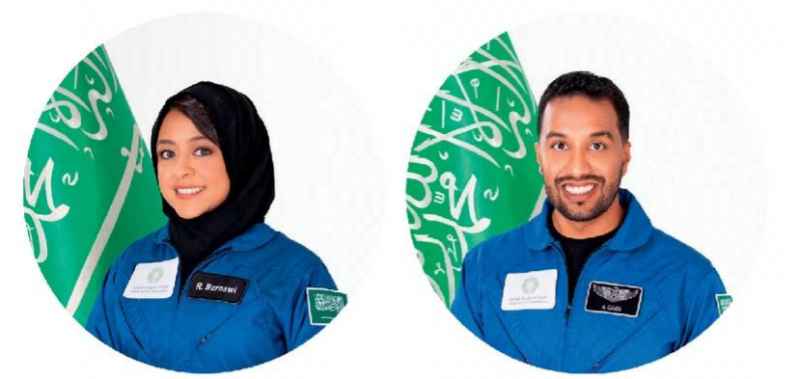
On May 31, 2023, the AX-2 mission was successfully completed and the two astronauts returned to Earth. Excluding the time for takeoff and return, they actually flew on the International Space Station for 8 days.
According to the Saudi Space Agency, HSF is a strategic plan that will achieve the key areas of Vision 2030 by enhancing Saudi Arabia’s technological capabilities, diversifying the economy and expanding Saudi Arabia’s industrial scope, including but not limited to physical sciences, human health, biology, biotechnology, biopharmaceuticals, earth sciences, space manufacturing and technology development. In addition, these research opportunities will promote international cooperation and further enhance Saudi Arabia’s role and contribution in the world.
The Saudi government is obviously quite satisfied with this flight. On August 21, Axiom Space announced that it had raised a large investment of US$350 million, part of which came from a Saudi investment company and the other part from a Korean pharmaceutical company.
UAE breaks two records
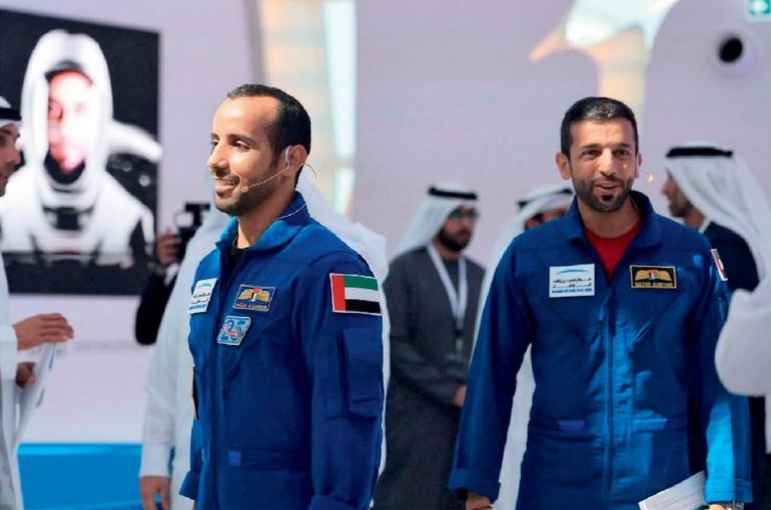
In 2023, the UAE completed a pioneering feat in the history of space flight in the Arab world. Astronauts Hazza Mansouri and Sultan Naiyad boarded the manned Dragon spacecraft of the US Space Exploration Technology Company on February 27 to enter the International Space Station. The two flew in orbit for 180 days, setting a record for space flight in the Arab world. Another record occurred on April 28, 2023, when Naiyad and another American astronaut walked out of the cabin and replaced the radio frequency unit in 6 hours and 30 minutes, and prepared for the installation of new solar panels. Breaking two records in one mission can be regarded as an honor for the UAE.
In early November 2023, the UAE expressed its intention to send astronauts to the International Space Station again. Salman Ali Mali, director general of the UAE Space Agency (also known as the Mohammed bin Rashid Space Center), said in an interview that the UAE has trained four astronauts, two of whom have already flown. In the future, the UAE will not only train new astronauts, but also arrange for experienced astronauts to fly again. Currently, new astronauts Nora Al Matrosi and Mohammed Mulla are undergoing training.
As for the mission cycle, Ma Li said that the 10-day short-term mission is already very valuable to the UAE, but if more and longer-term missions can be implemented, it will certainly be better. The UAE is not only looking at low orbits, but also at the moon. Ma Li said that since joining NASA’s Artemis program in 2020, the UAE has also been observing the moon very closely, hoping to implement astronauts flying around the moon or even landing on the moon in the long term.