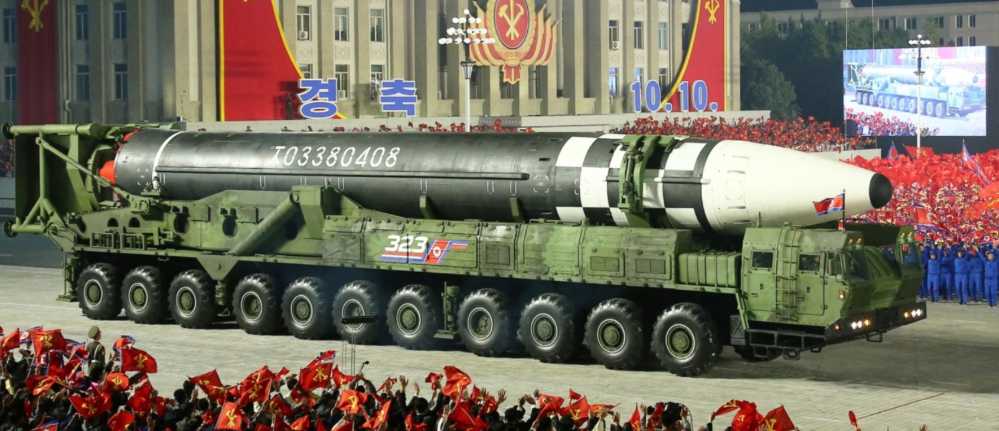

The U.S. Department of Defense’s annual report on China’s military power said that the People’s Liberation Army has deployed about 600 medium-range ballistic missiles with a range of 1,000-3,000 kilometers, about 1,000 short-range ballistic missiles with a range of 300-1,000 kilometers, and about 300 land-based cruise missiles. The report believes that the People’s Liberation Army has also acquired the ability to suppress important ground and surface targets near the first island chain and even the second island chain. A strategy of using long-range missiles to conduct standoff strikes in the Western Pacific is unfolding.
As the first country in the world to use standoff weapons in actual combat, the United States has long been wary of the growing standoff strike means of its great power rivals and the anti-access capabilities they have formed. In recent years, the United States is actively purchasing traditional standoff strike weapons such as cruise missiles for its various military services, and actively investing in the research and development of new concepts such as hypersonic weapons, aiming to ensure the safety of its launch platform while achieving penetration strikes on potential high-value targets in depth, so as to enhance its "deterrence" capability as much as possible.
Defense zone range defined by the US military
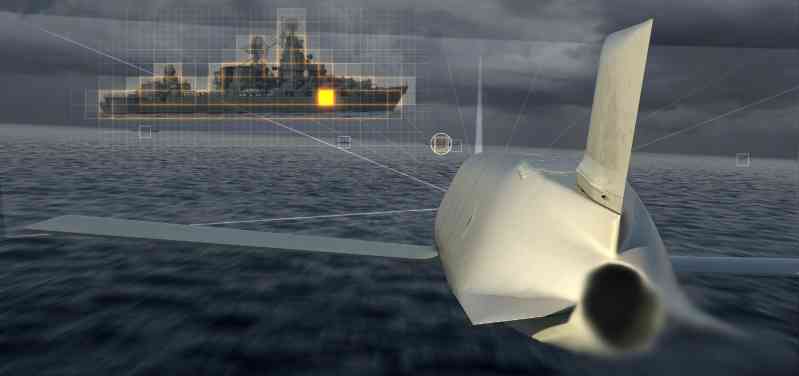
How to define standoff strike weapons? From the application level, it is naturally the actual size of the opponent’s "defense zone" that defines what "standoff strike" is. For example, in many so-called "anti-terrorism wars" that the US military has participated in in recent years, even the "Hellfire" anti-tank missiles and "JDAM" GPS-guided bombs can often be safely launched and dropped outside the opponent’s air defense firepower, but they are obviously not considered "standoff strike weapons" in the general sense. Coincidentally, the US Air Force has a project called "Stand-In Strike Weapons" (SiAW) under development. Although the U.S. military has not clearly defined the "standard within the defense zone", judging from Northrop Grumman’s bid for SiAW, which is based on the next-generation anti-radiation missile AARGM-ER that the United States is about to install, considering that the range of AARGM-ER is 220 kilometers and 300 kilometers depending on the release altitude, SiAW should have a maximum range of about 300 kilometers. From this point of view, the range standard of "out-of-area strike weapons" can be roughly set at more than 350 kilometers. As the main airborne general-purpose air-to-ground missile of the U.S. military, the basic model AGM-158A of the "Joint Air-to-Surface Strike Missile" (JASSM), which was installed in 2009 and has a range of 370 kilometers, just meets this standard. At the same time as the AGM-158B was fully installed, the famous "Long-Range Anti-Ship Missile" (LRASM ). Due to the more complex multi-mode guidance head of the missile, the weight is slightly increased. In addition, its terminal flight adopts the ultra-low altitude sea-skimming penetration mode, which has greater air resistance. The outside world estimates that the range of the missile is between JASSM and JASSM-ER, and some agencies estimate it to be more than 480 kilometers.
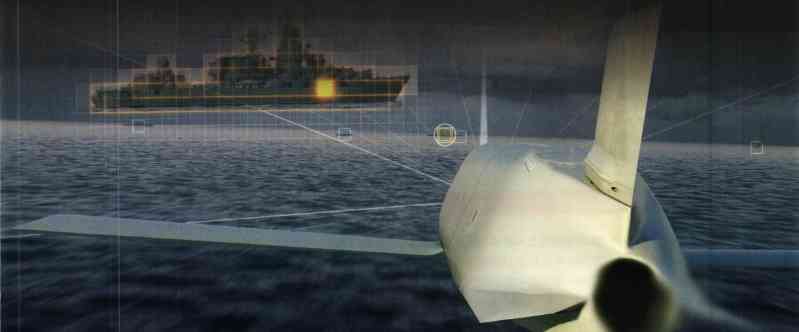
Most of the existing AGM-158 series are air-launched. LRASM has been tested for compatibility with the MK-41 vertical launch system of the US Navy’s Aegis warships as another main launch platform for the US military’s standoff strike. The US military is currently gradually retiring the older Tomahawk Block 3. The Tomahawk Block 4, which began service in 2004, will be fully upgraded to the Block 5 standard, and 375 missiles are expected to be converted by fiscal year 2024. At the same time, the US military continues to purchase Tomahawk Block 5 (including Type 5A for striking mobile targets at sea and Type 5B for striking diverse land targets). After purchasing a total of 180 missiles in fiscal years 2020 and 2021, the US military again awarded Raytheon a contract to purchase 154 Tomahawk Block 5 missiles in May 2022. It is worth noting that only 70 of the 154 missiles are for the Navy, 54 for the Marine Corps, and the remaining 30 for the Army. This is the first multi-service procurement of the Tomahawk, and it is also a landmark event that the US military’s current standoff strike platform is expanding from the Navy and Air Force to other services.
From subsonic to supersonic
The US military launched a Tomahawk using a land-based MK-41 vertical launch device on August 18, 2019, which became a landmark event after the United States withdrew from the Intermediate-Range Missile Treaty on August 2 of that year. As the only cruise missile used on a large scale by the US military in actual combat, the Tomahawk Block 4/5 series with a range of more than 1,600 kilometers and mature performance is still a trusted standoff strike means by the US military, complementing the AGM-158 series. However, after withdrawing from the Intermediate-Range Missile Treaty, the United States’ pursuit of standoff strike means is not only these traditional subsonic cruise missiles.
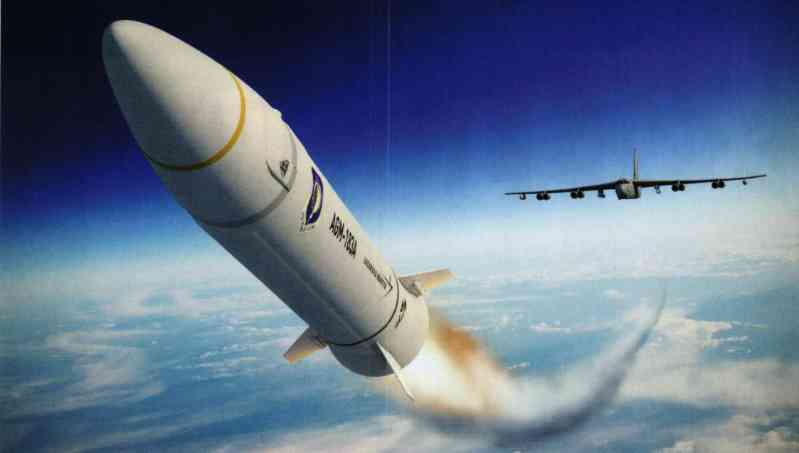
Currently, the U.S. Air Force is developing conventional standoff missile projects including "Standoff Attack Weapon (SOAW)", "Hypersonic Attack Cruise Missile (HACM)" and "Air-Launched Rapid Response Weapon" (ARRW/AGM-183A). Except for the technical indicators of SOAW, which was just released in August this year, which are still unclear, HACM and ARRW are both hypersonic missiles, using air-breathing cruise and boost-glide schemes respectively. The U.S. Army’s "Long-Range Hypersonic Weapon" (LRHW), "Precision Strike Missile" (PrSM), the Navy’s "Intermediate-Range Conventional Prompt Strike" (IRCPS) and other boost-glide hypersonic weapons are also in different stages of development.
Behind these dazzling models, the U.S. military’s corresponding ammunition reserves and production capacity are also worthy of attention. Since several new hypersonic weapons are still being tested and have not yet started mass production, the U.S. military still needs to continue to purchase traditional subsonic cruise missiles to meet its combat needs. In addition to the "Tomahawk" series mentioned above, the U.S. military has focused on purchasing the land attack type AGM-158B/ASSM-ER in recent years, and the anti-ship type AGM-158C/LRASM is not its procurement focus, which is quite surprising to the outside world. In fact, in 2018, when LRASM formed its initial combat capability, the US military made a more radical plan: after purchasing 25 LRASMs each in fiscal years 2020 and 2021, it focused on developing its improved version LRASM V1.1, and the total purchase of the basic version was only 115. Although the US military decided to increase the total number of LRASM purchases to 300-400 in 2019 as its threat assessment changed, the planned equipment scale of LRASM is still small compared to the US military’s decision to increase the total number of JASSM-ER purchases from nearly 2,900 to 7,200 during the same period.
This shows from one side that compared with the "attack halfway across the sea" that the outside world focuses on, the US military may pay more attention to "source strike" and "attack the enemy by surprise" in the hypothetical "large-scale intervention" battlefield environment at this stage, using a large number of JASSM-ER with a longer range to strike the hypothetical enemy ports and even deep, as well as important targets that have just landed and lack cover. Using LRASM to strike the landing fleet that is closely protected by the opponent’s naval and air forces during the crossing stage may be a "feint attack" to attract the opponent’s attention.
Cruise missiles with a diameter of tens of centimeters and a wingspan of two or three meters, even if they are not stealth-processed like the AGM158 series, have lower radar signal characteristics than aircraft. Although it takes a period of time to fly over the sea, once the missile flies over the land, the complex ground clutter will form a good cover environment. When attacking land targets with low time sensitivity, it is even possible to plan more complex attack routes to achieve better penetration effects.
The challenge of countering US strikes beyond the zone of defense
As the proportion of JASSM-ER series equipment with better stealth will increase significantly in the future, the ability of anti-stealth radar to detect US stealth cruise missile groups will become a key indicator as important as the ability to detect stealth fighters such as F-35. It is also important to note that the "Precision Strike Missile (PrSM)" and other models with relatively mature technical routes in the US military’s hypersonic weapons will also have certain combat capabilities in the future.
When the defender fights against the JASSM series launched by the US military from aerial platforms, especially the US military is testing the use of C-130 and C-17 transport aircraft to airdrop full of JASSM-ER The "Rapid Dragon Plan" of using a tray of missiles to carry out air-distributed saturation attacks, and using stealth fighters or other high-speed platforms to carry ultra-long-range air-to-air missiles to carry out preemptive source strikes, is a very effective response. However, when the defender responds to the land-based missiles deployed by the United States based on military bases in the Asia-Pacific region, it is a completely different issue from a political and technical perspective.
Technically speaking, countries that have made certain achievements in the field of hypersonic weapons and air-to-space anti-missiles already have the ability to develop anti-hypersonic weapon systems. However, from the previous use of air defense missile systems with strong anti-tactical ballistic missile capabilities and advanced ballistic missile Judging from the examples of missile confrontation, the attacker still has a clear advantage. If the attacker’s missile launcher is limited by the deployment area and is difficult to maneuver and conceal over a large area (especially when deployed on small islands), it is more effective to monitor its movements as much as possible in peacetime and destroy it preemptively in wartime.
Politically speaking, if the defender wants to preemptively strike the medium- and long-range missiles deployed by the US military on the territory of a third country, whether it means going to war with the third country is an unavoidable issue. Compared with the source strike on the air or sea platform, the search strike is more convenient for concealing its own missile launcher, and it is also very difficult technically.
From the experience of the Russian-Ukrainian conflict, the ability to provide real-time air situation support over a wide range of depth is the fundamental condition for resisting large-scale missile attacks, and it becomes increasingly important as the opponent’s missile flight speed and stealth performance increase. For hypersonic weapons that fly at high speeds and often have only one interception opportunity, it is necessary to further optimize the design of anti-missile systems based on the flight characteristics of hypersonic missiles using different power principles to ensure the best interception conditions. For cruise missiles with more interception opportunities, it is necessary to focus on the reasonable configuration of soft and hard interception means at all levels, such as combining the battlefield sea and air environment, using early warning aircraft, destroyers and frigates and other platforms for forward detection, building a sea and air coordinated air situation network, and complementing the firepower of ship-borne/shore-based fighter aviation and ship-to-air missiles to form a wide-area multi-layer interception capability.
In the long run, the scale of the U.S. military’s standoff weapons reserves will soon exceed the level of the U.S.-Soviet confrontation during the peak of the Cold War, and improvements will be made to its relatively single penetration means. The long-term goal is to form a dual advantage in quality and quantity in its standoff strike means. Given the rapid rise of the People’s Liberation Army of China, the United States must speed up the improvement of its equipment if it wants to maintain its military hegemony.