
Time flies. At the beginning of the new century, it has become a worldwide consensus that large-scale industrial activities of mankind have caused huge pollution to the earth’s environment. The aircraft that flourished in the mid-to-late 20th century not only increased in number, but also shuttled directly in the atmosphere. After the exhaust pollution of ground factories was controlled, aviation engines using petroleum fuels have become the most common and most influential source of pollution in the atmosphere. Unlike petroleum fuels that emit a large amount of greenhouse gases (carbon dioxide) when burned, the combustion product of hydrogen is only water, which does not pollute the atmospheric environment at all. Under the high standards of environmental protection in the new era, hydrogen has once again made a shining debut, returned to the aviation field, and become the main direction of research and development of a new generation of aviation power energy in various countries.
From electric power to hydrogen power
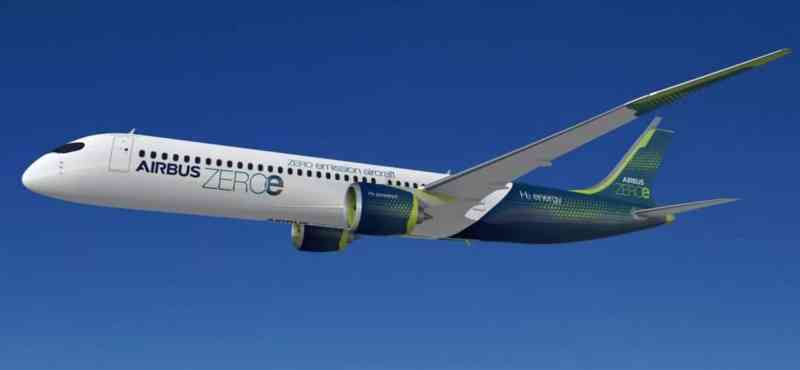
At present, European countries are the main researchers of aviation hydrogen power energy. !As one of the regions with the highest economic level in the world, most European countries, especially Western European countries, have played a radical role in environmental protection issues. Achieving global carbon neutrality by 2050 is an important environmental protection goal promoted by European countries. Statistics show that in 2019, the global aviation industry emitted more than 1 billion tons of carbon dioxide into the atmosphere. Although the carbon emissions of the aviation industry have plummeted in the past two years due to the global epidemic and a sharp reduction in flights, it is clear that this decline is temporary and will rebound again after the epidemic is under control. In order to gradually reduce the carbon emissions of the aviation industry in the future, in June 2020, the French government announced a plan to support the development of the future aviation industry, proposing to invest 7 billion euros in 15 years to support the construction of hydrogen-powered "green aircraft". On this basis, in September 2020, as the world’s largest aircraft manufacturer, Airbus announced that it will launch a commercially viable hydrogen-powered concept aircraft "ZEROe" (Zero emission) within five years. The plan is studying three types of regional aircraft: 50-seat hydrogen-electric propulsion aircraft; 50-85-seat aircraft, series or parallel hybrid propulsion, turbines combined with batteries or fuel cells; 85-100-seat aircraft, using hydrogen combustion or parallel hybrid propulsion. As major shareholders of Airbus, the governments of France, Germany and Spain, as well as their vigorously promoted new century environmental protection policies, are the most important supporters of this plan.
In fact, Airbus first chose a traditional hybrid power method similar to the automotive industry for future low-emission aviation power, and hydrogen power was not Airbus’s first choice. However, the weight of the battery pack is much higher than the weight of fuel with the same calorific value. In other words, its energy density is too low. For cars, it is acceptable, but for aircraft that need to leave the ground support and fly into the sky, its weight is still large. At the same time, the fuel engine in the traditional hybrid system is still a source of pollution. According to the plan, aircraft using traditional hybrid power only use hybrid mode in the take-off stage with the highest energy consumption. During normal cruising, fuel engines are still used as propulsion power, and the emission reduction effect is not ideal. For this reason, Airbus decisively terminated the E-Fan X traditional hybrid electric aircraft verification aircraft project in early 2020, and also terminated the next step of modification and testing of the BAE AvrORJ100 traditional hybrid electric aircraft.
Although pure electric aircraft can achieve zero emissions almost immediately, the weight of the battery pack will greatly occupy the aircraft’s payload space. If long-distance flights are to be achieved, the commercial load will be reduced to an unacceptable level, which is incompatible with Airbus’ main products - large and medium-sized passenger aircraft. For this reason, Airbus has also terminated the research on pure electric power as a power source on aircraft and turned to hydrogen as the main power energy source for future commercial passenger aircraft. Glenn Llewellyn, engineer in charge of Airbus’ hydrogen power experimental project, commented: "Hydrogen fuel is the most promising type of energy that allows us to power aircraft and aviation with renewable energy, and battery technology has not developed at the level we need to achieve our ambitions.
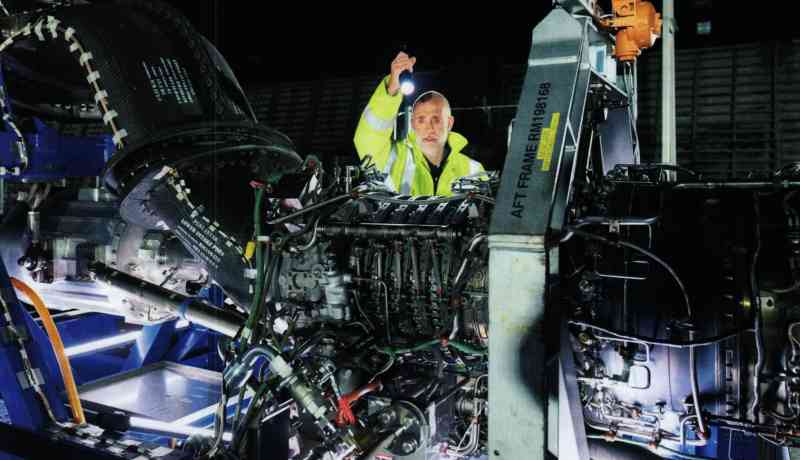
The British Aerospace Technology Institute (ATI) released several technology roadmaps for the "Zero Emission Flight" (FlyZero) project in March, identifying a series of technologies with great potential for hydrogen-powered aircraft, evaluating the possible benefits of related technologies, and proposing goals and paths for technology development. The research report of the FlyZero project believes that environmentally friendly liquid hydrogen fuel will be the most viable zero-carbon emission fuel, and it is possible to be used in larger aircraft using fuel cell gas turbine engines and hybrid power systems. Chris Gale, FlZero project director, and Gary Elliott, ATI CEO, told the media: "Aircraft manufactured today are more efficient than ever before, and will increasingly use alternatives to fossil fuels. This represents a big step towards global climate goals in terms of reducing carbon emissions. But what if we could eliminate carbon emissions altogether? A new era for aviation is upon us. ”
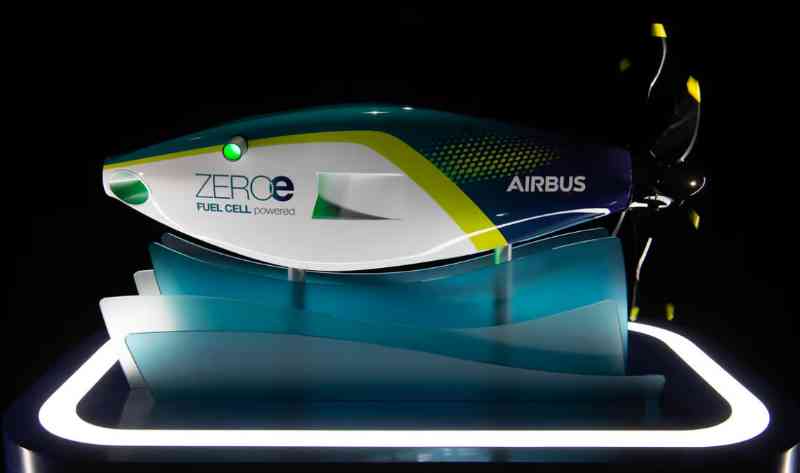
The main ways to use hydrogen to power aircraft include: hydrogen directly as a fuel source for fuel cells, generating electricity through the reaction of hydrogen and oxygen, and providing power for aircraft engines. Hydrogen is directly used as a fuel source for modified engines. In fact, hydrogen fuel cells have long been used in military equipment. The Type 212 submarine developed by Germany is the world’s first conventional-powered submarine using a fuel cell AIP system. Its hydrogen fuel cell is the first generation of practical PEM fuel cells produced by Siemens. The main system consists of nine groups of proton exchange fuel cell modules, 14 tons of liquid oxygen storage tanks, and 1.7 tons of gaseous hydrogen storage tanks. However, MTU Aero Engines, which is working with the German Aerospace Center to study aviation hydrogen fuel cell propulsion systems, believes that under the current operating environment, 20-seat fuel cell-driven aircraft "have no commercial value." Due to the restrictions on carbon dioxide emissions in various countries around the world, especially in Europe and the United States, the restrictions may be more stringent. MTU Aero Engines predicts that fuel cell-powered aircraft with less than 100 seats should be feasible starting in 2035, and then in the 40s of this century. In the mid-to-late 1990s, it was expanded to single-aisle passenger aircraft. In contrast, the R&D expenditure of hydrogen fuel cell technology only accounts for about 20% to 25% of the R&D expenditure of MTU Aero Engines, and most of the funds are still invested in improving aviation gas turbine engine technology.
From the current progress, if Airbus wants to successfully achieve the goal of putting practical hydrogen-powered aircraft into use before 2035, replacing traditional fuel jet engines with hydrogen power is likely to be the easiest technical route to achieve results and meet the power needs of future medium-sized and larger passenger aircraft. However, it is not just the new hydrogen-powered aircraft engine that needs to be studied and produced. If hydrogen-powered aircraft are to be put into operation before 2035, it is also necessary to vigorously promote the construction of infrastructure required for hydrogen energy to enter commercial passenger services, as well as the construction of regulatory and certification frameworks. The FlyZero research report pointed out that areas that need special attention include cryogenic hydrogen fuel systems, hydrogen-powered gas turbine engines, and verification aircraft for ground and air operations.
Challenges of hydrogen power
For hydrogen, a flammable and explosive fuel, it is currently quite difficult to store and use it safely on aircraft. Since gaseous hydrogen (even the high-pressure hydrogen currently used by the automotive industry) has too low a density and takes up too much space, it is not suitable for aircraft. Only liquid hydrogen and special cryogenic tanks can be used. Since hydrogen boils at -252.78℃, the biggest challenge for commercial aviation is to develop a liquid hydrogen tank that can meet the needs of aircraft applications and has a long enough service life. "For decades, the aerospace industry has been using pressure vessels to store liquid hydrogen propellants to power space exploration." Renato Bellarossa, head of propulsion products and tanks at Airbus Defense and Space, commented: "Therefore, we have a lot of expertise in damage tolerance, advanced manufacturing technology and container pressure testing, which are key to supporting the development of liquid hydrogen tanks for future aircraft propulsion systems. Such cross-industry cooperation will bring us closer to the goal of sending hydrogen-powered aircraft into the sky in the next decade."
However, since the density of liquid hydrogen is only 70.85 kg/m3, it is still far lower than the density of traditional petroleum fuels. Therefore, although liquid hydrogen has the highest energy density, its energy is only about 1/4 of that of traditional aviation fuel in the same volume. This means that if you want to obtain the same energy, you need a larger tank device when using hydrogen. Therefore, hydrogen-powered aircraft require new design technology to increase fuel storage space. How to minimize this adverse effect and strike a balance between commercial space and fuselage system costs remains a thorny issue. In addition, most of the hydrogen produced industrially is used for oil refining and chemical manufacturing, and almost all of it is extracted from natural gas or coal, and its production process is not environmentally friendly. How to provide sufficient liquid hydrogen for future hydrogen-powered aircraft, especially liquid hydrogen that meets the environmental protection requirements of the entire process, is also a major problem.
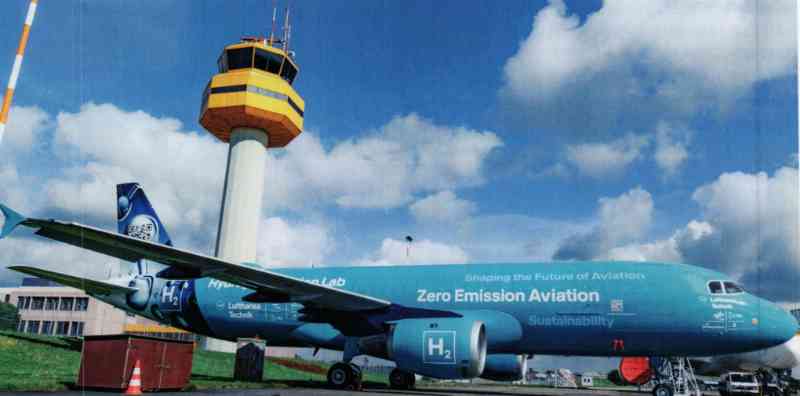
test platform, and the test content included hydrogen storage of passenger aircraft, working stability of fuel cells, and ground hydrogen refueling system.
So far, no airport in the world can provide aircraft hydrogen refueling services. For this reason, Airbus is also working hard to promote the establishment of an airport network in Europe that can operate hydrogen-powered aircraft in the future. Lyon Airport in France was selected as the first project test site. The project will start construction in 2023. The main projects include building a hydrogen distribution station at the airport to supply hydrogen to hydrogen-powered ground vehicles; before 2030, it will continue to develop and build liquid hydrogen storage and supply infrastructure for hydrogen-powered aircraft fuel operations on a large scale; at the same time, it is planned to explore the possibility of establishing a network of aviation hydrogen fuel production, storage and supply facilities at airports in countries such as France, Portugal, the United Kingdom and Sweden by 2030.
It is predicted that by 2030, the global market value of hydrogen-powered aircraft will reach US$27.68 billion; by 2040, the market value will exceed US$174 billion. But aviation hydrogen power will be a difficult task that requires long-term planning and will bring about earth-shaking changes to the trillion-dollar aviation industry. Even if all goes well, as Airbus wishes, and hydrogen-powered aircraft can achieve initial breakthroughs by 2035, the possibility of hydrogen-powered aircraft becoming mainstream before 2050 is still controversial, and only time will tell.