
Recently, there have been rumors that Pakistani Air Force pilots went to China to test-fly the J31 stealth fighter. Regardless of whether the rumors are true or not, the current Pakistani army has fully entered the era of Chinese equipment, and the Chinese J10 fighter jets previously equipped by the Pakistani Air Force are the top priority of Pakistan’s military modernization. This article is compiled by
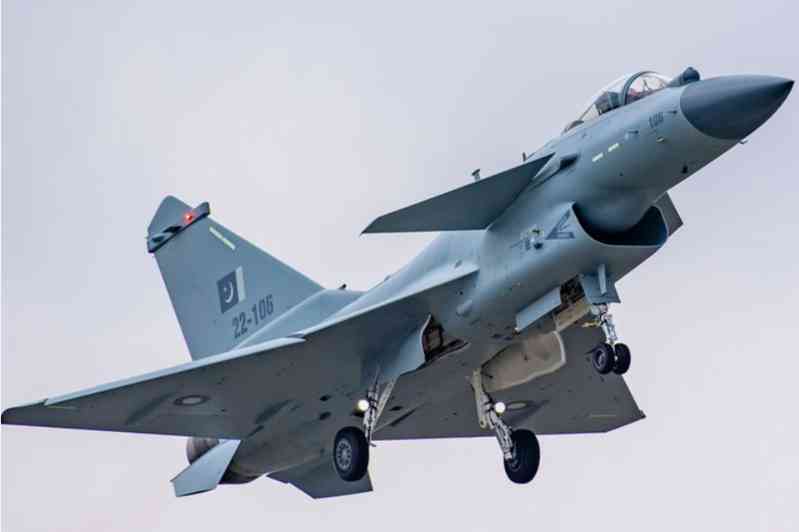
Earlier in March 2022, a new type of fighter appeared in the skies of Pakistan. Six J-10Cs with tail numbers 101, 102, 103, 104, 105 and 106 entered Pakistan through the PURPA waypoint on the northeastern border with China.
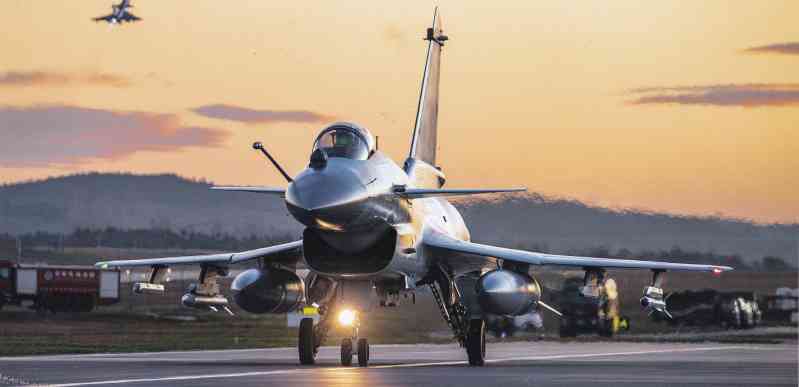
The J-10C is precise and deadly. It adopts a canard delta wing design and has the multi-functional and all-weather capabilities of a 4.5-generation fighter. The Pakistan Air Force’s “Dragon” jet fighters are in place to protect our country in the coming days.
The scene is reminiscent of 1968. At that time, six French “Mirage” fighters with tail numbers from 101 to 106 entered Pakistani airspace. The leader plane was piloted by Lieutenant Colonel MM Alam, and Hakimullah, Farooq F. Khan, Lieutenant Colonel Farooq Umar, and Lieutenants Arif Manzoor and Akhtar Rao flew under him.
Fast forward to 2022. The lead pilot of the “Dragon Team” is Lieutenant Colonel Imtiaz Rahim Shehzada, the commander of the 15th Squadron. Lieutenant Colonel Bilal Raza and Squadron Leaders Jibran Rasheed, Hassan Anees, Qishan Mohammed, and Ali Qasim formed the double wing of the lead plane. The formation flew from Chengdu to Kamra and landed at the Minhas base of the Pakistan Air Force. The air was full of vitality, and excitement and pride were condensed at the scene of welcoming the "Dragon Team". All eyes were fixed on the start of the runway to see the "Mighty Dragon" that was about to land at the first sight.
Assembling on the apron of the base were the senior leadership of the Pakistan Air Force, including the Chief of Air Staff Zaheer Ahmed Babur Sidhu. The historic moment has arrived! The first "Mighty Dragon" with the number 101, piloted by Lieutenant Colonel Imtiaz Rahim, appeared on the scene. 6 J-10Cs completed the landing at Minhas base! Senior Air Force officials observing on the apron breathed a sigh of relief and applauded for the perfect landing.
When the plane appeared on the apron, people saluted the "Watergate Salute" to the "Mighty Dragon", which is a traditional etiquette to welcome the arrival of new aircraft. After the ground crew lined up, before Lieutenant Colonel Rahim got off the plane, he found that Chief of General Staff Zahir Ahmed had climbed up the ladder to greet him.
Does this aircraft meet our expectations?" The Chief of General Staff asked with a smile. "I have to admit that it is one of the best fighters in the world. We have done all the work in China for several months to improve our tactics on the operating platform. It is safe to say that the combat capability of the fighter we brought back is indeed amazing and far better than expected, sir." Lieutenant Colonel Rahim responded.
This is a major investment, but it is worth every penny in the defense sector. The J-10C is a cutting-edge platform that will take the PAF to new heights in terms of platform performance, which the PAF has always pursued, and in terms of combat readiness. When the "Who Else Is It" team spoke to ground crews and pilots, everyone agreed that importing the J-10C is a step in the right direction and is something the PAF has long dreamed of.
It is great to see them flying all the way from China. This aircraft is really beautiful. Air Marshal Zaheer Ahmed, Chief of the General Staff, emphasized at the ceremony that the commissioning of the "Mighty Dragon" highlights the fact that the PAF’s investment in combat power is huge. "The fact that we will be flying the J-10C shows that the PAF has a strong defense capability and is willing to do its part in the world and fulfill its obligations," said the ceremony at Minhas Base, which was enthusiastic and infectious.
Drive the Raptor
In order to receive training for the J-10C and bring the Raptor back from China, the Pakistani Air Force formed a special team, with professional pilots and ground crew on the candidate list. Lieutenant Colonel Imtiaz Rahim Shahzada, who had flown F-16 fighters and Mirage fighters, accepted this glorious "shadow" mission and led the task force to China in October 2021. The pilots in the team are proficient in flying F-16, JF-17 and Mirage aircraft, familiar with beyond visual range (BVR) operations, and even have experience in operating artificial intelligence systems. The team followed strict COVID-19 prevention and control protocols and went to China in 3 groups within 3 weeks.
Captain Azkar from the "Dragon Project" was responsible for logistics and supervised the implementation of the departure process. If the flight was cancelled due to the COVID-19 epidemic, there must be a backup plan. After arriving in China on October 20, Pakistani military personnel were quarantined in the city of arrival for 14 days. The day before the quarantine period expired, Lieutenant Colonel Imtiaz Rahim tested positive, and all personnel except him were allowed to go to Chengdu, where they were quarantined for another two weeks. Lieutenant Colonel Imtiaz Rahim spent a total of 72 days in the quarantine area. days before joining up with teammates who had already started training. The training focused on operating the J-10C.
In Chengdu, we learned how to fly this technologically advanced jet from scratch, and then went through all the missions and basic skills training. "Lieutenant Colonel Rahim said. Most of the pilots’ courses are conducted in the classroom, experiencing the unique performance of the aircraft on advanced simulators. Language barriers are a major problem, and with the help of translators, PAF personnel overcome this obstacle. After class, pilots often have to sit down and check and digest what they have learned on their own, and there is no time to visit China. The instructors come from the manufacturer Chengfei, and some are Chinese counterparts.
After completing a few days of theoretical courses, tests are required. During the training, it is crucial that pilots can perform J-10C maneuvers freely. The simulator training is very detailed, avionics operation, driving actions, and the corresponding feedback are very real, including emergency handling procedures, which truly simulates the flying experience of the J-10C. Each PAF pilot must complete the required number of training on the simulator and meet the minimum requirements of the syllabus before being allowed to fly the new aircraft. Anything that can be done on a real aircraft can also be done on a simulator, such as maximum rate turns, vertical climbs, weapon employment, etc.
“Many people underestimate the workload of a pilot, especially a fighter pilot. An hour of flight, even on a simulator, can mean hours of extra work, mission briefings, preparation, flight checks, debriefing, not to mention the preparation time for the actual mission.” Lieutenant Colonel Bilal Raza stressed the importance of training.
The day finally came, and the PAF personnel saw the Raptor for the first time and were in awe of the aircraft. The first thing they noticed was its majestic appearance. Compared with the weapon systems they had already flown, the Raptor looked slightly different.
“It was a wonderful feeling, we fell in love with this big bird at first sight,” said Lieutenant Colonel Raza. “This is one of the most advanced fighter jets in the world, and we are lucky to be part of this program of the Pakistan Air Force and be a pioneer. This is a special treatment and brings real joy.” He added. He wanted to feel the control in the air and wanted to experience the flexibility and maneuverability of the aircraft.
In Chengdu, the job of the Chinese instructors is to teach Pakistan Air Force pilots flying skills. Initially, the Chinese were worried that the Pakistani guests would not be able to master it quickly. "This is not like passing the exam in college. We must achieve a pass rate of almost 100% at every stage, and there can be no slack," recalled Lieutenant Colonel Imtiaz Rahim: "We need to master the materials quickly, and the learning curve must be quite steep. The instructors worked overtime and gave up a week of Spring Festival holidays to train Pakistan Air Force pilots-no compromise on training standards"
First mission
After learning all the boring basics of aerodynamics, aircraft systems, navigation and instrument flying, it was time to feel the aircraft. It took two days for the Pakistan Air Force personnel to be allowed into the cockpit. Everyone fastened their seat belts and further familiarized themselves with the equipment. Each pilot conducted a ground start-up drill to familiarize themselves with the start-up and shutdown procedures, followed by slow and medium-speed taxiing. Some pilots made rapid progress, while the rest continued to train on simulators. "Finally, we are ready to go. After months of preparation, it is time to fly. Of course, a full set of briefings must be completed before the flight, and everything needs to be in order before taking off after being checked by the supervisor," said Lieutenant Colonel Rahim.
Since the pilots of the Pakistan Air Force have not flown for a long time, they need to regain the sense of flying. They need to use the K-8 trainer aircraft to adapt to the flight overload, understand the wind direction and the flying airspace. Before stepping into the cockpit of the J-10C, the trainees need to familiarize themselves with the equipment of the J-10C and wear customized anti-gravity suits in order to achieve perfect results. The last step is very important. The pilots must learn to use the most advanced equipment-their helmets. This helmet display projects flight data directly on the helmet mask, not just in the cockpit. This allows pilots to easily view key data such as altitude, airspeed and direction, and even select multiple targets for shooting.
"This aircraft has helped us a lot, and flying itself has become second nature. We have been able to focus on all the information the aircraft provides us." said Lieutenant Colonel Rahim. "It is amazing to be on this 4.5-generation semi-stealth fighter, which is close to the world’s cutting-edge level. In terms of combat power, this is a heavyweight aircraft, and the Pakistan Air Force will apply it to combat," said Lieutenant Colonel Jibran Rashid.
The leader Lieutenant Colonel Rahim made history by flying the "Raptor" for the first time. He said: "A lot of challenges come from digesting all the information the aircraft gives you. Operating all the sensors and systems, and then flying, this feeling is very intense."
All Pakistan Air Force pilots have undergone basic operation training, as well as exercises to build confidence in advanced operation tasks, including exercises in empty and loaded configurations. This was followed by air combat tactical training and training for Pakistani instructors.
Pakistani pilots were surprised after turning on the afterburner of the J-10C, exclaiming that its thrust was greater than that of the F-16. "When I first turned on the afterburner, the thrust was incredible. The J-10C can produce 29,000 pounds (about 13.15 tons) of thrust, which is 10,000 pounds (about 4.54 tons) more than the JF-17 and more power than two Mirage fighters combined." Lieutenant Colonel Jibran Rashid said that a Mirage fighter can produce 14,000 pounds (about 6.35 tons) of thrust.
The aircraft accelerates so quickly that the procedures after takeoff must be performed in rapid succession to keep pace with the aircraft. Once in the air, operating the aircraft is not difficult. Lieutenant Colonel Raza said: "This is actually a very easy aircraft to fly. The aircraft has voice recognition capabilities, which makes your operation even easier. "The pilot flew at an altitude of 26,000 feet (7,924.8 meters), made sharp turns, gradually increased overload, went straight into the approach, obtained information through voice commands, such as requesting fuel status, and completed most actions with hands on the stick (HOTAS). In addition, there were instrument approaches, low-altitude penetrations, and maneuvering shooting. The runway is 7,500 feet (2,286 meters) long, and the J-10C can complete the landing and stop comfortably in only 3,500 to 4,000 feet (1,067 to 1,219 meters). Our first safe landing was historic for both Pakistanis and Chinese, and this scene was exciting. We were also given a bouquet of flowers on the spot." Lieutenant Colonel Raza said.
Transfer to the Raptor
After 6 months of trials and tribulations, it is time to fly the first batch of 6 J-100 "Raptor" back home. The pilots began to plan the details of the diversion mission. They needed to answer all the questions, such as how to choose the diversion airport, the emergency plan, the weather on the way, etc. Crossing the Karakoram Mountains is not an easy task. It requires flawless planning, and everyone did it.
On the day of departure, each aircraft was fully fueled and equipped with 3 external fuel tanks. Led by Lieutenant Colonel Rahim, the six aircraft taxied to the take-off point. After the engines were started, they began to taxi on the runway in Chengdu.
After takeoff, team leader Rahim looked around to see if the other teammates were already with him. Climbing to cruising altitude, they flew according to the planned route. "This is a proud day, a proud moment for all of us. We know we are making history, and this feeling is nostalgic. There were no accidents in the transition and the weather was good. When we entered the airspace above the Karakoram Mountains, we were surprised to see the beautiful scenery under our wings. We flew over the Karakoram Mountains, and the main peak K2 is 28,000 feet (8534.4 meters) above sea level, which is the second highest peak in the world.
As soon as the 6 J-10Cs entered Pakistani airspace, an escort F-16 from the 9th Squadron joined the "Dragon" formation. "Welcome back." The "Fighting Falcon" pilot, call sign "Griffin 1", greeted his comrades on the radio.
Rahim said: "We established radio contact with the Pakistani air traffic control radar and received a warm welcome." "Dragon 1, welcome home." "The ground controller responded on the radio. Six brand-new jets landed at the Minhas base, which is also the supply and logistics base of the newly formed 15th Squadron. The Pakistan Air Force’s reception team arrived safely, which is a milestone. For many years, Kamra, where the base is located, has been a military stronghold. In the history of Pakistan’s military, a new and beautiful chapter has begun here. After introducing the most advanced modern aircraft such as the J-10C and its powerful weapon system, the Pakistan Air Force will enhance its combat effectiveness and become more powerful.