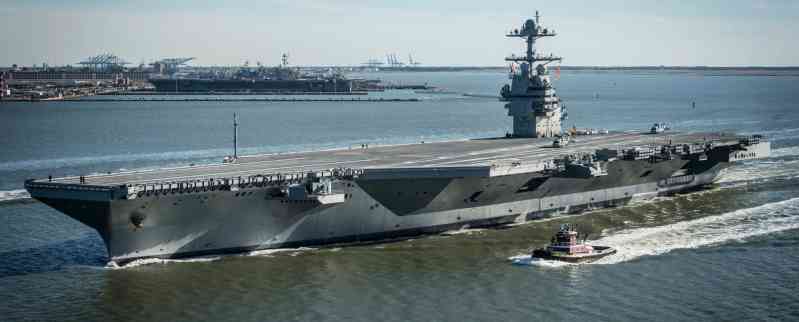
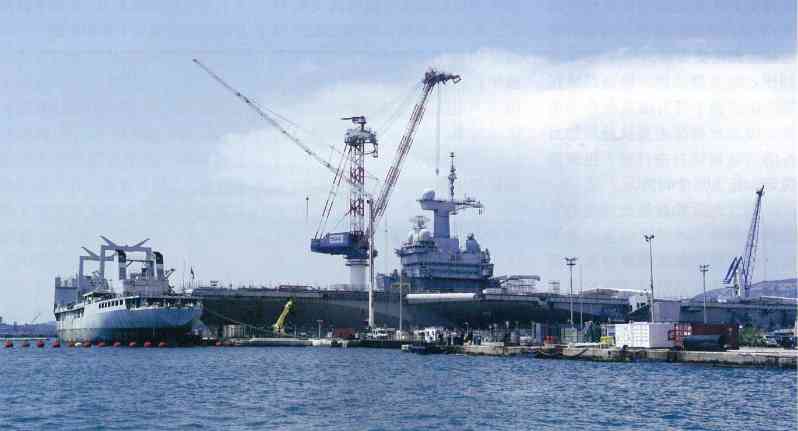

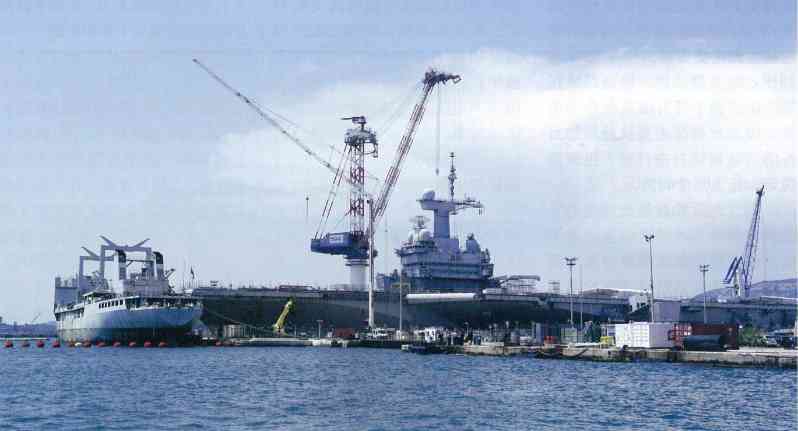
Toulon, close to the Mediterranean Sea, is the capital of the Var Province in southern France. The largest naval port of the French Navy is located here, and many scientific research institutions and naval arsenals of the French Naval Group are also located in Toulon. Unlike the prosperity and hustle and bustle of Paris, this small town has its own accumulation and connotation. For France, Toulon was the bridgehead for the French Navy to send troops to the Mediterranean during the Bourbon Dynasty, the starting point for Napoleon to ascend to the throne during the Great Revolution, and the place where the French Navy sank tragically during World War II. Countless historical events have given Toulon a unique charm. The narrow streets and undulating terrain, through which you can admire the historical buildings, are no different from most small European towns. But when you walk into the naval museum here, go out to sea to see the 40,000-ton giant ship "Charles de Gaulle" aircraft carrier near the naval port, and the huge but quiet French Navy submarine force, everything will remind you that every move here can influence the situation in Europe and even the world.
Unique development conditions
The Port of Toulon is one of the best anchorages in Europe with natural conditions. It was built in the early 16th century. In 1599, France built an arsenal and shipyard in Toulon; from 1604 to 1610, a small shelter was built to protect ships in the port. Since the Richelieu period, throughout the era of sailing warships, this has been the most important port for the French Navy’s Mediterranean Fleet, and most of the warships were anchored here. During the French Civil War caused by the Fronde Movement from 1648 to 1653, Toulon and the warships anchored there suffered devastating damage. Two warships sank, and three warships had to be dismantled to provide parts and raw materials for other warships. Only six warships were left to move, and another four were not completed until the Colbert period. Since the port of Toulon did not have the ability to repair or build ships at this time, all movable warships were transferred to Marseille for repair or completion.
After Louis XIV took power, he began to build naval facilities on a large scale in Toulon. Between 1661 and 1671, Toulon’s shipbuilding capacity continued to improve. From 1671, France began to expand the dry dock of the Toulon shipyard. Starting in 1680, Colbert, the Minister of the Navy and the King’s Financial Director, began to build a larger port. In order to protect the facilities in the port, the French Navy hired the famous military engineering designer, future French Marshal Bastian Le Prestré de Vauban, to build fortifications for Toulon in 1678. Starting in 1679, in order to berth more warships, Colbert ordered the construction of a larger anchorage near the original anchorage of Toulon Port, so that Toulon Port could accommodate 50 to 60 ships. In 1697, Vauban built a large rope factory in Toulon, which was 20 meters high. Its structural features allowed the ropes to be stretched out as a whole when they were entangled together. The labor required to produce the ropes came from prisoners in nearby prisons, because the prisoners kept walking on the huge "treadmill" to power the rope-making machine. This scene also laid the groundwork for Toulon to be destroyed by the revolutionaries in the future.
Rise with the wind
The first battleship built by the Toulon shipyard was the "Saint Philippe", which was launched on February 3, 1663 and commissioned on April 15, 1664. The warship was originally named "Holy Spirit", but was changed to "Saint Philippe" before launching. The ship is 47 meters long, nearly 12 meters wide, and has a displacement of 1,450 tons. It was originally equipped with 74 guns, and after the modification, it could carry 84 guns. Due to the frequent changes in the French Navy’s classification standards for warships, the level of the "Saint Philippe" also changed constantly. It was classified as a first-class warship in 1669, and was downgraded to second-class two years later, and returned to first-class in 1690.
1661-1669 was the peak period of the first wave of shipbuilding for the French Navy. In February 1668, the Royal Louis, the first three-deck first-class warship built by the Toulon shipyard and the first French Navy equipped with more than 100 guns, was launched. It was originally designed to carry 104 guns, and theoretically could carry up to 120 guns. It was nearly 53 meters long, nearly 44 meters wide, with a displacement of 2,400 tons and a draft of 7.15 meters. However, the Royal Louis exposed the immaturity of the design and construction level of the French Navy ships at that time. There should have been 16 pairs of gun holes on the lower deck, but most of them were not drilled, and the shooting holes near the anchor chain holes could not be used. It was not until 1676-1677 that the Royal Louis returned to the Toulon shipyard for upgrading and reconstruction, and the goal of carrying 104 guns was truly achieved.
In March 1668, the second first-class warship "Dauphin" was launched, with a displacement of 1,800 tons. It was originally planned to carry 100 guns, which was later increased to 104. In April, the "Monarch" equipped with 84 guns was launched, with a displacement of 1,700 tons. In February and March 1669, the Toulon shipyard successively launched the "Ile de France" and "Paris", both with a displacement of 1,700 tons. The characteristics of these two ships are that they are designed as three-deck warships, but the middle part of the upper deck is not armed, and the front deck and the rear deck are separated, so they can only be regarded as two-deck warships. After the two ships were launched, they were classified as second-class warships with 60 guns, but after entering service, they were classified as first-class warships with 70 guns. In 1690, the number of guns on the two ships increased to 80. The "Scepter" launched in 1670 was in a similar situation. When it was designed, the upper deck was partially armed with 76 guns, but it became a fully armed three-deck warship when it was completed. It also increased the number of guns to 80 in 1690, and added 4 more guns in 1691 together with the "Ile de France".
In addition to first-class warships, the Toulon shipyard also built a batch of three-deck second-class warships during this round of shipbuilding climax. The "Lady" equipped with 74 guns was launched in February 1670: the "Royal Thalizi" equipped with 76 guns was launched in April: the "Florissent" and "Henry" were launched in October. Starting in 1686, France no longer built three-deck second-class warships similar to the scaled-down first-class warships, but instead built double-deck second-class warships. In June 1688, the first double-deck second-class warship, the "Glorious", was launched at the Toulon shipyard, equipped with 70 guns. In March and April 1690, the "Fortune" and "Indomitable" were launched successively; in November, the "Fortitude" and "Happiness" were launched; in November 1692, the "Bourbon" was launched.
After 1695, France had to slow down the construction of first-class warships due to financial pressure, and even the larger second-class warships made France feel quite pressured. The shipyards mainly built second-class warships with less than 70 guns. In September 1695, the "Toughness" equipped with 60 guns was launched at the Toulon shipyard. Like other small second-class warships of the same period, it was once reclassified as a third-class warship. It was not until the early 18th century that France finally rebuilt second-class warships equipped with 70 guns. The Toulon shipyard launched the "Neptune" equipped with 72 guns in August 1704; the "Conqueror" was launched in 1712; and 4 Duke of Orleans-class ships were launched from 1722 to 1724. This class of ships is a second-class warship equipped with 74 guns.
In addition to first-class and second-class battleships, the Toulon shipyard, like other French naval shipyards, built a large number of small warships, but it also faced the same problem. As France’s national strength became unsustainable, the construction of large battleships was forced to be suspended for decades. It was not until 1780 that the Toulon shipyard launched two Terrible-class ships, the "Terrible" and the "Majestic". In 1782, the French Navy began to design a new first-class battleship equipped with 118 guns, named the Marseille Commercial Class (later renamed the Ocean Class). A total of two ships were built, one each at the Brest Shipyard and the Toulon Shipyard. The Toulon Shipyard built the "Marseille Commercial". In 1789, the Toulon Shipyard received an order for a new first-class battleship. In 1790, the ship was named "Dauphin", but in 1792, the revolutionaries renamed the battleship "Proletarian". At this time, Toulon, like other cities in France, was facing the test of revolution, and Toulon, which was firmly controlled by the old forces, would inevitably suffer a heavy blow in the wave of revolution. .
Toulon before and after the revolution
After the outbreak of the French Revolution in 1789, Britain, Prussia, Austria, Spain and other countries were worried that the flames of revolution would burst out of France and spread to the whole of Europe, so they formed an anti-French alliance in an attempt to suppress the revolutionary government and restore the Bourbon dynasty. In late August, the royalists were worried that the government forces would occupy Toulon to liquidate them, so they chose to hand over the French Mediterranean Fleet stationed in Toulon and the entire Toulon Fortress to obtain the protection of Britain and Spain. In this way, the anti-French alliance occupied the largest naval base and shipbuilding in the Mediterranean without firing a single shot. Within one month, the anti-French alliance stationed 14,000 soldiers here.
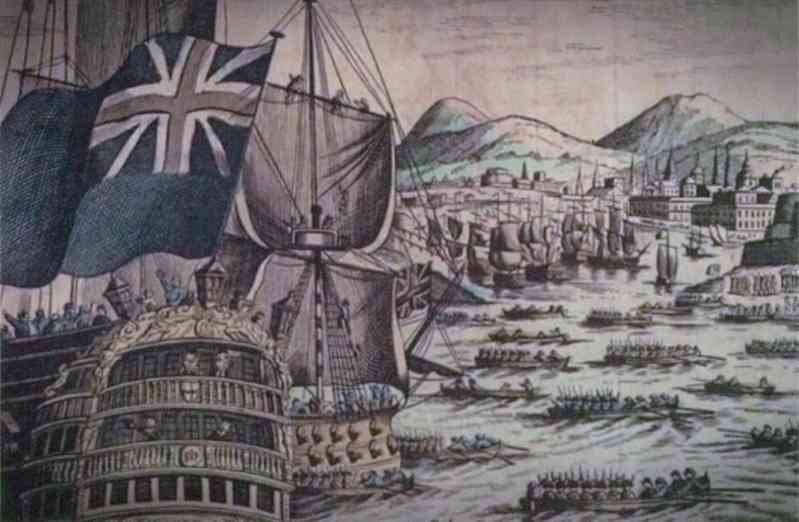
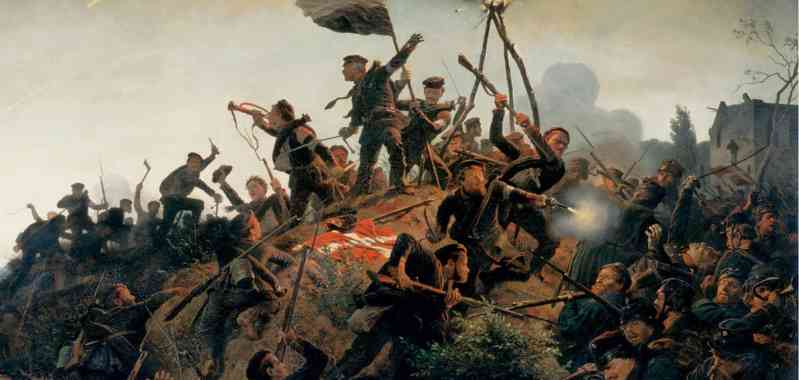
The French government army urgently appointed Carto as the commander of the front-line troops to command the troops to recapture Toulon, but the Toulon fortress was easy to defend and difficult to attack. The French army suffered repeated setbacks, and the commander of the government army’s artillery was unable to continue fighting due to injuries. At this time, the artillery captain Napoleon was ordered to take charge of the situation. He searched for artillery everywhere to reorganize the artillery troops, while studying how to avoid heavy casualties. The French commander’s poor command and weak will gave Napoleon the opportunity to perform. In the end, he captured the anti-French coalition commander O’Hara alive in a counterattack and reversed the situation. Napoleon then became the French commander of the Toulon front. He first led his troops to capture Little Gibraltar and Cape Kerr, forcing the British fleet in the port to flee Toulon, and the anti-French coalition in Toulon was in trouble. On December 17, the anti-French coalition surrendered, and on the 18th, the French army recaptured Toulon. Napoleon became famous for the Battle of Toulon, but Toulon suffered huge losses in the battle.
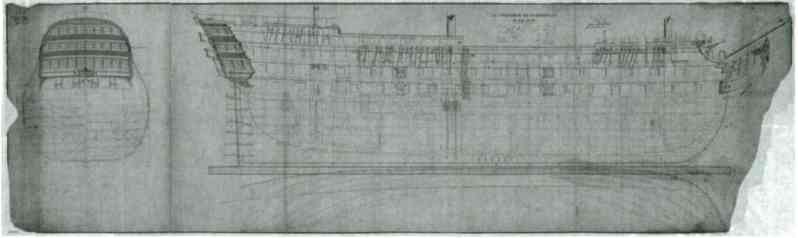
The destruction caused by the battle between the government army and the anti-French coalition is self-evident. Although the battle mainly took place outside the town, the city, port and shipyard would not receive additional protection and still suffered a lot of damage. After the anti-French coalition surrendered, the government army carried out a series of massacres in Toulon in order to retaliate against the citizens of Toulon who cooperated with the enemy. A large number of citizens were killed, and the city and shipyards and other facilities were almost completely destroyed. In addition to being dissatisfied with the cooperation between the local people of Toulon and the anti-French alliance, the fact that the rope factory used prisoners to provide labor also made the revolutionaries very angry. After ending a series of retaliatory acts, the French government had to rebuild a series of destroyed facilities, especially the Toulon shipyard. In 1794, the French Navy began to rebuild the Toulon shipyard and build new slipways and dry docks. By the 1830s, 15 slipways had been built in the eastern part of the Mourillon district, and a new dry dock was built in 1850.
The French Navy’s disastrous defeat in the Battle of Trafalgar made Napoleon decide to build new and larger warships. December 19, 1805: France placed an order for the first new three-deck first-class ship equipped with 118 guns, named "Austerlitz". The ship was started in the Toulon shipyard in April 1806. The 3rd, 4th and 5th ships with upgraded guns were all built in the Toulon shipyard. In 1812 and 1813, the Toulon shipyard received new orders for 2 ships every year. In addition to the Austerlitz class, the Toulon shipyard also built a smaller battleship, the Paris Commercial.
With the maturity of steam engine technology, France hopes to use technology to make up for the gap in fleet size with the British Navy. Under the promotion of Napoleon III, steam power and propellers began to be used in main battleships.
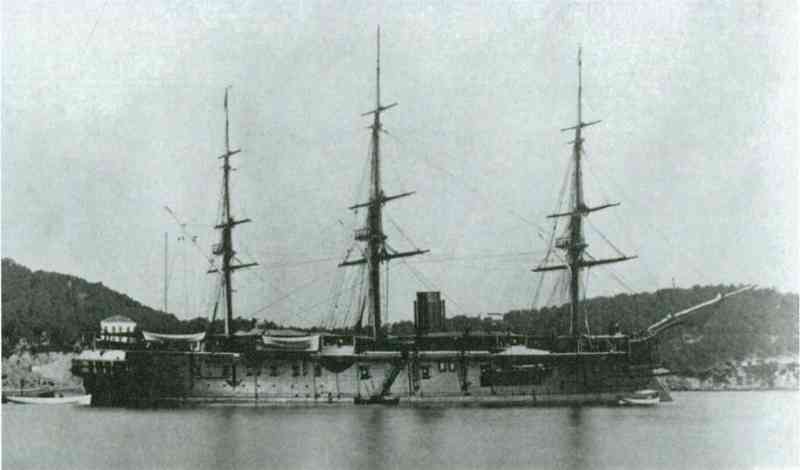
The French Navy began to equip steam-powered ships in 1818, mainly to safeguard the interests of overseas colonies. In 1842, the French Navy released a plan to build a series of steam warships. In May 1850, the French Navy’s first steam-powered two-deck battleship, the "Napoleon", was launched at the Toulon shipyard, marking the beginning of the French Navy’s entry into the steam era, and steam engines began to be used on larger warships. In August 1852, the "Montibello" was launched at the Toulon shipyard. It was equipped with a 120-horsepower (about 88.2 kilowatts) steam engine, and its maximum speed was only 4.5 knots when it relied entirely on steam power. The "Sovereignty", launched in 1854, was equipped with a 600-horsepower (about 441.3 kilowatts) steam engine. The "Ville de Paris", launched in 1858, had a displacement of 5,300 tons. The French Navy’s steam warships performed well in the Crimean War, which forced the British Navy to give up its insistence on sail power and join the ranks of steam warships.
Leading France into the era of ironclad ships
In 1859, the first French ironclad ship, the frigate "Glorious", was launched at the Toulon shipyard. Although the warship still used a wooden hull and its size was far from comparable to that of a large warship, the appearance of the "Glorious" made wooden warships all over the world obsolete. The steam engine of the "Glorious" has 800 horsepower (about 588.4 kilowatts, later upgraded to 900 horsepower) and is equipped with 120 mm thick iron armor outside the wooden hull. Although it is equipped with a steam power system, the "Glorious" still retains the mast. One chimney and three masts are the prominent features of many ironclad ships at the time. There are no guns on the central axis of the "Glorious", and all guns are arranged on the side. In 1861, the Invincible, a ship of the same class as the Glory, was launched at the Toulon shipyard, and the third ship, the Normandy, was launched at the Cherbourg shipyard.
Based on the Glory, the French Navy designed the Provence class, which had improved power, seaworthiness, and protection capabilities, with a maximum horsepower of 1,000 horsepower (about 735.5 kilowatts) and armor thickness of 150 mm. The Toulon shipyard built the first ship, the Provence, as well as the fifth ship, the Savoy, and the tenth ship, the Revenge. The Ocean-class ironclad ships that began to be launched in 1868 began to be equipped with central turrets, and the Toulon shipyard built the Marengo, a ship of this class. The naval powers of this era must continue to launch more advanced warships to maintain their advantages, and major French shipyards began to build new ironclad ships at full capacity. The Toulon shipyard launched the Richelieu in 1873 and the Trident in 1876. In addition, the ironclad ships in service were modified and upgraded in 1893-1894 and 1897-1898, mainly including the replacement of new guns and upgrading of power systems.
Submarine Chapter
In the 1880s, Caballero of Spain invented the world’s first electric submarine. At this time, France was a world leader in rechargeable batteries and electric motor technology. Caballero’s success inspired French designers, who used their technological advantages to catch up and make France’s submarine technology leap forward. The famous French warship designer Dupuy de Lorme and his son-in-law Gustave Zed were the ones who opened the door to the French submarine era, but Lorme died before he could see the submarine he developed being launched. Zed first submitted his submarine design to the French Navy in 1883, but it was not taken seriously at the time. It was not until 1886, when Ober became the Minister of the Navy, that Zed’s invention was taken seriously. In November 1886, Zed was ordered by the Navy to build a submarine. In 1888, the "Eel" submarine (numbered Q1) developed by Zed was launched at the Toulon shipyard. The motor, periscope and electric compass on the boat were invented by Krebs. The "Eel" was 17 meters long, with an underwater displacement of 29 tons. Its weapons were 2 torpedoes and a maximum speed of 8 knots. At that time, the "Eel" still had some positive buoyancy underwater, so it had to keep moving and not float to the surface with the cooperation of the rudder. Although the "Eel" was not perfect, the future development direction of submarines became clearer and clearer, and Zed soon began to design a new submarine. In 1893, the "Gustave Zed" (Q2) was launched at the Toulon shipyard. The length of the boat reached 48 meters and the underwater displacement was 269 tons.
In addition to Zed, there are also excellent designers in the French civilian world. In 1885, French engineer Gubert built two small submarines, hoping to be recognized by the navy. After several setbacks, Gubert signed a contract with the navy, and the navy agreed to let him demonstrate his products. In 1887, the new submarine "Gubert 1" developed by Gubert was launched. It was about 5 meters long and had an underwater displacement of 1.8 tons. The driver and crew had to sit back to back. After a series of demonstrations, the navy paid 20,000 francs for it in 1894. Encouraged, Gubert launched "Gubert 2" in 1886, with a length increased to 8 meters, and the appearance was not much different from "Gubert 1". Although the speed was faster and it could carry two torpedoes, the problem of being unable to move stably underwater still existed. In the end, the French Navy gave up Gubert’s invention, but the politician Peretin favored Gubert. With his help, some of Gubert’s designs were adopted by the navy.
For the French Navy, submarines and torpedoes are powerful weapons to weaken the British Navy’s advantage. Major shipyards are working hard to build submarines while building main battleships. After building the "Electric Eel" and "Gustave Zede", the Toulon shipyard began to participate in the construction of the Aquaman-class submarines in 1902 and completed 10 of the 20 ships. The Aquaman-class is about 24 meters long, with an underwater displacement of about 74 tons, a surface speed of 7.2 knots, an underwater speed of about 6 knots, and is equipped with 2 torpedoes. In 1904, the Toulon shipyard launched two Cormorant-class ships, namely the "Cormorant" (Q38) and the "Stork" (Q39); in 1905, the "Argonaut" was launched; in 1907, two Circe-class ships (Q47, Q48) were launched; in 1908, the Emerald-class "Sapphire" (Q44), "Topaz" (Q45), and "Turquoise" (Q46) were launched. In 1905, the construction of the Flower Moon class began, and in 1908, the "Monge" (Q67) was launched. In 1909, the "Sapphire" (Q44), "Topaz" (Q45), and "Turquoise" (Q46) were launched. The same class "Ampere" (Q68) was launched in 1910, and the "Lussac Bay" (Q69) was launched in 1910. Three Bernoulli-class ships (Q83, Q84, Q85) were launched in 1911-1912.
Until the outbreak of World War I, France’s submarine technology was at the forefront of the world. At this time, France had 55 submarines, of which the most advanced were 16 Brumaire-class submarines. The Toulon shipyard built the "Arago (Q86), "Curie" (Q87) and "Le Verrier" (Q89). The outbreak of World War I slowed down the construction of the French Navy, and by the end of the war, the size of the French submarine force was far less than that of Germany.
Destruction and rebirth
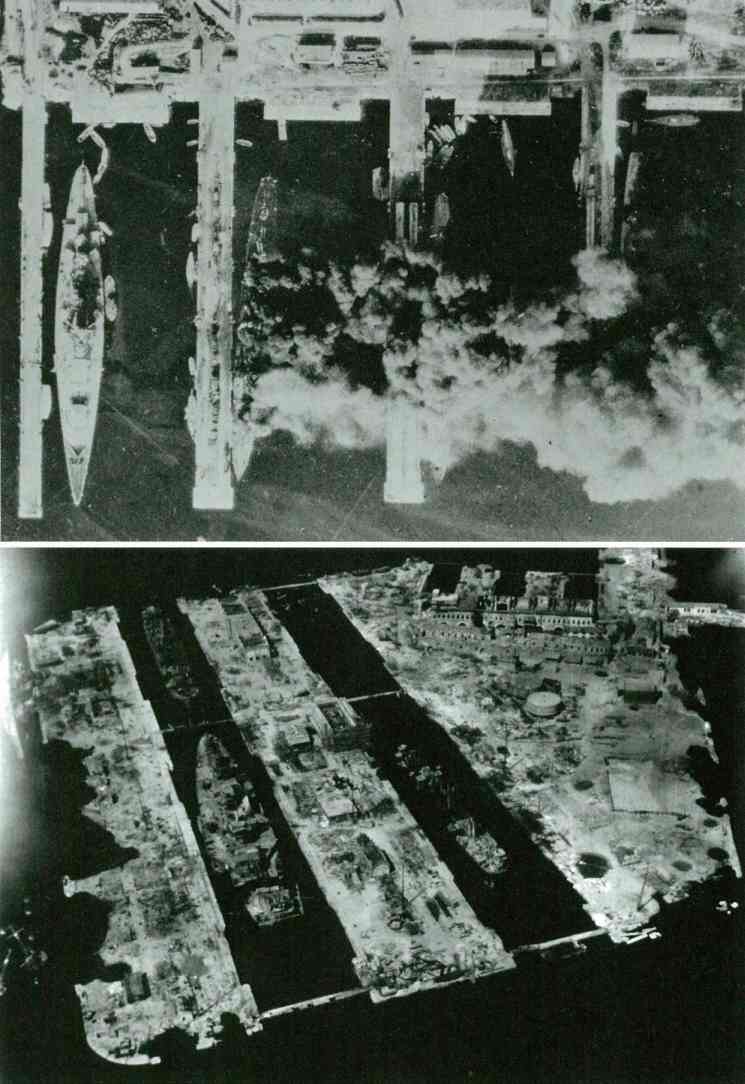
After France surrendered in World War II in June 1940, the French naval ships stationed in Toulon chose to sink themselves tragically to avoid falling into the hands of the German army. Since then, the port of Toulon has become the base of the German Navy’s submarine force, and the shipyards and arsenals have changed from serving French Type 0 submarines to serving German U-boats. In August 1944, 100,000 French troops launched a landing operation code-named "Dragoon" in Toulon to cooperate with the Normandy landing. After the end of World War II, France restored its ports and shipyards, but the main business of the Toulon shipyard has changed from building surface ships and submarines to repairing ships. After the war, the main surface ships and submarines of the French Navy were almost no longer built in Toulon. The Toulon shipyard has 11 dry docks, the two largest of which are 422 meters long. Toulon Port has also become the home port of the French nuclear submarine force and aircraft carrier formation. The French Navy’s Mediterranean Fleet, the Third Naval Region, and the Naval Aviation Command are all located in Toulon. The tonnage of warships stationed here accounts for 70% of the total tonnage of the French Navy. It is one of the most important military ports in France.
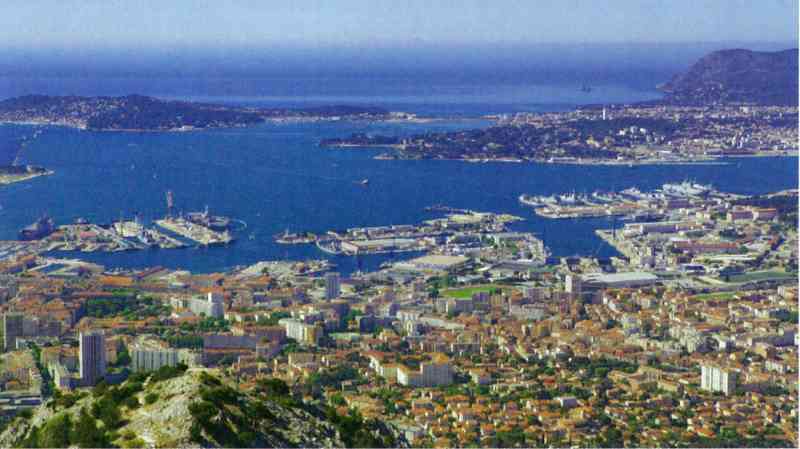
In 1981, the French government built the Toulon National Maritime Museum near the clock tower of the Toulon Naval Base. The museum houses the gate of the base built in 1783, preserves a large number of cultural relics in the history of the French Navy and shipbuilding industry, and uses paintings to show the development of the Port of Toulon and the shipbuilding industry. In addition to the museum, many historical buildings, including the Murillon Arsenal, are also open to the public, showing people the more than 400-year history of Toulon’s naval facilities. Although the naval base is not allowed to enter at will, tourists can choose to take a boat to watch the French Navy’s fleet at sea.
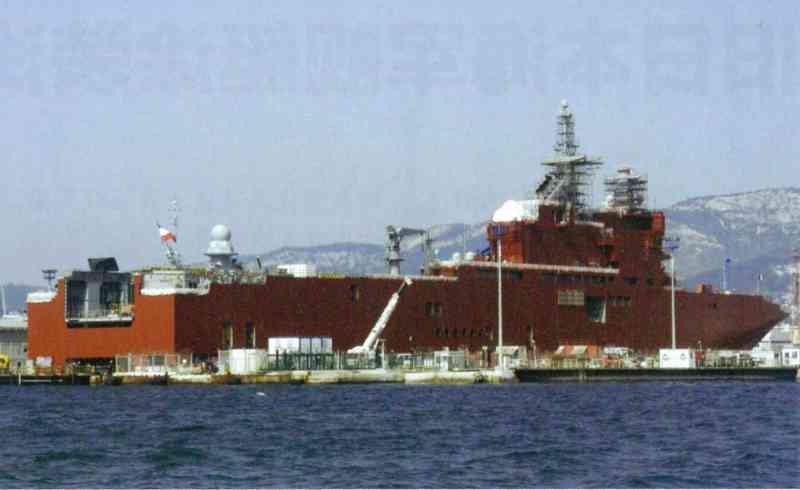
Today, many French state-owned shipbuilding companies, including the Toulon shipyard, have been incorporated into the French Naval Group. Among the 3,500 employees of the group, 2,200 work in Toulon, developing equipment for the French Navy and providing all the necessary services. The French Naval Weapons Manufacturing Administration and several marine research institutions are also located in Toulon. The technologies developed by these institutions and enterprises during their service to the French Navy have also been largely transformed into civilian technologies, making it an important center for French electronic equipment, aviation manufacturing, and even tobacco, paper and other industries. The Toulon Shipyard and the Port of Toulon together provide strong logistical and technical support for the French Mediterranean Fleet. The scenery of Toulon also attracts tourists from all over the world to appreciate the scenery where classic and modern coexist.