
Tanks are still the main force in ground combat
The conflict that broke out on February 24, 2022 is currently in a stalemate, and there is no sign that it will end in the short term. At present, the war is mainly concentrated in the four states in eastern Ukraine, which are basically flat and very conducive to the armored mechanized forces. During World War II, the tank forces of the Soviet Union and Germany launched offensives and defenses in this area many times, and wrote a rich and colorful chapter in the history of the Soviet Patriotic War
At the beginning of the Russian-Ukrainian war, the Russian army launched an offensive on the plains in eastern Ukraine with less than 200,000 people. Since then, the armies of both sides have been unable to gain a decisive advantage after several rounds of exchanges, and the combat style has gradually evolved into trench warfare, siege warfare, and firepower warfare during the First World War. As a result, the "tank uselessness theory" once resurfaced on the Internet media. However, even in a World War I-style positional war of attrition, tanks still have to be used to carry out cluster attacks to seek breakthroughs. Practice has shown that it is not enough to rely solely on artillery fire to attack the opponent’s tight defense line, even with the full support of NATO countries. Take the 155mm caliber artillery shells, which are currently the most consumed on the battlefield. The monthly consumption of the Ukrainian army is several times the total production capacity of Western countries. At present, the US media has revealed that the United States has allocated the US military’s combat readiness ammunition inventory in South Korea to support Ukraine in an emergency. The dilemma of NATO, led by the United States, on this issue is evident.
Although the armies of various countries now emphasize information warfare, network-centric warfare and joint operations, in the end, only tanks have the strongest protection and can carry out attacks under the enemy’s intensive artillery fire. Therefore, tanks are not only not outdated, but are still the main force in ground combat. However, with the development of the times, tanks can no longer fight alone as they did when they first entered the battlefield. Instead, they must obtain full-element support from their own combat system. Only when they can suppress their opponents in multiple dimensions can they show their "steel power" again.
Before the outbreak of this war, the Ukrainian army had a total of about 2,000 tanks left over from the Soviet era. However, only about 720 T-64 tanks, 133 T-72 tanks, 34 T-80 tanks and 5 T-84 "fortress" tanks were equipped with troops. The remaining more than 1,100 tanks were stored in warehouses as strategic reserves, and their condition was worrying due to years of disrepair.
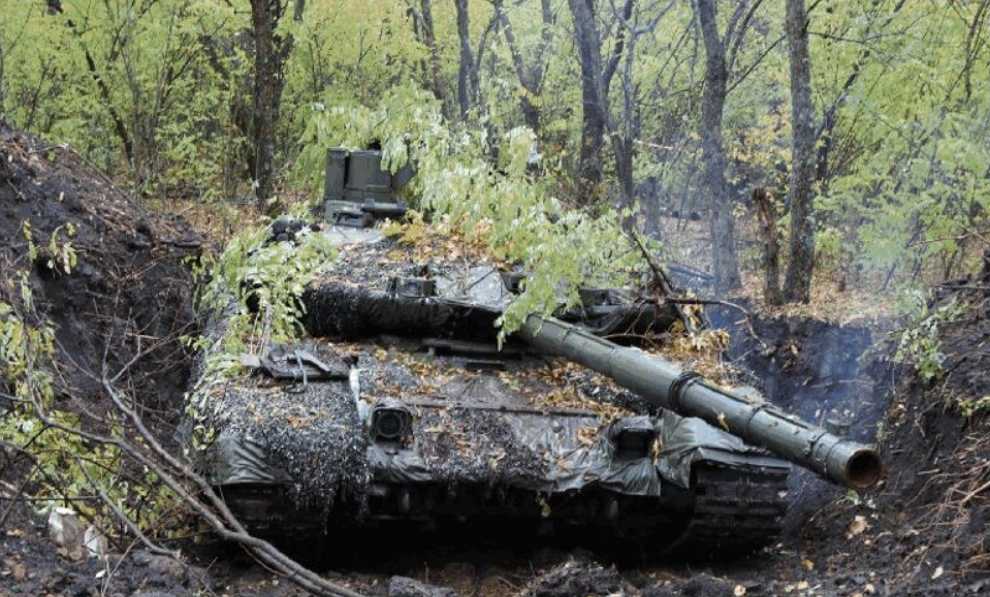
After the outbreak of the war, the Ukrainian army suffered serious losses in its active tanks. Part of the stock tanks fell into the hands of the Russian army, and the remaining stock tanks could not be "rejuvenated" in a short period of time due to the serious lack of maintenance resources of the Ukrainian army. Some of the stock tanks that were repaired with great difficulty were seriously outdated in actual performance, and they were put into battle piecemeal, not only failing to play a decisive role, but also being quickly consumed. After the Russian offensive stagnated, the 386 Russian T-62, T-72, T-80 and T-90 tanks that the Ukrainian army claimed to have captured also encountered similar problems. The number of tanks that could be used by the Ukrainian army was not large. The West, led by the United States, was convinced that the Russian offensive was weak and could not achieve a quick victory. While imposing a series of economic sanctions on Russia, it also implemented various military assistance to Ukraine. The assistance was getting stronger and stronger, and the weapons and equipment provided were becoming more and more advanced and more and more aggressive.
It should be pointed out that long before the "tank aid to Ukraine" incident, NATO had actually provided Ukraine with a large number of main battle tanks. It’s just that these tanks are all Soviet-made tanks that the Eastern European countries that have recently joined NATO are preparing to eliminate. This is a very cost-effective "good deal". For Eastern European countries, since they have joined NATO, the entire country’s military system and equipment system need to be "Westernized". Soviet tanks are incompatible with Western combat systems. In addition, the equipment is old, the performance indicators are outdated, and the actual status is worrying. Therefore, they are urgently needed to be eliminated and transferred to Ukraine. This not only clears the country’s inventory, but also does a favor. Why not? For Ukraine, these tanks are the same type as the existing equipment of the Ukrainian army, and the ammunition is universal. The tank crew can drive the auxiliary tanks to the battlefield without retraining, which can meet the urgent needs of the battlefield.
According to public reports, Poland, the Czech Republic, Slovenia and other countries have provided Ukraine with at least about 410 Soviet tanks as of January 2023. Among them, Poland provided at least more than 240 T-72s and 40 PT-91s; the Czech Republic provided 70 T-72s, Slovakia provided 30 T-72Ms, and Slovenia provided 28 T-55s equipped with Israeli "super jacket" armor.
However, as early as June 2022, Ukrainian Deputy Defense Minister Karpenko publicly declared that the "permanent loss" of Ukrainian tanks exceeded 400. During the Battle of Severodonetsk from June to August of that year, the Ukrainian army claimed that there were more than 200 "permanent losses" of tanks. Based on this calculation, in the battle from September to the end of 2022, the "permanent loss" of Ukrainian tanks will not be less than 300. In other words, before NATO frequently argued about the issue of assisting Ukraine with tanks in January 2023, the Ukrainian army "permanently lost" nearly a thousand tanks. Although there are 410 Soviet tanks donated by Eastern European countries and some battlefield recycling and warehouse repair products as supplements, it is currently estimated that the actual number of main battle tanks held by the Ukrainian army may be between 300 and 400. Many of these tanks have suffered varying degrees of damage, and the supply of accessories, fuel, and ammunition is also not optimistic.
Game considerations
In September and October 2022, the Russian army announced the implementation of mobilization. Although Russian law stipulates that conscripts cannot be sent abroad to fight, the four states of Donetsk, Luhansk, Kherson, and Zaporizhia in eastern Ukraine have passed a referendum in late September 2022 and announced their joining the Russian Federation. Therefore, there is no legal obstacle for the newly conscripted soldiers of the Russian army to be deployed to the battlefield in eastern Russia after three months of training. Along with the expansion of the army, Russian military enterprises are stepping up their efforts to produce new equipment, and the Russian army is unsealing and repairing its stockpile equipment. Therefore, by the spring of 2023, the battlefield in eastern Ukraine is likely to usher in a new round of large-scale offensives by the Russian army.
Against such a background, the West, led by the United States, must further increase its military assistance to Ukraine in order to continue to maintain battlefield balance and achieve the strategic goal of continuously consuming Russia’s national strength. According to the assessment, tanks are the weakest link in Ukraine’s ground combat forces. With the Soviet tanks in the former Eastern European countries that have newly joined NATO basically exhausted, in theory, the West can continue to "buy" Soviet tanks from Asian and African countries to aid Ukraine. However, India, the two largest holders of Soviet tanks, currently holds a neutral position, while North Korea supports Russia and is unlikely to comply with Western demands and transfer active tanks to Ukraine. The total number of Soviet tanks owned by African countries is also considerable, but the logistics support capabilities of African armies are very poor, and the status of Soviet tanks in their hands should not be overestimated. Instead of trying to persuade African countries to "donate" Soviet tanks one by one and transporting them to Ukraine with great difficulty, it is better to directly draw Western tanks in service or in stock to aid Ukraine, but each country has its own difficulties.
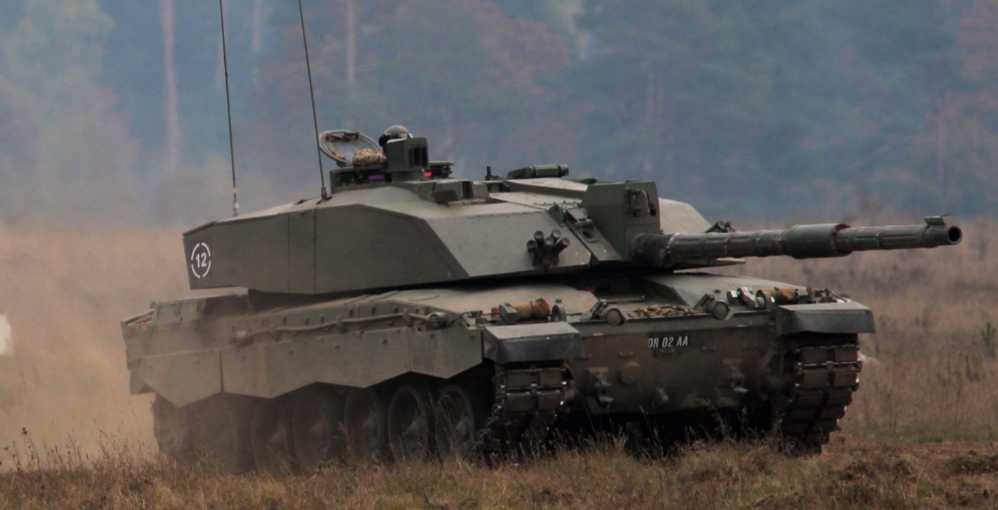
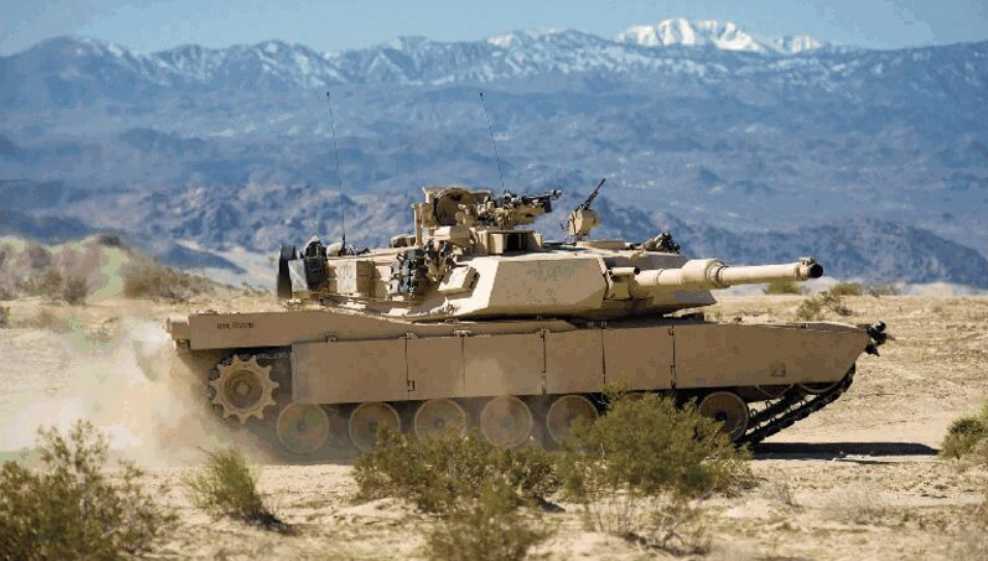
As far as the United States is concerned, the number of its M1 series tanks in service and in stock is very considerable, and there are sufficient spare parts. In theory, it is not difficult to draw out hundreds or even thousands of tanks to aid Ukraine. However, as early as 10 years ago, the United States, which had consumed a lot of national strength in the quagmire of the "war on terror", suddenly discovered that a certain country that had been predicted by it many times before as "about to collapse" had risen strongly and its international influence was increasing day by day. In the eyes of the United States, it had developed to the point of seriously threatening its hegemony, so it was eager to withdraw from Afghanistan and Iraq, and promote the strategic transformation of the US military and reorganize its weapons to meet the challenges brought by "great power competition". The top brass of the US military are full of contradictions about the future situation: if they are not ready, they will not be sure to win by triggering regional conflicts to interrupt the rise of a certain country, and they will be constrained by all parties; their rearmament process is difficult, and judging from the rapid development of the opponent’s national strength, if they wait until all their war preparations are ready, they may have no chance of winning. Because the situation between the two countries has a series of uncertain factors, the US military dare not easily withdraw the active M1 series main battle tanks to aid Ukraine. Even in order to make Germany relax on the issue of aiding Ukraine with the "Leopard" 2 main battle tanks, they had to announce that they would aid Ukraine with a batch of M1 series tanks, but they did not forget to emphasize again and again: the aid will be newly produced M1 tanks, and the earliest delivery time will be after August 2023.
From the perspective of the United Kingdom and France, the number of Challenger 2 and Leclerc main battle tanks equipped by these two countries is relatively small. As of January 2023, there are only 148 and 222 respectively. At most, they can only symbolically provide Ukraine with more than 10 tanks. Therefore, they do not play a leading role in the issue of tank aid to Ukraine. The one who is really suffering and in a dilemma in this storm is Germany.
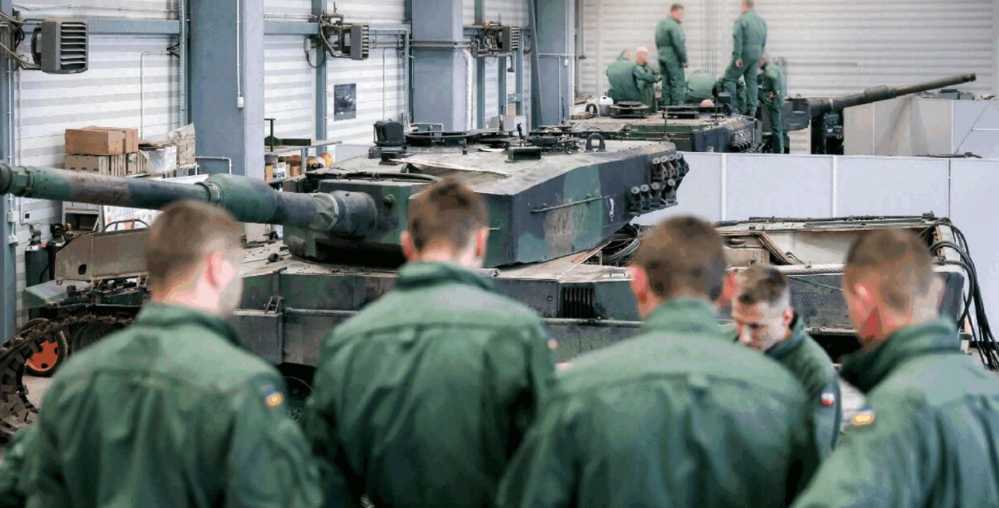
Germany is not only one of the "dual cores" of the European Union, but also the performance and quality of its Leopard 2 series tanks are world-renowned, with a total of 3,600 tanks produced. As of early January 2023, although Western countries have abandoned their military equipment after the end of the Cold War and are obsessed with enjoying the dividends of the Cold War, Germany has only about 220 Leopard 2 main battle tanks in service, and nearly 300 tanks in stock, which can be said to be "not much surplus food for the landlord", but other European countries have about 1,500 Leopard 2 main battle tanks. If Ukraine is to be assisted, these Leopard 2 tanks will inevitably become the main force of Western tanks to aid Ukraine. However, because of Germany’s historical status as a defeated country in World War II, Germany has additional terms when exporting Leopard 2 tanks: if the purchasing country wants to sell or transfer these tanks to a third party, it must obtain the consent of the German government in advance. So when Poland took the lead in expressing its willingness to assist Ukraine with 14 Leopard 2 main battle tanks, it also did not forget to publicly declare that this move requires the approval of the German government.
In this situation, the German government was temporarily caught in a dilemma. On the one hand, after the outbreak of the conflict, the German Parliament quickly passed a 100 billion euro arms reconstruction bill, hoping to rearm and work hard to get rid of the constraints and control of the United States; on the other hand, the economies of Germany and Russia are highly complementary. Germany is the main source of Russia’s high-end industrial products and industrial mother machines, and oil and natural gas from Russia support the engine of the German economy. Therefore, Germany hopes to control the intensity of its aid to Ukraine within a certain range to maintain the economic relationship between Germany and Russia as much as possible and minimize its own losses. Therefore, Germany is not only very reluctant to provide tank aid to Ukraine, but also gives people a sense of "hesitation" in other aid projects.
However, Germany, which has a "historical stain" and still has US troops stationed on its own territory, how can it be truly "independent"? In the atmosphere where "aiding Ukraine to fight against Russia" has become a "politically correct" atmosphere in the Western world, it is impossible for Germany to remain immune. After the completion of the "Nord Stream" 2 natural gas pipeline, which is vital to the German economy and even the entire Western European economy, it was constrained by various forces. Not only has it been unable to be ventilated, but a certain force even personally blew up the key nodes of this natural gas pipeline, which completely cut off Germany’s thoughts.
At the end of 2022, a research report by the German Institute for Economic Research (IW) pointed out that the conflict lasted for 10 months and caused economic losses of 2,000 euros to each German. In 2023, if the conflict continues, it will cause the German economy to suffer an economic loss of 4.5%. GDP. From 2020 to 2023, the total loss of the German economy due to the epidemic and conflicts may be as high as 600 billion euros. In this case, it is natural that Germany is hesitant about the issue of tank aid to Ukraine.
However, no matter how strong Germany’s "arms" are, it can’t twist the "thighs" of the United States. On January 24, 2023, German Chancellor Scholz had a phone call with US President Biden. When the United States made concessions and expressed its willingness to assist Ukraine with 31 M1 series main battle tanks, Germany finally gave in and not only agreed to transfer 14 "Leopard" 2A6 main battle tanks from the German Federal Armed Forces inventory to Ukraine, but also did not object to other countries assisting Ukraine with "Leopard" 2 tanks. As a result, the "tank aid to Ukraine storm" that lasted for nearly a month finally came to an end.
All have problems and have limited effects
As of January 27, NATO member states announced that they would provide aid to Ukraine with a total of 186 Western main battle tanks. They are 31 M1 main battle tanks from the United States, 14 Challenger main battle tanks from the United Kingdom, 14 Leopard 2A6 from Germany, 14 Leopard 2A4 from Poland, 53 Leopard 2A4 from Spain, 14 Leopard 2A5 from Sweden, 14 Leopard 2 from the Netherlands, 10 Leopard 2A4 from Finland, 8 Leopard 2A4 from Norway, 6 Leopard 2A5 from Denmark, 4 Leopard 2A4 from Canada, and 4 Leopard 2A6 from Portugal.
Among them, the United States clearly stated that the 31 M1 tanks it plans to provide to Ukraine are brand new and will definitely not be delivered in the near future. Spain, which donated the largest number of tanks to Ukraine, also said that the 53 Leopard 2A4s it plans to donate to Ukraine need to be refurbished before they can be delivered. In terms of the actual performance of the tanks, the US-aided M1 is almost certainly a "main battle tank" that is not equipped with depleted uranium armor and depleted uranium "Challenger" armor-piercing projectiles. Even when it was first put into service more than 30 years ago, it was a "non-mainstream" model with unsatisfactory performance. The Leopard 2 series tanks have good performance, but the Leopard 2A4 is only at the world’s advanced level in the mid-1980s, and is behind the times by today’s standards. The Leopard 2A6, which has been equipped with the RH20L55 main gun and strengthened armor protection, is not inferior to any similar Russian equipment in performance, but the total number of Leopard 2A6s donated to Ukraine is only 18, which is a drop in the bucket. However, the Ukrainian ambassador to France announced on January 27 that "many countries have officially confirmed that they will supply main battle tanks to Ukraine, totaling 321 to date." ”
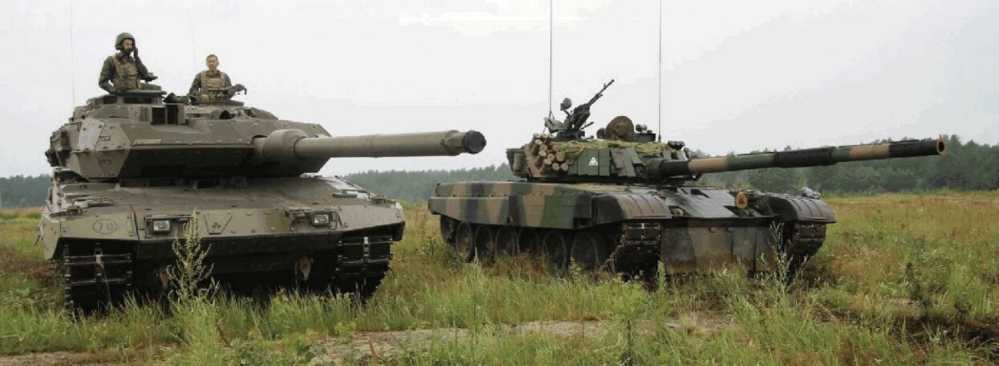
This is quite different from the number of tanks that the West has promised to send to Ukraine according to public reports. This may be the result of Ukraine adding the number of Soviet tanks that Eastern European countries promised but did not actually deliver.
However, even if these "crowd-funded" Western tanks are delivered to the Ukrainian army as scheduled, how much effect can they have? Historically, many countries have had the "dream" of turning the tide with one or two so-called "cutting-edge weapons", but there is no precedent for successful realization. Modern warfare is a systemic war. Unless the Western military aid system covers tanks, infantry fighting vehicles, armored vehicles, self-propelled howitzers, rocket launchers, field air defense systems, regional air defense systems, fighters, attack aircraft, air-to-ground joint command aircraft, optical imaging satellites, infrared early warning satellites, GPS navigation satellites, radar telemetry satellites and Starlink systems, and the amount of aid must reach a sufficient volume, the Ukrainian army can form a battle advantage over the Russian army in local areas. Such a scale and intensity of aid not only exceeds the actual capabilities of NATO countries at present, but also does not conform to the United States’s strategy of prolonging the Russian-Ukrainian conflict, consuming Russia’s national strength, more firmly binding Western European countries to their own chariots, and attracting European hot money to return to the United States to alleviate the US economic crisis.
In addition, even if Western weapons including tanks are continuously exported to Ukraine, it is very doubtful whether the Ukrainian army can gather qualified soldiers capable of controlling these Western weapons.
Before the outbreak of the Russian-Ukrainian conflict, the population of Ukraine was about 37.5 million. After the conflict broke out, according to UN statistics, there were about 7.6 million Ukrainian refugees fleeing to the West, and another 2 million people fled to Russia for refuge. The four eastern Ukrainian states currently under the actual control of the Russian army have a population of about 10 million. The number of people under the actual control of the Ukrainian government is about 18 million. A considerable part of this population must be used to maintain a country’s industrial and agricultural production and the normal operation of the government, and the human resources available for conscription are not abundant. According to public reports, Ukraine has carried out more than 10 rounds of conscription mobilization since the outbreak of the Russian-Ukrainian war, and people from 16-year-old boys to 60-year-old elders are all among those being conscripted. But even so, the Ukrainian army is still far from sufficient, so it has to recruit a large number of women. Now the proportion of female soldiers in the Ukrainian army has exceeded 20%.
On February 1, the news that a blind Ukrainian man received a government conscription order became a hot search. If this kind of blunder is just an oversight in the Ukrainian government’s work, then even Ukrainian government officials and Ukrainian citizens who have fled abroad are included in the conscription, which means that Ukraine’s human resources are almost exhausted and it may not last long. In contrast, although Russia announced an expansion of 300,000 troops, according to Western media reports, one million Russians have fled abroad, but the permanent population in Russia has reached 146 million, and there are also many people willing to fight to defend their homeland in the newly incorporated four eastern states of Ukraine. Therefore, the source of soldiers is far less tight than that of Ukraine, and it is more durable than the Ukrainian army.
As we all know, Western tanks are very different from Soviet tanks in terms of design concepts and usage habits, and they require higher quality of soldiers. Along with the large number of Ukrainian tanks destroyed, there are also large losses of experienced tank crews. In the current situation where the source of soldiers is so tight, it is extremely difficult for the Ukrainian army to find veterans who have certain actual combat experience and at least a rough command of English to receive Western tank replacement training. Of course, the West can recruit "volunteers" for the Ukrainian army from retired tank soldiers, but the number cannot be large, and they must be under the command of the Ukrainian army, so it is difficult to create a "climate"
In summary, to win Russia in this war, the West must increase more aid, and shouting slogans is useless. The free world must work together. Of course, if the target of this war is not Russia, then it is another matter.