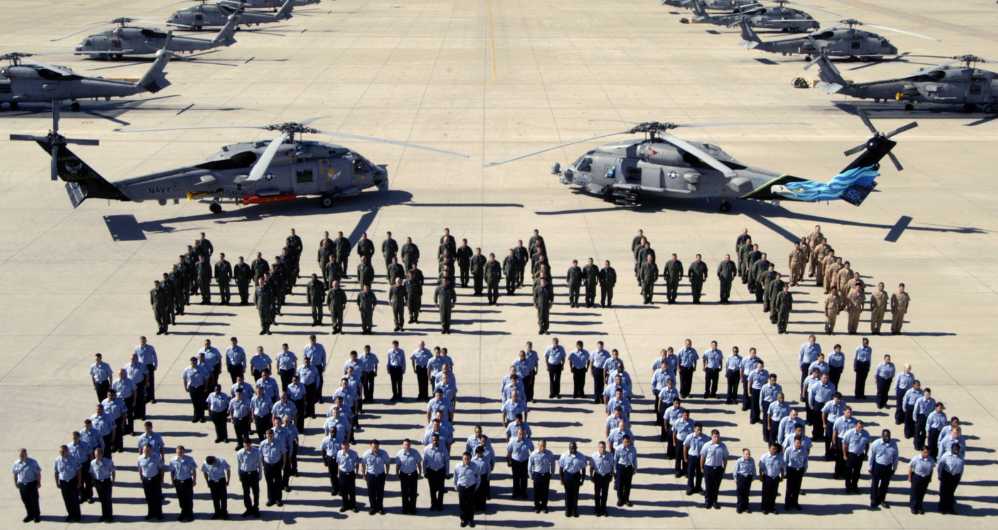
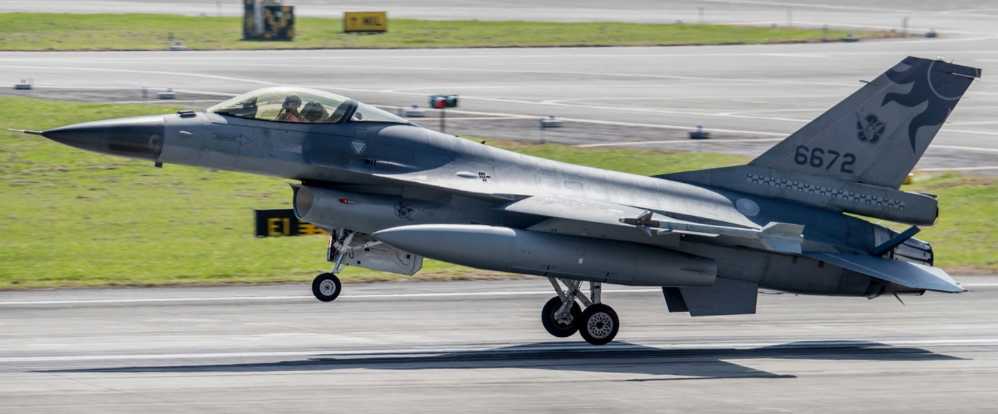

The "Phoenix" spreading its wings and ready to fly
Since the late 1970s, the Taiwan Air Force has been interested in purchasing new American fighter jets to replace the outdated F-100 "Super Sabre" and Northrop F-5A/B "Freedom Fighter" fighter jets. One of the first candidates to be considered by the Taiwan Air Force was the General Dynamics F-16 "Fighting Falcon" series fighter jets. General Dynamics, eager to expand its overseas market, has specially launched a low-profile F-16/79 export fighter jet that uses the J-79 series turbojet engine to meet the needs of the Taiwan Air Force. It is expected that this type of aircraft will win the expected large export order by virtue of its common engine with the existing F-104G "Star Fighter" fighter-bomber. However, the F-16/79 and the F-20 "Tiger Shark" fighter jet launched by Northrop were all rejected by the US government at the final approval stage and missed the Taiwan Air Force.
It was not until 1992 that the door of the F-16 series fighter jets, which had been closed for many years, was opened to the Taiwan Air Force for the first time. Compared with more than 10 years ago, the Cold War had ended at this time, and the Western military industry had to face the current situation of severe recession, and even the US arms dealers, who have always been rich and powerful, were no exception. At this time, Taiwan introduced the US technology research and development The F-CK-1 Ching Kuo fighter has taken shape, and the negotiations between France and Taiwan on the sale of Mirage 2000 fighters are progressing smoothly. The US government realized that if it did not open up a new round of fighter aircraft sales to Taiwan, then US arms dealers would probably miss out on this emerging arms buyer.
In July 1992, the U.S. Air Force suddenly sent a letter to the Taiwan Air Force Headquarters, inviting it to visit major air force bases in the United States in August, especially the bases of the U.S. Air Force’s fighter test and evaluation, training, and logistics support units. After receiving the news, the then Taiwan Air Force Commander-in-Chief Tang Fei immediately decided to send Ding Dianbin, director of the Taiwan Air Force Headquarters Weapons Acquisition Management Office (abbreviated as "Weapons Acquisition Office"), to set up a special task force and organize a delegation to visit the United States. The members of this delegation include: Li Zhenzhi (leader), deputy leader of the training group of the Taiwan Air Force Headquarters, Chang Shiwei, deputy leader of the evaluation group of the Weapons Acquisition Office, Hao Youdong, Cui Renjun, Tan Quzhi, members of the logistics support group of the Weapons Acquisition Office, Wang Lian, Yang Jianmin, and 10 other IDF fighter seed instructors of the 427th Wing.
During their stay in the United States, the delegation visited several U.S. military test and training bases, and gained a further understanding of the U.S. military’s new generation of fighter jets’ replacement training and logistics support measures. The specific itinerary is as follows:
First visit Edwards Air Force Base in California. Learn more about the F-16 C/D Block50/52 fighter weapon mounting test flight procedures and the C-17 "Globemaster" III strategic transport aircraft’s new overall test flight procedures.
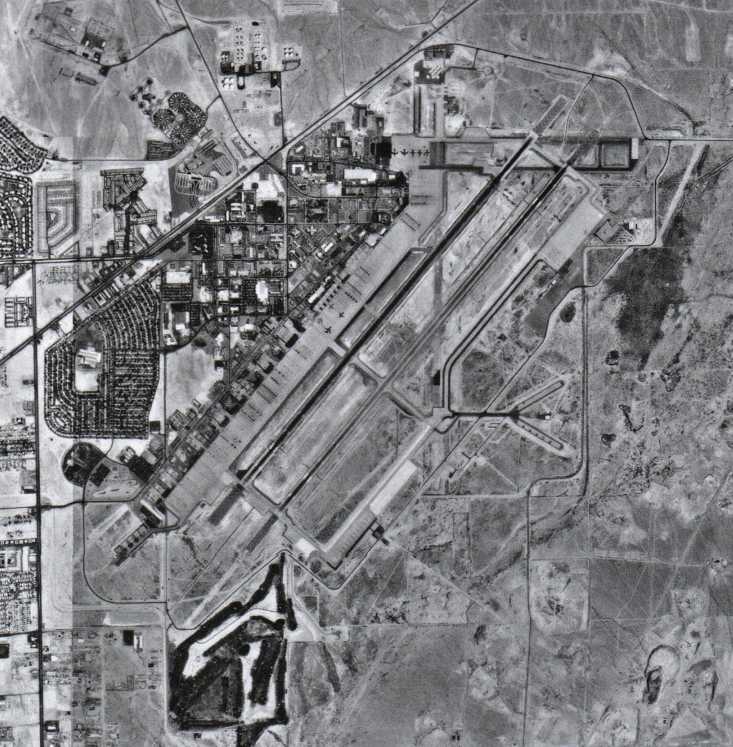
Then visit Nellis Air Force Base in Nevada, and visit the U.S. Air Force’s War Center responsible for planning new weapons and new tactics test training processes, the 57th Adversary Squadron responsible for simulating Russian-made fighters and air defense systems, the Fighter Weapons School responsible for organizing and supporting the "Red Flag" military exercise, and the 98th Flying Wing, and the 53rd and 505th Test and Evaluation Groups, which are responsible for testing new aircraft, new tactics, and new weapons. They learned in detail how the U.S. Army’s "Aggressor Squadron" used F-16, F-15, T-38 and F-5EFF to simulate Russian-made fighters for confrontation training; they inspected various types of Russian-made air defense missiles and anti-aircraft artillery systems collected by the U.S. Army; and listened to the experience briefing on how to use various homemade and Russian-made equipment to simulate modern air combat, especially the simulation of modern air-to-ground electronic warfare. In addition, the delegation also learned about the system application and development plan of the U.S. Air Tactical Training Instrument (AMCI), as well as the experience summary of the air forces of European countries going to Nellis Base to participate in the "Red Flag" exercise. After that, they visited Luke Air Force Base in Arizona and visited the U.S. Air Force F-15 and F-16 training squadrons to learn about the personnel replacement training process of the U.S. fourth-generation fighter. Team leader Li Zhenzhi also boarded an F-15 tactical simulation trainer (FMTS) and had an air combat with U.S. personnel on the simulator to enhance their understanding of advanced simulator training.
Finally, they visited Hill Air Force Base in Utah. Base), sent Hao Youdong and others to visit the Ogden Logistics Center at Hill Air Force Base to gain an in-depth understanding of the unit-level, station-level, and base factory-level maintenance processes used by the U.S. F-16 fighter unit, and established a preliminary concept of the three-level logistics support system for the fourth-generation fighter.
On September 3, 1992, two days before Taiwan and France reached a contract to sell 60 Mirage 2000s, President Bush, who hoped to keep General Dynamics’ fighter production line and then stabilize the votes of military industry practitioners, announced at a campaign rally that he agreed to sell 120 single-seat F-16A and 30 two-seat F-16B fighters to Taiwan, with a contract value of about US$6 billion. Upon learning of this news, Taiwan Air Force Commander-in-Chief Tang Fei immediately sent Taiwan Air Force Headquarters "Chief of Staff" Qi Zhengwen and Operations Director Wang Wenzhou to set up a special task force to specifically contact the United States for talks. On October 11, the task force went to the United States to attend the F-16 fighter aircraft arms sales meeting, and at the meeting it was finally determined that the model to be sold was the F-16A/B Block 15 "Mid-Life Upgrade" (MLU) configuration fighter that had been equipped with the Netherlands, Belgium, Norway, and Denmark Air Force. In late October, a US delegation went to Taiwan to conduct base exploration and draft a price request. On November 12, the Taiwan Ministry of National Defense ordered the procurement delegation in the United States to sign a price request with the United States for the purchase of F-16 fighter jets. On the 30th of the same month, the price request officially came into effect. The procurement plan was named the "Peace Phoenix" plan by the US Pentagon and the Taiwan Air Force code-named it the "Phoenix Project."
There is also a small episode here. On the eve of the signing of the "Peace Phoenix" project contract, the Deputy Chief of Staff’s Planning Office suddenly notified General Tang Fei that there were great difficulties in handling the funds needed for the contract. Tang Fei immediately asked to see the then Taiwan Defense Minister Sun Zhen. After learning about this, the latter immediately contacted the Minister of Finance. After some bargaining, the NT$157.96829 billion required for the "Phoenix Project" was finally settled. It was raised by borrowing funds from various public banks under the name of "special budget" from the Taiwan Ministry of Finance.
It is better to wait for people to have equipment than for equipment to wait for people
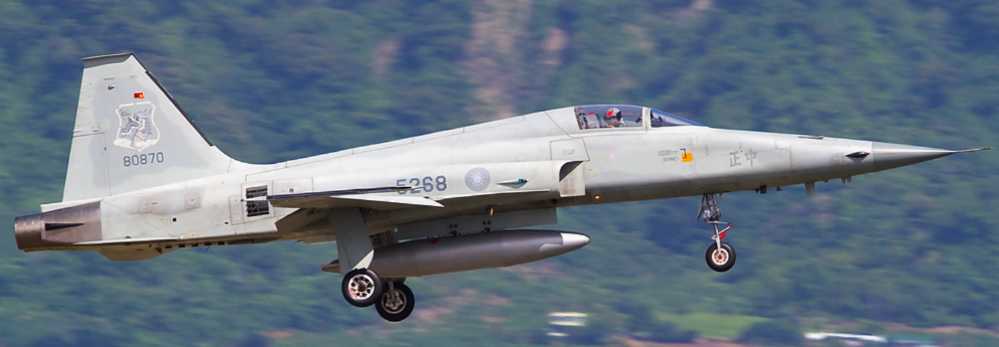
Although the funds required for the "Phoenix Project" have been resolved, the Taiwan Air Force still needs a large number of pilots and ground maintenance personnel with excellent professional capabilities to meet the simultaneous advancement In order to understand the overall quality of the air force personnel and the manpower requirements for building the "second-generation force", in November 1992, Taiwan Air Force "Commander-in-Chief" Tang Fei instructed Li Zhenzhi, deputy head of the headquarters training group, to conduct a secret study to compare the training levels of various types of fighters and aircrews on both sides of the Taiwan Strait in the form of charts. The results showed that the Taiwan Air Force had a big loophole in personnel training: First, due to the aging of the F-104 series fighters, after the "Star Safe Special Inspection" (a safety inspection plan for F-104 fighters), the combat training flight overload was limited to 4g and the maximum speed was limited to 1.4 Mach, so that new pilots could not conduct high-altitude high-speed interception and high-overload flight training, which seriously affected the combat capability of the troops; secondly, although the F-5EFF "Zhongzheng" series fighters, which had the largest number, were in a slightly better situation, the early batches had premature corrosion of the fuselage structure due to poor manufacturing and maintenance levels, resulting in a decrease in the fleet’s attendance rate and affecting the number of pilot training hours; finally, with the vigorous development of Taiwan’s civil aviation industry, a large number of experienced senior pilots chose to retire early and join the ranks of civil aviation pilots when there was no hope of promotion, making the shortage of manpower in the front-line flight brigade, which had long been unable to reach full staffing, even more serious.
In order to gain a specific understanding of the overall quality of the Air Force’s personnel and the manpower requirements for building a "second-generation force", in November 1992, Taiwan Air Force Commander-in-Chief Tang Fei instructed Li Zhenzhi, deputy head of the headquarters training group, to conduct a secret study to compare the training levels of various types of fighter jets and aircrew on both sides of the Taiwan Strait in the form of charts. The results showed that the Taiwan Air Force had major loopholes in personnel training: First, due to the aging of the F-104 series fighters, after the "Star Safe Special Inspection" (a safety inspection plan for F-104 fighters), they were forced to limit the combat training flight overload to within 4g and the maximum speed to within 1.4 Mach, so that new pilots could not conduct high-altitude, high-speed interception and high-overload flight training, seriously affecting the combat capability of the troops; secondly, although the F-5EFF "Zhongzheng" series fighters with the largest number were in a slightly better condition, the early batches had insufficient manufacturing and maintenance levels, resulting in premature corrosion of the fuselage structure, which reduced the fleet’s attendance rate and affected the pilots’ training hours; finally, with the vigorous development of Taiwan’s civil aviation industry, a large number of experienced senior pilots chose to retire early and join the ranks of civil aviation pilots when there was no hope of promotion, making the manpower shortage of the front-line flight brigade, which had long been unable to be fully staffed, even more serious.
In order to reserve sufficient human resources, Tang Fei decided to carry out a series of "combination punch" measures in advance to improve the combat effectiveness of the troops before the new aircraft arrived:
Strengthen the assessment of air and ground crew
Tang Fei instructed the Taiwan Air Force Headquarters Operations Group, Training Group and Supervision Office to form a joint supervision team to go to each front-line flight and maintenance brigade for assessment. All air crews who failed the assessment will be sent back to the Air Force Academy for "retraining" in flight disciplines and technical training.
Adjust the formation and training methods of the troops
Due to the shortage of qualified air and ground crews, the Taiwan Air Force Headquarters decided to reduce the three squadrons under the active fighter flight brigade to two fully staffed combat readiness squadrons, and all the remaining personnel will be assigned to the standby squadrons, and will take turns to go to the Air Force Academy for "retraining" according to the plan. At the same time, the Taiwan Air Force learned from the experience of the United States, Britain, Germany and other countries and found that the key to maintaining flying ability is not the number of flight hours, but to flexibly formulate the minimum flight hour training standard based on the pilot’s experience level. The Taiwan Air Force decided to cancel the 15-hour personal flight hour requirement per month, and combined with the current fighter attendance rate, it changed to require senior pilots to fly 10 sorties per month, about 8 to 10 hours; junior pilots fly 12 sorties per month, about 10 to 12 hours. In order to solve the problem of the F-104 "Star Warrior" fleet being too aging and new pilots unable to train, the Taiwan Air Force also decided to stop dispatching pilots who graduated from the 69th and later classes of the Officer School to the 3rd and 11th Squadrons using the F-104, and instead send new personnel and some senior personnel to the F-5F two-seat trainer/fighter for training to maintain flying skills and prepare for the replacement of a new generation of fighters.
Change the maintenance and deployment methods of existing fighters
In the past, the flight and maintenance cycles of various types of fighters of the Taiwan Air Force were determined by each flight squadron, resulting in disordered control and a decrease in the overall attendance rate. After the adjustment, all types of fighters are uniformly formulated by the flight squadron for maintenance/flight schedules and unified deployment; the repair squadron uniformly organizes maintenance, which improves the attendance rate of fighters.
Leasing US military trainer aircraft to reserve manpower for replacement
In November 1992, Tang Fei learned that the US Air Force would seal a batch of T-38 trainer aircraft in a "hot engine" state, and immediately instructed Li Zhenzhi to study the leasing of these trainer aircraft. Li Zhenzhi’s plan was to lease 60 T-38s, of which 40 were shipped to Taiwan for flight training, and the other 20 were deployed at bases in the United States, and trained by US instructors. In early December, the plan to lease T-38 trainer aircraft was officially released. The next day after submission, it was approved by Liu Heqian, the then Chief of the General Staff of the Taiwan Army. Then the plan was formally submitted to the United States. In late December, the lease plan was agreed by the United States and merged into the "Peace Phoenix" plan. It is expected to start training in the United States in May 1993, code-named "Eagle Plan"
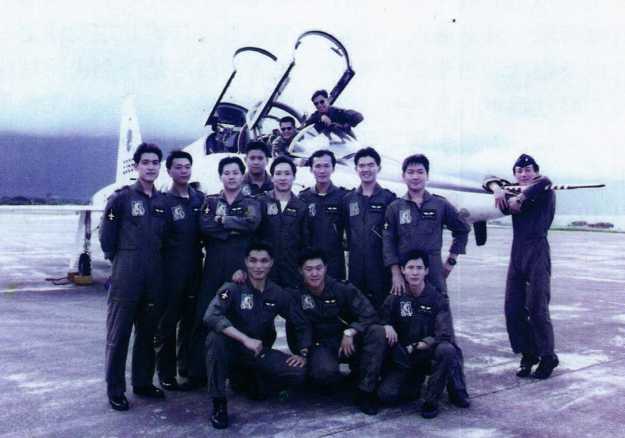
The "Eagle Plan" is planned more comprehensively. For example, after consultation with the US side, it is agreed to provide the same standard of medical and insurance benefits as other foreign military trainees for overseas trainees and their families, and the required funds are included in the project budget; in order to ensure the morale of the trainees during their overseas stay, the trainees’ families are specially arranged to visit the United States and are allowed to take the T-38 trainer aircraft for flight experience. In May 1993, the Taiwan Air Force T-38 training course at Holloman Air Force Base in New Mexico officially started. The course was taught by the US Air Force. The 435th Squadron is responsible for the training, including air combat energy operation, basic air attack and defense, and air dogfighting. By the end of the program in May 1996, a total of 6 batches of 116 Taiwan Air Force pilots had completed training at Holloman Air Force Base.
In May 1993, the United States and Taiwan reached a further agreement on the lease of T38 trainer aircraft: the United States provided T-38 trainer aircraft free of charge, and the Taiwan Air Force only needed to pay for the maintenance, spare parts and transportation costs of the aircraft. It was planned to officially start training at Hualien Air Force Base in April 1994. When the lease plan was progressing step by step, an unexpected situation occurred. A "legislator" suddenly proposed to increase the production of AT-3 "Self-Strengthening" trainer aircraft and firmly opposed the lease of American-made T-38 trainer aircraft. In terms of time, increasing the production of AT-3 It will take several years, which will undoubtedly seriously delay the progress of personnel training, so this proposal was rejected by the Taiwan Air Force. By the time Li Tianyu, who was responsible for communicating with the Taiwan "Legislative Yuan", finally persuaded the "legislators" who held opposing opinions, this batch of T-38 trainer aircraft had already been leased by other countries. The Taiwan Air Force had no choice but to lease 40 T-38s that had been sealed for a period of time. The entire plan had to be postponed for one year due to the unsealing and test flying of the sealed aircraft. It was not until the end of April 1995 that all the aircraft were shipped to Taiwan.
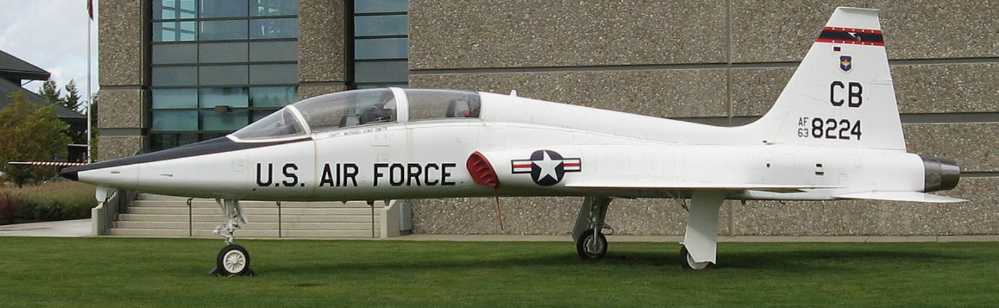
On April 28, 1995, all 40 T-38s After being disassembled, it arrived at the Hualien Air Force Base in the east of Taiwan Island by sea. After the first aircraft was overhauled, Lieutenant Colonel Zhang Yicheng and Lieutenant Colonel Cai Longde completed the first test flight. On May 1, the T-38 training course at the Hualien Air Force Base officially opened. On May 24, Liu Heqian personally visited the Hualien Base, presided over the opening ceremony and delivered a speech.
The training courses at the Hualien Base are divided into elementary and advanced classes according to content. The elementary class is based on the 14th Squadron of the 8th Brigade of the Hualien Air Force Eastern Regional Command, and is aimed at the "new front class" students who did not meet the assessment standards of each squadron and the newly graduated pilots of the Air Force Academy. The main training courses of the elementary class are various basic flight subjects, which last for 6 months. As of April 30, 1998, a total of 6 batches and 126 people have completed training. The advanced class is based on the 15th Squadron of the 8th Brigade, and is mainly for seed instructors who have not received "bombing and shooting class" (the old name of the Taiwan Air Force’s adversary squadron course) training and are scheduled to be equipped with a new generation of fighter jets in the future. The training content and subjects of the advanced class are similar to those of the Holloman Base, and the duration is 3 months. As of April 30, 1998, a total of 12 batches of 184 students have completed training.
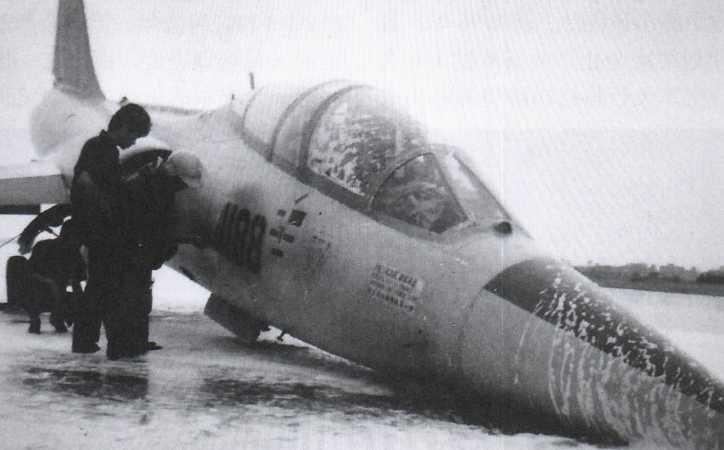
In May 1998, all training projects of the "Eagle Plan" were completed. In three years, only one T-38 was damaged in an accident during training in Taiwan. After that, except for one aircraft kept as a memorial, the rest of the aircraft were dismantled and returned to the United States by sea.
Strengthen foreign language training
Lay a good foundation for overseas training Since the four "second-generation force reconstruction" plans are huge projects, the foreign language level of trainees is also quite high. According to the estimation of the Taiwan Air Force Headquarters in early 1993, by the time the overseas training project is fully launched in May 1996, at least 216 aircrew members who are proficient in English and French, as well as 458 matching ground technicians will be needed. The specific requirements are: 112 aircrew members are needed for the T-38 training project in the United States; 84 aircrew members and 195 ground crew members are needed for the "Phoenix Project" (F-16A/B replacement project) in the United States; 6 aircrew pilots and 96 ground crew members are needed for the "E-2T early warning aircraft replacement project" in the United States. The "Flying Dragon Project" (Mirage 2000 replacement project) to France requires 14 air crew members and 167 ground crew members.
Because foreign language education was not yet popular in Taiwan at that time, and there was a lack of communication with the US military for more than ten years, foreign language education was abandoned, resulting in an extreme shortage of foreign language talents within the Taiwan Air Force. According to the foreign language test held in December 1992, only 16 pilots in the Taiwan Air Force could meet the basic language requirements for overseas flight training (ECL English test 85 points), and the ground crew who could meet the standards were even rarer. The foreign language level of most non-commissioned officers was below 55 points (the qualified requirement for ground crew was 75 points). After learning of this situation, the relevant projects of the United States and France were evaluated and the foreign language level of their personnel was a "high-risk" project of the project, requiring the Air Force to correct it within a time limit, otherwise it would cause a major delay in the deadline for military purchases and replacements.
Realizing the seriousness of the situation, the Taiwan Air Force Headquarters began to try to "make up for the loss" and finally decided to seek help from the American Institute in Taiwan (AIT), which contacted the Defense Language Institute (DLI) under the US Department of Defense to provide teachers and teaching materials. The required expenses were included in the "Phoenix Project". From November 1993, the Taiwan Air Force began to open three batches (each batch lasting 3 months) and two levels (basic class and intensive class) of foreign language cram schools at Songshan Air Force Base and Gangshan Air Force Academy. Those who passed the assessment will go to the Defense Language Center of the United States for training. After completing the 45-day course, they will be eligible for overseas training. The first batch of English classes from November 1993 to May 1994 completed the training of 6 pilots and 96 flight and ground crew technicians (those who went to the United States to participate in the "Eagle Eye Project"). The second batch of English classes from December 1993 to 1996 completed the training of 256 flight crew members. The third batch of English classes from December 1994 to May 1996 completed the training of 501 ground crew members. According to the results of the English test of all trainees in November 1995, 65 flight crew members who went abroad for training had reached 90 points in the ECL test, 157 had reached 85 points, and 25 had reached 80 points: all ground crew members who went abroad for training had reached the requirement of 75 points, which basically met the foreign language ability requirements for training abroad.