
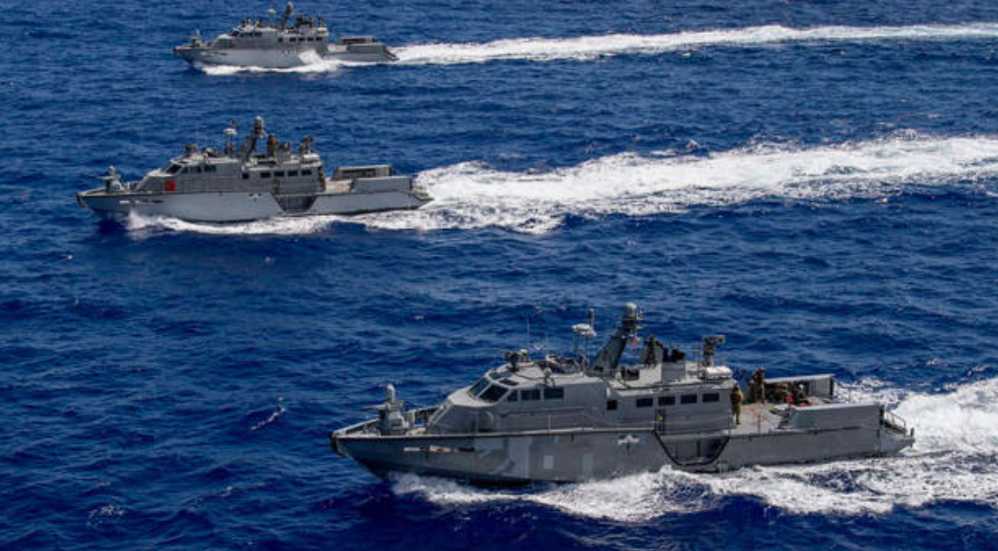
Small steps and fast progress: 85-foot Mk patrol boat (PB) and 65-foot littoral command boat (CCB)
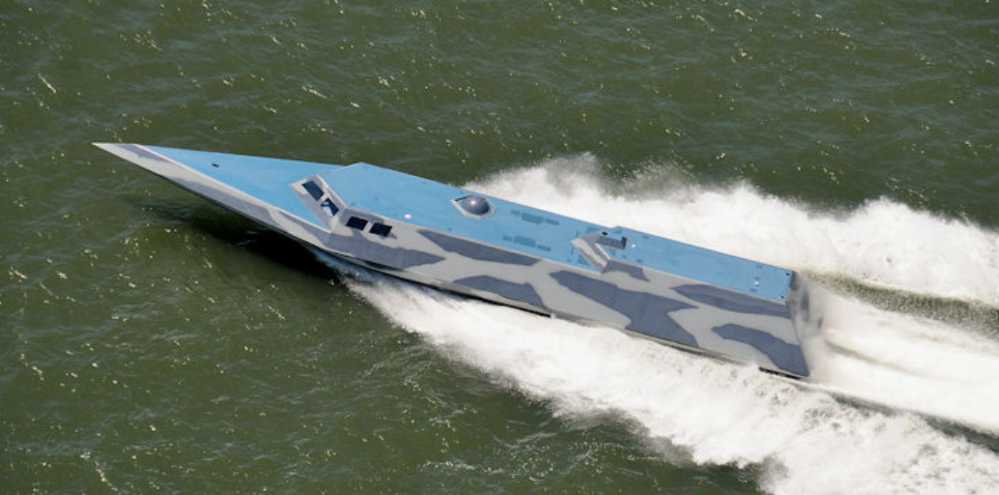
The 30-foot open-top RPB and RAB are too simple, and the 52-foot RCB is still too small and has poor sea navigation performance. The highly anticipated 82-foot Mk VSOC "died young", and the US Navy had to seek another larger and stronger patrol boat-the Mk V patrol boat (PB). As the name suggests, she is the successor model of MkVSOC. In addition to serving as the command boat of the small boat unit and the mother boat of the special operations force, her main tasks can also perform maritime infiltration, patrol, infrastructure protection, regional security cooperation, security force assistance, and spot checks and arrests (VBSS) and other tasks.
According to the plan of the US Navy, the total demand for MkVI is 48. In order to avoid repeating the same mistakes, the US Navy adopted the strategy of "small steps and fast running", first trial-producing a batch of "reduced versions of 65-foot littoral command boats (CCB) and then mass-producing 85-foot patrol boats (PB)
In May 2012, the US Navy awarded the contract for the construction of 5 65-foot CCB boats to International Security Boats. In August 2013, the first CCB was delivered to the 1st Coastal River Squadron. In 2014, it was deployed to Bahrain in the Middle East for full testing. After passing the test, the US Navy signed a contract in July 2014 to order 5 85-foot Mk VI PB patrol boats, with a total price of US$30.5 million, and the total number is expected to reach 48. Completely replace the 34-foot "Sea Ark" and the 82-foot Mk V SO0 special warfare boat. On September 8, 2015, the Coastal River Squadron 2 in Virginia received the first two Mk VIs.
The Mk VI patrol boat looks very "solid". Its design is based on many work boats of the US Coast Guard. The closed cab and main deck cabin are combined with the "self-righting" design of the Coast Guard work boat. If it is overturned at any angle in severe sea conditions, it can automatically right itself within tens of seconds, ensuring that it can complete various tasks in level 3 sea conditions and survive in level 4 sea conditions.
This combat speedboat has ample space to serve as the command boat and special warfare mother boat of the fleet, with a tall and closed cab and spacious The main deck cabin provides vibration-reducing seats for 18 members, as well as air conditioning, kitchen, toilet, bathroom, and even 4 beds for off-duty personnel to rest (beds with cruise safety fixtures), all separated by sound insulation materials, so that two groups of crew members can take turns to operate the boat and continue to fight.
This type of boat is equipped with 2 groups of crew members, each with 4 to 5 people, including 1 commander, 2 helmsmen, 2 mechanics, 2 weapon station operators, and 2 machine gunners; in addition, it can carry an 8-person The total number of VBSS team members is 16~18. Although there is a kitchen, the crew’s meals are mainly MRE combat rations, and drinking water can be guaranteed for 24 hours.
In addition to carrying VBSS team members, the main deck cabin also supports modular reset to adapt to various purposes such as personnel accommodation and transportation, carrying unmanned platforms, command and control, detention, and logistics supply; it can carry 3.5 tons.
There are 2 diesel engines in the closed power compartment, which can use marine diesel or JP-5 aviation fuel, 2 water jet propulsion, speed of 35 knots, and a range of more than 600 nautical miles under a typical mission profile (35% economic speed + 50% cruising speed + 15% maximum speed, full load, 0.9 meters wave height, 10% surplus fuel) It can operate all-weather, can sail in 3 meters shallow water, and has a self-sustaining capacity of not less than 24 in any weather. hours. It can turn 180° at cruising speed, and the turning diameter is less than 6 hulls. The whole boat has high reliability, up to 2000 hours without critical failure.
The main deck has a wide space and hydraulic crane, which can carry speedboats, unmanned surface boats, unmanned submarines and drones, and carry out release, recovery, maintenance, operation and other operations. At the same time, the height of the main deck also allows the VBSS team to easily board target ships of various heights. The top space of the boat and the foldable design of the antenna can support helicopter hovering rescue and personnel and material lifting tasks.
The remote weapon station at the bow can be installed with a Mk 38 25mm machine gun, and its firepower can be comparable to that of 100-ton patrol boats in many countries. The overall structure meets the structural strength specifications of naval boats, and important parts such as personnel positions and power systems meet the NI III bulletproof standard (7.62 mm machine rifle ordinary bullet 15 meters shooting), and additional protection components can be added.
The side of the ship has a V-shaped life-saving port, which is the same as the Coast Guard’s 47-foot motor lifeboat. Using this life-saving port, only two crew members can rescue one person or salvage items from the water, and one crew member can ensure the safety of the rescued person. The crew member who moves freely can board the boat from the water without help. In addition, it also supports the use of Jason’s Cradle rescue rope net.
This type of boat can be transported by dock transport ship, single-point vertical lifting, medium-sized military truck transportation or C-17, C-5 transport aircraft air transportation.
"Future Star": 60-foot medium combat boat (CCM Mk 1)
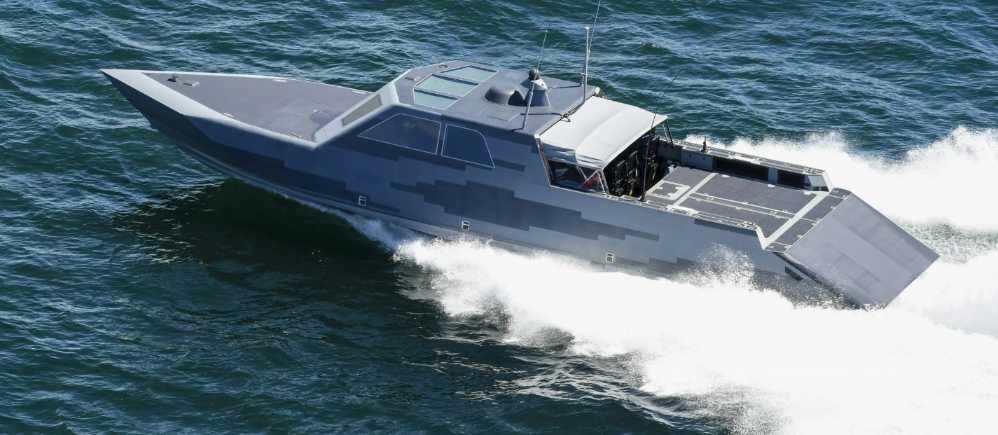
Although the MkVIPB boats are being equipped one after another, the US Navy is still not satisfied. On February 10, 2014, the Naval Special Warfare Command ordered a batch of unknown number of CCM Mk1 combat boats. This is a type of small boat with stealth design, flexible and adaptable, which is very suitable for special operations forces. It can form a high-low combination with MkVIPB and CCB boats. A total of 30 boats were purchased, with a total contract price of approximately US$40 million, and will be completed in 2021.
CCM Mk1 is mainly used for special operations personnel to enter and exit medium and low threat waters to perform tasks, and can also complete special reconnaissance, counter-terrorism, station defense, non-traditional operations, environmental protection and drug control, personnel evacuation, VBSS and other tasks.
Compared with the existing 11-meter RHIB boat, the CCM built with aluminum alloy materials The Mk1 is more stealthy and difficult to detect. It looks like a smaller version of the Mk V SOC. However, it is faster and has a longer range than the RHIB. It can move freely in high sea conditions and can sail at 40 knots for 5 hours in sea conditions level 3, while the RHIB can only reach 32 knots in sea conditions level 2.
The mission reliability requirement for the CCM Mk1 is not less than 80%. The definition of "mission" is the probability of completing an 11-hour mission in a 48-hour mission cycle without a critical failure event that forces the mission to be cancelled.
The resource availability requirement for the CCM is not less than 65%. Specifically, it means that the number of all active CCM boats that can be used to perform missions is not less than 65%. The calculation method is: if the CCM According to the plan, 30 Mk1s were purchased and assigned to the Navy, of which 8 were in a 6-month deployment cycle, 8 were undergoing squadron-level training, 8 were undergoing single-boat training, and 6 were in maintenance. The 6 ships in maintenance status cannot be deployed, and 20 of the remaining 24 should be able to be deployed (83.33%), so as to ensure that 65% of the 30 boats can be deployed normally.
This type of boat has 4 crew members and 19 passengers, and provides better vibration damping and buffering capabilities. The technical standard is that Sed8 does not exceed 4.7 MPa.
Its equipment is much better than the simple open RHIB, equipped with brand-new weapons and electronic equipment, including remote weapon stations, advanced sensors, 4 crew computer workstations, blue force tracking systems, DASR Anti-jamming GPS receiver, advanced tactical radio (PSC-5D, PRC-150, PRC117G), etc. The Norwegian Kongsberg, a well-known company in the field of ship technology, provides the CICORTEX system to integrate the various subsystems and sensors on the boat. Each subsystem of the boat can monitor itself, automatically prompt alarms, and report log data to the fleet support center.
The key parts of CCM Mk1 adopt the 4-level bulletproof standard, which has stronger battlefield survivability and reserves sufficient space for various future upgrades.
Although the current main transport aircraft of the US Special Operations Command (SOCOM) is the C-130 Hercules series, the procurement party emphasized that the performance and design of CCM Mk1 cannot be limited to the air transport and airdrop size limitations of the C-130 transport aircraft. Therefore, CCM Mk1 is designed according to the transportation standards of the larger C-17 Globemaster, and land transportation is designed according to the standards of the M1088A1FMTV6x6 truck. In contrast, the 11-meter RHIB boat is designed according to the C-130 standard; while the Mk V SOC boat requires a larger C-5 Galaxy for transportation. The CCM Mk1 can be modularly disassembled and assembled, especially according to the needs of the Navy SEALs, where "manual disassembly" is more important than "easy assembly". The biggest problem with the CCM Mk1 at present is the cost and technical risks brought about by high-end performance requirements, advanced hull design, and composite superstructure.
In addition, the combat boats used by the U.S. Navy Special Operations Command also include combat assault boats (CCA) and heavy combat boats (CCH).
CCA can be used by the Navy Special Warfare Group 4 (SBT-12 and SBT-20), mainly performing maritime interception missions (Maritime Interdiction Operations, MIO) in medium and high threat environments, and can also deliver/evacuate special operations forces and conduct coastal patrol operations. Its mission positioning is between rigid inflatable boats and CCMs, and it is smaller, more flexible, and more convenient to transport than CCMs. CCA can be airlifted by C-17 transport aircraft, but unlike CCM, it can be parachuted from the rear hatch of C-17 to the water surface. CCA can be carried on light surface ships, while CCM can only be operated on larger surface ships.
The Heavy Combat Boat (CCH) mainly performs long-range secret delivery and evacuation missions of the "Seal Commando" in medium and high threat environments, and also has limited coastal patrol and maritime blockade capabilities. As part of the Advanced Technology Demonstration (ATD) program, the US Navy has conducted comprehensive tests on two CCH prototype boats, "Sea Lion 1" and "Sea Lion 2" since 2003, and they were finally put into use in fiscal year 2014. At present, the "Sea Lion 3" with an improved design has also been put into service: "Sea Lion 4" is under construction.
The Navy’s "small jeep": 7-meter rigid inflatable boat (RHIB)
The 7-meter rigid inflatable boat is currently the most common work boat in the US Navy. It is as common as the army’s jeep and plays multiple roles such as patrol boats, transportation boats, and lifeboats.
The rigid inflatable boat was developed by France in the 1970s. It has a fiberglass rigid hull. And a circle of flexible airbags, with a raised control room/control stand and antenna and lighting bracket in the middle. Compared with fully rigid speedboats and fully soft rubber boats, rigid inflatable boats are light in weight, have good seaworthiness, large reserve buoyancy, are not afraid of bumps, and have a small volume after the airbags are deflated. They can be disassembled in as little as 20 minutes. In addition, the inflatable circle can also reduce the impact of waves, reducing the impact on the crew from 30g to 4g. At present, rigid inflatable boats have gradually become the main force of the US Navy’s work boats. As a ship-mounted work boat or a multi-purpose port speedboat, they appear frequently in marine activities such as VBSS and search and rescue.
The Navy’s "Big Jeep": 11-meter Rigid Inflatable Boat (RHIB)
The 11-meter Rigid Inflatable Boat is an enlarged version of the 7-meter Rigid Inflatable Boat, with greater carrying capacity and better performance. It is currently divided into two types: ordinary and special operations.
The main structure is also made of fiberglass and can be dismantled to become two equipment storage boxes: it is a typical squad combat boat and a standard tactical module for amphibious ships.
It can be hoisted by helicopter, airlifted by C-130, C-5, C-17 and other transport aircraft, and airdropped by parachute, and transported by trailer on land.
In 1997, the U.S. Navy Special Warfare Command ordered the first batch of 70 special operations 11-meter rigid inflatable boats. It has also been exported to many countries.
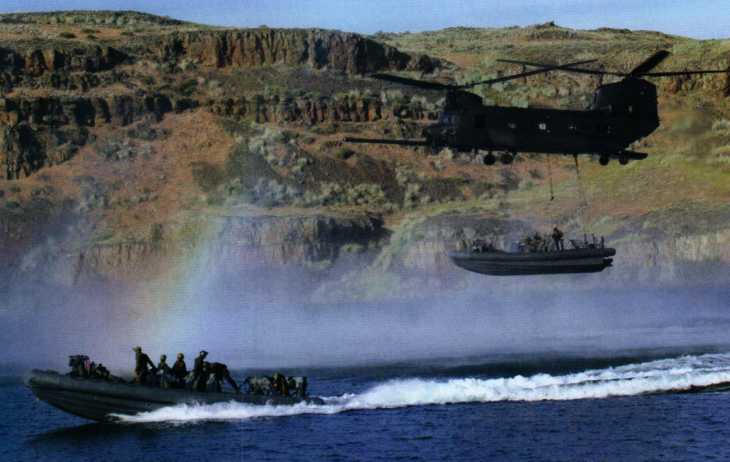
The "flying carpet" of the Navy SEAL: 16-foot SEAL combat rubber boat
This is a fully inflatable rubber boat widely used by special forces such as the Navy SEALs and the Marine Corps. It appears frequently in various special operations movies or documentaries. Its scientific name is Combat Rubber Reconnaissance Craft (CRRC) or Combat Rubber Raiding Craft (CRRC), and it is produced by the famous French company Zodiac.
CRRC It can be transported by various types of aircraft and submarines, and is mainly used for tasks such as cross-horizon transportation, infiltration, coastal reconnaissance, and beach landing for small forces; it can be filled with air in a few minutes by foot pumps, compressors, and high-pressure gas cylinders. The biggest advantage is that it is light in weight and small in size after folding, and can be easily put into the back cargo box of a small pickup truck; and it can remain floating in various sea conditions.
CRRC has a variety of models, the most typical of which is the 8-person F470 (also known as FC470) boat. The main hull has 5 interconnected air bags, which can be separated by valves, allowing one air bag to leak without affecting the mission. There are also 2 air bags under the two sides of the hull, called "Speed Skags", which make the bottom of the boat slightly three-body structure to increase the speed, while reducing the impact force, and can also play a role in increasing buoyancy. There is a longitudinal inflatable keel in the middle of the bottom of the boat, forming a V-shaped bottom, which improves the navigation performance. There is a wooden baffle at the tail for easy installation of the engine. CRRC It can be paddled manually or equipped with 1~2 outboard engines.
A set of CRRC includes an inflatable hull, 1~2 outboard engines, a detachable aluminum alloy bottom plate, paddles, a bow rope (righting line) to turn the boat right when it capsizes, a pocket for storing equipment at the bow (such as fins, ropes, etc.), and a 6-gallon (about 22.7 liters) or 18-gallon (about 68 liters) soft fuel tank.
Most military CRRCs are equipped with a 40-kilowatt twin-cylinder silent engine and a propeller with a protective cover, which can prevent the propeller from injuring people or being hit by objects in the water.
When operating a CRRC, a specially trained operator The coxswain (called the captain or helmsman) sits at the stern of the boat to operate the engine. He also bears the captain’s responsibilities and is responsible for the actions. Even if there are higher-ranking crew members on the boat, they must obey him. Next to him is the deputy operator, who is responsible for communication between the boats and assists the boat operator in operating the boat when necessary. The other crew members ride on the sides of the boat, which can lower the outline of the entire boat to avoid detection on the one hand, and free up space in the boat to accommodate weapons and equipment and additional oil bags on the other hand.
Since CRRC has no protection ability, light weapons can cause great damage to it, so it is generally used at night to play the concealment and suddenness of the operation. Later, Zodiac also launched the world’s first bulletproof component for inflatable boats, which can be installed on the F470 boat within 40 seconds.
Summary
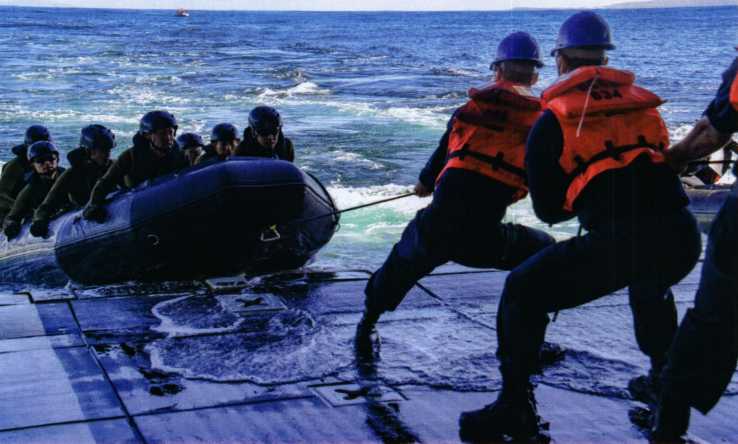
The above are the main combat speedboats currently in service in the US Navy, Marine Corps, and Special Forces. In fact, the US military has many other small boats, such as explosive ordnance disposal boats, diving work boats, transportation boats, pilot boats, etc., which will not be introduced here.
Coastal river special operations and water safety alert operations have always been considered by the US Navy as very important combat styles, which cannot be replaced by high-intensity naval battles and traditional land battles. To this end, the US military has developed a series of dedicated combat speedboats. These small boats are neither main battleships nor armed transport boats or assault boats. They are very distinctive in terms of tonnage, appearance, internal layout, firepower, protection, equipment configuration, etc., and have clear division of labor and outstanding characteristics. They are still evolving and improving with the changes in combat needs.
In contrast, from the perspective of military operations such as Mekong River cruises, South China Sea island confrontations, small-scale amphibious operations, and overseas escort fleet security protection, my country still has a long way to go in coastal river operations, small special operations, port anchorages and water security alerts, and water public security border defense. Whether it is the exploration of this unique combat style or the research and development of special combat speedboats, many are still at the stage of motorized sampans, assault boats, and armed transport boats. It is better to learn from "other people’s jade" and improve my country’s equipment system.