
In the new era of great power competition, the U.S. Army is undergoing a profound strategic transformation to cope with possible high-intensity wars. As an important part of the strategic transformation of the U.S. Army, the U.S. Army has begun to make partial adjustments to the organization of its forces. Not only have the division-level units regained operational command from the management agencies, but the functions and organizational forms have also changed greatly. The new standard heavy division plan is very telling.
At the beginning of 2021, General McConville, Chief of Staff of the U.S. Army, formulated the "AimPoint 2035" comprehensive transformation goal, with the aim of making adequate preparations for future large-scale ground operations (LSCO), and the fundamental focus is to cope with great power competition. To this end, the Army must complete the intermediate transformation in 2028. In August of that year, the U.S. Army Training and Doctrine Command (TRADOC) completed and submitted the U.S. Army’s "WayPoint 2028/29" strategic planning document to plan ahead for the U.S. military to win within the multi-domain operations (MDO) framework. In order to achieve the future vision of the Army’s "Aiming Point 2035", the US military will reorganize its existing forces before "Waypoint 2028/29", which involves a major change in the current US Army organization. The main content is to return to the division-centered force organization. Among the five types of Army divisions planned by the US Army according to the "Waypoint 2028/29" strategic document, the new standard heavy division is a very representative type
Background
"Division" is the basic tactical corps in the US Army. It has strong independent combat capabilities and sustained combat capabilities, and at the same time has administrative management and combat command powers. However, in 2005, the US Army decided to change the original division-centered force organization model to a force centered on modular brigade combat teams (BCT). At present, the US Army’s brigade combat teams are divided into three types, including: armored brigade combat teams (ABCT), "Stryker" brigade combat teams (SBCT), and infantry brigade combat teams (IBCT). In brief, the brigade combat team consists of 1 brigade headquarters company, 3 infantry battalions CAB battalions, 1 cavalry squadron, 1 field artillery battalion, 1 engineer battalion, and 1 brigade support battalion. The degree of synthesis of the brigade combat team is equivalent to that of a reduced division, and the combat elements are complete. The armored brigade combat team is a contracted force centered around the M1 "Abrams" tank and the M2 "Bradley" infantry fighting vehicle, the "Stryker" brigade combat team is a force mainly based on the "Stryker" wheeled armored vehicle, and the infantry brigade combat team is a light infantry force with high strategic mobility. According to the combat purpose, there are three types of BCT: airborne, air assault, and mountain. The concept of BCT has been successful in the global war on terrorism from 2001 to 2021. The U.S. Army has a total of 31 brigade combat teams, including 11 armored brigade combat teams, 7 "Stryker brigade combat teams, and 13 infantry brigade combat teams.
However, the U.S. military top brass believes that BTC is not entirely suitable for the foreseeable future great power competition. Once a large-scale battle with an opponent with a sound military system is entered, only a more "heavy" troop organization can ensure sufficient combat resilience. Therefore, in the U.S. Army’s transitional "Waypoint 2028" plan, although some BCTs are still retained, The army will no longer be designed with this as the core. The army will be divided into 5 types of army divisions, namely: Joint Airborne Force Entry Division (JFE), Joint Airborne Force Entry Division (JFE), Standard Light Division, Standard Heavy Division, and Breakthrough Heavy Division. Among them, since the Standard Heavy Division was the backbone of the US Army during the Cold War, the restored Standard Heavy Division is very typical in reflecting the strategic transformation of the US Army.
The 6th adjustment of the heavy division
Planned according to the "Waypoint 2028/29" strategic document The standard heavy division is essentially the return of the U.S. Army’s armored division/mechanized infantry division as a combat unit in history, and it is also the sixth organizational adjustment of the U.S. Army’s heavy division in history. The history of the U.S. Army’s armored division began in World War II. Since then, its organization has been constantly adjusted and changed. The organizational structure of the U.S. Army’s armored division from 1940 to 1942 was as follows: division headquarters and division headquarters company, 325 people; 1 armored brigade, with 3 armored regiments, 6045 people, equipped with 108 medium tanks and 260 light tanks; 1 armored infantry regiment , 2,135 people, 94 half-track vehicles; 1 armored artillery regiment, 2,127 people, 3 artillery battalions, equipped with 36 105mm howitzers; armored reconnaissance battalion, 763 people, 13 light tanks, 62 half-track vehicles and reconnaissance vehicles; engineer battalion, supply battalion, ordnance battalion communication company, medical team, etc. The total number of the division is 14,620 people, with 108 medium tanks, 273 light tanks, 36 howitzers, 41 mortars, 38 anti-tank guns, 720 machine guns, 30 submachine guns, 1,992 rifles, and 2 various vehicles. 000+.
After 1943, the organization of the US Army Armored Division has undergone certain changes. Division Headquarters and Division Headquarters Company: The division has 2 combat commands and 1 reserve command, and the combat command has no fixed jurisdiction; 3 armored battalions: Each battalion includes 3 medium tank companies (17 tanks each), 1 light tank company (17 tanks), battalion headquarters platoon (2 medium tanks, 1 half-track vehicle), reconnaissance platoon (6 jeeps), weapons platoon (2 half-track vehicles, 3 M4/105 tanks or M8 self-propelled howitzers); 3 armored infantry battalions; 3 armored artillery battalions, each with 18 M7 self-propelled howitzers; there are also armored reconnaissance (cavalry) battalions, engineering battalions, supply battalions, ordnance battalions, communications companies, medical teams, etc. The division has more than 11,000 people, 168 medium tanks, 64 light tanks, 54 self-propelled howitzers, 80 armored vehicles, 36 self-propelled anti-tank guns, 94 mortars, 669 rocket launchers, 940 machine guns, and nearly 1,500 other vehicles. After the end of World War II, the organization of the US Army armored division continued to adjust and change.
In the mid-1950s, in order to adapt to the needs of nuclear weapons warfare, the US military made a major reorganization, changing the "three-three system" division to a "five-group system division." Between 1956 and 1957, all active Army divisions (including armored divisions) were changed to five-group divisions. By 1960, the National Guard and Reserve divisions had also completed the reform. In the early 1960s, McNamara became Secretary of Defense and increased the number of active Army divisions from 11 to 16, abolishing the reserve divisions and merging them into the National Guard. In response to the problem that the five-group divisions were not used well in practice, they were changed to "three-brigade divisions" from the beginning of 1962, and four types of divisions were established: infantry divisions, armored divisions, airborne divisions, and mechanized infantry divisions. In 1965, air mobile divisions were also established. Each division has one direct unit and three brigade headquarters. The three brigade headquarters do not have battalion units under their jurisdiction in peacetime. In wartime, they have a number of combat battalions (usually 2 to 5) in a building block manner. For example, an armored division has 6 armored battalions and 5 mechanized battalions. The divisional artillery consisted of three 155mm howitzer battalions and one 12-gun 203mm howitzer battalion, in addition to a missile battalion. During this period, the U.S. Army’s "three-brigade division" armored division also included a division support command, commanded by a deputy division commander, responsible for all technical and support forces (maintenance battalion, medical battalion, supply battalion, financial company, etc.); an aviation battalion, which had a battalion headquarters company, a general support company (responsible for reconnaissance and liaison) and an air transport mobile company (including three air transport platoons, each with eight transport helicopters); an engineer battalion, which had five companies, including a pontoon bridge company; a communications battalion, which had three communications companies equipped with telephones, teletypewriters, and long-range radio stations; an armored cavalry (reconnaissance) battalion, which had three armored cavalry companies (equipped with tanks, armored vehicles, self-propelled mortars) and an air cavalry company with armed helicopters; a military intelligence battalion, which mainly engaged in electronic warfare; an air defense battalion, equipped with M163 "Vulcan" self-propelled anti-aircraft guns and anti-aircraft missiles; a military police company, a chemical defense company, a divisional military band, etc. 18,000 people in total, 351 M60A3 tanks, 376 armored personnel carriers, 154 TOW anti-tank missiles, 200 Dragon anti-tank missiles, 54 M109A1 155mm self-propelled howitzers, 12 M110 203mm self-propelled howitzers, 107 mortars, 173 helicopters (51 of which are attack helicopters), 24 M48 "Quercus" air defense missile launchers, 24 M163 "Vulcan" self-propelled anti-aircraft guns, and 72 shoulder-fired missiles ("Red Eyes").
In the 1980s, the U.S. Army carried out the third organizational reform after World War II (also the fifth adjustment since World War II) to create an "optimal army" that can fight various types of wars. This is the famous Type 86 Division. On the basis of the three-brigade division system, all ground divisions (including Army divisions and Marine Corps divisions) are divided into heavy divisions (including armored divisions and mechanized infantry divisions), light divisions (including motorized infantry divisions, light infantry divisions, airborne divisions, and air assault divisions) and Marine divisions. After the transition period after the end of the Cold War, in the early 21st century, the US Army entered an era with BCT as the core, but the US Army division-level units were not abolished. They only played a functional role as a management agency above the brigade combat team and were not responsible for combat command. For example, the 1st Cavalry Division of the U.S. Army has the 1st Armored Brigade Combat Team, the 2nd Armored Brigade Combat Team, the 3rd Armored Brigade Combat Team,
1st Cavalry Division Combat Aviation Brigade, 1st Cavalry Division Artillery Group, 1st Cavalry Division Support Brigade; 1st Armored Division’s 1st Armored Brigade Combat Team, 2nd Armored Brigade Combat Team, 3rd Armored Brigade Combat Team, 1st Armored Division Combat Aviation Brigade, 1st Armored Division Artillery Group, 1st Armored Division Support Brigade; 2nd Infantry Division’s 1st "Stryker" Brigade Combat Team, 2nd "Stryker" Brigade Combat Team, 2nd Infantry Division Combat Aviation Brigade, 2nd Infantry Division Artillery Group, 2nd Infantry Division Support Brigade, 210th Field Artillery Brigade; 82nd The Airborne Division includes the 1st Infantry Brigade Combat Team (Airborne), the 2nd Infantry Brigade Combat Team (Airborne), the 3rd Infantry Brigade Combat Team (Airborne), the 82nd Airborne Division Combat Aviation Brigade, the 82nd Airborne Division Artillery Group, and the 82nd Airborne Division Support Brigade; the 101st Airborne Division includes the 1st Infantry Brigade Combat Team (Airborne), the 2nd Infantry Brigade Combat Team (Airborne), the 3rd Infantry Brigade Combat Team (Airborne), the 101st Airborne Division Combat Aviation Brigade, the 101st Airborne Division Artillery Group, and the 101st Airborne Division Support Brigade. With the promulgation of the strategic document "Aiming at Waypoints 2028/29 and Other On-Time 2035", the US Army’s division-level units have begun to return from the functions of management agencies to the true colors of traditional combat units. The US Army’s heavy divisions (armored divisions/mechanized infantry divisions) then began the sixth organizational adjustment in history. Its general organization principle is to dilute the contractual color of the brigade combat team that has regained its combat command to a certain extent, and restore it from BCT to a relatively simple combat brigade (armored brigade, "Stryker" brigade), and re-use the division as a basic tactical synthetic combat unit.
It is not a repetition of the Type 86 Armored Division
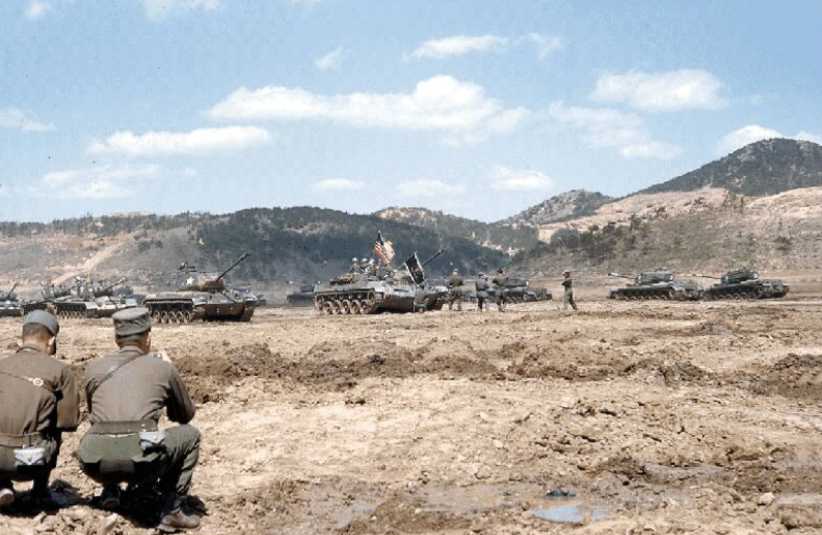
In terms of the history of the organization adjustment of the US Army’s heavy divisions, the 5th edition, that is, the armored division/mechanized infantry division of the Type 86 division, received the highest evaluation. The main changes of the heavy division in 1986 compared with the previous three-brigade division (the 4th adjustment) are: the combat battalion was changed from the original "three-three system" to the 4-3-4 system; the "TOW" missile launchers of the mechanized infantry battalion increased from 18 to 66; the original 12-gun M110 self-propelled artillery battalion of the division artillery was incorporated into the army, and the division added a 9-gun MLRS rocket launcher company, and the number of artillery in the 155mm self-propelled artillery battalion increased from 18 to 24; the self-propelled anti-aircraft guns of the division air defense battalion increased to 36; the division aviation detachment and the reconnaissance battalion were merged into a combat aviation brigade; the division support command added 3 forward support battalions, which are controlled by the support command in peacetime and commanded by the brigade in wartime; in the 1990s, some technical troops were added, such as the engineering battalion expanded to an engineering brigade, and so on. The heavy division is organized as follows: division headquarters and division headquarters company (276 people for the armored division and 277 people for the mechanized infantry division); 3 combat brigades: each brigade has 90 people in the brigade headquarters and brigade headquarters company, the armored division has 6 tank battalions and 6 mechanized infantry battalions: the mechanized infantry division has 5 armored battalions and 5 mechanized infantry battalions: the division artillery consists of the headquarters and headquarters company, 3 M109 series 155mm self-propelled howitzer battalions (24 guns each), 1 MLRS multiple rocket launcher company (9 guns), and target search company. The armored division has 2,516 artillerymen, and the mechanized infantry division has 2,540 artillerymen; the combat aviation brigade consists of the brigade headquarters and brigade headquarters company, cavalry battalions, 2 attack helicopter battalions, aviation command company, and general support aviation battalion, totaling 1,566 people. The cavalry battalion (reconnaissance battalion) consists of the battalion headquarters and the battalion headquarters company (equipped with 2 TOW missile launchers and 2 M3 cavalry fighting vehicles), 2 ground cavalry companies (each consisting of 3 cavalry platoons, 1 mortar platoon and a maintenance platoon, equipped with 12 M3 fighting vehicles and 12 TOW missile launchers, 6 107mm mortars) and 2 air cavalry companies (each equipped with 8 OH-58s); 1 attack helicopter battalion consists of the battalion headquarters and the battalion headquarters company, the aviation maintenance company, and 3 attack helicopter companies, equipped with 24 AH-64s; the general support aviation battalion is equipped with 24 UH-60s, 6 OH-58s, and 3 EH-60s; the division supports the headquarters, It has a headquarters and headquarters company, a basic support battalion, three forward support battalions, an aviation maintenance company, and an equipment management center, with a total of 2,917 people (the mechanized infantry division has 2,903 people). The basic support battalion has a battalion headquarters and a battalion headquarters company, a motor transport company (149 people), a heavy equipment maintenance company (227 people), a light equipment maintenance company (175 people), a medical support company (126 people), a supply and service company (180 people), and a missile support company (128 people); a forward support battalion has a battalion headquarters and a battalion headquarters company, a maintenance company, a supply company, and a medical company, with a total of 463 people; an engineer battalion has a battalion headquarters and a battalion headquarters company, four engineer companies, and a pontoon bridge company, with a total of 889 people. In the 1990s, the engineer corps was expanded into an engineer brigade, with three engineer battalions; an air defense battalion has a battalion headquarters and a battalion headquarters company, and three air defense companies. Equipped with self-propelled anti-aircraft guns and anti-aircraft missiles; the communications battalion, including the battalion headquarters and battalion headquarters company, command communications company, forward communications company, and communications support company, with 681 people; the military intelligence battalion, including the battalion headquarters and operations company, electronic warfare company, and service support company, with 313 people; other division-affiliated units: chemical defense company with 145 people, military police company with 148 people, and division band with 41 people. The 86-type armored division has 16,993 people (more than 19,000 people in the 1990s) and the mechanized infantry division has 17,278 people (more than 20,000 people in the 1990s). The heavy division is equipped with: 348/290 M1A1/A2 tanks (armored division/mechanized infantry division), 216/280 M2 infantry fighting vehicles, 100 M3 cavalry fighting vehicles, 48/60 M901 anti-tank missile vehicles, 144/180 "Javelin" anti-tank missiles, 9 MLRS multiple rocket launchers, 72 M109A1/A2/A6 155mm self-propelled howitzers, 66 M106 107mm heavy mortars, 48 M981 fire support vehicles, 48 AH-64 attack helicopters, 50 OH-58 observation helicopters, 3 EH-60 electronic warfare helicopters, 30 UH-60 utility helicopters, 36 self-propelled anti-aircraft guns (once used "Sergeant York", later changed to "Vulcan"), air defense missile launchers 18 "Little Oak" vehicles, 36 "Avenger" air defense missiles or 72 "Stinger".
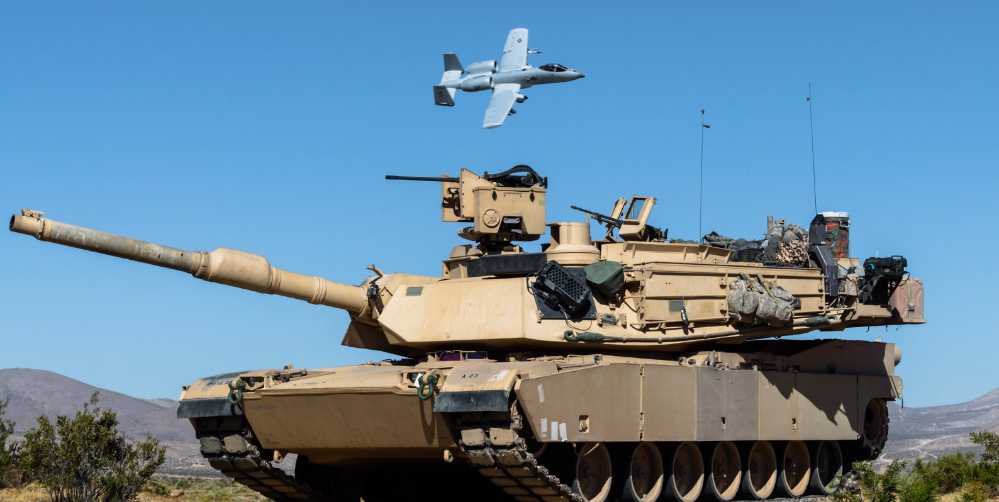
The US Army’s Type 86 Heavy Division is a product of the peak of the Cold War, which means that it is also a product of the intense competition among major powers. Therefore, in the current strategic transformation of the United States, some people believe that the returning 6th version of the standard heavy division will inevitably have the imprint of the Type 86 Heavy Division. What’s more, many of the main battle equipment of the Type 86 Heavy Division at that time, and its improved models of the same series are still active equipment of the US Army. Such as the "Abrams" series main battle tanks, "Bradley" series infantry fighting vehicles, M109 series 155mm self-propelled artillery, "Apache" series attack helicopters, M270/M142 series multiple rocket launchers, etc. are all like this: This is even more reasonable It is believed that the 6th edition of the standard heavy division, which is currently being reorganized, is likely to be a modernized reproduction of the Type 86 heavy division. However, the actual situation is that the Type 86 heavy division may provide reference and reference for the current 6th edition of the US military’s standard heavy division, but the latter is not a simple repetition of the former. For example, according to strategic documents such as "Aiming Point 2035" and "Waypoint 2028/29", the 6th edition of the standard heavy division will include a division headquarters battalion, 1 military intelligence battalion, 2 armored brigades, 1 "Stryker" brigade, 1 Army Aviation Brigade, 1 artillery brigade, 1 division engineer battalion, 1 defense brigade, and 1 division support brigade. Obviously, as far as the combat brigade at the large structural level is concerned, the "Stryker" brigade of the 6th edition of the standard heavy division is a new quality element that the Type 86 heavy division does not have. In addition, the defense brigade and the support brigade These two non-combat brigades cannot find any structural elements that can strictly correspond to the Type 86 Heavy Division. In fact, the Defense Brigade (PB) is a newly established force organization planned in the US military’s "Waypoint 2028/29" strategic document. It is based on the previous US military’s Mobile Enhanced Brigade (MEB) and consists of 1 engineer battalion, 1 military police battalion, 1 mobile short-range air defense battalion (M-SHORAD), 1 nuclear, biological and chemical protection battalion, and 1 brigade support battalion. Its role is the same as that of the air defense unit of our army’s synthetic forces, responsible for providing cover support for the standard heavy division.
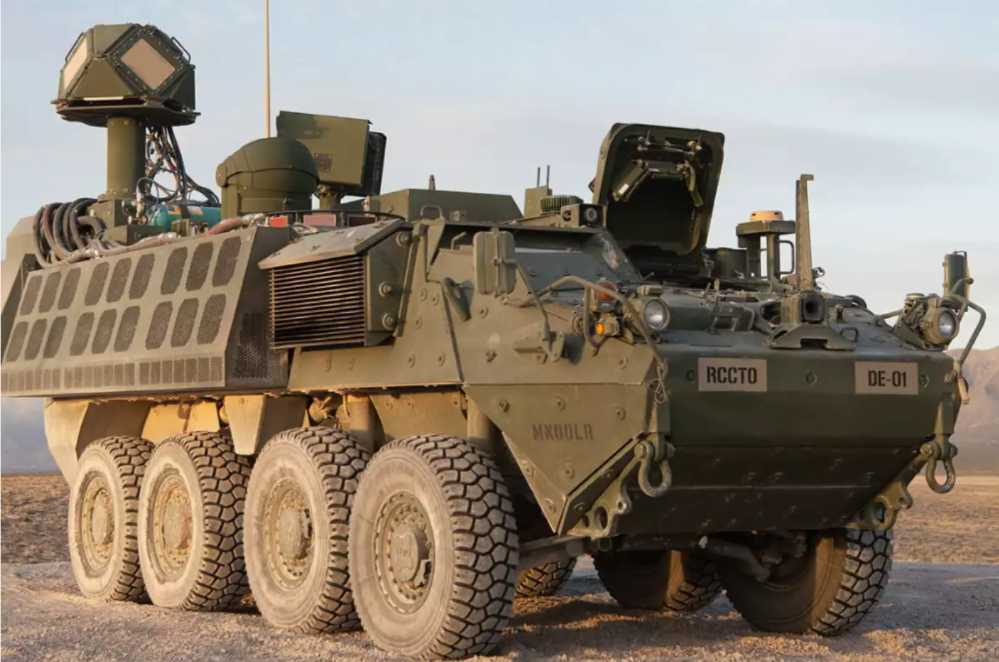
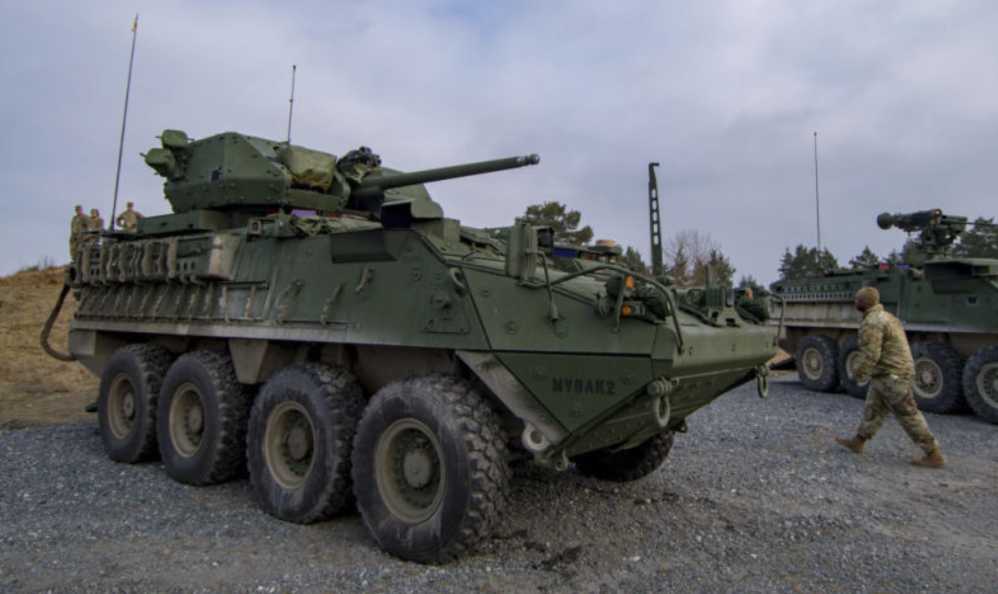
Among them, the mobile short-range air defense battalion will be equipped with the "early mobile short-range air defense system" and "directed energy mobile short-range air defense system" on wheeled chassis to provide accompanying short-range air defense for the heavy breakthrough division. This air defense battalion is the core of the entire Defense Brigade (PB). The "Early Mobile Short-Range Air Defense System" is developed by adding the "Multi-Mission Hemispherical Radar" of Israel’s RADA Electronic Industries, the MX-GCS electro-optical/infrared sensor of L3 Viscom and the "Reconfigurable Integrated Weapon Platform" of the Moog Group to the "Stryker" A1 armored vehicle. The standard weapons are 4-mounted "Stinger" air defense missiles, twin-mounted "Hellfire" anti-tank missiles, an M230 30mm machine gun and a 7.62mm coaxial machine gun. It is mainly responsible for short-range air defense within a range of 8,000 meters. The "Directed Energy Mobile Short-Range Air Defense System" is a 50KW high-energy laser weapon, which is mainly responsible for providing continuous anti-UAV and anti-rocket, artillery and mortar firepower. It also uses the "Stryker" A1 chassis and integrates the Ku720 small active phased array radar, which can effectively detect small targets such as drones and mortar shells 8,000 meters away. It is also equipped with AN/VLR-1 forward-looking infrared system, automatic video tracking device and laser rangefinder, and has independent target interception and tracking capabilities. "Directed Energy Mobile Short-Range Air Defense System" can capture, track and strike cruise missiles, helicopters or drone targets within 5,000 meters and flying at an altitude of 10 to 3,000 meters. The biggest advantage is low cost. The cost of a laser launch is only US$30, and it can achieve better results than traditional air defense weapons when performing anti-drone swarm operations. The support brigade is equivalent to the integration of the basic support battalion and the forward support battalion of the Type 86 Heavy Armored Division. It usually includes one or more reinforced combat support battalions, one fuel battalion and one mobile transport battalion, which are responsible for supporting tactical-level support operations.
In addition, the support brigade also has a professional force battalion. Responsible for commanding and controlling all attached, reinforced and combat-controlled units of the support brigade. Its core capabilities are to establish a battalion command post, execute combat procedures, synchronize support tasks, and plan, prepare, execute and evaluate support needs within the support brigade. The battalion consists of a command group, a chaplain group and a coordinating staff, and can command up to 7 units. The organizational unit of the professional force battalion is the battalion headquarters company, including the maintenance platoon, the medical rescue team and the medical evacuation team, which can be strengthened by the signal company, the human resources company and the theater financial management support unit. At the combat brigade level, the 6th edition of the standard heavy division is also different from the 86-type heavy division. For example, the armored brigade of the standard heavy division will consist of a brigade headquarters company, 3 combined arms battalions (CAB), 1 cavalry squadron, 1 armored engineer battalion, and 1 brigade support battalion; while the "Stryker" brigade will consist of a brigade headquarters company, 3 wheeled armored infantry battalions, 1 wheeled armored cavalry squadron, and 1 brigade support battalion.
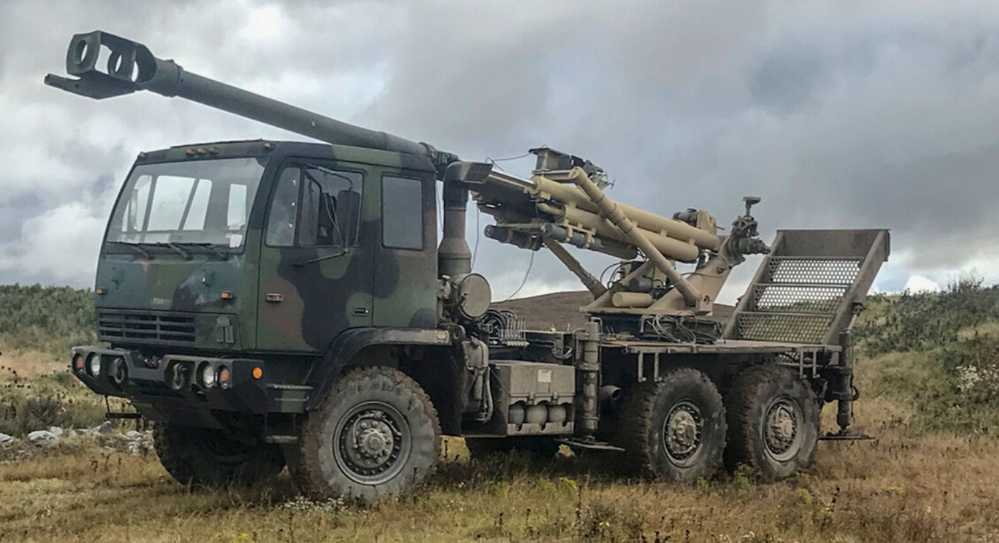
It should be mentioned that in May 2021, the US Army announced that it would retire the 105mm M1128 "Mobile Gun System" (MGS) in the "Stryker" brigade and replace it with a 30mm Medium Caliber Weapon System (MCWS) machine gun carrier and CROWS-J "Javelin" missile vehicle. Then in August 2022, the US military stated that it would definitely not add large-caliber direct-aiming firepower vehicles to the Stryker Brigade, so some people questioned that this would lead to a gap in related capabilities. However, with the clarification of the analysis of the "Waypoint 2028/29" strategic document, since the Stryker Brigade abandoned the BCT organization and centered on the heavy division, this means that if necessary, the Stryker Brigade will be able to obtain the reinforcement of the M1A2 Abrams main battle tank, which basically eliminates the hidden danger of the retirement of MGS. In other words, with the retirement of the M1128 mobile artillery system, the Stryker Brigade will no longer have a fixed large-caliber direct-aiming firepower, but it can obtain tank squad reinforcement from the heavy division. It is worth noting that the artillery brigade of the standard heavy division consists of 2 155mm tracked armored artillery battalions and 1 155mm towed artillery battalion, which is the same ratio as the armored brigade combat team and the Stryker combat team. This is actually another difference between the 6th edition standard heavy division and the 86-type heavy division. Although the towed artillery battalion comes from the artillery battalion of the original "Stryker" brigade combat team, in the future, as the U.S. military’s "Next Generation Howitzer" (NGH) vehicle-mounted howitzer project progresses, it will also begin to replace the new 155mm wheeled self-propelled artillery. In addition, it is also necessary to see that in the "Waypoint 2028/29" strategic document planning, the standard heavy division will also receive strength reinforcement from higher-level units in wartime. That is, subordinate units from the army level will be allocated in a timely manner according to combat needs, including expeditionary signal battalions, multiple rocket system artillery battalions, EAB artillery battalions, indirect fire defense system (IFPC) air defense battalions, special forces companies, expeditionary military intelligence brigades, electronic warfare companies, integrated electric warfare battalions, engineer battalions, explosive disposal battalions, military intelligence support battalions, civil affairs battalions, medical brigades, and medical battalions. For example, the M142 HIMARS is currently assigned to the artillery brigades of the 1st Army and the 18th Airborne Army of the US Army. In the "Waypoint 2028/29" strategic document planning, it can be strengthened to the standard heavy divisions as appropriate. The M270 is currently assigned to the artillery brigades of the 3rd Army and the 8th Army of the US Army in Europe and Africa (USAREUR-AF). In the "Waypoint 2028/29" strategic document planning, it can also be strengthened to the standard heavy divisions as appropriate. The military’s EAB artillery battalion is equipped with a 155mm 58-caliber Extended Range Artillery (ERCA) howitzer, which is mainly used as deep anti-artillery firepower. In wartime, it can be reinforced to the standard heavy division depending on the situation. The Indirect Fire Defense System (IFPC) Air Defense Battalion is mainly used to protect army troops and bases from threats such as subsonic cruise missiles, third-level drone systems, and rockets. In 2020, the US military selected the "Iron Dome" as a temporary IFPC Increment 1 interim solution, and in August 2021, the newly designed "Persistent Shield" system defeated Rafar’s "Iron Dome" and was selected as the IFPC Increment 2 air defense system. In addition, the "Indirect Fire Defense System-High Energy Laser" (IFPC-HEL) and the "Indirect Fire Defense System-High Energy Microwave" (IFPC-HPM) will also be equipped in the Indirect Fire Defense System Air Defense Battalion.
The 6th edition standard heavy division has other characteristics that are different from the 86-type heavy division. For example, in order to effectively respond to two regional conflicts occurring simultaneously despite the continuous reduction in personnel quotas, the 6th edition standard heavy division incorporated individual reserve personnel into the current army division for the first time. According to the establishment of the 6th edition standard heavy division, 417 reserve personnel were incorporated into the army division, including 255 National Guard personnel and 162 reserve members, accounting for about 3% of the total number of personnel in the division. Usually, these people still serve in the original reserve force on the same day, but wear the armband of the newly formed force to indicate which division they currently belong to. When the newly formed force needs to perform combat missions, these reserve personnel must obey orders to perform active duty tasks. For another example, considering the particularity of warfare in the information age, the sixth edition of the standard heavy division expanded the personnel and equipment strength of the intelligence reconnaissance department during planning. The intelligence battalion of the sixth edition of the standard heavy division has 438 people, 49 more than before the reorganization, and the aviation and artillery brigades have also added an intelligence analysis team. These enhanced reconnaissance units and intelligence teams will comprehensively enhance the reconnaissance capabilities, distribution and transmission capabilities, and intelligence emergency response capabilities of the sixth edition of the standard heavy division.
The combat function positioning of the new standard heavy division
The organization serves the function. Therefore, the combat function positioning of the sixth edition of the US Army’s standard heavy division is an interesting topic. Among the five types of army divisions planned according to the "Waypoint 2028/29" strategic document, there are actually two types of heavy divisions in the US Army, namely the breakthrough heavy division and the standard heavy division, and the combat function positioning of the two heavy divisions is different. The Breakthrough Heavy Division is a new design concept proposed by the U.S. Army to cope with the competition among major powers. It is also the heaviest armored division in the history of the U.S. Army. The Breakthrough Heavy Division consists of a divisional battalion, three armored brigades, one divisional cavalry squadron, one combat aviation brigade, one artillery brigade, one engineer brigade, one defense brigade, and one division support brigade, with a total strength of about 12,000. It is equipped with a total of 261 M1A2SEPV2 main battle tanks, 363 Bradley infantry fighting vehicles, 288 AMPV armored vehicles (replacing M113 armored vehicles), 54 155mm XM1299 self-propelled howitzers, 54 M1287 120mm self-propelled mortars, and 130 helicopters of various types. Among them, the XM1299 self-propelled howitzer uses a 155mm 58-caliber XM907 howitzer barrel, with a maximum rate of fire of 10 rounds per minute, and a maximum effective range of about 50 kilometers when using standard shells. The range of the 155mm ramjet glide shells can exceed 100 kilometers, which can provide long-range fire suppression. In addition, a military long-range rocket artillery brigade will be strengthened in wartime, with 2 multiple rocket launcher battalions and 32 sets of M270A1 multiple rocket launcher systems to provide long-range coverage firepower. In addition to the main battle tanks, infantry fighting vehicles and "Apache" helicopters responsible for anti-armor operations in the heavy breakthrough division, the divisional cavalry squadron is equipped with CROWS-J "Javelin" missile remote weapon station electric light reconnaissance vehicles can also be used for anti-armor operations.
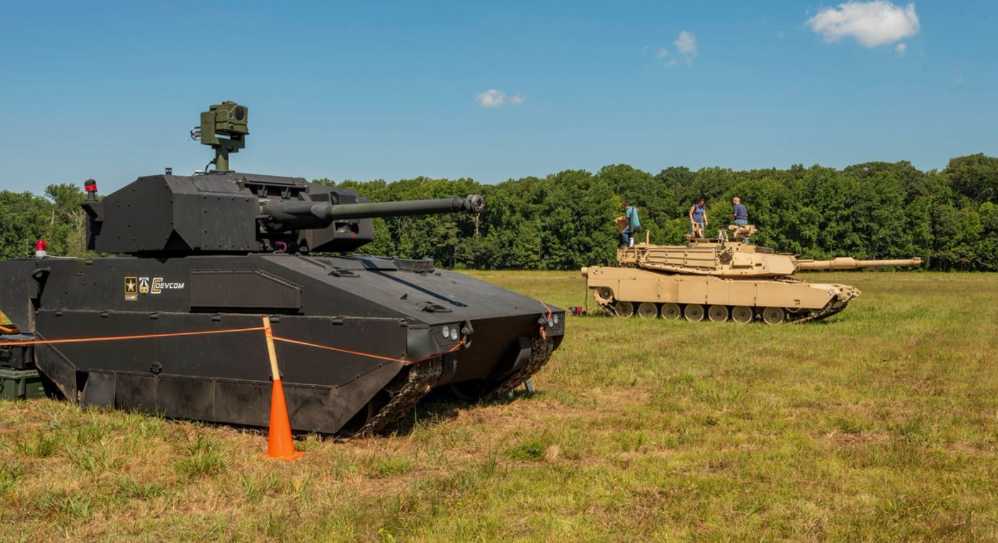
Each divisional armored brigade of the breakthrough heavy division has 3 joint battalions (armored composite battalion), 1 armored cavalry company, 1 robot combat vehicle company, 1 brigade engineer battalion and brigade support battalion. Each joint battalion is composed of 2 tank companies (M1) and 2 mechanized infantry companies (M2), while the armored cavalry company is also composed of 2 tank platoons and 2 armored cavalry platoons (M3). The Robotic Combat Vehicle Company is a unit of the new Breakthrough Heavy Division. Equipped with RCV unmanned tanks. This unmanned tank has three versions: light, medium and heavy, namely RCV-L (less than 10 tons), RCV-M (10~20 tons) and RCV-H (30 tons). They are equipped with anti-tank missiles, small and medium caliber chain machine guns, and 105mm or 120mm caliber tank guns, respectively. Among them, RCV-H has the ability to confront main battle tanks head-on. In fact, in the planning of the "Waypoint 2028/29" strategic document, the Breakthrough Heavy Division is mainly used as the spearhead of the attack, playing the important role of tearing open the defense line of heavyweight opponents such as China and Russia. In contrast, the standard heavy division is slightly less heavy than the Breakthrough Heavy Division, but it has higher battlefield mobility, which is mainly reflected in the fact that one of the three combat brigades is a "Stryker" brigade. In addition, the Breakthrough Heavy Division Combat Brigade has a complete mounted cavalry battalion under its jurisdiction, while the standard heavy division only has a mounted cavalry company, and there is no division-affiliated mounted cavalry battalion. The differentiation between the standard heavy division and the Breakthrough Heavy Division in terms of organization is of course intentional. According to the planning of the "Waypoint 2028/29" strategic document, the standard heavy division with more balanced capabilities will have a wider task spectrum than the breakthrough heavy division. In offensive tasks, it can be used as the second echelon of the breakthrough heavy division to invest in depth and develop victory; in defensive tasks, it can rely on better combat toughness and durability to repeatedly seesaw with strong enemies.
Conclusion
The organizational structure is a concentrated reflection of the military strategy, combat thinking and construction concept of an army, and it is also a weather vane for the transformation and construction of an army. Through organizational research, one can intuitively and deeply feel the development direction and combat effectiveness of an army. At present, the US Army still adopts a modular organization with brigades as the core, which is also the general impression of the US Army. But in fact, under the guidance of the great power competition strategy, the organization of the US Army is undergoing profound changes. Before the release of the "Waypoint 2028/29" strategic document, in order to cope with the competition among major powers, the main change in the US Army’s troop establishment was the establishment of the "All-Domain Combat Task Force"/Multi-Domain Brigade, which is a "transitional" unit. In Europe, the "All-Domain Task Force"/Multi-Domain Brigade is equivalent to a rocket artillery brigade with its own electronic countermeasures, electronic reconnaissance, communications intelligence, drones, high-altitude balloons and mobile short-range air defense units. In Asia, the "All-Domain Task Force"/Multi-Domain Brigade is equivalent to a tactical missile brigade with various auxiliary units. After the release of the "Waypoint 2028/29" strategic document, the troop establishment reform of the US Army’s strategic transformation began to enter the deep waters. It began to merge several existing brigade combat team units together, restore the command and combat capabilities of the division organs, and return the support firepower of these brigade combat team units to the division, and then hand over the new capabilities of the multi-domain brigade, such as long-range strikes, reconnaissance and surveillance, electronic countermeasures, and drones, to the division. Among the five new types of army divisions that emerged, the most typical one is the standard heavy division. In addition, under the guidance of the "Waypoint 2028/29" strategic document, the US Army is also planning to establish a new theater firepower command, initiate the re-commissioning process of a new corps-level agency (the 5th Army), and promote the transformation of corps and division headquarters to multi-domain commands. As the saying goes, a storm is brewing, and the US Army is preparing for a great power war!