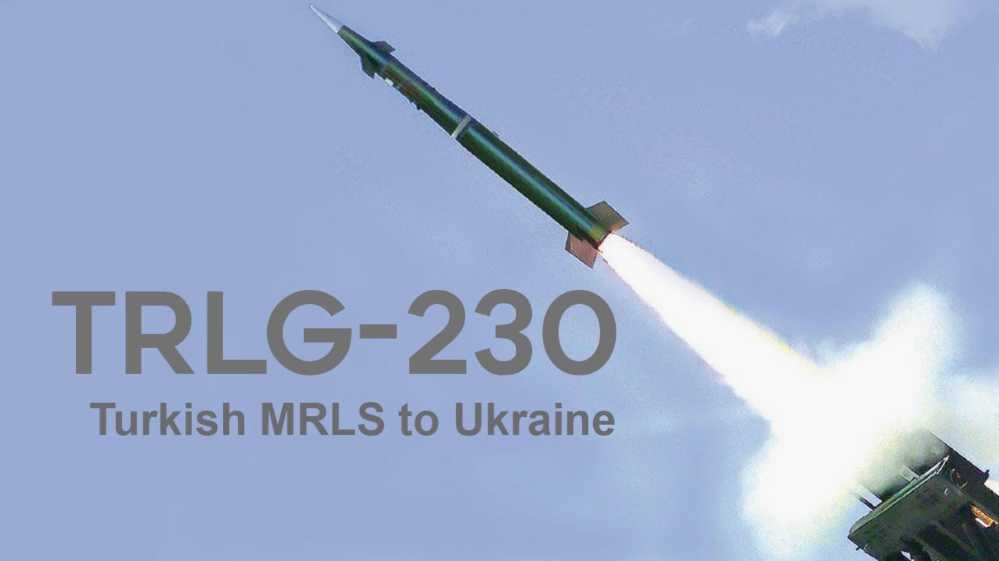

According to the news released by the "Eye of the Middle East" website, Turkey has delivered dozens of TRLG-230 laser-guided rockets produced by Turkey’s Roketsan company to Ukraine. At the same time, videos of the Ukrainian army launching TRLG-230 rockets also appeared on social media, confirming that Turkey is still providing military assistance to Ukraine to a greater or lesser extent. The eye-catching performance of Turkish weapons and equipment on the Ukrainian battlefield once again proves that they have excellent research and development capabilities for advanced technology equipment.
Development of TRLG-230 rockets
Turkey recognized the independence of Ukraine on December 16, 1991. The two countries established diplomatic relations on February 3, 1992. Over the past 12 years, Turkey has strengthened its strategic partnership with Ukraine, which covers different areas of cooperation, including reciprocal cooperation in the field of defense. Turkey is also actively involved in the modernization efforts of the Ukrainian Navy. Recently, the keel of Ukraine’s first "Ada-class" frigate was laid at a Turkish shipyard.
According to Wikipedia, before the outbreak of the Russian-Ukrainian conflict, Ukraine had signed a contract with Turkey to supply Ukraine with an unknown number of TB-2 drones. In the summer of 2022, Turkey delivered 200 Kirpi 4x4 armored vehicles produced by the Turkish BMC company. At the same time, Ukraine also received a variety of ammunition, including 155mm artillery shells, MAM-L guided bombs, MAM-C guided bombs and Falcon HR (Sungur IR) air defense missiles and TRLG-230 rockets.
Before the emergence of the TRLG-230 rocket, Turkey developed a variety of caliber rockets (including 107mm, 122mm, 230mm, and 300mm rockets) based on the introduction of foreign technology (such as the Guardian 1 rocket launcher). Initially, these rockets were not equipped with guidance systems. In order to improve the lethality and market competitiveness of Turkish rocket artillery, Loktsan has been committed to integrating guided rockets of various calibers into a universal launch platform for many years. On November 18, 2016, after six years of design, development and identification, the TRG-300 "Kaplan" (meaning "Tiger") guided rocket system (range 30~120 kilometers) was finalized and delivered to the Turkish armed forces in batches for the first time in June 2017. At present, the system has been equipped with the Turkish, Azerbaijani and Bangladeshi armies. The TRG-300 "Kaplan" satellite-guided rocket uses a GPS+GLONASS+INS composite guidance system, which can provide timely, accurate and intensive firepower support. TRG-300 guided rockets can be launched from MBRL weapon systems manufactured by Loctsan, T-122/300MBRL (compatible with launching 122mm and 300mm rockets) weapon systems, MCRL-122/300 launchers and other compatible platforms with appropriate interfaces. They can perform fire support missions during day and night and in adverse weather conditions to strike regional/high-value targets.
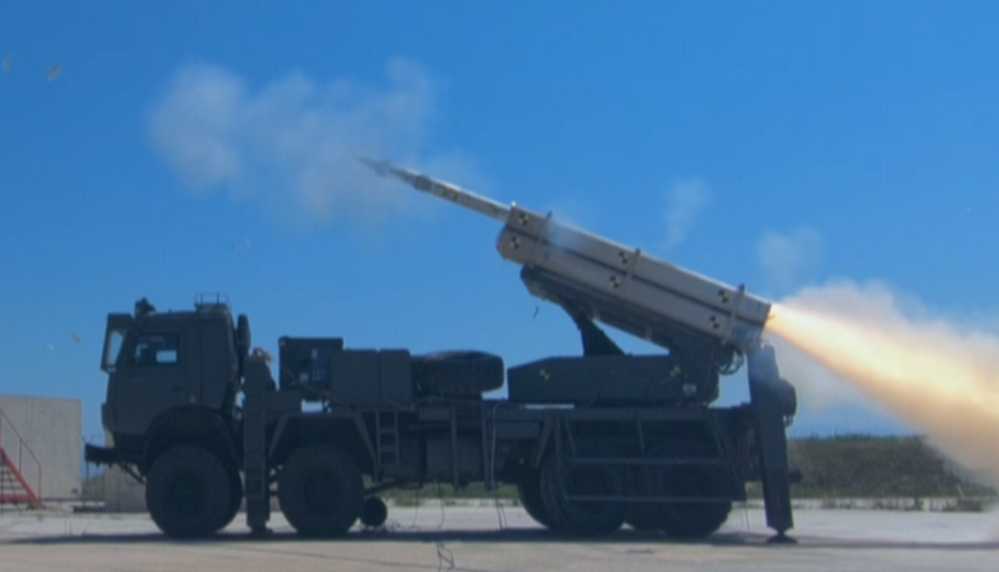
TRG-300 guided rockets are carried on a 6x6 tactical wheeled vehicle chassis, and the launcher is installed at the rear of the truck chassis, with four launch tubes per vehicle. The system has a "hit and run" capability through navigation, automatic hydraulic leveling and stabilization, and automatic bracket placement integrated with the weapon management system. Thanks to its fully automatic weapon control, navigation and erection system, the launcher only requires three crew members, namely a vehicle commander, a gunner and a driver. There are two types of TRG-300 guided rockets. The Block 1 guided rocket weighs 585 kg and has a range of 30 to 120 kilometers. Its HE (high explosive + steel ball) warhead weighs 105 kg. The Block II guided rocket is an enhanced missile with a warhead weight increased to 190 kg and a range reduced to 20 to 90 kilometers. The guidance systems of these two variants are global satellite positioning systems with an accuracy of about 10 meters and inertial navigation systems. According to pictures released by the Bangladesh Defense Analysis website, the TRG-300 delivered to the Bangladesh Army uses the Russian-made KamAZ 65224 series 6x6 military truck chassis. The truck is powered by a KamAZ-740.632-400 four-stroke V8 diesel engine, which is connected to a ZF16S1820 manual transmission with an eight-speed gearbox. Its maximum road speed can reach 90 km/h.
After the successful development of the TRG-300 guided rocket, Turkey’s Loktsan Company launched the satellite-guided model of the TR-230 rocket, the TRG-230 guided rocket, in July 2020. Due to the reduced size of the rocket, each launch vehicle can carry more launchers. In October 2020, the new TRLG-230 laser-guided rocket was successfully tested. The TRG-230 satellite-guided rocket has a diameter of 230 mm, a full bomb weight of 215 kg, and is equipped with a 42 kg heavy high-explosive warhead (other warheads can also be replaced). The TRG-230 satellite-guided rocket adopts a pointed cone head and a cylindrical body design. The warhead is equipped with four air rudders in a duck-style layout, and a cross-shaped foldable tail is installed at the rear of the body (which can be regarded as a smaller version of the TRG-300 guided rocket). It adopts a rectangular closed launch box with modular storage, transportation and launch. The rocket launch box of 6 rounds can be directly hoisted on the launch vehicle. The system can also adopt a double or triple layout. The TRLG-230 rocket uses a trigger or air burst fuse, and combines an inertial guidance system assisted by GPS and GLONASS and a semi-active laser seeker (installed in the pointed cone of the head). It is also equipped with a high-explosive/steel ball warhead weighing 42 kg and a killing radius of 55 meters. However, the mass of the whole bomb is reduced to 210 kg, which can be stored for 10 years. It is said that its strike accuracy is less than 2 meters. The Turkish Loktsan Company used a TB-2 drone to provide it with laser illumination in the live-fire test. It is said that it has the ability to strike moving targets. The TRLG-230 guided rocket can accurately and effectively strike high-priority targets within a range of 20 to 70 kilometers. It can be launched from the Loktsan MCL multi-caliber launcher rocket launcher (MBRL) and other platforms with compatible interfaces.
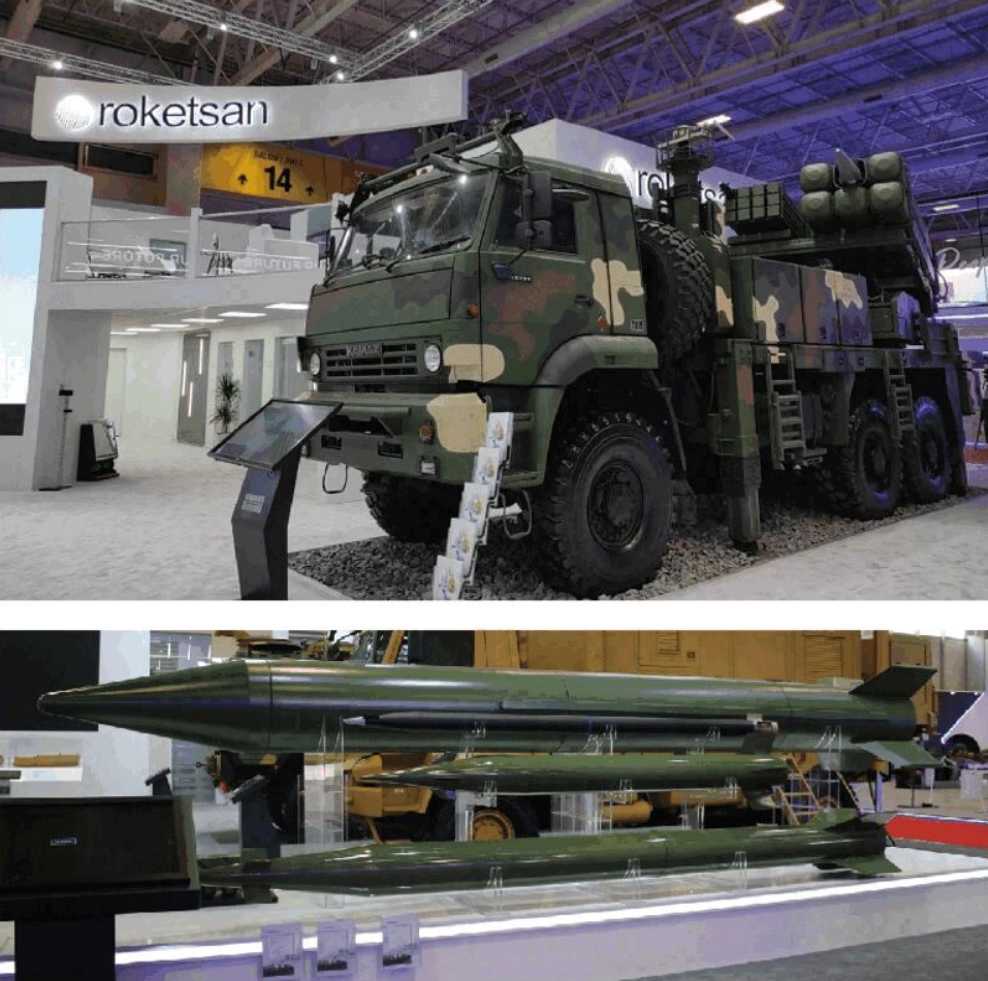
In August 2021, Turkey’s Loktsan Company displayed TRLG-122 (122mm laser-guided rocket), TRLG-230 and TRG-300 guided rockets at the IDEF exhibition. These rockets can be launched from the same launch platform, and their design concept is similar to that of my country’s AR3 or SR5 rocket launchers. According to the "Army Identification" website in September 2021, Turkey’s Loktsan Company plans to integrate the TRLG-230 guided rocket into unmanned combat aerial vehicles (UCAVs) for air-to-ground combat. The onboard GPS guidance system can be used within a range of 55 kilometers in a strong interference environment. The performance of the missile’s laser seeker can vary depending on the performance of the laser designator, atmospheric conditions and the laser reflectivity of the target surface. Potential targets of the TRLG-230 include artillery and air defense systems, radar sites, troop assembly areas, logistics facilities, C3 systems and other high-priority targets designated by laser from land platforms or unmanned aerial vehicles (UAVs). The system is uniquely efficient, with a standby mode, accurate laser designation and precision strike capabilities, while pod-type transportation, storage and handling capabilities ensure mobility. Both types of 230mm guided rockets can use the same MBRL modular launch system, which can choose 8x8 or 6x6 wheeled chassis. A total of 12 230mm rockets can be hoisted on the launch vehicle in two modules, and can also be launched on the same frame with 107mm and 122mm rockets. The system can also carry TRG-300 300mm rockets and 610mm "Khan" ballistic missile modular launch boxes. The system takes 5 minutes to prepare for launch. Before launching, the hydraulic jack needs to be lowered to improve the stability of the vehicle. The launch vehicle can be connected to the tactical/battlefield command, control and management system to obtain target information.
Khan ballistic missile system will be exported to Indonesia
According to Sabah Daily on October 3, 2022, at the Indonesian Defense Exhibition (Indo Defence 2022) held in Jakarta, Loktsan announced that it would export the Khan missile to Indonesia. When talking to Anadolu Agency, Loktsan Assistant General Manager Mut Kotros mentioned the importance of the Southeast Asian market to the company. Loktsan’s modular multiple rocket launcher (MBRL) system can launch Khan missiles and other guided rockets of other calibers. The Khan missile has a diameter of 610 mm and weighs 2,500 kg. The Khan is a solid-fuel missile with a warhead weighing 470 kg, which uses the Global Navigation Satellite System (GNSS) and Inertial Navigation System (INS) to guide it to the target. The missile launcher can carry two Khan missiles, each in a separate launch box made of composite materials.
Mute Kotros pointed out that as one of Turkey’s leading defense companies, they signed two agreements with the Indonesian Ministry of Defense under the coordination of the Turkish Defense Industry Department (SSB). "According to the contracts we signed, we will deliver our first products to the Indonesian Ministry of Defense in the near future. The first is the Khan missile, which has an effective range of up to 280 kilometers. The second agreement is aimed at layered air defense through two independent medium and long-range air defense systems." Mut Kotros also emphasized Indonesia’s geographical structure consisting of islands and long coastlines, pointing out the country’s needs for naval systems and ship-to-ship missiles. The Khan missile can accurately hit the target through its inertial guidance system or its GNSS-supported inertial guidance system. The system has the ability to be deployed quickly, and the shooting preparation time is very short, and the battlefield survivability is strong. According to customer requirements, the missile system can also be integrated into the MBRL modular launcher together with rockets such as TR-122 (Turkish domestically produced 122mm unguided rocket), TRG-122 (Turkish domestically produced 122mm satellite-guided rocket), TRLG-122 (Turkish domestically produced 122mm laser-guided rocket), TRG-230, TRLG-230, TRG-300, etc. The design of the overall transport-launch module can greatly improve the continuity of firepower output and the wartime operation safety of the rocket launcher system while giving full play to the inherent firepower density advantage of the rocket launcher, and can also reduce the excessive dependence on the logistics transportation system. An MBRL rocket launcher company includes a command and control vehicle, 6 launch vehicles, 6 ammunition supply vehicles, a meteorological vehicle, a maintenance and repair vehicle, and other necessary mission support vehicles. The number and type of vehicles can also be customized according to user requirements. One of the most important functions of the system provided by Loktsan is the ability to integrate MBRL’s command and control system and weapon management system with other systems. Combat information can be quickly transmitted from target acquisition units (such as target acquisition radars or drones) to launch vehicles. This is a weapon system capable of launching rockets and missiles within a range of 10 to 280 kilometers. Loktsan signed its first export contract in 2014, followed by another export contract in 2019. With the delivery of the first contract completed, logistical support services are underway. With the support of these advanced systems, Turkey’s defense industry enterprises are performing better and better in the world arms market.
7 Turkish companies are among the top 100 defense industry companies in the world
According to the Sabah Daily in August 2020, the number of Turkish companies in the "Defense News Top 100", which is regarded as one of the most prestigious defense industry lists in the world, has increased to 7. The Defense News Top 100, published annually by the US-based military publishing company, brings together data from many companies around the world, annual reports, analyst reports, and research reports from Defense News and the International Strategic Institute. Currently, there are 7 Turkish defense companies on the list, namely ASELSAN, Turkish Aerospace Industries (TAI), BMC, Roketsan, Defense Technologies Engineering and Trade Inc., FNSS and Havelsan. They ranked 48th, 53rd, 89th, 91st, 92nd, 98th and 99th respectively. While FNSS and Havelsan entered the list for the first time, Aselsan entered the top 50 for the first time, rising four places. Asselsan has improved its performance with projects carried out in Turkey and abroad, continuing its rise from 93rd place, with its defense revenue increasing by 21% from $1.7 billion in 2018 to $2.1 billion in 2019. The company first entered the list in 2006.
Asselsan achieved this success with R&D products and development solutions based on communication systems, radar and electronic warfare systems, optoelectronic systems, avionics systems, defense and weapon systems, command and control systems, and naval systems. TAI uses its domestic resources to produce aerial platforms for Turkey and is a major supplier to international manufacturers such as Boeing, Airbus, Lockheed Martin Northrop Grumman, Bombardier and Leonardo. The company also entered the list for the first time in 2011, ranking 83rd. In 2019, the company’s defense turnover increased by 42% year-on-year, from $130 million in 2018 to $1.8 billion. Since 2019, the company ranks 53rd, rising 16 places. Although TAI’s total turnover reached $2.2 billion last year, 18% of it came from civil aviation projects. BMC is one of the manufacturers of armored vehicles for the Turkish defense industry, and it has remained on the list after entering it for the first time in 2019. The company ranked 85th with $554 million, and its defense industry turnover in 2019 was $533 million, ranking 89th. The vehicle manufacturer was recently commissioned to mass-produce Turkey’s "Altai" main battle tank, and produces a variety of commercial and defense industry vehicles in different configurations (from buses to trucks, mine-resistant armored vehicles to tactical wheeled vehicles). Loktsan, with the vision of "becoming a leading organization in rocket and missile systems" and contributing to the strike force of the Turkish Armed Forces and allies, continues to be on the list in 2020. Loktsan, which ranked 89th in 2019, ranked 91st in 2020.
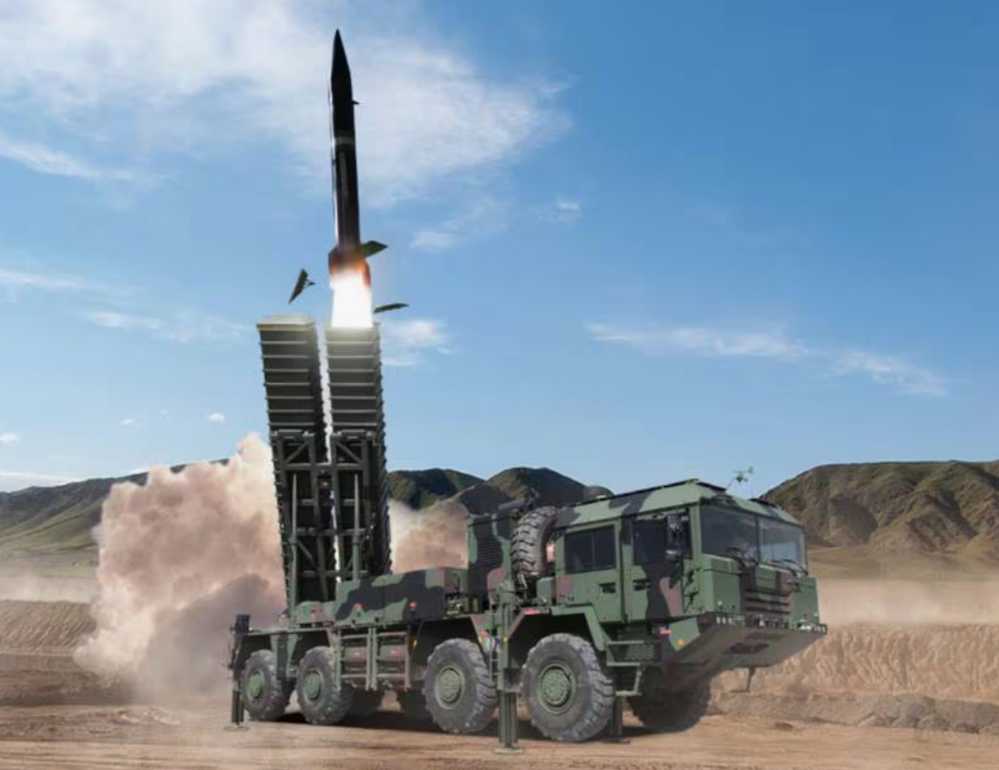
Loktsan’s turnover fell by 1% to only $515 million, and as a result, it dropped two places in the ranking. Among the company’s eye-catching products are the "Bora" surface-to-surface missile ("Khan" missile), TRG-300 "Kaplan" guided rockets, TRG-122 guided rockets, MAM-C small smart ammunition, Cirit 70mm laser-guided rockets, UMTAS and OMTAS medium- and long-range anti-tank missiles, L-UMTAS laser-guided long-range anti-tank missiles, SOM-J precision-guided standoff ammunition compatible with SOM and JSF, Hisar air defense missiles, Turkey’s first domestically produced anti-ship cruise missile-Atmaca and the "Sungur" air defense missile system. Meanwhile, STM ranked 85th in the "Defense News Top 100" in 2019, and fell 7 places in 2020 to 92nd. The company’s defense revenues fell by 14%, from $564 million in 2018 to $485 million in 2019. The company is committed to meeting Turkey’s needs with its high-tech products and being competitive abroad by developing innovative and smart technological solutions. STM has recently been involved in the design, modernization and construction of military maritime vehicles, and its "Kamikaze" suicide drones, innovative satellite technology, radars that can detect targets behind walls, and cybersecurity solutions have attracted attention. FNSS is one of the armored vehicle manufacturers in the Turkish defense industry and entered the list in 2020 at 98th place. The company’s turnover in 2018 was $367 million, and it increased by 2% in 2019 to $374 million. FNSS designs and manufactures efficient, reliable and innovative tracked and wheeled armored vehicles and is one of the world leaders in this field. The company’s products are favored by users in different countries, and more than 4,000 armored fighting vehicles have been delivered to date. FNSS manufactures a wide range of products, from 15-ton tracked armored vehicles to "Kaplan" medium tanks, from 4x4 to 8x8 tactical wheeled armored vehicles, from mobile assault bridges to armored engineering machinery and manned and unmanned turrets. Harvison is another Turkish defense industry company that entered the list for the first time in 2020. The company develops software-based solutions and its turnover increased by 6% last year to US$295 million, ranking 99th.
Summary
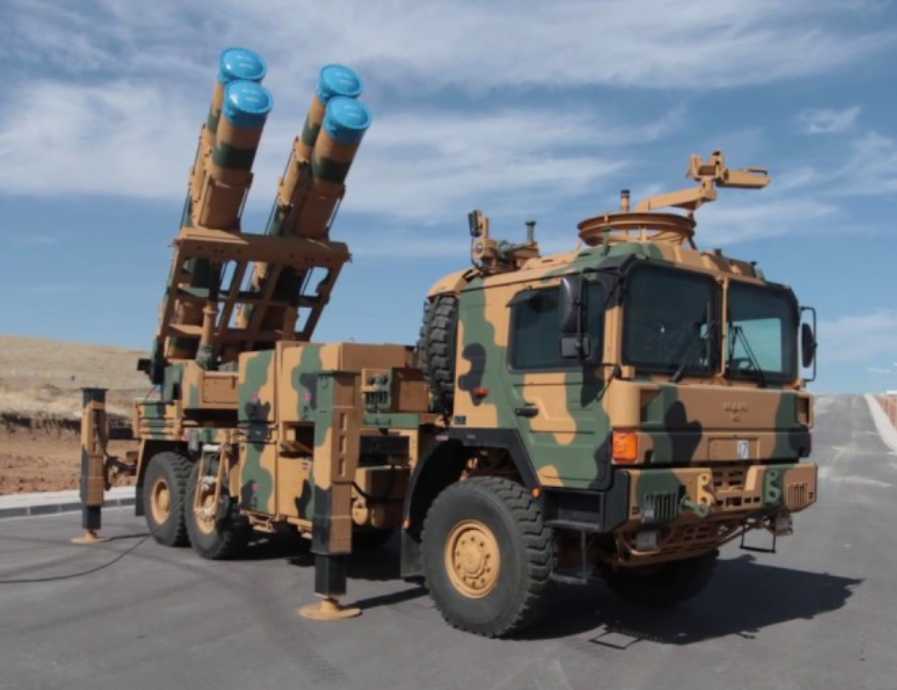
As a world-renowned defense company, Turkey’s Loktsan’s MBRL modular rocket launcher/missile launcher system can launch 122/230/300 mm guided rockets and is compatible with tactical missiles with a diameter of 610 mm. The system has the advantages of short launch preparation time, high system automation, strong maneuverability and high strike accuracy.
Recently, Turkey conducted the first test launch of the TAYFUN (BORA-II project, whose basic design is similar to the "Khan" missile) ballistic missile, and the missile successfully hit a target 561 kilometers away (the maximum design range is 750 kilometers), which means that Turkey is making a breakthrough in the field of tactical missile technology.
With the strengthening of the technical strength of defense industry companies in Turkey and other countries, Turkey’s recently launched drones, rocket launchers, and short-range missiles have good performance and performed well on the Russian-Ukrainian battlefield. Turkey’s military industry is rising in the Middle East.