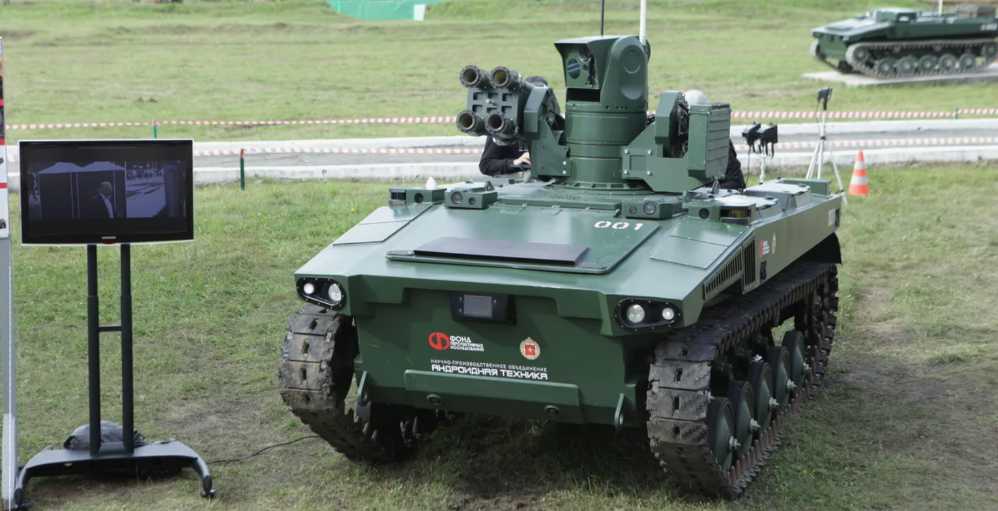

According to a report by Russia’s TASS on February 3, 2023, four "Marker" anti-tank robot UGV (unmanned ground vehicle) platforms have arrived at the battlefield in eastern Ukraine. Dmitry Rogozin, head of the Russian "TsarWolves" research and technology center, said that Russian experts have begun testing the combat algorithms of a group of combat robots. Rogozin said: "The first four ’Marker’ robots will arrive in the area strictly according to plan. We have begun downloading target images, testing combat algorithms within combat robot units, and installing powerful anti-tank weapons." Whether the robot can play a role in the eastern Ukrainian theater as Russia wishes is worthy of continued attention from all parties.
Development Overview and Basic Performance
The "Marker" robot platform is jointly developed by the Russian National Center for the Development of Technical and Basic Robotic Elements and Android Technologies. The robot platform is designed to create a future war model. It adopts a modular design with an open information architecture. One configuration of the test platform is equipped with a machine gun and an anti-tank grenade launcher produced by Kalashnikov. It is expected that more weapon combinations will be tested in the future.
It is worth noting that the turret on the robot can be linked with the rifle carried by the infantry to point at potential targets. An official statement from Android Technologies claims that the robot combat vehicle can "work in pairs with fighter jets and receive target data provided by aircraft sensors" or can be remotely controlled by accompanying personnel. Therefore, the "marking" robot platform can only shoot after the accompanying infantry confirms the target to avoid accidentally injuring friendly forces or civilians. But it can also operate autonomously according to the program design, and the modular multi-spectral vision and data processing system with neural network algorithms can support the robot to operate autonomously.
The mission systems carried on the vehicle include laser warning systems, temperature sensors, day and night infrared (IR) cameras, laser rangefinders, target detection, early warning systems, identification and tracking equipment, etc. This opens up a new way of cooperation between humans and robots, where AI-driven sensors are responsible for detecting and aiming at targets, while humans check, verify and confirm targets before the robot fires. It turns infantry into observers of robots, and robots can move autonomously on the road and become "comrades-in-arms" of soldiers. Android Technologies clearly sees the Marker robot platform as an autonomous learning tool, saying that "the evolution of combat robots is improving the ability to perform tasks in autonomous mode, while the role of the operator is gradually reduced." In addition to installing a large number of cameras on the vehicle body, the Marker robot platform is also equipped with laser radars at the four corners of the vehicle body, as well as a GLONASS satellite positioning and navigation system. In this way, the vehicle has a certain ability to autonomously avoid obstacles, and can also achieve autonomous travel with the help of satellite navigation by pre-planning routes on electronic maps, reducing its dependence on back-end remote control. Thanks to the use of artificial intelligence technology, the Marker combat robot will be able to automatically identify and attack Ukrainian equipment, including Abrams and Leopard tanks. Earlier this month, Rogozin wrote on his Telegram channel that the Marker combat robot will receive a "baptism of fire" on the battlefield in the Donbas region of eastern Ukraine. At the time, he said that the Marker can "operate autonomously", perform combat operations and locate targets 15 kilometers away. The command module developed by Russian companies can control multiple Marker robots at the same time, allowing them to fight in groups. "Our colleagues have developed modules for autonomous movement and motion control for multiple platforms," Boris Vishnyakov, deputy director of the software systems department of the Russian State Scientific Research Institute of Aviation Systems (GoSNIAS), told TASS. According to the expert, they have developed modules for 2D and 3D object recognition, semantic segmentation, automatic self-localization by deep calculation, trajectory construction and passability measurement required by robots. Rogozin told the media that four "Marker" robots will be delivered to Donbass in February, including both reconnaissance and strike versions. First, they will be tested on the training ground, and then in combat.
Thanks to the use of artificial intelligence technology, the "Marker" combat robot will be able to automatically identify and attack Ukrainian equipment, including "Abrams" and "Leopard" tanks. Earlier this month, Rogozin wrote on his Telegram channel that the "Marker" combat robot will receive a "baptism of fire" on the battlefield in the Donbas region of eastern Ukraine. At the time, he said that the "Marker" can "operate autonomously", perform combat operations and locate targets 15 kilometers away. The command module developed by Russian enterprises can control multiple "Marker" robots at the same time, allowing them to fight in groups. "Our colleagues have developed autonomous movement and motion control modules for multiple platforms," Boris Vishnyakov, deputy director of the software systems department of the Russian State Scientific Research Institute of Aviation Systems (GoSNIAS), told TASS. According to the expert, they have developed modules such as 2D and 3D object recognition, semantic segmentation, deep calculation automatic self-positioning, trajectory construction and passability measurement required by the robot. Rogozin told the media that four "Marker" robots will be delivered to Donbas in February, including reconnaissance and strike versions. First, they will be tested on the training ground and then in combat.
"Marker" has a rotating combat module that is able to turn 540 degrees in one second. The robot will autonomously select targets based on the most important priorities and hit them with appropriate firepower. "The ’Mark’ robot can be used with various modules. It can carry machine guns, cruise missiles, military and medical equipment, smoke grenade launchers, and two types of drones, tube-launched and towed," the press office of the Android Technology Research and Production Association told TASS. Earlier, Dmitry Rogozin, former head of the Russian State Space Corporation, said that the "Marker" robotic platform has begun patrolling the Vostochny Space Center. According to him, the "Marker" operates in remote control and autonomous modes. The operational control of this ground combat robot is mainly through the operation control unit to send instructions and receive data transmitted back by the robot platform, thereby realizing the control of the robot platform. Its operation control unit is light and Flexible, including a light control box and a handheld remote control. There is a device similar to the size of a laptop in the control box. Its display can comprehensively display the long-distance images taken by the camera device on the robot, data transmission images and other data. The robot’s movement state can be manipulated through the buttons on the handheld remote control similar to the game console remote control. The operation is very simple, just like playing a computer game.
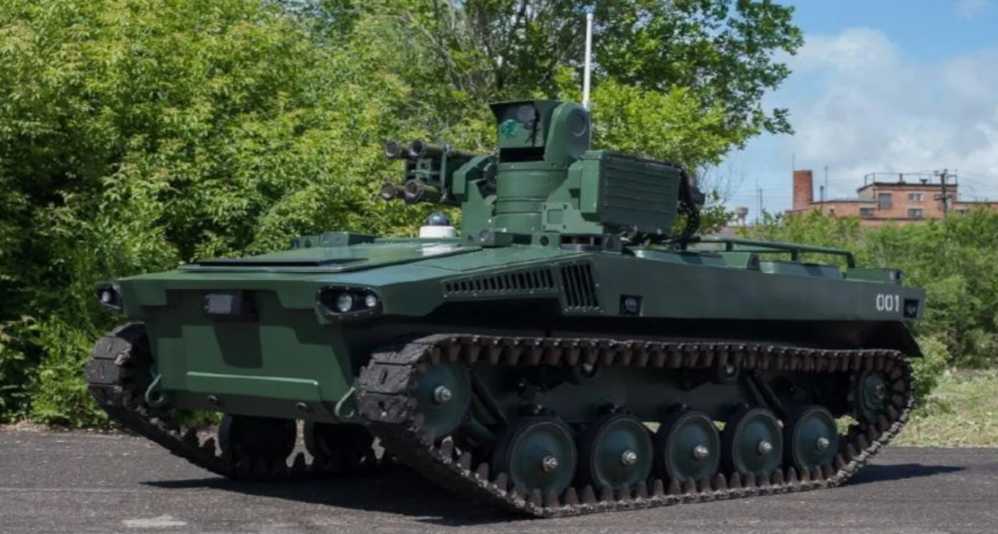
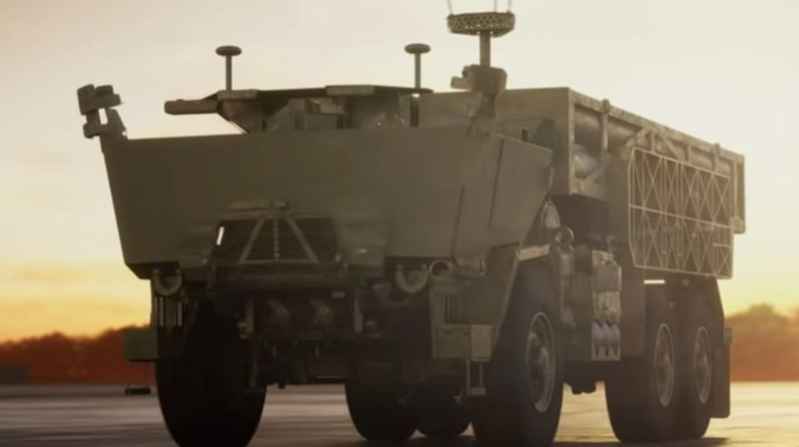
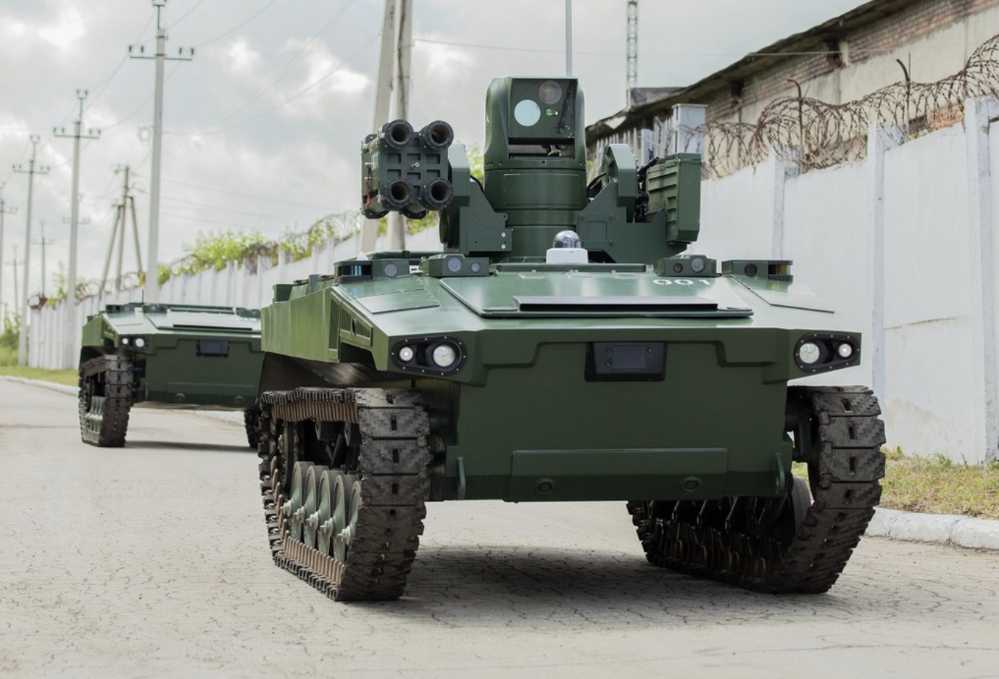
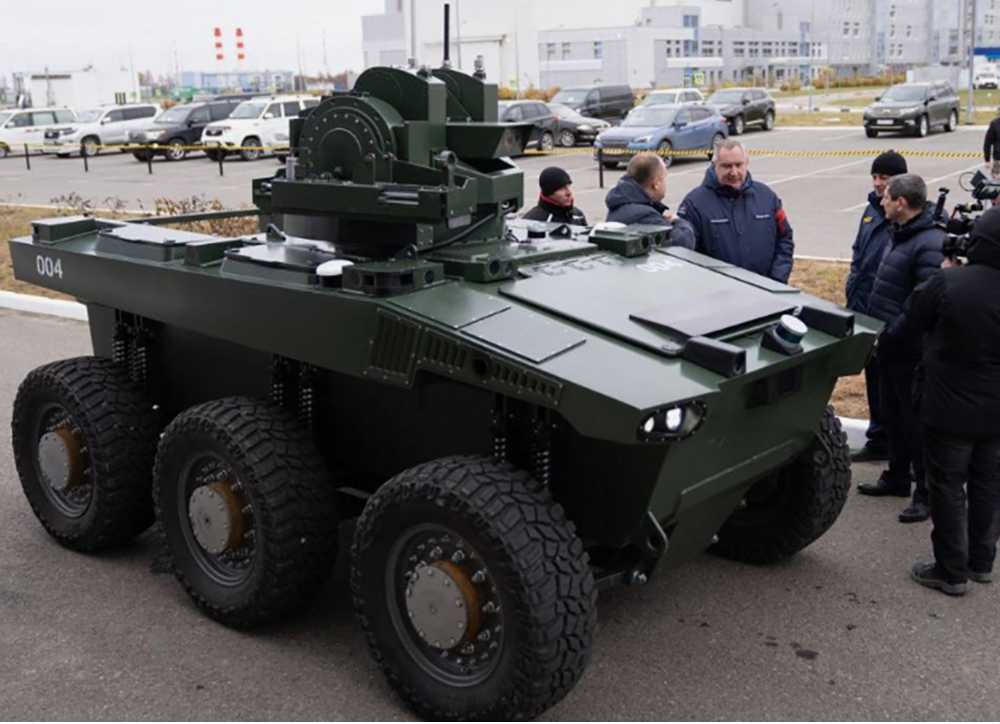
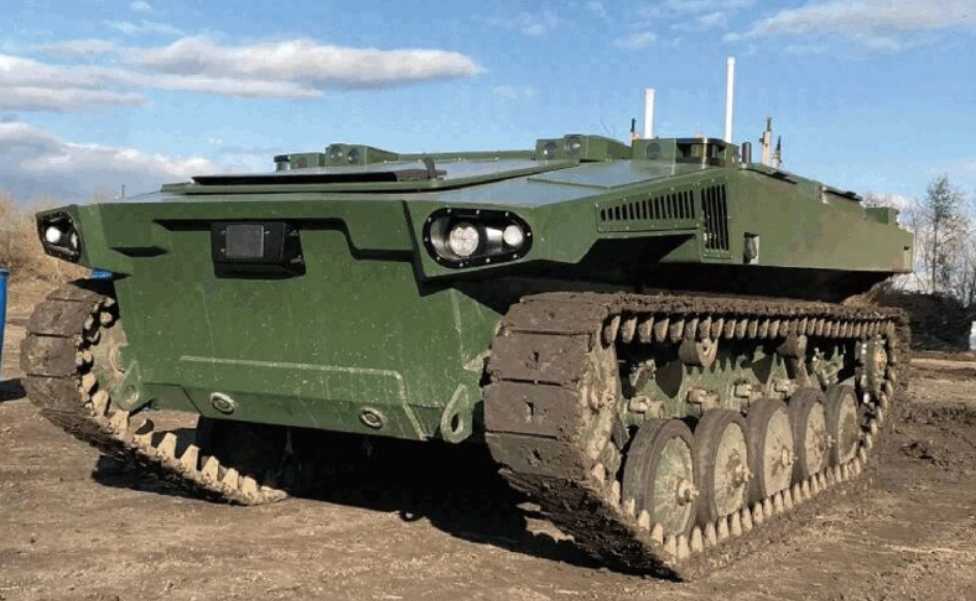
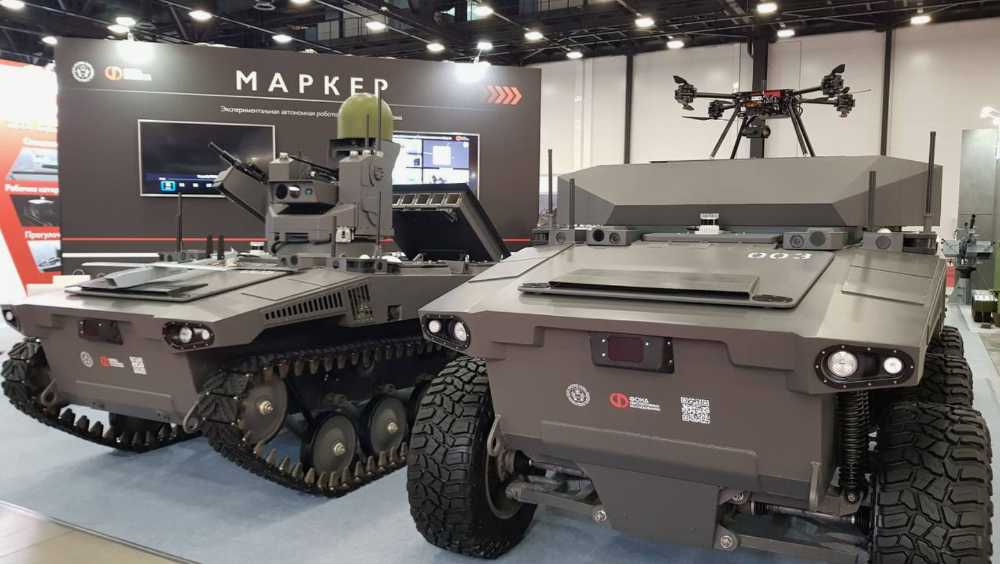
The "Marker" hybrid robot can use a crawler chassis with 5 single-rim rubber-mounted road wheels on each side of the chassis, 2 track rollers on it, the driving wheel at the back and the induction wheel at the front. It can also use a 3-axis wheeled walking system. Its combat weight is more than 3 tons, which is equivalent to the 3.6 tons of the German "Wistle" airborne combat vehicle, and has strong maneuverability. It is reported that it has Russia’s most advanced object recognition and autonomous movement capabilities. The Russian defense industry department revealed that the robot has a maximum range of 1,000 kilometers and an autonomous operation time of 60 hours. The tracked version can reach a maximum speed of 70 km/h, while the wheeled version can reach a maximum speed of 80 km/h.
The anti-tank version of the "Marker" robot is equipped with a remote-controlled weapon station with a 7.62 mm light machine gun on the left and four RPG-26 anti-tank rockets on the right side of the turret. The entire rocket is 770 mm long and weighs 2.9 kg. It is easy to carry, simple to operate, and has strong lethality, making it popular in many areas. The rocket carries a 72.5 mm diameter armor-piercing warhead (1.8 kg), which can penetrate 440 mm armor, 1 meter thick reinforced concrete or 1.5 meters thick brick wall, with a maximum effective range of about 250 meters. Its weapon configuration is similar to that of the "Platform" M tracked combat robot. The "Platform" M combat robot weighs about 800 kg and is equipped with a machine gun and four disposable rocket launchers. The robot is 1.6 meters long and 1.2 meters high and can climb 25-degree steep slope, overcoming 21-centimeter-high obstacles. Soldiers remotely control the robot through a joystick from 1,500 meters away. "Platform" M is a tracked general-purpose combat platform, mainly used for patrolling and reconnaissance, capable of destroying fixed and mobile targets, and its power system uses a large-capacity lithium battery module, which allows it to work continuously for 4 hours. It has participated in actual combat in Syria. The "Marker" robot has a stronger sustained combat capability than it. The wheeled version of the "Marker" robot weapon station is equipped with a 12.7mm machine gun and an AGS-17 30mm automatic grenade launcher. Its transport and servo module is mainly composed of a heavy-duty flatbed trailer and specialized equipment such as detection and maintenance.
Possible combat use mode
On January 25, 2023, local time, the German government issued a statement saying that it would first deliver 14 Leopard 2 main battle tanks from its own inventory to Ukraine. Its ultimate goal is to provide Ukraine with 80 tanks of this type, which are expected to equip two Ukrainian armored battalions. Later on the 25th, US President Biden delivered a speech at the White House, expressing his continued support for Ukraine and announcing plans to provide Ukraine with 31 M1 Abrams main battle tanks. Previously, there has been a view within the United States that these tanks are too difficult for the Ukrainian army to operate and maintain.
In response to the German statement, the Russian Embassy in Germany immediately responded, warning the German side to make an "extremely dangerous decision" , "contrary to the statements made by German politicians that Germany does not want to be involved in this conflict", "will bring this conflict to a new level of confrontation". The Russian Embassy said in a statement that Berlin’s decision proves that Germany and its allies "have no intention of resolving the Ukrainian crisis through diplomatic means". CNN pointed out in its report that unlike air defense systems or anti-tank missiles, these weapons (referring to the Leopard 2 and M1A2 tanks) are not defensive weapons. Like previous artillery and rocket systems (such as HIMARS), they are intended to strike hard at the Russian army in ground offensives. Sending tanks to Ukraine means that the West has taken a new step, and this move shows that "NATO is fearless". Before the United States and Germany, the United Kingdom had announced that it would provide Ukraine with a batch of weapons and equipment, including 14 British-made Challenger 2 main battle tanks. This is the first time that a NATO member state has announced that it will provide Ukraine with "offensive weapons" such as main battle tanks.
Konstantin Gavrilov, head of the Russian delegation to the Vienna negotiations on military security and arms control, said that weapons such as the Leopard 2 tank can be equipped with armor-piercing shells containing uranium. If such ammunition made by NATO is provided to Kiev, "it will be regarded by the Russian side as the use of a nuclear dirty bomb against Russia, and will lead to all (possible) consequences."
In addition to the escalation of verbal warnings, Russia is also ready to show off a new type of "killer weapon." According to the Eurasian Times on January 27, one day after the United States and Germany finally approved the delivery of their respective main battle tanks to Ukraine, former Russian Space Agency Director Dmitry Rogozin said that the tanks would be destroyed by combat robots code-named "Mark." Kremlin spokesman Dmitry Peskov warned that any tanks sent by the United States to Ukraine would "burn like other tanks." Russia has deployed several different models of Kalashnikov-made robots to support its operations in Syria and eastern Ukraine (such as the Ulan-6 mine-clearing robot). In response to Russia’s statement, Samuel Bendett of the U.S. Center for Naval Analysis said that the idea of this artificial intelligence combat robot is to "replace soldiers in dangerous missions and make the mission more effective." Bendett said the Marker combat robot is designed to analyze and interpret military information, but "the point of making such a system is to make it expendable." Bendett said the Russian military has been discussing replacing human soldiers with autonomous weapons for a long time, but Russia - and other countries such as the United States and China that are developing similar technology - are still in the "initial stages" of this process.
Rogozin claimed that the Marker combat robot has been used as a security system at the Vostochny Cosmodrome in eastern Russia, "to control its security perimeter." Bendett said this security function is consistent with the test results achieved in recent years, and the Marker combat robot can perform defensive functions, such as guarding military bases like an "orbital camera." Although Russian developers said the Marker combat robot was tested in a forest area to observe its ability to work autonomously in a more combat-like environment, "it has always been clear that this technology has not yet been achieved." Bendett said: "This type of unmanned ground vehicle (UGV) cannot navigate on its own in a very complex combat environment. Therefore, although the developers of the Mark combat robots claim that these vehicles can drive autonomously and perhaps complete a series of relatively complex tasks, they will not necessarily be ready for the very complex environment on the Ukrainian battlefield. "Such an environment will have counterattacks, jamming and other factors that disrupt the communication between the Mark combat robots and their operators," he explained. Therefore, there is a certain uncertainty about the specific test conditions of the Mark combat robots in these just announced tests. Bendett also said that the Mark combat robot is unlikely to enter the Ukrainian position because some design features make it "vulnerable." "In contrast to the transformation of existing systems, the Mark combat robot was developed from scratch. This combat robot is a relatively small and fragile system-it is not necessarily well protected." Bendett believes that despite some of the touted advantages, unlike the Russian military’s larger and heavier unmanned combat vehicles (such as the Uranus 9), "the weaponry of the Mark combat robot is not powerful enough (the range is too short) and cannot cope with attacks from large-caliber machine guns and rocket-propelled grenades. Therefore, he is skeptical of Rogozin’s claim that the Mark combat robot will be put into actual combat. Bendett judged that it was unlikely that Russia would equip Ukraine with ground combat robots on a large scale. "It looks like most of the existing Marker robots, 3 of 5, will be combat tested in Ukraine and may be lost in combat," Bendett said via email. "The fact that Android Technologies seems to be able to do this suggests that the company is willing to respond to the Russian Ministry of Defense’s needs for improved weapons and tactics, and perhaps also indicates that the company is developing another project based on the actual combat experience of the Marker robot."
How will the Russian robot perform against a well-trained human tank crew? On Twitter, Bendt expressed skepticism, calling the announcement mostly a publicity stunt. "Previous tests of the ’Marker ’ robot - at least those that were public - were against small drones, and these (unmanned ground vehicles) were tested in a targeted manner in complex spaces such as forests, but not on actual battlefields where there are multiple countermeasures. In addition, Western tanks will be part of a combined arms formation, with air support from drones, and will search for any Russian targets, including the ’Marker ’ robot. Rogozin’s earlier claim that the ’Marker ’ was a reconnaissance unmanned ground vehicle is closer to the actual situation. Like most Russian technology companies, the unmanned ground vehicle manufacturer has been hampered to some extent by Western efforts to block the flow of computer components to Russia. But according to a report, these sanctions have had an uneven effect." Bendt said that Android Technologies CEO Yevgeny Dudorov said in December 2022 that technology sanctions had little impact on his company’s ability to obtain key components. "Dudorov believes that the Russian Ministry of Industry and Trade’s investments will enable the domestic robotics industry to catch up with leading companies in about 1.5 to 2 years and fully catch up with market leaders in 10 to 12 years," he said. Bendt called Dudorov’s assessment "optimistic" because "Russia’s high-tech sector continues to rely on imported parts." In fact, 80% of the parts of Android Technologies’ Fedor robot need to be imported from abroad, which will limit Russia’s ability to mass-produce combat robots.
According to the news released by the German Ministry of Defense Twitter account on February 8, 2023, the first batch of German Leopard 2A6 main battle tanks will be delivered to Ukraine at the end of March 2023. After this delivery, the Ukrainian Armed Forces will be equipped with this world-renowned advanced tank. The Leopard 2A6 main battle tank is very suitable for modern warfare, including advanced armor protection, powerful weapon systems, and state-of-the-art communication and surveillance equipment. The Leopard 2A6 has been used by several countries in Europe and is known as one of the best main battle tanks in the world. However, like any military equipment, the Leopard 2A6 also has its advantages and disadvantages, and whether the tank is suitable for any specific mission depends on a series of factors, including the specific requirements of the military operation, the local environment, and the availability of support resources.2 In March 2011, the German company Krauss-Maffei Wegmann handed over the first upgraded Leopard 2A6 main battle tank to the German Army. It is equipped with Rheinmetall’s 120mm L55 smoothbore gun, capable of firing DM53 armor-piercing projectiles (APFSDS-T), giving it an additional combat range of 1,600 meters and greater armor penetration characteristics. The Leopard 2A6 is also equipped with a new fire control computer. The commander is equipped with a PERI-R17A2 two-way stabilized periscope for day and night observation and target identification, which provides a 360-degree all-round field of view. The tank has a "hunter-killer" engagement capability. The tank is powered by a MTUMB873 diesel engine with an output of 1,500 horsepower and is mated to the Renk HSWL3 54 gearbox connected. The tank’s maximum road speed can reach 70 kilometers per hour and its maximum range is 550 kilometers. Russia’s T-90M tank will face a strong opponent, and the "marking" robot can provide it with battlefield intelligence on the front line and reduce Russian casualties.
In addition, Russia will encounter a stronger enemy on the Ukrainian battlefield. According to Larissa Holzky and Martin Murphy in the German Handelsblatt on February 10, 2023, Rheinmetall hopes to deliver its most modern KF51 "Black Panther" main battle tank to the Ukrainian army. "We are discussing the export of the ’Black Panther’ with Kiev," CEO Armin Papage told Handelsblatt. Ukraine not only wants this most advanced main battle tank but also The KF51 Panther tank has an innovative operating concept. It is basically designed for a crew of three: the commander and gunner as well as the driver, and the chassis can provide additional operator stations for weapons and subsystems specialists or command personnel (such as company commanders or battalion commanders). The KF51 Panther tank is designed according to the NGVA standard. The fully digital architecture of the tank enables seamless integration of sensors and effectors within the platform and in networked systems. The operation of sensors and weapons can be quickly transferred between crew members. Each operator station can take over tasks and roles from others while retaining its full functionality. Since the turret and weapons can also be controlled by the operator station, there are plans to develop an unmanned turret version or a fully remote-controlled version of the KF51 "Black Panther" in the future. The main weapon of the KF51 is the 130mm Rheinmetall Future Artillery System, which can destroy the main battle tanks of various countries. In addition, it can also carry weapons such as cruise missiles and drones. If the "Marker" robot encounters the KF-51 on the battlefield, the KF51 with stronger situational awareness will have the upper hand.
Comparison between "Marker" and other Russian robots
At the "Army-2016" defense exhibition, Russia’s Rostec company exhibited the "Uranus" 9 ground unmanned combat vehicle. "Uranus" is 5.12 meters long, 2.53 meters wide, 2.5 meters high and weighs 10 tons. It is equipped with an unmanned turret that can be equipped with a 2A72 30mm cannon, a 7.62mm coaxial machine gun, and AT-9 anti-tank missiles. It can also be equipped with 9K38, 9K333 and other portable air defense missiles according to the needs of combat readiness missions. Its combat weight and weapons and equipment are significantly stronger than those of the "Marker" combat robot. However, this model had a low-level error in the failure to launch an anti-tank missile during testing. "Uranus" 9 is operated by an operator inside a moving vehicle (the distance between the vehicle body and the operator is no more than 3 kilometers). The operator can manually operate the tank in real time, or set it to move on a fixed route through a program.
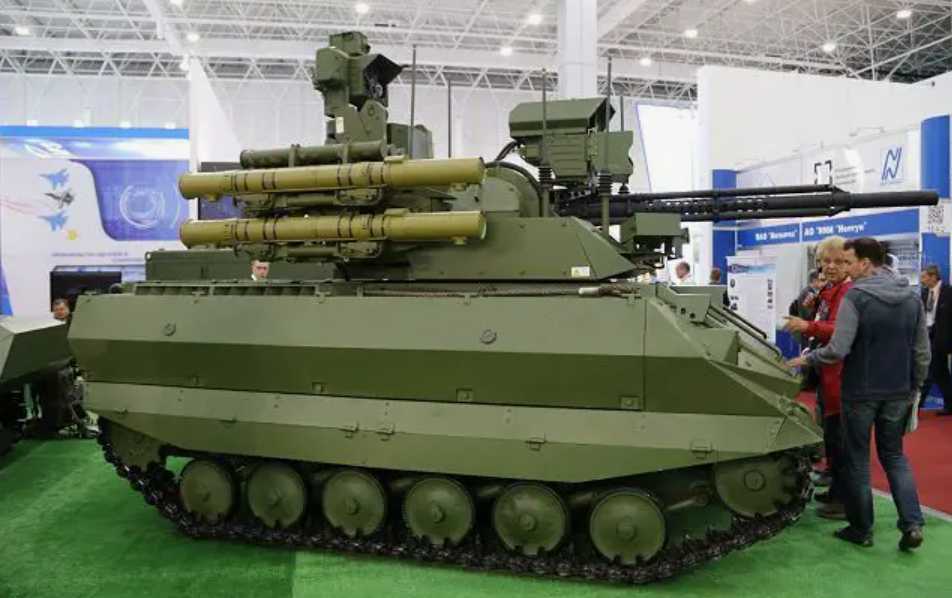
In May 2018, according to Russian state-owned media Sputnik, Russia announced that it would deploy its "Uranus" 9 unmanned combat vehicle to the Syrian battlefield. However, "Uranus" 9 also exposed many problems, the main fault being the unreliable communication system. Although the vehicle claims to be able to operate autonomously along a predetermined route, it is actually mainly based on wireless remote control operations. And remote control operations mean This requires the transmission of commands and data, especially the images obtained by the tank must be transmitted back to the remote control end, which places high demands on communication bandwidth and reliability. The actual control distance of "Uranus" 9 on the battlefield is only 300~500 meters, and link breaks often occur. During the combat period in the second half of 2018 alone, "Uranus" 9 experienced 17 communication link breaks, which also caused delays in the use of weapons and launch failures. Its sighting system also has problems. Although it has a reconnaissance and identification capability of 6 kilometers during the day and 3 kilometers of observation and identification capabilities through thermal imaging channels at night, the actual feedback from the battlefield is that its detection system has an effective reconnaissance distance of no more than 2 kilometers, and because the operator is equipped with a monochrome display, the screen resolution is too low. This is also the reason why Russia One of the reasons why Russia has developed a new "Marker" unmanned combat vehicle. During the "West-2021" strategic exercise jointly held by Russia and Belarus in September 2021, Russia also sent the "Uranus" 9 combat robot to participate for the first time. It is mainly responsible for guarding and protecting logistics facilities such as warehouses and gas stations, as well as military facilities such as communication centers and command posts, and is responsible for anti-drone operations.
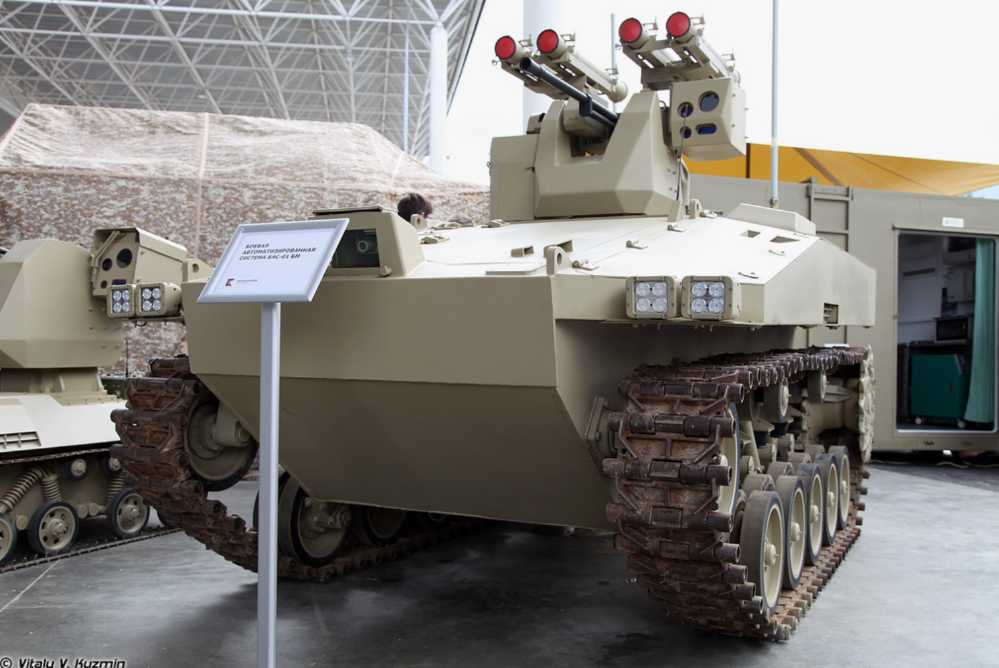
Russian Kalashnikov Company has also developed the BAS-01GBM "Comrade" (Soratnik) armed unmanned vehicle. It weighs about 7 tons, has a maximum speed of 40 kilometers per hour, a maximum range of 400 kilometers, can be remotely controlled from 10 kilometers away, and the detection range of the on-board optoelectronic system is 2,500 meters. The vehicle can be equipped with a 7.62mm PKT/PKTM machine gun or a 12.7mm 6P49Kord heavy machine gun, or a 30mm AG-17A automatic grenade launcher. In addition, the vehicle can also be equipped with the latest developed 40mm 6G27 automatic grenade launcher. If anti-armor missions are to be performed, the vehicle can be equipped with the powerful 9M133M "Kornet" EM (AT-14) anti-tank missile. The vehicle can complete reconnaissance and surveillance missions at the same time. At the same time, it also takes into account fire support, intelligence acquisition, security, patrol mine clearance and obstacle clearance. It is equipped with an unmanned remote-controlled turret with guidance, aiming and shooting functions. In addition, the vehicle can also act in conjunction with other unmanned vehicles (including drones). When performing tasks together with drones, "comrades" can perform reconnaissance missions or provide fire support to troops. It is expected that Russia will put more unmanned combat vehicles into the Ukrainian battlefield to provide reference for the future development of more mature and reliable robot combat vehicles.
Conclusion
Considering that the "Marker" combat robot does not use additional armor or explosive reactive armor, it only has basic armor that looks relatively thin, and its protection is poor, and it is expected to only be able to resist small-caliber rifle bullets. Whether it can successfully hide and ambush enemy tanks on the battlefield in Ukraine where drones are everywhere is still unknown. Of course, no matter how powerful the combat robot is, it still needs remote control of the command module to play its intended tactical role. It is not clear whether it is really possible to use drones for relay remote control. If it is not possible, then it means that the control range of this type of combat robot is relatively limited. How it performs on the battlefield needs further observation.