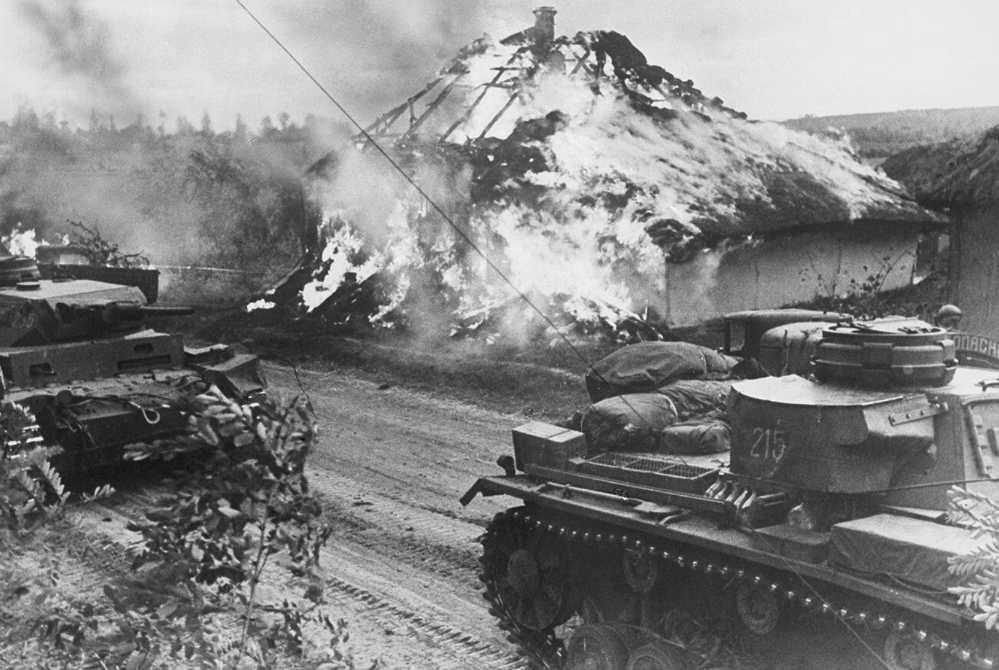

When the German army formulated the "Barbarossa" operation plan to invade the Soviet Union, Leningrad (now St. Petersburg) was listed as one of the most important targets. Hitler wanted to wipe this city, which was regarded as the "cradle of Bolshevism", off the map. Therefore, in the No. 21 directive issued by the German High Command, the task of the Northern Army Group starting from East Prussia was to destroy the Soviet army in the Baltic region all the way and take Leningrad directly. The spearhead of this German army was the 4th Panzer Group.
Target: Dvina River
The Northern Army Group was commanded by Field Marshal Wilhelm Ritter von Lieber. It included two infantry units, the 16th and 18th Armored Groups, and the 4th Panzer Group as the iron fist. The distance from the assembly area to Leningrad is about 700 kilometers, and this is by no means a smooth journey. It is densely covered with swamps and forests, streams and villages.
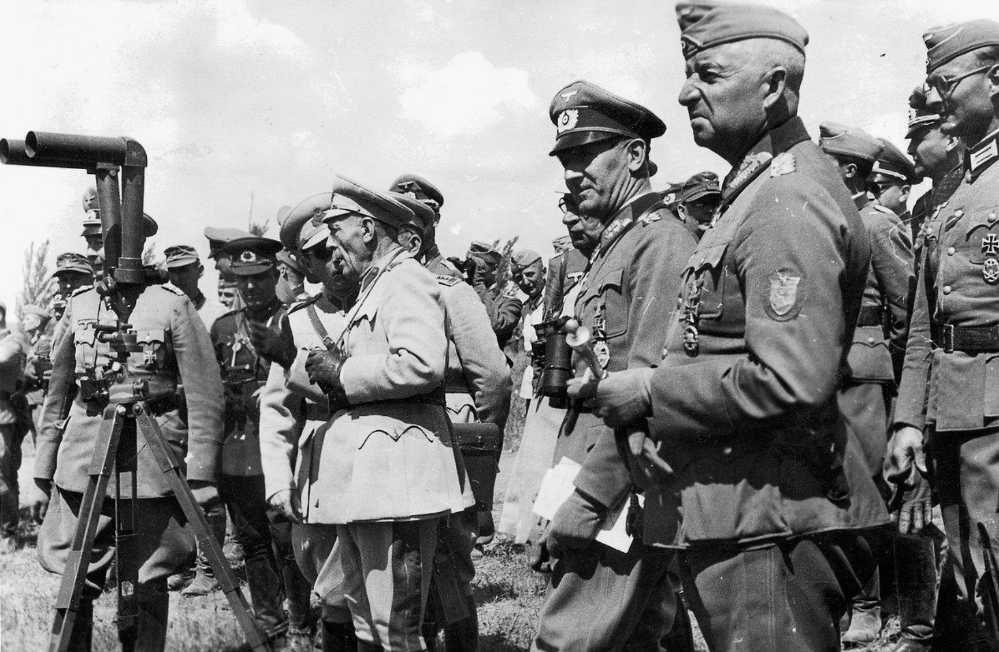
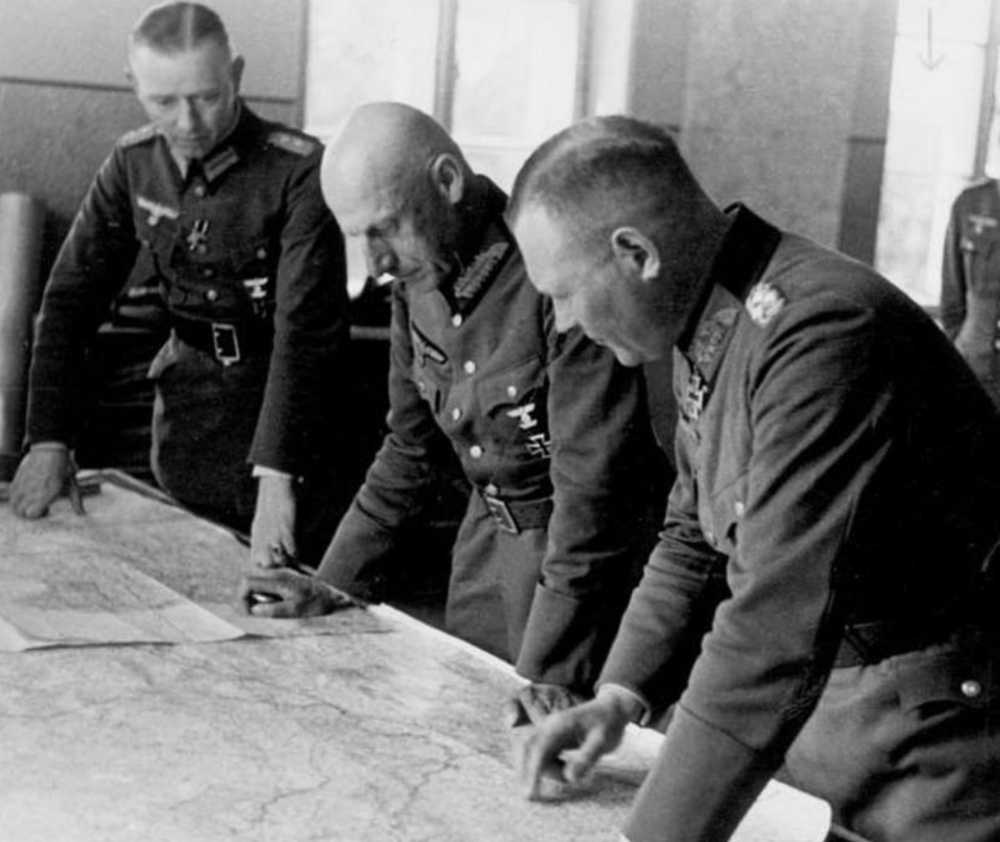
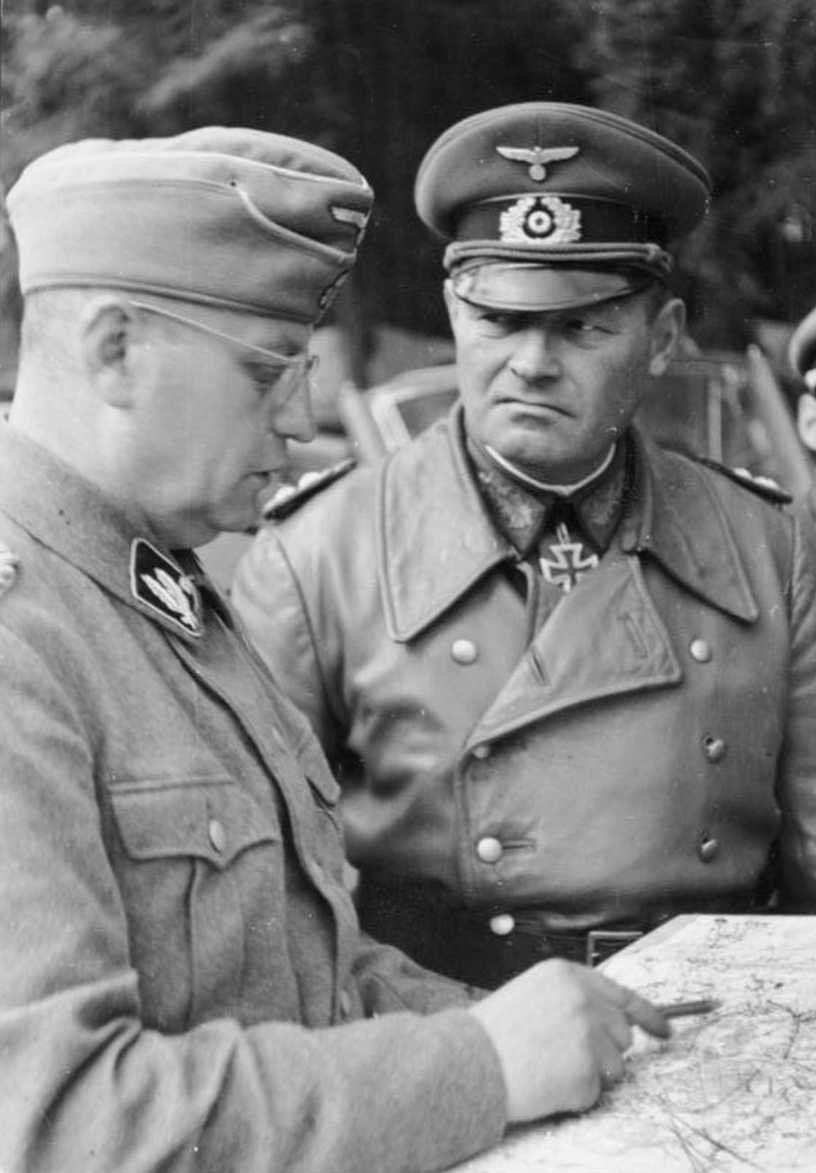
One of the Germans’ top targets was the bridges over the Dvina River. Of the many rivers in the Baltic region, the Dvina River, which originates in the Valdai Mountains in Belarus and flows 1,020 kilometers into the Gulf of Riga, is the most important. It is of great significance for Lieber and his troops to capture the bridges there as soon as possible, because these bridges connect the few good roads in the region. General Erich Hoepner’s 4th Panzer Group was responsible for capturing the intact bridges on the river, which meant that this armored force would sweep across Lithuania and rush at full speed to the Latvian cities of Daugavpils and Jakapils. Hoepner’s command included two mobile forces, one of which was General Georg-Hans Reinhardt’s 41st Motorized Corps, which included the 1st and 6th Panzer Divisions, the 269th Infantry Division, and the 36th Motorized Infantry Division; the other was General Erich von Manstein’s 56th Motorized Corps, which was commanded by General Erich von Manstein, who was considered one of the best tacticians during World War II, and included the 8th Panzer Division, the 290th Infantry Division, the 3rd Motorized Infantry Division, and the "Totenkopf" Division of the Waffen-SS.
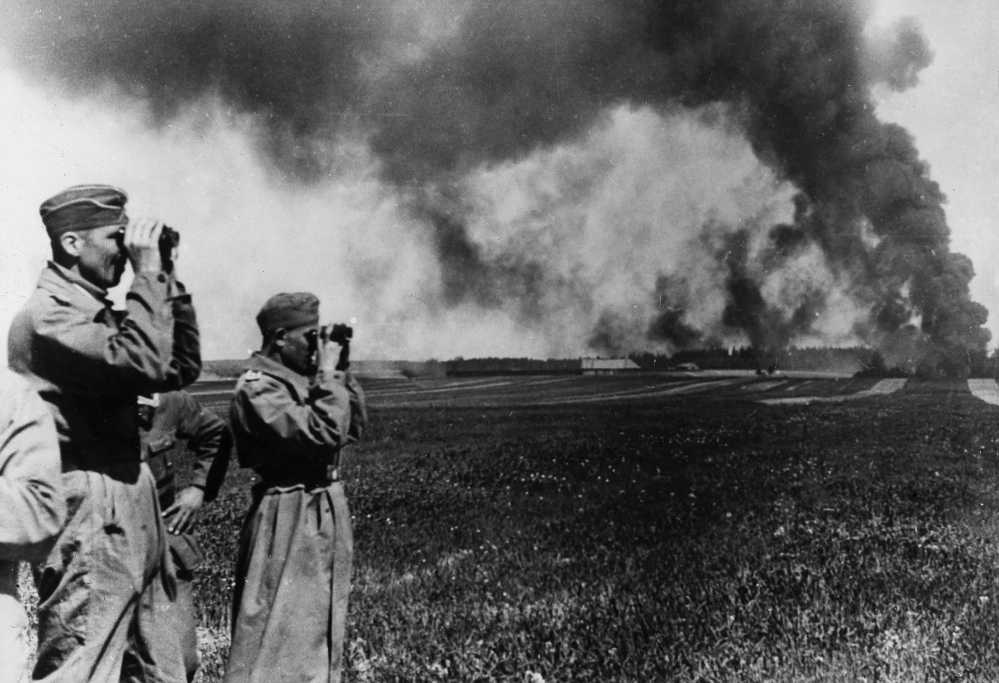
Reinhardt’s mission was to control Jakabils, while Manstein was to capture the Daugavpils Bridge. The infantry of Army Group North accompanied the 4th Panzer Group on both wings. On the right was General Ernst Busch’s 16th Army, which was heading for Kaunas, the second largest city in Lithuania. On the left was the 18th Army, which was advancing towards Riga, the capital of Latvia, led by General Georg von Kuchler.
The Soviet forces facing Army Group North were the forces of the Baltic Special Military District, commanded by Lieutenant General Isaac Kuznetsov, which would become the Northwestern Front at the beginning of the war. Among Kuznetsov’s units, Major General Petrovich Sobenikov’s 8th Army was stationed on the Baltic coastline, with 5 infantry divisions, 2 tank divisions, 1 mechanized division and 2 border regiments; to its left was Lieutenant General Ivanovich Morozov’s 11th Army, with 8 infantry divisions, 2 tank divisions, 1 mechanized division and 3 border regiments; these units were also backed up by Major General Erastovich Berzhanin’s 27th Army, which had 6 infantry divisions.
For the Soviet High Command, the German surprise attack was not an absolute “raid” because several deserting German soldiers had tipped off the Soviet border troops about the impending invasion. In the early morning of June 22, 1941, Lieutenant General Kuznetsov received a vague warning from Moscow asking his soldiers to “secretly enter the basic defense zone.” At the front line, sentries entered the bunkers and waited for orders, but more troops that should have been transferred to the front line did not move because the order from Moscow stated: "Do not fire at the enemy before they take military action."
There is no doubt that such an indecisive arrangement did not help the border guards to deploy. By 3:30 in the morning, only a few front-line commanders learned more about the situation, and it was too late to make adjustments by then. Near the Soviet-German border, the western sky suddenly lit up, and after the flash, artillery shells whizzed past. Soon, a large number of German planes came and dropped bombs on the Soviet positions. Operation Barbarossa and the 4th Panzer Group’s advance towards Leningrad began.
The German army advanced on two fronts
Both Manstein and Reinhardt knew that speed was crucial to capturing the bridge over the Dvina River. Due to the poor quality of roads in the Baltic region, both motorized armies had to rely on their own mobility to overcome the difficulties on the way forward.
Before the mechanized forces could move, the infantry had to seize the Soviet frontier positions along the Neman River. The Neman River runs along the border between East Prussia and Lithuania, but the Germans were undeterred by this natural barrier. As the assault troops began to cross the river, the ill-prepared Soviet soldiers offered little resistance. The bridges over the Neman River fell into the hands of the German infantry, providing the needed passage for the tanks and armored vehicles of Manstein and Reinhardt.
By 06:00 on the morning of the 22nd, Manstein reported to Hoepner that the 8th Panzer Division, commanded by Brigadier General Erich Brandenburg, had captured Jurbakas and that the 290th Infantry Division, commanded by Major General Theodor von Redder, was passing through the village of Mittuya, with the two forces about 12 kilometers apart.
At about 15:00 in the afternoon, the 8th Motorcycle Battalion of the 8th Armored Division led by Lieutenant Colonel Rudolf Kutt captured a bridgehead across the Dubysa River in Seredis; in the evening, the battle group led by Lieutenant Colonel William Chrysoly obtained an important crossing at Ariogara. In this way, the 56th Motorized Army can smoothly cross the Dubysa River and continue to advance towards Daugavpils. In Manstein’s words, this is "advancing at a record speed."
The vanguard of the 8th Armored Division continued to advance after crossing the river, and engaged a Soviet unit near Zasina, about 2,000 meters northeast of Arrigola. Due to the harassment of light tanks and anti-tank guns, the 8th Armored Division’s first day of Operation Barbarossa ended at 23:00 that night.
At the same time, most of the 290th Division continued to cross the Dubissa River. Although Major General Kurt Young’s 3rd Motorized Infantry Division was delayed when it set off, it also arrived overnight. In the southeast, the SS "Skull" Division led by Brigadier General Theodor Eicke was also on the way.
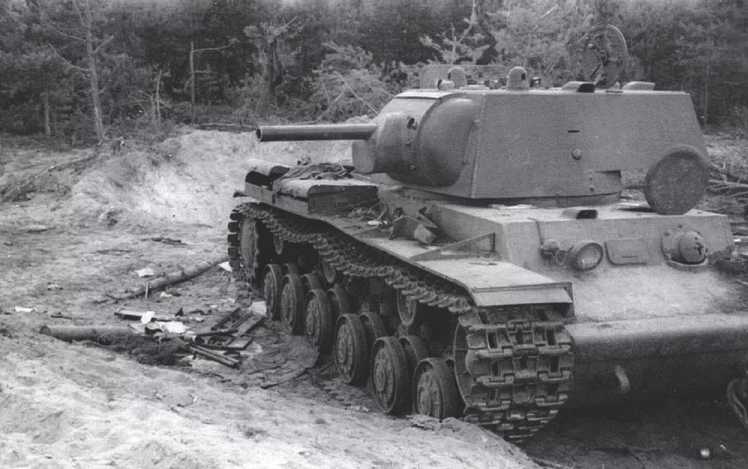
In contrast, Reinhardt’s progress was slow. The four divisions of the 41st Motorized Corps launched an attack from the Tilsit area in East Prussia, and encountered strong resistance from a single Soviet infantry division after crossing the border. After that, the 6th Panzer Division commanded by Brigadier General Franz Landgraf advanced to 4 kilometers south of Taurag, while Major General Friedrich Kirchner’s 1st Panzer Division was still directly west of the 6th Panzer Division. Although the 6th Panzer Division opened the road to Taurag, the counterattacks launched from time to time by local Soviet troops made it difficult for the Germans to advance as planned.
On the Soviet side, the sudden artillery and air strikes of the German army destroyed the communication network of the Soviet army. When the German armored forces quickly penetrated, Morozov’s 11th Army did not receive any combat orders at all. A prominent example is that Colonel Ozerov, commander of the 5th Division of the 16th Army, watched the German army pass his front position nearby, but was told by the military on the radio, "We advise you not to participate in combat operations. Otherwise, you will bear the consequences."
However, Kuznetsov began to work hard to gather troops to launch a counterattack. On the evening of the 22nd, he asked the 8th and 11th Armies to stop the German attack at all costs. When Reinhardt’s troops moved to Raseniai northeast of Taurag, the 12th Mechanized Corps (under the 2328th Tank Division and the 202nd Mechanized Division) under the command of Major General Mikha Shestepalov rushed to block it, and the 3rd Mechanized Corps (under the 2nd, 5th Tank Divisions and the 84th Mechanized Division) of the 11th Army also entered the area under the leadership of Major General Vasilyevich Kurkin to intercept the Germans.
Armored Battle of Raseniai
In order to avoid the German aircraft that had already gained air superiority, Kuznetsov ordered the two mechanized armies to break up into smaller units and march towards Raseniai. But the air raid was inevitable. Colonel Olenko, the commander of the 23rd Tank Division, watched his 40 tanks and armored vehicles being blown up by low-flying "Stuka" dive bombers, but he was completely helpless.
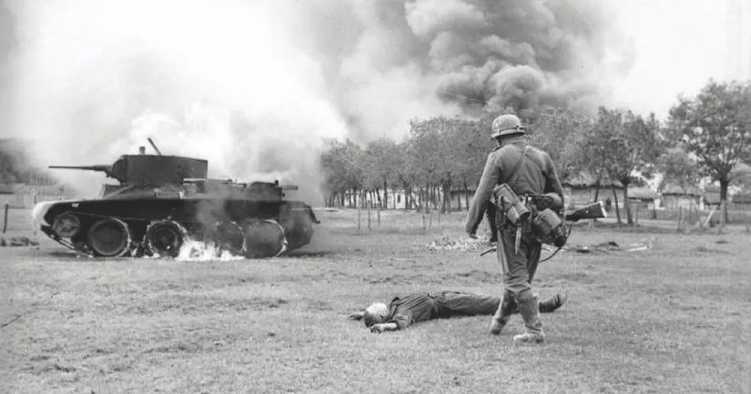
The tanks that survived the air raid continued to advance. As the German and Soviet armies advanced towards Raseniai separately, a four-day armored duel began. Facing the Soviet mechanized forces that survived the catastrophe, the German 4th Armored Group suffered a head-on blow for the first time on the Eastern Front: the terrible Soviet heavy tanks appeared.
Although the Soviet main battle tanks at that time were still the lighter T-26 and T-28, many units had received a batch of T-34 medium tanks, as well as KV-1 and KV-2 heavy tanks. The Soviet 2nd Tank Division, which the German 6th Panzer Division encountered near Skodwell, about 20 kilometers west of Raseniai on June 23, was equipped with some KV heavy tanks.
Under the command of Colonel Nikolayevich Solenkin, the division commander, the KV heavy tanks launched an attack. The 6th Panzer Division was mainly equipped with the Czechoslovak-made PzKpfw35(t) medium tanks. The 37mm main gun of this tank was completely ineffective against the "KV monster" weighing 45 tons, and the same was true for anti-tank guns of the same caliber. Solenkin’s tanks ran rampant on the battlefield as they pleased, and when the shells ran out, the KV tanks directly crushed the German anti-tank guns.
Faced with such a strong enemy, the 6th Armored Division suffered greatly. Only one KV-1 tank cut off the 6th Armored Division’s supply line to the Dubissa bridgehead. This heavy tank held out for a whole day, withstanding every attack method the Germans could think of. Finally, the German soldiers leveled an 88mm anti-aircraft gun and fired straight at it, which silenced the KV-1.
The 1st Armored Division also suffered. Its commander, Major General Kirchner, wrote: "The KV-1 and KV-2 we first encountered here were really amazing. One of our armored companies opened fire at about 800 meters, with no effect at all... Soon the tanks closed in at a close range of 50-100 meters... The Russian tanks continued to advance, and all armor-piercing shells bounced off them."
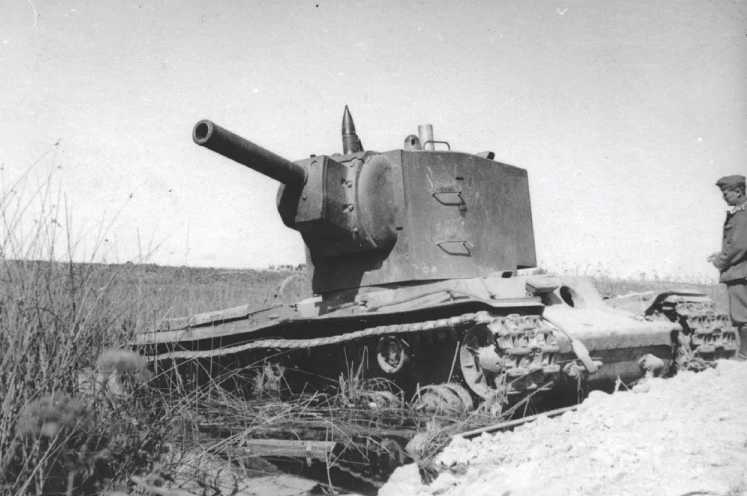
However, the Germans eventually found a way to deal with these behemoths, which was to concentrate firepower to destroy the tank’s tracks, and then have multiple infantrymen move forward to blow it up with explosives. After many days of fighting, Colonel Solenkin lost most of his tanks, and he himself was killed in the battle on the 26th.
After realizing that the flank might be exposed, the Soviet troops withdrew from the battlefield, and the German armored divisions made further progress. On the afternoon of the 26th, Kirchner’s Armored Division joined forces with Brigadier General Otto Ottenbach’s 36th Motorized Infantry Division to surround most of the 3rd Mechanized Army. At this time, many Soviet tanks had run out of fuel and became targets for German artillery on the battlefield.
Major General Kurkin’s 3rd Mechanized Army suffered heavy losses. The 2nd Tank Division no longer existed, with only one tank and 400 soldiers returning to the defense line; Colonel Fedorov’s 5th Tank Division and Major General Fomenko’s 84th Mechanized Division were both severely reduced in personnel. The 12th Mechanized Army, which escaped the trap, was in a slightly better situation, but it was also weak. According to the battle report of the 4th Armored Group, it destroyed hundreds of Soviet tanks and armored vehicles in the several days of fighting in La Senego.
Surprise attack on the Daugavpils Bridge
While Reinhardt was engaged in a bitter battle with Soviet tanks, Manstein continued to advance, his troops penetrated the relatively weak part of the Soviet defense line, and after an incoherent and fierce battle with the Red Army border guards, the 56th Motorized Army broke through the opponent’s uncoordinated counterattacks and continued to advance. By noon on June 24, the vanguard of this armored force had penetrated 170 kilometers into Lithuania and was about 130 kilometers away from the Daugavpils Bridge.
Manstein ignored the fact that he was far ahead of his friendly troops and kept pushing his troops forward without protecting his flank. His order was simple - "keep moving forward at all costs."
At the forefront of the 8th Armored Division was a special detachment led by Lieutenant Hans-Wolfram Knak. In the early morning of June 26, 26-year-old Knak and his men drove two captured Soviet trucks to Agelpils on the Dvina River. This detachment came from the German "Brandenburg" Training Corps. They had received special warfare training before the war. The soldiers wore Red Army uniforms and spoke fluent Russian, so they were able to pass through the Soviet fortifications smoothly.
The trucks drove onto the bridge on the outskirts of the city. Just as the first truck was about to reach the east side of the bridge, the sentry opened fire on it. Knak’s men jumped off the truck and fired back with their weapons. The second truck stopped in the middle of the bridge, with many casualties, but the survivors rushed to the east and worked together to repel the Soviet soldiers at the sentry. Then, the Germans skillfully dismantled the explosives fixed to the bridge piers by the Soviet engineers.
A Soviet mechanized unit tried to regain control of the bridge, but the follow-up forces of the 8th Armored Division arrived in time and the Germans completely controlled the Taugelpils Bridge. Manstein achieved his important mission in the early stage of the operation, but Knak did not survive the day. He was killed by a stray bullet at noon that day.
As the armored units crossed the bridge, the 290th Infantry Division followed closely behind. Although the infantry could not catch up with the tanks, their actions further tore through the Soviet defenses in front of them and ensured the safety of the 56th Motorized Army’s supply line. Now, Manstein began to march his troops to Dvinsk.
Hitler, who was accustomed to intervening in specific war affairs after hearing about Manstein’s success, began to interfere in the operations of the Northern Army Group. In response, General Franz Halder, the Chief of the German Army General Staff, recorded in his diary: "The Führer wants to throw all the armored units in the north to Dvinsk."
In other words, Hitler wanted Reinhardt to move closer to Manstein, but Marshal Lieb refused. Reinhardt had just defeated Kuznetsov’s tank unit in a hard battle, and the road to the Jakabils Bridge was open, so there was no reason to move at this time. Moreover, approaching Manstein meant crossing large woodlands, which was difficult for the armored forces. Therefore, Lieber asked Reinhardt to continue with the original plan.
Breakthrough and pause
After a short rest, Reinhardt’s troops resumed action on June 27. After defeating a Soviet mechanized unit, the battle group of the 1st Panzer Division under the command of Brigadier General Walter Krueger opened the door to the Dvina River. At 4:15 am the next day, the 1st Battalion of the 113th Infantry Regiment, led by Major Frans Eckinger, began the battle for the Jakabils Bridge. As in Taugelpils, the Germans tried to seize the bridge by pretending to be Red Army troops, but this time the defenders were not fooled and the two sides exchanged fierce fire.
Soon after, the 113th Regiment deployed more troops, and the defenders of the bridge were slowly pushed back, but the engineers were ready to blow it up. When the German offensive became unstoppable, a series of loud noises shook the entire area - the Jacobels Bridge was blown up.
As a result, the German army could only rely on assault boats to force a crossing. With the strong support of their own artillery, Major von Kittel led the 2nd Battalion of the 113th Regiment to establish a bridgehead, using it as a fulcrum, and the German reinforcements were able to cross the river, albeit slowly. As more and more combat units arrived in the Jacobels area, Reinhardt was able to control the crossing.
Meanwhile, Manstein’s troops were strongly challenged. A part of Major General Berzhanin’s 27th Army, supported by Major General Lelyushchenko’s 21st Mechanized Army, launched a counterattack on Taugelpils and briefly controlled the northern suburbs of the city. However, the Germans stabilized the situation due to the timely entry of the "Totenkopf" Division, and Lelyushchenko’s tanks were repelled with heavy losses. The battle report of the 56th Motorized Army stated: "The vast majority of the city has been destroyed."
The first important goal on the way to Leningrad has been achieved. The Germans have destroyed most of the Soviet troops in Lithuania and controlled the passage over the Dvina River. Lieb’s armored forces are ready for the next stage of the operation, but Hitler intervenes again.
Hitler’s feelings about the progress made by Army Group North are more nervous than excited. The enemy may indeed be in chaos, but the military map shows that the two arrows extending far to the north of Reinhardt and Manstein’s troops seem to be isolated and weak. He believes that it would be best for the two motorized armies to be united, or at least to move in unison.
After defeating Lelyushchenko’s mechanized troops, Manstein, who was in Taugelpils, was ready to advance northward, but he was told to wait in place until most of Reinhardt’s troops could resume action. Manstein waited until July 2 to be allowed to resume the advance, with the goal of Pskov, about 275 kilometers northeast of Gelpils, and Reinhard would also advance from Jakabils to Pskov. While the German armored forces were resting and pausing, the Northwestern Front was deploying considerable manpower to Pskov in order to rely on the local "Stalin Line" to block the invaders. The 22nd Army (180th and 182nd Infantry Divisions) of the 27th Army (led by Major General Pavlovich Dukhanov) advanced to Pokhov near Pskov; Major General Maksimovich Kachalov’s 24th Army (181st and 183rd Infantry Divisions) was located in Ostrov, about 55 kilometers south of Pskov; the 41st Army (111th, 118th and 235th Infantry Divisions), as a reserve force, also rushed to Pskov under the command of Major General Stepanovich Kosobutsky.
The command structure of the Northwestern Front was also reorganized. Kuznetsov was relieved of his command due to the setbacks in the first week of the war. His successor was Sobenikov, the former commander of the 8th Army, and the 8th Army was handed over to Lieutenant General Sergeyevich Ivanov, the former deputy commander of the Southwestern Front.
At the same time, according to the instructions from Moscow, the 1st Mechanized Army, which was originally stationed in Leningrad, was led by Major General Lvovich Shernavsky and moved towards Pskov. Its vanguard, the 3rd Tank Division, under the command of Colonel Andreev, entered a woodland about 16 kilometers southwest of Pskov.
Fierce Battle in Pskov
The advancement of the 4th Armored Group was increasingly hindered by complex terrain. The armored and motorized divisions could not count on the few roads and railways in the area, and always had to pass through densely wooded or swampy areas. Despite this, the Germans continued to make new progress while repelling the Soviet counterattack.
Reinhardt’s troops had a high-grade highway available, and their armored spearheads could advance at a faster speed. On July 4, the 41st Motorized Army began to attack Ostrov. At 17:00 that afternoon, the 1st Armored Regiment of the 1st Armored Division entered the city of Ostrov, but in the southeastern suburbs of the city, Soviet troops still relied on the Velikaya River and the bunkers and anti-tank trenches of the "Stalin Line" to continue to hold on.
The defenders were even able to launch a counterattack. According to the report of the German 1st Armored Division, the division was under tremendous pressure from Colonel Ivanov’s 111th Infantry Division and Colonel Andreev’s 3rd Tank Division. The formidable KV-1 and KV-2 heavy tanks played a role again, causing the 1st Company of the German 37th Anti-Tank Battalion to suffer heavy damage, and its 37mm anti-tank guns were almost completely destroyed. The situation was saved by the timely intervention of the 3rd Battalion of the 73rd Artillery Regiment. The battalion commander, Major William Short, asked his field guns to shoot at close range, allegedly destroying 12 tanks and armored vehicles.
On the 7th, Reinhardt completely cleared the Ostrov area, and then he was ready to continue his march towards Pskov. Reinhardt divided his troops into three routes: the 36th Motorized Infantry Division was on the left, the 1st Armored Division was in the middle, and the 6th Armored Division was on the right wing.
In Manstein’s theater of operations, the German army had a hard time advancing. According to the established arrangement, Manstein should cover Reinhardt’s weak right wing. He chose to advance to Sebesh and Opochka, trying to bypass the front of the "Stalin Line". However, the local terrain was complex, and the 3rd Motorized Infantry Division led by Major General Kurt Young had to stop and even change direction, which made the 56th Motorized Army’s advance fall behind schedule.
It was not until the early morning of the 8th that the 8th Armored Division arrived at the banks of the Velikaya River, and the tankers hoped to capture the key bridge in a storm. But as the German tanks approached, the engineers of the 50th Motorized Corps of the 1st Mechanized Corps detonated explosives, and when the largest highway bridge in the area collapsed, several German tanks that had rushed onto the bridge were carried into the river.
Outside Pskov, the 41st Army, supported by the remnants of the 1st Mechanized Corps, launched a blocking attack on Reinhardt’s troops, but the engagement was ineffective. While the German 1st and 6th Panzer Divisions tore through the Soviet mechanized forces, Major General Ottenbach led his 36th Motorized Infantry Division into Pskov and was involved in a house-to-house street battle. The defenders fought tenaciously, and the Germans had to call in "Stukas" to dive bomb residential buildings. After suffering heavy losses, the remaining Soviet troops abandoned the burning Pskov on July 9 - the 4th Panzer Group took another step towards Leningrad.
So far, the tempting victory seemed not far ahead. According to the German war report, the Northwest Front, which consisted of 23 divisions, had about 74,000 dead or missing, and tens of thousands of others were injured. Among the divisions that initially participated in the war, only 7 divisions were close to full strength, and 11 divisions had only 2,000 to 3,000 people left to continue fighting; many of the 14 newly formed divisions that were deployed to the front line were also severely damaged. The entire Northwest Front suffered very serious equipment losses, including nearly 2,500 tanks and various armored vehicles.
After achieving phased achievements, General Hoepner received new instructions from the Northern Army Group Headquarters. In the next step, the 4th Panzer Group will launch a two-way attack, Reinhardt will attack Luga, and Manstein will attack Lake Ilmen in a flanking maneuver.
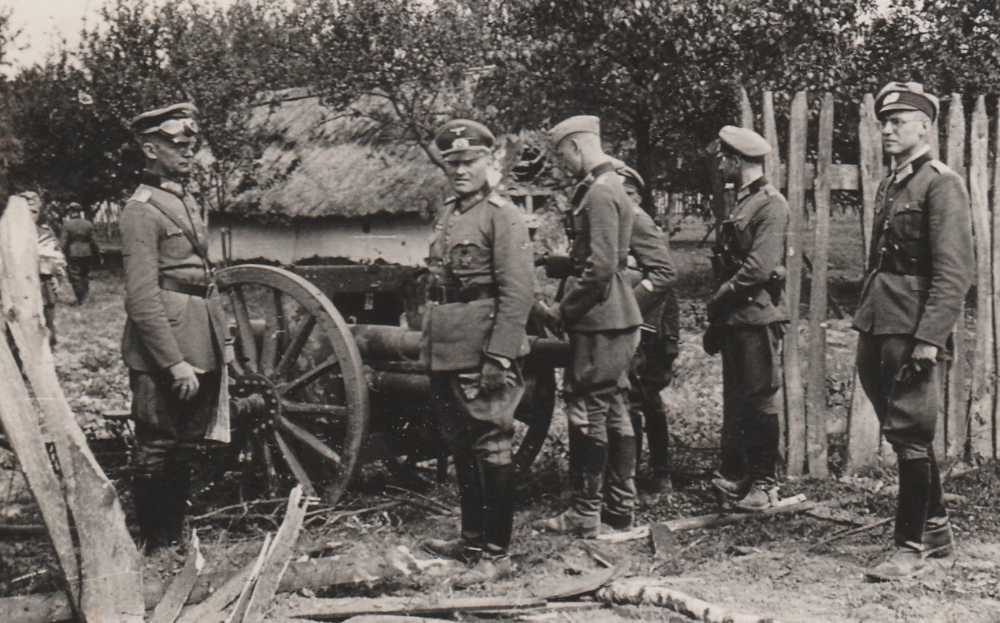
The "Wall" of Luga
Luga is located about 95 kilometers south of Leningrad and is another fulcrum on the Soviet defense line. When the battles of Ostrov and Pskov were still going on, the Soviet army had already built another defense line along the Luga River. The defense line was 5 to 6 kilometers deep and consisted of anti-tank trenches, cross-fire points and minefields. Lieutenant General Mikhailovich Popov was responsible for commanding the entire defense line, and his deputy Lieutenant General Pavlovich Piadshev led a "Luga Action Team" as a mobile reserve.
On July 10, Reinhard received strong support. General von Chapius’s 37th Army was transferred from the 18th Army to the 4th Panzer Group. The 41st Motorized Army took advantage of the situation to repel the Soviet 118th Infantry Division, which had just been transferred from the Moscow Military District, thus opening a gap in the front line and opening the road to Luga.
In order to stop the Germans, Colonel Grubev’s 90th Division was ordered to plug the loophole, but the unit was attacked by the German Air Force on the way and suffered heavy losses. The 1st and 6th Armored Divisions that poured into the gap in the defense line accelerated their advance towards Luga. On their right wing, the 58th Regiment of the 36th Motorized Infantry Division advanced towards Gdov. During the day on the 12th, the 90th Division began to block the 1st Armored Division, but the Soviet infantry could not stop the German tanks. By the evening of the same day, the 1st Armored Division had advanced to 30 kilometers southwest of Luga, where it stopped to rest.
Manstein’s division, on Reinhard’s right, was moving toward Lake Ilmen. The 3rd Motorized Rifle Division captured Pokhov after a very fierce battle, then turned north, while the 8th Panzer Division advanced toward Solz, about 50 kilometers southwest of Novgorod. By the 14th, after overwhelming the enemy in front of them, the tanks of the 8th Panzer Division drove into the streets of Solz.
Meanwhile, Reinhardt ran into a "wall" at Luga. Multiple attacks by the 41st Motorized Corps failed to penetrate Luga’s outer defenses. Lieutenant General Piadshev’s "Luga Action Team" fought tenaciously, and was also reinforced by the fresh forces of Major General Gavrilovich Lazarev’s 10th Mechanized Corps (21st, 24th Tank Divisions and 131st Mechanized Divisions), as well as the resilient remnants of the 41st Army.
Frustrated, Reinhard turned his attack to Sabsk and Kingisep northeast of Luga, trying to outflank the defenders from the outside. Leading the way were the Kruger Kampfgruppe of the 1st Armored Division and the Kampfgruppe of the 6th Armored Division led by Colonel Erhard Laus. These troops repelled the Soviet counterattack southeast of Lake Samro and captured several villages such as Liadi and Alessino. The 36th Motorized Infantry Division followed.
On July 15, the 1st Battalion of the 113th Regiment, as the vanguard of the Kruger Kampfgruppe, fought a fierce battle with the Soviet troops stationed in Sabsk under the command of Major Eckinger. It was not until the evening of the same day that Eckinger was able to control Sabsk after being reinforced by the 2nd Battalion, and then established a bridgehead on the other side of the Luga River.
Major General Kirchner, the commander of the 1st Armored Division, who received the report, happily went to the front to inspect. However, his car was hit by shell fragments on the way to Sabsk. Kirchner, who was seriously injured, handed over the command, and Kruger became the temporary commander of the 1st Armored Division.
On the other hand, the Soviet High Command in Moscow had realized that although the Luga defenders put up a resolute resistance, they could not hold on for too long, so they ordered a new line of defense to be built outside Leningrad. Soldiers, workers, and the elderly and young people in the city worked together to repair fortifications between the mouth of the Luga River and Chudov, and finally laid a new position consisting of trenches, bunkers, minefields and anti-tank positions on the Moscow-Leningrad highway, about 125 kilometers southeast of Leningrad.
Is it a division or a combination?
While Reinhardt was working to consolidate the bridgehead across the Luga River, Manstein was heading towards Novgorod. The 8th Panzer Division, which was leading the way, was counterattacked by the Soviet 11th Army and was repelled, but the front was frustrated. Moreover, the Ludwigs were in danger of being further isolated, and the opponent must have noticed their long, almost undefended flanks.
On the morning of July 15, Manstein received a telegram from the 8th Panzer Division at his headquarters in Solz: "In our rear, 3 kilometers east of Borovichi, the logistics column is using machine guns and mortars to resist the enemy’s attack." This sudden attack threatened the supply line of the 8th Panzer Division and could separate the division from the rest of the 56th Motorized Army.
Meanwhile, Solz was under attack from the north, with more Soviet troops reportedly approaching the south of the city, and the 3rd Motorized Infantry Division also claimed that it had encountered "fierce attacks" on its way. Manstein decided to abandon Solz and instead establish defensive positions on the southern outskirts of the city.
In fact, the Soviets were trying to isolate and even destroy the 56th Motorized Corps. Not only were several new infantry divisions involved in the operation, but also Major General Gordivich Horutsenko’s 220th Mechanized Division, Andreev’s 3rd Tank Division, and Colonel Bunin’s 21st Tank Division.
In order to deal with the crisis, Manstein sent the "Skull" Division to protect the 8th Armored Division’s retreat. But on the 16th, the division commander, Brigadier General Eck’s command vehicle ran over a mine, and he was injured and left the scene, and Brigadier General Georg Keppler took over the command. The "Totenkopf" Division, advancing along the Deno-Solz Highway, fought and advanced, temporarily repelling the Soviet infantry.
With the "Totenkopf" Division ensuring the safety of the supply line, the German situation improved, and ammunition, fuel and food were able to be supplied to the 8th Armored Division again. At the same time, General von Both’s 1st Army (11th and 21st Infantry Divisions), which had recently been transferred to the 4th Armored Group, also appeared outside of Solz, which seemed to be a strong support for Manstein’s troops to continue to advance towards Leningrad.
But the situation in the Solz area was not clear. Although Major General von Berkman’s 11th Infantry Division cleared the outside of Solz on the 21st, it was immediately counterattacked by the Soviet Army. The Soviet 11th Army, which was reinforced by two infantry divisions, still maintained sufficient combat effectiveness.
Although the repeated battles hampered the actions of the 4th Panzer Group, both Manstein and Reinhardt believed that there was an opportunity for a breakthrough, and the strategy that should be adopted now was to combine the two forces and concentrate the attack. Manstein hoped to transfer his troops to the area where Reinhardt was located, where there was a better road network, and the swampy forest area around Lake Ilmen was really difficult to pass.
Reinhardt, Hoepner and others all agreed with Manstein’s judgment, but Hitler, who had previously asked the two motorized armies to attack together, held the opposite opinion at this time. Hitler was also worried about the supply lines of his precious armored forces, but he now believed that it would be more ideal to attack in two directions. In response to the difficulties raised by Manstein, he allowed the 56th Motorized Army to rest temporarily in place and resume action when the infantry of the 16th Army appeared on its right wing.
In the next few days, the 16th Army occupied Manstein’s right wing position, but during this period, Hitler also changed his mind and admitted that the terrain around Lake Ilmen was indeed not suitable for tank operations. In this regard, General Halder, Chief of the Army General Staff, wrote in his diary on July 30: "It is obvious that the High Command is revising its past ideas and no longer insisting on requiring the Northern Army Group to cut off the enemy’s eastward retreat route around Leningrad (Manstein’s task).
Arriving at the gate of Leningrad
So, the latest decision is that Manstein should seek to join forces with Reinhard to attack Leningrad. Although Manstein was happy about this, he was confused by a series of troop adjustment orders that followed. The 56th Motorized Army actually faced a reorganization, and the "Skull" Division would be moved to the 18th Army. The 8th Panzer Division became the reserve of the 4th Panzer Group, supplemented by the 269th Infantry Division of Brigadier General von Leyser and the "Police" Infantry Division of the Waffen-SS of Major General Arthur Mulversted. As a result, Manstein only had the 3rd Motorized Infantry Division, a mobile unit, and
Reinhardt was angry that the great opportunity of a joint attack with Manstein had been wasted for several days. He wrote in his diary: "We repeatedly urged to resume the offensive as soon as possible and asked for some troops, at least Manstein’s troops, to be transferred in our direction, especially when they were stagnant due to the terrain. But all this was in vain... More delays. This is terrible. We have lost the opportunity forever, and things will become more and more difficult. ”
The Soviets still controlled Luga, and taking advantage of the Germans’ indecision, the Northwestern Front rushed to send 9 infantry divisions and two cavalry divisions here, and transported some brand-new KV-1 and KV-2 heavy tanks to the Luga bridgehead by rail. These tanks had just rolled off the production line in the Leningrad arsenal.
In a downpour on the morning of August 8, Reinhardt and Manstein resumed their march towards Leningrad. Manstein would attack the Luga highway directly, while Reinhardt’s primary target was the bridgehead near Kingisepp. The battle around the area had been going on intermittently for several days. The muddy ground caused by the heavy rain turned the rapid advance expected by the German armored forces into a tangle of battles. Both sides fought for every square meters of land. Luga finally fell on August 17, and only the remnants of several Soviet troops fighting on the Luga defense line retreated to Leningrad. According to the battle report released by the 4th Armored Group on the 19th, in the fighting over the past few days, 12,000 Soviet soldiers were captured, 1,412 tanks and armored vehicles and 246 artillery pieces were destroyed or captured.
Seeing that the attack on Leningrad was about to enter a new stage, Hoepner was unable to concentrate his armored forces. Reinhardt advanced towards Krasnogvadiyevsk, Manstein’s 3rd Motorized Infantry Division pointed to Demyansk, and the 8th Armored Division as a reserve was left near Luga.
In Manstein’s view, his motorized army had basically "fallen apart", There was no hope of participating in the final attack on Leningrad. Now, his army headquarters and the 3rd Motorized Infantry Division, which was still under his control, were targeting Demyansk, which was 285 kilometers away from Leningrad. What annoyed him even more was that the Northern Army Group soon ordered the 3rd Motorized Infantry Division to be transferred to the 9th Army. However, Manstein’s mood was appeased in early September. He was given the command of the 11th Army and left the northern battlefield to the Crimean Peninsula in the south.
Reinhardt, who still stayed in the Leningrad direction, resumed operations at the end of August. The 36th Motorized Infantry Division took the lead and captured Izola, about 18 kilometers south of Leningrad, on the 28th. The 1st and 6th Armored Divisions were still struggling to break through Krasnogorsk.
On the first day of September, Reinhardt’s troops captured Mga, and with the fall of the city, the last railway line between Leningrad and the rest of the Soviet Union was cut off. However, continuous rain in the following days brought the advance of the 4th Panzer Group to a standstill. While waiting for the roads to dry, Marshal Lieber formulated a plan for the final stage of the battle to capture Leningrad-the German tanks had already stopped at the gates of Leningrad.
However, the Germans had reached the end of their strength. On September 13, Stalin arranged for General Georgy Konstantinovich Zhukov to fly to Leningrad, and Zhukov brought with him a brief handwritten instruction from Stalin: "Leave the front to him. "Every day, the Soviet army and civilians fought for precious time to strengthen the defense of Leningrad. Thousands of people worked day and night to build more anti-tank trenches, artillery and machine gun positions. At the same time, a considerable number of reinforcements were also sent to the area.
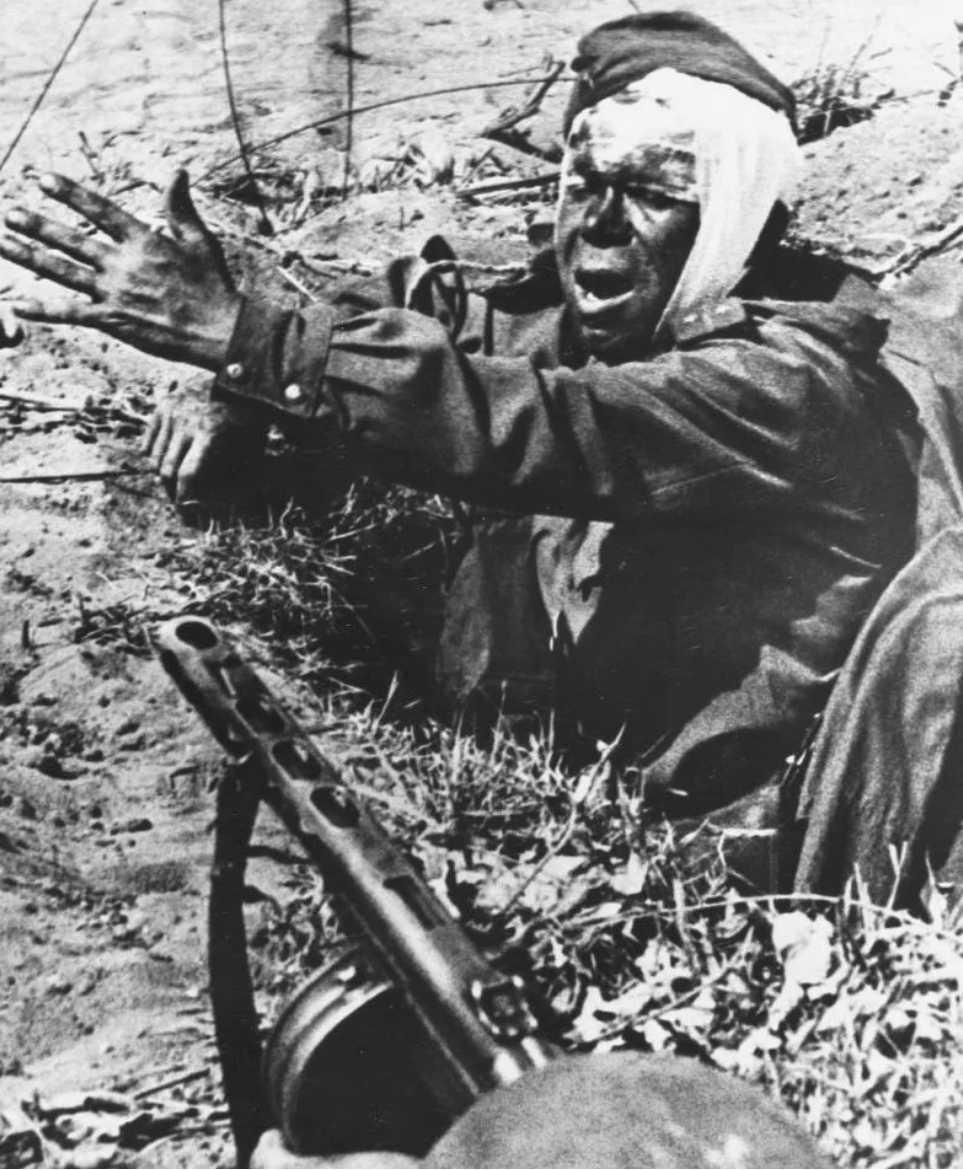
When Zhukov tirelessly commanded his men to stop the final offensive of the German army, the 4th Panzer Group became unable to continue. At this time, Hitler changed his mind again. He ordered the siege of Leningrad, trying to starve the city to death. For the Germans, the lightning attack on Leningrad was ultimately a dream - a dream that was shattered by the Soviet army with life and blood.