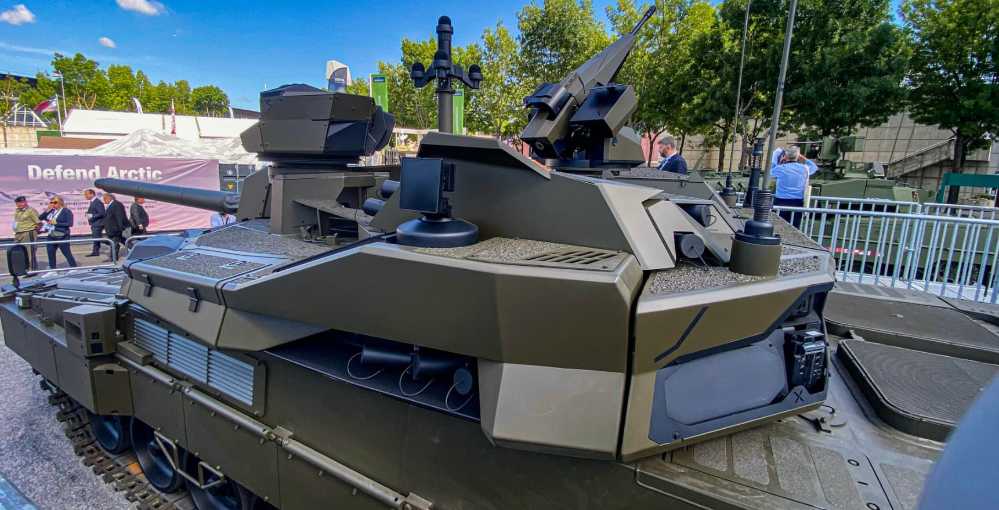

As armored vehicles enter the 21st century, they have reached a high level in terms of firepower, protection, informationization and mobility. It is very difficult to develop a new and epoch-making armored vehicle. At present, the demand for heavy armored vehicles such as main battle tanks in various countries around the world has decreased, while the demand for light and medium armored vehicles, especially wheeled vehicles, has increased significantly. However, compared with the demand, most of the latter seem to be insufficient in firepower, so designers have turned their attention to the upgrading and transformation of armored vehicles. The turret is the core of the firepower of armored vehicles, and the transformation and upgrading of traditional turrets has become a promising field. The concept of "external top-mounted remote-controlled weapon station" (remote-controlled turret) came into being. At present, various weapon stations have sprung up like mushrooms after rain. People mostly refer to this type of turret weapon system as "remote control weapon station (RCW). When installed on different chassis, it becomes a new infantry fighting vehicle, which brings new ideas for the improvement and development of armored vehicles.
Remote control weapon station (RCWS) is a remote-controlled weapon system, usually equipped with fire control systems for weapons of different calibers, which can be installed on wheeled/tracked armored combat vehicles, as well as light tactical vehicles and trucks. The reason why remote control weapon stations are widely used in modern military vehicles is that the gunner can operate weapons in the vehicle, which can not only prevent artillery attacks, but also effectively reduce the probability of casualties in the event of a rollover accident. In addition, remote control weapon stations can improve the safety of armored transport vehicles and light protection reconnaissance vehicles. It can enhance the defensive capabilities of the vehicle, strengthen situational awareness, and, if equipped with appropriate weapons, can also achieve precise firepower at the maximum range of the weapon. Weapons that can be installed on the remote weapon station include light machine guns, medium-caliber machine guns, automatic grenade launchers, and some remote weapon stations will even be equipped with non-lethal weapons. At present, more and more missiles are also beginning to be installed on remote weapon stations. In the near future, high-energy laser weapons are likely to be installed on remote weapon stations. Remote weapon stations can enable infantry fighting vehicles to provide more efficient fire support for dismounted troops; provide tanks with fast-response light weapons systems; and make tanks and infantry fighting vehicles more survivable and more lethal in close-range urban combat. In addition, remote weapon stations can also enable combat support and combat service support vehicles to obtain The advantages of remote weapon stations make them a "must-have" for all types of armored vehicles.
This will inevitably make the global market full of competition. Well-known foreign companies currently participating in the competition in the remote weapon station market include: Otto Melara, Kongsberg Defense Systems, Krauss-Maffei-Wegmann, Rafael, Saab, United Technologies Systems of South Africa, KBM Instrument Design Bureau, Ural Locomotive and Rolling Stock Plant, CMI Defense, Nexter Systems, ASELSAN, BAE Systems, DETRAC, Elbit Systems, EOS, FN Herstal, MOOG, Raytheon The company has a number of well-known large defense companies, including the Singapore Technologies Dynamics Company and Valhalla. It is reported that the current global remote weapon station market share is about US$15 billion, and it is expected to reach US$24.76 billion in 2026, with a compound annual growth rate of 13.2% during the forecast period.
Key technologies of remote weapon stations
To adapt to a variety of battlefield environments, remote weapon stations should have situational awareness, target detection, strike, operability, protection, rapid support, environmental adaptability, and upgrade modular embedding capabilities. It has three working modes (combat, self-checking and correction) and two control modes (standard remote control control mode and manual control mode). Therefore, this requires the remote weapon station system to have a high degree of integration, involving a wide range of technical fields, and requiring many key technologies to be broken through. At present, the key technologies of foreign remote weapon stations include overall technology, servo system technology, sighting and display technology, recoil control firepower strike technology, etc.
Overall technology The overall technology of the remote weapon station includes overall structural planning and system modular integration, remote control, bus control, matching of system dynamic characteristics, system anti-interference, grounding wiring, vehicle protection, military needs and firepower distribution, energy flow and information flow exchange inside and outside the vehicle, ammunition carrying capacity setting, power supply and distribution optimization, reliability and safety design, etc.
Overall technology
The overall technology of the remote weapon station includes overall structural planning and system modular integration, remote control, bus control, matching of system dynamic characteristics, system anti-interference, grounding wiring, vehicle protection, military needs and firepower distribution, energy flow and information flow exchange inside and outside the vehicle, ammunition carrying capacity setting, power supply and distribution optimization, reliability and safety design, etc.
Combined with the structure and use characteristics of the weapons equipped with the remote weapon station, the overall structure is reasonably planned to minimize the overall size while avoiding the mutual influence between the components during use due to the overly compact structure. System integration should adopt modular design ideas, which not only ensure the independence of functional modules, but also fully consider the mutual integration between modules, realize the integrated design of system multi-functions and the universal design of single functions, so that the functional capacity of the system within the limited space can be effectively improved. In addition, the remote control weapon station adopts system modularization to better enhance the multi-purpose combat capability. With the continuous changes in battlefield requirements, the remote control weapon station will pay more attention to system modularization, including the modularization of system structure and the modularization of software and hardware. The modularization of system structure requires the system to have an open structure, ensuring that the system is easy to add functional modules, upgrade and expand the functions of each subsystem, and ensure technical updates. It is the basis for the diversification of the firepower configuration of the remote control weapon station and the guarantee of its multi-purpose combat capability. The modularization of software and hardware focuses on the concentrated embodiment of functions, and covers the functions of each subsystem, subsystem or equipment by adopting high-reliability universal modules. At present, many typical models of remote control weapon stations adopt system modular design. Users can choose suitable weapons, sights, ammunition boxes and universal mounts for rapid assembly according to different needs.
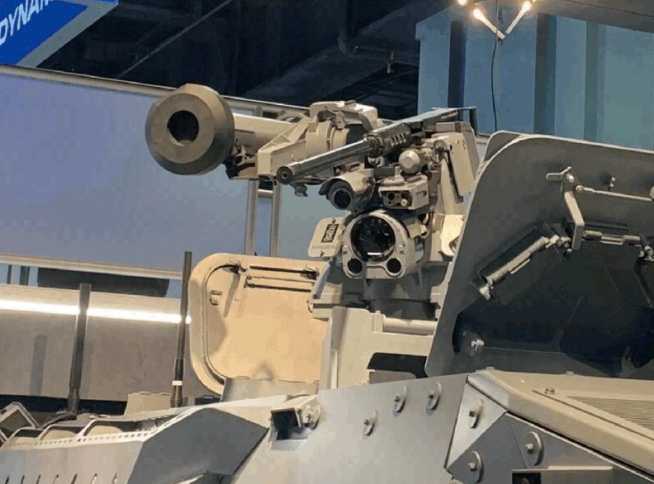
The impact of the shooting accuracy of the remote control weapon station mainly includes the matching relationship of the system dynamic characteristics, the matching clearance between the various parts of the turret, the sighting and identification accuracy and the ranging accuracy, the servo control accuracy and the response speed. In terms of overall technology, the focus is on solving the matching problem of the system dynamic characteristics. For remote control weapon stations equipped with machine guns or automatic grenade launchers, the technical approaches to dynamic characteristics matching are: optimizing the mass and center of gravity distribution of the turret so that the natural frequency of the turret avoids the radio frequency and the vibration frequency of the vehicle body to avoid resonance and forced vibration; optimizing the installation position of the gun body on the mount to reduce the impact of the unbalanced torque and the gun body reversal torque on the stability of the turret during shooting; reasonably designing the gun body buffer and adopting a two-way buffer structure to reduce the impact of the gun body recoil and return to position.
The optimization of power supply and distribution of the remote control weapon station includes the use of low-power electrical equipment and power supply line optimization. The system power consumption should be minimized under the premise of meeting the system function.
Combined with the characteristics of the use of remote weapon stations, the feeding mechanism, electromechanical interface, and insurance device are reasonably designed to ensure the reliability and safety of the system. At the same time, effective shielding measures are adopted to avoid electromagnetic interference within the system and between the system and external devices.
Servo system technology
The servo system technology of remote weapon stations includes high-precision transmission, servo motor zero drift suppression, low-speed stable tracking, high-speed gun adjustment, motor control and electric drive, etc.
With the development of future battlefields, remote weapon stations are carried on various mobile platforms and need to have the ability to carry out high-precision strikes on mobile targets under various complex road conditions and high-mobility conditions. However, the remote weapon station also faces the difficulty of the gunner observing, aiming and shooting at the target due to the rapid mobility of the armored vehicle platform, which puts higher requirements on the stability accuracy, reaction speed and anti-interference ability of the remote weapon station system. The use of servo system technology can achieve stable control and precise strikes with high precision and rapid response, which is one of the main technical means to solve this current problem. At present, the research direction of servo system technology is mainly focused on high-precision power transmission mechanism and advanced control structure and control algorithm of remote weapon station.
In terms of high-precision power transmission, for the mechanical transmission part, the main research is on anti-backlash mechanism or gapless transmission. It is necessary to reasonably distribute the transmission chain gap and reduce the gap at the end of the transmission, such as using cradle tooth arc and high and low machine gears for gear backlash elimination, or using torsion spring loaded double-piece gears for gear staggered backlash elimination, or using DC torque motor to directly drive the load for gapless transmission. In addition, the transmission friction should be reduced, the transmission stiffness and stability accuracy should be improved, and the transmission chain and transmission ratio should be reasonably matched to ensure the transmission accuracy and response speed.
For the disturbance problem introduced by the rapid maneuvering of the platform, the remote weapon station mainly adopts fast-response control structure and control algorithm to improve the stability accuracy of the system. In terms of control structure and control algorithm, the main research is on information detection devices with high accuracy and good real-time performance, state estimation methods and advanced compensation algorithms. In the design, servo motors with high power density, strong overload capacity, good starting performance and wide speed regulation range are usually used for driving and high-precision rotary transformers for position detection, and a current, speed and position closed-loop control system is formed with the corresponding control circuit to achieve high control accuracy and good servo characteristics. The stability sensor of the remote weapon station system usually uses a gyroscope group with a large scale factor, high signal-to-noise ratio and strong sensitivity, so as to improve the feedback accuracy of the stable measurement equipment and reduce the steady-state error of the system. The servo control module is based on the digital signal processor and adopts advanced compensation (such as speed feedforward compensation, position feedforward compensation, etc.) and control algorithms (such as expert PID control algorithm, self-disturbance rejection control algorithm, etc.) to effectively solve the contradiction between the accuracy, stability and rapidity of servo control and improve the stability of the system. If the fiber optic gyroscope is used to replace the traditional electromechanical gyroscope for system state information detection and estimation, the reliability and sensitivity will be higher. Based on this, the research on compensation algorithm can realize the compensation of various nonlinear influencing factors and the automatic adjustment of the control structure according to environmental changes. The Swedish "tracking shooting" remote weapon station uses advanced algorithms to control the servo system. The algorithm can minimize nonlinear movements such as friction and backlash, so that the remote weapon station can still accurately shoot when the vehicle passes through complex terrain.
Observation and display technology
The observation and display technology of the remote weapon station includes video image acquisition and quality assurance, photoelectric sensor coupling, multi-optical system remote control zoom, optical system fog observation, image enhancement, observation and aiming system dustproof, lifting gimbal, high and low limit, aiming line correction, automatic target tracking, information transmission, image processing and image stabilization technology, etc.
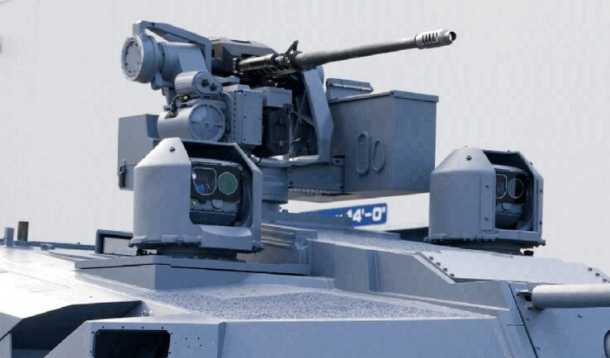
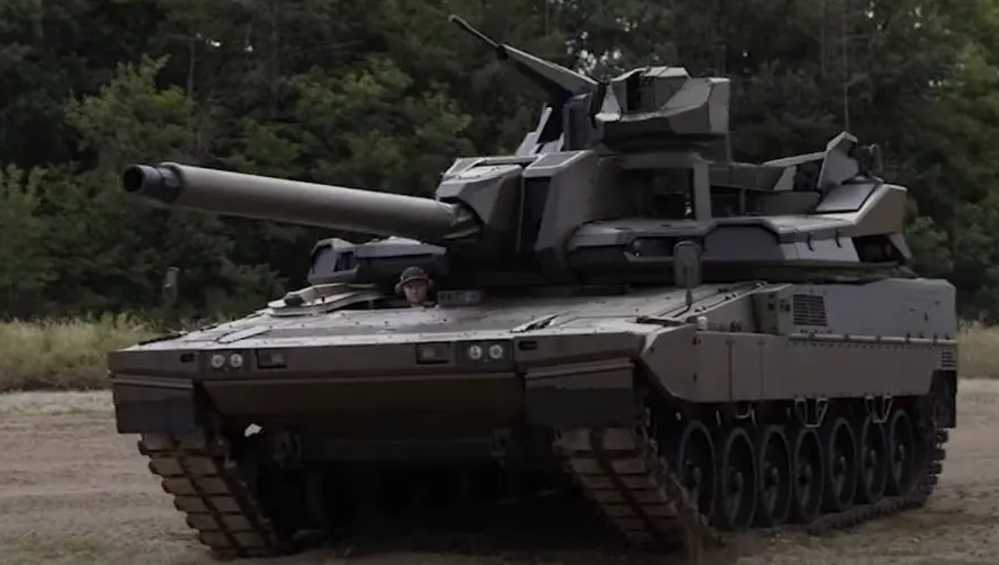
The trend of the complexity of the modern battlefield background is becoming more and more obvious. The presence of electromagnetic interference, smoke, and a large number of obstructions has seriously restricted the situational awareness of the remote weapon station. In addition, the diversification of battlefield targets has also put forward higher requirements for the observation and display technology of the remote weapon station. The remote weapon station adopts remote control operation. The gunner no longer observes the target directly with the human eye or observes the target through a direct-aiming optical sight, but observes and aims at the target through the image on the display screen. This requires the observation and aiming system of the remote weapon station to have all-weather situational awareness capabilities to ensure full-time observation of the battlefield and remote control operation of weapons. In order to adapt to the complex and diverse battlefield environment, the observation and aiming display technology needs to focus on solving the problem of normal use of the observation and aiming system in harsh environments.
Under adverse weather conditions such as low temperature, humidity, fog, and strong light, the sight range and imaging quality of the remote weapon station’s sighting system are seriously affected. To ensure the normal use of the system, its adaptability to adverse weather conditions must be improved. During the design, on the one hand, an infrared filter is added to the CCD camera lens to fully utilize the sensitivity of the CCD camera to the near-infrared band; on the other hand, an adaptive histogram equalization method is used to widen the image contrast, obtaining an observation effect that is more than three times the visibility, ensuring the sight range of the remote weapon station in adverse weather conditions. When observing the target under strong light or backlight conditions, the image quality is poor or there is a black silhouette. The continuously adjustable electronic shutter and light bar adjustment method are used to adjust it. By reasonably setting the high and low thresholds of the light flux adjustment, the light intensity entering the CCD is within the ideal range, ensuring the imaging quality of the target under abnormal lighting conditions.
Remote control weapon stations are usually equipped with various caliber machine guns and automatic grenade launchers. The load generated by weapon shooting has a strong impact on the precision optical components of the sighting system. If the system is to work normally and continuously, corresponding anti-impact measures need to be taken. At present, the main method is to increase the force area of the lens to ensure the stability of its optical axis and the impact resistance of the optical components during vibration and impact, and to use advanced optoelectronic technology to improve situational awareness. Since the first generation of foreign remote control weapon stations have many weaknesses in situational awareness, the second generation of remote control weapon stations need to develop advanced sighting and display technology and apply it to remote control weapon stations. More and more advanced optoelectronic sighting systems, such as new thermal imagers, eye-protection laser rangefinders, anti-sniper systems, helicopter detection systems, etc., are integrated into remote control weapon stations. For example, in order to improve the detection capability of snipers, the US military installed the "Pioneer" anti-sniper system when improving the remote weapon station. The system determines the position of the sniper by receiving and measuring the muzzle shock wave of the sniper rifle and the shock wave generated by the projectile flight. The remote weapon station equipped with this system has a quick response and accurate strike, can effectively deal with sniper targets, and has excellent performance on the battlefield.
Lightweight armor protection technology for turrets
In the past, ordinary steel armor has been widely used in armored vehicle turrets due to its good performance of high strength and high hardness, but because ordinary steel is very heavy, the mobility of armored vehicles is greatly limited. At present, the armored vehicle turrets equipped by troops in various countries in the world not only require superior protection performance, but also have the characteristics of lightweight turret structure, so as to further improve the survivability and mobility of armored vehicles. To this end, world-renowned large-scale military protective material research and development companies have launched some innovative technologies for lightweight armor protection of turrets.
The fourth-generation lightweight armor products developed by IBD Desenroth in Germany use nanomaterial armor technology. At the same level of protection, nano-ceramic materials can save 30% of weight. Compared with conventional steel armor, high-strength nano-nitrogen steel can also save about 30% of weight. The company has also made progress in aluminum-titanium alloys, and its ballistic protection performance has been improved, which is close to that of ceramic armor, thus providing a lighter and more cost-effective turret armor solution. In addition, Rheinmetall of Germany has launched advanced modular composite armor technology to protect armored vehicle turrets from ballistic threats and attacks from improvised explosive devices. The "VERHA-Land" universal armor provided by the company provides the maximum possible protection for vehicle turrets while maintaining the lowest additional weight. The modular lightweight composite armor is made of a variety of different materials, such as individually bonded aramid fibers, high-performance polyethylene fibers, and glass fiber layers, and the military applicability of these materials has been tested. For higher threat levels, these materials can be combined with various ballistic ceramics to achieve optimal protection and mobility.
The new armor products provided by Israel’s Prasun Sasa use composite materials. The company has been innovatively using aluminum alloy armor and layered blast management concepts. These technologies have been used in additional armor components installed on armored vehicle turrets, which include metal composite armor components that can protect against kinetic energy bullets and fragmentation effects and a dedicated mine protection component. In addition, Prasun Sasa has invented a "smart" armor technology, including aluminum alloy armor, aramid fiber for anti-collapse lining, and lightweight ceramic armor that can resist multiple hits from high-performance armor-piercing ammunition, which can provide effective protection for the turret of armored vehicles.
The British tank armor supplier MTL Group has launched Interchangeable Modular Perforated Protective Armor (IMPAS), which is a lightweight and low-cost protective armor that improves the armor’s anti-destruction performance by adding ceramic composite materials. IMPAS uses an innovative armor protection technology that is suitable for installation on turrets with rolled homogeneous armor and aluminum armor. Due to its low cost and light material, it has good versatility and can be put into use immediately. IMPAS is divided into a simple version and an advanced version. Its ceramic composite material can provide an efficient, interchangeable and lightweight solution, which can achieve the 1, 2 and 3 protection levels of NATO Standard Agreement 4569. In addition, MTL Group has also conducted design and manufacturing tests, including simulated explosions and using the world’s highest strength machines to squeeze the armor. Through various demonstrations, the outstanding protection capabilities of IMPAS are fully demonstrated.
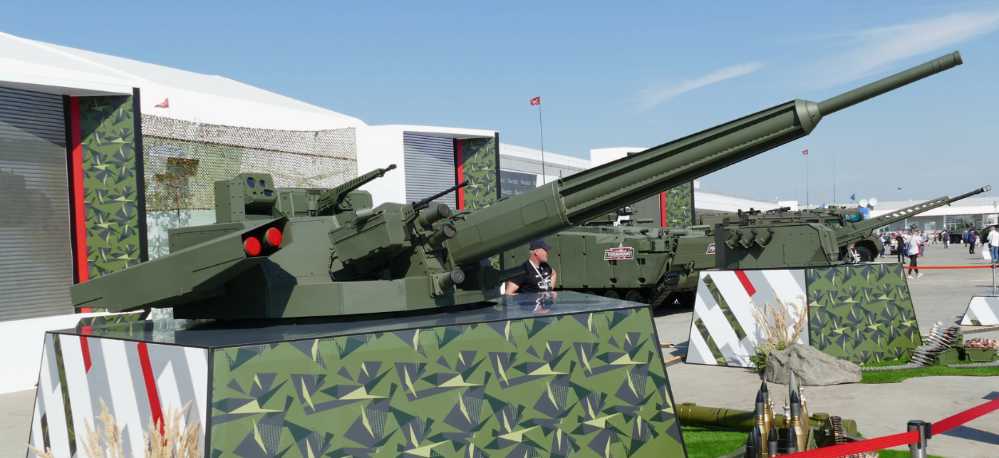
Recoil control fire strike technology In the battle of armored vehicles equipped with unmanned turrets, the artillery can use a long-distance recoil method to reduce the impact of recoil on the vehicle body, but the long recoil distance also means that the artillery rate of fire will be reduced, affecting its combat technical indicators. The use of low-recoil firepower strike technology can reduce the impact of artillery firing on the vehicle body on the one hand, and on the other hand, the rate of fire of the artillery can be completely determined by the automatic loading speed, thereby achieving the purpose of increasing the rate of fire. At the same time, the impact of recoil on the vibration of the vehicle body can also speed up the aiming time of the first round. The expansion wave low-recoil artillery technology is currently the most advanced low-recoil firepower strike technology.
The expansion wave low-recoil artillery is a new type of artillery. Its working principle is that when the propellant propels the projectile in the barrel, if the tail of the gun chamber is suddenly opened, the gunpowder gas will suddenly spray out to the rear, and the pressure in the chamber will drop accordingly. This phenomenon is called expansion wave or "gunpowder gas dilution" phenomenon. The expansion speed of the pressure drop in the chamber in the barrel is the same as the propagation speed of sound waves, so there will be a time lag when this pressure drop phenomenon is transmitted to the bottom of the projectile. The expansion wave cannon uses this hysteresis phenomenon to accurately control the timing and speed of the breech opening, so that the projectile does not feel the pressure drop when the breech opens, and still flies away from the muzzle at the original initial velocity as if it is flying in a closed barrel. If the time of the breech opening can be delayed as much as possible, so that the expansion wave catches up with the bottom of the projectile just at the moment when the projectile just leaves the muzzle, the so-called "timing synchronization" is achieved. In addition, an expansion nozzle is installed at the tail of the cannon, and the gunpowder gas released from the breech is discharged backward at high speed through the nozzle. At this time, the expansion nozzle has the effect of cooling and reducing the pressure of the gunpowder gas, and the internal heat energy of the cannon is converted into the kinetic energy of the back jet flow, and a reverse pressure is formed at the nozzle that acts on the cannon, which greatly offsets the recoil energy of the cannon. It can be said that the expansion wave cannon works according to the principle of traditional cannon before the breech opening, and works according to the principle of low-recoil cannon after the breech opening. The external ballistics of this type of artillery projectile will not be affected, and the muzzle velocity and ballistic curve are the same as those of the projectile fired by traditional artillery, but the recoil distance and barrel heat can be reduced.
Development trend of remote-controlled weapon stations
With the complexity of future battlefield backgrounds and the diversification of battlefield targets, remote-controlled weapon stations must continue to maintain accurate observation, aiming, and rapid and accurate strikes on targets. It is necessary to adopt a variety of advanced technologies to further improve the system’s situational awareness, high-precision strike capability, multi-purpose combat capability, and intelligence level. Based on the analysis of the current development status of foreign remote-controlled weapon stations, with the development of the modern war situation and the continuous breakthroughs in related key technologies, the development of foreign remote-controlled weapon stations will show the following trends.
Multi-functional and multi-system integration trend
According to the different mission requirements and carrying capacity of various combat platforms, foreign remote-controlled weapon stations can achieve multi-functional and serialized development of remote-controlled weapon stations by improving structural design, selecting weapons and ammunition of different powers, and observation and aiming devices with different functions. They can be carried on almost all mobile platforms and have strong combat mission applicability. In addition, as foreign armies continue to increase their requirements for remote weapon station control capabilities, precision strike capabilities, and multi-target combat capabilities, more and more foreign remote weapon stations are highly integrating fire control systems with tracking and guidance systems, vehicle-to-vehicle network systems, global positioning systems, and auxiliary training systems, forming a trend of multi-system integrated development.
More emphasis on modular and open design
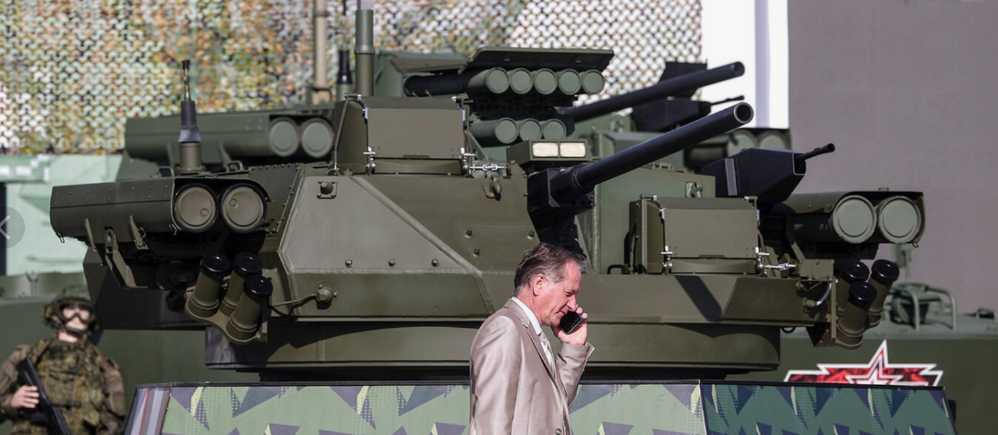
In order to meet the diverse military needs in modern warfare, foreign remote weapon stations are not only installed on medium and heavy armored vehicles, but also require to be installed on light patrol vehicles: Therefore, remote weapon stations will pay more attention to modular and open designs in terms of firepower, sighting control, communication, and protection, so as to facilitate the flexible configuration of a variety of weapons and ammunition (including precision-guided missiles), improve and upgrade, and realize multi-functional and serialized development, mainly including the modularization of system structure and the modularization of software and hardware. The modularization of the system structure requires the system to have an open structure, ensuring that the system is easy to add functional modules, easy to upgrade and transform, and easy to maintain. It is the basis for the diversification of firepower configuration and the guarantee of the multi-purpose combat capability of the remote weapon station. For example, the CAN bus is used to connect the fire control units, which can not only add navigation, radar and other equipment, but also connect to the main fire control system of the platform. The modularization of software and hardware focuses on the concentrated embodiment of functions, and often uses general task modules to cover the functions of various subsystems or subsystems. Among them, the diversification of firepower configuration is the most significant embodiment of the modular design concept of the remote weapon station. Early remote weapon stations achieved diversified firepower configuration by equipping a weapon station with two or even three different caliber weapons at the same time. In the future, the trend of multi-firepower configuration of remote weapon stations is to achieve it through firepower system modules. According to combat needs, different task modules are replaced to achieve multiple uses of one vehicle, improve the efficiency of use, and ensure that the system is easy to add functional modules, upgrade and update technology. This will be an important direction for the development of remote weapon stations in various countries.
Future intelligent development is inevitable
Intelligent weapons and equipment are an inevitable trend in future development. The intelligentization of remote weapon stations is a process of gradual development from manned combat platforms to unmanned combat platforms. The key lies in the use of autonomous control technology to develop "subjective initiative" weapon systems that can automatically identify, autonomously strike targets and automatically conduct damage assessments. At present, remote control network nodes have network warfare capabilities and comprehensively improve the combat effectiveness of the system. The development of automatic tracking remote weapon stations is one of the important trends in recent years. The combat sequence of such weapon stations is described as straightforward, reducing the information cycle between sensors and gunners. Once the target is determined, it is closely tracked. The target distance is obtained through a laser rangefinder. The azimuth and elevation data are automatically increased by the fire control computer without manual intervention. The commander only needs to open the weapon’s insurance and perform the launch operation, which greatly improves the system’s operational intelligence level.
The performance of optoelectronic fire control systems continues to improve
The key to combat under information conditions is to improve the battlefield situation awareness capability. The core of situation awareness capability is the identification of the enemy and the enemy. How to perceive the environment and target conditions from the data provided by various optoelectronic sensors and how to identify the enemy and the enemy are becoming increasingly urgent. However, the trend of complex battlefield backgrounds in the future is becoming more and more obvious. The presence of electromagnetic interference and smoke, fog, and obstructions seriously restricts the situational awareness of remote weapon stations. In addition, the diversification of battlefield targets also puts higher demands on the situational awareness of weapon stations. Through analysis, it is known that the field of view of the first generation of remote weapon stations abroad is relatively narrow, which reduces the commander’s situational awareness of the surrounding environment, especially in urban combat. Many types of existing weapon stations do not have 360-degree close-range surveillance capabilities and cannot cope with close-range threats posed by enemy snipers and improvised explosive devices. Based on this, facing the complex combat environment and various threats in future wars, more and more advanced optoelectronic fire control systems, such as high-speed drive systems, continuous zoom daytime video cameras, uncooled thermal infrared cameras, laser rangefinders, fiber optic gyroscope systems, anti-sniper acoustic systems, helicopter detection systems and other advanced instruments and equipment will be integrated into remote weapon stations and their combat platforms, realizing the day and night target identification, observation, tracking and stabilization capabilities, 360-degree rotation, large-angle pitch shooting capabilities, and the ability to engage multiple scattered targets in the air and on the ground in a short period of time, enabling the remote weapon station system to observe and record the situational awareness of incoming threats in real time around the clock in cities, forests, mountains and deserts.
Protection performance is constantly improving
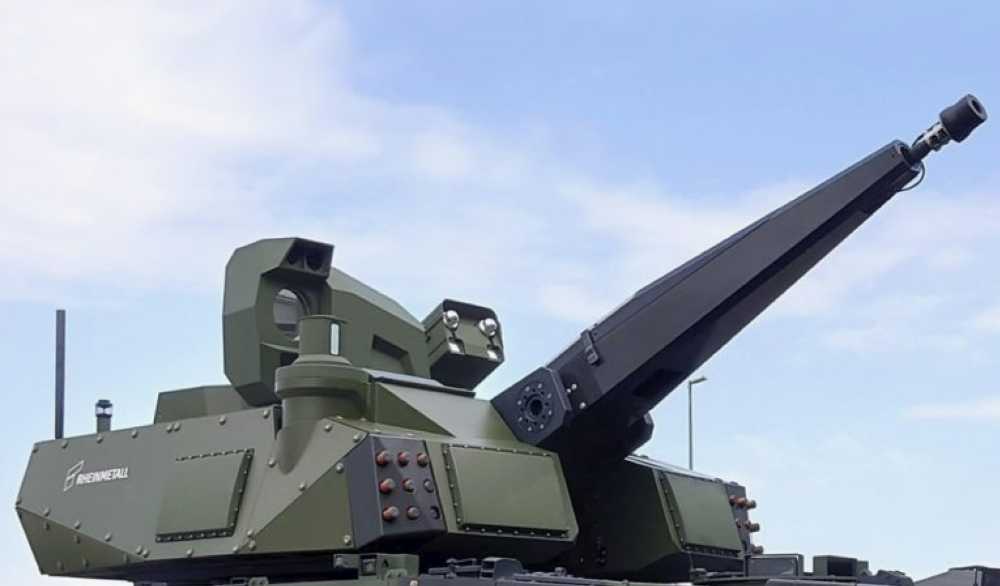
Based on the battlefield survivability requirements of remote weapon stations, foreign armies are paying more and more attention to the protection performance of remote weapon stations, and have achieved clever layout and reduced contour height from the structural design to reduce the probability of remote weapon stations being discovered and hit; various types of lightweight armor and protection systems are used to improve the protection capabilities of key components such as remote weapon station sighting instruments, ammunition boxes and ammunition supply devices; make full use of the advanced fire control system of the remote weapon station to provide early warning, and install multiple smoke screen launchers to provide passive smoke screen interference protection for itself and the carrying platform.