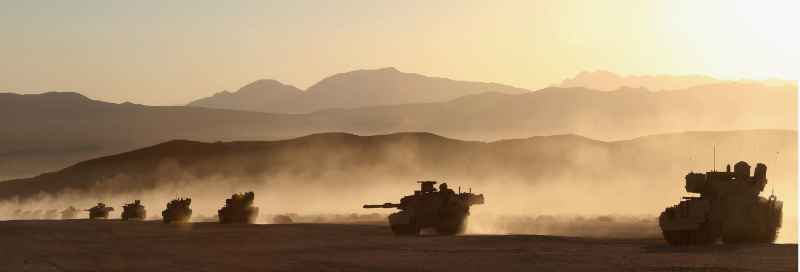
The "Torch" operation, in which the Allies landed in North Africa at the end of 1942, is considered the initial starting point for the Allies to reverse the course of World War II and launch a counterattack against Germany and Italy. During this amphibious operation, an American tank unit that had just landed on the battlefield was tested by a far more complicated situation than expected, but they finally took control of their own destiny.
Seeking the comfort of tobacco
Brigadier General Lucien Truscott wanted to smoke a cigarette. It was the night of November 8, 1942, and the 47-year-old American general felt that he was spending the worst night of his life. From the early morning of this day, as part of the Allied "Torch" operation, an American army under the command of Truscott rushed onto the beachhead in French Morocco. However, almost from the beginning, the landing operation did not go as planned. What Truscott saw was: As far as I could see, there was chaos on the beach. The landing craft swayed in the surging waves, and personnel and equipment were thrown into the water. Soldiers wandered aimlessly, lost in despair, calling out to each other in vain for their comrades, and then cursing loudly, but it was all meaningless. "
Alone in the dark, Truscott wanted to "seek the comfort of tobacco" and lit a cigarette. Then he saw the faint light of more cigarettes on the beach. However, just before the landing, the brigadier general had asked his men to strictly prohibit smoking on the beach to prevent exposure. Truscott later said, "If my people knew that their commander was the first to violate the smoking ban, they would be very surprised!
The twinkling lights of cigarettes reflected the difficult situation faced by Truscott and his 9,100 American soldiers. In the Allied landing in French Morocco and Algeria, the mission of Truscott’s landing force was to capture the military airport near the Moroccan port of Leuty, which was crucial to the Allied air force. Truscott estimated that his men would be able to accomplish the mission at noon on the day of the landing.
However, the ideal was far from reality. Both the U.S. Navy and the U.S. Army were extremely inexperienced in large-scale amphibious operations. The landing barges were late and off course. The landing units were scattered under the influence of huge waves. The soldiers who stepped onto the beach were dragged down by the soft sand and found themselves completely without the support of tanks, artillery or medical teams.
Worst of all, the Allies completely misjudged the reaction of Vichy France, the controller of the landing area. One of Truscott’s staff officers naively believed that Vichy France’s colonial troops would welcome their arrival with a brass band. In fact, the Vichy regime regarded the Allied landings in North Africa as an "invasion" of French overseas territories, and the garrisons in Morocco and Algeria began to use all the forces they had to fight back.
Sporadic reports from the battlefield pointed out that French coastal batteries had engaged in long-range duels with the U.S. fleet, French fighters came to strafe the U.S. troops on the beach, and French reinforcements from neighboring areas were coming from all directions. Truscott was told that a French armored unit in counterattack was found on the south wing of the landing site. This threat could lead to the collapse of the entire landing operation. Although the enemy stopped advancing in the dark, they would probably resume their actions after dawn.
After smoking the cigarette, Truscott, frowning, was still thinking about what to do next. Suddenly, an officer came out of the darkness to report. He was the one Truscott had been looking for. The man was Lieutenant Colonel Semmes, the tank commander of Truscott’s landing force, and one of the few officers present with war experience - he was a tank veteran who had participated in World War I.
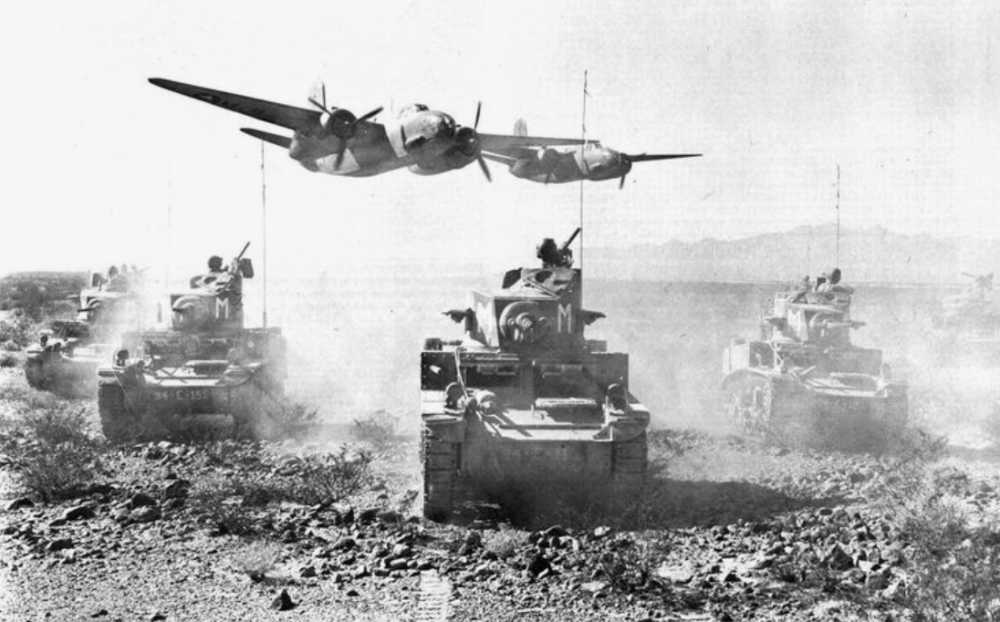
Semmes saluted Truscott and claimed that 7 M5 "Stuart light tanks had successfully landed. Truscott was very happy to hear the news. He issued a concise instruction to Semmes: Call up your tankers, take position before dawn, and stop the French counterattack.
Join the "Torch"
The battle in which Truscott, Semmes and their subordinates participated was an integral part of Operation Torch, and the entire North African landing originated from the promise made by British Prime Minister Churchill and US President Roosevelt to Soviet leader Stalin to "open a second front".
The top leaders of the Allies promised to start the counterattack against Hitler before the end of 1942 to relieve the Soviet Union from the Great pressure, but the British and American military commanders had different perceptions of the strategic scope and campaign objectives of this operation. The British wanted to carry out an amphibious attack in North Africa as a basis for landing in southern Europe and controlling the Mediterranean, while the Americans set their sights on France and prepared to carry out a large-scale landing across the English Channel.
However, the landing in France required far more complicated preparations, and the implementation time would not be earlier than 1943; based on his promise to Stalin, Roosevelt twice instructed his generals to cooperate with the British army, that is, to implement the North African landing at the end of 1942. It can be said that the US military prepared for Operation Torch with a "reluctant" attitude from the beginning.
The campaign target of the North African landing was determined to be Algeria The Mediterranean ports of Oran and Algiers, and the Atlantic port of Casablanca in Morocco. Once these locations are established, the landing forces will move east to Tunisia, where they will meet up with General Montgomery’s British 8th Army and then completely defeat the Axis forces in North Africa.
Algeria and Morocco are both French colonies, which were under the control of Vichy France at the time. After France’s defeat and surrender in June 1940, the Germans instructed the establishment of a puppet government in the resort town of Vichy, with Marshal Henri Bétain, a French hero of World War I, as president. The Vichy regime administers France’s overseas territories, and its garrison in North Africa is close to 110,000, supported by tanks, aircraft and surface fleets. If the French army chooses to fight, it will be against The landing force posed a major threat.
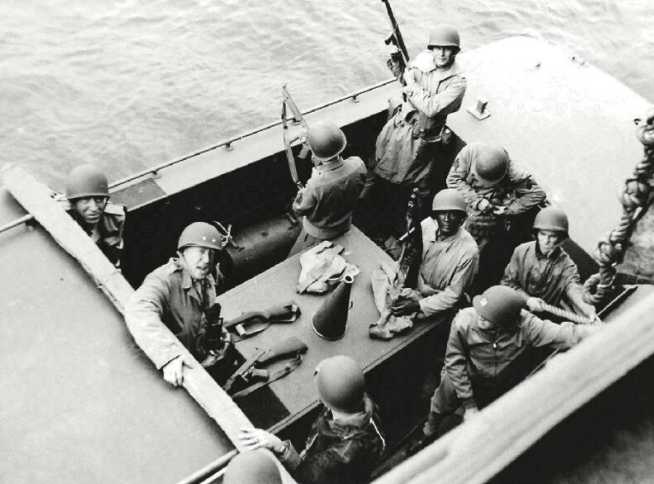
Given that there were considerable French troops stationed in Oran, Algiers and Casablanca, Operation Torch would not directly attack these port cities, but would land on beaches at a certain distance from these places to avoid provoking the French army to take radical actions.
For example, in the direction of Casablanca, the Western Task Force commanded by Major General George Patton would assault three beaches far apart, thus forming an encirclement of Casablanca. Specifically, the three targets were Saffi, 225 kilometers south of Casablanca, Fedallah, 20 kilometers north, and Port Leuty, 112 kilometers north of Fedallah.
The task of landing in Saffi was handed over to the US 2nd Armored Division, a unit that Patton had personally commanded. The well-trained 3rd Infantry Division was directed at Fedallah. As mentioned above, the Port of Leuty area has an important airport, which is urgently needed for the Allied air operations. Brigadier General Truscott is responsible for the operation to capture the area. The main force under his command is the 60th Regimental Combat Group (RCT), which is mainly composed of the 9th Infantry Division.
Patton decided in September 1942 that Truscott would be responsible for the operation in Port of Leuty. He believed that the latter was qualified enough. Truscott, who came from Texas, was a cavalry officer. He participated in the failed Dieppe amphibious operation in August 1942 as a liaison officer of the US military in the UK, so he had experience in this type of operation. The infantry unit of the 60th Regimental Combat Group was commanded by Colonel Frederick de Rohan, and the armored unit attached to it, the 1st Battalion of the 66th Armored Regiment, was commanded by Lieutenant Colonel Harry Symes.
Semmes was originally not involved in Operation Torch because the U.S. military stipulated that officers participating in this war should not be older than 50 years old. Semmes’ response was to go directly to Patton, who was his old boss during World War I. "Of course there is a place for you," Patton responded immediately after listening to Semmes’ statement, "In fact, you will command an important tank unit.
Operation plan and tough opponents
The soldiers of the Truscott Landing Force assembled and prepared at Fort Bragg, North Carolina, where they waited for the arrival of this historic expedition. In order to cope with the unprecedented cross-ocean assault, the preparations were simply inexhaustible. As historian Elliot Morrison said, "When the preparations came to an end in late October, the atmosphere was still full of improvisation and haste. ”
The staff was plagued by terrain problems. Truscott’s men would land near the mouth of the Seb River where it empties into the Atlantic Ocean, at a resort called Mehdia. Although beach conditions were suitable for landings, the Mehdia coast in November was known for its rough waves.
South of the resort, a lagoon that ran nearly 7 kilometers parallel to the coastline, along with adjacent swamps, shrub-covered ridgelines, and the Seb River itself, presented obstacles to the landing force. 14 kilometers upstream of the Seb River was the port of Leuti and the nearby airport.
After repeated assessments, Truscott’s men would land at 4 a.m. on November 8, before sunrise. The landing will be carried out in two hours. The 60th Regimental Combat Group will land on five beaches on both sides of the Sebou River estuary at the same time, and then quickly advance to the port of Leuty; Semmes’ armored battalion has a total of 54 M5 light tanks, which will serve as a reserve and be deployed at any time to expand the results of the battle as needed.
Based on his experience in Dieppe, Truscott asked the destroyer "Dallas" to enter the Sebou River at high tide, anchor near the airport, and send an assault team to the shore from there, and prepare to provide fire support for the ground operation to capture the airport.
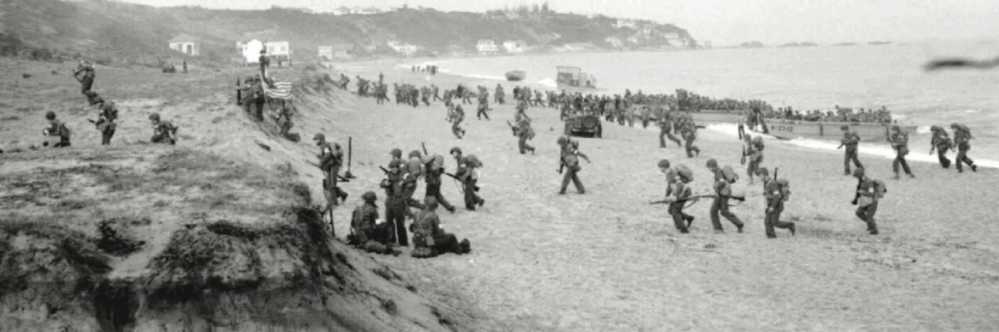
According to estimates, the US military is expected to control the area before 11 a.m. on the 8th. Live at the airport, so that a batch of P-40 "Tomahawk" fighters of the US Army Air Force transported by the escort aircraft carrier "Cenango" can enter the Port of Leuti Airport later that afternoon.
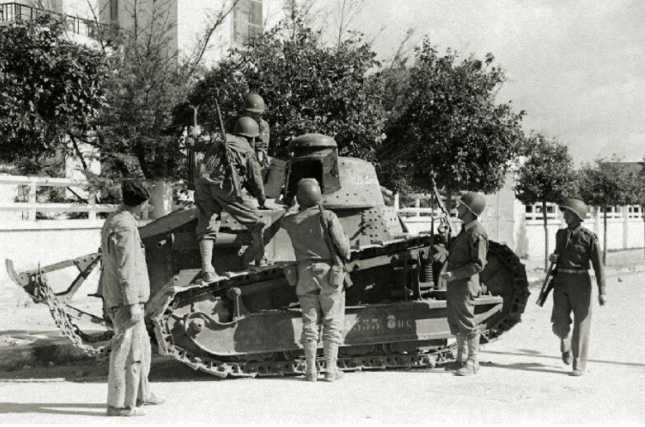
Intelligence shows that the main force stationed by Vichy France in Port of Leuti is the 1st Colonial Skirmisher Regiment of Morocco. The combat effectiveness of this light infantry formation is questionable, but its commander, Colonel Jean Petit, is a 48-year-old capable veteran. In addition to more than 3,000 Moroccan and French infantry, Petit can also use 9 anti-tank guns and 3 old tanks from the First World War.
A commanding height near Port of Leuti is a cliff overlooking the Sebou River, on which remains the stone fortress Carta built by Portuguese colonists in the 16th century. Casbah. The French deployed six 138.6mm coastal defense guns with a range of 20 kilometers in Casbah, and an artillery unit of the French Foreign Legion also set up a 75mm howitzer position there.
In Meknes, adjacent to the port of Leouti, there are 1,200 Algerian cavalry and a French mechanized unit, which are said to be able to rush to the port of Leouti within 6 hours.
More powerful support will come from Rabat, the colonial capital 46 kilometers south of the port of Leouti, where the 1st African Chasseur Regiment, an armored car squadron and up to 47 Renault R-35 light tanks are ready for action.
Will the French army resist? The Americans have never had a clear answer to this. They certainly hope that Vichy France can "understand" the significance of the landing in North Africa, but General Charles Nogues, the highest commander of the French Morocco garrison, may have no choice. If he surrendered to the Allied landings, Germany would most likely take violent revenge on Vichy France.
So, on the eve of Operation Torch, General Nogues issued a directive from his headquarters in Rabat, which was first conveyed to Major General Maurice Massenet in Meknes, and then to Colonel Petty in Port-Leouti. The order was concise and clear: "Keep fighting!"
“Unplanned” landing
Operation Torch was launched on the night of November 7-8, 1942. The landing fleet heading to the coast of Morocco was commanded by Rear Admiral Monroe Kelly, including the battleship Texas, the light cruiser Savannah, the escort aircraft carrier Chenango, and several destroyers, and of course the transport ships responsible for transporting the 60th Regimental Battle Group.
The landing operation seemed to be going wrong. First, several light aircraft crashed accidentally, and then the insufficient number of barges used to transport troops caused the assembly and transfer of the 60th Regimental Battle Group to take too much time. General Truscott had to shuttle between transport ships, trying to urge his subordinates to speed up the action. At 4:30 a.m. on the 8th, when the general returned to his command post on the transport ship Henry T. Allen, he was surprised to learn that President Roosevelt had just made an open broadcast to Vichy France, asking the French army in North Africa not to prevent the Allied landing.
Truscott was too surprised. This meant that Operation Torch had lost all its confidentiality elements, which was equivalent to playing an open card on the gambling table. Despite this unpleasant surprise, Truscott had no choice but to order the landing to be carried out as planned. At 5:40, more than an hour later than originally scheduled, American soldiers began to land on the beach at the mouth of the Seb River.
In order to maintain a certain degree of concealment, the US warships did not carry out artillery preparations, but it didn’t take long for the French to respond. The searchlights on the coast flickered, illuminating several landing craft, and then a red flare rose in the dark sky, followed by fierce shooting from light weapons.
The Portuguese colonial stone fortress of the Casbah was put into action. The coastal defense guns fired at the American destroyer "Eberle" which was close to the enemy. The latter dodged and fired back. After 6:30, the light cruiser "Savannah", accompanied by several destroyers, opened fire with the Vichy French artillery at the Casbah.
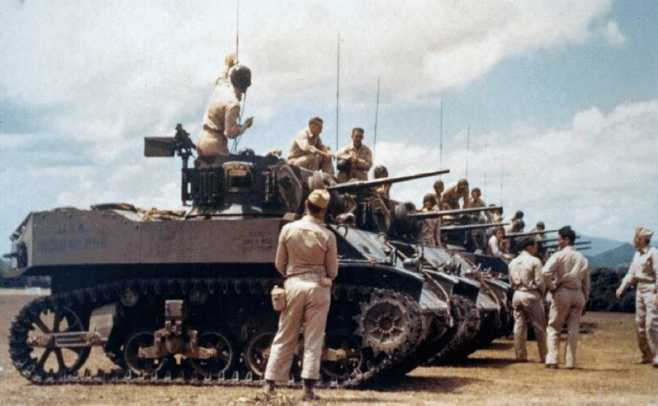
Several French Dewardin D520 fighters also appeared over the landing site. They strafed the beach and drove away the American reconnaissance planes, but the French fighters were later driven away by the F4F "Wildcat" fighters from the "Cenango".
The Truscott landing force was put into action as much as it could. On the beach south of the Seb River estuary, Major John Deely’s 2nd Battalion Landing Team (BLT) encountered no resistance when landing, allowing them to advance towards the Casbah and the French coastal artillery positions. However, the fierce exchange of fire between the coastal artillery and the American warships caused the inexperienced American soldiers to lose their composure, and Major Deely could hardly organize an effective attack.
Seizing this opportunity, Colonel Petty of Port Leuty launched a counterattack, and he deployed his colonial infantry and tanks. Although the tanks available to the French army were only three "antique" Renault FT-17 light tanks from the First World War, they were enough to panic the 2nd Battalion Landing Team; but because these three old tanks had mechanical failures one after another, the French counterattack on the morning of the 8th failed.
In the north, the 3rd Battalion Landing Team landed under the leadership of Lieutenant Colonel John Tophy. This unit went to the wrong place, 8 kilometers away from the original beach. In order to return to the right direction, the battalion will spend a whole day trekking on the sand dunes.
Major Dwight McCully’s 1st Battalion Landing Team also landed far away from the designated beach. They made an exhausting march on foot at the southern end of the lagoon. In order to prevent the French counterattack in this direction, McCully left Company A and several 37mm anti-tank guns on guard near the coastal road.
At the same time, the destroyer "Dallas", which was originally scheduled to enter the Seb River, remained on the sea because the arresting net at the mouth of the river was still intact, blocking the way of the warship. A reconnaissance ship was supposed to go and cut off the barrage, but it was sunk by the defenders’ firepower.
7 tanks landed
As the day passed, the situation faced by the landing troops did not improve. The sea became more and more violent, and dozens of landing craft sank or were seriously damaged by the waves. After seeing that his warships could not suppress the French coastal artillery firepower, Major General Kelly ordered the landing fleet to move to waters farther away from the beach.
Although this move ensured the safety of the ships, it further increased the difficulties of the landing troops. The barges that could be used now had to travel 40 kilometers to deliver military supplies to the landing site, which made it difficult for the troops that had already landed on the beach to get support from heavy weapons such as tanks and artillery.
Equally bad was that due to the fleet’s backward position, the transport ships and the landing troops could no longer communicate via radio. General Truscott, who wanted to find out what was happening on the battlefield, had to go ashore in advance, so at 15:00 on the afternoon of the 8th, he landed on the beach.
Like many landing vehicles, the jeep that Truscott was riding in did not go far on the beach before it was stuck in the thick sand and could not move. He had to squeeze into a half-track vehicle with the infantry to observe the battlefield. What he saw was frustrating: the French firepower seemed to come from all directions, the landing troops had become scattered soldiers, the supplies were piled up on the beach without anyone to manage, and few officers could organize orderly actions.
At nightfall, bad news came from Company A of the 1st Battalion of Major McCully: they were under attack by a strong enemy force. In the afternoon of that day, a French army unit came from Rabat, and at dusk, the colonial infantry and tanks had begun to exchange fire with the US outposts.
The French army had a superior force. They first defeated a platoon of Company A 12 kilometers south of the Mehdia Resort, and then rushed to another platoon 2 kilometers away. The Moroccan infantry, supported by French tanks, showed a high level of training. They bravely penetrated and not only destroyed a 37mm anti-tank gun of the US Army, but also captured Lieutenant John Allers, the commander of Company A. Due to the darkness of the night and the malfunction of two Renault FT-17 tanks, the French counterattack was paused, and they could almost see the beach where the US troops landed.
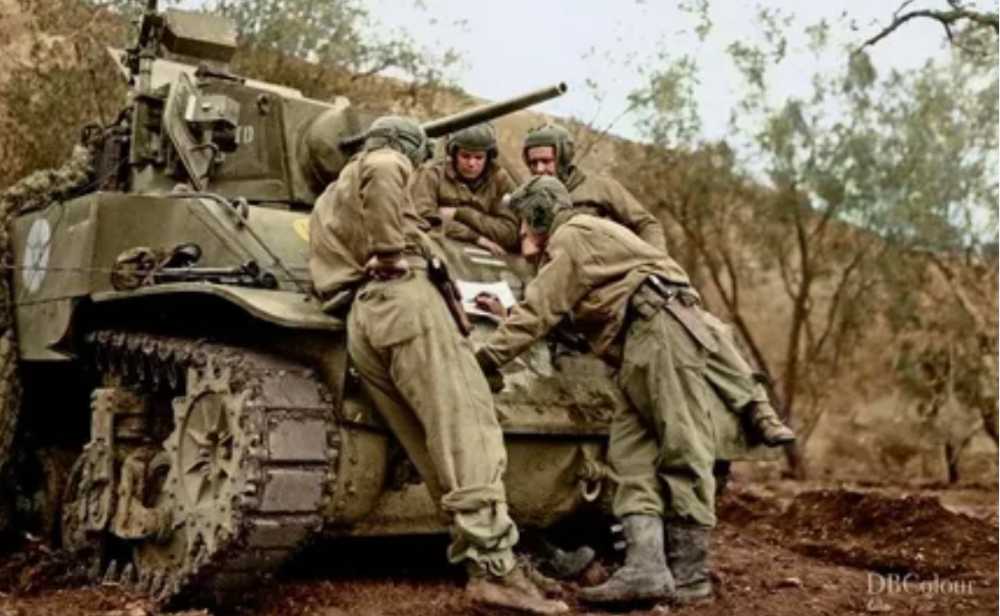
As described at the beginning of this article, this was the "darkest moment" felt by Brigadier General Truscott, for which he did not hesitate to break his own ban and lit a cigarette. As the cigarette flames on the beach continued to flicker, the barges that continued to operate after nightfall successfully sent part of the troops of the Semmes Armored Battalion ashore. Although only 7 M5 "Stuart" light tanks arrived, these were precious heavy weapons after all.
Then, after receiving the order from Truscott to stop the French, Lieutenant Colonel Symes led his seven "Stuarts" to move to the south wing of the landing site, where Company A of the 1st Battalion had just been hit hard. During the march, Symes learned that all the M5 light tanks had their radios and sights misaligned during the sea transportation, and now it was impossible to adjust them.
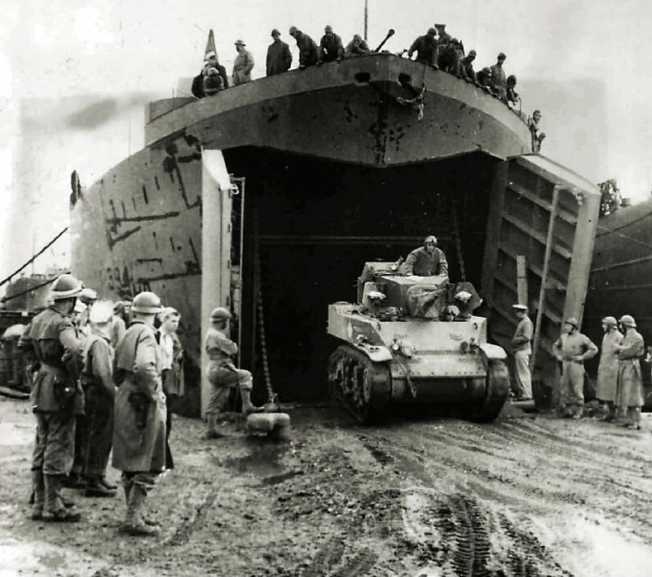
This means that the US tankers will have to fight under "primitive" conditions, just like their fathers did in World War I, relying on their arms and palms to transmit signals, and have to fire at close range to ensure shooting accuracy. Of course, for Symes, a former World War I tank veteran, this was nothing.
Symes set up an ambush position on a ridge, from which he could overlook the coastal road extending from Rabat. Lieutenant John Money led two M5 tanks in ambush on the west side, while the other five "Stuarts" were commanded by Symes himself and were in position on the east side of the coastal road. The tankers spent a sleepless night, believing that the French attack would come at dawn.
Sparks flashed"
When the first rays of dawn on November 9th broke through the sky, about two battalions of Vichy French infantry began to advance from a farm about a kilometer away from the ambush position of the "Stuart". Money’s two M5 light tanks immediately intercepted them. The deadly machine gun bullets fired by the American tanks almost destroyed the leading infantry company, and as a result, the morale of the others became low, so that no decent action was taken that day.
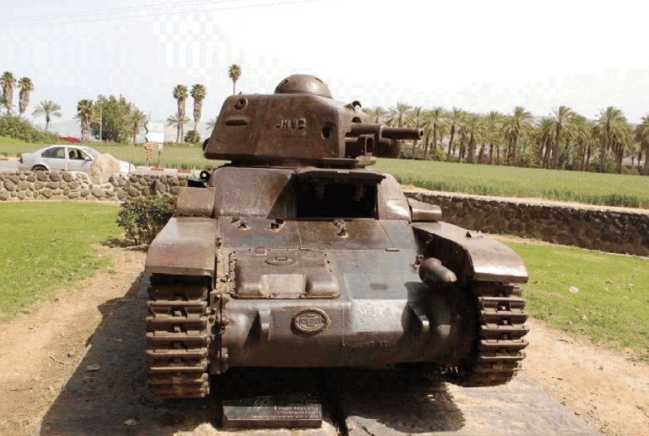
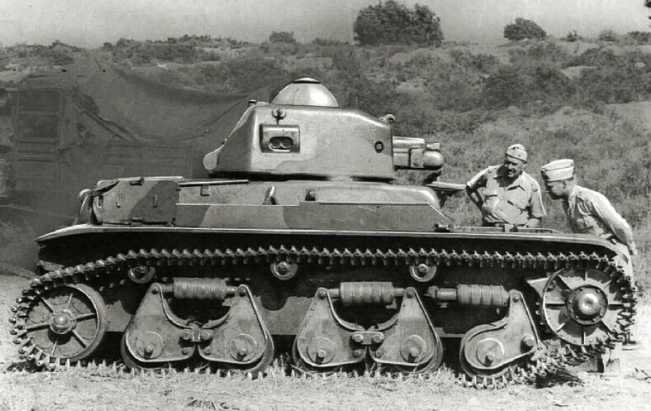
But soon after, a bigger threat appeared on the east side of the coastal road. Symes used his Observing through the telescope, he could count 14 Renault R-35 light tanks. As the tank with the largest number of equipment in the French army at the outbreak of World War II, the Renault R-35 with a combat weight of 10 tons was positioned to support infantry operations. Therefore, the maximum speed on the road was only 20 kilometers per hour, and it also lacked long-distance mobility.
After discovering the American tanks, the French tanks opened fire first. The 37mm short-barreled main gun of the Renault R-35 fired armor-piercing shells. The French tankers aimed very accurately, and several shells hit the "Stuart". Sams later recalled: "I noticed that when the front armor plate of the tank was hit, there would be a burst of sparks.
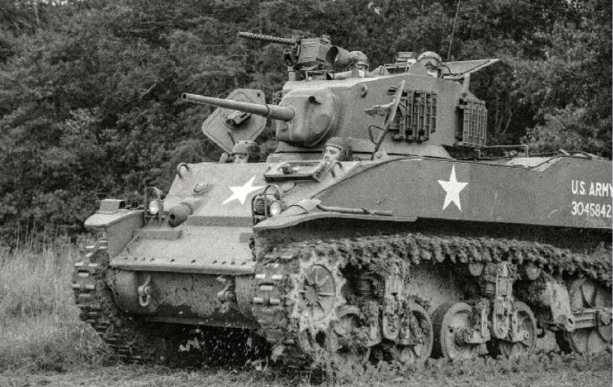
However, the Renault R-35 had already exposed the problem of limited penetration of the 37mm main gun in the Battle of France in 1940, and the situation was the same this time. Although the thickness of the front armor of the M5 light tank was only 28.5 mm, its defense was greatly increased because it adopted a 50-degree tilt setting. "The white-hot hardened steel core of the French shells did not penetrate the steel plate, but was hurled into the air," said Symes.
The American tankers were eager to fight back, but they were temporarily unable to do so because the sights on their tanks were uncalibrated and useless. The tankers had to rely on visual observation to engage the enemy, and the prerequisite was to put the French tanks close enough to fire within 200 meters to ensure a hit.
As the light tank with the largest number of production in the United States during World War II, the M5 "Stuart" weighing 15.6 tons also had a main gun caliber of 37 mm, but its initial velocity was higher than that of the Renault R-35 with the same caliber, and its performance with armor-piercing shells was also better. Therefore, when the M5 started to fire accurately, it was often able to penetrate the frontal armor of the R-35 light tank.
The "Stuart" suppressed the Renault tank in the main gun fire, which made the members of Semmes’s small tank unit very excited. However, Lieutenant Colonel Semmes found a new trouble. "Due to the extremely low temperature, our tank guns cannot eject empty shells after firing. The tank commanders who act as loaders have to grab the shells with both hands. As a result, they basically lost their nails."
When the commander reloads the shells, the driver of the M5 will reverse the tank to a relatively hidden position and wait until the gun is in place before going to join the battle. The advantage of this is that the "Stuart" can always be in a position with the thickest frontal armor facing the French tanks, thereby improving battlefield survivability.
But even so, Semmes was still worried. After all, the Renault tanks had an advantage in numbers, and the French might think of outflanking his already very fragile defense line. But soon, Semmes got unexpected help.
Deadly cat-and-mouse game.
Soon after the tank duel near the landing site began, the light cruiser "Savannah" launched two Curtiss SOC-3 "Seagull" seaplanes it carried. This biplane seaplane is equipped with a two-person crew, with depth charges and two 7.7mm machine guns as weapons, but it is also equipped with another important equipment: airborne radio.
When one of the Seagulls flew low over the battlefield, the crew observed the armored duel between the Stuart and the Renault R-35. The onboard radio worked properly, and the rear-seat observer began to transmit the battlefield position data back to the Savannah. At 7:50, the Savannah’s 152mm main gun fired the first shell and began to provide fire support for the M5 light tank. The light cruiser would fire a total of 121 shells, and during this process, the Seagull hovering over the battlefield continuously provided it with bullet calibration.
It turned out that the artillery coverage from the cruiser was "unbearable" for the poorly protected Renault light tank. After several rounds of naval gunfire, the R-35s that were still able to move left the scene and hid in a nearby eucalyptus forest. Symes determined that at least four Renault R-35s had been completely destroyed, two of which were the work of his tankers. Symes’ own "Stuart" was hit by eight French tank shells, but the front armor of the vehicle body withstood all the impact.
Symes and his men got a precious respite, but another "Seagull" flying nearby just reported that the French troops in the nearby area were regrouping and might launch a larger-scale attack. Fortunately, it didn’t take long for the US reinforcements to arrive. First came two half-track vehicles equipped with 75mm anti-tank guns, followed by 10 "Stuart tanks led by Captain William Edwards. This gave Semmes a lot of confidence.
The second wave of the Vichy French attack started at 9 o’clock. A team of R-35 tanks moved on one side of the road, while a mixed formation of infantry and armored vehicles tried to outflank on the other side. Edwards’ M5 light tanks were in position in a patch of cacti, and they soon played a deadly cat-and-mouse game with the Renault light tanks.
This was a close-range tank battle. Both sides kept firing and hit. A "Stuart" commanded by Raymond Herbert had just destroyed an R-35 at a close distance of dozens of meters, and was immediately hit on the side of the vehicle by another Renault tank. The M5 was hopelessly on fire, and the four crew members, including Herbert, were all heavily injured. , and nearby, another Stuart was also on fire after being hit.
However, the Seagull and Savannah intervened again. The 152mm shells fired by the cruisers fell all over the battlefield, creating craters of various sizes and preventing the French tanks from moving normally. The Seagull was no longer a pure spectator. The pilot dived down and dropped 150 kg depth charges on the Renault tanks - this was a rare sight. Weapons used to counter submarines hit the tanks!
After a coordinated battle on the ground, in the air and at sea, the Americans successfully held their positions. When it was over, Lieutenant Colonel Symes counted 27 destroyed Renault R-35 tanks, and the Americans lost 6 "Stuarts". General Truscott was present to witness the aftermath of the battle, "In the valley below, many bodies lay in various positions of sudden death. "
By 14:30, the U.S. military had fully mastered the situation, and Truscott moved Edwards’ tanks to where they were more needed. More tanks from the Symes Armored Battalion arrived, and the tankers had time to adjust the radio and sights. The Vichy French troops then launched another half-hearted attack, which was quickly repelled by the firepower of American tanks and the "Savannah",
Mission accomplished
Truscott’s landing force could now focus on their goal, which was the airport at Port Leuty. That afternoon, Major McCully’s 1st Battalion landing team, supported by several "Stuarts", and The French troops on the outer positions of the airport engaged in battle, allegedly destroying the latter’s 28 machine guns and 4 anti-tank guns.
At dawn on November 10, the US attack was directed at the stone fortress Casbah. The battle began with the bombardment of two 105mm self-propelled howitzers, followed by eight Douglas SBD "Dauntless" dive bombers from the escort aircraft carriers that came to drop bombs, and finally the infantry of the 1st Battalion Landing Team and the 3rd Battalion Landing Team charged with bayonets. The 250 defenders of Casbah stopped resisting, and the fortress fell into the hands of the attackers at 10:50.
While the battle was going on, the destroyer "Dallas", which had already entered the Seb River, came upstream and successfully dropped the assault weapons it was carrying near the airport in Port Leuty. Shortly before the U.S. captured the Casbah, the airport at Port Leuty was firmly in the hands of the Americans. Two and a half hours later, the first P-40 fighter from the escort aircraft carrier "Chenango" landed here.
As important strongholds fell one by one, the French resistance began to weaken. Phones kept ringing between headquarters at all levels. After learning about the battle situation from Major General Massenette and Colonel Petty, General Nogues in Rabat held urgent consultations with Admiral François Darlan in Algiers, the highest military commander of Vichy France in North Africa.
After 19:30 on the 10th, Darlan, who felt that the situation was over, issued an order to cease hostilities. At 23:30, Massenette, who was in Port Leuty, The major general sent a messenger hoping to negotiate an armistice with Truscott the next morning.
At 8 a.m. on November 11, Major General Massenet, dressed in a neat uniform, walked into the American position under a white flag. Accompanied by a guard of honor composed of Sams’ tankmen, Truscott met with the French general in the Stone Fort Casbane, and the two sides quickly reached a ceasefire agreement. After saluting each other, enemies became allies and the battle for the port of Leuty was over.
In this three-day battle, a total of 95 American soldiers were killed, 275 were wounded or missing, and the French lost about 350 soldiers. As planned, Truscott’s troops captured the airfield, which was crucial to the Allied’s next move, and they achieved their mission.
In his post-war summary, Truscott was still haunted by the battle’s loss of control. He wrote: "The lack of experience of the landing units, the unexpected sea conditions, and the extreme haste caused by various factors put this landing on the verge of success or failure. If we were facing a well-prepared and fully armed enemy, it would have been very likely to cause a major disaster." It was through this battle that the Allies gained valuable experience necessary for carrying out complex amphibious operations, which would later play a role in Sicily, Salerno, Anzio and Normandy.
The American tank troops that first landed on the battlefield had a good start in Morocco. The M5 "Stuart" light tank did not lose out in the confrontation with opponents of the same level. However, this is just the beginning. When the Allies move from Morocco and Algeria to Tunisia, they will face the battle-hardened Germans, and the US tank units will also learn new lessons under the attacks of German tanks.